



Your mental health practice depends on the right technology, but most SaaS platforms, including Luminare Health, keep you on a subscription treadmill. Each new clinician, front desk hire, or feature leaves you paying more. By the time your practice grows, you may have spent enough to build your own system from scratch. If you feel boxed in by Luminare Health’s pricing, limited workflows, or data policies, you’re not alone.
This guide gets honest about the top Luminare Health alternatives for 2026. We’ll dig deep into real features, pricing, migration friction, and trade-offs for each major option: from SimplePractice and TherapyNotes to enterprise suites and ownable custom platforms like Devaims. Whether you’re a solo therapist or a multi-site behavioral health organization, you’ll see how the numbers and workflows really compare. You’ll also see what it looks like to finally stop renting your core software.
Why mental health practices look for Luminare Health alternatives
Switching EHR and practice management systems is never easy, but Luminare Health’s model pushes many practices to consider alternatives. Here’s why:
- Recurring per-user fees add up fast. Most SaaS EHRs, including Luminare Health, charge monthly for each clinician, biller, or admin. For a 6-provider group, this can mean $500 per month, and the cost only grows as you add staff or locations. Over five years, you may spend $30,000 to $50,000 with nothing to show for it at the end.
- Locked-in features and paywalls. Core tools like telehealth, e-prescribing, analytics, or even custom forms are often reserved for higher pricing tiers or require extra fees. Predicting your true cost is difficult, and you may find yourself forced into an expensive plan just to unlock a single workflow.
- Data portability worries. Getting your data out of Luminare Health can be challenging. Some exports are partial or require support tickets, and full fidelity (all notes, billing, scheduling, attachments) is rarely guaranteed. This can make switching risky, especially for compliance and continuity of care.
- Limited custom workflows. Most platforms force you to adapt your process to their software. Intake, documentation, billing, and reporting are all shaped by the vendor’s roadmap, not your clinical or business needs. If you want to automate unique steps, run advanced analytics, or deeply integrate with third parties, you may hit a wall.
- Contract surprises and price hikes. SaaS vendors frequently update pricing, bundle features, or change contract terms at renewal. Practices find themselves paying more for the same tools or being locked into multi-year deals to avoid annual increases.
These pain points are driving practices, especially those with growth plans or unique workflows, to compare Luminare Health alternatives more closely than ever.
Quick comparison of the best Luminare Health alternatives
| Tool | Best for | Starting price | You own it? |
|---|---|---|---|
| SimplePractice | Solo and small group practices | Reported $29/mo per clinician | No, SaaS subscription |
| TherapyNotes | Insurance billing and compliance | Reported $49/mo per user | No, SaaS subscription |
| TheraNest | Growing group practices | Reported $39/mo for 1 user | No, SaaS subscription |
| Valant | Mid-large practices, psychiatry | Reported $135/mo per provider | No, SaaS subscription |
| Kareo Behavioral (Tebra) | Integrated billing + EHR | Reported $125/mo per provider | No, SaaS subscription |
| Greenspace | Client outcomes tracking | Reported $30/mo per clinician | No, SaaS subscription |
| ICANotes | Behavioral health documentation | Reported $75/mo per clinician | No, SaaS subscription |
| Netsmart | Enterprise and public sector | Custom/quoted | No, SaaS subscription |
| Devaims | Practices that want to own their system | One-time build, then flat maintenance | One-time build, you own it |
Always confirm current pricing and contract terms before deciding. Vendors change tiers and add-ons regularly.
The 9 best Luminare Health alternatives
1. SimplePractice (Best for solo and small group practices)
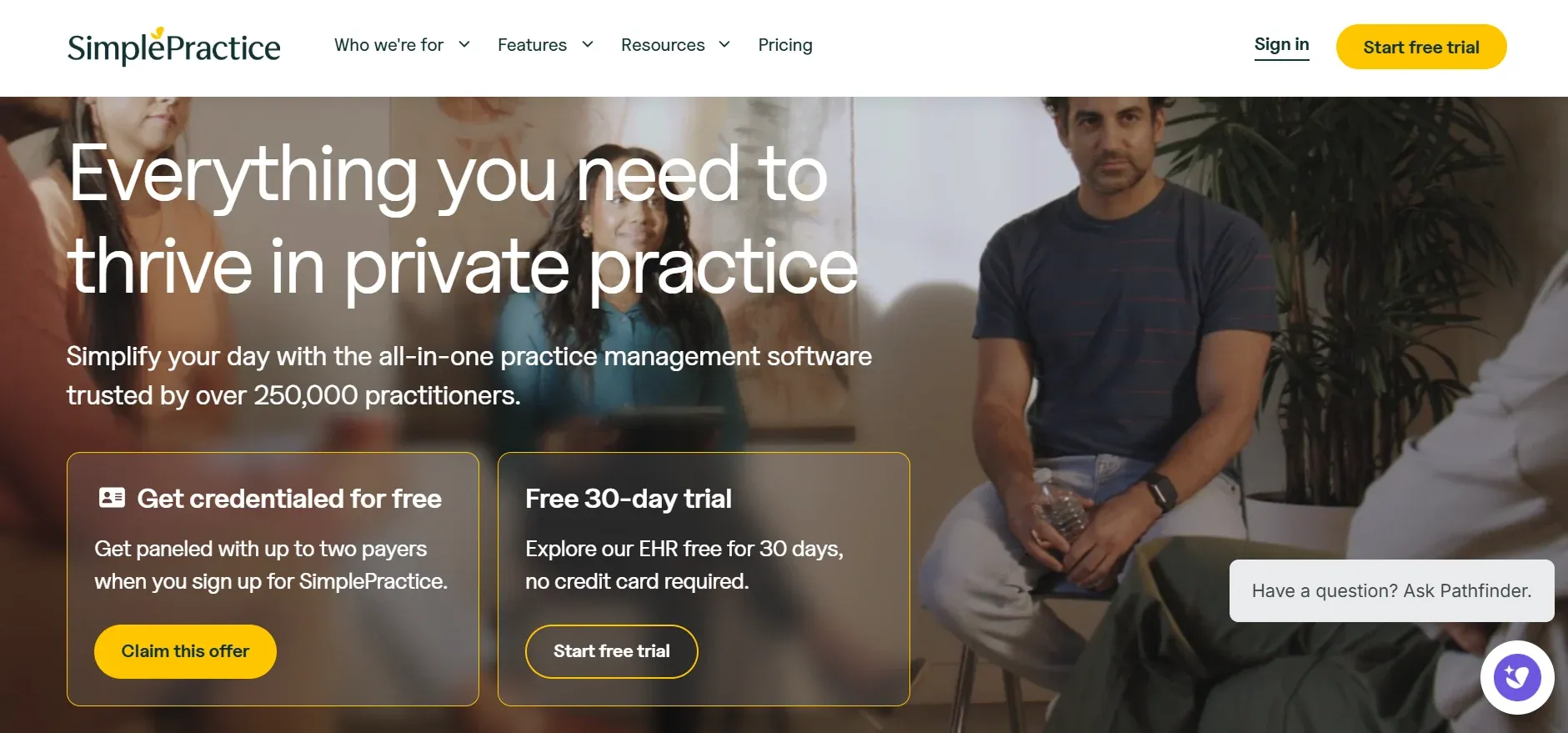
SimplePractice is widely known for its modern interface and ease of use, making it highly popular among solo practitioners and small group practices. Its focus is on simplifying scheduling, documentation, and client communication. The onboarding process is straightforward, with templates and video guides to help new users get started quickly.
Pricing: Starts at $29 per month per clinician. Add-ons like telehealth and e-prescribing incur extra fees.
- Modern, intuitive interface for clinicians and clients
- Quick onboarding and helpful support resources
- Affordable entry pricing for solo and small practices
- Limited workflow customization for advanced needs
- Telehealth and e-prescribing are paid add-ons
- Data exports may not include all custom fields or attachments
If you need more workflow flexibility or want to avoid per-user rent, Devaims offers a custom alternative with no recurring per-seat fees.
2. TherapyNotes (Best for insurance billing and compliance)

TherapyNotes is built for practices that rely on insurance billing and require strong compliance features. Its claim management and documentation workflows are comprehensive, and it offers support for both individual and group practices.
Pricing: Starts at $49 per user per month. Telehealth and e-prescribing are additional costs.
- Robust insurance billing and compliance tools
- Detailed audit trails and documentation rigor
- Strong support for group practices
- Per-user and per-feature pricing increases with growth
- Limited workflow customization beyond built-in templates
- Data export can require manual steps or support tickets
If you want to automate unique billing logic or own your data, Devaims can build these workflows to your exact needs.
3. TheraNest (Best for growing group practices)
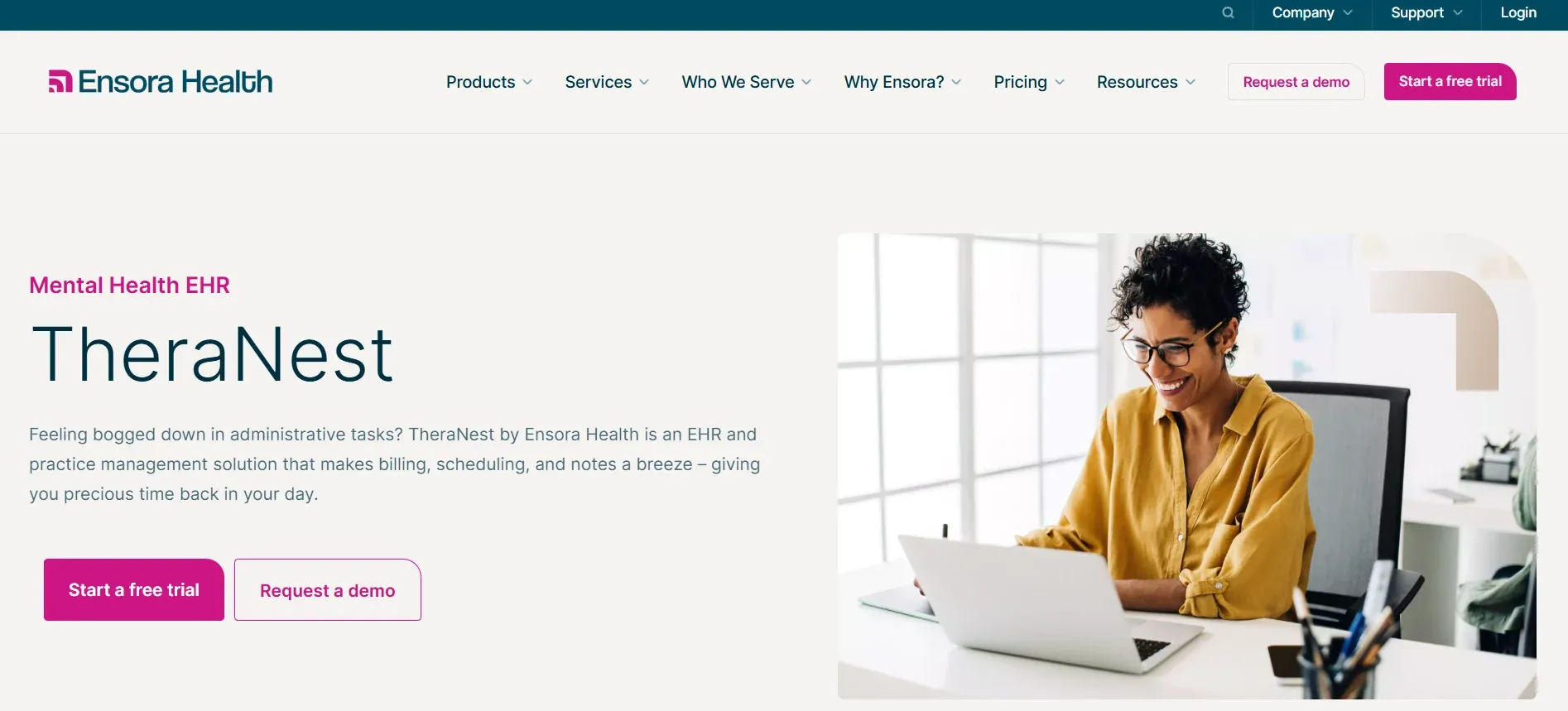
TheraNest is designed for practices that are scaling up and need to manage multiple clinicians, complex scheduling, and client engagement. Its group management features go beyond what Luminare Health offers, and it’s frequently used by practices transitioning from solo to group operations.
Pricing: Starts at $39 per month for one user. Additional users and features increase the cost.
- Supports group and individual scheduling
- Automated reminders for clients and clinicians
- Good fit for hybrid (in-person and telehealth) practices
- Per-user pricing can become expensive for larger teams
- Customization limited to built-in platform features
- Full data migration may require manual effort or paid support
For practices with unique intake or billing processes, Devaims enables full customization and eliminates per-user fees.
4. Valant (Best for psychiatry and mid-large practices)
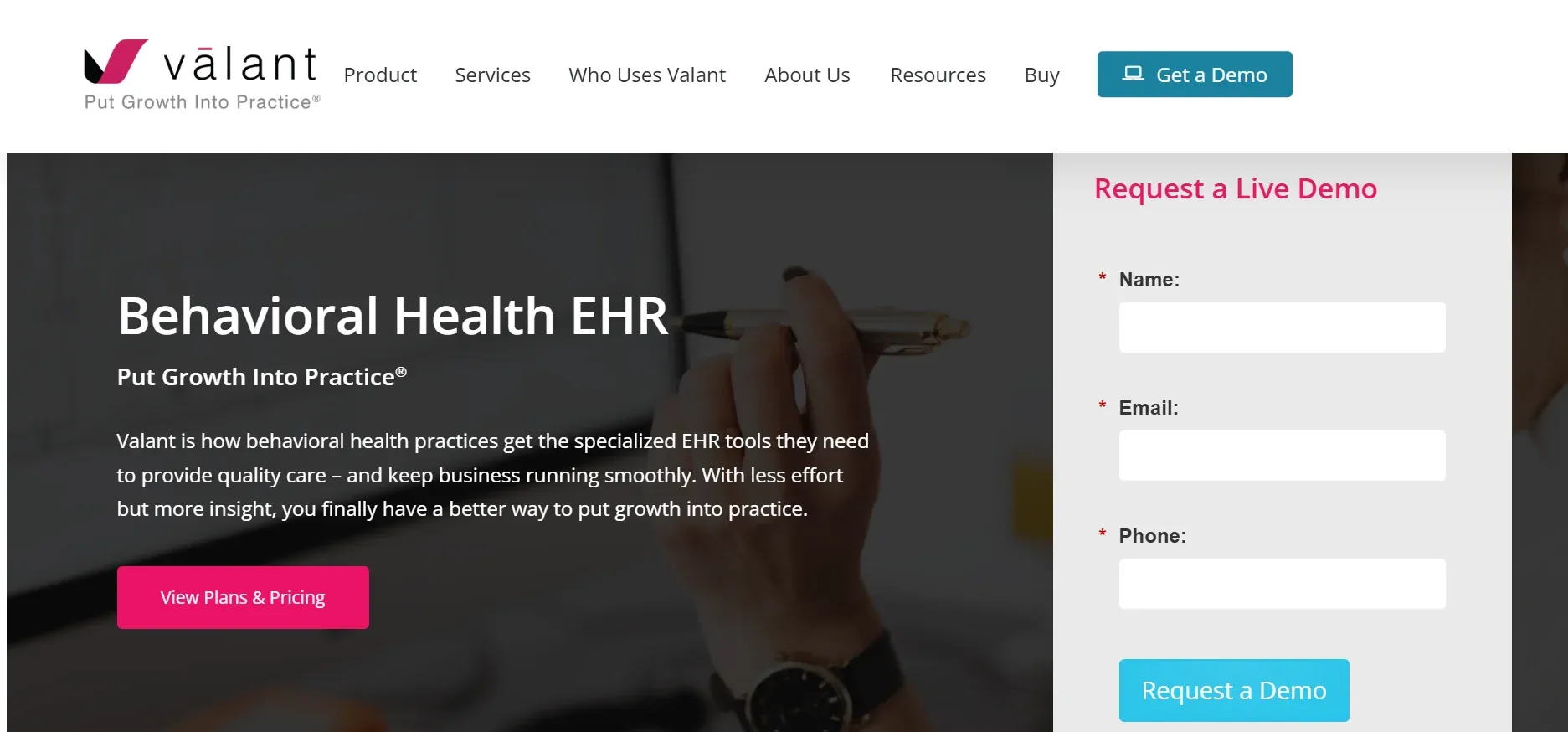
Valant is positioned for mid to large mental health and psychiatry practices needing a full-featured EHR, deep analytics, and advanced compliance. Unlike Luminare Health, Valant provides strong support for psychiatric workflows and medication management, but its pricing and contracts are significantly higher.
Pricing: Starts at $135 per provider per month. Multi-year contracts are common.
- Comprehensive EHR with advanced analytics
- Robust support for psychiatry and medication management
- API access for approved partners
- High upfront and monthly costs
- Mandatory contracts and steep learning curve
- Customization limited by Valant’s roadmap
For practices needing unlimited customization or ownership, Devaims provides a tailored alternative with no vendor lock-in.
5. Kareo Behavioral (Tebra) (Best for integrated billing + EHR)
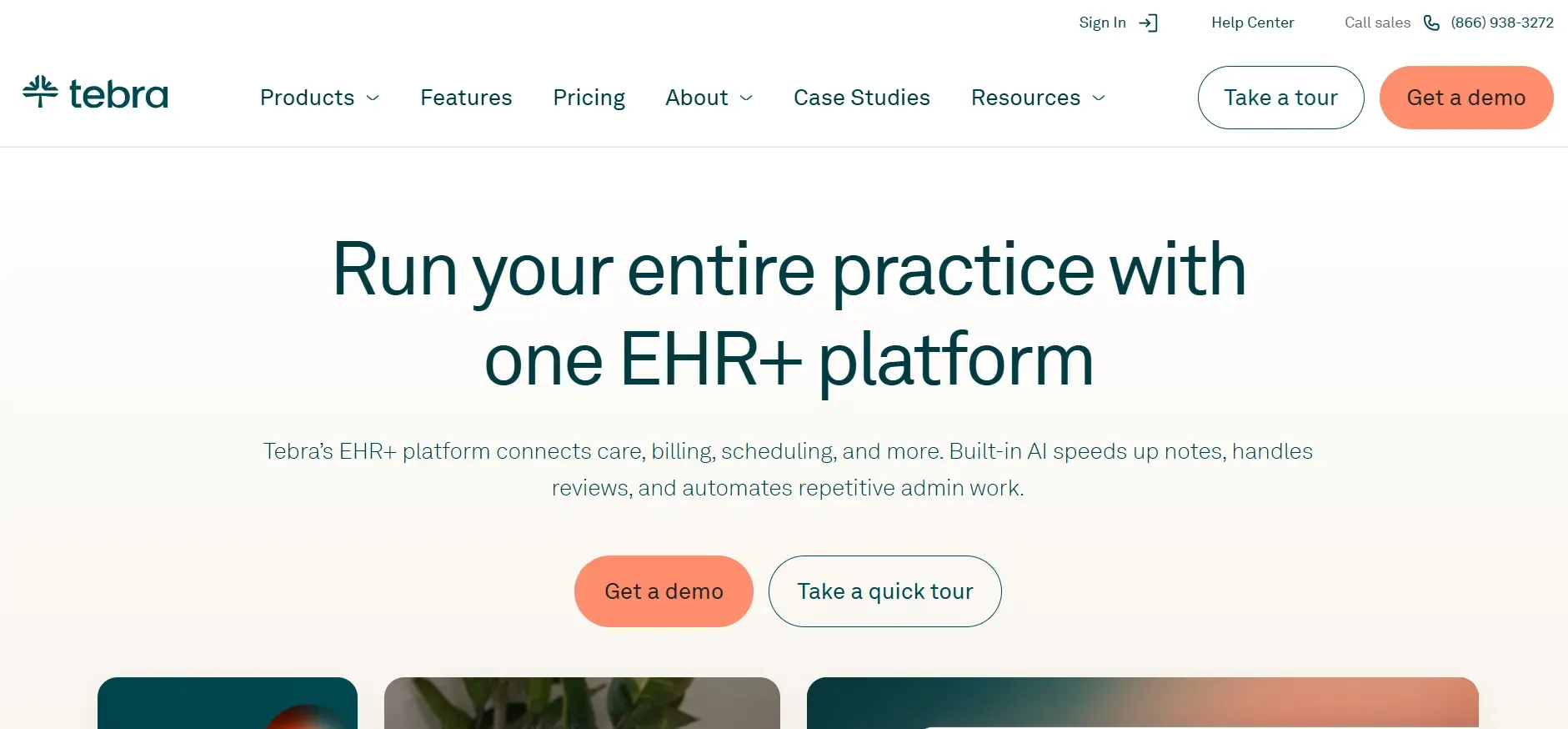
Kareo Behavioral, now part of Tebra, is marketed to practices seeking an all-in-one billing and EHR solution. It stands out for its integrated clearinghouse and insurance workflows, aiming to handle everything from scheduling to claims in one place.
Pricing: Starts at $125 per provider per month. Add-ons for telehealth and e-prescribing increase costs.
- Integrated billing and claims management
- Real-time eligibility checks and denial management
- Suitable for solo providers and medium-size groups
- High per-provider cost with extra fees for features
- Limited workflow customization and integrations
- Data migration for clinical and billing history can be complex
If your practice needs unique intake or billing logic, Devaims can build these processes to your specifications and eliminate recurring rent.
6. Greenspace (Best for outcomes tracking and measurement)

Greenspace is not a full EHR, but a specialized platform for measuring client outcomes and engagement. It integrates with most major EHRs (including Luminare Health, SimplePractice, and TherapyNotes) to automate routine assessments and visualize progress over time.
Pricing: Starts at $30 per clinician per month. Additional features may incur extra costs.
- Automated outcome surveys and progress tracking
- Integrates with leading EHRs
- Customizable measures and reporting
- Not a standalone EHR, requires integration with another system
- Per-user pricing adds up as your team grows
- Managing two systems can be cumbersome for some practices
For practices wanting outcomes tracking built into their core platform, Devaims can integrate these features directly into your owned system.
7. ICANotes (Best for behavioral health documentation)
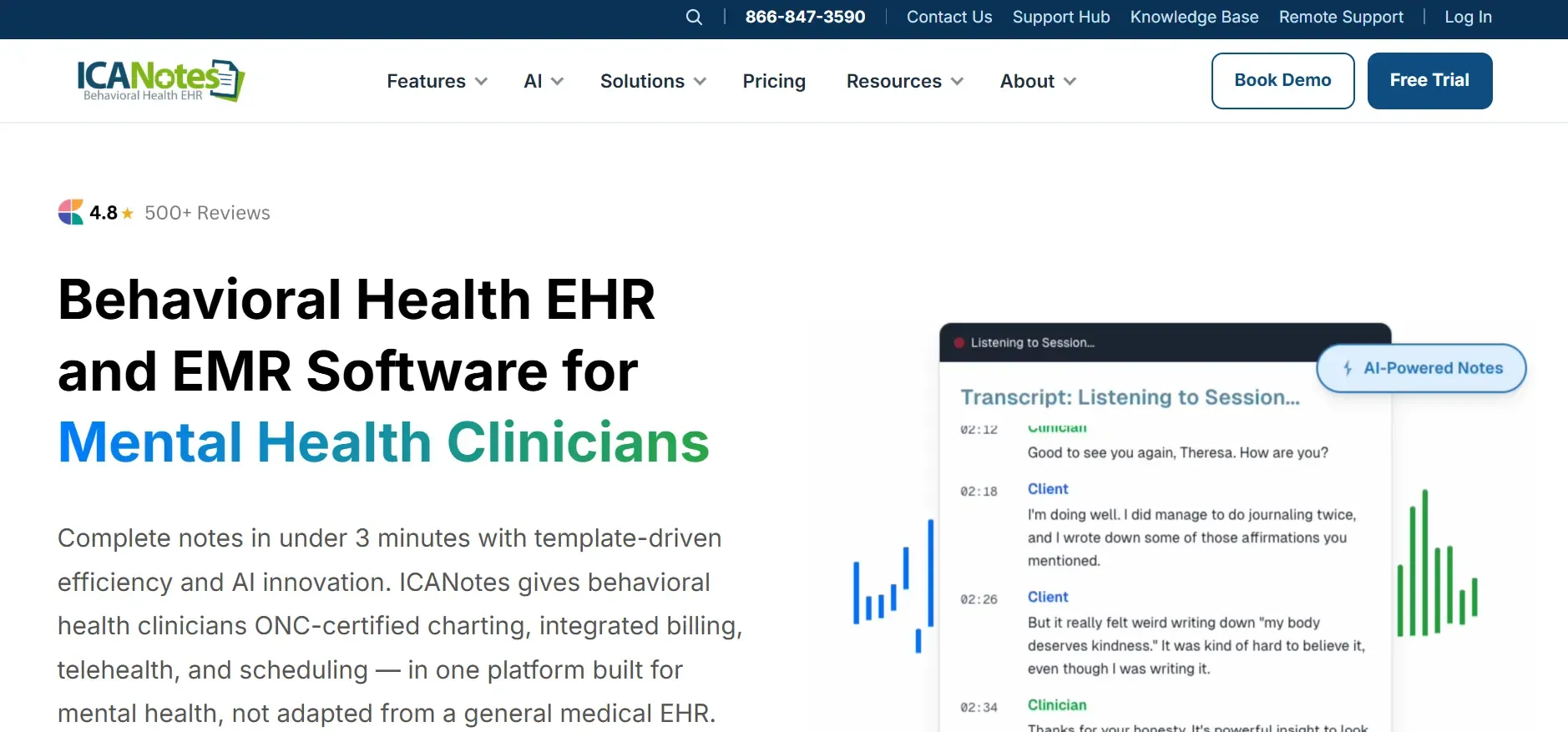
ICANotes is a documentation-focused platform built specifically for behavioral health. It’s known for its rapid note entry and compliance tools, catering to clinicians who need to generate comprehensive documentation quickly.
Pricing: Starts at $75 per clinician per month. E-prescribing and telehealth are paid add-ons.
- Fast, structured note creation
- Compliance-focused documentation tools
- Popular among psychiatrists and therapists
- Interface can feel dated and slow onboarding
- Customization of templates is limited
- Reporting and analytics are basic
If you need advanced analytics or unique documentation workflows, Devaims can build these features to your requirements.
8. Netsmart (Best for enterprise and public sector)

Netsmart is a leader in behavioral health EHRs for enterprise organizations, public sector agencies, and large nonprofits. Netsmart’s suite is designed for scale, supporting everything from outpatient programs to statewide behavioral health networks.
Pricing: Custom/quoted, typically for large organizations with multi-year commitments.
- Comprehensive EHR and compliance tools
- Supports multi-site and large-scale operations
- Open APIs for deep integrations
- Not cost-effective for small or midsize practices
- Implementation and support require significant resources
- Workflow customization can involve long development cycles
For organizations seeking full ownership and flexibility, Devaims offers a custom alternative without multi-year contracts.
9. Devaims (Best for practices who want to own their system)
Devaims is the only option on this list where you truly own your mental health platform, source code, data, and all. Devaims builds a custom EHR, practice management, billing, and telehealth system around your exact workflows. Once built, you pay a flat maintenance fee for updates and support, not per-user or per-feature rent.
Pricing: One-time build (typically $30,000 to $50,000), then flat monthly maintenance (e.g., $200/month). No per-user or per-feature fees.
- Full ownership of your platform and data
- Unlimited users, features, and customization
- Flat, predictable maintenance costs with no surprises
With Devaims, you control your roadmap, integrations, and data, no more vendor lock-in or recurring rent. Migration support is included, ensuring a smooth transition from Luminare Health or any SaaS.
Other Luminare Health alternatives worth knowing
- Qualifacts, enterprise-grade EHR with deep compliance and analytics tools. Implementation and pricing are only feasible for large agencies or public sector organizations.
- BreezyNotes, simple EHR for solo and small group practices, with basic workflows and affordable pricing. Lacks advanced features and deep customization, but is easy to onboard.
- CarePaths, an affordable, cloud-based EHR with integrated telehealth and outcomes tracking. Good for smaller practices but limited in workflow flexibility.
Some of these tools are highly specialized or only fit very large organizations. Always confirm that the features, scale, and support match your practice’s needs before committing.
How to choose the right Luminare Health alternative
- By budget: Solo and small practices may find SimplePractice or BreezyNotes cost-effective, but any multi-clinician group will quickly see per-seat SaaS fees outpace the cost of ownership. Devaims and other ownable builds eliminate these recurring charges entirely.
- By specialty: Psychiatry, multi-site, or public sector practices often need the analytics, compliance, and medication management of Valant, Netsmart, or Qualifacts. Outcome-focused clinics may add Greenspace or CarePaths to their stack.
- By workflow: If your intake, documentation, billing, or analytics process is unique, or you want to automate custom steps, only a custom build like Devaims fits perfectly. SaaS tools are limited to their vendor’s roadmap.
- By growth plans: If you expect to add clinicians or locations, calculate your total 5-year SaaS spend and compare it to a one-time build plus maintenance. Most group practices break even by year 4, with savings growing every year after.
- By data control: Practices with strict compliance, research, or reporting needs should scrutinize each platform’s data export and migration options. Only ownable platforms guarantee full data access and portability.
Consider your growth, compliance, and workflow needs, not just today, but for the next five years. If you want to stop paying rent and start building equity in your technology, keep reading for a detailed look at the real cost math.
Stop paying rent on software you could own
Every SaaS EHR, including all Luminare Health alternatives above, follows the same model: you rent access, pay per user, and never truly own your data or workflows. The more your practice grows, the more you pay. You remain at the mercy of contract renewals and feature paywalls.
Owning your software with Devaims flips the model. Your custom platform is built to your exact needs, branded for your practice, and includes every workflow, integration, and report you require. You hold the source code, control your data, and pay only a flat maintenance fee for updates and support. No per-user, per-feature, or surprise upgrade charges, ever.
- Recurring fees disappear: Once you own your platform, adding clinicians, admins, or new features costs nothing extra. Your maintenance fee is flat and predictable.
- Total customization: Intake, billing, documentation, analytics, and outcomes tracking all work exactly how you want. If you change workflows, your platform adapts with you.
- Real data control: Your data stays in your hands, easily exportable and auditable for compliance, research, or migration. No more vendor lock-in or partial exports.
- Future-proof: Platform maintenance and support are transparent, with no forced upgrades, feature removals, or price hikes. You decide your own roadmap.
Here’s how the math plays out for a typical mid-size practice (6 clinicians):
| Platform | Ownership | Pricing model | Source code | Contract |
|---|---|---|---|---|
| Luminare Health | Rented | Per provider, per month | No | Annual |
| SimplePractice | Rented | Per user, per month | No | Monthly/Annual |
| Valant | Rented | Per provider, per month | No | Multi-year |
| Devaims | Owned | One-time build, flat maintenance | Yes | No contract |
| Year | Rent (SaaS: $500/mo x 12) | Own (Devaims: $30K build + $200/mo maint) |
|---|---|---|
| 1 | $6,000 | $32,400 |
| 2 | $12,000 | $34,800 |
| 3 | $18,000 | $37,200 |
| 4 | $24,000 | $39,600 (now ahead) |
| 5 | $30,000 | $42,000 |
For most practices with 4 or more clinicians, the total cost of SaaS rent matches or exceeds a fully owned Devaims build by year 4. After that, every new provider or feature is pure savings. If you want a custom quote and break-even analysis for your own numbers, we’ll run it for free.
How to switch from Luminare Health
- Export your data: Request a full export of all client demographics, documentation, appointments, and billing history from Luminare Health. This may require multiple export formats and support tickets to ensure completeness.
- Choose your new platform: Decide between SaaS alternatives or a custom Devaims build. Consider your workflow, budget, and long-term growth needs.
- Map and import data: For SaaS, import tools are usually limited to basic client info and appointments. For Devaims, the migration team will map and validate all data, ensuring notes, billing, attachments, and custom fields are preserved.
- Reconnect integrations: Set up payment processors, insurance clearinghouses, telehealth platforms, and any third-party analytics or marketing tools.
- Training and parallel run: Train staff on the new workflows and interface. Run both systems in parallel for a period to catch issues before full cutover.
- Finalize and close out: Review your Luminare Health contract for termination clauses or penalties. Once confident in your new system, formally end your old subscription.
With a Devaims custom build, full migration support is included, reducing risk and ensuring a smooth transition.
Frequently asked questions
What is the best Luminare Health alternative for small practices?
For solo and small group practices, SimplePractice and TherapyNotes are the most popular for ease of use, quick onboarding, and affordable entry pricing. Both offer strong scheduling and documentation, but costs rise quickly with each new clinician. For practices planning to grow or seeking to avoid per-user rent, Devaims offers a future-proof alternative by allowing you to own your platform from day one.
Which Luminare Health alternative is cheapest?
SimplePractice and TheraNest offer the lowest entry pricing ($29 to $39 per month for a single user), but total cost rises steeply as you add clinicians and features. Over five years, even small teams may find that an owned platform like Devaims is cheaper, especially if you plan to expand or require advanced workflows. Always calculate your total 3 to 5 year spend before deciding.
Is there a free Luminare Health alternative?
No major EHR for mental health is truly free and fully HIPAA compliant. Some platforms (like BreezyNotes or CarePaths) offer free trials or limited-feature versions, but all require a paid subscription or ownership investment for long-term use. Free open-source EHRs exist (like OpenEMR), but they require significant IT expertise and custom development to meet mental health and compliance needs.
What’s the best Luminare Health alternative for insurance billing?
TherapyNotes and Kareo Behavioral are strong for insurance billing, clearinghouse integration, and claims management. Both offer robust denial tracking and ERA/EFT support. If your billing workflows are highly customized or you need to automate unique payer logic, only a custom platform like Devaims can build these processes to your exact specifications.
Can I keep my data when switching from Luminare Health?
Luminare Health offers data export, but the process is not always straightforward and may require support intervention. Some data types (such as custom forms, attachments, or historical billing) may not export cleanly or in a format compatible with your new EHR. With Devaims, you always have full access to your data and database, and the migration is managed for you to ensure nothing is lost.
When does owning beat renting for mental health software?
For most practices with more than three clinicians, the total cost of SaaS rent matches or exceeds the one-time build plus maintenance of an owned platform by year 3 or 4. If you plan to grow, want unlimited users, or need custom workflows, the savings and control of ownership become even more compelling over time. The math tilts further in favor of ownership as you add staff or expand locations.
What’s the main drawback of Luminare Health alternatives?
Most alternatives are also SaaS platforms, so you remain subject to per-user pricing, feature paywalls, and vendor-controlled roadmaps. True ownership, where you keep the code, data, and control, is only possible with a custom build like Devaims. The main consideration is a higher upfront investment and the need to plan your workflows in advance, but the long-term savings and flexibility are unmatched.
The bottom line
Choosing a Luminare Health alternative means weighing your current needs, growth plans, and appetite for customization. For many, SaaS options like SimplePractice or TherapyNotes provide a quick fix, but the costs and limitations mount quickly. If you’re ready to invest in your practice’s future, owning your platform with Devaims is the only way to break the subscription cycle and build real equity in your systems.
Our advice: add up what you’ll pay in rent over five years. If that number would have bought you a custom platform, you’re already paying too much. Devaims helps you make the leap, own your platform, not just your data, and never worry about price hikes or feature restrictions again.
Want more insight? Explore the Devaims blog, or see our latest comparisons: SimplePractice alternatives, TherapyNotes alternatives, and Valant alternatives.