

Ever feel like you’re paying more in software fees than you are for your laser lease? You’re not alone. Many dermatology practices sign up for Intergy, only to realize the real cost isn’t just the monthly sticker, it’s the lock-in, the per-provider fees, and the upgrades you have to buy just to get basic reporting. This scenario is all too common: you want to grow, but your EMR’s bill grows faster than your patient list.
If you’re searching for Intergy alternatives, you’re likely tired of renting access to your own data and being charged for every new provider or feature. The good news? Dermatology now has a full stack of EMRs and practice management platforms competing for your business. EMA (Modernizing Medicine) is a specialist favorite, Nextech is everywhere in aesthetics, Kareo and DrChrono keep it simple, and a custom Devaims build lets you finally own the whole thing. Here’s the honest, vendor-neutral breakdown of what you get, what you pay, and how to break out of the rent trap for good.
Why dermatology practices look for Intergy alternatives
Recurring subscription costs add up fast: $400+ per provider per month is typical, and that doesn’t include add-ons for telehealth, e-prescribing, or lab integrations. Over several years, these recurring costs can easily surpass the cost of building a custom solution. For practices with multiple providers or plans for growth, the math gets even worse. For example, a 10-provider practice on a $500/mo system is committing $60,000/year to software rent alone, not counting periodic price increases.
Locked into multi-year contracts: Most vendors require commitments of 2 to 5 years. Early termination can mean hefty fees or even losing access to your own data. These contracts often auto-renew unless you give long notice. This lock-in can stifle innovation and keep you from switching if your needs change.
Feature upgrades cost more: EMR vendors often lock advanced analytics, custom workflows, or specialty modules behind higher pricing tiers or as paid add-ons. What looks like a reasonable base price quickly escalates as you add e-prescribing, telehealth, or custom forms. Many practices are surprised to find that the features they need are not included in their original contract.
Slow support and generic workflows: Dermatology isn’t primary care, but many EMRs treat it like it is. Customization is possible, but rarely easy or cheap. Support tickets can take days or weeks, and requests for dermatology-specific improvements are often deprioritized in favor of primary care or larger specialties.
Limited data ownership: Exporting your records, or even your own note templates, can be a minefield. If you want true control, you need more than just a login. Some systems limit exports to PDFs or charge additional fees for structured data, making migrations difficult and sometimes incomplete.
These are the main reasons so many clinics are searching for Intergy alternatives in 2026. The desire for more control, better value, and specialty-focused workflows is at an all-time high.
Quick comparison of the best Intergy alternatives
| Tool | Best for | Starting price | You own it? |
|---|---|---|---|
| Modernizing Medicine (EMA) | Dermatology clinics | Reported $499+/provider/mo | No |
| Nextech | Aesthetics + specialty derm | Custom quote, typically $400+/provider/mo | No |
| Kareo (Tebra) | Small to midsize practices | Reported $125+/provider/mo | No |
| DrChrono | iPad-first clinics | $249+/provider/mo | No |
| Athenahealth | Large or multi-location | ~7% of collections | No |
| Practice Fusion | Budget-conscious solo clinics | $149/provider/mo | No |
| Greenway Health | Multi-specialty groups | Custom quote | No |
| DermEngine | Imaging-heavy practices | $169+/provider/mo | No |
| Devaims | Your clinic, your rules | One-time build, you own it | One-time build, you own it |
Pricing changes frequently, so confirm current pricing before you decide. Also, consider that many platforms require additional setup, training, or migration fees that may not be obvious in the initial quote.
The 9 best Intergy alternatives
1. Modernizing Medicine (EMA) (Dermatology specialists)
Modernizing Medicine’s EMA is built for dermatology, with deep specialty features that go far beyond what generalist EMRs offer. Its unique selling point is its dermatology-native workflow, which includes detailed image management, pathology tracking, and procedure documentation tailored to dermatology. EMA’s visual diagnosis tools and high-quality image annotation are particularly valuable for clinics focused on skin cancer, cosmetic procedures, or high-volume lesion tracking.
Pricing: Reported $499+/provider/month, plus setup and training fees.
- Dermatology-native workflow and templates
- High-quality image management and annotation
- Integrated teledermatology and pathology tools
- Advanced features and analytics require higher-tier plans
- Strict contracts and auto-renewal terms
- Data export and migration can be complex and costly
EMA’s advanced analytics are locked behind premium tiers. With Devaims, you specify your reporting needs up front and own every feature from day one.
2. Nextech (Aesthetics + specialty derm)
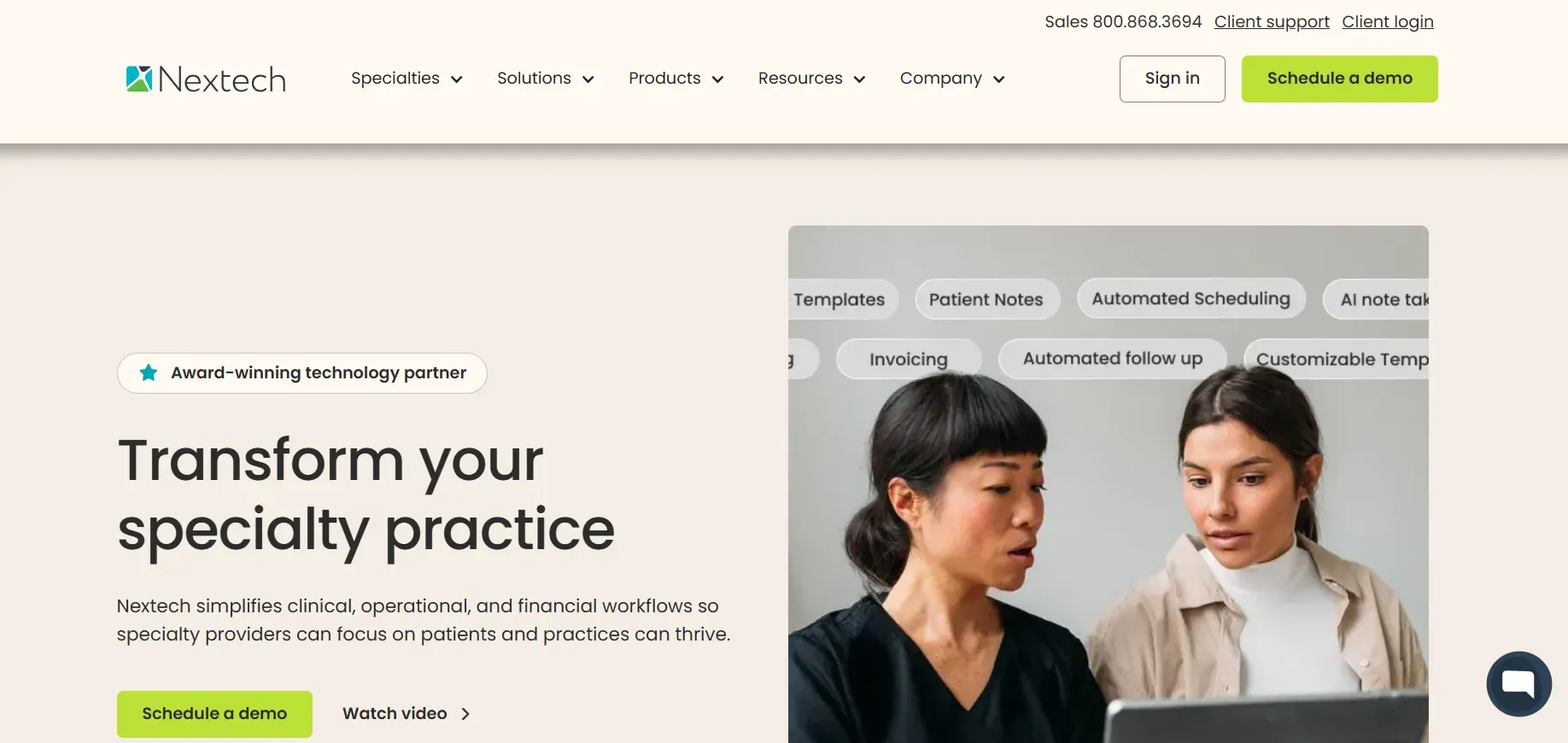
Nextech is a powerhouse in both dermatology and medical aesthetics. Its core strength is a broad suite of specialty modules, including cosmetic inventory management, before/after photo galleries, and marketing tools. Nextech’s scheduling and patient engagement features are robust, supporting everything from online booking to automated reminders and follow-ups.
Pricing: Custom quote, typically $400+/provider/month, with add-ons for advanced modules.
- Comprehensive cosmetic and medical modules
- Strong scheduling and patient engagement tools
- Inventory and marketing management built in
- Opaque pricing and required bundles can escalate costs
- Customizations often require additional fees
- Data portability is limited due to proprietary structure
Nextech’s customizations can add up. Devaims delivers every workflow you need, with no per-feature upcharges.
3. Kareo (Tebra) (Small to midsize practices)
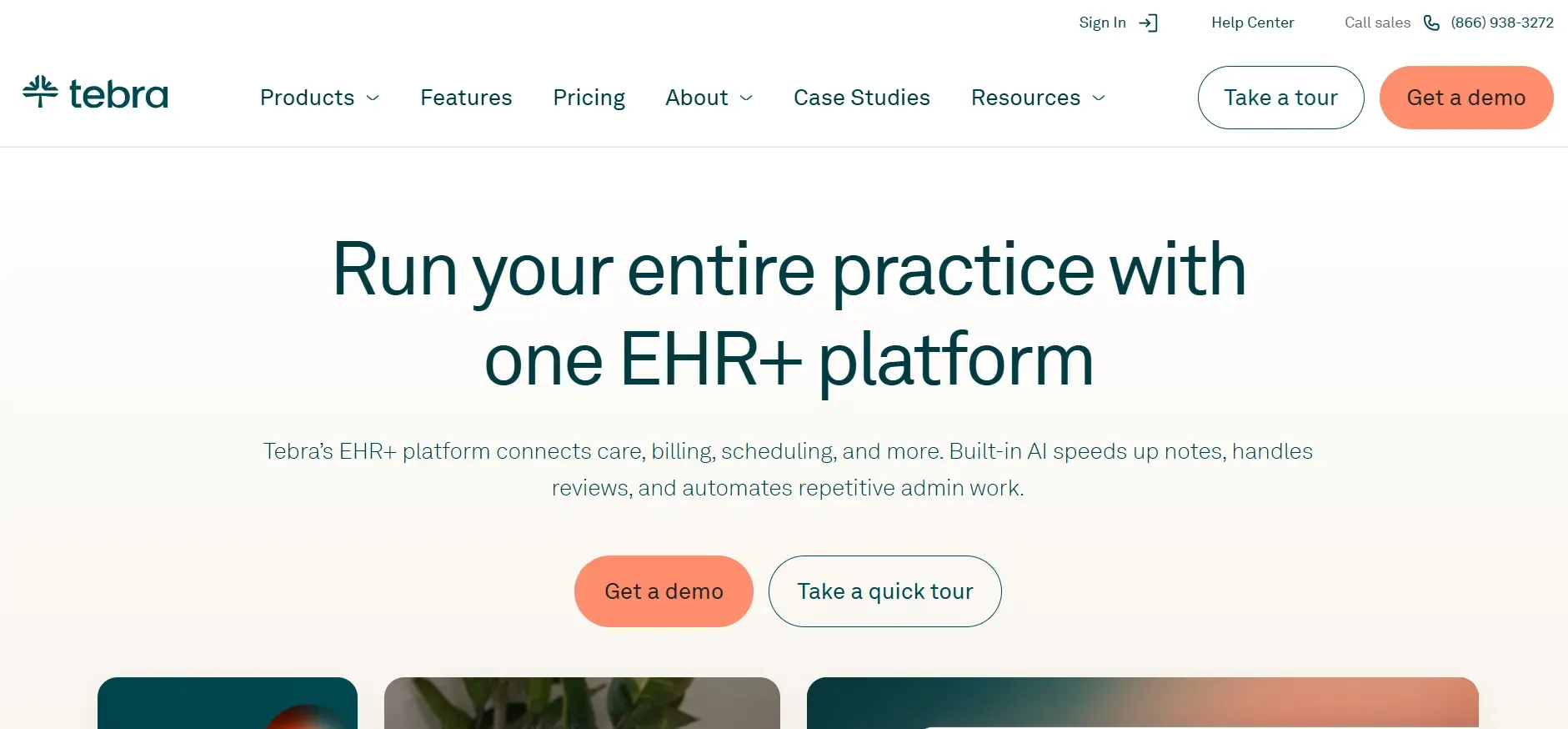
Kareo (now part of Tebra) is a cloud-based EMR designed for small to midsize outpatient practices. Kareo offers a streamlined user interface and quick onboarding, making it a favorite for clinics moving off paper or upgrading from legacy systems. However, its dermatology feature set is more basic, with limited built-in image management and procedure templates.
Pricing: Reported $125+/provider/month, with add-ons for telehealth and analytics.
- Affordable entry price for solo or small practices
- Simple, intuitive interface and onboarding
- Integrated billing and scheduling tools
- Limited dermatology-specific features and imaging
- Advanced features require paid add-ons
- Data ownership is standard SaaS, not full control
Kareo’s low base price can rise quickly with add-ons. Devaims offers a flat cost, no matter how many features or users you add.
4. DrChrono (iPad-first clinics)
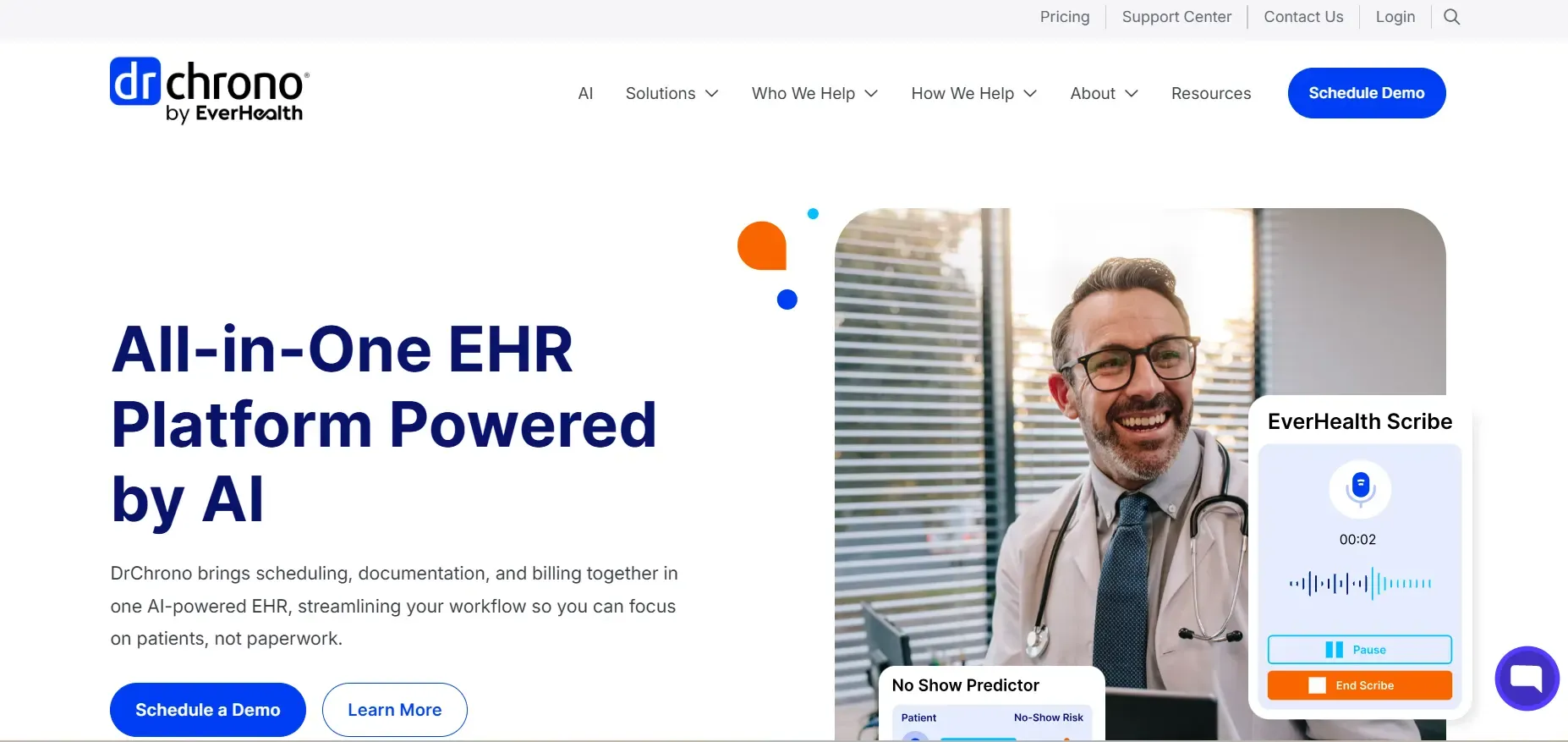
DrChrono is a cloud-based EMR with a distinctive iPad-first design. It appeals to dermatology practices that want flexible, mobile charting and the ability to move easily between exam rooms. DrChrono’s interface is modern and intuitive, and it supports digital consent forms, patient check-in on tablets, and e-prescribing from any device.
Pricing: $249+/provider/month, with higher tiers for advanced features.
- Mobile-first, iPad-optimized charting
- Patient self-check-in and digital forms
- API access for custom integrations
- Specialty workflows require significant customization
- Advanced features only in higher-tier plans
- Desktop features less robust than mobile
5. Athenahealth (Large or multi-location practices)
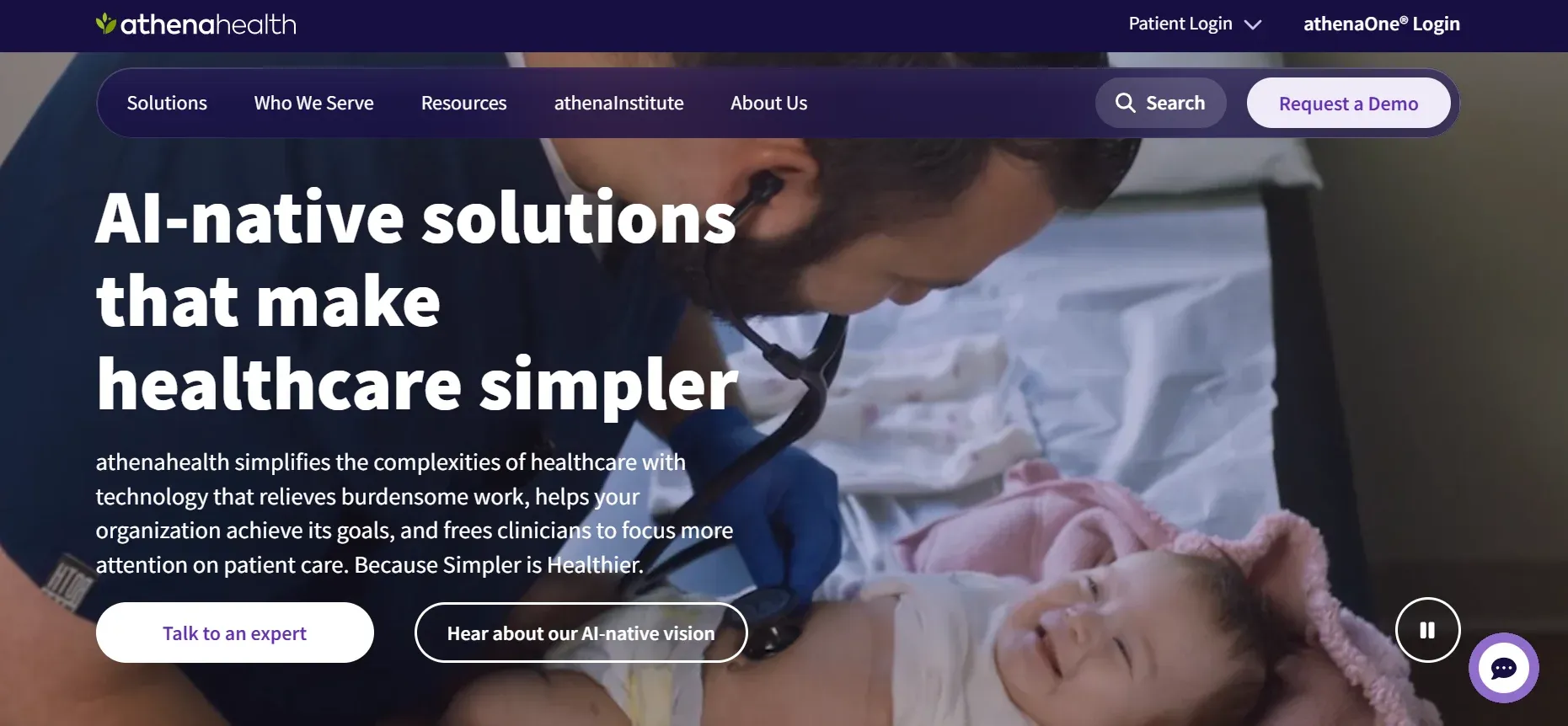
Athenahealth is a cloud-based platform designed for large groups, multi-location practices, or organizations with complex billing and reporting needs. Its infrastructure is highly scalable, and it is known for integrated revenue cycle management (RCM) services. Athenahealth’s pricing is typically a percentage of collections (around 7%), which aligns vendor incentives with practice performance but can become expensive as revenue grows.
Pricing: ~7% of collections, plus setup and migration fees.
- Highly scalable for large or multi-site practices
- Integrated RCM and compliance tools
- Extensive interoperability options
- Percentage-based pricing can erode margins
- Long-term contracts and difficult exits
- Customizations require vendor approval
6. Practice Fusion (Budget-conscious solo clinics)
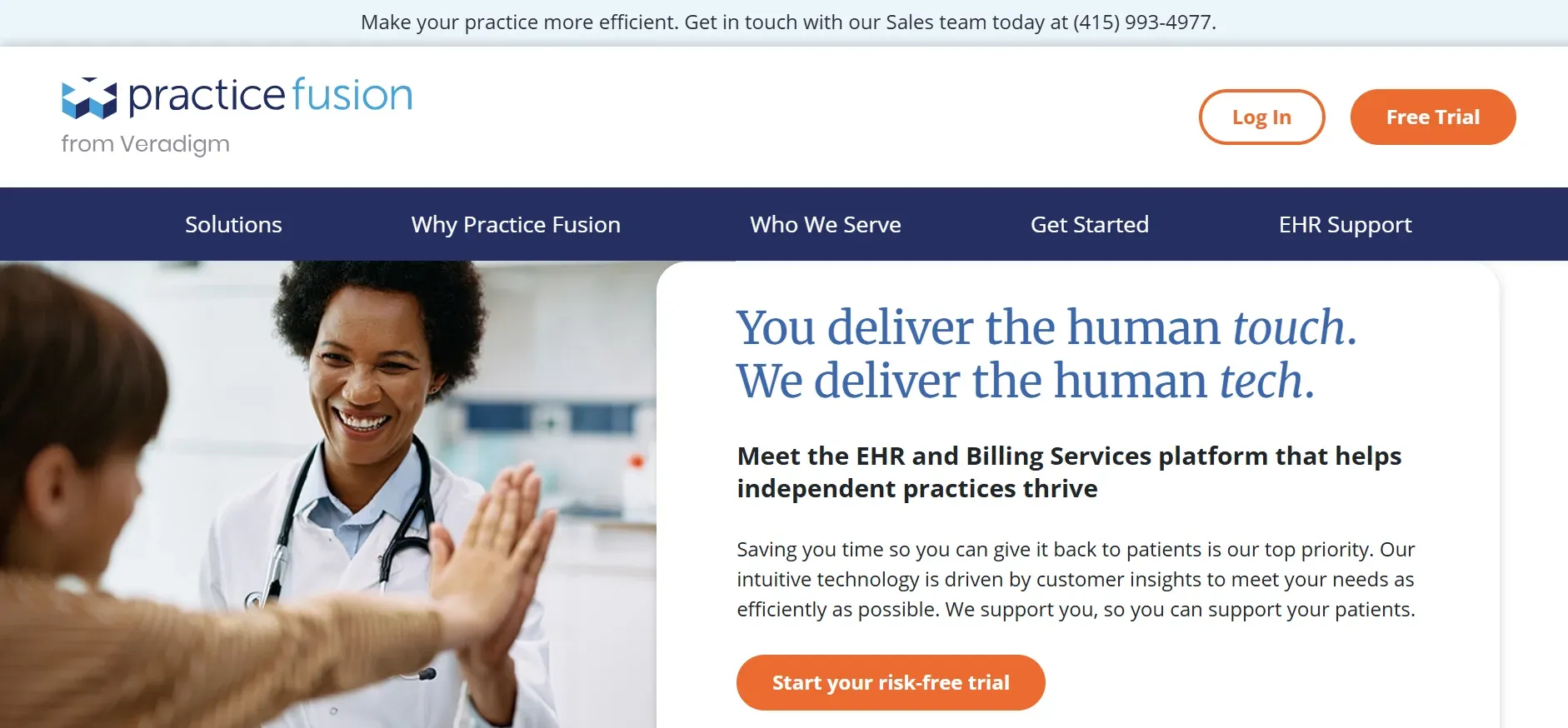
Practice Fusion started as a free web-based EMR and is now a paid option under Allscripts. It is best suited for solo dermatologists or very small practices that need a simple, low-cost platform. Practice Fusion’s feature set is basic, with little in the way of specialty workflows, advanced imaging, or cosmetic modules.
Pricing: $149/provider/month, no long-term contract required.
- Low monthly cost for solo providers
- Simple web-based interface
- No long-term contract required
- Lacks dermatology-specific features and imaging
- Limited customization and reporting
- Some users report in-app advertising
7. Greenway Health (Multi-specialty groups)
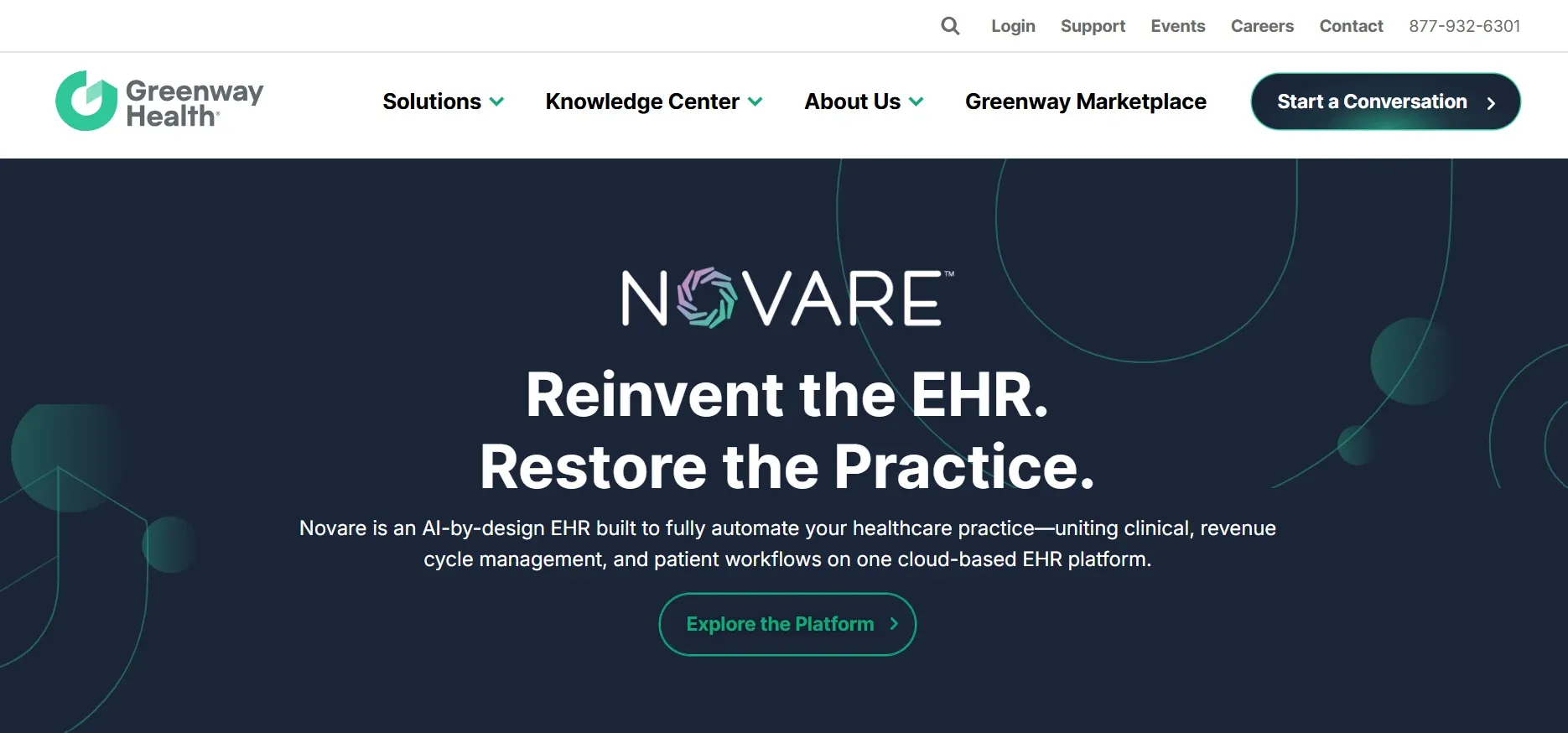
Greenway Health is a mature EMR platform aimed at multi-specialty groups and larger practices. Its strength lies in highly customizable workflows and a comprehensive billing engine. Greenway’s Intergy alternative offers more flexibility than the original, but requires significant setup and training.
Pricing: Custom quote, with setup and training fees.
- Highly customizable workflows and templates
- Comprehensive scheduling and billing
- Interoperability for multi-specialty practices
- Steep learning curve for small teams
- Specialty modules often require add-ons
- Setup and training can be time-consuming
8. DermEngine (Imaging-heavy practices)
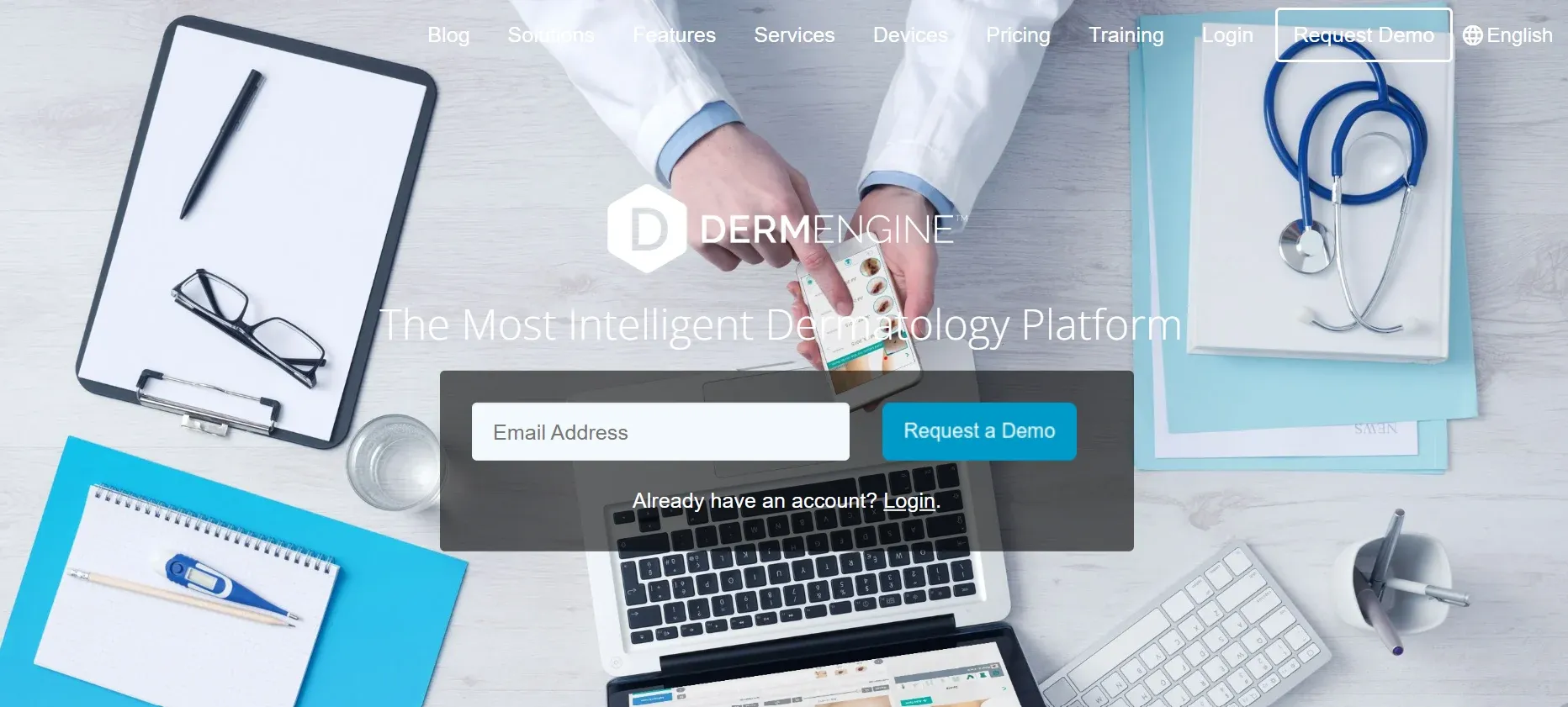
DermEngine is designed specifically for dermatology practices with heavy imaging and teledermatology needs. Its core is a secure, cloud-based image management and analysis system. While not a full EMR for every workflow, it is a strong option for automated lesion tracking and AI-powered analysis.
Pricing: $169+/provider/month, with add-ons for analytics and integrations.
- Automated lesion mapping and tracking
- AI-powered image analysis
- Teledermatology platform for remote consults
- Not a complete EMR, requires separate PM/billing
- Data export and integration depth can be limited
- Add-ons can raise total cost
9. Devaims (Your clinic, your rules)
With a Devaims custom build, you get a dermatology EMR, scheduling, billing, and imaging platform coded for your workflows and handed to you, source code and all. No per-provider fees, no forced upgrades, no SaaS rent. Add or change features as you grow. You’re not locked out of your own data, and every feature is yours to keep. It’s the alternative to every rented system on this list.
- Custom charting templates for medical, surgical, and cosmetic dermatology
- Integrated high-resolution imaging and device support
- Practice management, scheduling, billing, and inventory modules built to spec
- Telehealth, e-prescribing, and patient portal as requested
- Advanced reporting, analytics, and custom dashboards
- API integrations with labs, pharmacies, and third-party tools
- Full data migration and ownership, including images and templates
- No per-provider or per-feature fees, ever
With Devaims, you own your EMR and your data outright. There are no recurring per-provider fees, no forced upgrades, and no vendor lock-in. Every feature is built to your workflow and handed to you, source code and all.
Other Intergy alternatives worth knowing
- Aesthetic Record, Specialty EMR for medspas and injectables; focused more on cosmetic than medical derm. Strong before/after photo management, marketing features, and membership tracking. Not ideal for medical dermatology or complex clinical workflows.
- Cerner (Oracle Health), Enterprise-grade, but often too much for private practices; best for hospital-affiliated derm. Powerful interoperability and compliance, but high cost and complexity.
- AdvancedMD, Well-known in multi-specialty, but tiered pricing and per-feature fees add up. Customizable, cloud-based, and offers a wide range of integrations, but can be expensive for dermatology-specific needs.
These platforms can work for niche needs, but may not fit the day-to-day of a focused dermatology clinic. Always check if their derm features are true modules or just generic templates. For more enterprise-grade comparisons, see the EHR Intelligence 2024 roundup.
How to choose the right Intergy alternative
- By budget: Solo clinics may lean toward Practice Fusion or Kareo, while larger groups can justify EMA or Nextech. Look beyond the monthly sticker price, as add-ons, setup fees, and required contracts can double the TCO over five years.
- By workflow: Heavy imaging? DermEngine. Cosmetic focus? PatientNow or Aesthetic Record. If you need both medical and cosmetic modules, prioritize platforms that do not force you to pay for features you will not use.
- By ownership: If you want out of the rent cycle, only Devaims gives you the source code and full control. No other vendor offers true software ownership with unlimited user and feature growth.
- By growth trajectory: If you plan to add providers or locations, watch for per-user or per-location fees that balloon costs. SaaS EMRs often penalize growth, while custom builds do not.
- By integration: If you rely on unique devices, proprietary imaging, or have a nonstandard process, custom may be the only way to get it right. SaaS EMRs usually limit integrations to their partner list.
Ready to break the rent cycle? Owning your system is easier than you think.
Stop paying rent on software you could own
Here’s the recurring problem: every Intergy alternative on this list, no matter how specialty-focused, is still rented. Every month, you pay for the right to access your own patient data, and every year you get a letter about a price hike or a required upgrade. Switch platforms, and you start the rent cycle all over again.
Devaims offers a different path. We build your dermatology EMR, practice management, and imaging tools to spec, then hand you the code. You keep everything: the features, the data, the integrations. There’s no multi-year lock-in, no per-provider tax, and no waiting for a “feature request” to get prioritized. You own the system. You control the roadmap.
Here’s how owning compares to renting:
- No per-provider or per-feature fees: Add users or locations without getting nickeled and dimed. SaaS EMRs often charge $100 to $500 per provider per month, so growth becomes expensive fast.
- Feature access is instant: If you want a new report or workflow, it’s yours. No more “locked to a higher tier” frustration.
- Data is yours: Export, analyze, or integrate with anything you want, without begging a vendor. This is critical for research, compliance, and multi-system reporting.
- Flat maintenance: Never get surprised by a 10% annual price hike. Maintenance is predictable and fully under your control.
| Platform | Ownership | Per-provider fees | Contract required? |
|---|---|---|---|
| Intergy | Rented | Yes | Yes |
| EMA (ModMed) | Rented | Yes | Yes |
| Nextech | Rented | Yes | Yes |
| DrChrono | Rented | Yes | Yes |
| Devaims | You own it | No | No |
Five-year cost comparison (10 providers, typical for a growing dermatology group):
| Year | Rented (e.g., EMA at $499/mo/provider) | Owned (Devaims, $29,000 build + $180/mo maint) |
|---|---|---|
| 1 | $59,880 | $31,160 |
| 2 | $119,760 | $33,320 |
| 3 | $179,640 | $35,480 (now ahead) |
| 4 | $239,520 | $37,640 |
| 5 | $299,400 | $39,800 |
This math is conservative: it does not include the cost of add-on features, annual price increases, or migration fees if you switch SaaS vendors. For a 10-provider clinic, the break-even with Devaims hits in year three. After five years, you’ve saved nearly $260,000, while growing on your own terms. Clinics planning to expand or frustrated by feature lock-in see the biggest benefit. Want to know exactly where your clinic breaks even? We’ll run your math for free.
How to switch from Intergy
- Export your patient records, images, and practice data from Intergy. If the vendor resists or limits exports, enlist IT or legal support. Your data belongs to you by law.
- Choose the new EMR or practice management system that fits your needs (see comparisons above). Consider workflow, integrations, and data portability.
- Migrate/import your data into the new platform. This often involves data mapping, deduplication, and testing. Expect to clean up some records and templates.
- Reconnect third-party integrations like labs, e-prescribing, and payment processors. Some connections may require new contracts or technical setup.
- Train your team on new workflows, templates, and device integrations. Consider a phased rollout for larger practices.
- Run the new system in parallel for 1 to 2 weeks to catch missed data or bugs. Encourage staff to log issues and compare outcomes between systems.
- Review your old Intergy contract to confirm termination and avoid overlap fees. Give notice as required. Some contracts require 60 to 90 days.
With a custom Devaims build, the migration is handled as part of the project, including data mapping, staff training, and parallel run support. For more on EMR switching, see AMA guidance on EMR switching.
Frequently asked questions
What is the best Intergy alternative for dermatology?
EMA (Modernizing Medicine) is widely adopted for dermatology, and Nextech is a strong contender for clinics combining medical and cosmetic services. For clinics tired of renting, a custom Devaims build is the only true own-it solution: you get exactly what you specify, control your data, and never pay per provider again.
Which Intergy alternative is the cheapest?
Practice Fusion has the lowest monthly cost for solo providers, but its feature set is basic and lacks dermatology depth. Over five years, owning your system with Devaims can actually save you more than any subscription if you have multiple providers or plan to grow. Always calculate total cost of ownership, including add-ons, migration, and price increases, before deciding.
Is there a free Intergy alternative?
There are no truly free, HIPAA-compliant dermatology EMRs in 2026. Practice Fusion was once free but is now paid. Open-source EMRs (like OpenEMR) exist, but require significant IT resources, regular security maintenance, and customization to fit dermatology. For most clinics, the support and compliance costs outweigh the “free” label.
Which alternative is best for imaging-heavy dermatology?
DermEngine stands out for automated lesion tracking, AI analysis, and device integration. However, it is not a complete practice management system. If you want imaging, billing, scheduling, and reporting in one place, a custom Devaims build can integrate all these features into a single, unified workflow, so you no longer need to switch between platforms.
How do I migrate data from Intergy to a new system?
Request a full data export from Intergy (including images, templates, and structured data). Work with your new vendor or development team to map and import the data. Most EMRs charge for migration, and the process can be slow, especially for images and custom templates. Devaims includes full migration and data validation as part of your build, and you retain access to all raw data going forward.
Can I keep using Intergy while I test a new system?
Yes. Most clinics run both systems in parallel for 1 to 2 weeks to ensure no data or workflow is lost. This is called a parallel run. Always check your contract for notice periods and overlapping fees before shutting Intergy down. Document any discrepancies and resolve them before fully switching.
What if a feature I need is locked to a higher tier?
With most subscription EMRs, upgrading is the only way to access premium features. Many clinics are frustrated to find that advanced reporting, device integration, or custom forms are not available in the base plan. With Devaims, you get exactly what you specify, with no forced upgrade cycles or tier locks. This flexibility is a key reason clinics seek own-it alternatives.
The bottom line
Every EMR on this list is rented, except the one you own. The real test: add up what your software will cost you over five years. If that number would have built you something you own, you already have your answer. Owning with Devaims means you control your workflows, keep your data, and never pay per provider again.
Want more EMR advice? Visit the Devaims blog, or check out our other deep dives: EMA alternatives, Nextech alternatives, and Kareo alternatives.