



Your urgent care center runs on speed and margins, but Epic’s costs are anything but quick or slim. The moment you need a custom report, you hit a paywall. The day you want to add a new clinic or provider, your monthly bill jumps, and you’re reminded that nothing here is yours, not even your own data exports. If you’ve ever felt trapped in a contract where every small tweak means more fees, you are not alone.
Epic is a hospital-grade system, but for urgent care, it is often overkill and overpriced. Many centers look for Epic alternatives that fit real-world budgets and workflows. The best options in 2026? Experity, Kareo, AdvancedMD, Athenahealth, and a handful of others that actually fit urgent care needs. For those tired of the rental treadmill, the only true escape is a custom build you own. Here’s the hard math, honest pros and cons, and how to know when it’s time to stop renting and start owning.
Why urgent care centers look for Epic alternatives
High per-provider fees: Epic charges per user, per month, and those fees add up fast as you scale. Adding a single new locum or PA can spike your costs for the entire year. These costs often do not include additional modules, interfaces, or support, which can further escalate your budget far beyond what you initially planned.
Contract lock-in and surprise renewals: Multi-year contracts mean you’re locked in, and renewal terms rarely get better. Early termination? Expect heavy penalties. Many centers have been caught off guard by auto-renewal clauses, annual price escalators, and required minimum commitments that don’t flex with seasonal or staffing changes. This makes it hard to pivot or adapt as your business grows or shifts.
Complexity overload: Epic is built for hospital systems, not the fast, high-volume workflow of urgent care. You’ll pay for features you never use, and still need workarounds for the ones you do. Many urgent care providers report that even basic tasks like rapid charting or walk-in intake are slowed by excessive clicks and irrelevant modules. Training new staff and maintaining compliance can become a full-time job in itself.
Customization at a premium: Want a workflow tweak or a report tailored to your billing? That’s a paid add-on, or not possible at all without an Epic-certified consultant. Even minor changes (like a new intake question or a tweak to discharge paperwork) may require a project request, approval cycle, and billable hours. This slows down your ability to respond to payer requirements or regulatory changes.
Data access headaches: Exporting your own data can be complicated, and integrations with labs, payers, or local systems may require extra modules or fees. If you ever leave, getting your full data set is an ordeal. Some urgent care groups report that data comes in fragmented formats, requiring extensive cleanup and mapping before importing into a new EHR. This can delay go-lives and increase transition costs.
These pain points drive many urgent care centers to search for Epic alternatives that match their workflow, budget, and ownership needs. The right fit can mean faster visits, more predictable costs, and fewer administrative headaches, all of which directly impact patient care and the bottom line.
Quick comparison of the best Epic alternatives
| Tool | Best for | Starting price | You own it? |
|---|---|---|---|
| Experity | Urgent care workflow | Reported $750+/provider/mo | No, SaaS |
| Kareo (Tebra) | Billing-driven clinics | Reported $160+/provider/mo | No, SaaS |
| AdvancedMD | Growing practices | Reported $485+/provider/mo | No, SaaS |
| Healow | Patient engagement | By quote | No, SaaS |
| iPatientCare | Interoperability | By quote | No, SaaS |
| Meditech | Hospital systems | By quote | No, SaaS |
| Athenahealth | Multi-location clinics | Reported $140+/provider/mo | No, SaaS |
| NextGen | Large practices | Reported $379+/provider/mo | No, SaaS |
| Devaims | Ownership, custom fit | One-time build; $150-230/mo maint | One-time build, you own it |
Always confirm current pricing before you decide, as fees change and add-ons can shift your total cost quickly. Many vendors offer introductory rates that rise after the first year, or require paid upgrades for e-prescribing, telehealth, or analytics modules. Carefully review contract terms for hidden costs and data export fees.
The 9 best Epic alternatives
1. Experity (Best for urgent care workflow)
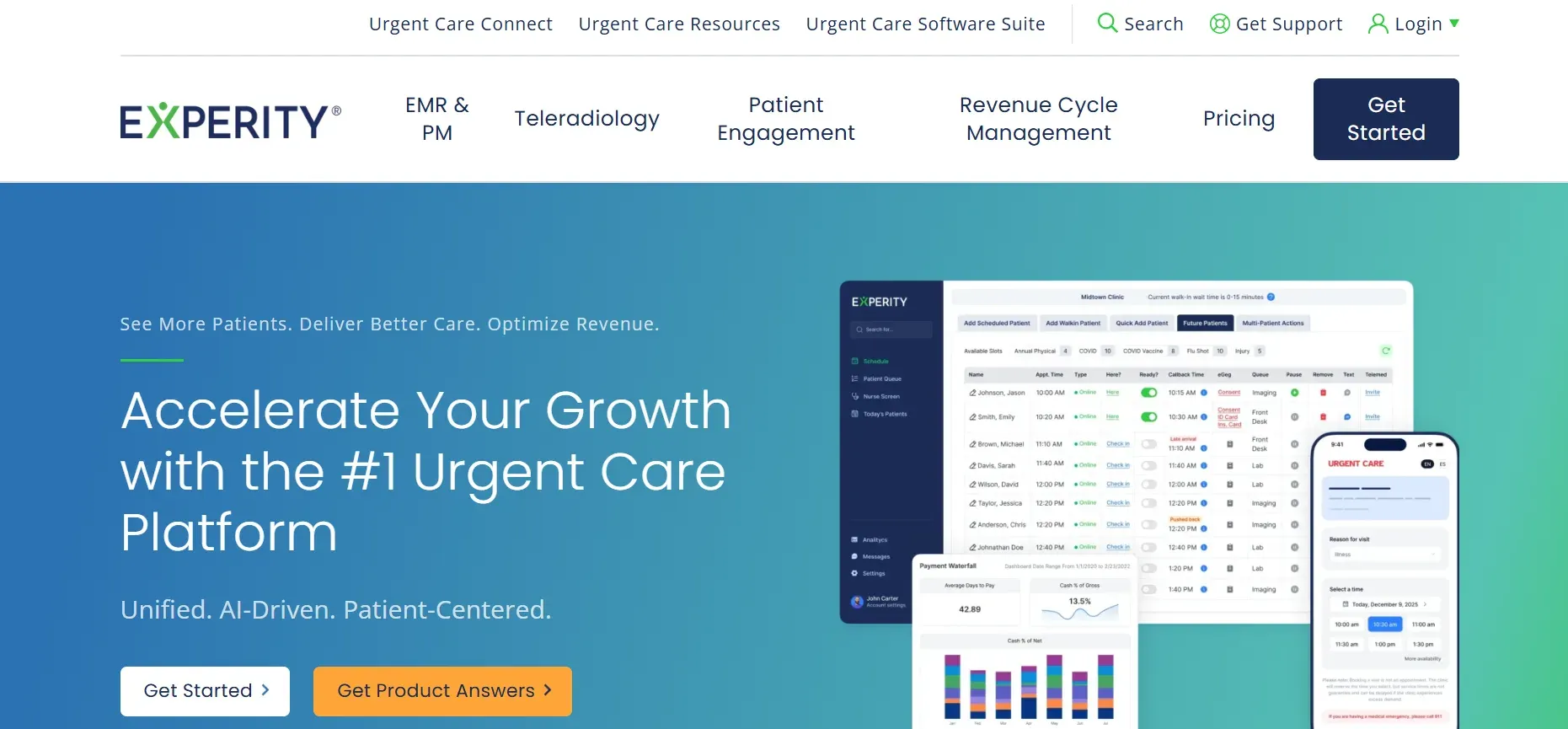
Experity was built specifically for urgent care, not hospitals. It’s the only major EHR designed from the ground up to match the rapid pace, walk-in volumes, and short visit durations that define urgent care. The platform streamlines intake, triage, charting, and discharge with minimal clicks and a user interface familiar to anyone in the urgent care space.
Pricing: Reported $750+/provider/month, multi-year contract typical.
- Key limitations:
- High per-provider fees, especially with add-ons
- Limited deep customization beyond built-in templates
- Data export can be slow or costly
- Strengths:
- Urgent care-specific workflows and rapid charting
- Integrated telemedicine and billing
- Strong analytics and compliance reporting
With Devaims, you can avoid per-provider fees and own your data outright.
2. Kareo (Tebra) (Best for billing-driven clinics)
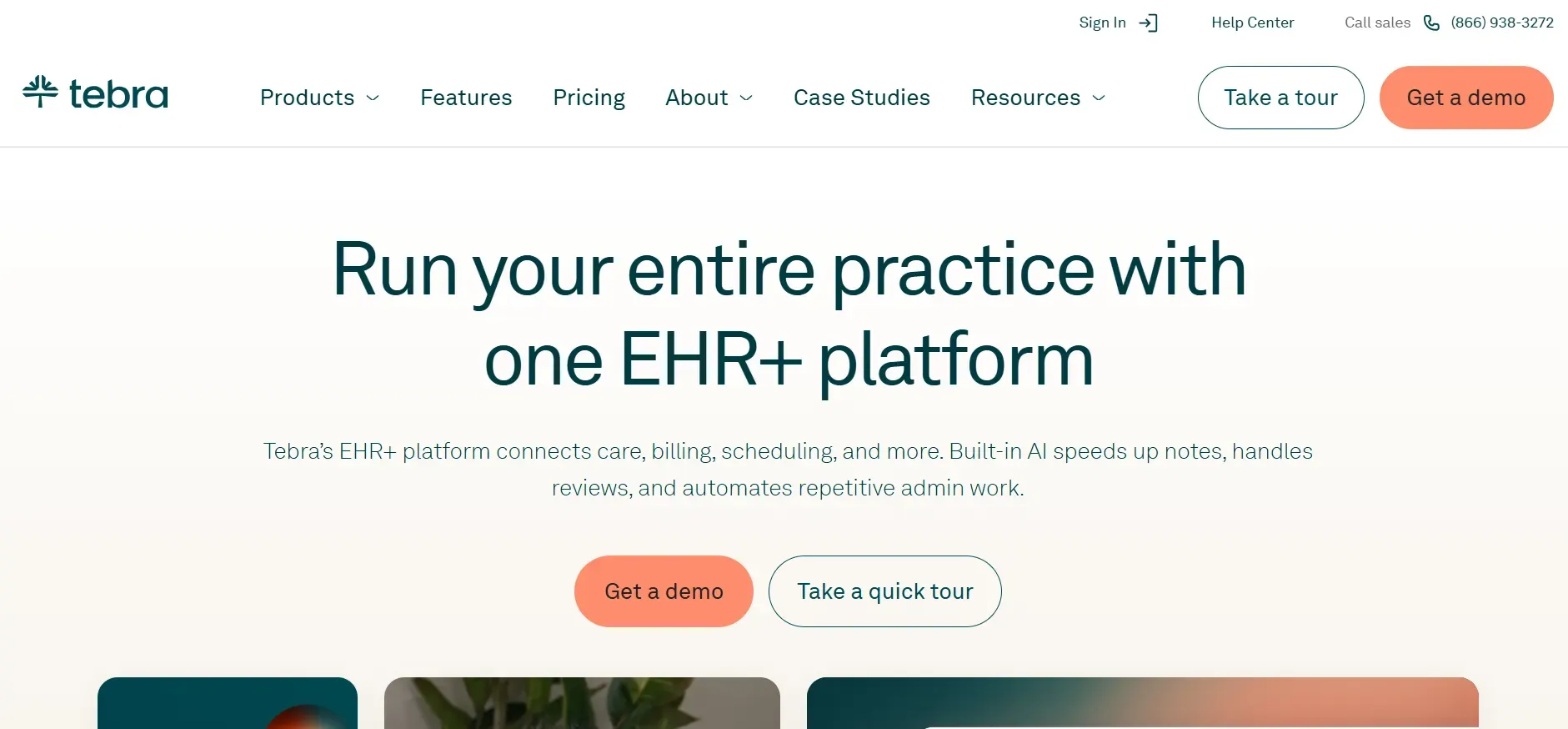
Kareo (now part of Tebra) is a SaaS platform focused on independent clinics that prioritize billing efficiency and claims management. Its EHR module is lighter than Epic’s, but the billing engine is strong, ideal for clinics where quick claims submission and collections are top priorities.
Pricing: Reported $160+/provider/month, add-ons extra.
- Key limitations:
- Basic EHR, limited advanced clinical workflows
- Costs rise with added features and growth
- Advanced reporting or integrations may require a consultant
- Strengths:
- Excellent billing and claims management
- Easy for new staff to learn
- Affordable entry-level pricing
Devaims lets you build billing workflows tailored to your needs, with no per-user fees.
3. AdvancedMD (Best for growing practices)
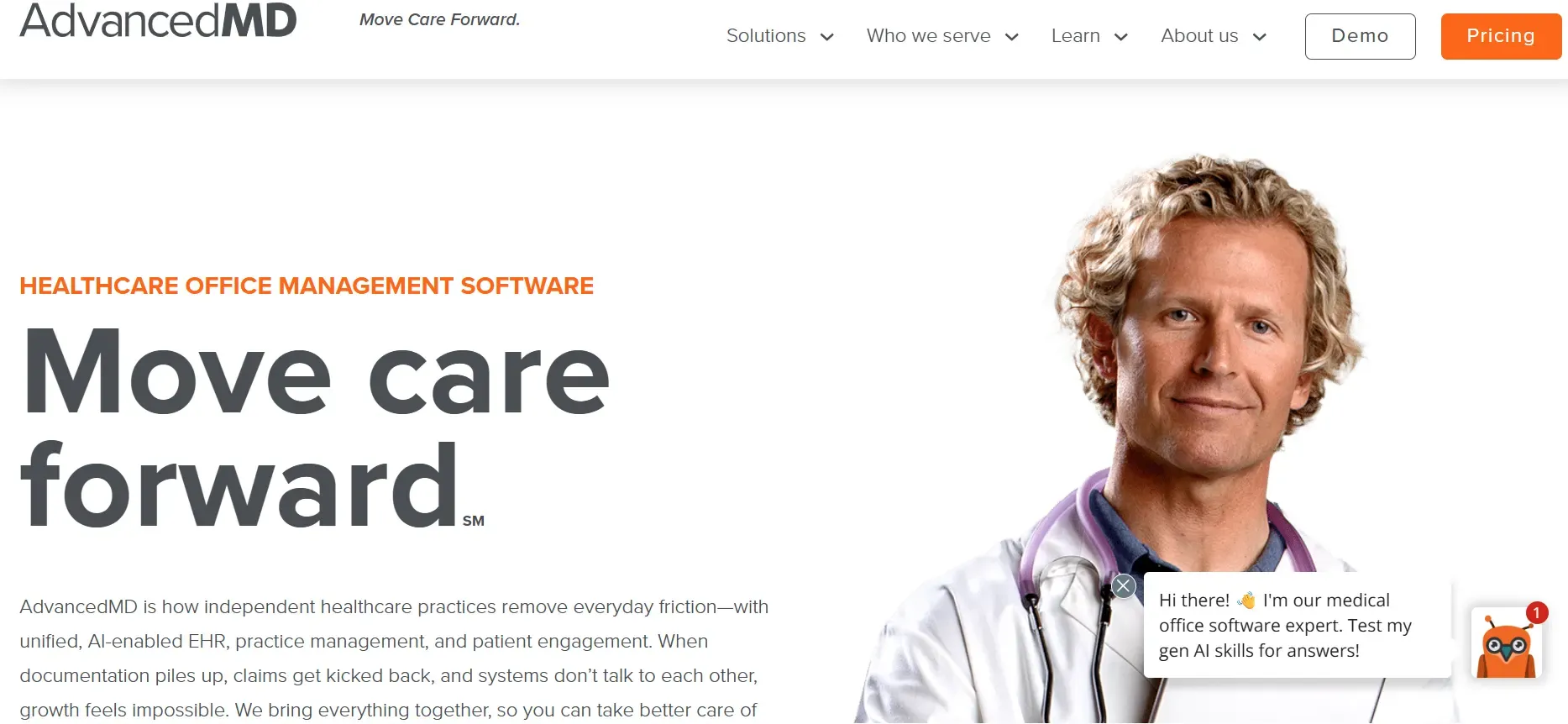
AdvancedMD targets practices that expect to grow, such as urgent care chains or clinics adding new locations. It provides a full suite: EHR, practice management, revenue cycle, telemedicine, and patient engagement in one cloud-based package.
Pricing: Reported $485+/provider/month, plus implementation fees.
- Key limitations:
- Monthly fees increase with added features or sites
- Initial setup can be complex for smaller practices
- Custom reports or integrations often require professional services
- Strengths:
- Comprehensive suite for multi-site growth
- Customizable templates and workflow automations
- Strong analytics and mobile access
With Devaims, you can standardize workflows across locations and own your platform.
4. Healow (Best for patient engagement)
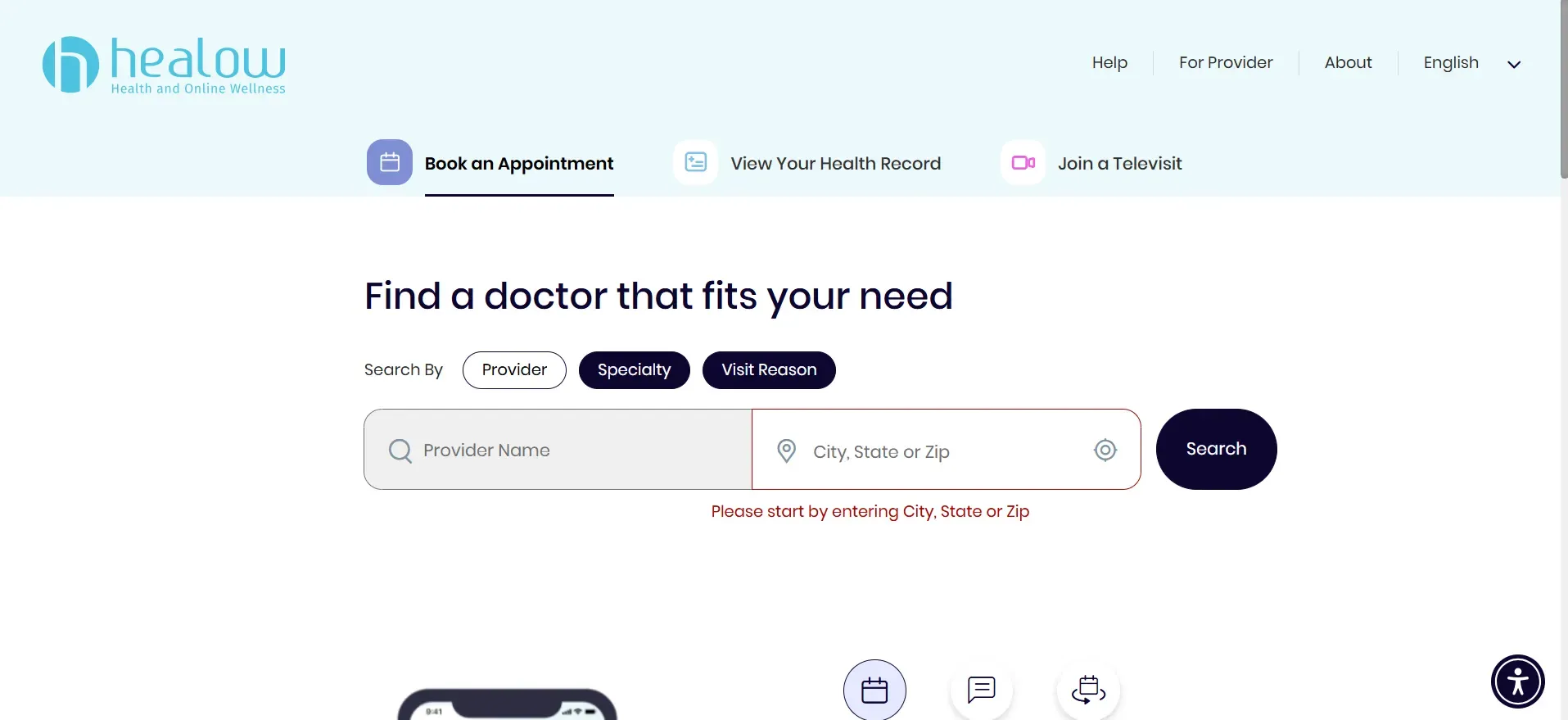
Healow is best known for its patient-facing mobile app and engagement tools. It lets urgent care centers offer online scheduling, telehealth, secure messaging, and appointment reminders, driving patient retention and satisfaction. Healow is often used as an add-on to existing EHRs (including eClinicalWorks), rather than a full EHR replacement.
Pricing: By quote, varies by features and volume.
- Key limitations:
- Not a full EHR, requires separate clinical platform
- Customization limited to app features
- Data ownership remains with vendor
- Strengths:
- Excellent patient engagement and telehealth tools
- Reduces no-shows and improves satisfaction
- Easy integration with eClinicalWorks
For clinics wanting deeper workflow integration, Devaims offers custom patient engagement modules you own.
5. iPatientCare (Best for interoperability)
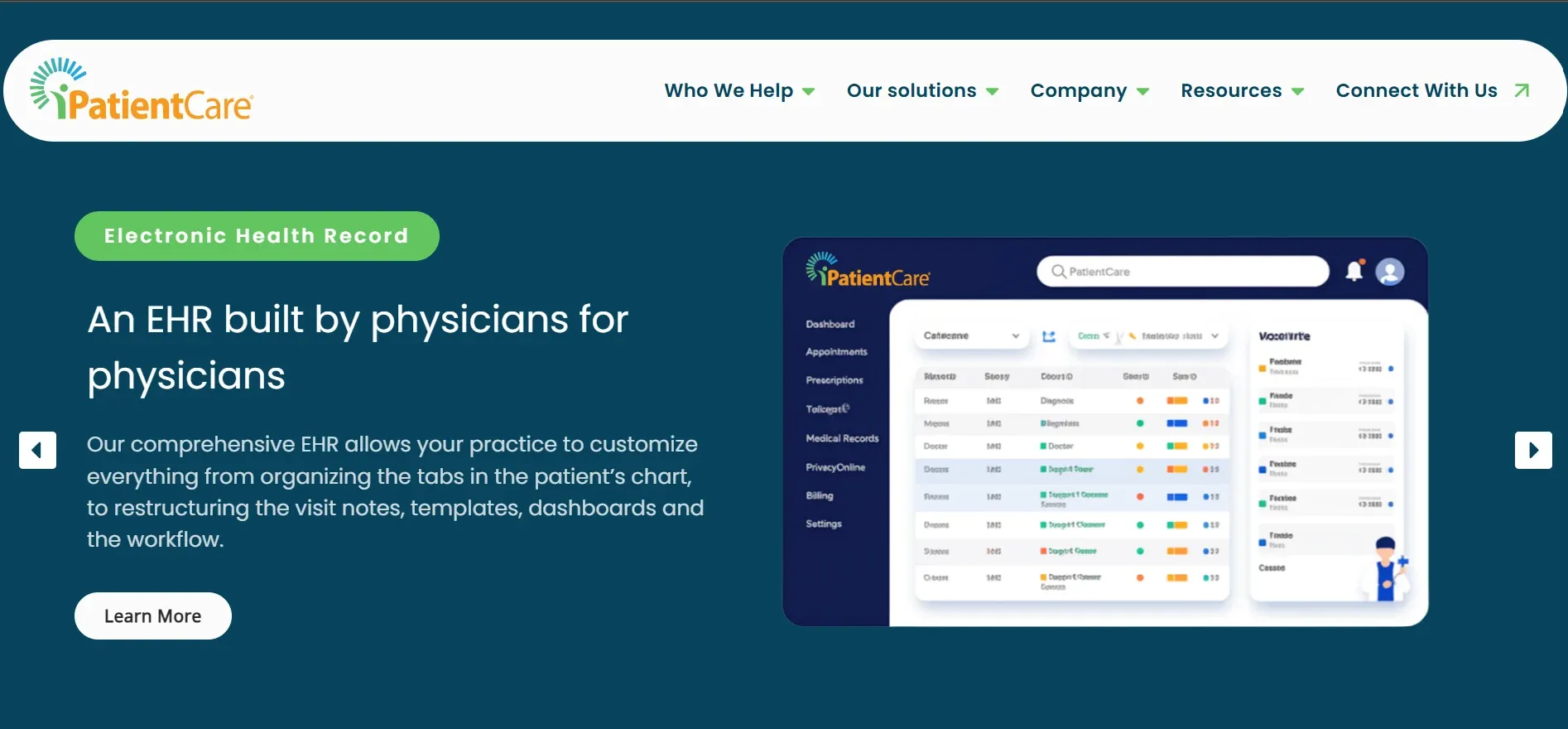
iPatientCare is designed for practices that need to connect with a wide range of labs, payers, and external EHRs. Its focus on interoperability makes it a strong choice for urgent care centers in complex referral networks or those participating in value-based care programs.
Pricing: By quote, per-user/month, plus integration fees.
- Key limitations:
- Customization often requires paid services
- Per-user pricing increases with staff
- Complex migration from Epic
- Strengths:
- Strong interoperability and API support
- ONC-certified and compliance-ready
- Flexible for multi-organization networks
Devaims builds direct interfaces to your systems, with no recurring integration fees.
6. Meditech (Best for hospital systems)
Meditech is a mature, hospital-grade EHR system comparable to Epic in terms of depth and scope. Some urgent care centers affiliated with hospital systems use Meditech to stay on a unified technology stack, enabling easy data sharing and centralized compliance oversight.
Pricing: By quote, typically high for independent clinics.
- Key limitations:
- High cost and complexity for independent centers
- Customization is slow and expensive
- Requires significant IT resources
- Strengths:
- Comprehensive EHR for hospital-affiliated clinics
- Strong security and compliance features
- Robust analytics and reporting
Devaims lets you avoid heavy IT overhead and own a system tailored to urgent care.
7. Athenahealth (Best for multi-location clinics)
Athenahealth is a leading Epic alternative for urgent care chains and multi-site clinics. It combines cloud-based EHR, practice management, and billing into a unified platform designed for scale and insurance workflow efficiency.
Pricing: Reported $140+/provider/month, add-ons extra.
- Key limitations:
- Per-provider pricing can erode margins as you grow
- Some features only at higher pricing tiers
- Customization limited to templates
- Strengths:
- Strong for multi-site management and billing
- User-friendly interface and fast onboarding
- Robust payer integrations
With Devaims, you can scale to new sites without extra fees or contracts.
8. NextGen (Best for large practices)
NextGen is designed for large, multi-provider urgent care clinics or groups with complex reporting and compliance needs. It offers a highly configurable EHR, deep analytics, and robust revenue cycle management.
Pricing: Reported $379+/provider/month, plus setup fees.
- Key limitations:
- High cost for smaller clinics
- Steep learning curve for staff
- Custom reports often require vendor support
- Strengths:
- Highly configurable for large groups
- Advanced analytics and compliance tools
- Strong interoperability with external systems
Devaims gives you custom analytics and reporting built to your specs, with no recurring fees.
9. Devaims (Best for ownership and custom fit)
Devaims builds custom urgent care software that you own outright. Instead of renting every month and paying extra for every tweak, Devaims hands you the source code. It’s yours, forever. You get exactly the workflows you want, built for your staff and your billing, with no per-provider fees, no contract lock-in, and no surprise hikes. The platform is HIPAA-compliant, integrates with your labs and payers, and can be extended as your practice grows. When you control the code, you control your future.
Pricing: One-time build (typical $32,000), $150-230/month maintenance if needed.
- Custom EHR workflows optimized for urgent care
- Full data ownership and export capability
- Integrations built to your requirements
With Devaims, you own your platform, data, and future direction. No per-user fees, no contracts, and no vendor lock-in.
Other Epic alternatives worth knowing
- PrognoCIS: Strong for occupational health and employee wellness, but less focused on urgent care walk-in workflows. Supports telemedicine and employer billing, but customization for urgent care can be limited.
- Nuvolo: Primarily a facilities management and asset tracking platform, not a clinical EHR. Useful for enterprise health systems managing urgent care facilities, but not for direct patient care documentation.
- OpenEMR and other open-source EHRs: These can be cost-effective for clinics with strong IT resources, but require significant maintenance, security oversight, and customization. They are rarely a fit for urgent care centers seeking rapid deployment and compliance out of the box. See OpenEMR for more details.
How to choose the right Epic alternative
- Budget: Know your per-provider break-even. SaaS fees can double at scale. Calculate total cost of ownership over 3-5 years, not just first-year expense. Consider costs for add-ons, support, and data exports.
- Workflow fit: Urgent care needs fast charting and minimal clicks. Test real-world usability with your actual staff. Request workflow demos and ask for user references from similar clinics.
- Customization: If you need custom billing, reporting, or intake flows, check what’s possible without add-on costs. Ask vendors to demonstrate how changes are made and what is included in your contract versus billable hours.
- Data access: Will you fully own and export your data? How easy is integration with labs and payers? Check if you’ll need to pay for data exports or if you can access your database directly.
- Ownership: Are you building value for your practice, or just paying rent? Consider how much equity you build in your workflows, data, and technology over time.
If you’re tired of paying per head and want a system that’s yours, it may be time to look at a custom build.
Stop paying rent on software you could own
Every Epic alternative above is rented, not owned. That means no matter how much you pay each month, you never build equity, and every new provider or location just hikes your rent. Devaims is different. We build your urgent care platform, tailor it to your needs, and hand you the keys: full source code, full data, full control.
Devaims is a custom software development agency specializing in healthcare. We deliver urgent care EHRs, scheduling, billing, and reporting tools, fully HIPAA-compliant, with integrations for labs, payers, and patient portals. You pay once for the build, then a flat monthly maintenance if needed, no per-user or per-site fees, ever.
- No per-provider fees: Add staff or sites without cost spikes. Scale your business without hitting a financial ceiling from your software vendor.
- Your data, your way: Full exports, custom analytics, and nothing locked behind a vendor. You can connect directly to your data warehouse or analytics tools, enabling deep insights and compliance reporting.
- Custom-fit workflows: Built for urgent care speed and growth, not hospital bureaucracy. Implement processes for occupational health, travel medicine, or specialty billing, whatever fits your business model.
- No contracts, no lock-in: When you own your platform, you control your future. No auto-renewals, no forced upgrades, and no vendor-driven migrations.
| Tool | Ownership | Per-provider fees? | Contract? |
|---|---|---|---|
| Epic | Vendor-owned | Yes | Yes, multi-year |
| Experity | Vendor-owned | Yes | Yes |
| Athenahealth | Vendor-owned | Yes | Yes |
| Devaims | You own it | No | No |
| Year | Rented (SaaS, 6 providers) | Owned (Devaims) |
|---|---|---|
| Year 1 | $54,000 | $32,000 |
| Year 2 | $108,000 | $34,760 |
| Year 3 | $162,000 | $37,520 |
| Year 4 | $216,000 | $40,280 |
| Year 5 | $270,000 | $43,040 (now ahead) |
For urgent care centers with even a handful of providers, the break-even hits by year 2. After that, every dollar you would have paid in rent is yours to reinvest in care, not contracts. We’ll run your numbers for free, no obligation. This math is based on reported SaaS rates for six providers; if you are larger, the cost gap widens further. For more on EHR cost modeling, see ONC’s TCO calculator.
How to switch from Epic
- Export your data: Request full clinical and billing records from Epic, including demographics, encounters, images, notes, scanned documents, and HL7 feeds. Ensure you receive data in interoperable formats (CSV, HL7, CCD) and clarify what is included versus extra.
- Choose your new platform: Select the Epic alternative that fits your workflow and ownership goals. Consider pilot testing with a subset of staff before full rollout.
- Import and map data: Work with your new vendor (or Devaims) to map historical data to the new system. Validate sample records for accuracy, especially for allergies, medications, and billing codes.
- Reconnect labs, billing, and payment integrations: Test all inbound and outbound data feeds, including lab orders/results, claims submission, and payment processing. Confirm that all interfaces are live before go-live.
- Train staff: Schedule hands-on training for providers, front desk, and billing teams. Provide sandbox environments for practice and develop quick-reference guides for common urgent care workflows.
- Test in parallel: Run both systems for a short period to catch issues before full cutover. Use parallel run data to verify billing, reporting, and workflow accuracy.
- Review your old contract: Ensure you have met all notice and compliance requirements for Epic termination. Document your data handoff and confirm all protected health information is transferred securely.
With a custom Devaims build, the migration is handled as part of the project. Devaims provides project management, technical documentation, and ongoing support during and after the transition.
Frequently asked questions
What is the best Epic alternative for urgent care centers?
For most urgent care clinics, Experity is the closest direct fit, offering urgent care-specific workflows and rapid charting. However, it remains a SaaS rental model. Clinics that want to own their software, fully control their data, and break free from per-provider fees often choose a custom build from Devaims, which delivers long-term cost savings and full flexibility.
Which Epic alternative is cheapest?
Entry-level SaaS like Kareo or Athenahealth can be cheaper per provider, especially for small teams or startups. However, as you grow and need more features (telehealth, analytics, integrations), total costs rise quickly. Over a five-year horizon, a Devaims build may cost more upfront but wins on total cost of ownership, especially for clinics with five or more providers or plans to expand.
Is there a free Epic alternative?
Open-source options like OpenEMR exist, but they require significant IT investment for setup, security, and ongoing support. They are HIPAA-capable but not HIPAA-certified out of the box, and you must manage compliance, backups, and updates yourself. For most urgent care clinics, paid SaaS or a custom build makes more sense for workflow fit, liability, and long-term support.
Which Epic alternative is best for multi-site urgent care?
Athenahealth and AdvancedMD are both strong for multi-site urgent care, with centralized scheduling, reporting, and billing. However, both charge per-provider or per-location fees, which can erode margins as you expand. For full control, no per-site fees, and the ability to implement unique workflows across locations, Devaims is unique, you own the platform and can scale as needed with no vendor-imposed limits.
Can I keep my data when switching from Epic?
You can request a full export when leaving Epic, but the process can be complex, and you may need to pay for data formatting or extraction services. Be proactive: request a sample export early, and clarify what is included (notes, attachments, billing, etc.). With Devaims, you own your data outright, and your exports are always in your control, enabling future transitions with less friction.
When should I switch from Epic to an alternative?
If you’re frustrated by rising per-provider costs, locked-down features, slow vendor response, or want to own your platform and data, it’s time to explore Epic alternatives. Calculate your five-year total cost, including all modules, support, and data access. If that number would have paid for a platform you own, or if you need workflows Epic cannot deliver, switching makes business sense.
Does a custom system work for urgent care compliance?
Yes, a Devaims custom build is HIPAA-compliant and can be tailored to urgent care regulatory needs, including e-prescribing (EPCS), Meaningful Use, billing, and lab integration. You can add compliance features for OSHA, CLIA, or occupational medicine as needed. Devaims provides documentation and support for audits and regulatory reviews.
The bottom line
Epic alternatives exist for every urgent care center, but the only way to stop renting is to own your platform. Here’s the test: add up what your current EHR will cost you over the next five years. If that number would have built you something you own, you already have your answer. SaaS is easier at first, but ownership puts you in control for the long haul. When your software pays for itself by year three, every year after is pure margin.
For more honest takes on urgent care software, visit the Devaims blog, or check out our other guides to Athenahealth alternatives, AdvancedMD alternatives, and eClinicalWorks alternatives.