



Your property management tech stack should make you money, not siphon it off unit by unit. But with Entrata, you hit that wall where every extra door means a little more rent to the software landlord. You pay per unit, per feature, and at renewal you brace for another price hike. Sound familiar?
If you’re frustrated with Entrata’s lock-in, rising fees, or the feeling you’re renting your own data, you’re not alone. In 2026, the best Entrata alternatives, like AppFolio, Buildium, Yardi Breeze, and DoorLoop, offer compelling fixes, but most keep you on the same treadmill of monthly payments. If you’d rather own your platform outright and keep your data forever, it’s time to look at a custom Devaims build.
Why property management companies look for Entrata alternatives
Per-unit fees eat into margins: Every new property adds another line item, turning scale into a cost, not a win. For a 200-unit portfolio, $1.40 per unit per month is $3,360 a year before add-ons. This fee structure makes it difficult to realize the economies of scale that should reward growth. The result: as you grow, so does your monthly software bill, not your profit.
Locked contracts and surprise hikes: Most SaaS tools, including Entrata, require annual commitments and quietly raise rates year over year. Even if you negotiate a discount upfront, that rate often climbs at renewal. Some property managers report 10 to 20% increases after their first contract, with little recourse but to accept or face a costly migration.
Features stuck behind higher tiers: Reporting, integrations, or owner portals may be locked unless you upgrade, often at a big jump. For example, advanced analytics, bulk messaging, or API access might require moving from a $1/unit plan to $2/unit or higher, multiplying costs for features you may only use occasionally.
Data ownership concerns: Your tenant and financial data sits on someone else’s servers, with export limits and unclear portability if you ever leave. Many platforms limit your ability to export historical records in usable formats, meaning switching vendors can be painful or incomplete. This is a particular risk for regulated portfolios or those planning for an exit or merger.
Clunky integrations and limited customization: Connecting new tools or tailoring workflows is slow, expensive, or just not possible. Third-party integrations often require additional fees or developer time, and many platforms resist significant customization, leaving you with workarounds or manual processes.
If you’re searching for Entrata alternatives, you’ve probably run up against at least one of these points already. The desire for more control, lower long-term costs, and true ownership of your platform and data is driving many property managers to reconsider their options.
Quick comparison of the best Entrata alternatives
| Tool | Best for | Starting price | Per-unit fees? |
|---|---|---|---|
| AppFolio | All-in-one midsize PMs | Reported $1.40/unit/mo | Yes |
| Buildium | Portfolio flexibility | Reported $52/mo (Core) | Yes |
| Propertyware | SFR portfolios | Reported $1/unit/mo | Yes |
| Yardi Breeze | Simplicity at scale | Reported $1/unit/mo | Yes |
| RealPage | Enterprise portfolios | Contact for quote | Yes |
| Rent Manager | Customization | Reported $1.00/unit/mo | Yes |
| ResMan | Large multifamily | Contact for quote | Yes |
| DoorLoop | Ease of use | Reported $59/mo | Yes |
| Devaims | Owning your platform | One-time build, you own it | No |
These figures shift, so confirm current pricing before you decide. Always read the fine print: many platforms have onboarding, setup, or payment processing fees that can alter your real cost.
The 9 best Entrata alternatives
1. AppFolio (All-in-one midsize PMs)
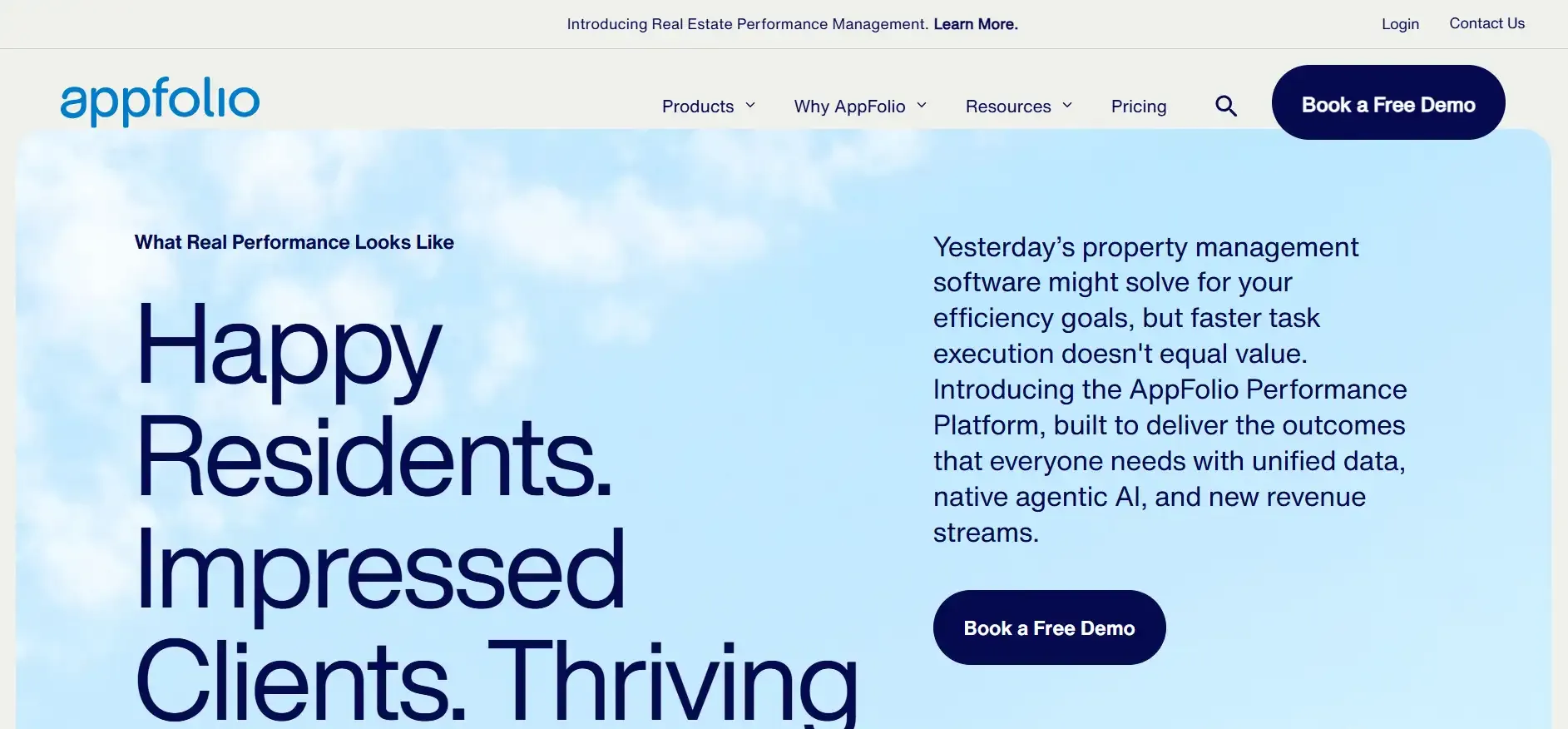
AppFolio has become a gold standard for midsize property management companies (typically 50 to 2,000 units) seeking an all-in-one tool. Its core strengths are modern design, strong accounting, and mobile-first features. The dashboard is intuitive, and the mobile app is among the most highly rated in the industry, allowing managers, maintenance techs, and even residents to access real-time information and complete tasks from anywhere.
AppFolio offers deep functionality: online rent collection, automated late fees, maintenance request tracking with photo uploads, bulk messaging, and built-in marketing syndication to major listing sites. Its accounting module rivals standalone solutions, supporting accrual/cash accounting, bank reconciliation, and owner statement generation. AppFolio also supports e-signatures, document storage, and a resident portal for payments and communication.
Integrations: AppFolio supports API integrations, but they are limited and often require you to be on their Plus tier. Marketplace integrations include background checks, payment processors, and renter’s insurance.
Migration friction: AppFolio offers onboarding specialists and data import tools, but the migration process can be complex if your data is not cleanly exported from Entrata. Expect a 4 to 8 week process for mid-sized portfolios, with some manual adjustments for custom fields or historical transactions.
Use cases: Ideal for midsize residential portfolios, HOAs, and mixed-use properties. Some commercial features exist, but are not as deep as Yardi’s or RealPage’s.
Trade-offs: The per-unit fees add up quickly, especially as you grow. Advanced features (like custom workflows, business intelligence dashboards, and API access) are restricted to higher-cost tiers. You are still subject to annual contracts, and AppFolio controls the roadmap. Feature requests often take years to appear, if at all.
Pricing: Reported $1.40 per unit per month, with setup fees and minimums. See their pricing here.
- Key limitations: Per-unit pricing, annual contracts, advanced features require upgrades.
- Strengths: Leading mobile features, integrated accounting, strong support, and documentation.
On a platform you own, every new unit is just another door you manage, not another fee.
2. Buildium (Portfolio flexibility)
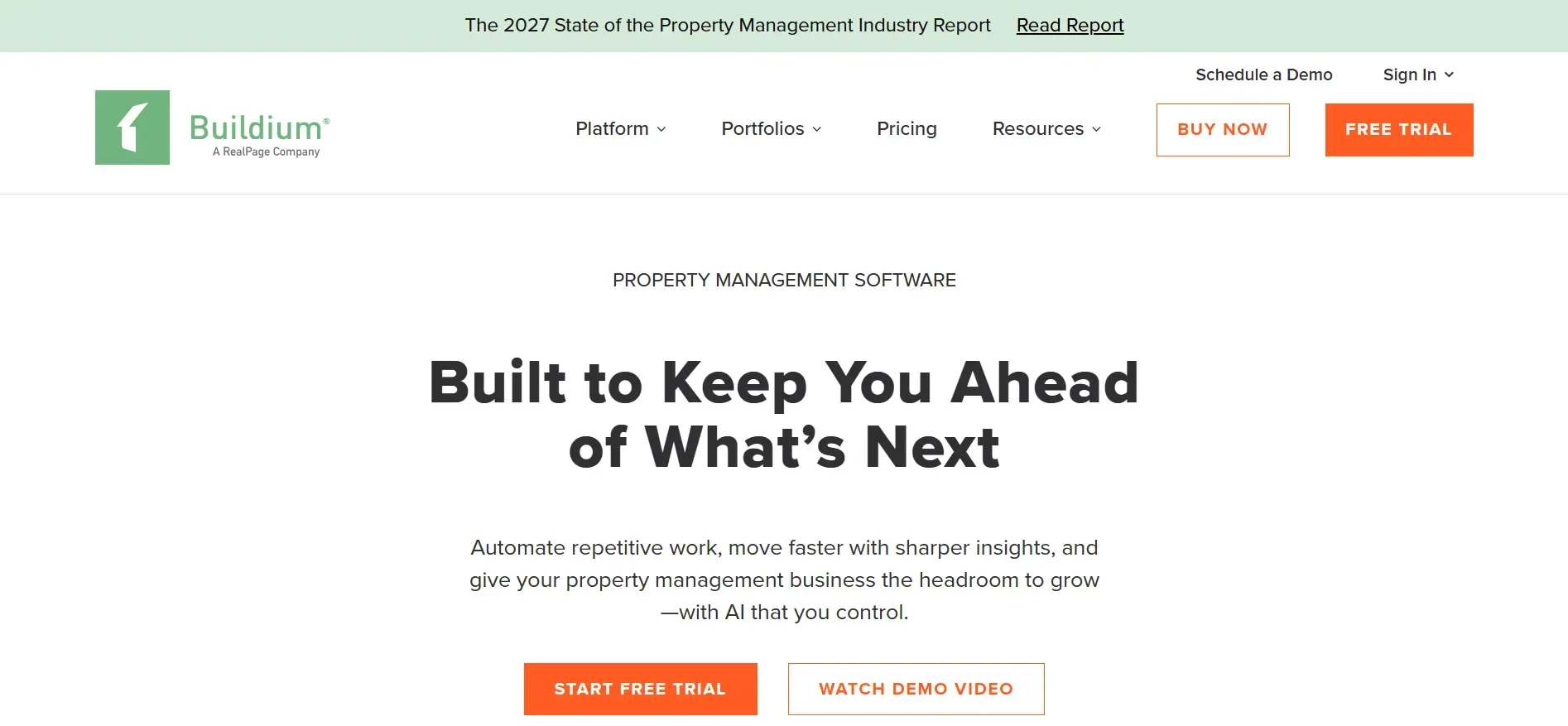
Buildium is a favorite among property managers handling a mix of residential, commercial, and association units. Its flexibility allows you to manage everything from single-family homes to large apartment buildings and HOAs. Buildium’s interface is user-friendly and the onboarding process is guided, with a self-service knowledge base and live support.
Buildium includes online rent collection, automated late fees, resident and owner portals, maintenance request tracking, and robust accounting with 1099 e-filing. The owner portal lets investors view financials, documents, and communications in real time, which is a draw for managers with multiple stakeholders. Buildium also supports e-leasing, integrations with listing sites, and built-in communication tools.
Integrations: Buildium offers integrations with payment processors, tenant screening, insurance, and open API (on higher plans) for connecting to third-party tools. However, customizing workflows or adding bespoke integrations can be restrictive without developer support.
Migration friction: Migration from Entrata to Buildium is relatively smooth for standard data (units, tenants, leases, payments). Custom fields, attachments, or historical transactions may require manual steps or CSV massaging. Buildium offers onboarding support, but the process can take several weeks for larger portfolios.
Use cases: Best for small to midsize portfolios seeking flexibility and self-service portals, as well as property managers who want to support associations alongside rentals.
Trade-offs: Per-unit pricing and tiered features mean costs rise as you expand or need more advanced reporting. Customization is limited compared to platforms like Rent Manager or a custom build. Some users report that reporting exports are less flexible than they’d like.
Pricing: Starts at around $52/month for Core (20 units), with add-ons and higher tiers for more features. Check their pricing.
- Key limitations: Per-unit and per-feature pricing, advanced reporting on higher tiers, limited custom workflows.
- Strengths: Excellent tenant and owner portals, built-in banking/reconciliation, easy onboarding.
When you own your software, you choose which features to keep or build next. No forced upgrades.
3. Propertyware (SFR portfolios)
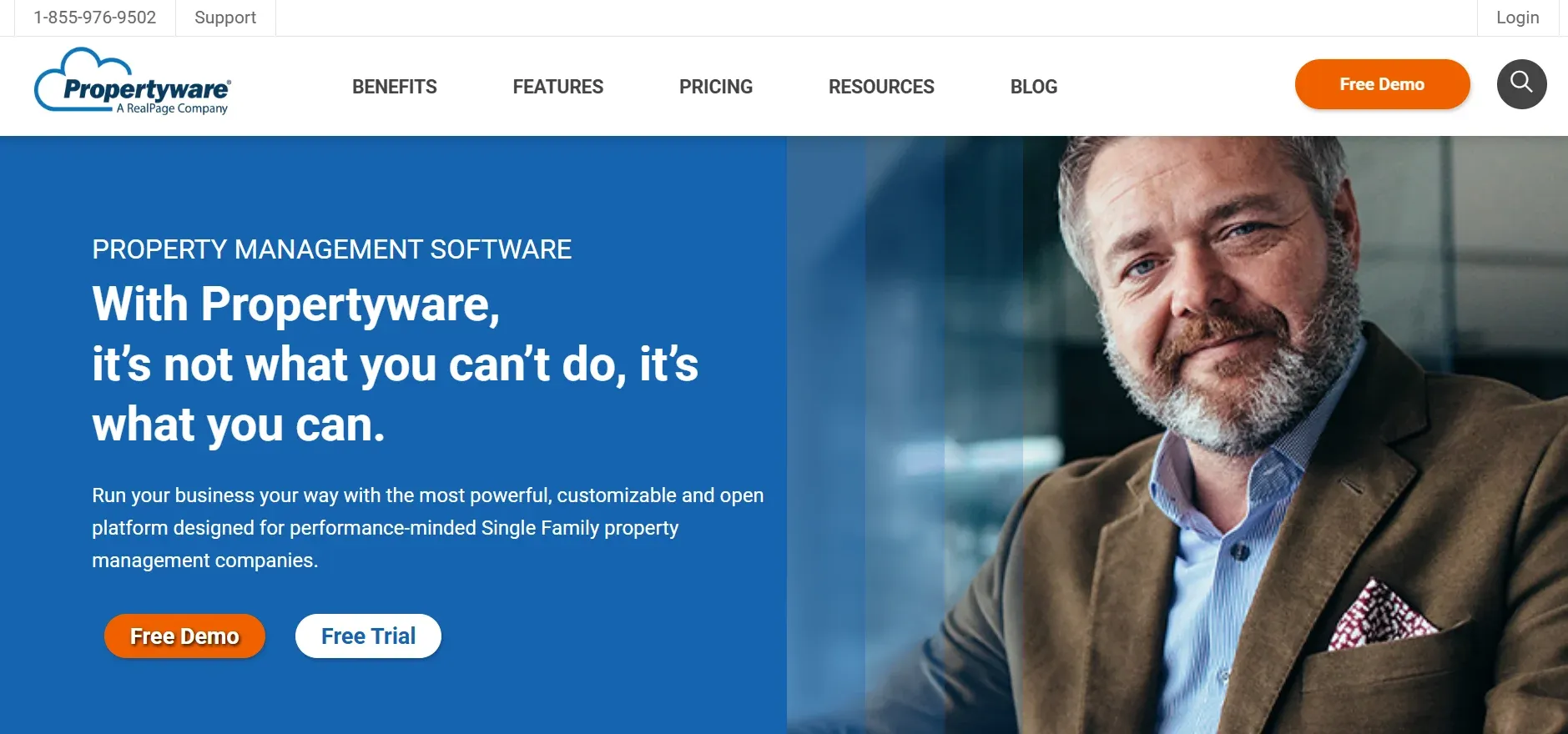
Propertyware is purpose-built for single-family rental (SFR) portfolios, catering to managers with hundreds or thousands of homes. Its strength lies in deep customization: you can design custom fields, automate workflows, and tailor reporting to your specific business needs. Propertyware supports online leasing, maintenance, inspections (with photos and checklists), and a built-in CRM for lead tracking.
Its accounting module is strong, supporting trust accounting, owner draws, and detailed reporting, key for portfolios with multiple investors or complex fee structures. Propertyware also offers a vendor portal for maintenance coordination and integrates with third-party background checks and payment processors.
Integrations: Open API is available, and integrations with tools like DocuSign, utility billing, and marketing syndication are included. However, some integrations require additional fees or developer time.
Migration friction: Propertyware provides migration assistance, but the process is more involved for portfolios with custom fields or complex accounting histories. Expect several weeks of parallel running to ensure a clean transition.
Use cases: Ideal for SFR managers who need granular control over workflows, custom reporting, and deep accounting.
Trade-offs: The UI is showing its age, which can slow onboarding for new team members. Feature updates lag behind newer platforms. Per-unit fees and annual contracts add up quickly at scale.
Pricing: Reported from $1/unit/month plus setup. See pricing details.
- Key limitations: Setup fees, dated interface, slow feature rollouts.
- Strengths: Custom fields/workflows, maintenance tracking, excellent for SFR portfolios.
4. Yardi Breeze (Simplicity at scale)
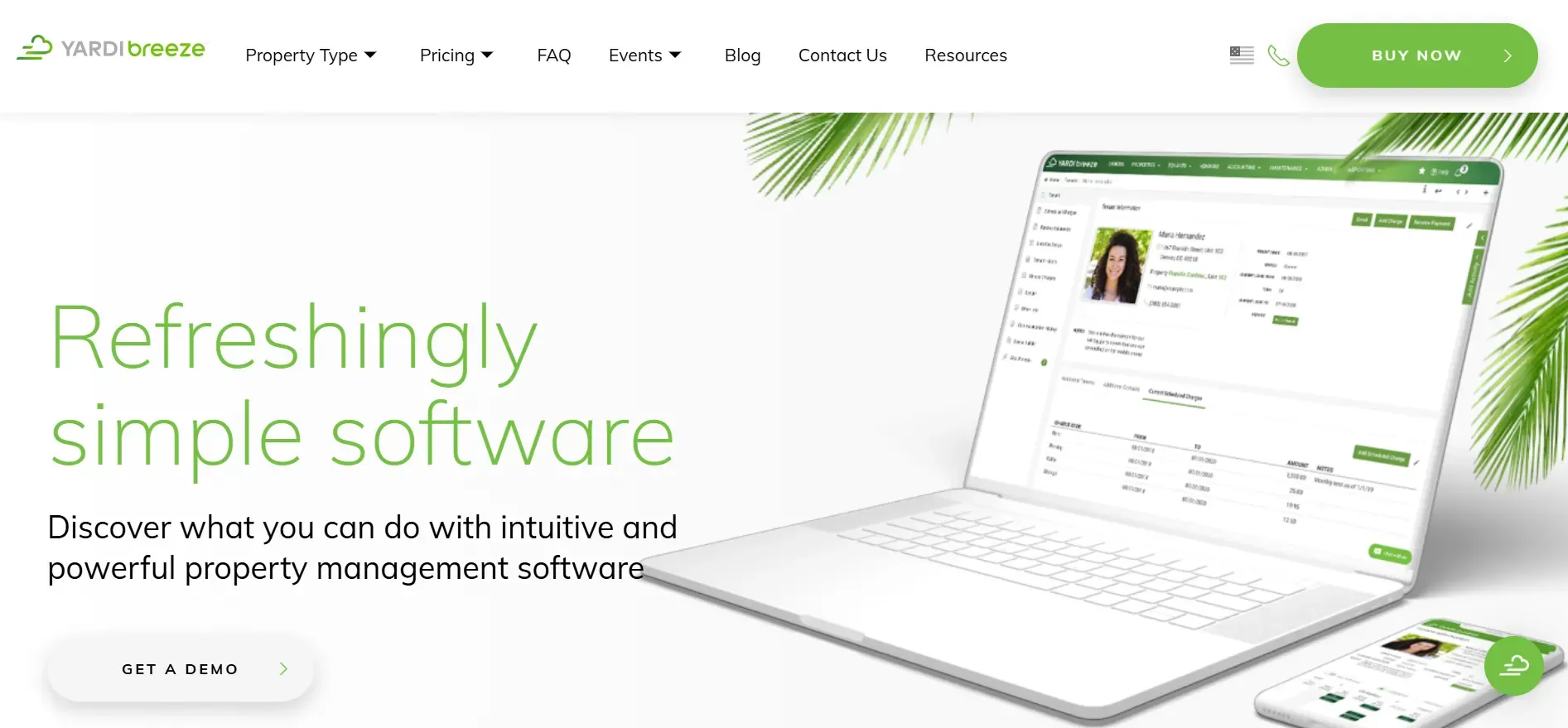
Yardi Breeze is the streamlined sibling of Yardi Voyager, designed for property managers who want the power of a major brand with less complexity. It’s cloud-based and mobile-friendly, with a straightforward setup process that gets teams running quickly. Yardi Breeze offers online leasing, rent collection, maintenance tracking, and accounting, with portals for residents and owners.
Its interface is cleaner and simpler than Entrata, making it a strong choice for teams without dedicated IT support. Yardi Breeze also automates marketing, listing syndication, and applicant screening. The accounting suite handles bank reconciliation, owner statements, and tax forms.
Integrations: Yardi Breeze integrates with Yardi’s own ecosystem (RentCafe, Yardi Payment Processing, etc.), but third-party integrations are more limited compared to platforms with open APIs. Custom integrations may require Yardi’s development services.
Migration friction: Yardi Breeze offers guided onboarding, but importing data from Entrata often requires manual mapping, especially for custom fields or historical transactions. Support is available, but expect several weeks for a full migration.
Use cases: Best for managers scaling up who want a recognizable brand, easy onboarding, and reliable support.
Trade-offs: While simpler than Yardi Voyager, some features (like advanced accounting or deeper business intelligence) require add-ons or upgrades. Customization is limited, and per-unit pricing remains.
Pricing: Reported $1 per unit per month, with minimums and optional add-ons. See their pricing.
- Key limitations: Per-unit pricing, limited third-party integrations, customization constraints.
- Strengths: Easy setup, reputable support, mobile-friendly portals.
5. RealPage (Enterprise portfolios)
RealPage is a heavyweight platform used by some of the largest multifamily and commercial operators worldwide. Its broad feature set covers property management, accounting, budgeting, business intelligence, marketing, utility management, and more. RealPage supports complex ownership structures, regional portfolios, and regulatory compliance (such as affordable housing and tax credit properties).
RealPage’s dashboards are highly configurable, offering custom reporting and data visualization at scale. The platform integrates with dozens of third-party tools (from maintenance systems to smart home solutions) and supports enterprise-grade security and user permissions. RealPage also offers a suite of revenue management and lease optimization tools, helping maximize NOI for large portfolios.
Integrations: RealPage’s open architecture supports deep integrations with accounting, payment processing, marketing, and utility billing solutions. However, some integrations are only available to enterprise clients and may require custom development or additional contracts.
Migration friction: Migrating to RealPage is a major project, often requiring months of planning, data mapping, and parallel running. Dedicated onboarding teams are provided, but expect a significant investment of time and resources.
Use cases: Best for enterprise portfolios (thousands of units), especially those with complex ownership, compliance, or reporting needs.
Trade-offs: RealPage can be overwhelming for smaller teams, with steep learning curves and complex pricing. Contracts are opaque, and support is tailored for large organizations, which can leave smaller clients feeling underserved.
Pricing: Contact for a quote. No transparent pricing available. Learn more here.
- Key limitations: No public pricing, complex setup, enterprise focus.
- Strengths: Vast features, custom reporting, deep integrations, compliance tools.
When your system is custom-built for you, you set the pace and direction. No waiting for vendor roadmaps.
6. Rent Manager (Customization)
Rent Manager is known for its high degree of customization, making it a top choice for property managers with unique workflows or mixed portfolios. Its modular design allows you to tailor the platform to your needs, from custom fields and forms to advanced reporting and automation. Rent Manager supports residential, commercial, self-storage, and association management in a single system.
The platform features a powerful report writer, open API, and scripting language for building custom automations. You can connect a wide variety of third-party tools, from payment processors to marketing platforms. Rent Manager’s accounting suite is deep, with support for trust accounting, recurring charges, and owner distributions.
Integrations: Rent Manager boasts one of the largest integration marketplaces in property management, including payment processors, maintenance apps, resident screening, and more. Its open API allows custom connections, and many users build bespoke workflows with developer support.
Migration friction: Rent Manager provides migration specialists and data import tools. However, the flexibility of the platform means that getting the most out of customization may require more setup time and testing during the transition.
Use cases: Ideal for property managers with complex or unique needs, or those managing multiple property types.
Trade-offs: The interface is less modern than newer platforms, and the learning curve for advanced customization can be steep. Per-unit pricing and extra fees for premium integrations can drive up costs.
Pricing: Reported around $1/unit/month. Check their pricing.
- Key limitations: Outdated UI, per-unit fees, advanced features cost extra.
- Strengths: Deep customization, strong API integrations, multi-property type support.
7. ResMan (Large multifamily)
ResMan is designed for large multifamily portfolios, with a focus on compliance, accounting, and operational oversight. Its platform supports affordable housing, HUD, tax credit, and conventional multifamily, offering compliance tracking, document management, and robust accounting tools.
ResMan’s dashboards provide real-time KPIs for leasing, occupancy, maintenance, and financials. The system supports resident and vendor portals, online payments, and maintenance workflows. Its reporting suite is tailored for regulatory compliance, making it a strong fit for portfolios subject to government oversight.
Integrations: ResMan integrates with payment processors, utility billing, screening, and more. Custom integrations are possible but may require additional contracts or development work. The platform’s API is less open than Rent Manager’s but more flexible than some legacy systems.
Migration friction: ResMan offers onboarding and migration support, but the process can be lengthy, especially if you have complex compliance data or custom reporting needs.
Use cases: Best for large multifamily operators, especially those with affordable housing or compliance requirements.
Trade-offs: Opaque pricing and add-on fees can make budgeting challenging. ResMan is less suited for small portfolios, and some features require integrations or higher-tier contracts.
Pricing: Contact for quote. No public pricing. Request a demo.
- Key limitations: Opaque pricing, enterprise focus, some features require integrations.
- Strengths: Compliance management, strong accounting, multifamily specialization.
8. DoorLoop (Ease of use)
DoorLoop is a newer entrant in the property management software space, emphasizing ease of use, quick onboarding, and a modern user interface. DoorLoop is entirely cloud-based, with an intuitive dashboard that lets small teams or solo managers get up and running in hours instead of days.
The platform supports online leasing, rent collection, maintenance tracking, document storage, and tenant communication. DoorLoop’s onboarding includes migration tools and live chat support. Its mobile app is clean and user-friendly, and the pricing for small portfolios is transparent and competitive.
Integrations: DoorLoop offers direct integrations with payment processors, tenant screening, and accounting tools, but its marketplace is smaller than those of established players like AppFolio or Rent Manager. Custom integrations are limited for now.
Migration friction: DoorLoop’s migration process is straightforward for standard data, but custom fields or unique workflows may require manual setup. The company provides onboarding support, and many customers report a smooth transition.
Use cases: Best for small to midsize portfolios, startups, or managers who value simplicity and quick setup over deep customization.
Trade-offs: Some features (like advanced reporting or custom workflows) are only available on higher-priced plans. If you scale rapidly, per-unit fees and feature gaps may require a future migration to a more advanced platform.
Pricing: Starts at $59/month (for up to 20 units), with per-unit pricing on higher tiers. See pricing.
- Key limitations: Key features on Pro/Premium, per-unit fees for larger portfolios, limited integrations.
- Strengths: Fast onboarding, transparent pricing, modern interface.
With a custom platform from Devaims, you control the feature list and roadmap. No more waiting for vendor updates.
9. Devaims (Owning your platform)
Devaims builds custom property management software for your portfolio, so you own the source code and the platform. No per-unit fees. No forced upgrades. No vendor lock-in. You keep your data, shape your workflows, and grow on your terms instead of theirs. Devaims’ approach is fundamentally different: instead of renting a platform, you invest in building your own, tailored to your business’s unique needs.
What does Devaims include? Anything you want. Common modules are lease management, automated rent collection, accounting (built to your chart of accounts), maintenance workflows, owner and tenant portals, marketing integrations, and custom dashboards. You can add CRM, analytics, document storage, or even AI-powered communication tools.
Integrations: Devaims connects to your preferred payment processors (Stripe, Plaid, etc.), background check providers, marketing syndication tools, or any third-party system with an API. Unlike SaaS platforms, you decide which integrations matter for your business, and Devaims builds them in.
Migration friction: As part of the project, Devaims handles the full migration from Entrata or any other system, including data cleaning, mapping, and validation. You work directly with the team building your software, ensuring data accuracy and minimal disruption.
Use cases: Best for property management companies with 150+ units, complex workflows, or a desire for true data ownership. Also ideal for companies planning for scale or acquisition, as the software becomes a business asset.
- One-time build, flat maintenance, full source code ownership, no per-unit fees, custom workflows/integrations, direct migration and support.
Other Entrata alternatives worth knowing
- Hemlane is built for remote landlords and property managers who oversee out-of-state or scattered-site portfolios. Its unique selling point is local agent coordination: Hemlane can connect you with licensed local agents for showings, inspections, and maintenance, all managed through the platform. However, reporting and customization are limited, and per-unit fees apply.
- TenantCloud is a solid option for very small portfolios, offering a free plan and affordable paid tiers. However, it lacks advanced reporting, robust integrations, and is best for DIY landlords or early-stage managers.
- Rentec Direct offers affordable plans and simple onboarding, but is less suited for complex portfolios or rapid scaling due to limited customization and basic integrations.
- Tools like On-Site focus on leasing and applications only, not a full PM platform. Use these as add-ons, not replacements, for full-featured property management.
How to choose the right Entrata alternative
- Budget: Tally up your actual monthly and annual costs, including per-unit and add-on fees, onboarding, support, and any payment processing surcharges. Compare this to the total cost of ownership (TCO) over five years.
- Portfolio size: Some tools are better for small landlords (Hemlane, TenantCloud), others for large multifamily or enterprise (RealPage, ResMan). Mid-market managers often find the best fit with AppFolio, Buildium, or Rent Manager.
- Customization: Decide if you need workflow flexibility or can live with out-of-the-box features. If your business has unique processes or integrations, prioritize platforms with open APIs or consider a custom build.
- Data ownership: Consider if you want to own your data and tech stack, or are comfortable renting and risking data lock-in. Review contract terms for data export and portability.
- Future growth: Look at how pricing and features will scale as your portfolio grows. Calculate break-even points for renting versus owning, especially if you plan to add units or investors.
If you want to break out of the rent-forever cycle, owning your software with Devaims is the most direct path.
Stop paying rent on software you could own
Every Entrata alternative here is still rented, monthly, per unit, and with lock-in. Even if you switch, you’re still paying for someone else’s roadmap, upgrades, and priorities. With Devaims, you get a property management platform built for your business, handed over with the source code, and kept running on a flat, predictable cost.
Devaims works with property management companies to build custom web and mobile tools you own outright. You decide the features, integrations, and workflow. No per-unit fees, no contracts, and your data is always yours to keep.
- Per-unit fees: Gone. Your software cost is flat, no matter how many doors you add.
- Locked-in upgrades: You control when and what gets built next.
- Data ownership: Your data and code stay with you, even if you change vendors.
- Reporting: Custom dashboards and exports, not what a vendor allows.
| Tool | Pricing model | Data ownership | Customization |
|---|---|---|---|
| Entrata | Monthly per unit | Vendor-owned | Limited |
| AppFolio | Monthly per unit | Vendor-owned | Moderate |
| Buildium | Monthly per unit | Vendor-owned | Limited |
| Devaims | One-time build, flat maint. | You own it | Full |
Here’s what the 5-year cost math looks like for a 200-unit company paying $1.40 per unit per month (AppFolio/Entrata):
| Year | Rented (Entrata/AppFolio) | Owned (Devaims) |
|---|---|---|
| 1 | $3,360 | $29,000 |
| 2 | $6,720 | $31,760 |
| 3 | $10,080 | $34,520 |
| 4 | $13,440 | $37,280 |
| 5 | $16,800 | $40,040 (now ahead) |
After four years, renting is still cheaper. But by year five, owning pulls ahead, and every year after that, the gap only widens. If you manage more units or pay higher per-unit fees, the break-even comes even faster. We’ll run your real numbers, free, and show you the model. For example, a 500-unit portfolio would cross the break-even point in less than three years.
Property managers with 150+ units benefit most from owning, but even smaller portfolios can win if you’re tired of paying for features you never use or need data control. With Devaims, your software becomes an asset, not a monthly cost. Ownership also gives you flexibility to respond to market changes, regulatory requirements, or investor expectations without waiting for a vendor’s next release cycle.
How to switch from Entrata
- Export all property, tenant, and accounting data from Entrata. Review Entrata’s export options, as some data may be in proprietary formats, so plan for data cleaning.
- Pick your new platform (and confirm migration support and integrations). Ask for references and case studies about migrations from Entrata.
- Set up your new system and import data (manual or assisted migration). Pay attention to mapping custom fields, attachments, and historical transactions to avoid data loss.
- Reconnect payment processors, portals, and any third-party services. Ensure all integrations are tested before going live.
- Train your team and owners on the new interface and workflows. Consider live webinars, recorded demos, and step-by-step guides tailored to your organization.
- Run both systems in parallel for one reporting cycle to catch any issues. Compare reports, transactions, and communication logs to spot discrepancies before full cutover.
- Review your Entrata contract and give notice of termination if required. Some contracts have auto-renewal clauses or migration fees, so read carefully.
With a custom Devaims build, the migration is handled as part of the project, including data mapping, validation, and user training. Your team works directly with developers, ensuring a smoother transition and rapid troubleshooting if any issues arise.
Frequently asked questions
What is the best Entrata alternative for midsize property managers?
AppFolio and Buildium are strong picks for midsize companies, offering all-in-one platforms with better user experience and mobile tools than Entrata. AppFolio’s interface and mobile app are particularly well-liked, while Buildium offers more flexibility for mixed portfolios or associations. Both have strong support and documentation. However, they still charge per unit and keep you on a subscription model. If you’re looking to own your system, a custom Devaims build is the only real alternative, especially if your workflows or integrations are unique, or if you want to avoid vendor lock-in and rising costs.
Which Entrata alternative is cheapest for small landlords?
Hemlane and TenantCloud have affordable plans for portfolios under 20 units, with Hemlane offering local agent support and TenantCloud providing a free starter tier. DoorLoop is also competitive for small portfolios with its flat monthly fee. However, these platforms lack the advanced features and scalability of enterprise tools. For small landlords who want to avoid per-unit fees, owning may not pencil out until you scale up, but you can still benefit from data ownership and customized workflows if you plan to grow.
Are there any free Entrata alternatives?
There are limited-feature options like TenantCloud with free starter plans, but these lack advanced accounting, integrations, and support. Most property managers outgrow "free" quickly as their needs become more sophisticated. Free tools are best for very small, stable portfolios or as temporary solutions during transitions.
What is the most customizable Entrata alternative?
Rent Manager stands out for built-in customization and API access, allowing you to tailor workflows, reports, and integrations. Propertyware also offers deep workflow customization, particularly for SFR portfolios. However, true flexibility only comes when you own the platform. Devaims is the only option on this list where you control every workflow and feature, with unlimited potential for future enhancements as your business evolves.
How do per-unit fees compare between Entrata and its alternatives?
Most Entrata alternatives still charge per-unit fees, usually from $1 to $2 per door per month, plus add-ons for advanced features, integrations, or support. For a 200-unit portfolio, this means $2,400 to $4,800 per year before extras. Over five years, this can easily exceed the cost of owning your own software if you manage 150+ units. The keyphrase "Entrata alternatives" is often searched by those looking to escape these recurring fees and gain more control over their tech stack.
When should I switch from Entrata?
If per-unit fees and lack of flexibility are squeezing your margins, or if you want to own your data and workflow, it’s time to evaluate Entrata alternatives. The break-even for owning your platform typically comes at 150 to 200 units, but even smaller companies should consider switching if they have unique requirements, compliance needs, or are planning to scale rapidly.
Can I keep my historical data when switching off Entrata?
You can export most data from Entrata, but some formats may require manual cleanup or migration support. Attachments, communication logs, and custom fields often need special handling. Devaims handles the full migration process as part of a custom build, ensuring your historical data is preserved and accessible in your new system.
The bottom line
Entrata alternatives help you escape some familiar pain points, but most just move you from one rental to another. The real shift comes when you own your software and data. With Devaims, your platform becomes a business asset, not a never-ending bill. You gain control over your workflows, integrations, and reporting, empowering you to run your business your way, without waiting for vendor updates or fearing price hikes.
Here’s the test: add up what the software will cost you over five years. If that number could have built you a system you own, it’s time to rethink renting. Owning turns your tech from a recurring bill into an asset that works for you, not the other way around.
Explore more on the Devaims blog or check out related reads: AppFolio alternatives, Buildium alternatives, and Yardi Breeze alternatives. For more research, see industry reviews at Software Advice and Capterra.