


Every specialty clinic leader has had the moment: you are staring at your Athenahealth invoice, realizing 7 percent of your collections vanished again, and you still cannot get out of the contract. Worse, every time you tweak your process, you hit a wall, because you do not own the system.
Long contracts, percentage-of-collections fees, and surprise add-ons make Athenahealth a tough pill for specialty clinics with steady volumes and unique workflows. If you are looking for Athenahealth alternatives that do not just reshuffle the same rental model, you are not alone. The top picks this year: Epic for enterprise scale, AdvancedMD for flexibility, and Devaims if you are ready to own your software and stop paying rent. Let us break down the landscape, and what it really costs to own versus rent.
Why medical specialty clinics look for Athenahealth alternatives
Percentage-of-collections pricing eats margin. Athenahealth’s pricing model takes a direct cut of your practice’s success. By charging 6 to 8 percent of collections, your costs rise with your revenue, which can be painful for specialties with higher reimbursement rates or procedures. This model was originally designed to align vendor and clinic incentives, but in practice it often means your software costs spiral upward as you grow. Over a five-year period, many clinics find they pay far more than the cost of building or licensing their own system.
Multi-year contracts are hard to escape. Athenahealth typically requires a three-year commitment with auto-renewal clauses. If your clinic changes direction, grows, or finds a better fit elsewhere, you are still locked in unless you pay stiff early termination fees. This inflexibility is especially tough for specialty clinics that need to pivot workflows or respond to regulatory changes quickly. Even switching vendors can be hampered by restrictive data export formats and slow response times from support teams.
Hidden costs and add-ons add up fast. While the headline rate is often the focus, clinics encounter additional fees for critical features: advanced reporting, premium support tiers, e-prescribing, and even integrations with labs or imaging centers. These add-ons can transform an affordable base rate into a much higher monthly spend, especially as your needs evolve. Budgeting becomes unpredictable, and surprise invoices are common.
Limited Medicaid billing and rigid workflows. Many specialty clinics, especially those serving complex or underserved populations, report that Athenahealth’s Medicaid billing workflows are inflexible or incomplete. Customizing claim formats, automating eligibility checks, or adapting to state-specific requirements often requires workarounds or manual intervention. For clinics with unique documentation or specialty reporting requirements, such as oncology, pain management, or behavioral health, the system’s rigidity can mean more administrative work and a higher risk of denials.
Support can be slow and impersonal. As Athenahealth has grown, support has become more layered and less responsive. Many clinics describe waiting days for resolution of critical workflow issues, with tickets passed between departments or escalated to offshore teams unfamiliar with specialty needs. This lack of personal, expert support is a leading reason clinics seek Athenahealth alternatives, especially when their revenue depends on quick claim resolution or accurate coding.
Quick comparison of the best Athenahealth alternatives
| Tool | Best for | Starting price | You own it? |
|---|---|---|---|
| Epic | Large multispecialty groups | Custom quote | No |
| AdvancedMD | Mid-size clinics needing flexibility | $429/mo/provider | No |
| Kareo (Tebra) | Small practices, billing focus | Custom quote | No |
| Modernizing Medicine | Derm, ophtho, ortho specialties | Custom quote | No |
| Nextech | Specialty clinics, high-touch | $300 to $399/mo/user | No |
| Allscripts | Integrated EHR + PM | Custom quote | No |
| Greenway Health | Ambulatory clinics | Custom quote | No |
| Netsmart | Behavioral health, social services | Custom quote | No |
| Devaims (custom build) | Clinics ready to own their system | One-time build | One-time build, you own it |
Always confirm current pricing before you decide. Vendor rates and terms change often, and hidden costs can emerge after your initial quote. Speak to existing users in your specialty for real-world feedback.
The 9 best Athenahealth alternatives
1. Epic (enterprise scale and integrations)
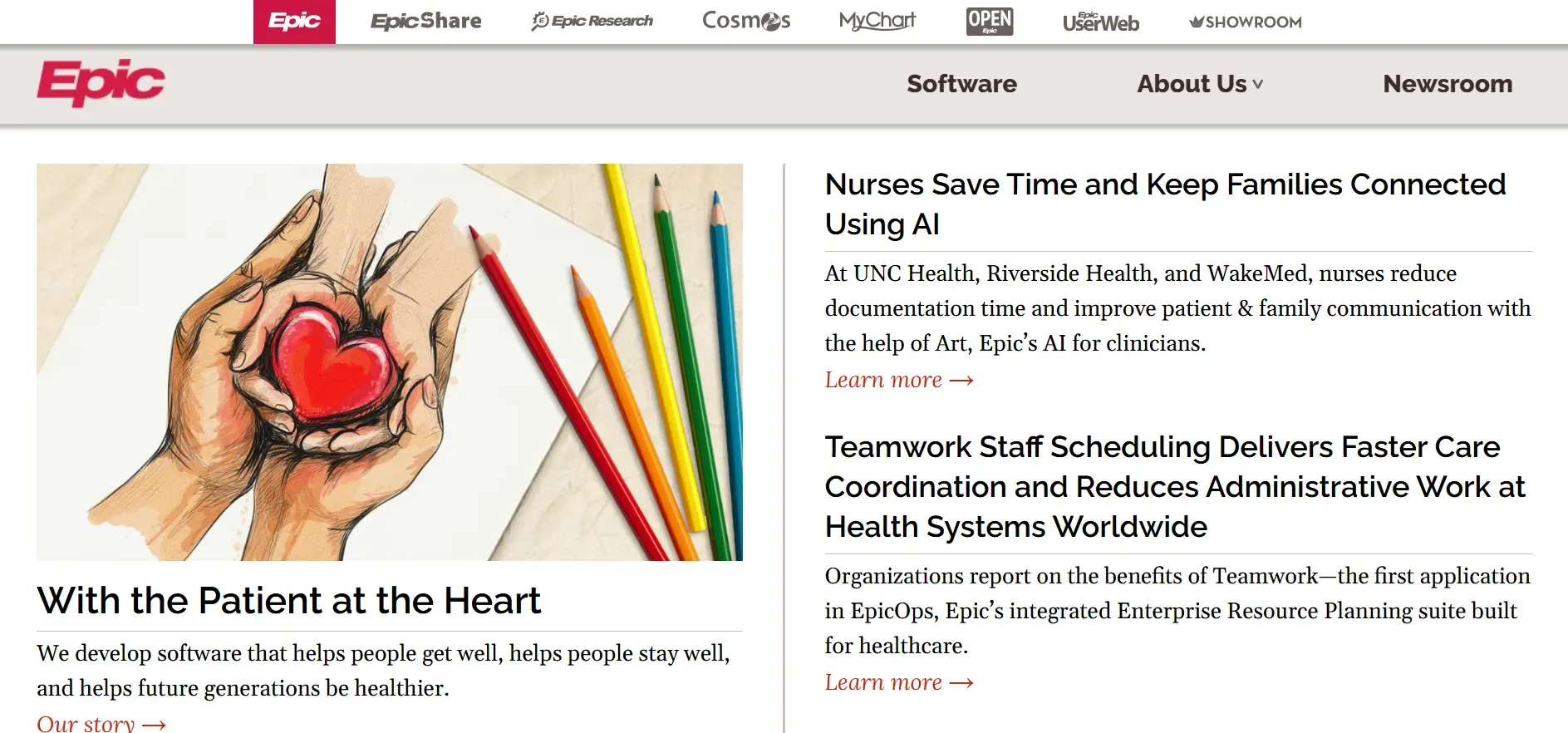
Epic is the EHR giant most often associated with large health systems, academic medical centers, and enterprise-level multispecialty groups. Its breadth and depth are unmatched: Epic offers robust modules for nearly every specialty, including oncology, cardiology, orthopedics, and pediatrics. Its interoperability is industry-leading, with built-in Care Everywhere data exchange and support for FHIR, HL7, and other major standards. Epic’s App Orchard marketplace enables clinics to integrate third-party apps, such as telehealth, analytics, and patient engagement tools.
Migration and integration: Moving to Epic requires significant planning and investment. Data migration from Athenahealth or other legacy systems is a large project, often involving both vendor and third-party consultants. Epic’s APIs and interfaces are powerful but require technical expertise to configure. For clinics with in-house IT or access to strong consulting partners, Epic can connect with labs, imaging, pharmacy, and even custom specialty tools. Smaller clinics may find the process daunting.
Concrete use cases: Epic shines for organizations that need to support multiple specialties under one roof, coordinate care across inpatient and outpatient settings, and require granular control over workflows. Examples include large orthopedic groups with surgical centers, or academic-affiliated clinics that need research and registry tools.
Pricing: Custom quote, typically high up-front and ongoing costs.
- Unmatched specialty depth and interoperability
- Enterprise-grade integrations and reporting
- Strong support for multi-specialty and research needs
- High implementation and training costs for mid-sized clinics
- Complexity can overwhelm smaller specialty practices
- Long contracts, rental model only
Devaims note: If Epic's complexity or cost is a barrier, Devaims can build a system tailored to your specialty workflows, with only the features you need.
2. AdvancedMD (flexibility for multi-provider clinics)
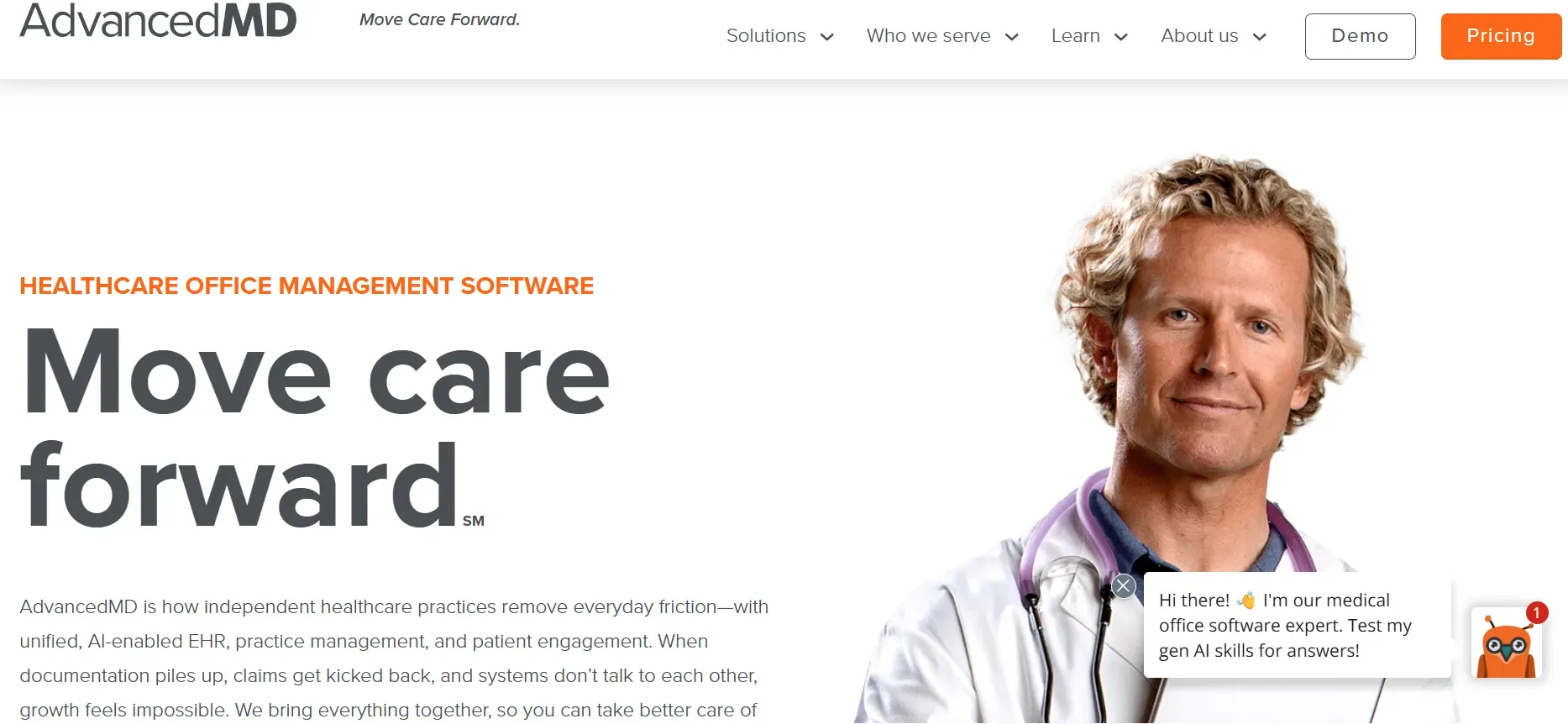
AdvancedMD serves as a bridge between small practice tools and the full enterprise suites. Its modular platform offers practice management, EHR, telemedicine, patient engagement, and revenue cycle management (RCM). Clinics can choose only the modules they need, keeping costs somewhat predictable. AdvancedMD integrates well with labs, imaging partners, and clearinghouses, and its API is well documented for practices that want to connect custom tools.
Migration friction: Moving to AdvancedMD is generally smoother than to Epic, but still requires careful mapping of patient, billing, and scheduling data. AdvancedMD has a dedicated onboarding team, but feedback on the process is mixed. Some clinics report smooth transitions, while others cite delays and the need for manual data corrections.
Concrete use cases: AdvancedMD excels for orthopedic, pain management, and multi-provider clinics that outgrow basic EHRs but do not need hospital-level features. Its scheduling and telemedicine modules are a draw for clinics with high patient throughput or complex resource management, such as physical therapy groups. The platform’s reporting is strong, but customization can require additional fees.
Pricing: $429/mo/provider and up, plus add-ons for advanced features.
- Flexible, modular platform for growing clinics
- Good integrations with labs and clearinghouses
- Strong telemedicine and scheduling features
- Per-provider pricing increases costs as you scale
- Extra fees for advanced analytics and e-prescribing
- Support quality can vary by clinic and region
Devaims note: If you want to avoid per-provider fees, Devaims offers a flat cost for unlimited users and custom features.
3. Kareo (Tebra) (billing focus for smaller practices)
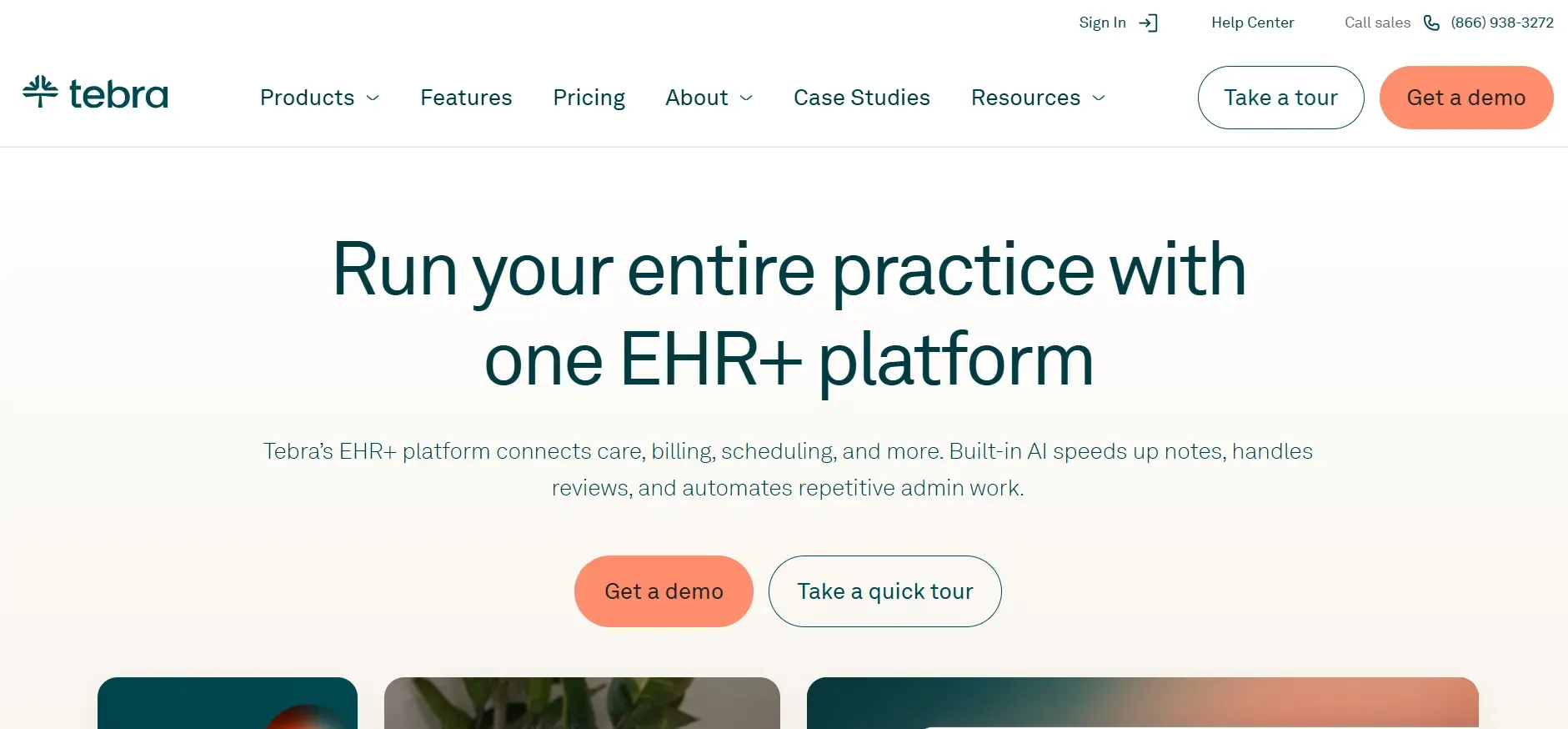
Kareo (Tebra) is designed for small medical practices and billing companies, with a strong focus on fast, efficient claims processing. Its interface is clean, and onboarding is typically quick thanks to templated workflows and guided setup. Kareo’s features include appointment scheduling, superbill creation, claims scrubbing, denial management, and a lightweight EHR. The Tebra platform (Kareo’s parent company) also offers patient engagement and practice marketing tools, which can help smaller clinics grow.
Migration and integration: Kareo supports data import from Athenahealth and other EHRs, but the process is less automated than with larger platforms. Some clinics need to manually reconcile patient histories or financial records. Integration options are limited: while Kareo connects to major clearinghouses and labs, advanced integrations, such as custom analytics or specialty devices, may be out of reach. Clinics that need robust interoperability should consider this carefully.
Concrete use cases: Kareo is ideal for solo providers, startup specialty clinics, or billing services managing multiple small clinics. Its claims management tools are well suited for high-volume outpatient billing, urgent care, or specialties with straightforward documentation needs.
Pricing: Custom quote, typically affordable for solo or small practices.
- Fast onboarding and simple interface
- Strong claims management for small clinics
- Affordable entry point for startups
- Limited customization for specialty workflows
- Support response can be slow for complex billing issues
- Costs rise quickly as you add providers
Devaims note: If you expect to grow or need deeper specialty features, Devaims can build a scalable platform with no per-user upcharges.
4. Modernizing Medicine (specialty EHR for derm, ortho, ophtho)
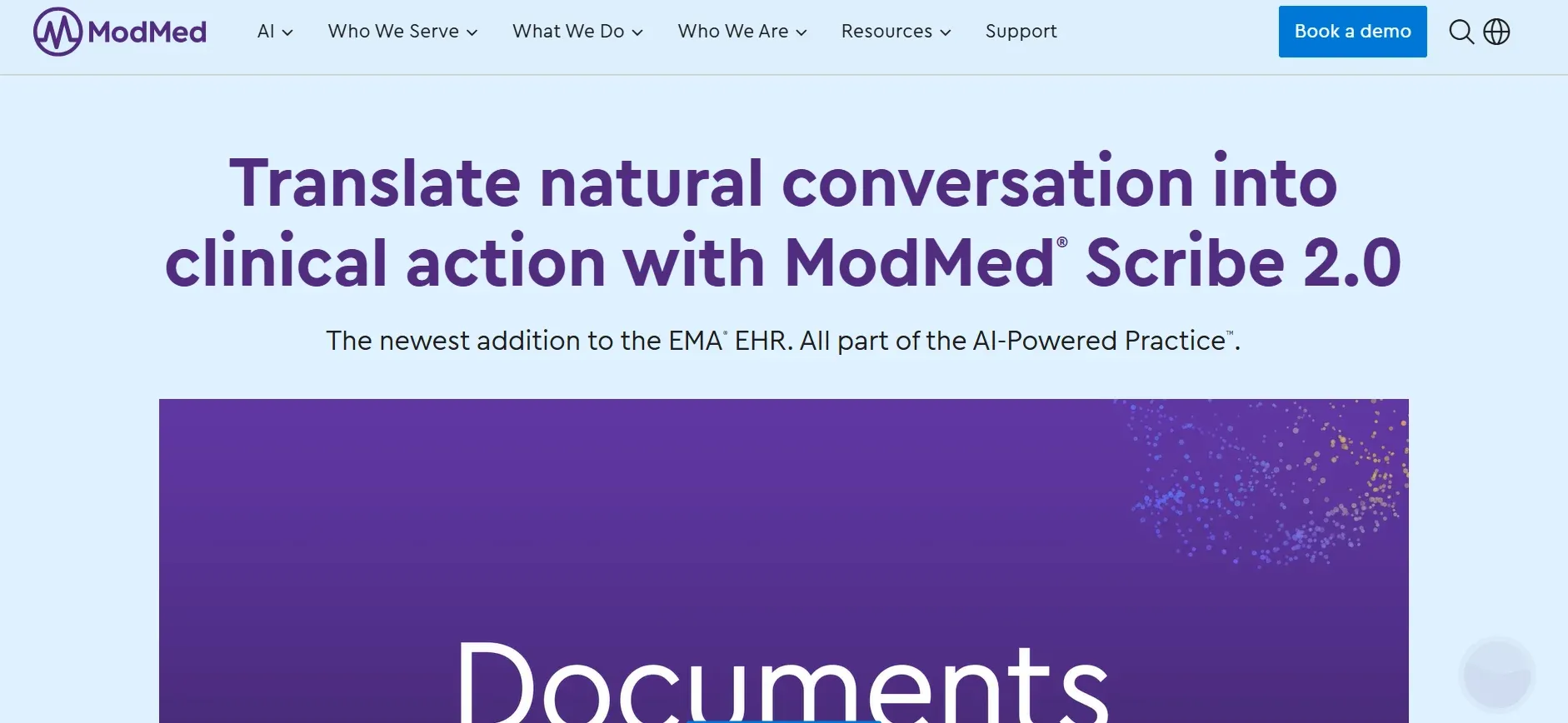
Modernizing Medicine (ModMed) is purpose-built for high-complexity specialties. Its flagship EHR, EMA, uses adaptive learning and touch-based navigation, making documentation fast for dermatology, ophthalmology, orthopedics, and other surgical specialties. ModMed offers built-in coding suggestions, specialty-specific templates, and integrated practice management. The platform also supports telehealth, inventory management, and patient engagement.
Migration and integration: ModMed’s onboarding team assists with data migration, but clinics with non-standard workflows or custom data fields may face manual work. Third-party integrations are limited compared to Epic or AdvancedMD. ModMed focuses on a closed ecosystem, so connecting to external analytics, custom labs, or niche imaging devices can require custom development or may not be supported at all.
Concrete use cases: ModMed is a top choice for dermatology clinics with high-volume cosmetic and medical procedures, orthopedic practices with device tracking needs, and ophthalmology groups needing embedded imaging and surgical planning tools. The EMA interface is optimized for iPad, which can speed up room-to-room documentation for busy procedure-based clinics.
Pricing: Custom quote, varies by specialty and modules selected.
- Specialty-optimized templates and workflows
- Fast documentation for procedure-heavy clinics
- Integrated practice management and telehealth
- Closed ecosystem limits third-party integrations
- Customization can be expensive or unavailable
- Opaque pricing and rising costs for add-ons
Devaims note: If you need integrations outside ModMed's ecosystem, Devaims delivers custom connections as part of your build.
5. Nextech (high-touch implementation for specialties)
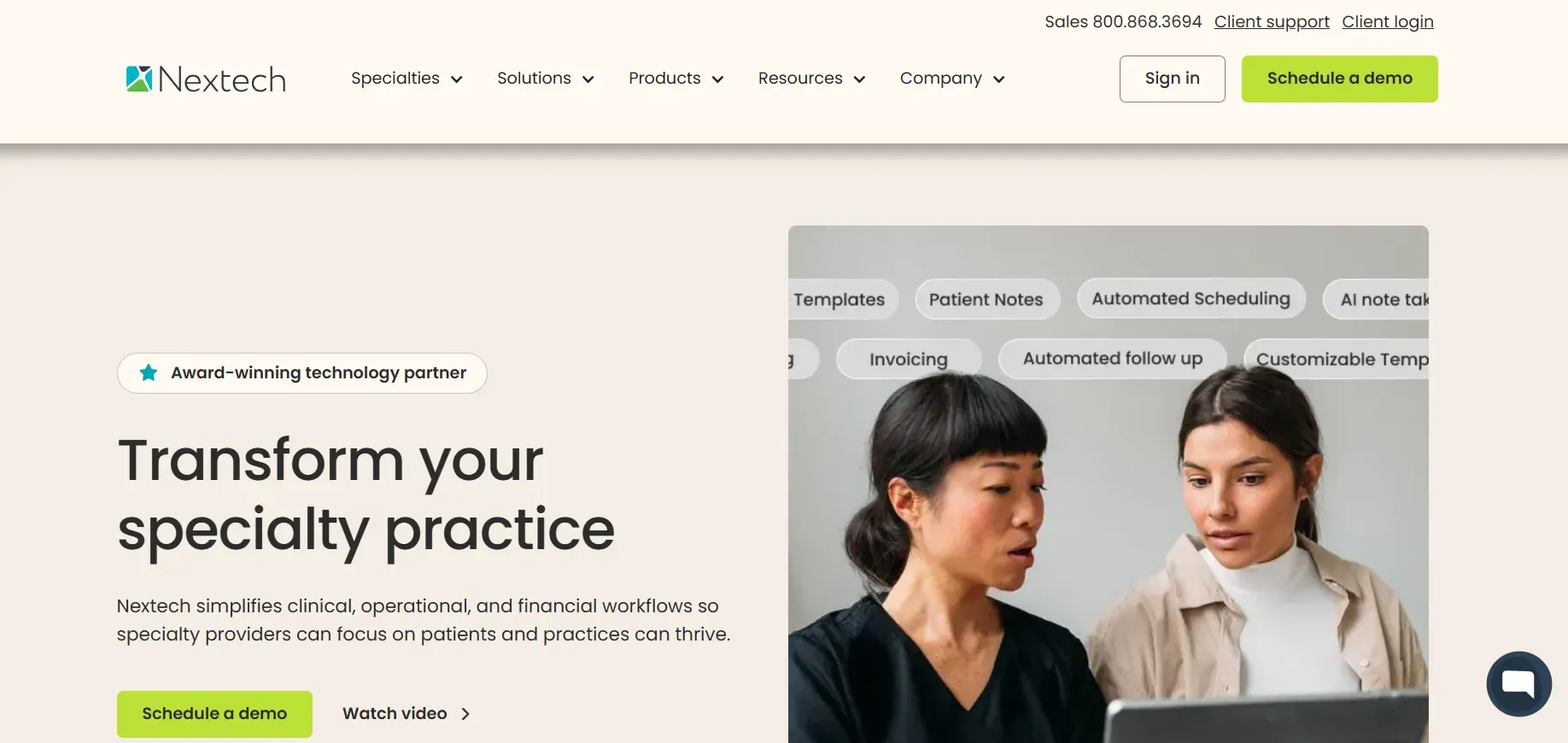
Nextech has carved out a niche with specialty clinics, especially in ophthalmology, plastic surgery, dermatology, and orthopedics. Its suite includes EHR, practice management, patient engagement, and revenue cycle tools. Nextech’s strength is in its specialty modules, offering built-in templates, image management, and procedure documentation tailored to each field. The company provides a high-touch implementation process, including in-person training and workflow consulting.
Migration and integration: Nextech’s onboarding process is thorough but expensive. Data migration from Athenahealth or other systems is handled by Nextech’s team, but custom data fields or unique workflows can require additional consulting hours at premium rates. Integration with labs, imaging, and billing partners is strong within supported specialties, but custom or third-party integrations may require extra work and incur additional costs.
Concrete use cases: Nextech is a favorite of multi-provider ophthalmology practices managing high volumes of imaging and procedures, as well as cosmetic/plastic surgery groups with complex scheduling and billing workflows. Its specialty-specific documentation speeds up charting and reduces errors for clinics with repetitive, procedure-driven encounters.
Pricing: $300 to $399/mo/user, plus implementation fees.
- Deep specialty modules and documentation tools
- Personalized onboarding and workflow consulting
- Strong image and procedure management
- High up-front implementation and training costs
- Hourly billing for support and customization
- Complexity may overwhelm smaller clinics
Devaims note: For clinics wanting to own their customization and budget, Devaims offers a one-time build with flat maintenance and unlimited users.
6. Allscripts (hybrid EHR and practice management)
Allscripts (now part of Altera Digital Health) is one of the oldest names in EHR and practice management. Its suite includes outpatient and inpatient EHRs, revenue cycle management, and population health analytics. Allscripts is known for its open API strategy, allowing clinics to connect third-party apps and build custom workflows. The platform is widely used in larger ambulatory groups and hospital-owned clinics.
Migration and integration: Allscripts has experience migrating data from Athenahealth and other major vendors. The company offers integration services for labs, imaging, and even custom applications via its Developer Program. However, clinics often report that legacy modules are slow and the interface can feel dated. Upgrading or customizing workflows may require Allscripts consulting, which can be expensive and time-consuming.
Concrete use cases: Allscripts is a good fit for large multi-specialty groups that need to coordinate care across outpatient and hospital settings, or for clinics that want to connect data with public health or research registries. Its open approach to integrations can benefit organizations with in-house IT or specific analytics/reporting needs.
Pricing: Custom quote, varies by implementation.
- Open API for integrations and custom workflows
- Comprehensive suite for large ambulatory groups
- Strong population health and analytics tools
- Legacy modules can be slow and dated
- Customization and upgrades require vendor consulting
- Support quality varies by product and region
Devaims note: If you want direct control over updates and integrations, Devaims builds your system to your exact requirements, with no vendor lock-in.
7. Greenway Health (ambulatory and outpatient clinics)
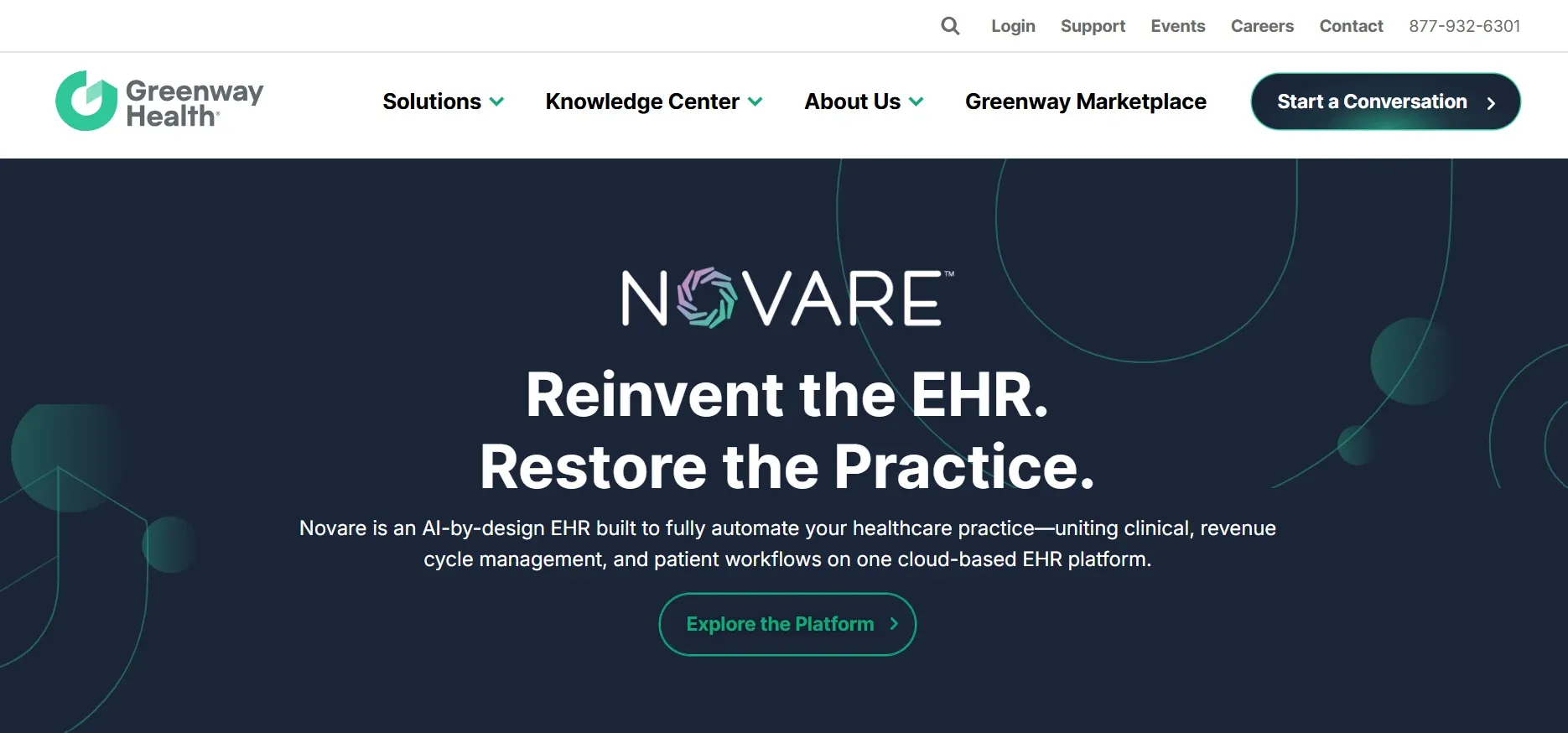
Greenway Health provides EHR and practice management software for ambulatory and outpatient clinics. Its Intergy platform is known for customizable templates, strong reporting, and integrated billing. Greenway Health supports a wide array of specialties, and its Marketplace offers connections to telehealth, patient engagement, and population health tools.
Migration and integration: Greenway offers data migration services from Athenahealth and other vendors, but the process is often described as lengthy, with some clinics reporting extended downtime or manual reconciliation of data. Integrations with labs and clearinghouses are solid, but adding new integrations or custom workflows can require Greenway’s development team, sometimes leading to delays or additional fees.
Concrete use cases: Greenway’s flexibility makes it a good fit for mid-sized ambulatory clinics with moderate complexity, such as family medicine, internal medicine, or multispecialty practices with standard documentation needs. Its reporting tools are useful for clinics needing to meet MIPS or other regulatory reporting requirements.
Pricing: Custom quote, pricing not transparent.
- Customizable templates and strong reporting
- Good specialty support for ambulatory clinics
- Marketplace for third-party integrations
- Support response times can be slow
- Premium features require extra fees
- Multi-year contracts may apply
Devaims note: If you want predictable support and no recurring upcharges, Devaims includes all integrations and support in a flat monthly fee.
8. Netsmart (behavioral health and social services)
Netsmart is built for behavioral health, addiction treatment, social services, and post-acute care. Its myAvatar and myEvolv platforms include features for care coordination, case management, compliance tracking (including Medicaid and state reporting), and patient engagement. Netsmart integrates with HIEs, labs, and payers, and offers mobile solutions for field-based care.
Migration and integration: Migrating to Netsmart from Athenahealth is possible, but the process can be complex, especially for clinics with custom data fields or extensive historical records. Netsmart provides professional migration services, but data mapping and validation often require significant staff involvement. Integration with state registries and Medicaid billing is a strength, but connecting to third-party analytics or custom reporting tools may be more limited.
Concrete use cases: Netsmart is ideal for behavioral health clinics managing complex care plans, social service agencies coordinating multidisciplinary teams, or substance use disorder treatment centers needing compliance with MAT (medication-assisted treatment) regulations.
Pricing: Custom quote, typically higher for smaller clinics.
- Strong Medicaid and compliance workflows
- Integrated care coordination and case management
- Mobile solutions for field-based teams
- Higher pricing for small clinics
- Customization requires vendor involvement
- Data export for future migrations can be challenging
Devaims note: If you want Medicaid billing tailored to your state and full data control, Devaims builds these features into your platform from day one.
9. Devaims (custom build you own outright)
Devaims is the alternative for clinics who are done with rental software. We design, build, and deliver a custom EHR and practice management platform that fits your specialty, your workflows, and your reporting needs. You own the code, keep your data, and pay only for what you need. No per-provider fees, no collections percentage, and no contract lock-in.
Features and integrations: Every Devaims build starts with an in-depth workflow analysis. We map your clinical, billing, and reporting processes, then design a system around them, not the other way around. Integrations are included by default, not as add-ons: lab interfaces, payment processors, billing clearinghouses, imaging, custom analytics, and even patient-facing portals. If you need to connect with state registries, research databases, or telehealth partners, we build those connections as part of the core project.
Migration friction: Migrating from Athenahealth or any major EHR is included in the project scope. Our team manages data extraction, field mapping, validation, and import, minimizing downtime and staff disruption. Because you own the system, future migrations, if ever needed, are fully under your control, with no proprietary data formats or vendor roadblocks.
Concrete use cases: Devaims is a fit for specialty clinics with unique workflows (oncology, pain management, behavioral health), multi-location practices who want unified reporting, or any clinic tired of paying more as they add providers. We have built platforms for clinics needing advanced registry integration, custom procedure documentation, and analytics tailored to value-based care contracts.
Pricing: One-time build (typically $30,000 to $60,000), plus flat-rate maintenance.
- You own the code and data, no recurring per-user fees
- All integrations and custom workflows included
- Flat maintenance, unlimited users, and full control
Other Athenahealth alternatives worth knowing
- Practice EHR: A budget option for solo and small group clinics, Practice EHR offers basic scheduling, charting, and billing. Specialty feature depth is limited, and support can be slow. Good for startups or clinics with simple needs.
- Cerner (Oracle Health): Now part of Oracle, Cerner is tailored for hospitals and large health systems. It offers deep interoperability and population health tools, but is usually too complex and costly for independent specialty clinics.
- DrChrono: A cloud-based EHR with mobile-first design, DrChrono is popular with startups and small clinics. Specialty templates and integrations are limited, but it offers fast setup and basic telehealth.
- CareCloud: Known for affordable pricing and a modern interface, CareCloud is a good value option for small to mid-sized clinics. However, customization is limited, and users report slow support for advanced needs.
How to choose the right Athenahealth alternative
- Budget constraints: If every dollar counts, beware of percentage-of-collections or per-provider models. A flat-fee or owned solution may save more long term, especially if you plan to grow or add providers.
- Specialty needs: High-complexity specialties (oncology, pain, behavioral health, orthopedics) require tailored workflows, custom documentation, and deep reporting. Not every EHR can deliver this out of the box.
- Practice size: Small practices may value simplicity and fast onboarding, but as you grow, per-user fees multiply quickly. Multi-site or multi-specialty groups should consider scalability and unified reporting.
- Integration requirements: If you run custom labs, external billing, or require real-time analytics, rented platforms often force workarounds or limit your options. Owning your software means total integration control and future-proofing.
- Contract preference: If you want to avoid long-term lock-in, seek out month-to-month terms, or better, your own build. Review contract fine print for auto-renewals, termination fees, and data export rights.
If you are tired of renting and want to control your tech future, owning your system with Devaims is the next step.
Stop paying rent on software you could own
The dirty secret: every Athenahealth alternative above, from Epic to Netsmart, is still a rental. Whether it is 7 percent of collections, $400 per provider per month, or a six-figure up-front fee, you are always paying for access, never ownership. Want to break the cycle?
Devaims builds custom web, mobile, and business software for specialty clinics who want to own, not rent. You get a system tailored to your workflows, your reporting, your integrations, and you keep the source code. No long contracts, no per-unit surprises, and no auto-renewals.
- Say goodbye to percentage-of-collections fees: With Devaims, your costs are a one-time build and flat maintenance, no matter how much you bill. This model is especially powerful for high-revenue specialties or clinics with stable patient flow.
- No more per-provider upcharges: Add users as you grow, at zero extra cost. If you expand to multiple locations or add providers, your software cost stays flat, no surprise invoices.
- Your data, your rules: Own your data from day one, no vendor lock-in or migration headaches. Export, analyze, or share your data as needed, without waiting for vendor approval or paying export fees.
- Custom everything: Every workflow, report, and integration is built for your specialty. If you need to adapt to new payor requirements, regulatory changes, or research initiatives, you control the roadmap.
| Tool | Pricing model | Contract | You own it? |
|---|---|---|---|
| Athenahealth | 6% to 8% of collections | 3-year, auto-renew | No |
| AdvancedMD | $429 to $729/mo/provider | Annual or multi-year | No |
| Netsmart | Custom quote | Annual/multi-year | No |
| Devaims (owned) | One-time build + flat maintenance | None | Yes |
| Year 1 | Year 2 | Year 3 | Year 4 | Year 5 | |
|---|---|---|---|---|---|
| Rented (typical SaaS, 7 providers, $450/mo each) | $37,800 | $75,600 | $113,400 | $151,200 | $189,000 |
| Owned (Devaims: $32,000 build, $200/mo maint) | $34,400 | $36,800 | $39,200 (now ahead) | $41,600 | $44,000 |
Your break-even is just after year 2. After that, owning puts thousands back into your practice every year. Clinics with steady patient flow and specialty needs benefit most from this model. Ready to see your numbers?
How to switch from Athenahealth
- Export your data: Start by requesting a full export of patient records, billing data, schedules, and attachments from Athenahealth. Confirm the export format and completeness, as some vendors provide data in proprietary formats.
- Select your new platform: Finalize your contract with your chosen alternative. If building with Devaims, this includes a detailed discovery phase to map your workflows and data requirements.
- Data migration: Work with your new vendor or developer to clean, map, and import your data. Validate key fields (such as insurance, allergies, and historical billing) to ensure nothing is lost or misaligned. For custom builds, this process is part of the project, and you can define exactly how data appears in the new system.
- Reconnect integrations: Set up connections to payment processors, labs, imaging, and external reporting tools. If you have custom devices or interfaces, plan for testing and validation ahead of go-live.
- Staff training: Provide hands-on training for all staff, ideally with parallel workflows so they can compare old and new systems. Devaims includes custom training sessions tailored to your clinic’s specific workflows.
- Parallel testing: Run both systems in parallel for at least two weeks. This lets you catch workflow gaps, data mismatches, or integration issues before fully switching over.
- Contract review: Carefully review your Athenahealth contract for termination procedures, required notice, and any fees. Ensure you have written confirmation of account closure and data handoff.
With a custom Devaims build, the migration is handled as part of the project, and you get detailed documentation for every step.
Frequently asked questions
What is the best Athenahealth alternative for specialty clinics?
If you want to break free from percentage-of-collections fees and own your software, a Devaims custom build is the only alternative that gives you full control. For off-the-shelf, Epic and AdvancedMD are the closest for large and mid-sized clinics, but both come with rental pricing and long contracts. The right choice depends on your specialty, integration needs, and appetite for upfront investment.
Which Athenahealth alternative is cheapest for a small clinic?
Kareo (Tebra) and Practice EHR are often the most affordable for very small clinics, especially solo providers or startups. However, as you add providers or locations, per-user fees can quickly outpace a custom build. Owning with Devaims becomes more cost-effective beyond two to three years for most clinics with steady volume, especially if you want to avoid recurring upcharges for each new user or feature.
Is there a free Athenahealth alternative?
There are no truly free Athenahealth alternatives with robust specialty features. Open-source EHRs (like OpenEMR or OSCAR EMR) exist but require significant IT support, lack integrated billing, and offer limited specialty templates or regulatory compliance. Devaims can scope a minimal custom system for less than you think if you want only core features, and you retain full ownership.
When should a specialty clinic switch from Athenahealth?
If Athenahealth’s percentage cuts into your margin, or if you are frustrated by contract lock-in, slow support, or lack of customization, it is time to evaluate alternatives. Clinics also switch when they need deeper specialty workflows, more flexible integrations, or want to future-proof their technology. Always consider the five-year total cost of ownership and workflow control before renewing an Athenahealth contract.
Can I keep my data when switching from Athenahealth?
You can export your data from Athenahealth, but the process can be complex and time-consuming. Some data, such as attachments, scanned documents, or custom fields, may require extra effort to migrate. With a Devaims build, you own your data from day one, and future exports or migrations are always in your control, with no proprietary barriers.
How does Devaims compare to Athenahealth for Medicaid billing?
Athenahealth users report Medicaid billing limitations, such as inflexible claim formats and poor support for state-specific rules. With Devaims, Medicaid billing workflows are built to your requirements, supporting eligibility checks, custom claim edits, and integration with state portals as needed. You define the workflow, and updates are delivered on your timeline, not the vendor’s.
Does owning my EHR mean I handle all updates and support?
With Devaims, you get ongoing support and maintenance as part of a flat monthly fee, no surprise bills or support tiers. Our team handles security updates, bug fixes, and feature enhancements, working directly with you to prioritize improvements. You control your roadmap, but you are not left to manage the system alone.
How does the cost of owning compare to renting for most clinics?
For a typical specialty clinic with steady patient flow and 5 to 10 providers, renting an EHR (at $400 to $700 per provider per month) adds up to $24,000 to $84,000 per year. Over five years, this is $120,000 to $420,000, with no asset to show for it. A custom build with Devaims is a one-time investment (often $30,000 to $60,000) plus flat-rate maintenance. After two to three years, you come out ahead, and your costs stay flat as you grow.
What are the risks of building your own EHR?
The main risks are under-scoping your requirements, missing regulatory needs, or lacking support for future changes. Devaims mitigates this with a detailed discovery phase, clear documentation, and ongoing support. You own the code and data, so you are never at the mercy of a vendor going out of business or shutting down a product line.
The bottom line
Every Athenahealth alternative claims to solve your pain, but most just reshuffle fees and contracts. The real lever is ownership: after two to three years, renting always costs more, and every new provider only widens the gap. Owning your clinic’s software means predictable costs, full control, and the ability to adapt as your practice evolves.
Here is the test: total up what your rental EHR will cost over five years. If that number is enough to build something you own, the math is telling you to stop renting your clinic’s backbone. The sooner you make the switch, the sooner you start building equity in your technology and freeing your clinic from vendor constraints.
For more insights, visit the Devaims blog or see our other alternatives roundups: AdvancedMD alternatives, eClinicalWorks alternatives, Epic alternatives.