

Every dermatologist I know has hit that moment: your Aesthetic bill jumps, support is slow, or a key feature is suddenly "premium only." You signed up for streamlined workflows, but now it feels like you’re renting your own data back every month. And switching? Most alternatives play the same game, just with a different logo.
Here’s the blunt truth: almost every Aesthetic alternative for dermatology has the same lock-in, rising costs, and feature-gating. Still, some are far better fits than others. EMA (Modernizing Medicine) is leading for dermatology-specific workflows, Nextech is strong on integrations, and Kareo (Tebra) is budget-friendly for smaller practices. But if you want out of the rent-forever cycle, there’s only one way: own your system with Devaims. That’s what this guide delivers, with real pros and cons, numbers you can trust, and a path to ownership.
Why dermatology clinics look for Aesthetic alternatives
Dermatology clinics are increasingly re-evaluating their dependence on Aesthetic and similar cloud-based EMR/PM platforms. The reasons go beyond simple cost sensitivity. Here’s what’s driving the search for better options:
- Surprise subscription hikes: Most SaaS EMRs start at a relatively attractive monthly rate. However, over time, clinics see incremental increases, often tied to annual renewals or the introduction of new "must-have" modules (like e-prescribing, reporting, or telehealth). These hikes can be unpredictable, making it difficult to forecast expenses and budget for growth.
- Feature gating by tier: Many EMR vendors bundle advanced features, such as custom charting templates, advanced analytics, or patient engagement tools, into higher pricing tiers. This means the base plan may not cover your actual needs, forcing you to upgrade or add à la carte features, driving up your true cost.
- Data lock-in and migration pain: While all vendors tout data portability, the reality is often complex. Exporting comprehensive patient records (including high-resolution images, structured notes, and billing history) typically requires vendor assistance, lengthy turnaround, and sometimes extra fees. The risk of data loss or incompatible formats can deter clinics from switching, even when dissatisfied.
- Third-party integration limits: Many dermatology clinics rely on a specific mix of labs, imaging systems, marketing platforms, and payment processors. Some Aesthetic alternatives support open APIs or direct integrations, but others restrict access, charge integration fees, or simply do not support your preferred vendors. This can result in manual workarounds or duplicated data entry.
- Per-visit or per-provider fees: The majority of cloud EMR vendors charge based on active providers or even on a per-encounter basis. As your clinic grows, these fees multiply. Practices planning to expand, by adding physician assistants, nurse practitioners, or additional dermatologists, can find their monthly bill snowballing far beyond initial projections.
For these reasons, dermatology practices are actively searching for Aesthetic alternatives that put them back in control, whether through better specialty fit, lower total cost of ownership, or outright software ownership.
Quick comparison of the best Aesthetic alternatives
| Tool | Best for | Starting price | You own it? |
|---|---|---|---|
| EMA (Modernizing Medicine) | Dermatology-specific EMR workflows | Reported $600+/provider/mo | No |
| Nextech | Integrated practice management | Reported $400+/provider/mo | No |
| Kareo (Tebra) | Budget practices | Reported $125+/provider/mo | No |
| DrChrono | Apple device users | Reported $199+/provider/mo | No |
| Athenahealth | Large practices | Custom quote | No |
| Practice Fusion | Small clinics | Reported $149+/provider/mo | No |
| Greenway Health | Multi-specialty groups | Custom quote | No |
| DermEngine | Imaging & AI diagnostics | Reported $299+/mo | No |
| PatientNow | Aesthetic medical spas | Custom quote | No |
| Devaims | Clinics wanting to own their system | One-time build (from $28,000) | One-time build, you own it |
Pricing shifts, so confirm current pricing before you decide. For more detailed breakdowns, check vendor websites and request up-to-date quotes based on your actual provider count and feature needs.
The 9 best Aesthetic alternatives
1. EMA (Modernizing Medicine) (Best for dermatology-specific workflows)
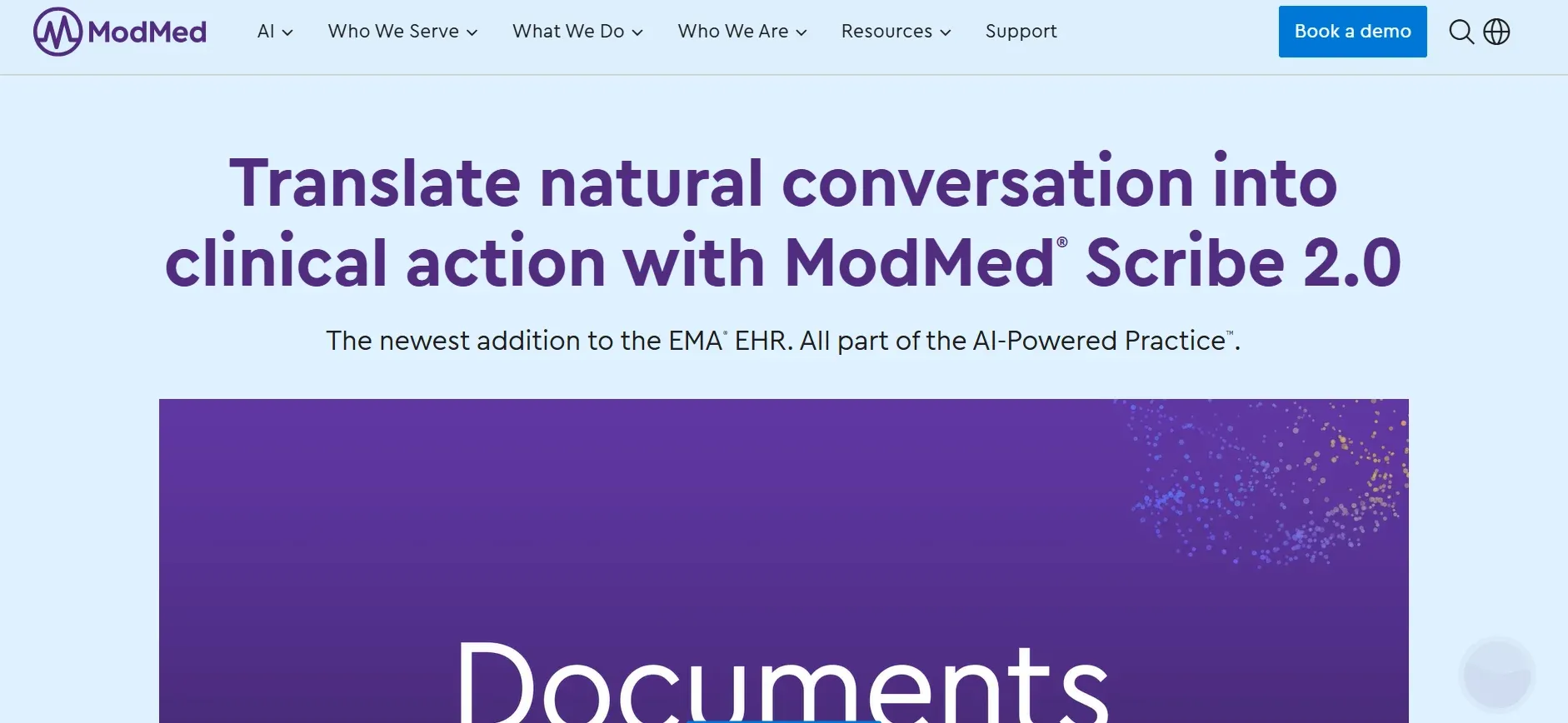
EMA is purpose-built for dermatology and has established itself as a gold standard for specialty-specific EMR workflows. Its architecture is designed around dermatology use cases, streamlining everything from lesion tracking to procedural documentation and high-resolution image management. EMA includes a unique adaptive learning engine that tailors charting to each provider's habits, saving time on repetitive note-taking.
EMA's image management is robust: you can annotate images, track changes over time, and link photos directly to patient records. Diagnostic support tools help clinicians with coding and documentation for a wide range of dermatological conditions and procedures. The platform also integrates with labs and e-prescribing systems, and it supports patient engagement through online portals and automated reminders.
Integrations and Migration: EMA offers integrations with billing platforms, labs, and imaging systems, but connecting to non-standard tools may require custom interfaces or additional fees. Migrating into EMA from another EMR is supported by their onboarding team, but exporting data out (for future migrations) often requires a service agreement and can be slow, especially for large image libraries.
Concrete Use Cases: High-volume dermatology clinics that require quick, template-driven charting; practices that rely on before-and-after photos (e.g., for Mohs surgery or cosmetic dermatology); clinics needing robust compliance and audit trails.
Pricing: Reported $600+/provider/month (contact Modernizing Medicine for a quote).
- Steep per-provider monthly costs
- Contract terms can be inflexible
- Limited customization for unique workflows
- Dermatology-native templates and charting
- Strong image management tools
- Built-in patient engagement features
With a system you own, adding providers does not multiply your costs.
2. Nextech (Best for integrated practice management)
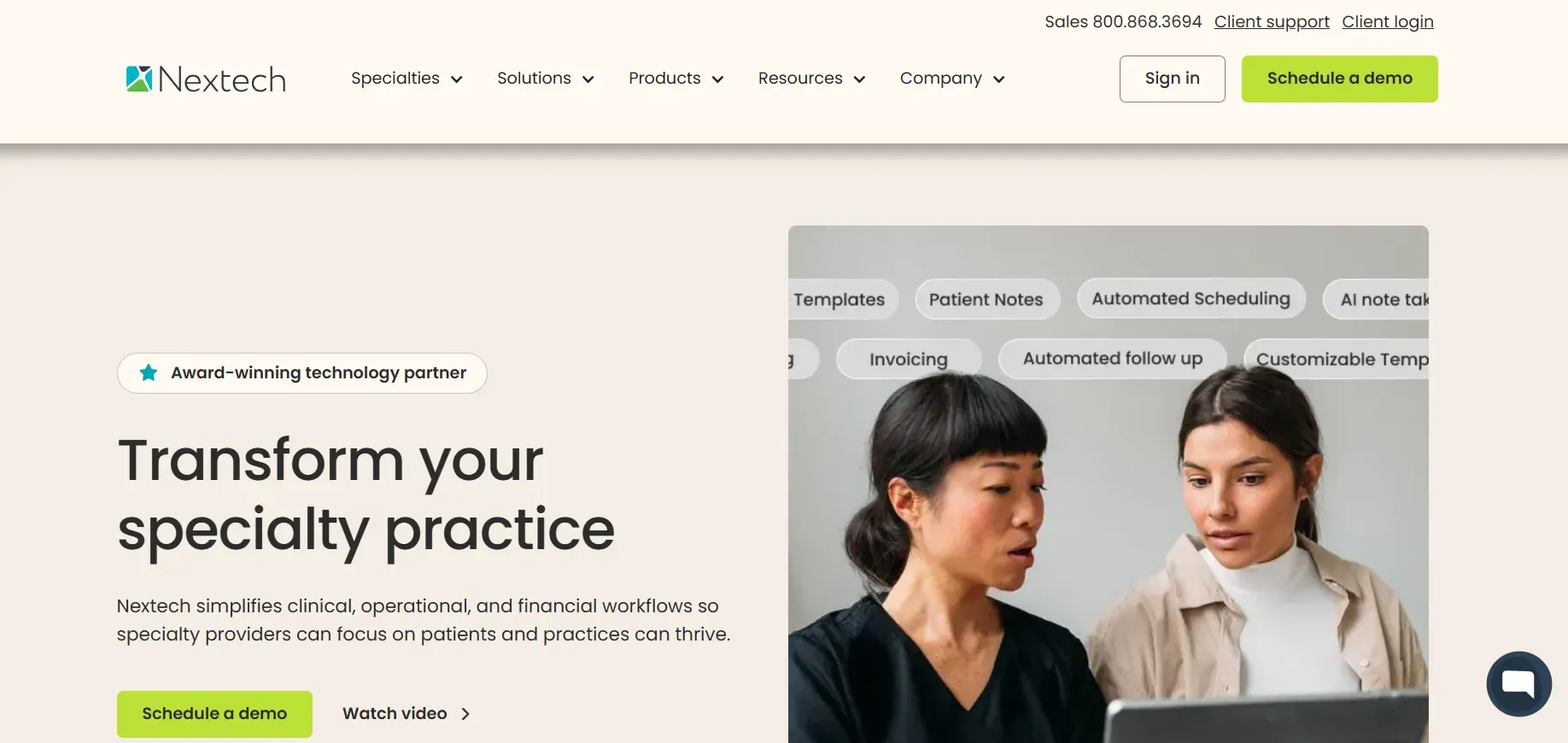
Nextech provides an all-in-one solution that combines EHR, practice management, and revenue cycle management. Its dermatology module includes specialty templates, procedure tracking, and inventory management for cosmetic products. Nextech stands out for its scheduling flexibility and billing automation, which help maximize provider utilization and reduce administrative overhead.
Integrations: Nextech offers a wide range of integrations, including lab systems, imaging modalities, clearinghouses, marketing platforms, and accounting software. However, some integrations are only available at higher pricing tiers or require setup fees. Migrating into Nextech is guided by their implementation team, but exporting data for future migration can be complex, especially if you use custom fields or non-standard workflows.
Use Cases: Mid-sized dermatology practices that want to centralize scheduling, billing, and clinical documentation. Clinics offering both medical and cosmetic services benefit from Nextech's inventory and marketing integrations. Multi-location practices use its reporting tools to track performance across sites.
Pricing: Reported $400+/provider/month (contact Nextech for demo and quote).
- Long-term contracts required
- Upgrades and integrations cost extra
- Interface can feel dated
- All-in-one EHR and PM
- Good dermatology and cosmetic procedure support
- Customizable scheduling and billing
With Devaims, integrations are designed for your exact workflow and remain yours to control.
3. Kareo (Tebra) (Best for budget practices)
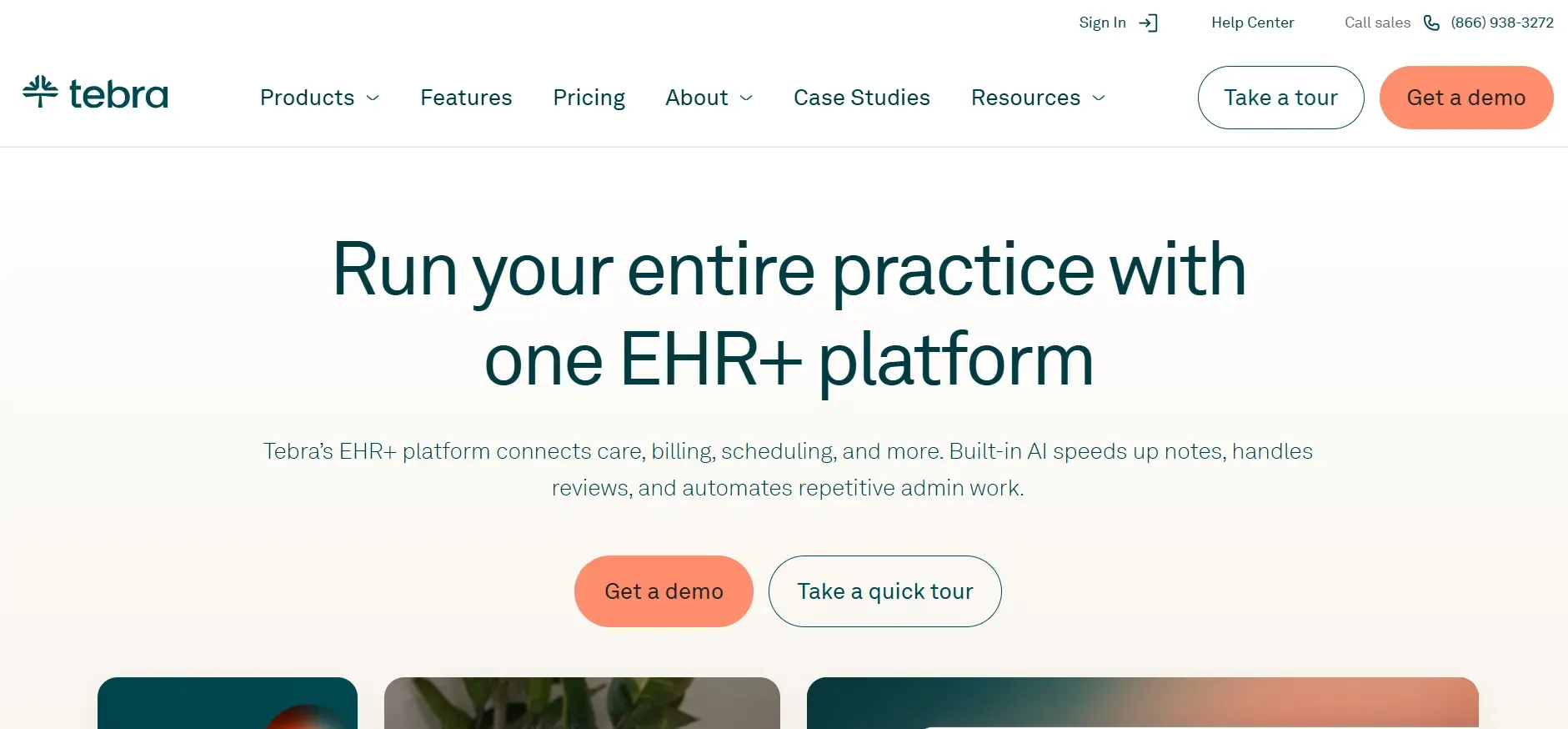
Kareo (now part of Tebra) is geared towards small and solo practices that need a simple, cost-effective EMR and practice management suite. The cloud-based interface is user-friendly, and onboarding is quick. Kareo includes basic charting, e-prescribing, appointment scheduling, and billing, enough for clinics with straightforward needs.
Integrations: Kareo integrates with a handful of labs, billing clearinghouses, and payment processors. For more complex integrations (like imaging platforms or marketing tools), clinics may need to rely on third-party middleware or manual processes. Migrating into Kareo is relatively simple for basic data, but full image libraries and custom fields can require manual mapping.
Use Cases: Solo dermatologists, small clinics, or new practices looking for an affordable entry point. Kareo is also favored by clinics that prioritize telehealth or need to manage a modest patient panel without advanced reporting or specialty templates.
Pricing: Reported $125+/provider/month (see Kareo pricing for updates).
- Limited native dermatology templates
- Fewer advanced reporting tools
- Support can be slow during peak times
- Affordable for small practices
- Straightforward onboarding
- Integrated telehealth
For clinics on a tight budget, Kareo is a good start, but growing practices should model five-year costs carefully.
4. DrChrono (Best for Apple device users)
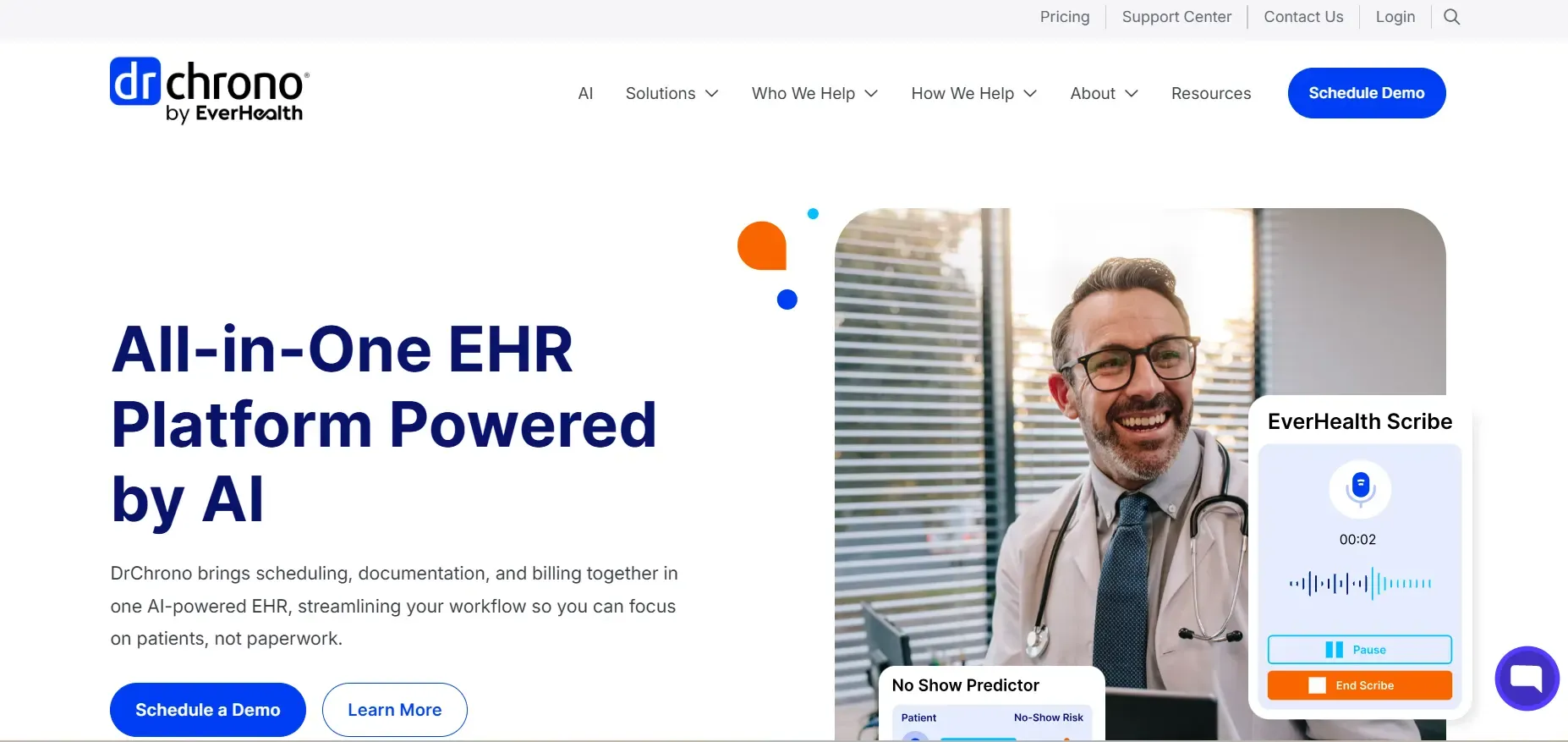
DrChrono is cloud-based and built specifically for Apple devices, offering a smooth iPad and iPhone experience. This is a major advantage for dermatology clinics that want to chart at the point of care, annotate images, and capture patient signatures directly on mobile devices. DrChrono includes e-prescribing, appointment reminders, and telehealth, with an app ecosystem for additional functionality.
Integrations: DrChrono connects with labs, billing partners, and imaging tools, but advanced integrations may require custom development or third-party connectors. Migration into DrChrono is straightforward for structured data, but image migration or complex chart notes may be more involved. Exporting data for future migration is possible but not always comprehensive without vendor help.
Use Cases: Tech-forward dermatology clinics, mobile practices, or providers who want to chart in real time while moving between exam rooms. DrChrono is popular among providers who value flexibility and a modern interface.
Pricing: Reported $199+/provider/month (see DrChrono pricing).
- Advanced features require higher plans
- Limited customization
- Occasional sync lags
- Excellent Apple device experience
- Telehealth and billing built-in
- Easy onboarding for tech-savvy staff
DrChrono is best suited for clinics that are already deeply invested in the Apple ecosystem.
5. Athenahealth (Best for large practices)
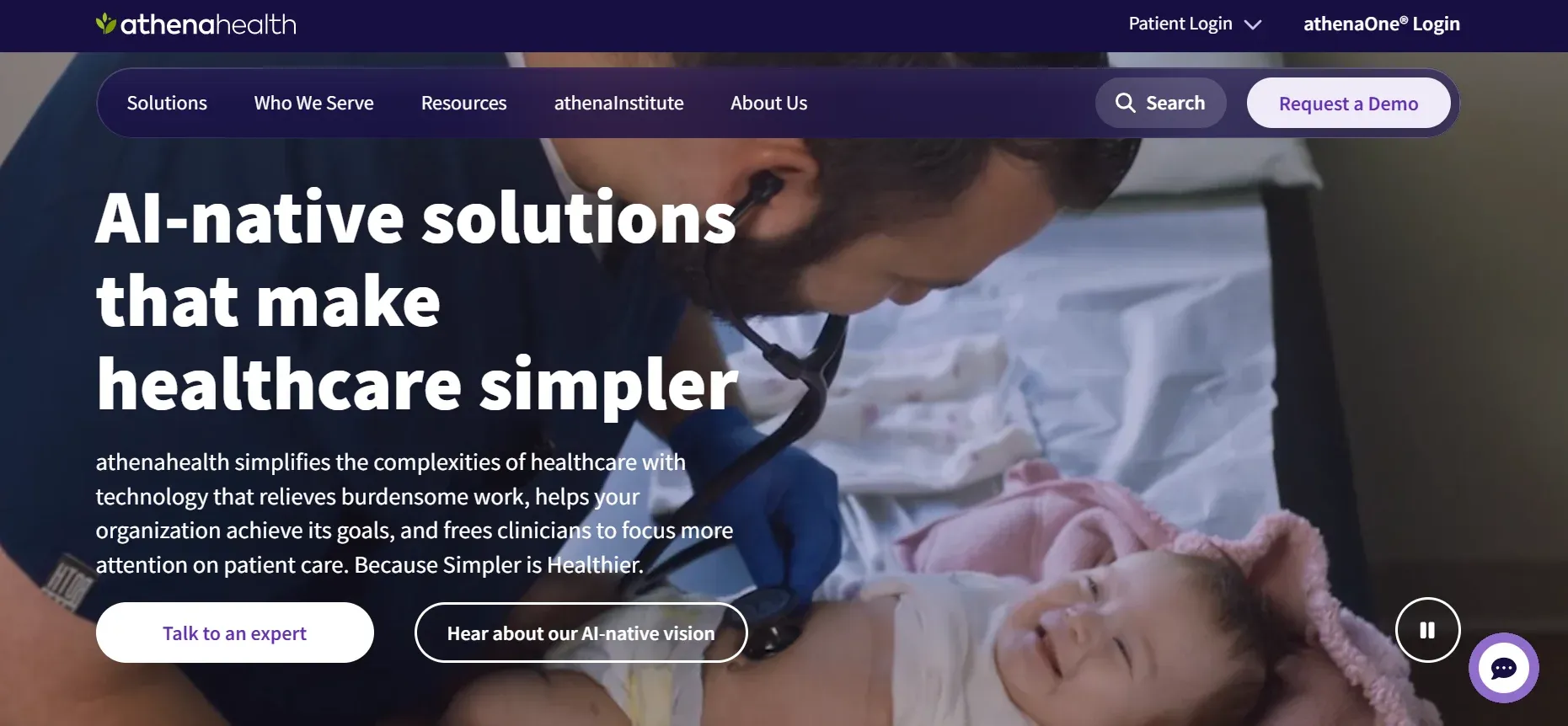
Athenahealth is a heavyweight in the EMR space, built for large, multi-site dermatology clinics and enterprise medical groups. Its platform is highly scalable, offering enterprise-grade security, customizable analytics, and extensive interoperability. Athenahealth connects with a broad array of labs, imaging centers, and hospital networks, enabling smooth data exchange for clinics that need to coordinate care across organizations.
Integrations: Athenahealth supports a wide range of third-party integrations, including billing, population health, and patient engagement tools. However, custom integrations or non-standard workflows may require additional setup and incur extra costs. Migration into Athenahealth is managed by a dedicated project team, but extracting data for future migration can be slow and expensive.
Use Cases: Large dermatology groups, academic medical centers, or clinics planning rapid expansion. Athenahealth is also a good fit for organizations that require advanced reporting, compliance features, and integration with other enterprise health systems.
Pricing: Custom quote only (request via Athenahealth contact).
- Long-term contracts (1+ years)
- Complex onboarding and setup
- Per-provider and add-on costs
- Enterprise-grade security and compliance
- Deep integrations with labs and imaging
- Customizable analytics and reporting
For multi-location or enterprise clinics, Athenahealth’s breadth is unmatched, but cost and complexity are high.
6. Practice Fusion (Best for small clinics)
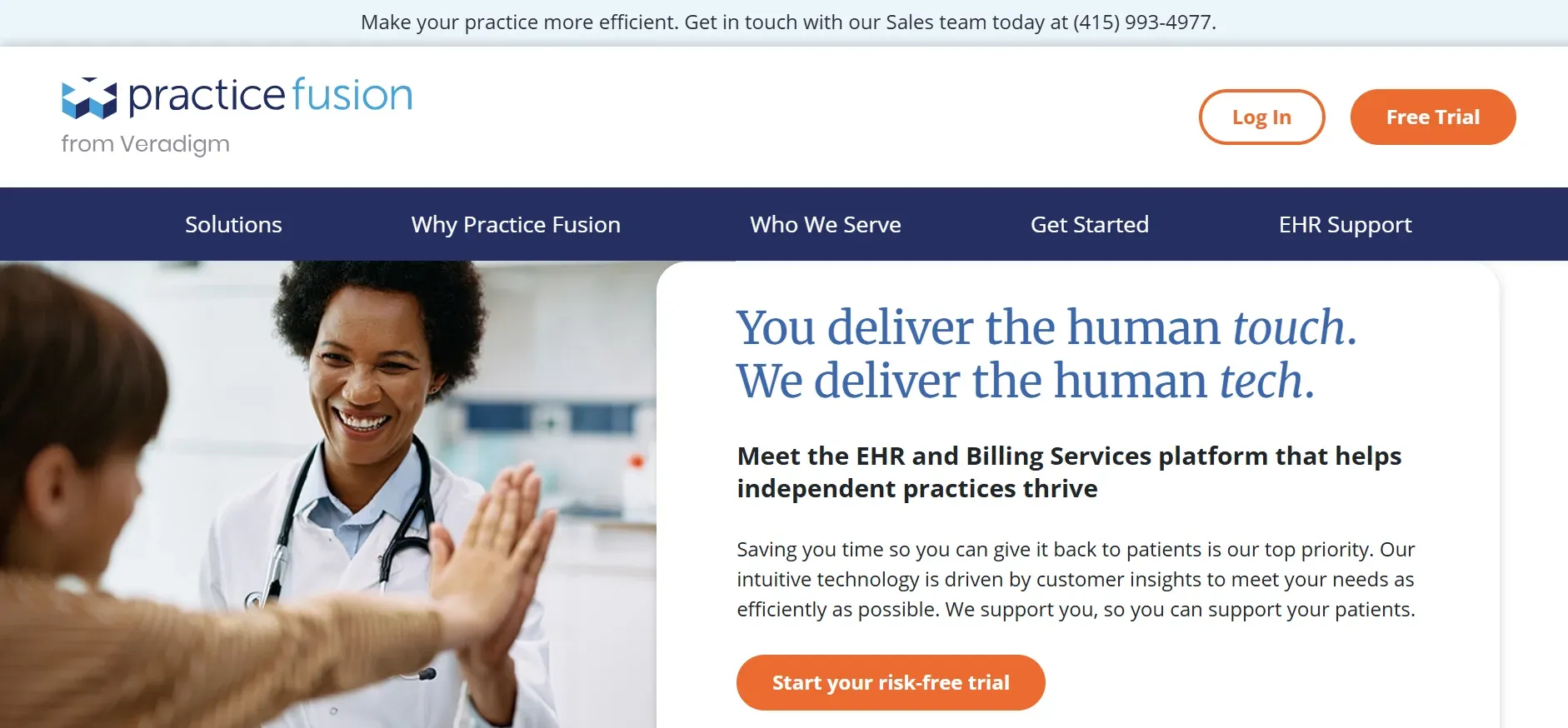
Practice Fusion is a web-based EMR that has long been popular with solo and small dermatology clinics. Its interface is clean and intuitive, making onboarding fast for new staff. Practice Fusion covers core EMR features: SOAP notes, e-prescribing, scheduling, and basic reporting. It is accessible from any device with a browser, which is ideal for clinics with limited IT resources.
Integrations: Practice Fusion offers basic integrations with labs, e-prescribing, and billing partners. More advanced integrations are limited or require third-party solutions. Migrating data into Practice Fusion is straightforward for structured data but challenging for images or custom fields. Data export for future migration is available but may require a fee and is not always comprehensive.
Use Cases: Solo dermatologists, small clinics, or practices just starting out. Practice Fusion is also used as a secondary EMR for clinics running low-volume or part-time dermatology services.
Pricing: Reported $149+/provider/month (Practice Fusion pricing).
- Limited specialty features
- Ads appear on lower plans
- Data migration is not always straightforward
- Low entry cost
- Simple, intuitive interface
- Cloud-based and accessible anywhere
Practice Fusion is a good stepping stone for new practices, but most growing clinics will eventually outgrow its capabilities.
7. Greenway Health (Best for multi-specialty groups)
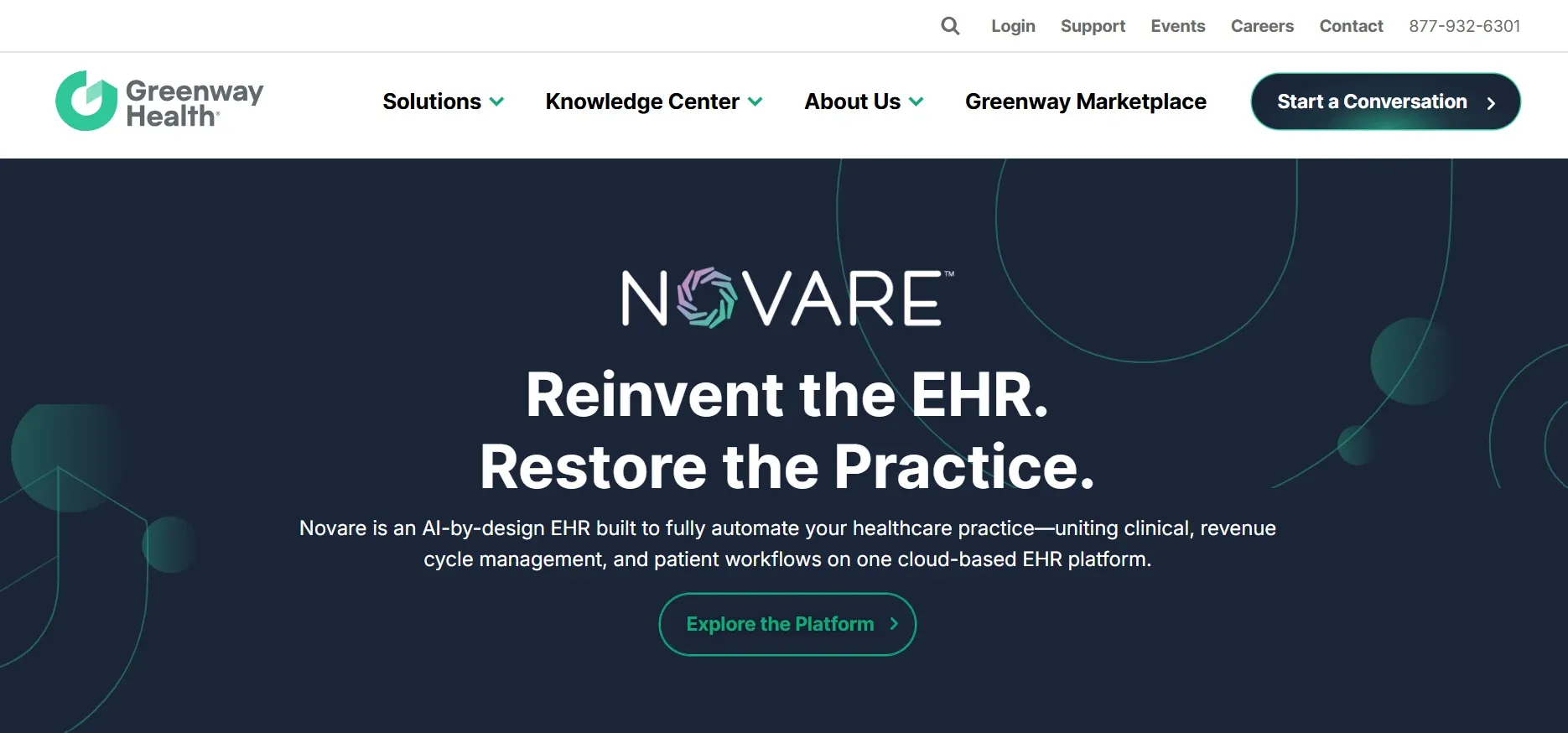
Greenway Health offers Intergy, an EHR platform designed for multi-specialty clinics. It provides robust customization options, allowing clinics to tailor workflows, forms, and reports to different specialties within the same organization. Greenway’s dermatology module supports image management, procedure tracking, and specialty coding.
Integrations: Greenway integrates with a variety of labs, imaging centers, and billing systems. Custom integrations are available but often come with additional costs and require vendor support. Migrating to Greenway is managed by their implementation team, but as with most platforms, full data portability (especially for images and custom fields) may be limited.
Use Cases: Multi-specialty clinics or large dermatology practices that require flexibility to support different clinical workflows. Intergy is also used by clinics that need robust compliance features and advanced analytics for managing multiple providers across locations.
Pricing: Custom quote (see Greenway demo).
- Custom pricing by practice size
- Steep learning curve
- Extra costs for integrations
- Flexible for multi-specialty clinics
- Robust reporting and analytics
- Strong compliance features
Greenway is ideal for organizations that need to support multiple specialties and require granular control over workflows and reporting.
8. DermEngine (Best for imaging & AI diagnostics)
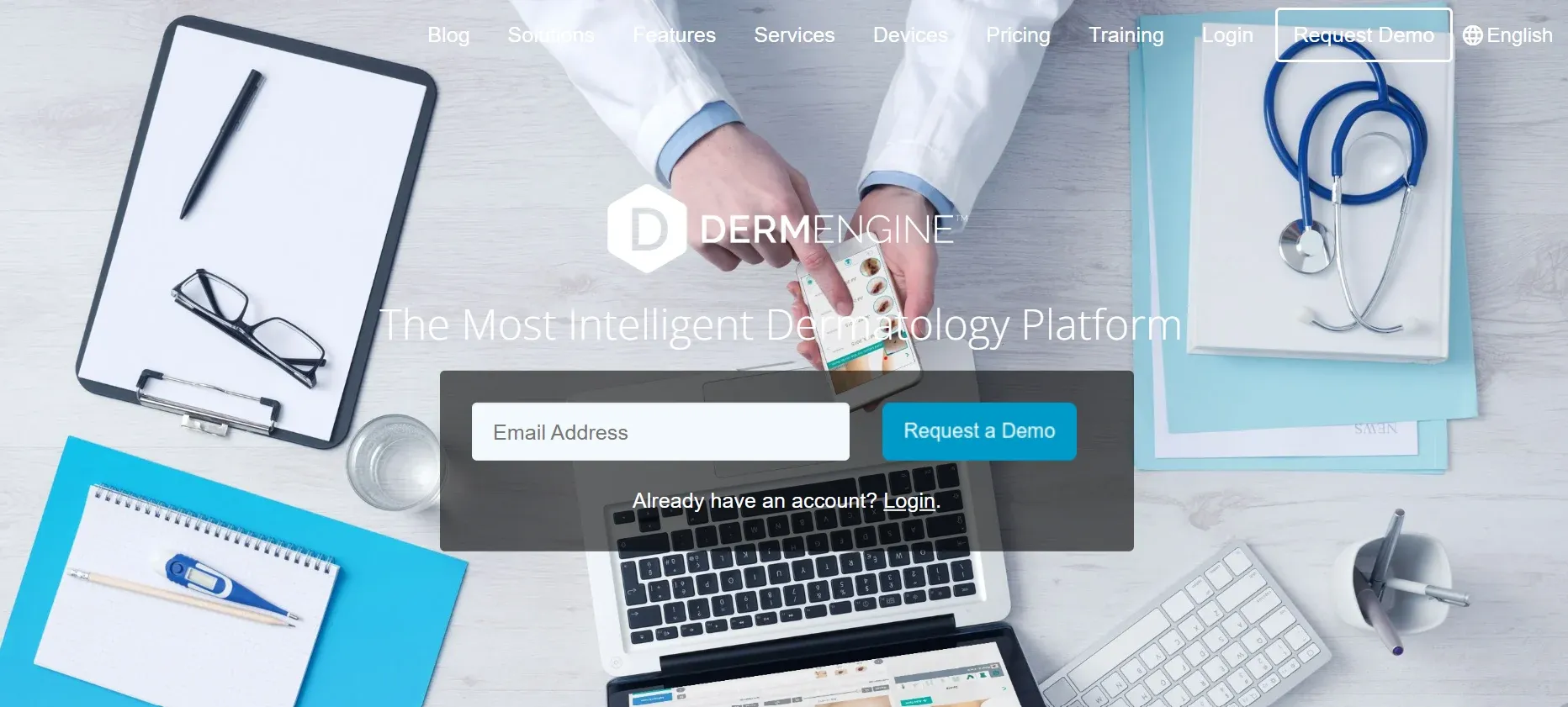
DermEngine is a cloud-based platform focused on dermatology imaging, AI-driven lesion analysis, and teledermatology. It is not a full EMR/PM suite but excels in high-volume imaging, mole mapping, and remote consultations. DermEngine supports direct image capture via mobile apps, automated lesion tracking, and AI-powered risk assessment.
Integrations: DermEngine integrates with some EMRs (like DrChrono and certain hospital systems) and offers APIs for custom connections. However, using it as a standalone solution means you must manually sync visit notes and billing data with your primary EMR. Migration to DermEngine is simple for images and structured data, but exporting data out for future migrations requires vendor support and can be complex.
Use Cases: Dermatology clinics with a high volume of imaging (e.g., mole mapping, skin cancer screening), teledermatology providers, and clinics seeking to leverage AI for diagnostic support. DermEngine is also used by academic centers for research and teaching.
Pricing: Reported $299+/month (see DermEngine contact).
- Not a complete EHR/PM system
- Monthly subscription, per-feature pricing
- Data export can be complex
- Advanced imaging and AI tools
- Teledermatology workflows
- Integrates with some EHRs
With a custom Devaims build, you can own both imaging and EHR in a single, unified stack, eliminating the need for multiple subscriptions and reducing workflow friction.
9. Devaims (Best for clinics that want to own it all)
Devaims builds custom dermatology platforms tailored to your exact workflows and requirements. Unlike every other option in this list, Devaims delivers software that you own outright, source code, data, and all. Every feature, report, and integration is built to your specifications, with no per-provider, per-feature, or per-integration fees. You set your own upgrade schedule, retain full data control, and never face forced contract renewals or feature gating.
Integrations: Devaims connects to any third-party system you use, including labs, imaging, marketing, analytics, or payment processors. Integrations are built for your real-world workflow and remain yours to modify or extend. Migration from your current EMR is managed end-to-end, with full preservation of patient data, images, and workflow history.
Use Cases: Growing or established dermatology clinics seeking to break the rent cycle, practices with unique workflows or integration needs, clinics with strict data governance requirements, or organizations planning for long-term stability and cost control.
- One-time build, you own the entire system and source code
- No per-user or per-feature fees, ever
- Full control over integrations and future upgrades
- Your data, your rules, always exportable
Devaims is the only alternative that truly puts your clinic in full control, now and in the future.
Other Aesthetic alternatives worth knowing
- Aesthetic Record, Focused on documentation and before-and-after imaging for med spas, but not a full EMR/PM suite. Useful for clinics that want advanced photo management without full clinical charting.
- Cerner, Enterprise health systems solution; overkill for most private dermatology clinics. Best suited for hospital-owned or academic dermatology departments.
- AdvancedMD, Strong practice management, but per-provider pricing and add-ons add up fast. Offers robust scheduling and billing, but specialty dermatology features are limited.
How to choose the right Aesthetic alternative
- Budget: Solo clinics might tolerate per-provider pricing, but growing teams should model five-year costs. Consider not just the base fee, but the cost of every additional provider, feature, and integration you may need as you expand.
- Specialty fit: If you need deep dermatology templates, advanced imaging, or specialty billing, prioritize platforms like EMA or a custom build. Generalist EMRs may require significant workarounds.
- Data ownership: Consider how easily you can export data and who controls your patient records. Vendor lock-in can make switching costly and risky, especially if you plan to scale or sell your practice in the future.
- Integration needs: If your practice relies on specialty labs, imaging, or marketing automation, check native support before signing. Some platforms offer open APIs; others restrict integration to their own partners.
- Growth plans: If you expect to add providers, avoid tools that make every new hire a major subscription bump. Owning your system eliminates this scaling penalty.
If you want to break the cycle of rising fees and own your software outright, it’s time to look at custom builds like Devaims.
Stop paying rent on software you could own
The core issue with almost every Aesthetic alternative is that you are renting, not owning. Each new feature, provider, or integration is another monthly charge. Switching vendors rarely solves the underlying problem, it just changes your landlord and resets the contract. Owning your software with Devaims breaks this cycle entirely.
Devaims builds custom dermatology platforms to your specs, including EHR, scheduling, imaging, and billing, all under your roof. You keep the source code. You run it where you want: on-premises, in a private cloud, or with a managed hosting partner. You’re never forced to upgrade, never pay for features you don’t use, and your data is always yours, never hostage to a vendor.
- Per-provider fees: Gone. Pay once, use with any team size. Grow your practice without penalty.
- Locked features: Every feature you need is included, no more "upgrade to access." Future enhancements are on your terms.
- Integration pain: Connect to any third-party system now or later on your own timeline. No vendor-imposed limits.
- Data migration fears: You own your data and can export it anytime, in any format. No more ransom fees or delays when you want to switch or expand.
| Tool | Ownership | Per-provider fees | Contract required? |
|---|---|---|---|
| Aesthetic | Rented | Yes | Yes |
| EMA | Rented | Yes | Yes |
| Nextech | Rented | Yes | Yes |
| Devaims | Owned, you keep the code | No | No |
The cost math:
Let’s do the math for a mid-sized dermatology clinic (4 providers):
| Year | Rent (Aesthetic/EMA/Nextech) | Own (Devaims) |
|---|---|---|
| 1 | $28,800 | $29,800 |
| 2 | $57,600 | $31,600 |
| 3 | $86,400 | $33,400 |
| 4 | $115,200 | $35,200 |
| 5 | $144,000 | $37,000 (now ahead) |
These numbers are based on typical per-provider pricing ($600/provider/month) for Aesthetic/EMA/Nextech. Devaims pricing assumes a one-time build (from $28,000) and modest annual maintenance. For a four-provider clinic, renting is cheaper in year one, but by year five, you’ve spent over $100,000 extra, and you still do not own your system. The larger your team or the longer your planning horizon, the more ownership pays off. Clinics with plans to add providers or scale services should pay close attention to this math.
How to switch from Aesthetic
Switching EMR platforms is a major project, but it is entirely feasible with the right plan. Here’s a step-by-step guide:
- Export all patient data, including images and notes, from Aesthetic. This may require vendor support and could involve extra fees. Be sure to request all structured data (patient demographics, encounters, notes, billing history) and unstructured data (images, attachments).
- Choose your new platform. Consider the total cost of ownership, specialty fit, integration needs, and data portability. Make sure your new vendor supports importing data in your required formats.
- Import data into the new system. Work with your vendor or a migration specialist to map fields and reconcile data. Pay special attention to historical images, custom fields, and legacy billing information.
- Reconnect payment processors, labs, imaging, and any third-party integrations. Test each integration thoroughly before going live.
- Train your staff on the new workflows and features. Schedule hands-on sessions, create cheat sheets, and set up a help desk for real-time support during go-live.
- Test the new system in parallel for at least a week. Run both systems side by side to catch data or workflow gaps. Use this time to tweak templates, workflows, and reporting.
- Review your Aesthetic contract for any early termination clauses before canceling. Some vendors require 30 to 90 days' notice or impose penalties for early exit. Plan your transition timeline accordingly.
With a custom Devaims build, all migration steps are handled as part of the project, including data mapping, integration setup, and staff training. This reduces risk and ensures a smoother transition.
Frequently asked questions
What’s the best Aesthetic alternative for dermatology clinics?
EMA (Modernizing Medicine) is a strong choice for dermatology-specific workflows due to its deep specialty templates and image management. Nextech is strong for integrated practice management, especially for clinics that want scheduling and billing under one roof. For clinics seeking full ownership, no per-provider fees, and the ability to customize every feature and integration, Devaims is the only option that delivers true software ownership. The best choice depends on your clinic’s size, specialty needs, integration requirements, and appetite for upfront investment versus ongoing subscription fees.
What is the cheapest Aesthetic alternative?
Kareo (Tebra) and Practice Fusion have some of the lowest starting prices, making them attractive for solo or small practices on a budget. However, clinics should watch for add-on and per-provider fees, which can quickly raise the total cost. Over five years, a custom Devaims build often costs less for clinics with multiple providers or plans to grow, as you avoid per-user charges entirely and gain full control over your data and features.
Is there a free Aesthetic alternative?
There are no true free Aesthetic alternatives with dermatology-grade charting and imaging. Some EMRs (like Practice Fusion) previously offered ad-supported free tiers, but these are now limited or discontinued. Open-source EMRs, such as OpenEMR, exist but require significant IT resources to install, customize, and maintain, making them a fit only for clinics with in-house technical expertise. Most practices will need to budget for at least a modest monthly fee or a custom build.
Which Aesthetic alternative is best for imaging and AI?
DermEngine is a leader for dermatology imaging and AI lesion analysis. Its advanced imaging features, mobile apps, and AI risk assessment are unmatched for mole mapping, teledermatology, and research. However, it functions best as an adjunct to your primary EMR, not a full replacement. A Devaims build can integrate similar imaging and AI features directly into your own platform, eliminating the need for parallel systems and subscriptions.
When should a dermatology clinic switch from Aesthetic?
If your costs are climbing, you’re locked out of key features, or your workflow doesn’t fit Aesthetic, now is the time to explore alternatives. Most clinics switch at contract renewal, during expansion, or when adding new providers. Other signs include poor support, slow product updates, or the inability to integrate with your preferred partners. The earlier you plan your transition, the smoother the migration will be.
Can I keep my data if I leave Aesthetic?
You can export your data, but it’s rarely a one-click process and may involve fees or delays. For full data portability, request exports in standard formats (such as CCD, HL7, or CSV) and ensure all images, notes, and attachments are included. If you own your system (like with Devaims), your data is always in your hands and fully exportable at any time, in any format you choose, without vendor involvement.
How do Aesthetic alternatives compare on long-term cost?
Most Aesthetic alternatives charge per-provider or per-feature, so costs multiply as you grow. Over five years, those fees often exceed the one-time build and flat maintenance of owning with Devaims. For clinics planning to add providers, expand services, or simply avoid future price hikes, ownership offers significant savings and more predictable budgeting. Always model your real five-year costs, including all hidden fees, before making a decision.
The bottom line
The best Aesthetic alternatives for dermatology each offer something unique, but all share one trap: you’re still renting. Here’s the real decision point: add up what you’ll pay over five years, then ask if that money could have bought you a platform you own. If the answer is yes, you’re ready for Devaims.
Don’t let per-provider fees and feature lock-in become your new normal. Own your system, own your data, and keep your margins. Want to see the real math for your clinic?
Want more insights? Visit the Devaims blog or check out these related guides: EMA alternatives, Nextech alternatives, Kareo alternatives.