


Ever get to month 15 of paying for Practice Perfect and realize you have nothing to show for it except another invoice? Or discover the one feature you need is locked behind an add-on? If you run a physical therapy or rehab clinic, you know the pain of chasing software instead of patient outcomes.
Practice Perfect is a household name in PT EMR, but the recurring costs and feature walls are real. The good news: there are real Practice Perfect alternatives, each with their own strengths and gotchas. Clinicient is popular for enterprise, Prompt EMR gets raves for modern design, and Fusion Web Clinic is a favorite for pediatrics. But the only way to stop renting and own your system is with a custom build from Devaims. Let’s unpack the honest options.
Why physical therapy clinics look for Practice Perfect alternatives
Physical therapy clinics are increasingly rethinking their dependence on Practice Perfect and similar SaaS solutions for several reasons:
- Recurring subscription fees stack up: Most clinics end up paying hundreds per month per provider, plus fees for add-ons or integrations. Over a few years, these costs can far exceed the value received, especially for clinics that grow or require more users. For example, a clinic with five providers can easily pay over $15,000 annually in licensing and add-on costs alone.
- Add-ons and modules mean “all-in” is pricey: Many essential features, such as telehealth, outcomes reporting, e-faxing, or advanced scheduling, are not included in base packages. Clinics often find themselves paying extra for each module, leading to unpredictable monthly expenses and making budgeting difficult.
- Data ownership and portability questions: With most SaaS platforms, you’re renting access to your data and workflows. Your clinical notes, scheduling history, and billing information are stored in the vendor’s cloud, and full exports are rarely straightforward. This makes switching costly and time-consuming, and raises concerns about long-term access and compliance.
- Feature gaps for niche workflows: Pediatric, multi-location, and hybrid clinics can hit hard limits with off-the-shelf tools. For example, pediatric therapists may need parent portals and therapy-specific templates, while multi-location clinics need strong user permissions and location management. SaaS solutions tend to serve the “average” clinic, leaving outliers underserved.
- Long-term contracts and scale limits: Many platforms require annual contracts or multi-year commitments. Scaling up or down can mean renegotiating contracts or paying penalties. Some systems have hard limits on the number of users, locations, or integrations, stifling growth or requiring costly migrations later.
That’s why so many clinics go searching for Practice Perfect alternatives: to control costs, own their data, and get features that fit their unique care models.
Quick comparison of the best Practice Perfect alternatives
| Tool | Best for | Starting price | You own it? |
|---|---|---|---|
| Clinicient | Enterprise clinics | Reported $299/mo/provider | No |
| Raintree | Large, multi-site PT | Custom quote | No |
| Prompt EMR | Modern, all-in-one | Reported $250/mo/provider | No |
| Therabill | Small to mid clinics | Reported $149/mo | No |
| Net Health | Hospitals, scale | Custom quote | No |
| Fusion Web Clinic | Pediatrics | Reported $119/mo | No |
| DrChrono PT | Integrated EHR | Reported $199/mo | No |
| Devaims | Full code ownership | One-time build, you own it | Yes |
Always confirm current pricing before you decide. Some platforms require custom quotes or have hidden add-ons. Also, be aware that many vendors update pricing annually or change what is included in base packages, so your costs may increase over time.
The 8 best Practice Perfect alternatives
1. Clinicient (enterprise clinics)
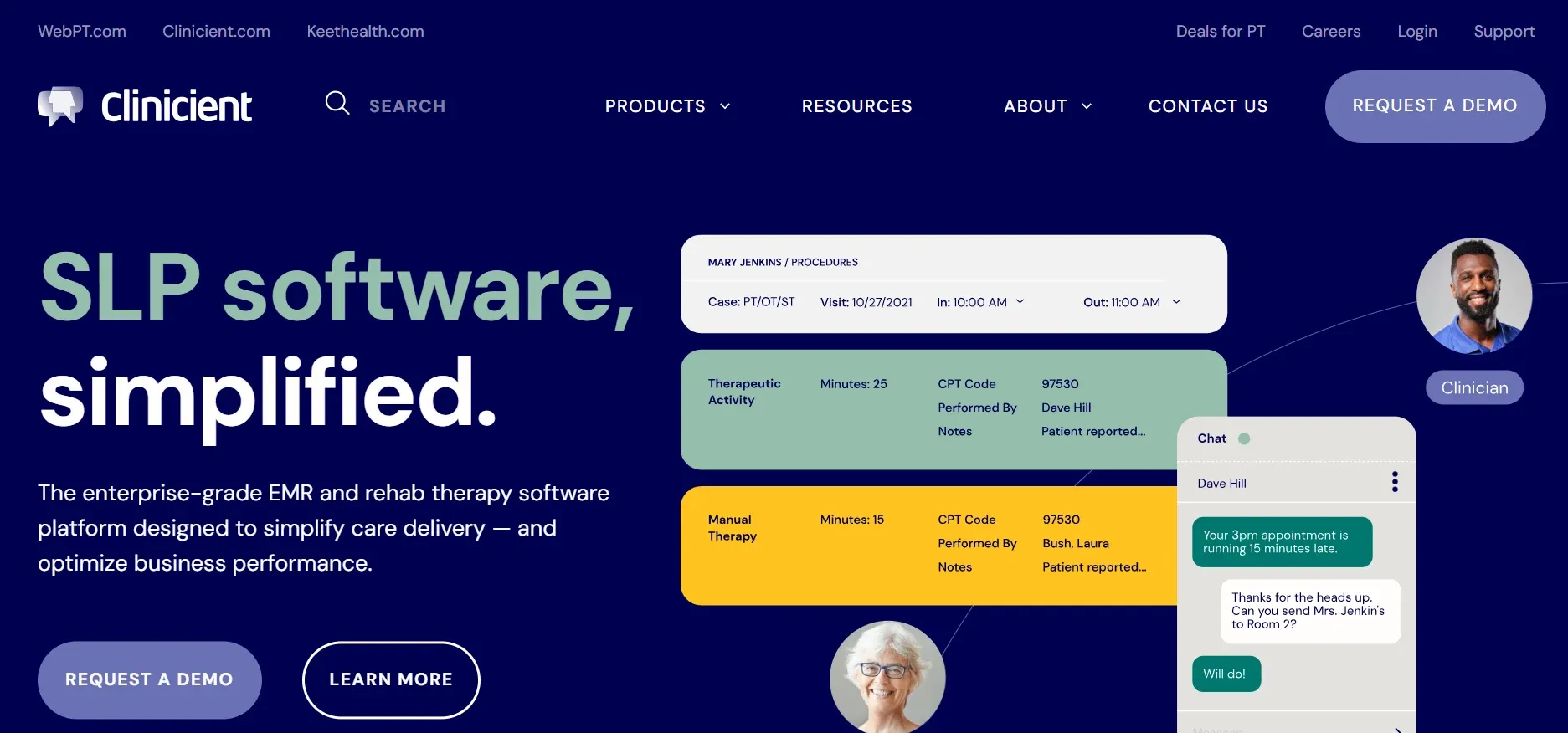
Clinicient is a top choice for large PT and OT practices that demand a comprehensive, enterprise-level EMR and billing solution. Its platform focuses on high-volume, multi-site clinics, offering deep payer integration, sophisticated analytics, and granular compliance controls.
- Pricing: Reported $299/month per provider, with additional fees for add-ons and integrations.
-
Key limitations:
- High per-provider fees and additional costs for customizations
- Complex onboarding and learning curve for advanced modules
- No code or data ownership, making future switching difficult
-
Strengths:
- Enterprise-grade analytics and compliance controls
- Deep integration with payers and clearinghouses
- Strong support for multi-location, high-volume clinics
2. Raintree (multi-site scalability)
Raintree is purpose-built for large, multi-location rehab groups and hospital-affiliated PT practices. Its flagship is customizability and integration, with a modular architecture that supports complex workflows and regulatory demands.
- Pricing: Custom quote required, modular pricing based on features and scale.
-
Key limitations:
- Opaque pricing and potential for escalating costs
- Complex implementation and longer onboarding timeline
- Platform is rented, not owned, with limited portability
-
Strengths:
- Highly customizable workflows and integrations
- Strong fit for multi-site and hospital-affiliated organizations
- Comprehensive compliance and audit features
3. Prompt EMR (modern UI, all-in-one)
Prompt EMR has quickly gained a strong following among independent PT clinics and mid-sized practices seeking a modern, easy-to-use platform. Its all-in-one approach combines scheduling, documentation, billing, and patient engagement with a clean, intuitive interface.
- Pricing: Reported $250/month per provider, with add-on fees for advanced features.
-
Key limitations:
- Per-provider pricing can become expensive as you grow
- Advanced analytics and integrations require add-ons
- Customization is limited beyond built-in templates
-
Strengths:
- Modern, user-friendly interface
- Quick onboarding and accessible training
- All-in-one platform for small to mid-size clinics
4. Therabill (small to mid-sized clinics)
Therabill, now owned by WebPT, focuses on simplifying billing and documentation for small to midsize clinics. Its streamlined platform is a favorite for solo practitioners and groups that want to keep things lean.
- Pricing: Reported $149/month, with additional fees for integrations and add-ons.
-
Key limitations:
- Lacks advanced analytics and deep customization
- Interface feels dated to some users
- May not scale well for growing clinics
-
Strengths:
- Simple, easy-to-learn platform
- Affordable for solo and small clinics
- Streamlined billing and documentation features
5. Net Health Therapy (hospitals and scale)
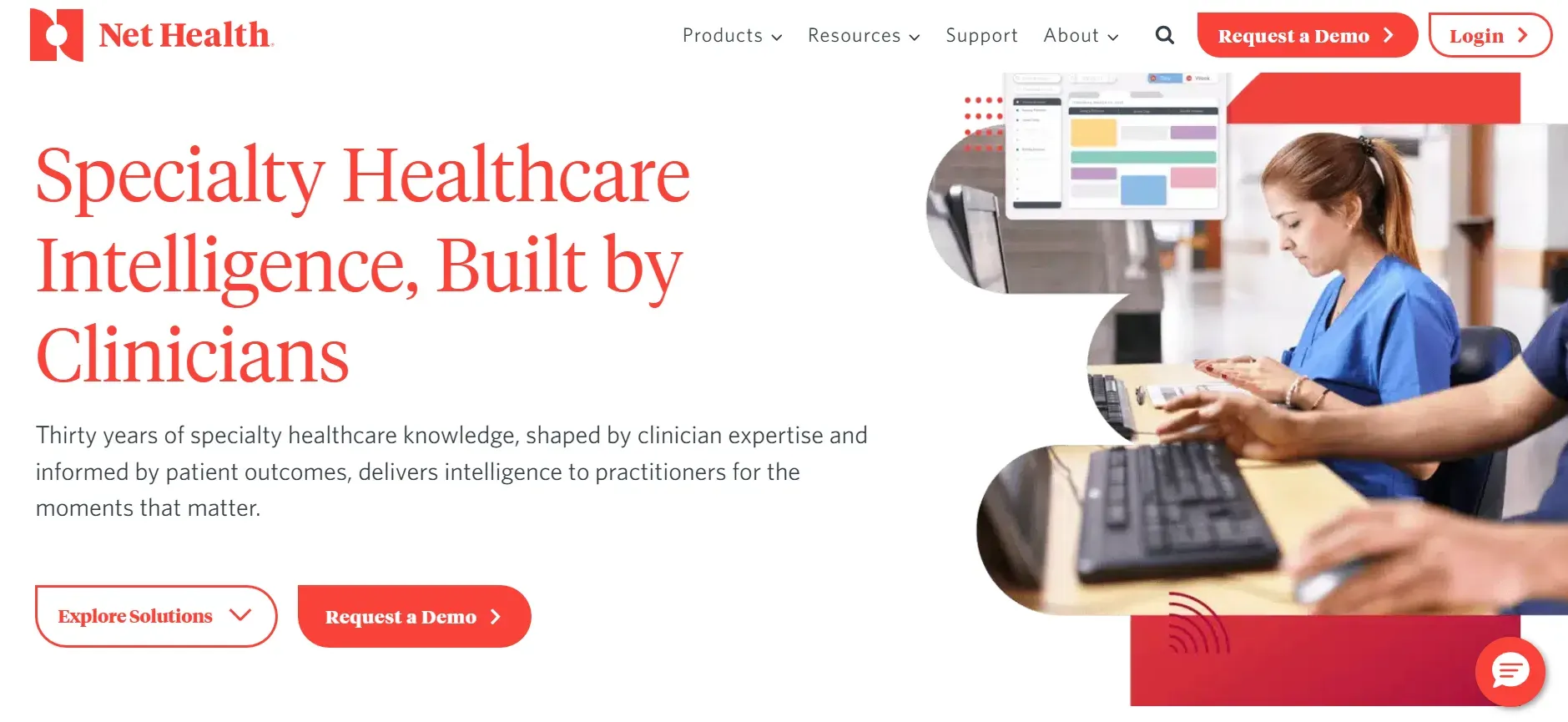
Net Health Therapy is built for large hospitals and health systems that require enterprise-grade analytics, security, and regulatory compliance. Its platform is engineered to handle high patient volumes, complex payer mixes, and rigorous audit requirements.
- Pricing: Custom quote required, designed for enterprise budgets.
-
Key limitations:
- Overkill for solo or small clinics
- Complex to manage and update
- Code and data are not fully portable
-
Strengths:
- Enterprise-grade analytics and compliance
- Deep integrations with hospital EHRs
- Comprehensive population health tools
6. Fusion Web Clinic (pediatrics specialty)
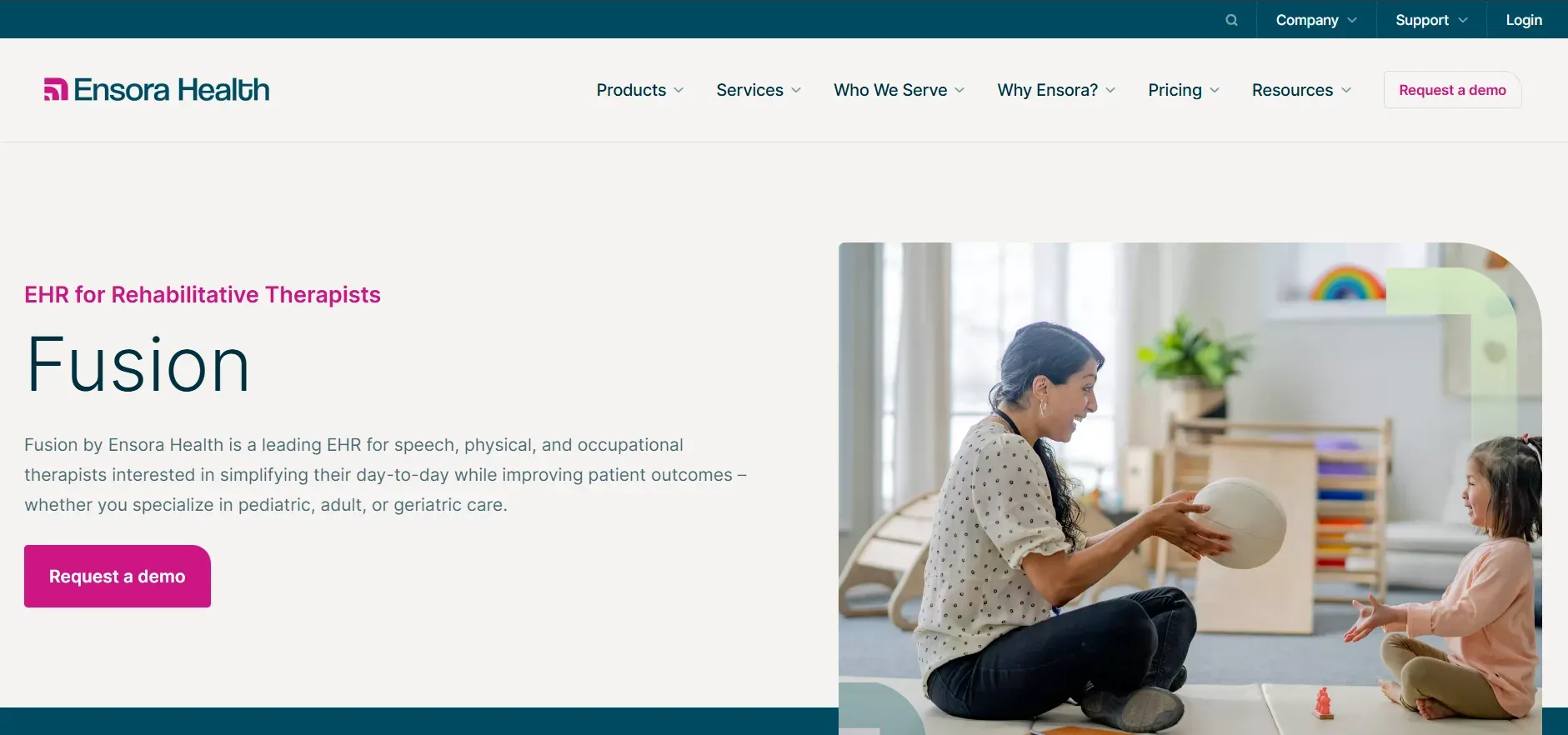
Fusion Web Clinic is a leading platform for pediatric occupational, physical, and speech therapy. Its design is child- and parent-centric, with workflows tailored to the unique needs of pediatric clinics.
- Pricing: Reported $119/month per provider, with higher tiers for advanced features.
-
Key limitations:
- Not suitable for adult rehab or complex multi-specialty practices
- Some features locked behind higher pricing tiers
- Monthly per-provider pricing adds up as staff grows
-
Strengths:
- Pediatric-specific templates and parent portal
- Intuitive layout for pediatric therapists
- Easy communication and developmental tracking
7. DrChrono PT (integrated EHR)
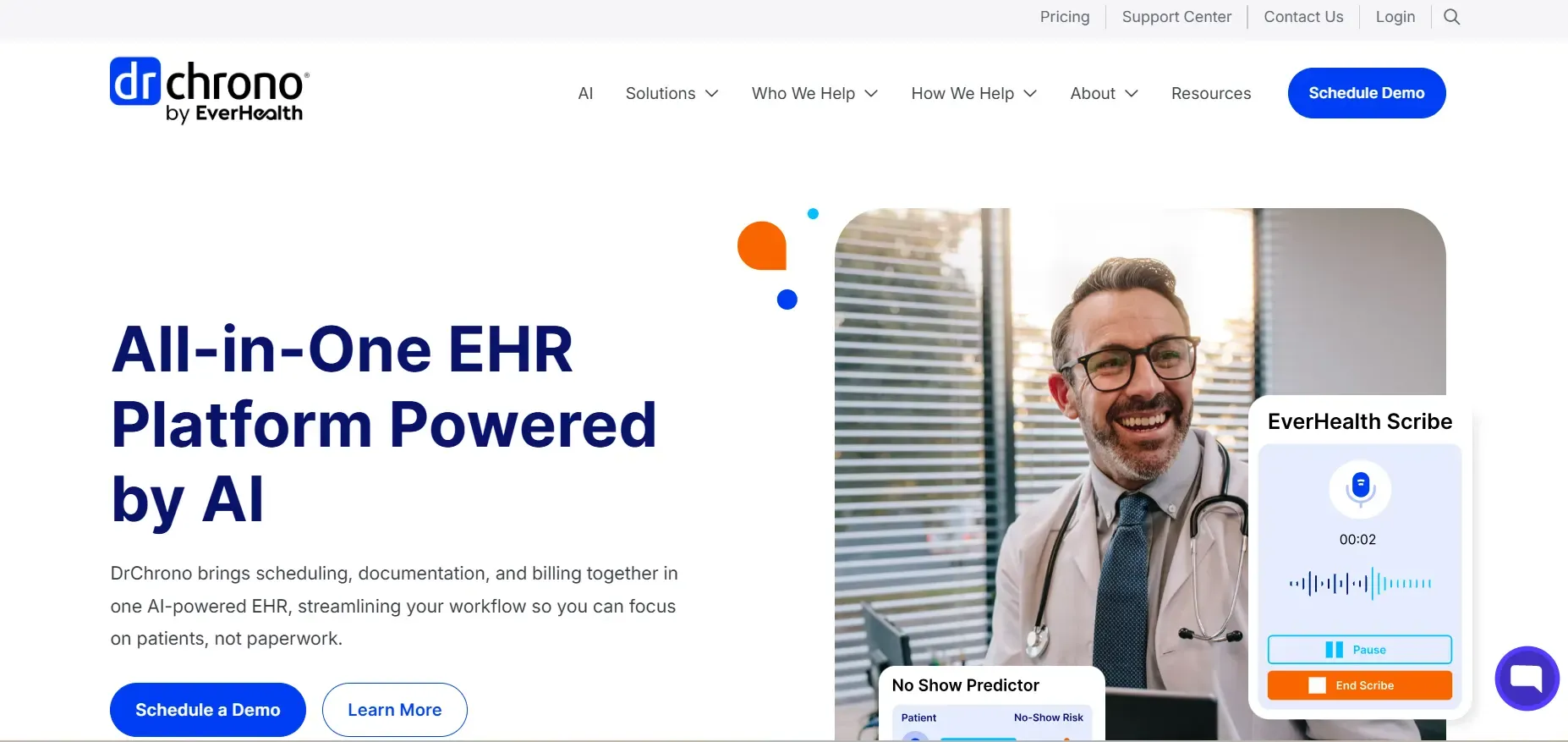
DrChrono PT is a general EHR platform with specialized modules for physical therapy. Its strength is in providing integrated medical records, e-prescribing, and practice management alongside PT-specific features.
- Pricing: Reported $199/month per provider, with add-on fees for telehealth and analytics.
-
Key limitations:
- PT-specific features are less deep than dedicated PT EMRs
- Learning curve for staff new to EHRs
- Add-on fees can drive up total cost
-
Strengths:
- Integrated EHR and PT workflows
- Mobile (iOS) support and open API
- Good fit for multi-specialty clinics
8. Devaims (full code ownership)
Devaims builds custom PT, rehab, and clinic management platforms that you own outright: you keep the code, the data, and the system. No per-provider fees, no surprise add-ons, no contract lock-in. Unlike every other “alternative” here, Devaims hands you the keys to your own software, built to fit your workflow, not the other way around.
- Full code and data ownership, unlimited users and locationsEvery feature and integration tailored to your clinicNo recurring seat or add-on fees, just a one-time build and flat maintenance
- Full code and data ownership, unlimited users and locations
- Every feature and integration tailored to your clinic
- No recurring seat or add-on fees, just a one-time build and flat maintenance
Other Practice Perfect alternatives worth knowing
- TherAssist, a solid legacy PT system, but with an aging interface, slow feature development, and limited cloud functionality. Still used by some clinics with established workflows.
- PTOS, niche for legacy clinics, with limited cloud features and dated user experience. New features are infrequent, but some long-standing clinics remain loyal for stability.
- WebPT, the largest PT EMR by user base, now owning Therabill. WebPT is known for its broad feature set and large support community, but has moved toward more bundled pricing and integration with its own billing tools. Worth a look for clinics prioritizing interoperability and a large user community. See a deep dive at Capterra.
Some of these tools are great for niche setups or legacy workflows, but come with the same “rent, not own” trade-offs as Practice Perfect. If you have highly specific needs or want to future-proof your clinic, pay close attention to the roadmap and support policies of any legacy system.
How to choose the right Practice Perfect alternative
- By budget: Compare all-in monthly costs, not just base pricing. Add up per-provider, telehealth, and integration fees. For example, a $150/month base may balloon to $300 or more with add-ons. Custom builds have higher upfront costs, but flat or minimal ongoing fees.
- By workflow: Pediatric, enterprise, or multi-location? Pick a tool built for your main use case, or consider a custom build if nothing fits. Clinics with unique documentation, parent engagement, or multi-site scheduling needs will outgrow generic systems quickly.
- By data ownership: If owning your system and data matters, only Devaims delivers true ownership. SaaS platforms may let you export data, but you never control the code or underlying database.
- By scale: Some tools are overkill for solo clinics (Net Health, Casamba), while others top out at a few locations (Therabill, Fusion). Consider your 3 to 5 year growth plan.
- By future needs: If you expect to grow, avoid platforms that charge per-user or per-location for every new hire or room. Ownership lets you scale without renegotiation or surprise bills.
If none of the SaaS options feel like a perfect fit, or you’re tired of renting your own process, it’s time to consider owning your platform with a custom build.
Stop paying rent on software you could own
The simple truth: every Practice Perfect alternative on this list is rented, not owned. That means monthly fees, upcharges, and the risk that your data or workflow could be stranded by a future price hike. Devaims is the alternative that flips the script: you pay once to build, pay a flat fee for updates, and the code, data, and platform are yours to keep.
Devaims is a custom software development agency that builds PT and rehab platforms from scratch or extends your existing stack. You get every feature and report you want, mapped to your workflows, and you own both the source code and the data, forever.
- No per-seat or per-location fees: Add as many clinicians, locations, or rooms as you want, with no extra charges. This is especially valuable for growing clinics or those with seasonal staffing changes.
- All features included: Everything you need gets built in, not held as a paid add-on. If you want a new workflow, report, or integration, you define it up front or add it later at a flat rate.
- Full data ownership: You keep your records, reporting, and audit trails, with no vendor lock-in. This is essential for compliance, audits, and future-proofing your clinic.
- Direct support, no call-center runarounds: The team who built your system supports it. You get fast, knowledgeable help from engineers who know your workflows inside and out.
| Platform | Ownership | Typical cost structure | Who controls features? |
|---|---|---|---|
| Practice Perfect | Rented | $120-$200/mo/provider + add-ons | Vendor |
| Clinicient | Rented | $299/mo/provider (reported) | Vendor |
| Prompt EMR | Rented | $250/mo/provider (reported) | Vendor |
| Devaims | Owned | One-time build, then flat maintenance | You |
Here’s what that looks like over five years for a 5-provider clinic:
| Year | Rented (Clinicient, Prompt, etc.) | Owned (Devaims) |
|---|---|---|
| 1 | $17,940 | $32,000 |
| 2 | $35,880 | $34,760 |
| 3 | $53,820 | $37,520 |
| 4 | $71,760 | $40,280 (now ahead) |
| 5 | $89,700 | $43,040 |
For clinics with even modest scale, you break even around year four. After that, every month you rent is just money out the door. If you want to see what your clinic would pay over five years, Devaims will run the numbers for you, no strings attached.
Clinics with more than three providers, multiple locations, or complex workflows gain the most from owning. If you’re tired of surprise bills or locked-in features, owning your software is the fastest way to build equity in your own clinic’s systems.
How to switch from Practice Perfect
- Export your patient data, documents, and billing history from Practice Perfect: This may require help from Practice Perfect support, as full data exports can be complex. Ensure you obtain all clinical notes, appointment history, scanned documents, and payment records in a usable format (CSV, XML, PDF, or HL7 where possible).
- Evaluate and select your new platform or custom build partner: Compare features, cost, data ownership, and support. Ask for references and see live demos tailored to your workflows.
- Map and import your data into the new system: Work with your new vendor to map legacy data fields, clean up any legacy inconsistencies, and import all records. For custom builds, this process is handled with direct input from your team to ensure nothing is lost or miscategorized.
- Reconnect payment processing, e-fax, and third-party integrations: Test all integrations thoroughly before go-live. For custom builds, you can request new integrations or improved workflows at this stage.
- Train your staff on the new workflows and documentation tools: Provide hands-on training, reference guides, and access to support channels. A smooth transition reduces errors and staff frustration.
- Run both systems in parallel for a few weeks: Dual-running ensures all data is transferred and workflows are functioning as expected. Monitor for missing records, billing issues, or scheduling conflicts.
- Review and terminate your Practice Perfect contract once migration is complete: Ensure you have all necessary data and documentation before ending your contract. Some vendors require notice periods or charge data export fees.
With a custom Devaims build, the migration is handled as part of the project, including planning, data mapping, and staff training. You get a single point of contact and proactive support throughout the transition.
Frequently asked questions
What is the best alternative to Practice Perfect for physical therapy?
For enterprise clinics or those prioritizing advanced billing and compliance, Clinicient and Raintree are strong contenders. Prompt EMR is favored by independent clinics for its modern design and usability, while Fusion Web Clinic leads in pediatric therapy. However, if your goal is to fully own your platform, set your own feature roadmap, and control your data without recurring seat fees, Devaims is the only true ownership alternative. The best choice depends on your clinic’s size, specialty, workflow complexity, and appetite for upfront investment versus ongoing fees.
Which Practice Perfect alternative is the cheapest?
Therabill and Fusion Web Clinic have some of the lowest reported monthly fees for small clinics, starting around $119 to $149/month per provider. However, these prices often do not include add-ons like telehealth, advanced reporting, or additional users. As clinics grow or require more features, costs can rise quickly. Over five years, a custom-owned platform from Devaims may be less expensive for clinics with three or more providers, especially when considering the elimination of recurring seat and add-on fees.
Is there a free alternative to Practice Perfect?
There are no truly free, HIPAA-compliant PT EMR systems with integrated billing and scheduling. Some open source EHRs (like OpenEMR) exist, but they lack PT-specific workflows, support, and compliance features required by most clinics. Free solutions usually mean sacrificing reliability, regulatory compliance, and support, risks most clinics cannot afford when dealing with protected health information.
Which alternative is best for pediatric therapy?
Fusion Web Clinic is purpose-built for pediatric therapy, offering child-friendly documentation, parent portals, and easy communication tools. Practice Perfect can be customized for pediatric use, but is more generalist. Devaims can build pediatric-specific features, such as developmental milestone tracking, parent engagement, and IEP management, which you own outright. For clinics with unique pediatric needs, a custom build ensures long-term fit and flexibility.
When should I switch from Practice Perfect?
Switching makes sense when you encounter feature limitations, rising fees, data portability concerns, or workflow friction that impedes clinical care or business growth. Many clinics switch at contract renewal, after a major workflow change (such as adding telehealth or opening a new location), or when strategic goals require features not supported by their current platform. If you find yourself budgeting more for software than for clinical development, or if you want to build equity in your systems, it’s time to explore Practice Perfect alternatives.
Can I keep my data when moving from Practice Perfect?
You can export patient records, billing data, and some documents, but the process can be labor-intensive. Some data, such as custom forms, scanned documents, or workflow rules, may not export cleanly. Planning is crucial to avoid data loss. With Devaims, data import and transition are handled as part of your custom build, with direct support to ensure a complete and accurate migration.
Do these alternatives integrate with billing and e-fax?
Most paid alternatives offer billing and e-fax as add-ons or integrations, usually at extra cost. Integration depth and reliability vary between platforms, so ask for live demos and references. If you own your own platform with Devaims, billing, e-fax, and any other workflow are built directly into your system and can be tailored to your exact needs, with no recurring integration or seat fees.
The bottom line
The strongest Practice Perfect alternatives all come with their own price tags and trade-offs. But the one question that changes the math is: what would it cost to build something once and own it forever?
For clinics with multiple providers, unique workflows, or growth plans, the five-year math often shows that renting software quickly outpaces the cost to build and own. Ownership means no more surprise bills, no forced upgrades, and the freedom to adapt as your clinic evolves. If you’re doing the five-year math and realize you could have built your own platform by now, it’s time to stop renting. The best Practice Perfect alternative for clinics ready to own is a custom build from Devaims. Book a consult, run your numbers, and see if ownership makes sense for your clinic.
See more insights on the Devaims blog, or check out related posts: Clinicient alternatives, Prompt EMR alternatives, WebPT alternatives.