


You start with Planning Center's free People module. Then you add Services, Check-Ins, Giving, and Groups. Suddenly, your monthly bill is north of $160, and you’re still missing a few features your team keeps asking for. Sound familiar? If you’re a church leader, you’ve felt the sting of modular pricing creeping higher every time you need to support another ministry or event.
Most Planning Center alternatives swap one set of trade-offs for another: flat rates, bundled features, or a shinier interface. But with every SaaS, you’re still renting. The real benefit comes when you own your software and stop paying the meter for your own congregation’s data. For most churches, Breeze ChMS, Realm, and Pushpay are strong Planning Center alternatives if you want someone else’s platform. If you want to own, Devaims is the route to keep your code, your data, and your future roadmap.
Let’s dig into the 9 best Planning Center alternatives, why churches like yours are making the switch, and when it’s time to stop renting and build something you truly own.
Why churches look for Planning Center alternatives
Modular pricing complexity: Planning Center’s a la carte model means every new ministry or feature adds a separate fee. Those $20 and $30 add-ons stack up fast.
Surprise cost hikes: As your church grows, so do your per-member, per-check-in, and per-gift costs. What started as affordable can quietly double once you cross certain usage thresholds.
No ownership, just rent: You never own the platform or your customizations. Miss a payment, and your access disappears along with your congregation’s data history.
Feature fragmentation: Want to build a custom dashboard or pull a report across modules? Good luck. You’re limited to what’s in the box, or you’re paying for another integration.
Per-user and per-feature fees: Adding volunteers, rooms, or events? Each one can mean bumping to a higher plan tier. That’s not how it should work when it’s your ministry on the line. These pain points drive many to research Planning Center alternatives.
Quick comparison of the best Planning Center alternatives
| Tool | Best for | Starting price | You own it? |
|---|---|---|---|
| Breeze ChMS | Flat-rate simplicity | $72/mo | No, SaaS |
| Church Community Builder (CCB) | Deep engagement tools | Quote required | No, SaaS |
| Realm | Integrated giving & comms | $29/mo | No, SaaS |
| Pushpay | Mobile giving | $99/mo | No, SaaS |
| Servant Keeper | On-prem & hybrid churches | $29/mo | No, SaaS |
| FellowshipOne | Large multi-campus | Quote required | No, SaaS |
| ChurchSuite | Comms & events | £15/mo | No, SaaS |
| Church Windows | Small and mid-size churches | $59/mo | No, SaaS |
| Devaims (Custom) | Owning your own stack | One-time build, you own it | Yes, you own it |
Always confirm current pricing before you decide, as rates and contract terms can change without warning.
The 9 best Planning Center alternatives
1. Breeze ChMS (Flat-rate simplicity)
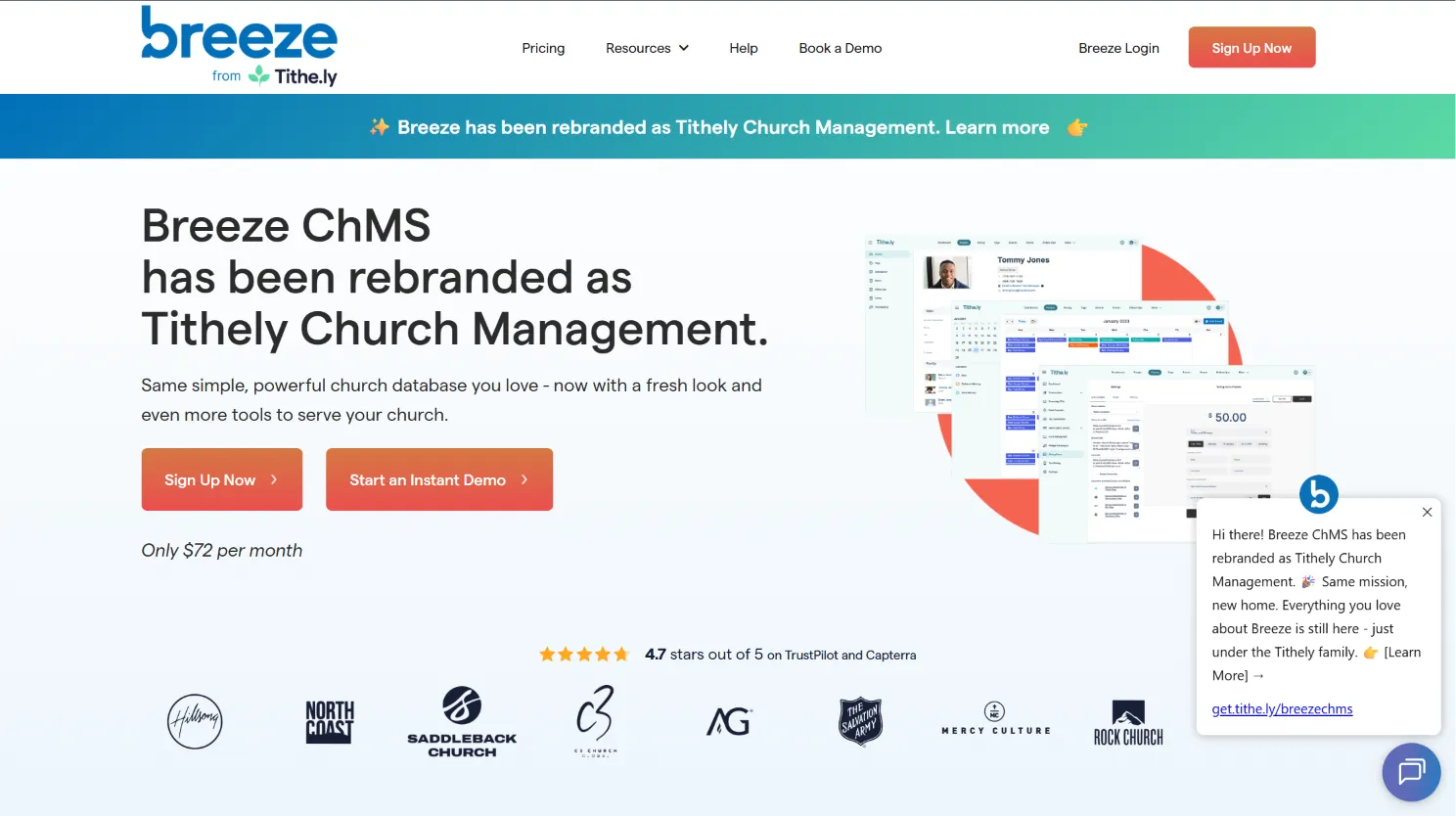
Breeze ChMS fits churches tired of complicated, modular pricing. Compared to Planning Center, it’s all-you-can-eat for a flat fee, with unlimited people, users, and storage. Smaller teams that don’t need deep customization often find Breeze the least stressful switch.
Pricing: $72/month flat rate, no contracts, no setup fees. See Breeze pricing.
- Simple flat pricing for any size church
- Fast onboarding, intuitive UI
- Unlimited users, storage, and support
- Feature set is less comprehensive than Planning Center
- Limited custom reports and automation
- Brand consolidation with Tithely may change roadmap
If you ever want a feature custom-built, you’ll still need to work around Breeze’s built-in limits. With Devaims, you’d just own that feature.
2. Church Community Builder (CCB) (Deep engagement tools)
Church Community Builder (now part of Pushpay) is best for churches that want built-in engagement tracking and workflow tools. Many teams find the interface less modern than Planning Center, but CCB’s people-mapping tools are hard to beat for larger churches.
Pricing: By quote only; onboarding fees range from $200 to $5,000. See CCB pricing.
- Comprehensive engagement and assimilation workflows
- Flexible group and volunteer management
- Strong integration with Pushpay giving
- Older user interface and navigation
- Onboarding fees and potential long-term contracts
- Pricing not transparent, must request quote
Custom dashboards or data ownership? Still a workaround unless you build with Devaims.
3. Pushpay (Mobile giving)
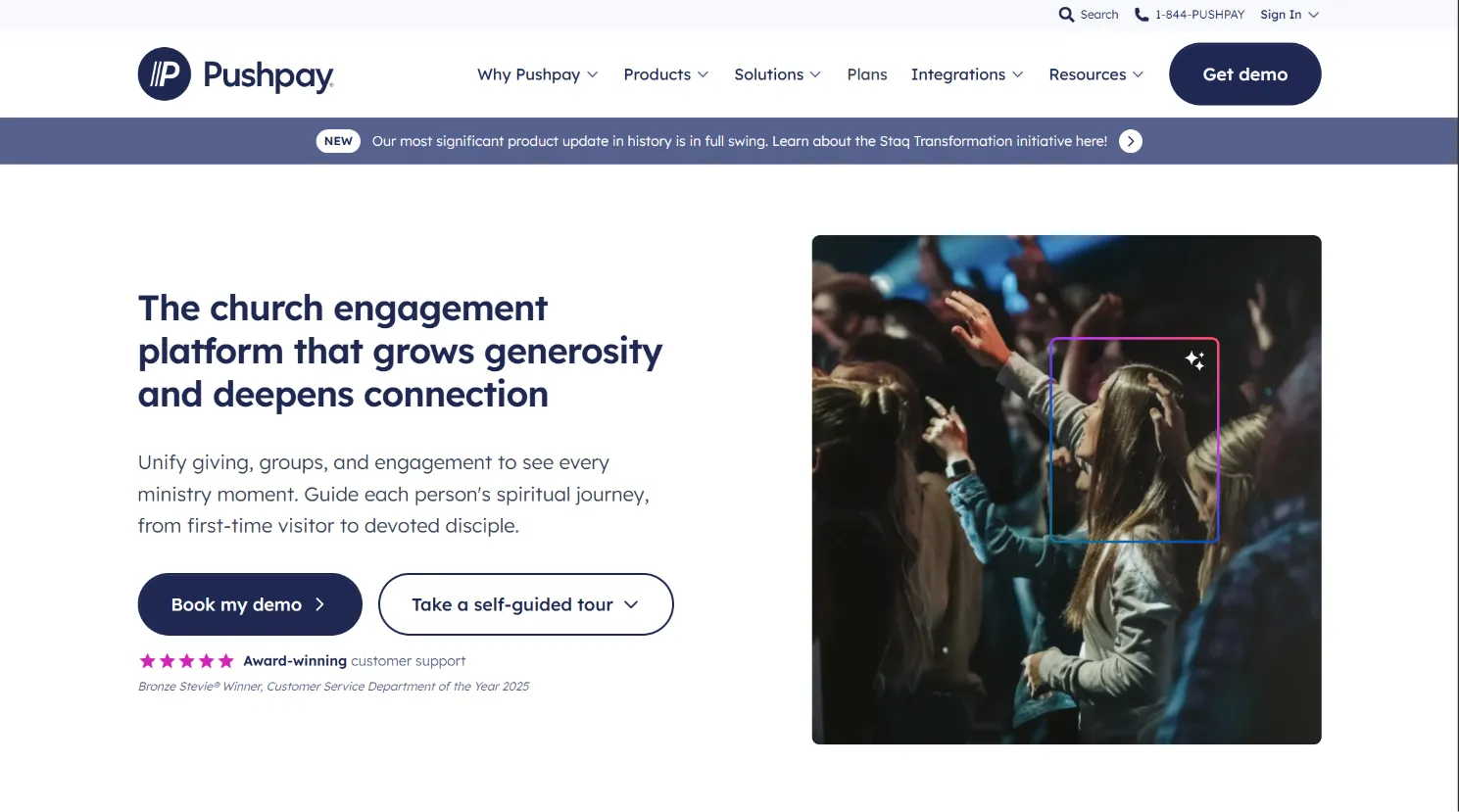
Pushpay is often the go-to for churches prioritizing mobile giving and digital engagement. Since acquiring CCB, Pushpay now offers a combined suite. The downside: costs climb quickly as you add features or need support beyond the basics.
Pricing: Starts at $99/month, top tiers up to $600/month; annual contracts common. See Pushpay pricing.
- Mobile giving experience is highly rated
- Unified platform with CCB for larger churches
- Recent investments in AI-driven pastoral care
- Price jumps sharply with plan tiers
- Annual contracts and setup fees possible
- Users report outdated UI and declining support
On a Devaims-built platform, your giving experience is yours to design and keep, with no per-gift fees or lock-ins.
4. Realm (ACS Technologies) (Integrated giving & comms)
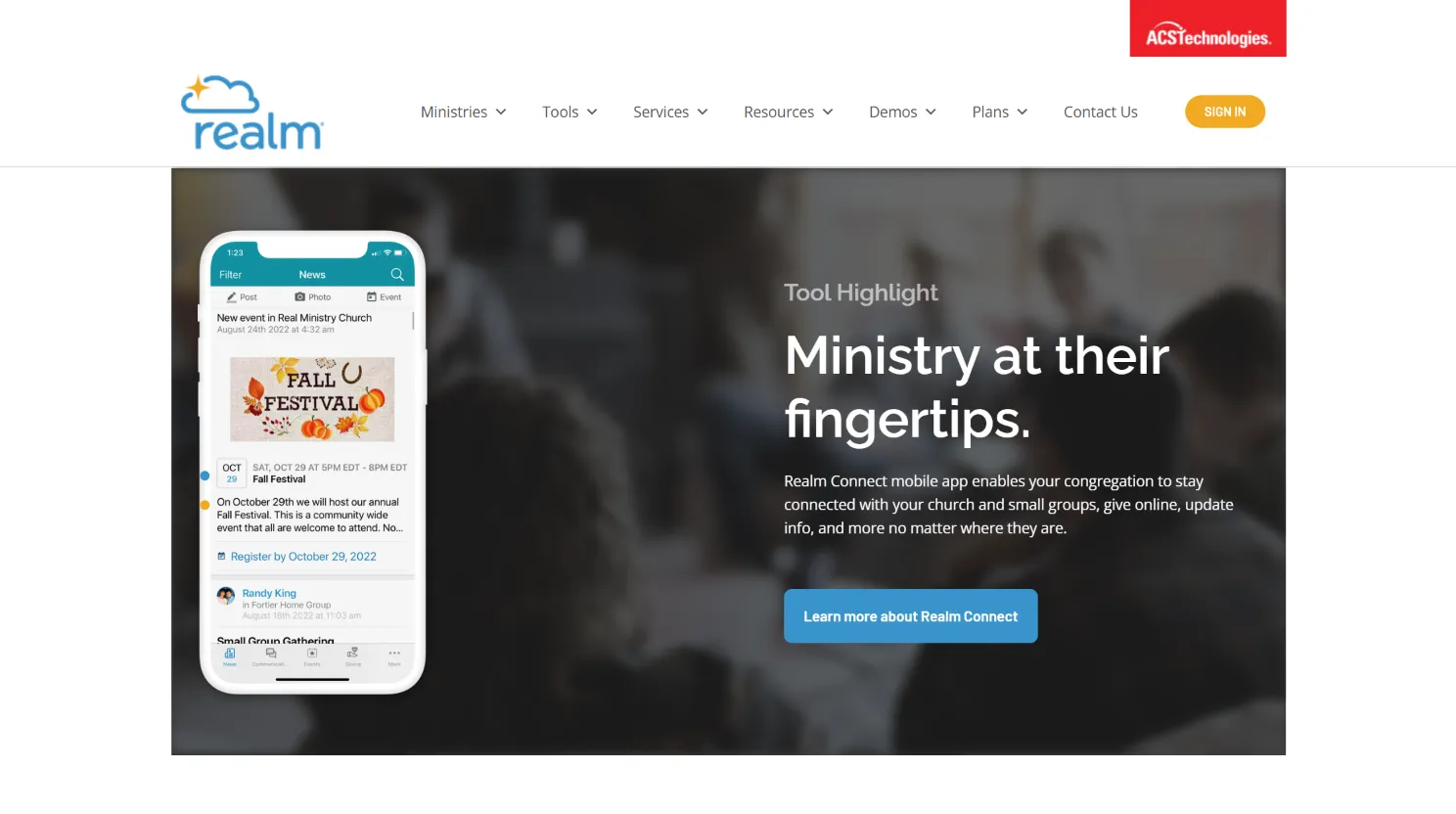
Realm by ACS Technologies is a popular all-in-one platform, especially for churches that want built-in giving, communication, and event tools. It’s often chosen by teams who need a balance between features and price.
Pricing: Starts at $29/month, up to $209/month for top tiers. See Realm pricing.
- Integrated giving, events, and comms tools
- Affordable entry-level pricing
- Strong support and training resources
- Interface less modern than some SaaS rivals
- Advanced features may require higher-priced plans
- Custom workflows are limited
With Devaims, custom workflows are built for your church’s process, not someone else’s roadmap.
5. Servant Keeper (On-prem & hybrid churches)
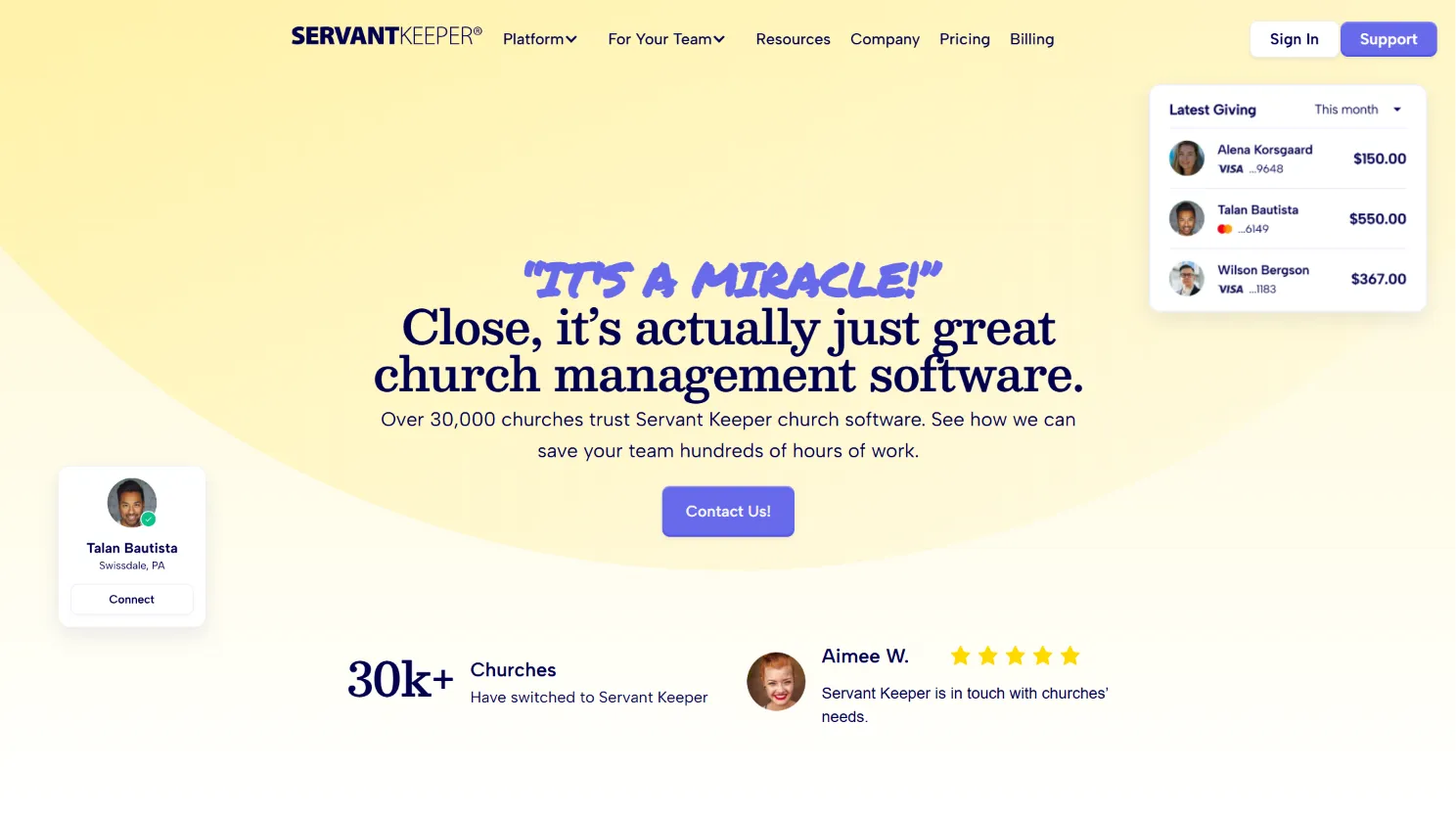
Servant Keeper is an option for churches that want the flexibility of cloud or on-premise deployment. Its hybrid model appeals to ministries with special privacy or connectivity needs. Compared to Planning Center, Servant Keeper offers more deployment control, but it still runs on a rented license.
Pricing: Starts at $29/month (cloud), perpetual licenses available. See Servant Keeper pricing.
- On-prem and cloud options
- Long track record in church management
- Good for privacy-focused teams
- User interface feels dated
- Some features require paid add-ons
- Not fully web-native
6. FellowshipOne (Large multi-campus)
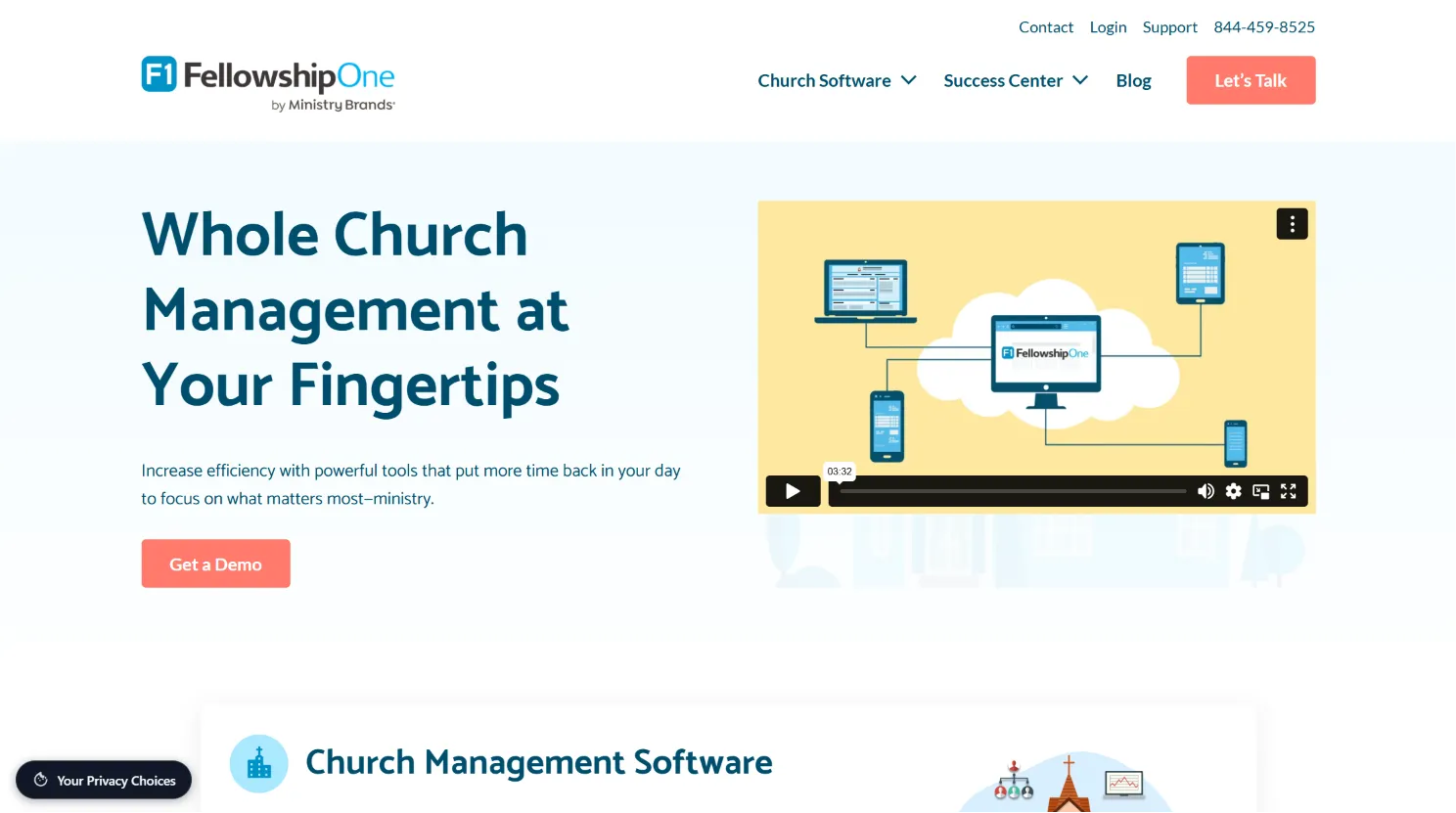
FellowshipOne is designed for large, multi-campus churches needing deep reporting and complex event management. It’s a legacy player that often appeals to churches outgrowing smaller tools. Compared to Planning Center, FellowshipOne brings more enterprise features, but also higher complexity.
Pricing: By quote only; expect higher tiers for large churches. See FellowshipOne pricing.
- Powerful for multi-campus coordination
- Deep custom reporting
- Flexible volunteer and attendance tools
- Steep learning curve for new users
- Higher cost for smaller teams
- Legacy interface can feel clunky
7. ChurchSuite (Comms & events)
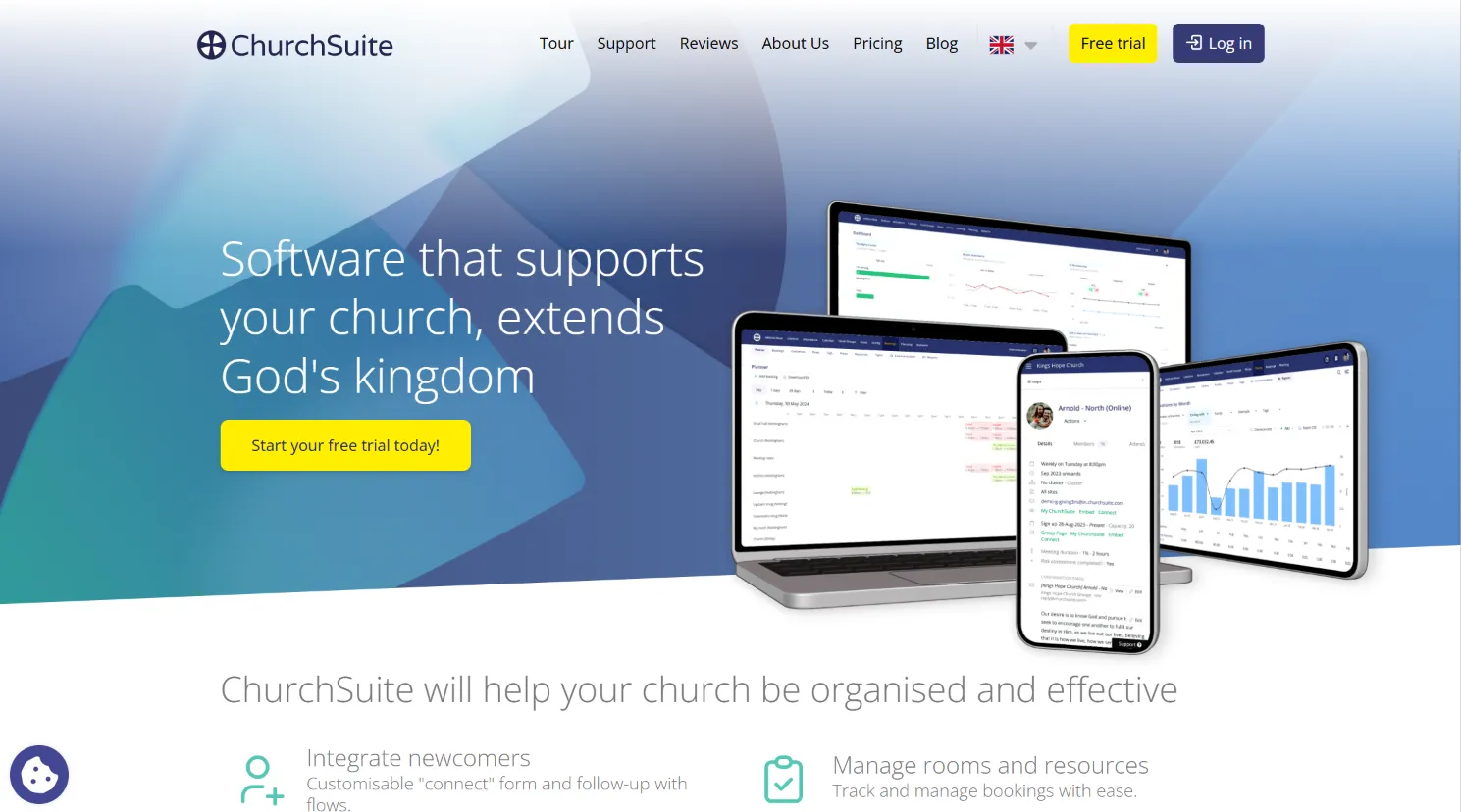
ChurchSuite is a modern cloud tool with a focus on communications and event management. UK-based, but gaining US traction, it’s ideal for churches that want to streamline events and comms without a lot of setup.
Pricing: Starts at £15/month; pricing rises with added modules and member count. See ChurchSuite pricing.
- Excellent event and comms features
- Mobile-first design
- Active development team
- Pricing scales with membership and modules
- No true ownership of data or workflows
- Some US-specific features may lag
8. Church Windows (Small and mid-size churches)
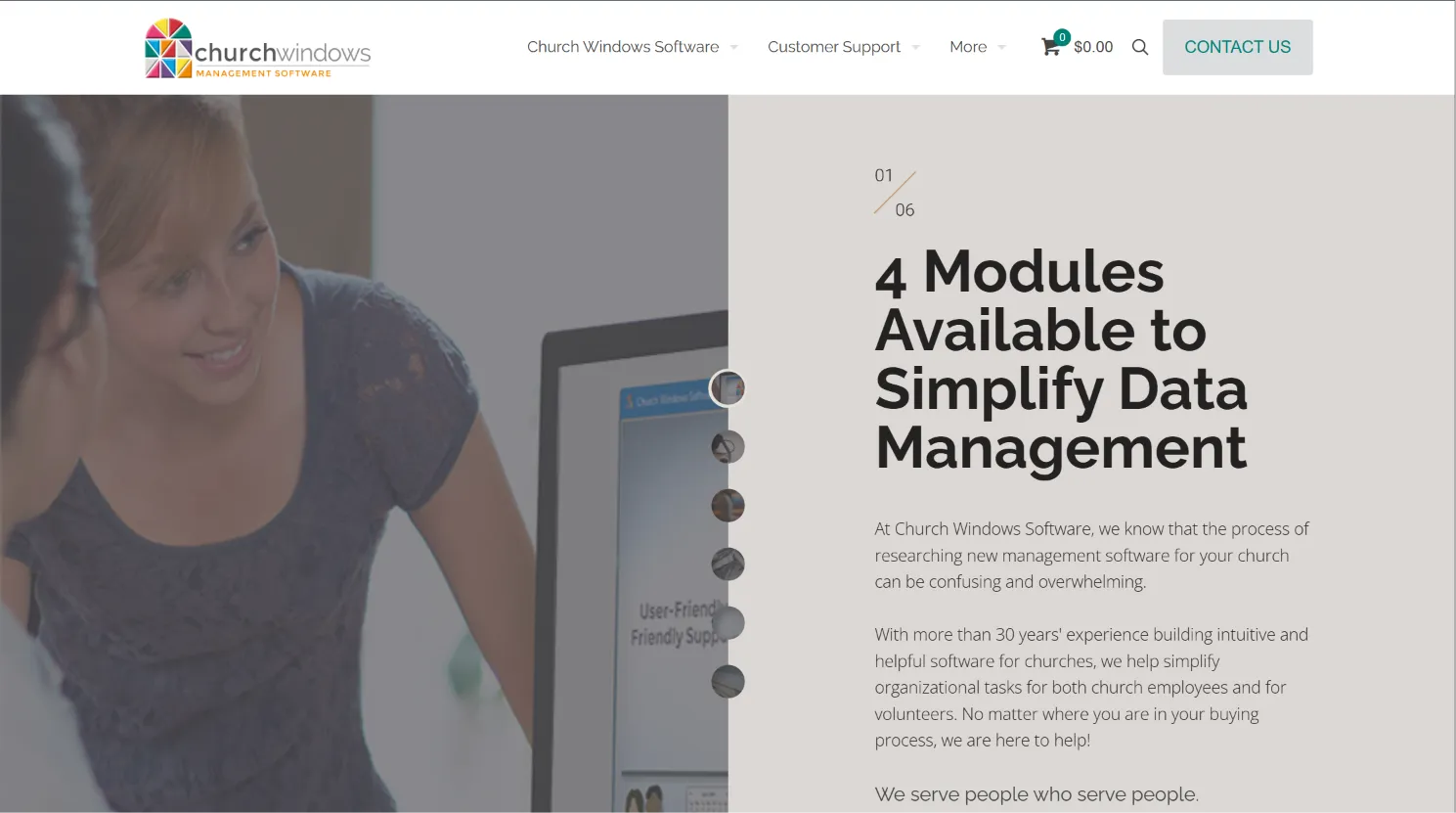
Church Windows is a long-standing church management system that handles membership, contributions, accounting, and scheduling. It’s popular with small to mid-size churches who need reliable basics without a steep learning curve. Compared to Planning Center, Church Windows is more old-school but offers a perpetual license option.
Pricing: Starts at $479 one-time for desktop; $59/month for web version. See Church Windows pricing.
- One-time purchase option
- Strong accounting and contribution tools
- Good for churches with basic needs
- Interface is dated and less intuitive
- Limited cloud functionality in perpetual version
- Fewer modern integrations
9. Devaims (Owning your own stack)
Devaims builds custom web, mobile, and business software for churches that want to own their stack outright. Unlike every alternative above, Devaims hands you the source code. You keep your data, set your roadmap, and stop paying rent to access your own congregation’s information. If your church needs integration, custom workflows, or features no off-the-shelf tool offers, Devaims is the only option where you keep what you pay for.
- You own the code, data, and future roadmap
- No per-user, per-feature, or per-event fees
- Custom integrations built for your church’s needs
- Flat, predictable costs after launch
Other Planning Center alternatives worth knowing
- Elexio: Focuses on worship and media management, but less feature-rich for mid to large churches.
- Elvanto: Now part of Tithely, offers strong volunteer scheduling for smaller teams.
- Faith Teams: Affordable, but limited integrations for larger churches.
- ChurchTrac: Budget-friendly, but lacks depth in custom workflows and automation.
How to choose the right Planning Center alternative
- By budget: Flat-rate tools like Breeze keep costs simple. Custom builds only make sense if you’re spending $150 or more per month over years.
- By features: If you need deep giving or event management, tools like Pushpay or ChurchSuite excel. For full ownership and custom workflows, only Devaims delivers.
- By church size: Larger, multi-campus churches benefit from FellowshipOne or a custom Devaims platform. Smaller teams may prefer Breeze or Church Windows.
- By data ownership: If keeping your congregation’s data and history is non-negotiable, owning the source code with Devaims is the only route.
- When the pain of renting outweighs the convenience of SaaS, it’s time to look at building your own platform.
Stop paying rent on your church management system
Every alternative to Planning Center, Breeze, CCB, Pushpay, Realm, offers a different flavor of rental. The interface changes, the price structure shifts, but the core problem remains: you’re always renting access to your own congregation’s data. If your church is tired of per-user fees, surprise add-ons, and feature lockouts, building your own system is the only way to own your future.
Devaims builds custom web, mobile, and business platforms for churches who want to keep their code, control their roadmap, and say goodbye to endless SaaS payments. You get exactly what you need, including integrations, automations, and custom reports, delivered as your property, not another monthly bill.
- No more per-member or per-feature fees: Add volunteers, events, or ministries without penalty.
- Custom integrations, your way: Connect to giving, accounting, or comms platforms on your terms.
- Your data, your control: Never worry about losing access or paying to export your history.
- Flat, predictable costs: After launch, only a reasonable maintenance fee, no more surprise hikes.
| Tool | Ownership | Per-user fees? | Contract required? |
|---|---|---|---|
| Planning Center | No, SaaS | Yes | No |
| Breeze ChMS | No, SaaS | No | No |
| Pushpay | No, SaaS | Yes | Yes |
| Devaims (Custom) | Yes, you own it | No | No |
Let’s do the five-year math. A typical church with 150 members using Planning Center’s full stack pays around $170/month, or $2,040/year. Over five years, that’s $10,200, and you still own nothing. A custom Devaims build runs $32,000 upfront, plus $180/month ($2,160/year) for maintenance. By year five, you’re ahead, and you own your platform, free to modify or move as you wish.
| Year | Rent (Planning Center) | Own (Devaims) |
|---|---|---|
| 1 | $2,040 | $32,000 + $2,160 = $34,160 |
| 2 | $4,080 | $32,000 + $4,320 = $36,320 |
| 3 | $6,120 | $32,000 + $6,480 = $38,480 |
| 4 | $8,160 | $32,000 + $8,640 = $40,640 |
| 5 | $10,200 | $32,000 + $10,800 = $42,800 (Devaims is ahead from year 5 onward) |
For churches with 150 or more members and growing needs, owning pays off fast. If you’re ready to stop paying rent on your ministry’s future, Devaims can build exactly what your church needs, and you’ll own it forever.
How to switch from Planning Center
- Export all your congregation, giving, and attendance data from Planning Center’s modules.
- Choose your new alternative (or plan your Devaims build) and map required features.
- Import data into the new platform, cleaning and mapping fields as needed.
- Reconnect giving, payments, and external integrations.
- Train your staff and volunteers on the new workflows and interface.
- Run both systems in parallel for a few weeks to catch any gaps or errors.
- Review your Planning Center contract or billing to ensure you’ve canceled all modules.
With a custom Devaims build, the migration is handled as part of the project.
Frequently asked questions
What is the best Planning Center alternative for a small church?
Breeze ChMS offers a flat-rate, all-in-one platform that many small churches find easier and more affordable than Planning Center’s modular fees. Church Windows is another good option for those who prefer a one-time software purchase.
Which Planning Center alternative is cheapest for growing churches?
Realm’s entry-level plan starts at $29/month, but costs increase with advanced features. Breeze offers a flat $72/month for unlimited people, no per-user pricing. Long-term, a custom Devaims build can be cheaper if your monthly SaaS fees are high.
Is there a free Planning Center alternative?
Planning Center’s People module is free for unlimited users, but most full-featured ChMS alternatives require a paid plan. Tithely offers some free giving tools, but for full ownership, only Devaims lets you build exactly what you need without recurring license fees.
What’s the best Planning Center alternative for giving and donations?
Pushpay and Tithely both specialize in online giving, with deep integrations. However, both require ongoing processing fees. With Devaims, your giving tools can be custom-built, and you control your own fees and integrations.
When should a church switch from Planning Center?
If your Planning Center monthly bill is climbing due to added modules, or you need features it doesn’t offer, it’s time to look for alternatives. If you want to own your system and stop renting, a custom Devaims build is the best route.
Can I keep my old data when moving to a Planning Center alternative?
Most alternatives allow importing data from Planning Center, though custom fields may require manual mapping. Devaims handles full data migration as part of every custom build, so you keep your full congregation history.
Are there Planning Center alternatives for hybrid or on-premise use?
Servant Keeper and Church Windows both offer desktop or hybrid deployment. For total ownership and flexibility, Devaims can build a system that runs wherever you want.
The bottom line
Most Planning Center alternatives just trade one set of rental terms for another. The most useful decision rule is this: add up every recurring fee, per-user cost, and upgrade over five years. If that number would pay for a platform you could own, it’s time to stop renting and start building for your ministry’s real needs.
Owning isn’t about avoiding change. It’s about investing in a system that serves your mission, not someone else’s pricing model. When you’re ready to run the math and see if custom ownership pays off for your church, Devaims is here to help.
For more insights, visit the Devaims blog, or explore related guides like Breeze ChMS alternatives, Pushpay alternatives, and Realm alternatives.