


Your medical practice is tired of renting its own data. NextGen Healthcare’s monthly fees keep climbing, but you never really own the platform. Maybe it was the last time they bumped your rate, or the moment a bug left your front desk scrambling and the fix took weeks. Maybe you’re just fed up with contracts that lock you in while the interface stays stuck in 2017.
If you’re searching for NextGen Healthcare alternatives, you’re not alone. Kareo (Tebra), AdvancedMD, DrChrono, Athenahealth, eClinicalWorks, Practice Fusion, Modernizing Medicine, Epic, and Cerner (Oracle Health) all promise a better deal, but most still rent you what you could own. The best pick for practices wanting true control? A custom build from Devaims, where you keep the code and the keys. Let’s break down what you should know before you sign another contract.
Why medical practices look for NextGen Healthcare alternatives
For many practices, the decision to move away from NextGen Healthcare is about more than just cost or interface complaints. It’s about regaining control over the lifeblood of your business, your data, your workflow, and your ability to grow without financial handcuffs. Here’s a deeper look at the most common reasons practices start exploring alternatives:
- Per-provider fees add up fast: NextGen Healthcare, like most subscription EHRs, charges a monthly fee per provider. For a solo practice, this might seem manageable, but the real costs hit as you expand. For example, at $500 per provider per month, a team of six pays $3,000 every month, $36,000 per year, and $180,000 over five years. And these fees never stop. You never build equity or gain ownership, no matter how long you stay.
- Locked into long contracts: Multi-year agreements (usually three to five years) are the norm, with penalties for early termination. Some vendors add ambiguous setup and integration fees, making it prohibitively expensive to leave before your term ends. This lock-in can keep you stuck with outdated workflows or poor support.
- Surprise price hikes: Many practices report annual increases of 10 to 15 percent, often with little warning. These increases can outpace your revenue growth, especially as reimbursement rates stagnate. Your budget planning becomes a moving target, and you may be forced to cut corners elsewhere to cover the rising software rent.
- Slow support and bug fixes: When a platform update breaks your workflow, the fix can take weeks or longer. Many practices feel stuck waiting for vendor timelines, with little recourse or ability to resolve issues on their own.
- You never own your data or code: Even if you can export most patient data, critical customizations, templates, and workflow logic are often stuck in proprietary formats. This makes switching a daunting technical and operational challenge. You’re always limited to what the vendor allows, and truly custom workflows are rarely possible.
These pain points drive practices to search for NextGen Healthcare alternatives that offer more control, transparency, and flexibility.
Quick comparison of the best NextGen Healthcare alternatives
| Tool | Best for | Starting price | You own it? |
|---|---|---|---|
| Kareo (Tebra) | Small to mid-size practices | Custom | No |
| AdvancedMD | Growing practices | $749/provider/mo | No |
| DrChrono | Mobile-friendly offices | Custom | No |
| Athenahealth | Billing-focused clinics | 3-7% of collections | No |
| eClinicalWorks | Established clinics | $449/provider/mo | No |
| Practice Fusion | Solo providers | $149/provider/mo | No |
| Modernizing Medicine | Specialty practices | Custom | No |
| Epic | Large health systems | Custom, six figures | No |
| Cerner (Oracle Health) | Hospitals and enterprise | Custom, six figures | No |
| Devaims | Practices that want to own it | One-time build | One-time build, you own it |
Confirm current pricing before you decide. Quoted rates often exclude setup, integrations, or required modules. Many vendors will only provide full pricing details after multiple sales calls, so always ask for a complete cost breakdown, including implementation, training, and data migration, before signing.
The 10 best NextGen Healthcare alternatives
1. Kareo (Tebra) (Best for growing outpatient clinics)
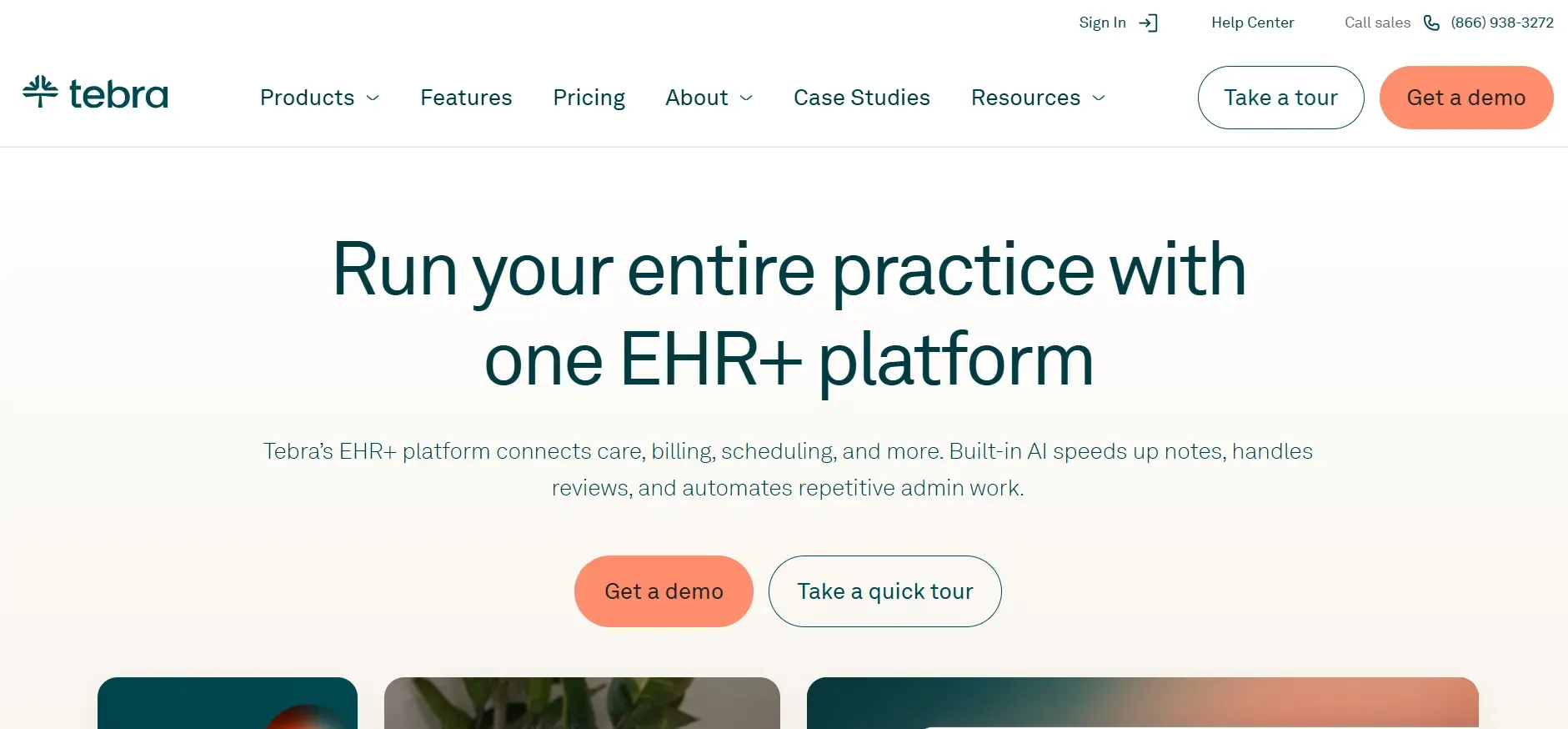
Kareo (now part of Tebra) delivers a cloud-based EHR and practice management suite designed for outpatient clinics, urgent care, and small to midsize medical groups. Its strength is a blend of user-friendly design and strong billing tools, making it a favorite among practices that want to modernize without the overhead of an enterprise-grade system.
Kareo’s core modules include scheduling, clinical charting, e-prescribing, telehealth, patient portal, and integrated billing. The platform is known for its intuitive dashboard, which helps front-desk staff and providers manage appointments, insurance eligibility, and patient communications with minimal training. Kareo also offers a library of specialty-specific templates, though its depth can lag behind some competitors in highly specialized fields.
Integrations: Kareo supports integrations with labs, imaging centers, and e-prescribing networks. It also connects to popular clearinghouses and offers some API access for custom workflows, although the range is limited compared to open platforms. Data extraction is possible, but full data portability is restricted by licensing terms.
Migration friction: Moving to Kareo from NextGen Healthcare is typically less burdensome than moving to a larger enterprise EHR. Onboarding support is available, but custom data migrations (such as templates and historical records) can incur additional fees. Practices should expect some manual effort to rebuild workflows and ensure data mapping is accurate.
Typical use cases: Independent primary care and specialty clinics, urgent care centers, and outpatient therapy practices. Kareo is especially suited for practices seeking a cloud-native experience with built-in insurance and patient billing tools, but without the bloat of hospital-grade systems.
Pricing: Custom quotes, typically $300-$500 per provider per month. Setup fees and add-ons may apply.
-
Key limitations:
- Does not allow code or database ownership
- Annual price increases are common
- Advanced analytics and specialty workflows may require add-ons
-
Strengths:
- User-friendly interface with minimal training required
- Integrated billing and insurance tools
- Flexible for small to mid-size practices
2. AdvancedMD (Best for scaling up with flexible pricing)
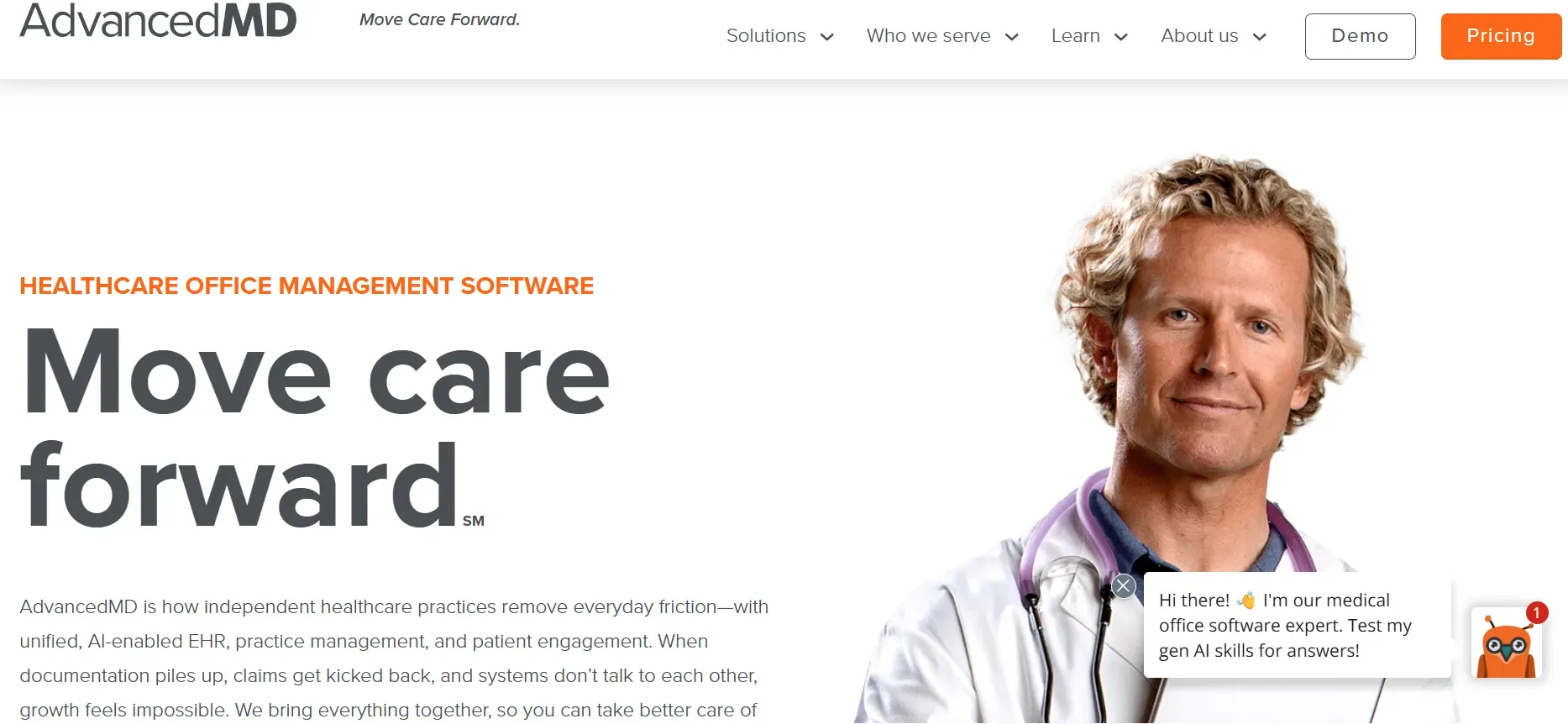
AdvancedMD is a comprehensive EHR, practice management, and billing platform that appeals to growing practices, especially those with fluctuating patient volumes. Its unique pricing structure lets you choose between per-provider and per-encounter billing, which can help manage costs if your patient census varies seasonally or by service line.
Platform features: AdvancedMD offers modules for scheduling, charting, telemedicine, patient engagement, e-prescribing, and strong reporting. Its workflow engine allows some process automation, such as appointment reminders and insurance eligibility checks. The reporting suite is extensive, with customizable financial and clinical dashboards for administrators.
Integrations: AdvancedMD connects with labs, imaging partners, clearinghouses, and some third-party apps via HL7 and FHIR. Its marketplace offers add-ons for reputation management, patient surveys, and more, but deep custom integrations may require additional development fees or third-party support.
Migration friction: Data migration is typically handled as a paid service, and the process can be time-consuming, especially for practices with complex data or custom templates. Some practices report needing significant staff retraining due to differences in workflow logic and interface layout.
Typical use cases: Multi-provider clinics, specialty practices, and behavioral health groups. AdvancedMD is often chosen by organizations looking to scale without the administrative complexity of hospital systems, and by those who want flexible pricing to match variable patient volumes.
Pricing: Starts at $749 per provider per month. Per-encounter pricing available. Setup and training fees may apply.
-
Key limitations:
- Multi-year contracts with auto-renewal
- Setup can be challenging without paid onboarding
- No code or database ownership
-
Strengths:
- Flexible pricing models
- Comprehensive feature set for growing practices
- Strong reporting and workflow automation
3. DrChrono (Best for tablet-first and mobile clinics)
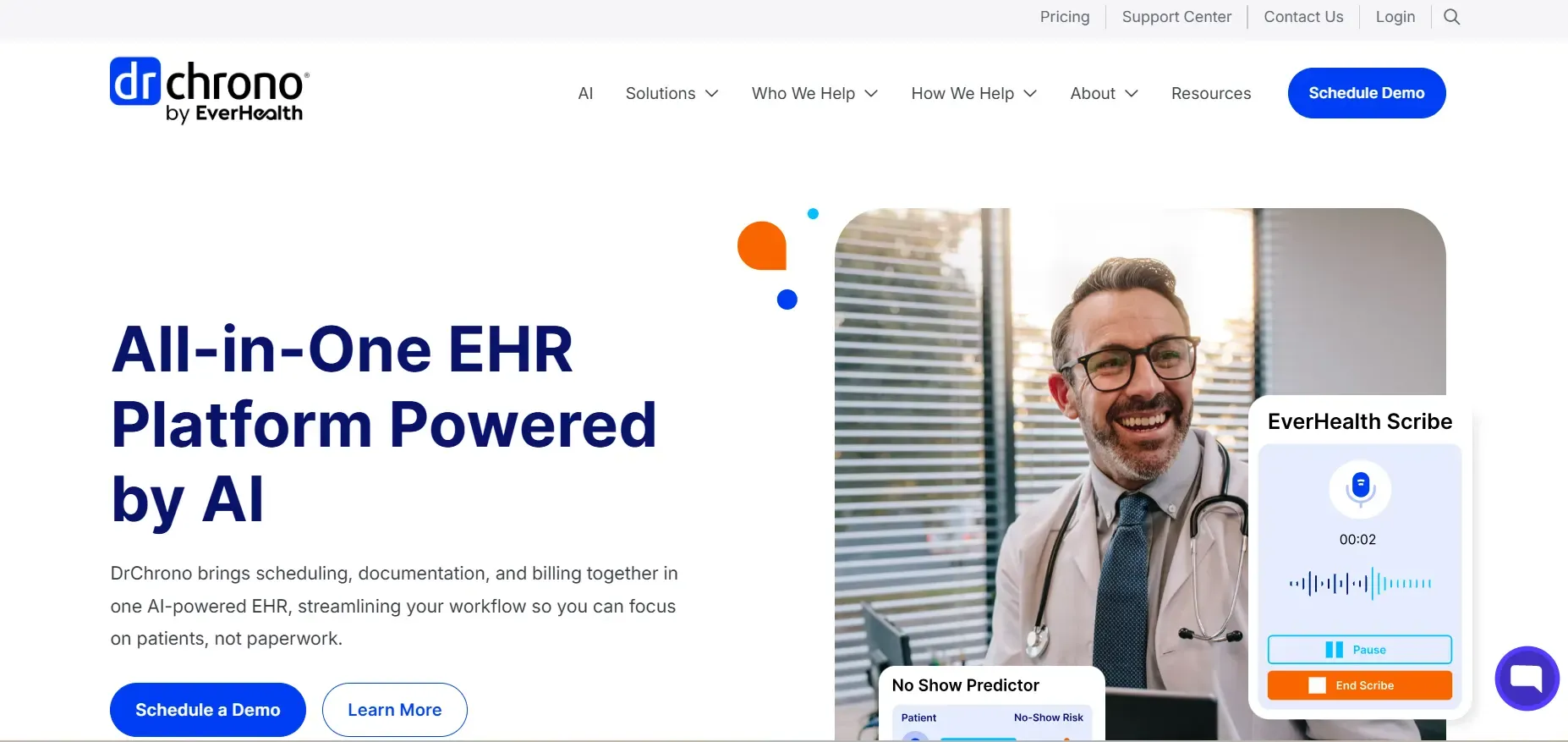
DrChrono is known for its best-in-class mobile experience, making it a top pick for practices that want to chart on iPads, iPhones, and other Apple devices. The platform is cloud-based and designed to be used anywhere, supporting telemedicine, e-prescribing, and digital intake forms directly from mobile devices.
Platform features: DrChrono offers customizable medical forms, voice-to-text charting, eRx, integrated billing, and a patient portal. Its Apple-first design means providers can use Face ID, touch navigation, and Apple Pencil for annotation. The system supports electronic faxing and can capture photos directly into the patient chart, useful for dermatology, wound care, and other visual specialties.
Integrations: DrChrono has an API for custom integrations, and supports connections with labs, imaging centers, and select third-party apps. However, some integrations (such as with major hospital systems or specialty registries) may require custom development or may not be available.
Migration friction: DrChrono offers migration support, but as with most EHRs, moving custom templates and historical data requires manual mapping. Practices moving from a desktop-based EHR may need to adjust workflows to fit the mobile-first paradigm, and some staff may require extra training.
Typical use cases: Concierge medicine, telehealth-first practices, mobile clinics, and providers who frequently chart away from the office. DrChrono is especially favored by tech-savvy clinicians who want to reduce paperwork and use digital intake and documentation.
Pricing: Custom quotes, typically $200-$400 per provider per month. Add-ons and integrations may increase costs.
-
Key limitations:
- Advanced specialty workflows may require workarounds
- Annual price increases are common
- No code or database ownership
-
Strengths:
- Outstanding mobile and tablet experience
- Customizable forms and digital documentation
- Ideal for telehealth and mobile practices
When you own your EHR, every mobile feature can be tailored directly to your workflow. No more workarounds or third-party limitations.
4. Athenahealth (Best for practices focused on billing performance)
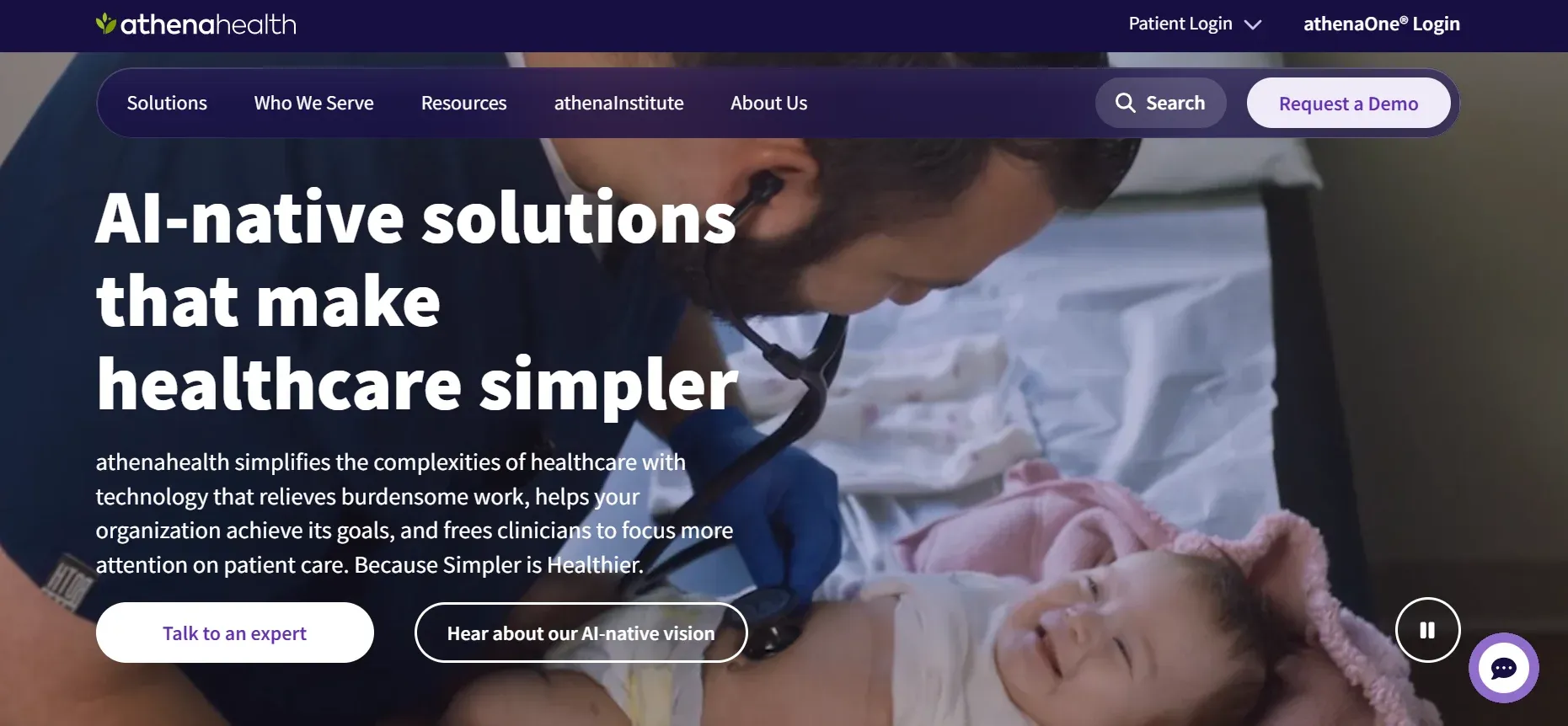
Athenahealth is a major player in the ambulatory and group practice market, known for its powerful billing and revenue cycle management (RCM) services. Unlike flat per-provider fees, Athenahealth charges a percentage of collections, which aligns their incentives with your revenue, but can become expensive as your collections rise.
Platform features: Athenahealth provides a cloud-based EHR, practice management, patient engagement tools, telehealth, and population health modules. Its billing engine is highly automated, with claim scrubbing, denial management, and payer rules updated continuously. The platform’s rules engine is updated centrally, which can reduce manual data entry and speed up reimbursement.
Integrations: Athenahealth integrates with a wide network of payers, labs, and clearinghouses. It offers APIs for some custom workflows, but deeper customizations may require professional services or are limited by the platform’s rules. Athenahealth’s marketplace provides access to third-party add-ons for patient engagement, analytics, and specialty content.
Migration friction: Athenahealth supports onboarding but charges for data migration and implementation. Moving custom templates, order sets, and reports can be complex, and practices often need to adjust to Athena’s workflow conventions (such as the way encounters and billing are linked). Three-year contracts are standard, with penalties for early exit.
Typical use cases: High-volume primary care and specialty practices, urgent care clinics, and organizations with complex billing needs. Athenahealth is often chosen by practices that want to offload revenue cycle management to a proven partner.
Pricing: 3-7% of collections. Implementation and migration fees apply.
-
Key limitations:
- Percentage-of-collections model can be costly as you grow
- Limited flexibility for deep workflow customization
- No code or database ownership
-
Strengths:
- Best-in-class billing and RCM tools
- Automated payer rules and claim management
- Strong network of integrations and add-ons
With a custom Devaims platform, you pay a one-time build and flat maintenance, not a percentage of your revenue. Your success doesn’t increase your software bill.
5. eClinicalWorks (Best for established clinics needing full EHR + PM)
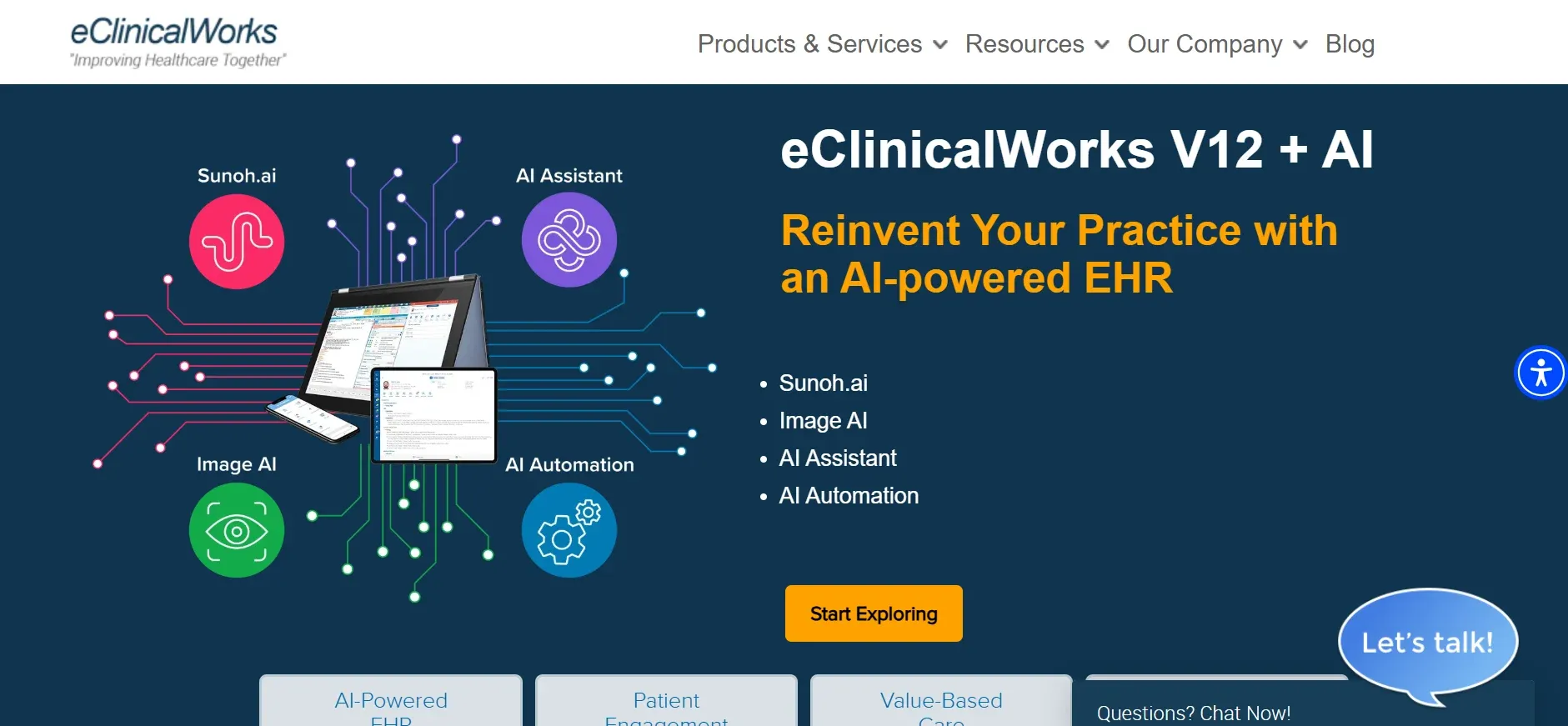
eClinicalWorks is a long-standing EHR and practice management solution, used by over 130,000 physicians. It offers one of the most comprehensive feature sets for ambulatory clinics, including scheduling, telehealth, patient portal, population health, and RCM modules.
Platform features: eClinicalWorks supports strong clinical documentation, integrated e-prescribing, chronic care management, and telemedicine. The system includes a strong analytics engine, customizable reports, and a patient engagement suite. Population health and care coordination features are available for larger networks.
Integrations: eClinicalWorks integrates with labs, imaging centers, HIEs, and external billing partners. It supports HL7, FHIR, and some third-party APIs. The eClinicalWorks app marketplace (eCW Hub) offers additional integrations for patient engagement, telehealth, and more.
Migration friction: Data migration is a paid service and can be complex, especially for practices with custom templates or unique workflows. The interface, while powerful, is often described as dated and can require substantial staff training. Contracts are usually three to five years, with steep penalties for early termination.
Typical use cases: Multi-provider clinics, FQHCs, community health centers, and primary care networks. eClinicalWorks is frequently chosen by organizations that need a reliable, scalable platform with a wide set of features and integrations.
Pricing: Starts at $449 per provider per month. Setup and add-on fees may apply.
-
Key limitations:
- User interface is less modern than newer entrants
- Advanced features may cost extra
- No code or database ownership
-
Strengths:
- Comprehensive feature set for clinics
- Strong analytics and reporting
- Reliable and scalable for multi-provider practices
6. Practice Fusion (Best for solo providers and startups)
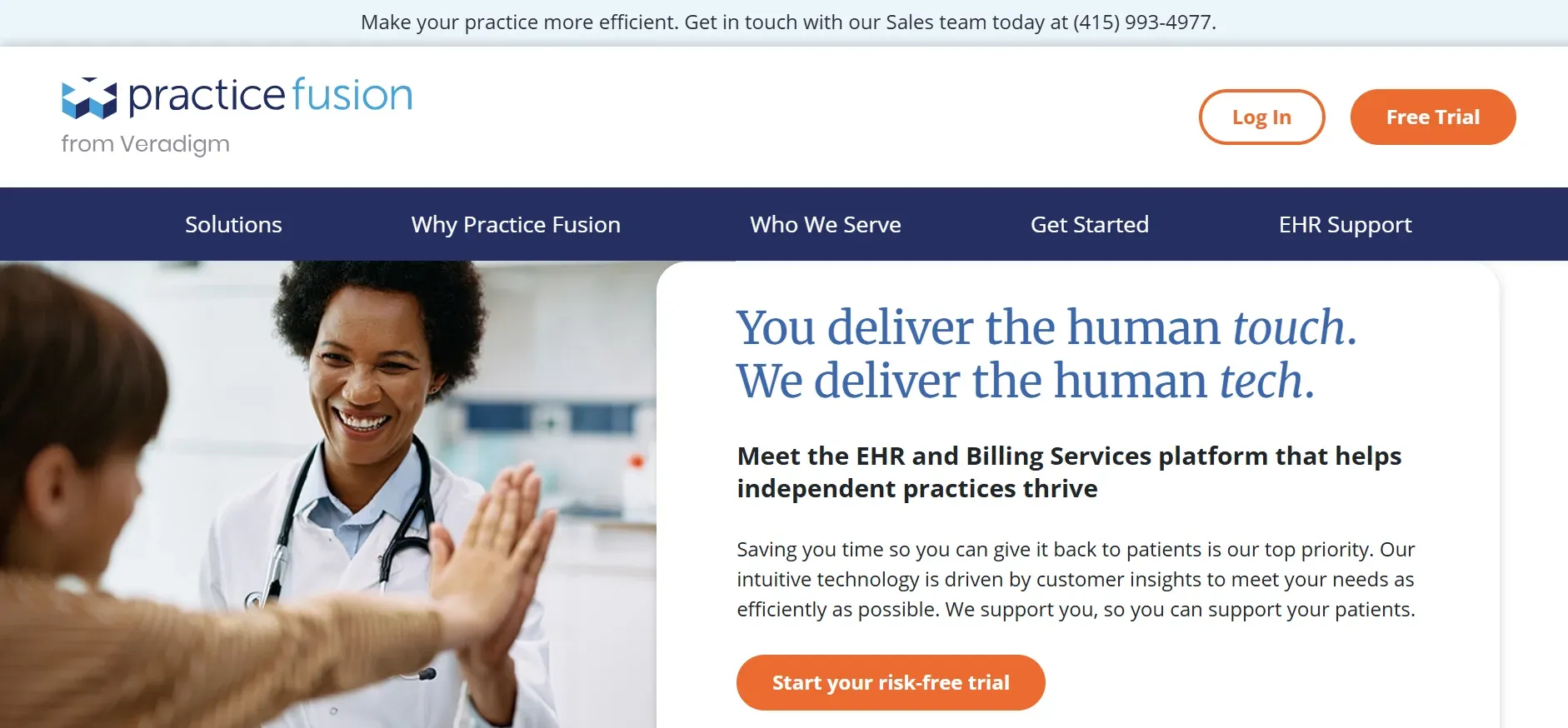
Practice Fusion is the budget leader, offering basic EHR and charting tools at a fraction of the cost of most competitors. It’s designed for single-provider and micro-practices that want to digitize records and billing without a large up-front investment.
Platform features: Practice Fusion includes appointment scheduling, charting, e-prescribing, basic billing, and a patient portal. Its interface is simple and web-based, requiring little to no setup. The platform offers a library of charting templates, though customization is limited compared to higher-end systems.
Integrations: Practice Fusion integrates with select labs and e-prescribing networks. Its integration ecosystem is less comprehensive than other options, and some reporting features are only available as paid add-ons. Data export is possible, but is usually limited to standard formats (CCDA, PDFs, CSVs).
Migration friction: The platform is easy to adopt, with minimal onboarding required for solo providers. However, if you outgrow Practice Fusion, migrating to a more advanced EHR can be time-consuming, especially if you need to re-create complex templates or custom reports.
Typical use cases: Solo physicians, telemedicine startups, and small behavioral health practices. Practice Fusion is ideal for providers who need a compliant EHR but do not require advanced features or deep customization.
Pricing: $149 per provider per month. Add-ons may increase costs.
-
Key limitations:
- Limited customization and reporting
- Integration options are basic
- No code or database ownership
-
Strengths:
- Low entry cost for solo providers
- Simple, web-based interface
- Quick onboarding and setup
If you outgrow Practice Fusion, migrating to a platform you own means you never face this pain twice.
7. Modernizing Medicine (Best for specialty and dermatology practices)
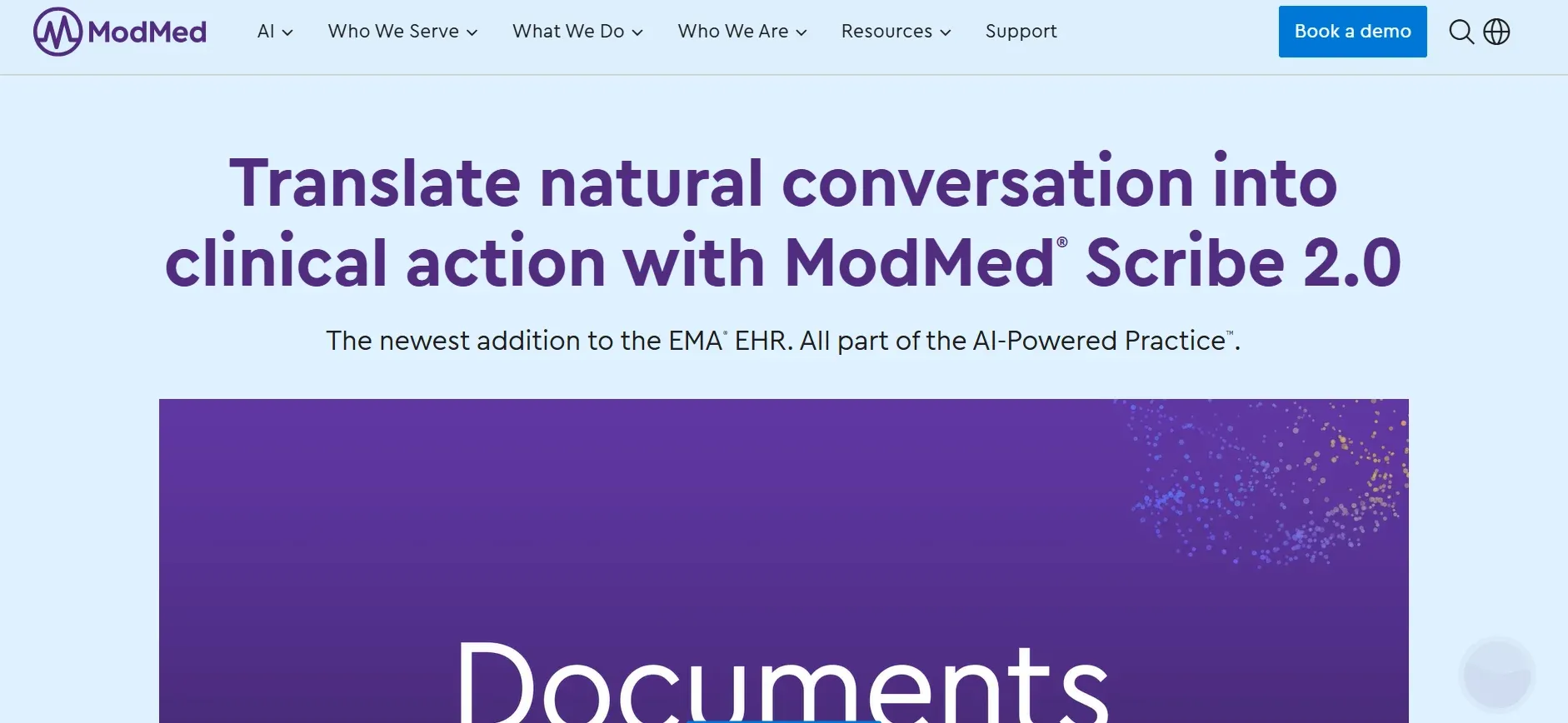
Modernizing Medicine (ModMed) delivers a specialty-specific EHR experience, with adaptive charting templates and tailored workflows for dermatology, orthopedics, ophthalmology, ENT, and more. Its flagship product, EMA, is designed by practicing physicians in each specialty, resulting in workflows that minimize clicks and documentation time.
Platform features: ModMed includes adaptive charting, procedure documentation, built-in coding assistance, telehealth, and patient engagement tools. The system uses machine learning to suggest diagnoses and codes based on charting patterns. It also supports multimedia documentation (photos, annotations) and integrates with specialty-specific devices (such as dermatoscopes).
Integrations: ModMed integrates with labs, imaging centers, and some practice management systems. Its API support is improving, but deep custom integrations may require additional vendor services. Patient engagement tools are strong, with mobile check-in, reminders, and online payment support.
Migration friction: ModMed offers migration support, but custom data (like specialty templates and historical images) often requires manual transfer. Pricing is opaque and can be high, especially for advanced modules or larger practices. Training is recommended to take full advantage of the adaptive charting features.
Typical use cases: Dermatology, orthopedics, ophthalmology, gastroenterology, and other specialty clinics that want tailored workflows and automation. ModMed is often chosen by practices that want to reduce documentation time and improve coding accuracy.
Pricing: Custom quotes, typically higher than generalist EHRs. Advanced modules and integrations may increase costs.
-
Key limitations:
- Less flexible for generalists or multi-specialty groups
- Pricing can be high for advanced features
- No code or database ownership
-
Strengths:
- Specialty-specific adaptive charting
- Efficient documentation and coding tools
- Strong patient engagement features
8. Epic (Best for large health systems and enterprise clinics)
Epic is the dominant EHR for large hospitals, health systems, and multi-site networks. Its scale, interoperability, and comprehensive feature set make it the gold standard for enterprise healthcare IT, but it’s rarely an option for independent clinics due to its high cost and complexity.
Platform features: Epic covers every aspect of clinical and administrative operations: ambulatory and inpatient EHR, revenue cycle, scheduling, population health, patient portal (MyChart), telehealth, research, and analytics. Its interoperability tools (Care Everywhere) enable data exchange across health systems and regions.
Integrations: Epic supports integration with hundreds of third-party systems, including labs, imaging, HIEs, and custom apps via FHIR. Its app marketplace (App Orchard) allows for some custom integrations, but deep customization is often limited by governance and requires Epic-certified consultants.
Migration friction: Epic implementation is a major undertaking, often requiring months or years of planning, extensive staff retraining, and a dedicated IT team. Data migration is complex, with significant manual mapping and validation. Costs are high: six figures for even small deployments, with ongoing maintenance and support fees.
Typical use cases: Large health systems, hospital networks, and multi-specialty groups with complex clinical and administrative needs. Epic is chosen for its scalability, regulatory compliance, and deep analytics.
Pricing: Custom, typically six figures for implementation. Ongoing maintenance and support fees apply.
-
Key limitations:
- High cost and long implementation timelines
- Little flexibility for small practices
- No code or database ownership
-
Strengths:
- Comprehensive feature set for enterprise needs
- Deep interoperability and analytics
- Scalable for large organizations
9. Cerner (Oracle Health) (Best for hospitals and enterprise)
Cerner (Oracle Health) is another enterprise-grade EHR, now under Oracle’s umbrella. It offers strong clinical, financial, and operational modules for hospitals, health systems, and large outpatient networks.
Platform features: Cerner includes inpatient and ambulatory EHR, revenue cycle management, population health, analytics, and patient engagement tools. It is designed for high reliability and uptime, supporting complex workflows, order sets, and care coordination for large organizations.
Integrations: Cerner supports HL7, FHIR, and a range of APIs for integration with labs, imaging, external billing, and Oracle Cloud services. Its scale makes it a preferred choice for organizations already invested in Oracle’s ecosystem.
Migration friction: Like Epic, Cerner implementation is lengthy and costly. Data migration from NextGen or other EHRs is a major project, often requiring custom scripts and extensive validation. Staff training and change management are critical for success.
Typical use cases: Hospitals, academic medical centers, and enterprise health systems. Cerner is often chosen by organizations with complex care delivery and reporting needs, and those seeking deep analytics and population health tools.
Pricing: Custom, typically six figures for implementation. Ongoing support and maintenance fees apply.
-
Key limitations:
- High cost and complex contracts
- Overkill for small clinics
- No code or database ownership
-
Strengths:
- Robust feature set for hospitals and enterprise
- Deep analytics and population health tools
- Strong integration with Oracle ecosystem
10. Devaims (Best for owning your EHR and escaping rent forever)
Devaims builds custom medical software, delivered with full source code so you own it outright. No per-provider fees, no forced upgrades, no lock-in. You get exactly the workflows, reports, and integrations your practice needs. When the time comes to add a new feature or connect to a new system, it’s your code, your data, your decision.
Platform features: Every Devaims build is tailor-made for your practice. You define the workflows, user roles, charting templates, and reporting. Integrations with labs, payers, imaging, and patient engagement tools are built to your requirements. You can choose your hosting (cloud or on-premises), security measures, and update schedule.
Integrations: Devaims supports full integration with labs, clearinghouses, payment processors, telehealth platforms, and more using industry standards like HL7, FHIR, and X12. APIs can be exposed for custom patient apps, analytics dashboards, or partner systems. You control the data model and can add or remove integrations as your needs evolve.
Migration friction: With Devaims, data migration is handled as part of your project. The team works with you to extract, map, and validate data from your legacy EHR, including custom reports, templates, and attachments. Once live, you own the code and database, making future migrations or enhancements straightforward.
Typical use cases: Practices of any size that want to stop paying rent and take control of their technology destiny. Ideal for clinics with unique workflows, specialty documentation, or integration needs that off-the-shelf EHRs cannot support.
Pricing: One-time build, typically $27,500 for a 6-provider clinic. Flat annual maintenance ($2,600/year) covers updates and support. No ongoing rent or per-user fees.
- Full code and data ownershipNo per-provider or monthly rentCustom workflows, integrations, and reporting
- Full code and data ownership
- No per-provider or monthly rent
- Custom workflows, integrations, and reporting
Other NextGen Healthcare alternatives worth knowing
- Elation Health: Focused on primary care workflows, Elation Health offers a modern, clinician-friendly interface and strong patient engagement tools. Pricing is subscription-based and generally higher than Practice Fusion, but lower than enterprise platforms. Its feature set is lighter than Epic or Cerner, and it lacks deep customization, but for primary care it is a strong, nimble option. See reviews on Software Advice.
- Healow: Healow is a patient engagement portal by eClinicalWorks, not a full EHR, but it adds online scheduling, telehealth, and secure messaging to existing systems. It’s a popular add-on for clinics using eCW or seeking to modernize patient access without switching EHRs.
- Open-source EHRs (like OpenEMR): These offer true code ownership and zero license fees, but require significant IT expertise and security vigilance. Most clinics will need outside help for hosting, updates, and compliance. OpenEMR and OSCAR are leading options, but expect to budget for professional support.
How to choose the right NextGen Healthcare alternative
- By budget: Solo providers and startups may lean toward Practice Fusion or Elation Health, while scaling clinics need to run the 5-year math on AdvancedMD, Athenahealth, or eClinicalWorks. For clinics with 4 or more providers, ownership often becomes the fiscally responsible option.
- By specialty: Dermatology or niche practices may get more from Modernizing Medicine or Elation Health than from generalists. For integrated behavioral health, look at AdvancedMD or Athenahealth’s specialty modules.
- By ownership needs: If you want to own your code and data, Devaims (or open-source, with caveats) is the only route. Subscription EHRs never grant true ownership, only a license to use.
- By contract flexibility: Avoiding multi-year lock-in narrows your choices fast. Most SaaS EHRs require 2 to 5 year commitments; only custom builds and open-source offer full flexibility.
- By integration stack: If you need custom workflows, bespoke reporting, or real-time data exchange with partners, renting limits you. Owning opens doors. Ask each vendor for a list of supported integrations, and whether you can access APIs or database exports.
When the same subscription math keeps coming up, it’s time to see if owning your EHR beats renting it year after year. Add up all fees, monthly, annual, setup, training, and migration, over five years and compare to a one-time build.
Stop paying rent on software you could own
The real problem with NextGen Healthcare isn’t just the bugs or the support tickets. It’s the math of renting your core platform forever. Every alternative on this list still charges you by the provider, the month, or the encounter. That adds up to five- and six-figure checks over five years, and you never get the keys.
Devaims is different. We build web, mobile, and business software for medical practices, and hand you the source code. No per-user rent, no lock-in, no forced module upgrades. Your workflows, your data, your system, owned outright, not leased.
Here’s how owning your EHR solves the pains you’ve lived with:
- No more surprise price hikes: Your maintenance stays flat, no annual increases. You control when and how to upgrade, and you’re never forced into new modules or features you don’t need.
- Freedom to scale: Add as many providers, locations, or service lines as you want, with zero increase in software rent. Your cost per provider drops every time you grow.
- Complete data control: Your data, your rules. Move, integrate, or export whenever you want, in whatever format you need. No more migration headaches or vendor delays.
- Custom features that actually fit: If your staff wants a new workflow, report, or integration, you just add it. No more waiting for a vendor roadmap or lobbying for features.
- Regulatory agility: Respond to regulatory changes (MIPS, Cures Act, state mandates) on your own schedule, with updates tailored to your workflows.
| Tool | Ownership | Pricing Model | Contract? |
|---|---|---|---|
| NextGen Healthcare | Vendor-owned | $500+/provider/mo | Yes (multi-year) |
| Athenahealth | Vendor-owned | 3-7% of collections | Yes (3 years) |
| AdvancedMD | Vendor-owned | $749/provider/mo | Yes (multi-year) |
| Devaims | You own it | One-time build + flat maintenance | No contract |
| Year | Rented (cumulative) | Owned (cumulative) |
|---|---|---|
| 1 | $36,000 | $27,500 |
| 2 | $72,000 | $30,100 |
| 3 | $108,000 | $32,700 |
| 4 | $144,000 | $35,300 |
| 5 | $180,000 | $37,900 (now ahead) |
For practices with more than four or five providers, the math usually tips in favor of owning by year two or three. After that, every year you’re still renting is money you could be saving or investing in features your staff actually wants. If you want to see your real numbers, we’ll run the projections for free.
How to switch from NextGen Healthcare
- Export all patient and billing data from NextGen Healthcare, including PDFs, CCDAs, raw reports, and custom templates. Be sure to request all attachments, scanned documents, and audit logs if needed for compliance.
- Choose your alternative and finalize your contract or build agreement. Make sure your new platform supports the integrations, workflows, and regulatory requirements you need.
- Import data into your new system. EHRs and custom builds both require careful mapping of patients, encounters, orders, billing, and attachments. Plan for data validation and reconciliation to avoid gaps.
- Reconnect insurance clearinghouses, labs, and payment processors. Test electronic claims, lab orders, and payment posting before go-live.
- Train clinical and front desk staff on new workflows, documentation requirements, and reporting tools. Create cheat sheets and quick reference guides to ease the transition.
- Run both systems in parallel for two weeks to catch missing data, workflow gaps, or integration issues. Compare reports and test critical workflows (e.g., e-prescribing, lab orders, billing submissions).
- Review your NextGen Healthcare contract to ensure all obligations are met before canceling. Watch out for auto-renewal clauses and confirm you have all data and documentation before shutting down access.
With a custom Devaims build, the migration is handled as part of the project, including data extraction, mapping, and staff training.
Frequently asked questions
What is the best NextGen Healthcare alternative for primary care?
For most primary care clinics, eClinicalWorks offers a strong mix of reliability, feature depth, and transparent pricing among subscription EHRs. Its robust reporting, population health, and care coordination tools are well-suited for busy clinics. However, you remain a renter: long contracts, per-provider fees, and vendor control over updates are the norm. If true ownership is your goal, Devaims is the only provider that delivers a platform you own outright, with workflows, reports, and integrations tailored to your team.
Which NextGen Healthcare alternative is the cheapest?
Practice Fusion starts at $149 per provider per month, making it the lowest entry cost for compliant EHR software. However, the low price comes with limited features and reporting, and over five years, even this "cheap" option adds up. For practices planning to grow, owning your own system with Devaims can be cheaper in the long run, especially if you factor in the cost of switching again as your practice evolves.
Is there a free NextGen Healthcare alternative?
OpenEMR and other open-source EHRs are free to download and offer true code ownership, but most clinics require paid support and IT help to run them securely and reliably. Expect to budget for professional hosting, security monitoring, and compliance updates. Devaims offers full ownership with managed support, removing the open-source headaches while delivering a system tailored to your needs.
When should I switch from NextGen Healthcare?
If you’re facing a contract renewal, a major price hike, or your workflows have outgrown the platform, it’s time to weigh NextGen Healthcare alternatives. Plan your transition several months ahead to allow for data migration, staff training, and parallel testing. Factor in migration costs, contract terms, and long-term ownership before you re-sign.
Can I keep my data when leaving NextGen Healthcare?
You can export most clinical and billing data, but some custom reports, templates, and workflow logic may not transfer cleanly. Always request your data in standard formats and ensure you have a full data dictionary and audit logs if needed for compliance. Devaims ensures you own your data, no more vendor lock-in or migration headaches.
What’s the break-even point for building my own EHR?
For most clinics with four or more providers, the build cost of a custom Devaims platform is recouped in less than three years compared to renting. After that, every year is pure savings. For larger practices (6 or more providers), ownership can save $50,000 or more over five years, while delivering exactly the features and integrations you want.
Do Devaims builds support integrations and updates?
Yes, Devaims delivers full-stack custom platforms with the integrations and feature updates you need. You’re never forced into upgrades or modules you don’t want, everything is built for your workflows. Ongoing support is available, and you can add new features or integrations as your practice evolves, on your schedule and budget.
The bottom line
The right NextGen Healthcare alternative depends on your budget, your contract tolerance, and how much ownership you want. Here’s the real test: add up what your EHR will cost you over five years. If that number would cover a build you own, you’re already losing money by renting.
If you want control, flexibility, and flat costs, owning your platform is the future. The sooner you stop paying rent, the faster you compound your savings and get exactly what your team needs. Subscription EHRs will always put you on a treadmill of rising costs and limited control. With Devaims, you step off the treadmill and build equity in your own technology.
Want more insights? Visit the Devaims blog for honest tech takes, or check out our guides to Athenahealth alternatives and eClinicalWorks alternatives.