


Your first bill is never the last. That’s the reality with Mitchell 1: you sign up, maybe for $168 per month, but then the add-ons, per-seat pricing, and contract terms start to stack. One day you realize you’ve paid more to rent your shop’s software than it would have cost to build something you own. And when you finally want out? There’s a contract in the way.
If you’re looking for Mitchell 1 alternatives, you’re not alone. Shop owners everywhere are hunting for a system that doesn’t nickel and dime, doesn’t lock up their data, and doesn’t force them to pay for features they’ll never use. The top picks this year: Tekmetric for predictable pricing, Shopmonkey for a modern UI, AutoLeap if you want all the bells and whistles. But if you want to own your system, not just swap landlords, Devaims is the only real exit from the rent trap.
Why auto repair shops look for Mitchell 1 alternatives
Locked-in contracts: Mitchell 1 requires an initial contract period, and you can’t cancel early without penalty. That’s money committed whether you’re happy or not. For many shop owners, this rigidity becomes a pain point, especially if business needs change or if you find yourself dissatisfied with the pace of updates or support. Contract lock-in also limits your agility, so switching to a competitor or a better fit means you either wait it out or pay a hefty early termination fee.
Stacking fees: The $168/month data access is just the starting point. Adding users or advanced features means more charges, and the costs climb with your shop’s growth. For example, adding service writers or techs to your account can turn what looked like a manageable monthly expense into a significant operational cost. Some shops report spending upwards of $500/month after all add-ons and user seats are factored in. This doesn’t even account for annual price increases or the hidden fees for data backups, integrations, or support tiers.
Feature gaps and tiered access: Essential tools like advanced inventory or scheduling are often locked behind higher tiers or costly add-ons. For instance, if your shop needs a robust digital vehicle inspection (DVI) module or integrated texting, you may find these are only available on premium plans. This tiered approach can force you to pay for a bundle of features you don’t want just to access the one you do need, leading to wasted spend and frustration.
Data ownership concerns: Your shop’s records, customer data, and workflows are locked away in a rented system. When you leave or stop paying, you risk losing access or facing painful exports. Data exports from Mitchell 1 can be limited, incomplete, or require manual intervention. This makes transitions stressful and can even put your customer history at risk. Many SaaS vendors claim you "own your data," but in practice, your ability to extract it in a usable format is often limited.
Slow to adapt: Even with new features like Online Scheduler, Mitchell 1’s updates lag behind what fast-growing shops need. Owners want flexibility and control without waiting for the next product cycle. Feature requests can take quarters or years to materialize, and there’s little recourse if a critical workflow isn’t supported. This is especially problematic for shops that want to deploy new business models, integrate with emerging parts suppliers, or adopt digital-first processes.
These pain points drive the search for Mitchell 1 alternatives. Many shop owners have found that the promise of all-in-one SaaS can turn into a cycle of rising costs, limited flexibility, and a sense of never truly owning the backbone of their business.
Quick comparison of the best Mitchell 1 alternatives
| Tool | Best for | Starting price | You own it? |
|---|---|---|---|
| Tekmetric | Transparent, contract-free pricing | $179/mo | No, rental SaaS |
| Shopmonkey | Modern interface, all-in-one | $239/mo | No, rental SaaS |
| AutoLeap | Feature-rich, scalable shops | $179/mo | No, rental SaaS |
| Shop-Ware | High-volume, digital-first shops | $249/mo | No, rental SaaS |
| NAPA TRACS | Shops loyal to NAPA ecosystem | Contact for pricing | No, rental SaaS |
| R.O. Writer | Traditional desktop users | $199/mo | No, rental SaaS |
| CCC ONE | Collision/body shops | Contact for pricing | No, rental SaaS |
| ALLDATA Manage | OEM data integration | Contact for pricing | No, rental SaaS |
| Devaims | Shops ready to own their platform | One-time build, you own it | Yes, fully yours |
Always confirm current pricing and contract terms before you decide. Rates and features change quickly, and some vendors only share full pricing after a sales call. Pay attention to included users, contract length, and support tiers.
The 9 best Mitchell 1 alternatives
1. Tekmetric (transparent pricing, unlimited users)
Tekmetric is a cloud-based shop management system built with transparency and modern workflows in mind. Tekmetric’s standout feature is its flat-rate monthly pricing: for $179/month, shops get unlimited users, unlimited devices, and month-to-month billing. There are no long-term contracts, and onboarding is included in the base price. This predictability makes it especially attractive for shops with growing teams who want to avoid the per-seat math of other platforms.
Pricing: $179/month, unlimited users, month-to-month billing.
-
Key limitations:
- Inventory and parts ordering modules less advanced than some competitors
- Some integrations require manual setup or third-party connectors
- No dedicated mobile app as of 2026
-
Strengths:
- Unlimited users at a flat rate
- Modern, easy-to-navigate interface
- No contract lock-in or onboarding fees
On software you own, every new user costs nothing extra, no per-seat math to track.
2. Shopmonkey (modern UI, all-in-one solution)
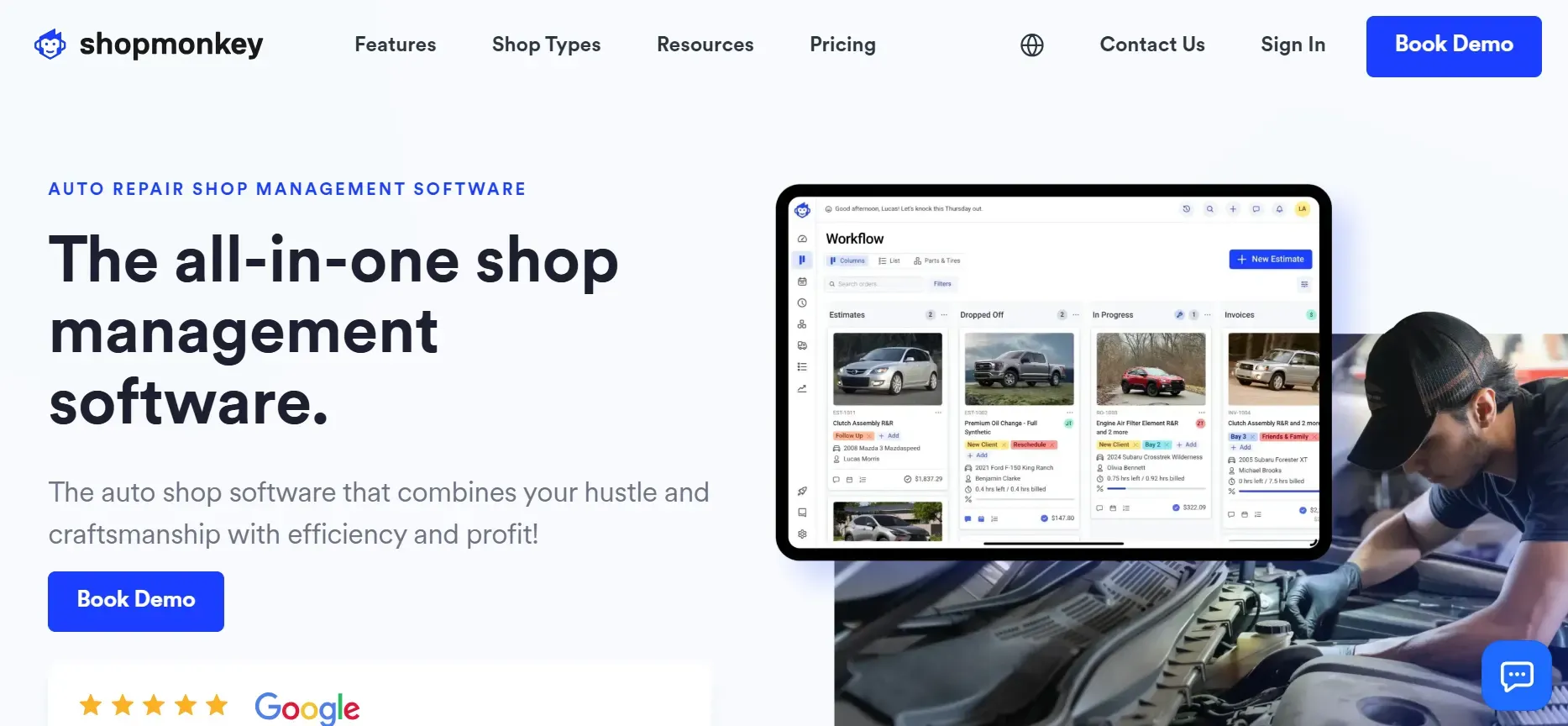
Shopmonkey sets itself apart with a visually modern, intuitive interface that appeals to tech-savvy shop owners and younger teams. The platform offers an all-in-one approach, bundling repair order management, scheduling, digital vehicle inspections, customer communication, payment processing, and parts ordering into a single cloud-based system. Shopmonkey also features a built-in CRM and marketing tools, positioning it as a central hub for shop operations.
Pricing: Starts at $239/month for Basic, $499/month for Ultimate. Additional users $20/month on higher tiers.
-
Key limitations:
- Per-user pricing increases costs for larger teams
- Advanced features only on premium plans
- Customization options limited for power users
-
Strengths:
- Clean, highly intuitive interface
- All-in-one feature set, reducing need for third-party tools
- Integrated payments and DVI
That’s the kind of report you’d just have if the platform were built for you.
3. AutoLeap (feature-packed, scalable shops)
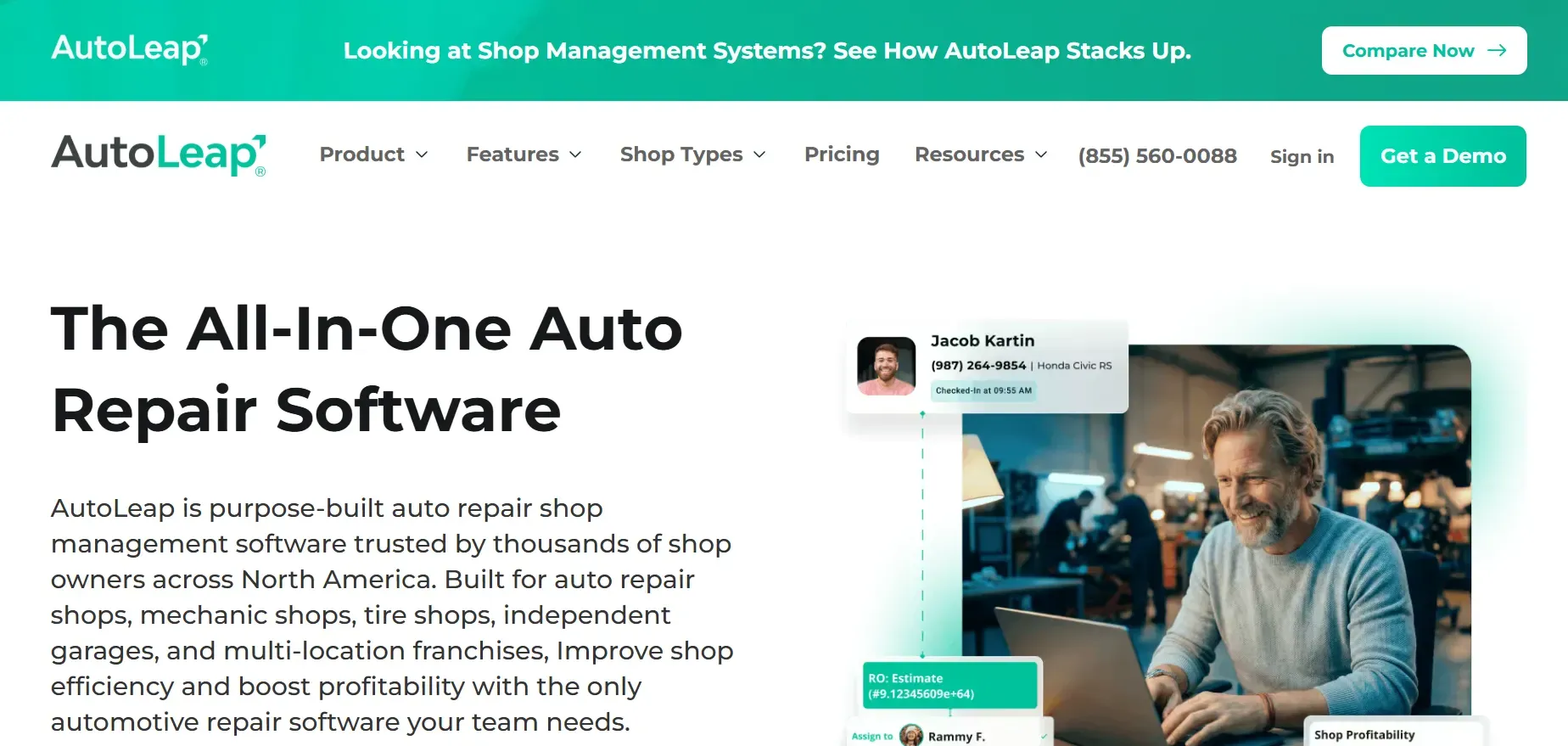
AutoLeap is designed for ambitious shops looking to scale. It offers a comprehensive suite that combines shop management, workflow automation, CRM, marketing, and analytics. AutoLeap’s dashboard gives owners real-time insight into shop performance, technician productivity, and marketing ROI. Its marketing automation tools support campaigns, reminders, and customer retention strategies.
Pricing: Essentials plan starts at $179/month, Pro at $309/month, Elite at $409/month.
-
Key limitations:
- Contract terms can be restrictive
- Advanced features require higher-tier plans
- Learning curve for teams moving from simpler systems
-
Strengths:
- Comprehensive, all-in-one feature set
- Strong CRM and marketing automation
- Customizable reporting and analytics
With Devaims, those custom workflows become part of your code, no vendor says no.
4. Shop-Ware (digital-first, high-volume shops)
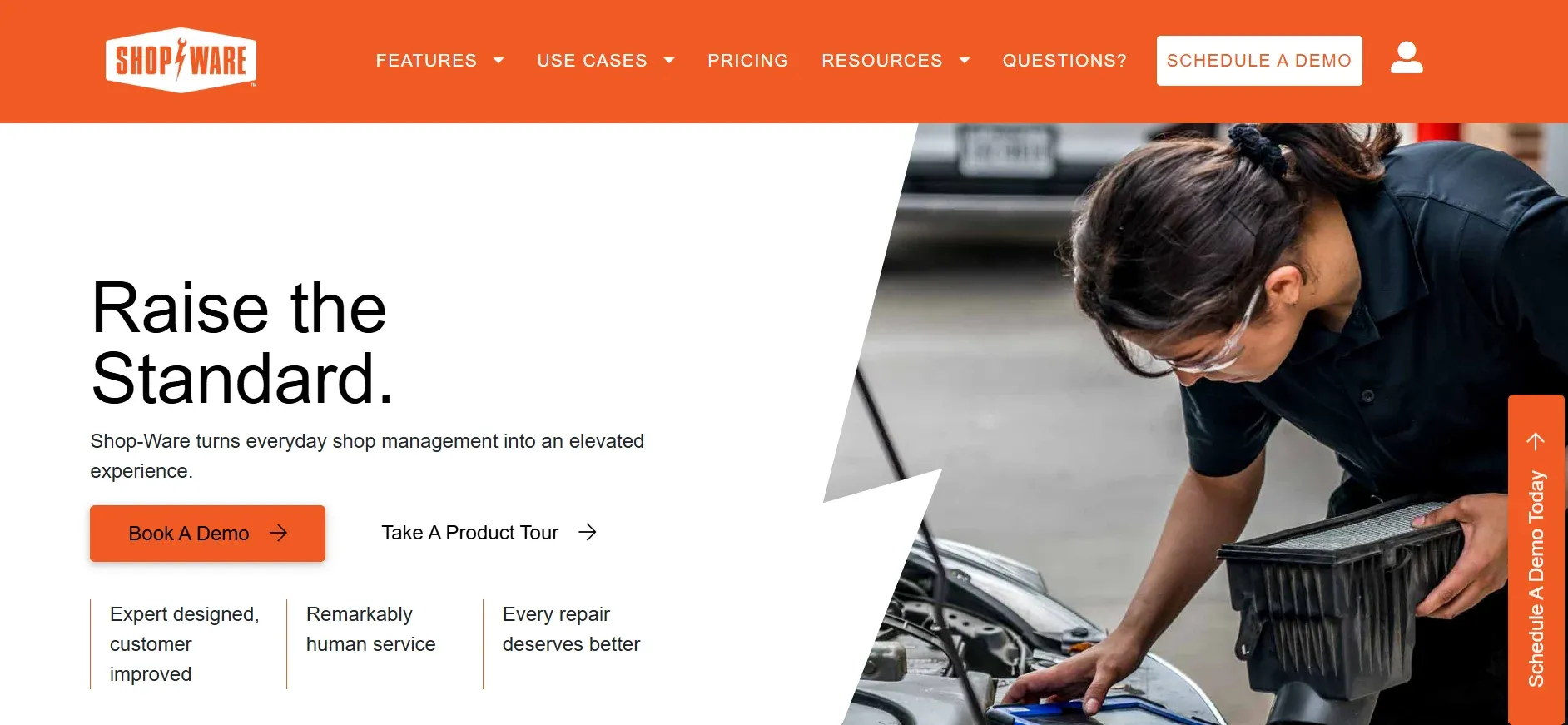
Shop-Ware targets high-volume, digitally focused auto repair shops. Its interface is sleek, with fast navigation and a workflow designed for busy service writers and techs. Shop-Ware brings digital vehicle inspections, customer texting, and robust workflow management to the table. It supports multi-location management and has advanced labor guide integrations.
Pricing: $249/month for Essentials, $399/month for Professional. Pricing is per location.
-
Key limitations:
- Inventory and parts ordering features less advanced than dedicated systems
- Premium features only on higher-tier plans
- Customization more limited than with a custom build
-
Strengths:
- Sleek, digital-first design
- Excellent DVI and customer communication tools
- Multi-location management
5. NAPA TRACS (NAPA ecosystem loyalty)
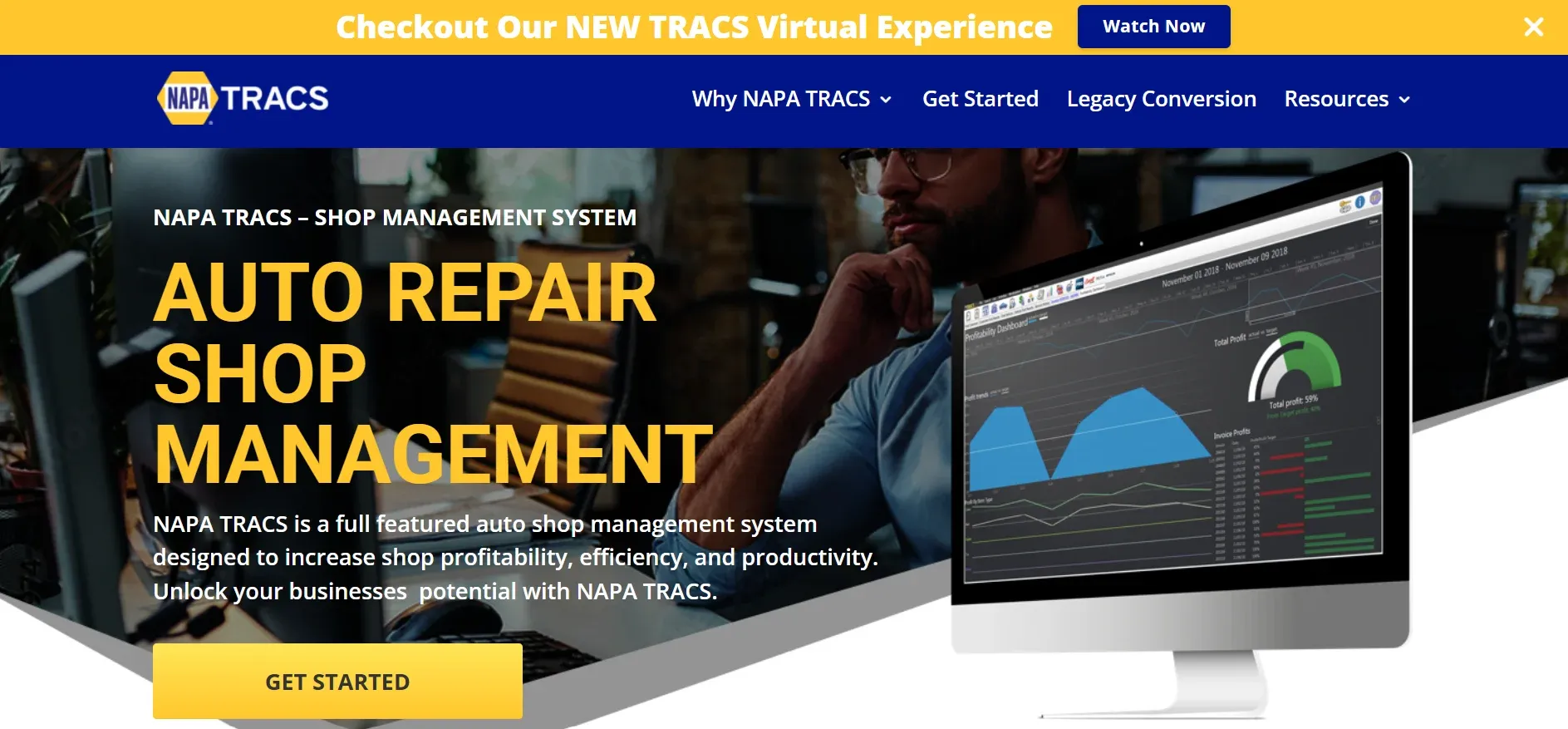
NAPA TRACS is built for shops loyal to the NAPA parts ecosystem. The system offers deep integration with NAPA’s parts catalog, inventory, and ordering systems. NAPA TRACS includes repair order management, scheduling, parts tracking, and customer communication. Its workflow is designed to streamline the NAPA parts sourcing process and is backed by NAPA’s nationwide support network.
Pricing: Not publicly disclosed, varies by location and features.
-
Key limitations:
- Interface can feel dated
- Reporting tools less customizable than newer platforms
- Opaque pricing and contract terms
-
Strengths:
- Deep NAPA parts integration
- Access to NAPA’s nationwide support
- Streamlined workflow for NAPA shops
6. R.O. Writer (traditional, desktop-first)
R.O. Writer is a legacy desktop shop management system with a long history in the industry. For shops that prefer running software on local computers rather than in the cloud, R.O. Writer remains a popular alternative. It offers repair order management, scheduling, parts ordering, inventory, and reporting. The platform is Windows-based and offers cloud add-ons for remote access.
Pricing: Starts at $199/month per location for desktop version. Add-ons and support extra.
-
Key limitations:
- Dated interface, lacks mobile accessibility
- Feature updates are slower
- Remote access requires extra configuration and fees
-
Strengths:
- Familiar for desktop-focused shops
- Robust repair order and inventory tools
- Longstanding industry reputation
7. CCC ONE (collision/body shops)
CCC ONE is the dominant solution for collision and body shops. Its core strengths are advanced estimating, insurance integration, and workflow tools tailored to the unique needs of the collision repair industry. CCC ONE supports direct links to insurers, automates the claims process, and offers comprehensive parts sourcing and workflow tracking.
Pricing: Not disclosed publicly, varies by shop size and features.
-
Key limitations:
- Expensive for general repair shops
- Learning curve for non-collision shops
- Contract lock-in is common
-
Strengths:
- Industry-leading insurance and estimating integration
- Comprehensive workflow for collision shops
- Strong support and reputation
8. ALLDATA Manage (OEM data integration)
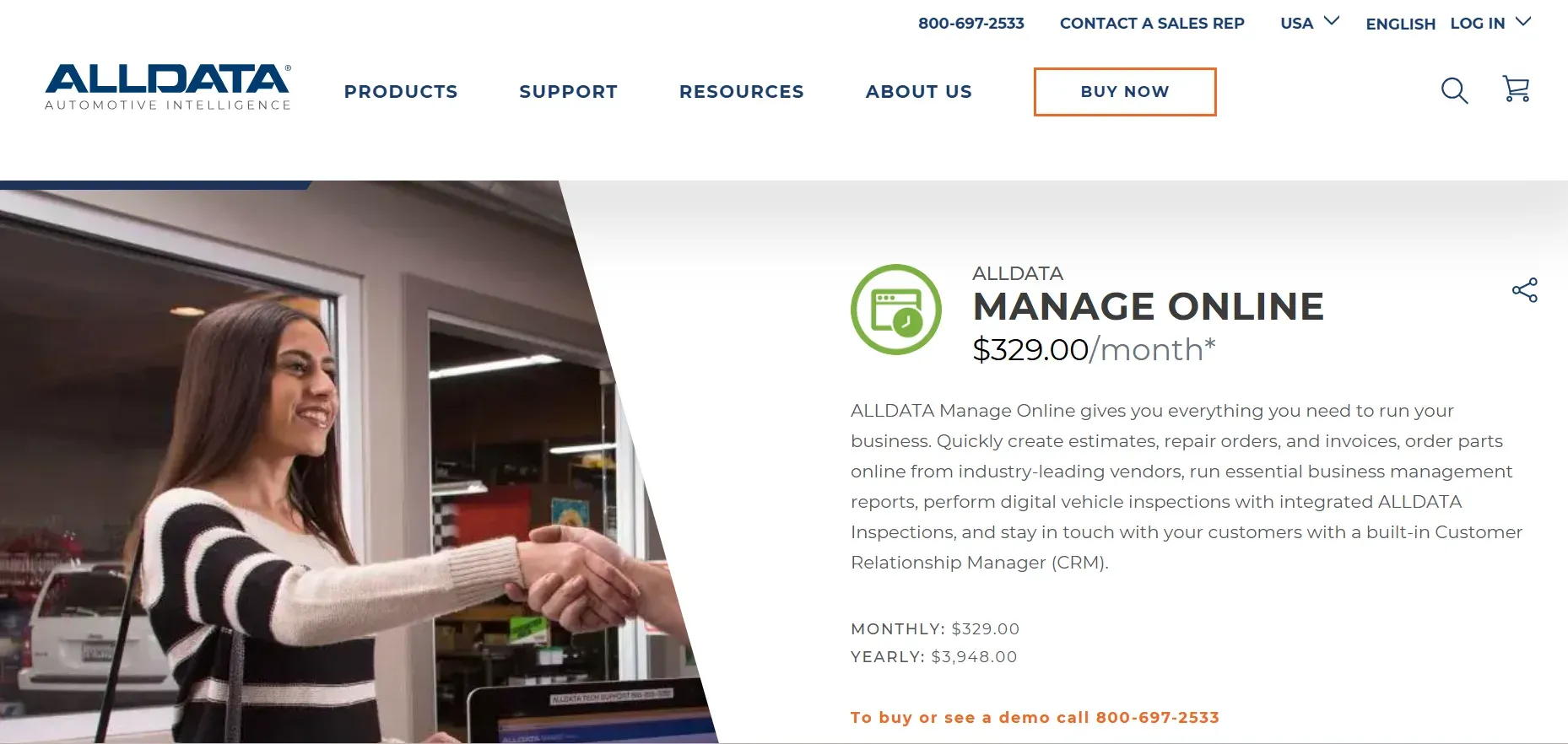
ALLDATA Manage is best known for its integration with ALLDATA’s vast OEM repair database. The platform combines shop management with direct access to manufacturer repair procedures, wiring diagrams, and TSBs. ALLDATA Manage offers repair order management, scheduling, inventory, and customer communication, with a focus on technical accuracy and compliance.
Pricing: Not published, depends on features and user count.
-
Key limitations:
- Interface less modern than cloud-first rivals
- Some management features lag in automation
- OEM data access may require separate subscriptions
-
Strengths:
- Direct OEM data integration
- Trusted industry resource
- Accurate repair procedures
9. Devaims (own your platform, own your data)
Devaims is the custom software alternative for auto repair shops tired of renting tools forever. Instead of paying monthly forever, your shop gets a bespoke system, built for your workflow, your team, your data. You keep the source code, control every feature, and never face price hikes or user fees again. Devaims builds, hands over the keys, and you run the shop your way.
- One-time build, then flat maintenance, no recurring rentalYou own the code and the data outright, foreverCustom features, integrations, and reports, exactly what your shop needsNo per-user or per-feature charges, scale freelyChange, grow, or sell your shop with zero software lock-in
- One-time build, then flat maintenance, no recurring rental
- You own the code and the data outright, forever
- Custom features, integrations, and reports, exactly what your shop needs
- No per-user or per-feature charges, scale freely
- Change, grow, or sell your shop with zero software lock-in
With Devaims, your software becomes a business asset, not a recurring liability.
Other Mitchell 1 alternatives worth knowing
- Bay-master: Good for small shops, but the UI is dated and support is limited. Feature set is basic and best for operations with simple workflows.
- Mitchell RepairCenter: Focused on body shops, not general repair. Deep insurance integration but less value for mechanical shops.
- Shop Commander: Niche, with limited integration to major parts suppliers. Best for very small or specialty shops.
These tools may fit specialized shops, but for mainstream auto repair operations, the main list covers the strongest options for most owners. For a more exhaustive list, see resources like Ratchet+Wrench’s management software directory or AutoSuccess magazine’s software directory.
How to choose the right Mitchell 1 alternative
- Budget: Map out your per-user and per-feature costs over five years, not just the monthly headline rate. Consider add-ons, integrations, and support fees. For example, a shop with 10 users paying $20 per user per month on top of a $300 base plan will spend $500/month, or $30,000 over five years, often more than the cost of a custom build.
- Workflow needs: Consider if you need deep OEM data, advanced scheduling, fleet tools, or just clean repair order management. Some SaaS tools specialize in collision repair, others in fleet, others in general auto. List your non-negotiable features before demoing platforms.
- Team and shop size: Flat-rate systems (like Tekmetric) scale better for big teams; per-user pricing (Shopmonkey) can sting as you grow. Multi-location shops should ensure the platform handles consolidated reporting and permissions.
- Contract and exit options: Look for month-to-month terms if you want flexibility, or skip SaaS entirely with an owned platform. Read the fine print on data export rights, cancellation penalties, and support tiers.
- Data ownership: If you want to keep your data forever and customize at will, only a custom build (Devaims) truly delivers. Consider what happens to your customer history if you switch or sell your shop.
Ready to quit renting for good? Here’s what owning your auto repair software looks like.
Stop paying rent on software you could own
The truth: Every alternative to Mitchell 1 is just another rented SaaS, with its own contract, its own upgrade cycle, and its own per-seat or per-feature fees. No matter how modern the UI or how friendly the support, you’re always paying rent, never building equity. That changes with a Devaims custom build.
Devaims builds shop management platforms you own outright. You get every feature you need, your workflow built-in, and your data stays yours. There’s no per-user math, no feature gates, and no risk of a surprise price hike. You keep the code and the keys.
- No more lock-in: Your data, your system. Switch hosts or developers any time. You are never at the mercy of a SaaS vendor’s roadmap or price hikes.
- No surprise fees: Flat maintenance covers updates and support. Add users, locations, or features without ever seeing a new bill. Your costs are predictable and under your control.
- Custom fit: If your shop runs a process no SaaS supports, Devaims builds it in. No more workarounds, just your way. Need a custom integration with a local parts supplier or a unique marketing workflow? It’s your call.
- Sellable asset: When you sell your shop, the software goes with it, boosting value. It becomes a business asset, not a recurring liability.
| Tool | Ownership | Customization | Per-user fees? | Contract? |
|---|---|---|---|---|
| Tekmetric | No, rented | Limited | No | No |
| Shopmonkey | No, rented | Limited | Yes | No |
| AutoLeap | No, rented | Limited | Maybe | Yes |
| Devaims (custom) | Yes, fully owned | Unlimited | No | No |
Here’s how the real math stacks up for a typical 10-bay shop over five years:
| Year | Rented SaaS (avg $400/mo) | Devaims (build $32,000, $200/mo maint) |
|---|---|---|
| 1 | $4,800 | $34,400 |
| 2 | $9,600 | $36,800 |
| 3 | $14,400 | $39,200 |
| 4 | $19,200 | $41,600 |
| 5 | $24,000 | $44,000 |
By year 7, your rented SaaS will have cost more than a custom build, and the gap only widens, because you’ll keep paying rent forever. Shops with 15 or more users, multi-locations, or unique workflows see the payoff even faster. Want to run your real numbers?
How to switch from Mitchell 1
- Export your customer, vehicle, and repair order data from Mitchell 1. This usually involves generating CSV or Excel files. Review export options: some fields, such as custom notes or attachments, may require manual extraction.
- Choose your new platform or custom Devaims build. Demo several options and ensure your must-have features and integrations are supported.
- Import your data into the new system, clean and map as needed. Most SaaS vendors offer import tools, but cleanup is often necessary for consistent formatting, duplicates, or missing fields. Devaims includes a dedicated migration process with full data validation.
- Reconnect payments, parts suppliers, and integrations. Set up your new workflow and test connections (QuickBooks, Carfax, parts catalogs, etc.).
- Train your staff on the new workflow and features. Schedule hands-on training and provide reference guides. With a custom system, training is tailored to your exact process.
- Test both systems in parallel for a week to catch issues. This reduces risk and ensures you don’t lose any repair orders or customer communications during the transition.
- Review your Mitchell 1 contract for final cancellation steps. Ensure you have exported all needed data and confirmed the cutover before terminating your old account.
With a custom Devaims build, the migration is handled as part of the project, with dedicated support for mapping, validation, and staff training.
Frequently asked questions
What is the best Mitchell 1 alternative for fast-growing shops?
Tekmetric and Shopmonkey are the two most popular for fast-growing, multi-user auto repair shops. Both offer modern interfaces and strong support, but watch out for per-user fees and SaaS lock-in. Tekmetric’s unlimited user pricing is ideal for expanding teams, while Shopmonkey’s all-in-one approach suits shops that want everything in one place. If you want to avoid paying rent forever and customize every aspect, Devaims is the only option you truly own, ideal for shops planning to scale, add locations, or build proprietary workflows.
Which Mitchell 1 alternative is the cheapest?
Tekmetric offers a flat $179/mo rate with unlimited users, making it one of the more affordable options for larger teams. R.O. Writer starts at $199/mo for desktop users, but you’ll want to factor in add-ons and support costs over several years. For small shops with basic needs, Bay-master is inexpensive, but its feature set is limited. Over five years, even the cheapest SaaS can cost more than a custom build if your team or feature needs grow.
Is there a free Mitchell 1 alternative?
There are no truly free shop management platforms that rival Mitchell 1’s feature set. Some entry-level tools (like RepairShopr or Wave) offer limited free trials or basic versions, but for a professional auto repair shop, expect to pay monthly, unless you own your system, as with a Devaims build. Free tools often lack essential features such as inventory, integrations, or DVI, and support is minimal.
Which Mitchell 1 alternative is best for body shops?
CCC ONE is the leading choice for collision and body shops, with deep insurance integrations, estimating tools, and workflow tracking. For general repair, other SaaS tools or a custom Devaims platform fit better as CCC ONE’s features are overkill for non-collision shops.
How do I know when to switch from Mitchell 1?
If you’re frustrated by contract lock-in, rising monthly costs, feature gaps, or data export headaches, it might be time to look at Mitchell 1 alternatives. Run a five-year cost projection, and if the numbers shock you, start exploring your options. Also, consider switching if your shop is growing, your workflows have outgrown Mitchell 1’s capabilities, or you want to own your data and technology future.
Can I keep my old repair orders and customer history?
Most alternatives allow you to import data from Mitchell 1, but the process can be tricky. Expect to spend time reviewing exported files for completeness and accuracy. With a Devaims build, data migration is planned into the project, so your history comes with you, no manual re-entry required. Be sure to confirm with your new vendor which fields and attachments will transfer, and test imports before finalizing the switch.
Are any Mitchell 1 alternatives truly owned, not rented?
Devaims is the only option on this list that delivers true ownership: you get the code, the data, and the ability to run and modify your platform without ongoing rent. All other alternatives are rented SaaS. Owning your software means you set the rules, customize at will, and never face price hikes or contract lock-in again.
The bottom line
There are plenty of Mitchell 1 alternatives, but every SaaS tool comes with its own price escalators and lock-in. The real test: add up what you’ll spend over five years, and ask if that money could have built you a system you own outright. For shops who want to keep their data, features, and dollars, Devaims is the only real exit from the SaaS rent cycle.
Looking for more? See the Devaims blog, or check out related posts: Shopmonkey alternatives, Tekmetric alternatives, R.O. Writer alternatives.