


HVAC contractors don't go looking for "Jobber alternatives" because Jobber is bad software. They go looking because the bill keeps climbing. You start on a reasonable plan, then you hire two techs, add an office admin, turn on a couple of add-ons, and suddenly the "affordable" scheduling app is one of your bigger monthly expenses. And you're renting it. Stop paying, and you lose everything.
Below are the 9 best Jobber alternatives for HVAC businesses in 2026, ranked by real pricing, contracts, and how well they fit a heating-and-cooling shop. The first one breaks the rental model entirely.
Quick Comparison of the Top Jobber Alternatives
Tool |
Best for |
Pricing model |
Who owns it |
| ServiceTitan | Large 20+ tech operations | $250-$500/tech/mo + setup | Vendor (rented) |
| Housecall Pro | Residential service shops | $59-$329/mo + add-ons | Vendor (rented) |
| FieldEdge | HVAC-specific workflows | ~$100-$125/user/mo | Vendor (rented) |
| Service Fusion | Flat-rate, unlimited users | ~$208/mo flat | Vendor (rented) |
| BuildOps | Commercial HVAC | Custom enterprise quote | Vendor (rented) |
| FieldPulse | Growing small teams | Custom flat tiers | Vendor (rented) |
| WorkWave | Larger field-service fleets | Custom quote | Vendor (rented) |
| mHelpDesk | Simple job tracking | Per-user monthly | Vendor (rented) |
| Successware | Established HVAC back-office | Custom quote | Vendor (rented) |
The 9 Best Jobber Alternatives for HVAC Contractors
1. ServiceTitan
Best for: Large HVAC operations with 20 or more technicians and an office team to run it.
ServiceTitan is the heavyweight of field service software, with deep dispatching, marketing, and reporting tools. But it's priced for big companies. It doesn't publish prices and instead runs you through a sales demo, with reported rates of $250 to $500 per technician per month, plus an implementation fee that can range from $5,000 to $50,000. It also requires a 12-month contract, and the company itself has said the platform isn't optimized for shops with three or fewer technicians.
Limitations:
- Very expensive per technician
- Requires long-term contracts (often 12 months)
- High onboarding and implementation costs
- Overkill for small or mid-sized shops
- Pricing not transparent
2. Housecall Pro
Best for: Residential HVAC shops that want easy customer texting and online booking.
Housecall Pro is one of the most popular Jobber competitors, and it's genuinely easy to use. Plans run from $59 to $329 per month, and unlike ServiceTitan there's no long-term contract, a real point in its favor. The problem is add-on creep: the cheaper plans omit GPS tracking and QuickBooks, so most growing shops are pushed up to Essentials or MAX, and extra users on MAX cost $35/month each.
Limitations:
- Per-user pricing increases with team size
- Key features locked behind higher tiers
- Add-ons can significantly increase monthly cost
- Limited customization for complex workflows
3. FieldEdge
Best for: HVAC contractors who want trade-specific features out of the box.
FieldEdge was built for the trades, with strong HVAC features like service agreements and equipment tracking, and it integrates tightly with QuickBooks. Pricing runs roughly $100 to $125 per user per month, which is on the higher end for a per-seat tool once you've got a few techs in the field.
Limitations:
- Per-user pricing becomes expensive at scale
- Less flexible outside HVAC use cases
- UI and workflow customization is limited
- Requires ongoing subscription costs
4. Service Fusion
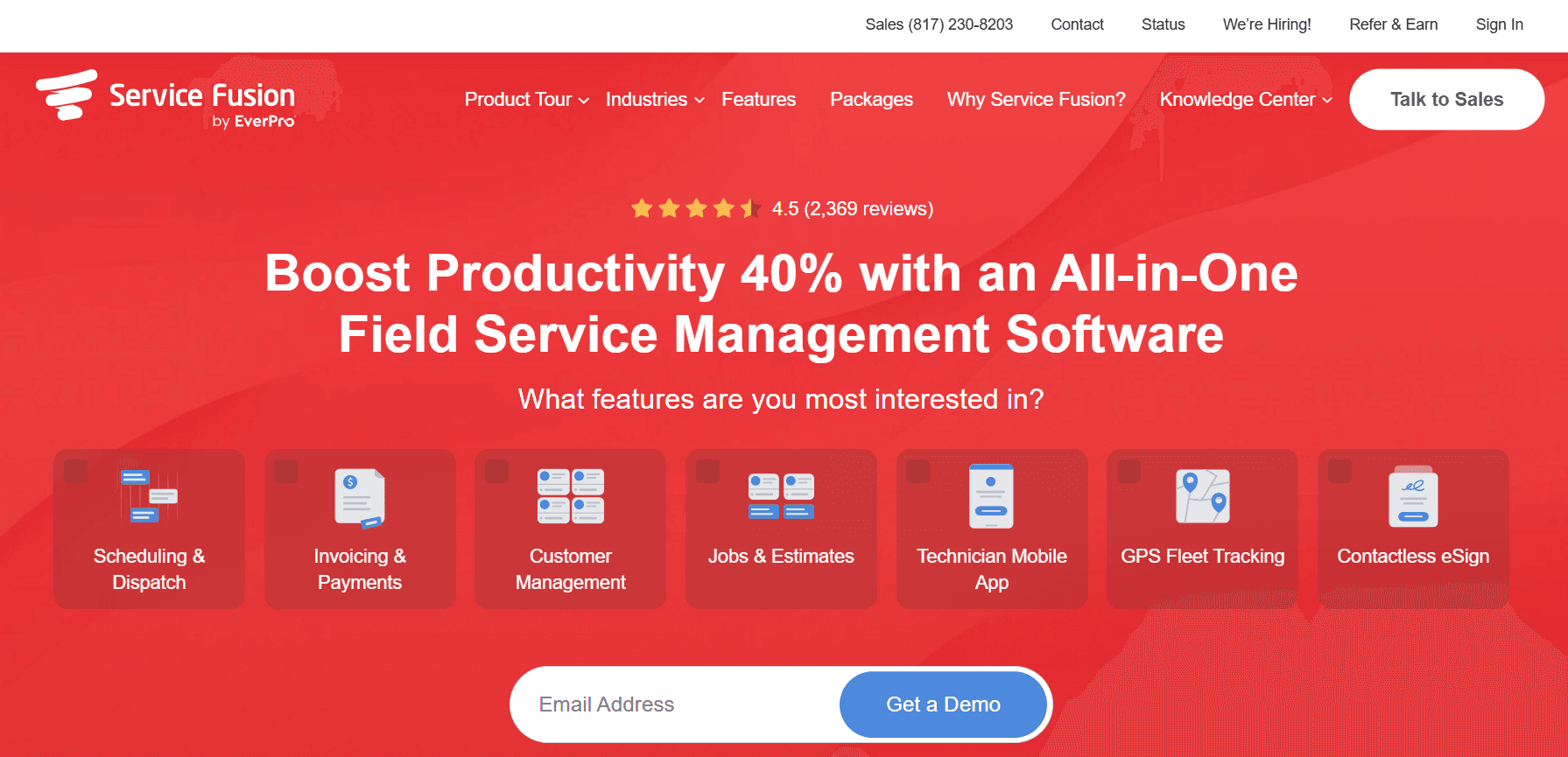
Best for: Budget-minded HVAC shops that want unlimited users at a flat rate.
Service Fusion is one of the more affordable Jobber alternatives because it charges a flat monthly fee with unlimited users, starting around $208/month. That flat model is smart if your team is growing. The trade-offs: GPS and VoIP are paid add-ons, and users commonly report rough onboarding and support.
Limitations:
- Important features sold as add-ons (GPS, VoIP)
- Interface feels outdated for some users
- Support and onboarding can be inconsistent
- Limited advanced automation
5. BuildOps
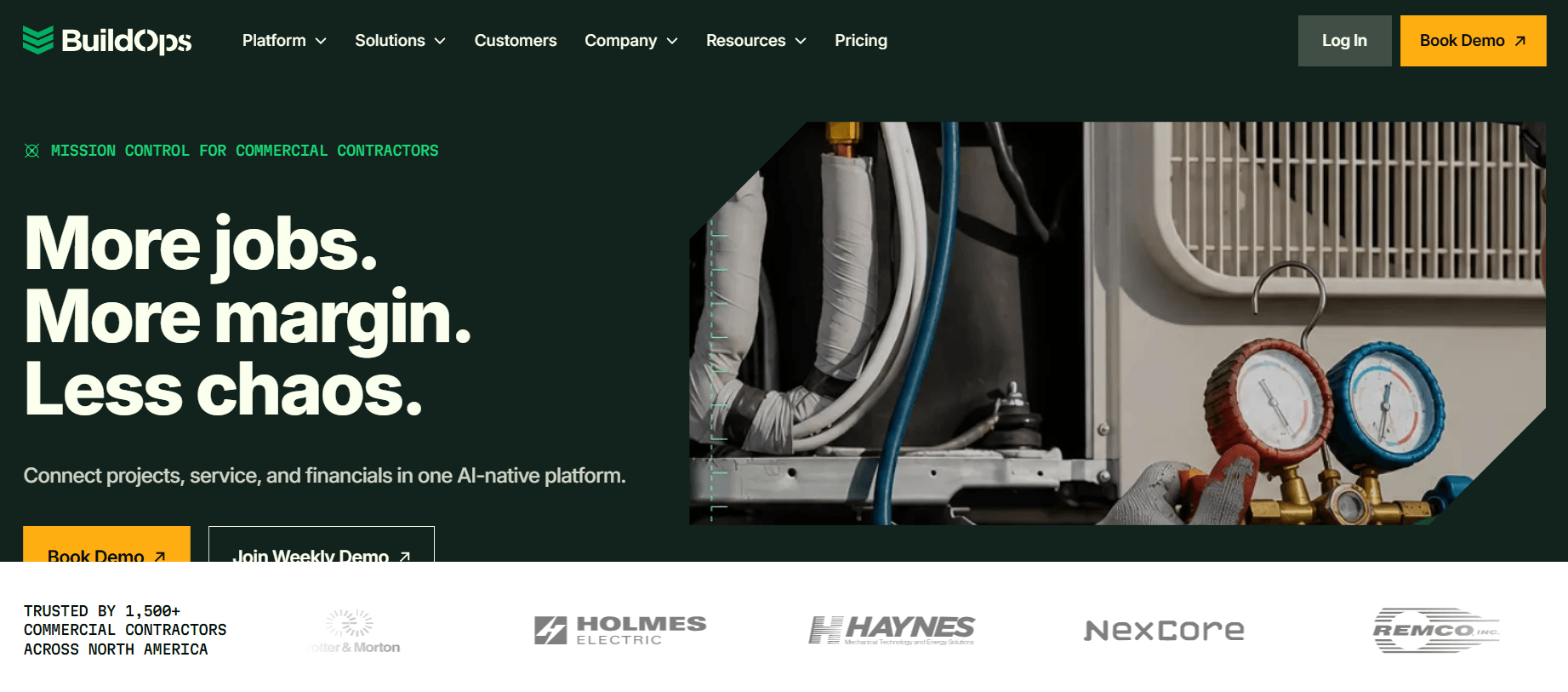
Best for: Commercial HVAC contractors with complex projects and service contracts.
BuildOps is aimed at commercial mechanical and HVAC contractors who juggle large service agreements alongside project work. It's powerful for that world, with strong contract and asset management. Pricing is custom and quoted through sales, and it sits at the enterprise end of the market.
Limitations:
- Enterprise-level pricing (custom quotes)
- Long implementation cycles
- Too complex for small residential shops
- Requires structured operations to use effectively
6. FieldPulse
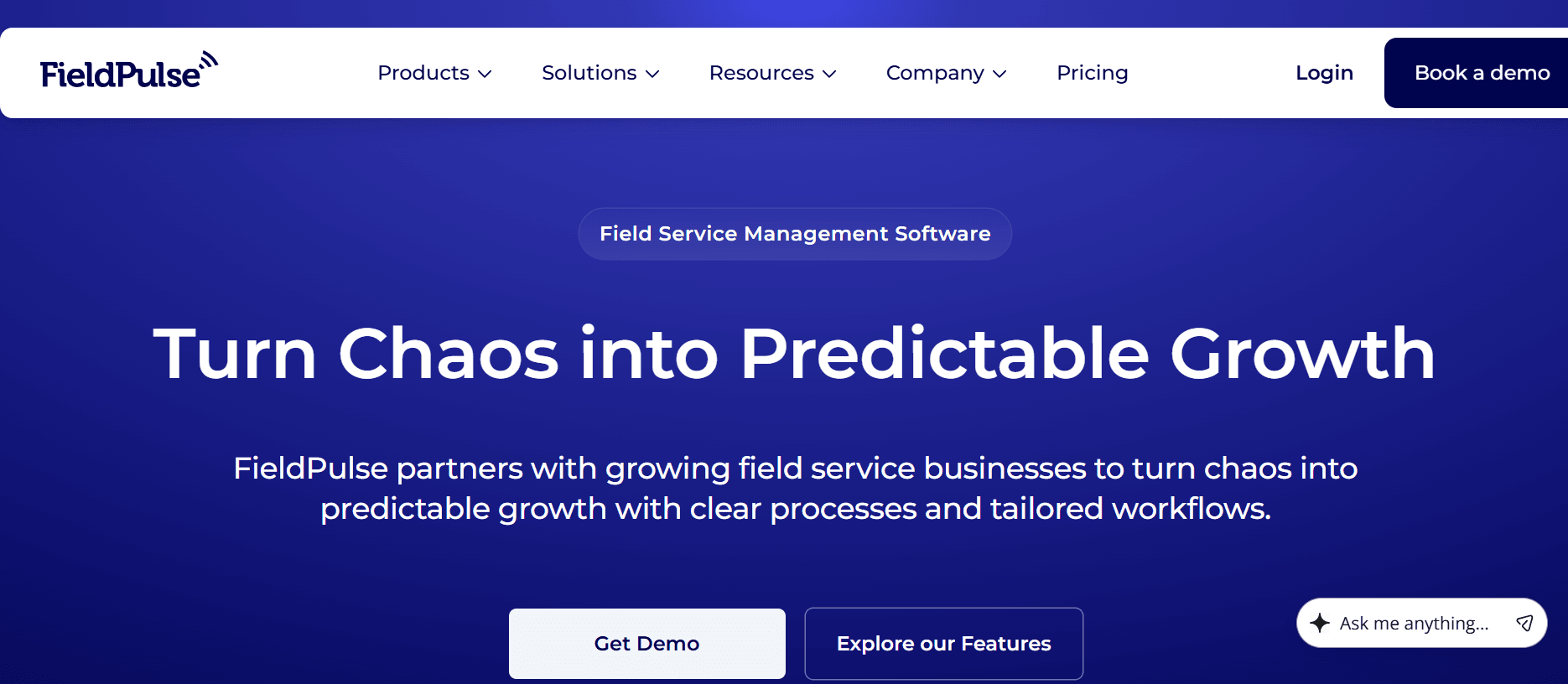
Best for: Small but growing HVAC teams that have outgrown a basic scheduler.
FieldPulse covers the field-service core well: scheduling, estimates, invoicing, and a solid mobile app. It markets itself to growing trade businesses. Pricing is quote-based with flat tiers, generally friendlier than the enterprise tools.
Limitations:
- Limited advanced automation
- Reporting features are not very deep
- Pricing is quote-based and unclear
- Can feel basic for large operations
7. WorkWave
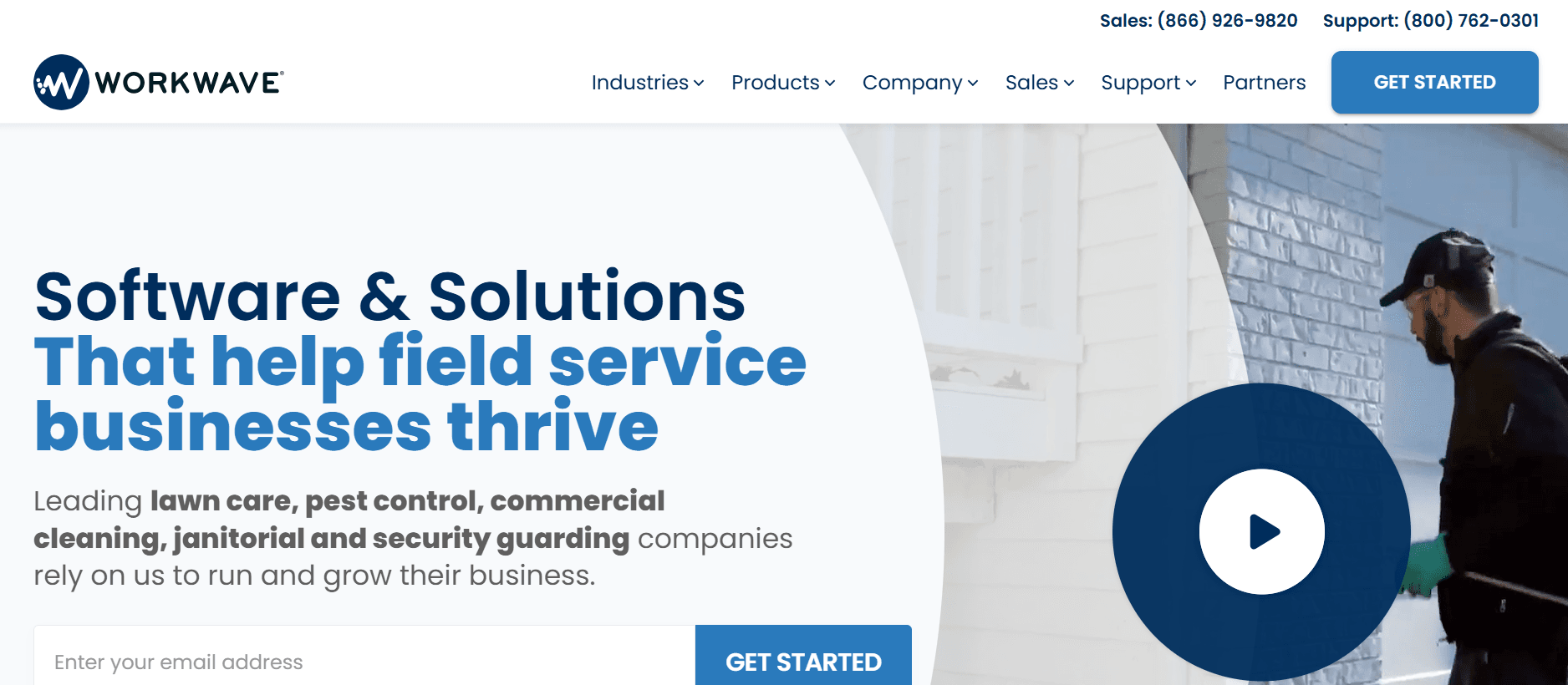
Best for: Larger HVAC and field-service fleets that need routing at scale.
WorkWave serves bigger field-service operations with fleet routing and scheduling tools, and it's been around a long time. It's built for scale, with custom enterprise pricing to match.
Limitations:
- Expensive enterprise pricing model
- Requires long-term contracts
- Overly complex for HVAC-only shops
- Setup and onboarding can be slow
8. mHelpDesk
Best for: Shops that want straightforward job tracking without much complexity.
mHelpDesk handles the basics (work orders, scheduling, invoicing) in a simple package. It's an older platform and lighter on modern HVAC-specific features, but it does the fundamentals on a per-user monthly plan.
Limitations:
- Lacks modern HVAC-specific features
- Limited automation and integrations
- Per-user pricing adds up over time
- Not ideal for scaling businesses
9. Successware
Best for: Established HVAC and plumbing companies that want deep back-office and accounting tools.
Successware is a long-standing platform built around HVAC and plumbing back-office operations, with strong accounting and inventory features. It's quote-based and aimed at established shops that want an all-in-one system.
Limitations:
- Complex interface and learning curve
- Pricing not transparent (quote-based)
- Less flexible than modern tools
- Requires structured workflows to work well
Beyond the Alternatives: Own Your HVAC Software Instead
Best for: HVAC shops that are done paying a monthly fee that grows every time they hire someone.
Every tool above is something you rent. For a lot of shops, that's the right call. But if you've read this far because the same two problems keep surfacing, a bill that climbs every time you hire and a system you can't bend to your shop, there's a different path worth knowing about. It sits here at the end, not at the top, because it isn't a direct Jobber alternative: you don't sign up for it next week.
Devaims is a custom software company, not a field-service app you subscribe to. Instead of renting a platform, you commission one built for your HVAC shop and own the source code when it's done. Your dispatch board, your flat-rate price book, your maintenance-agreement workflow, your QuickBooks setup, built the way you already work, with no per-tech fee and nothing locked behind a higher tier. Add your fifth tech or your twenty-fifth and the software costs the same.
For a brand-new solo operator, that's more than you need, one of the rented tools above will get you running today. But for an established shop with several techs and a monthly bill that keeps climbing, owning the platform changes the economics for good.
Get a free custom HVAC software quote →
What actually makes Devaims different from Jobber
Jobber is a rental. A good one, but still a rental. You pay every month; the price is per user, and the day you stop paying, you walk away with nothing. The product is built for the average field service business on earth, which means it does a hundred things your HVAC shop will never touch and a few things your shop needs exactly the way you run it, but can't change.
Devaims reverses that arrangement in three ways:
- You own your software. Pay once instead of paying monthly forever. The code belongs to you, and you can host it with us or move it wherever you want.
- Built for your business. Your software is customized to match how your company works, from dispatching and pricing to service agreements and reporting. No, trying to make a generic system fit.
- Everything is included. Two-way texting, automations, custom reports, and integrations; it's all part of your build. There are no locked features or expensive upgrades later.
The problem with renting: Jobber's per-user pricing punishes you for hiring
Here's where the rental model bites established shops.
Jobber's Connect plan runs $99/mo (billed annually) for up to 5 users, and its top Grow plan is $149/mo for up to 10 users. Either way, every user past your plan's cap adds $29/mo. So the moment your shop grows, your software bill grows with it, whether or not that new hire needs the full toolset.
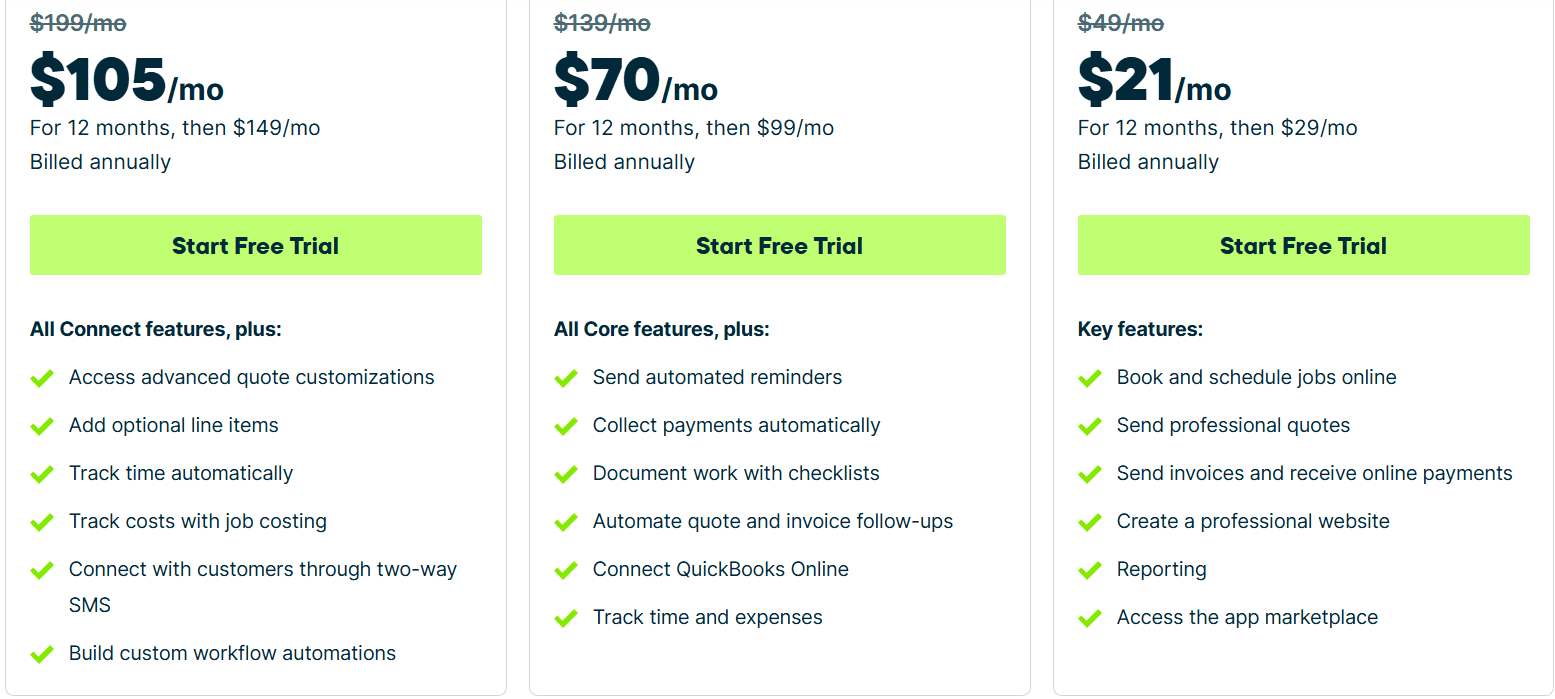
And the features you'd actually expect to be standard, Data Import, Premium Support, and the API tour with API access, aren't even on the Connect plan. They're gated to the top Grow tier. So a shop that just wants to bring in its own data, get real help when something breaks, and connect the other tools it already runs gets pushed up to the most expensive plan to do so.
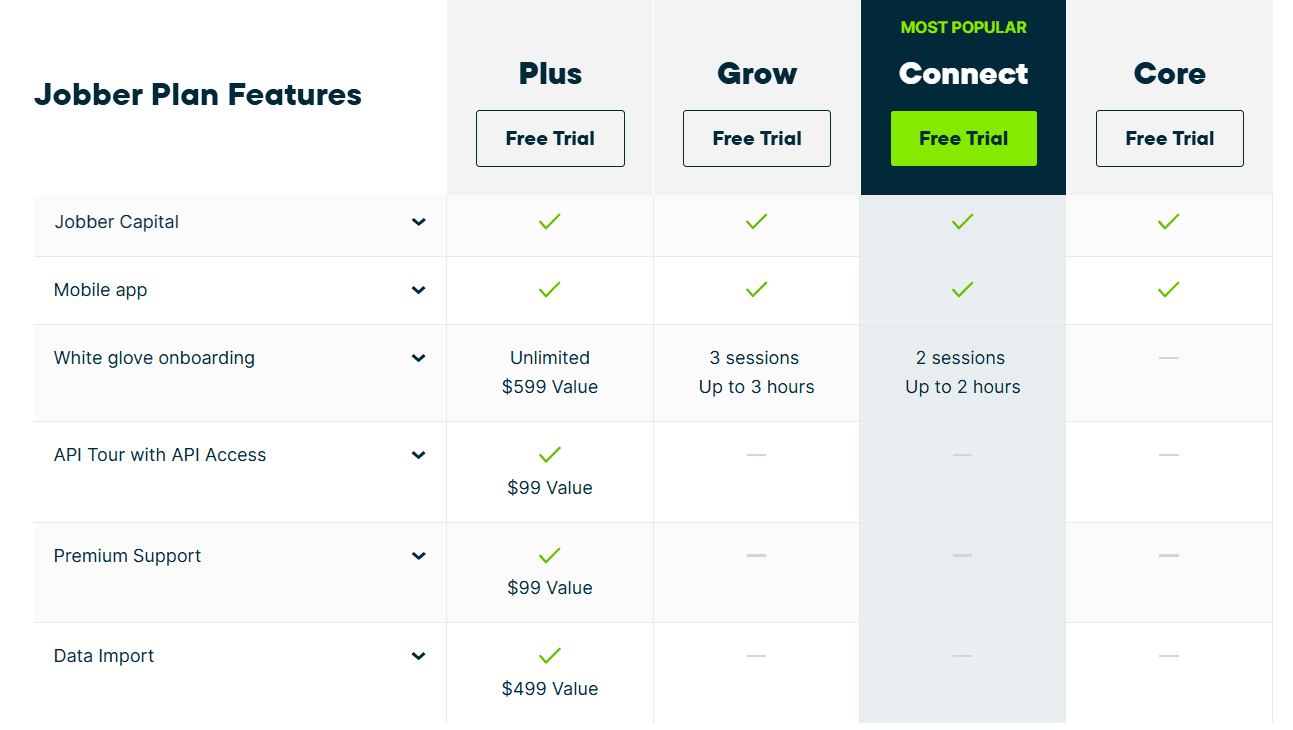
Some of the features most HVAC businesses expect are not included in lower-tier plans. Features like data import, premium support, and API access are available only on the highest plan.
That means if you want to move your existing data, connect the software you already use, or get faster support when you need it, you have to upgrade to the most expensive tier.
With Devaims, these features are included from the start. You don't have to pay more just to get the basics your business needs.
Devaims vs. Jobber at a glance
Feature |
Devaims |
Jobber |
| Pricing model | One-time build fee | Monthly subscription, forever |
| Per-user fees | None, flat at any team size | ~$29/user/mo after 5 users |
| What you own after 3 years | The software (the code is yours) | Nothing but a cancelled account |
| Built around your shop | Yes: dispatch, pricing, workflows | No, one-size-fits-all |
| Two-way customer texting | Included | Top tier (Grow) only |
| Feature gating | None, everything in the build | Tiered (Core / Connect / Grow) |
| Flat-rate price book | Custom, yours | Generic |
| QuickBooks setup | Configured to your books | Standard connector |
| Your data | Yours, exportable, no lock-in | Locked in until you migrate out |
| Setup time | A few weeks (built to spec) | Same day |
| Ongoing cost | Optional flat hosting/maintenance | Mandatory monthly, scales with headcount |
| Best for | Established shops with several techs | Brand-new or solo operators |
Why Are HVAC Contractors Switching From Jobber in 2026?
Jobber works. The reason shops leave is structural. The costs grow in ways that punish exactly the success you're working toward, and the software never bends to fit your shop.
Per-user pricing punishes growth. Jobber's model charges for seats. Every technician beyond your plan's limit is $29/month, so the better you do and the more you hire, the more you pay. Even employees who only need to clock in drive up the bill. Hire five techs over two years and you've quietly added thousands a year to a cost you can't reduce.
The features you need are locked on higher tiers. Job costing and real two-way texting require the Grow plan or higher. On cheaper plans you can send one-way "on my way" texts but cannot hold a real back-and-forth with a customer, the exact thing you need when a tech finds extra work on site. The result is predictable: most HVAC shops can't stay on the cheap plan, so the "$39 software" becomes $300-$600 a month once you add the right tier, the extra users, and the add-ons.
It's cookie-cutter, and you can't change that. Jobber gives you a fixed template. If your shop has its own dispatch logic, its own service-agreement workflow, or a report you actually need, you mostly can't build it. You bend your business to fit the software instead of the other way around. This is the single most common complaint across every tool in this category, not just Jobber.
You're renting, and your data is the hostage. This is the one that finally moves people. After three or five years of payments, you own nothing. And when shops try to leave, many find their customer history and job records locked inside the platform, hard to export and hard to walk away from. You're not just renting software, you're renting access to your own business data.
What Custom HVAC Software Gives You That No Subscription Can
Look back at the list above and you'll notice the same two cons attached to almost every tool: limited customization, and your data trapped inside. A custom build erases both, then adds capability that off-the-shelf software simply cannot match because it was never built for your shop.
You own 100% of the code and your data. No vendor can raise your rate, retire a feature, change the rules, or lock your customer history behind a cancellation. The software is an asset on your books, not a bill on your statement.
It's built around your exact workflow. Off-the-shelf platforms are built for the "average" HVAC shop, so everyone gets the same template. Custom software molds to how you actually dispatch, quote, and bill, which turns your own way of working into an advantage instead of a compromise.
Every feature is included from day one, no tiers, no add-on tax. A full custom HVAC platform can include all of this in one build:
- AI-powered dispatch that matches each job to the right tech by skill, location, and equipment
- A mobile technician app with offline mode, photo capture, digital job sheets, and customer e-signature
- Full customer and equipment history: make, model, warranty, and notes from every past visit
- Drag-and-drop scheduling with live GPS tracking and conflict detection
- Inventory and parts management that tracks van stock and syncs with supplier catalogs
- Maintenance-agreement automation that handles SLA tracking and recurring outreach
- Quote-to-invoice automation with SMS and email payment links and QuickBooks sync
- Compliance reporting, a branded customer self-service portal, multi-branch management, and live BI dashboards showing revenue per tech and first-time fix rates
Modern AI built in, not sold as another upsell. Agentic AI can take an inbound request, check tech availability, book the job, and send the customer an ETA in under a minute. Predictive models read equipment sensor data to flag a failing compressor weeks before it dies. Generative AI handles personalized follow-ups, and AI-assisted diagnostics help techs quote accurately in the field.
It connects to what you already run. Custom software can integrate with your legacy accounting, a proprietary supplier portal, or any tool you depend on, and it won't break the next time a vendor changes an API.
It handles hyper-local compliance the big platforms miss. Rules like California Title 24, NYC Local Law 97, and municipal refrigerant or carbon reporting are easy to bake into custom code, where generic tools often leave you to handle them by hand.
No per-seat fees, ever. Mid-sized to large HVAC companies routinely pay tens of thousands of dollars a year, often $30,000 to $80,000 or more, in recurring per-seat SaaS fees across a platform like ServiceTitan. A custom build removes that line item entirely. A custom HVAC platform typically pays for itself within 8 to 14 months through recovered maintenance-agreement revenue, lower licensing costs, and faster dispatch, and after that it's pure savings for the life of the business.
We handle the move off Jobber for you. Switching software shouldn't mean a weekend of copy-pasting customers into a new system. When you move to Devaims, we migrate your data for you (customers, job history, equipment records, open invoices) out of Jobber, or spreadsheets, or whatever you're running now, and into your new platform. You don't re-key anything. We also set up your integrations, train your team, and stay on call as the build goes live, so the transition is a few quiet weeks, not a fire drill.
Rent Forever or Own It? The Real 2026 Math
This is the part that matters, so let's put real numbers on it. Take a growing HVAC shop with roughly a dozen people who need access (owner, dispatcher, and 10 techs) and want data import, premium support, and API access, which on Jobber means the Grow tier.
The numbers below are an illustrative example. Swap in your real headcount and your Devaims build quote and we'll do this math with you for free on a quick call.
Year |
Jobber (rented, ~$400/mo all-in) |
Devaims (owned: $9,000 build + $99/mo flat maintenance) |
| Build / Year 1 | $4,800 | $9,000 + $1,188 = $10,188 |
| Year 2 (cumulative) | $9,600 | $11,376 |
| Year 3 (cumulative) | $14,400 | $12,564 (you're now ahead) |
| Year 4 (cumulative) | $19,200 | $13,752 |
| Year 5 (cumulative) | $24,000 | $14,940 |
Somewhere in year three, ownership pulls ahead and never looks back. Every year after that, the gap widens, because Jobber keeps charging full freight (and tends to raise prices and per-user fees over time), while your owned software just keeps running on a flat plan.
And the line item that doesn't show up in the table is the most important one: at the end of year five, the Jobber shop has spent $24,000 and owns nothing. The Devaims shop has spent less, and owns the software.
Run your own numbers and get a free quote →
Frequently Asked Questions
Is there a cheaper alternative to Jobber for HVAC?
On a monthly basis, Service Fusion (flat rate, unlimited users) and Housecall Pro's Basic plan are cheaper than a fully loaded Jobber plan. But "cheaper monthly" still means paying forever. The cheapest option over the life of your business is software you buy once and own, like a Devaims build, because the payments end.
Can I get HVAC software with no monthly fee?
Yes. That's the entire idea behind custom-built software. Instead of a subscription, you pay a one-time build fee and own the code. There's no per-user charge and no monthly subscription, just optional hosting and support if you want us to handle it.
Is custom software worth it for a small HVAC business?
It depends on your stage. If you're a brand-new solo tech, an off-the-shelf tool you can start today is the smarter first step. Once you have a few techs, steady work, and a monthly software bill that keeps rising, a custom build that you own typically pays for itself within two to three years and saves money every year after.
Do I really own custom software?
Yes. With Devaims you own the source code and your data outright. There's no vendor that can raise your rate, lock features behind a new tier, or hold your customer history hostage if you stop paying, because there's nothing to stop paying.
What if I outgrow my custom software later?
Because you own it, you change it. New service line, new workflow, new integration: we extend the software you already own instead of forcing you onto a pricier subscription tier. You're never boxed in by someone else's roadmap.
Conclusion
Every Jobber alternative on this list has a real use case. ServiceTitan fits big operations with the budget for it. Housecall Pro and Service Fusion are easy, affordable rentals for residential shops. FieldEdge and Successware bring deep HVAC features. They're all good at what they do.
But they all share one thing: you rent them, every month, for as long as you're in business, and the bill grows as you grow. If you're tired of that, the answer isn't a different subscription. It's owning your software.
If you've been searching for Jobber alternatives because the monthly cost keeps climbing, look at the own-it model before you sign up for another subscription. Get a free custom HVAC software quote from Devaims and see what it costs to own your tools instead of renting them.
Explore more guides on running a profitable HVAC business on the Devaims blog, including our full breakdown of the best HVAC software in 2026.