


Picture this. Your funeral home's software bill quietly ticks up every year, and every time you need another workstation or feature, it's another call, another fee. Osiris isn't the only one who does this, most alternatives tie your essential systems to monthly rent and a contract you can't escape. Five years later, you've paid thousands, and the only thing you own is another invoice.
If you're searching for Osiris alternatives, you're probably tired of per-computer upcharges, buried setup fees, or simply not owning your own business logic. We break down the real differences, the hidden costs, and the handful of options that treat your funeral home like a business, not a captive audience. The honest answer: every vendor rents you software, except one. Devaims lets you own your management system outright, code and all. Let's compare the numbers.
Why funeral homes look for Osiris alternatives
Per-computer and per-case fees add up fast. Osiris, like many legacy systems, charges you for each additional computer or user and, in some cases, even by the number of cases you process. This means that as your business grows, your software bill may increase unpredictably. For example, a firm that adds a new location or hires more staff finds their costs jumping, without any corresponding increase in value or capability from the platform. These hidden scaling penalties are rarely clear upfront, making budgeting a headache.
Locked-in feature tiers frustrate owners. Many SaaS funeral home tools, Osiris included, segment their features into "tiers" or "plans." Essential tools, such as advanced reporting, document automation, or integrations with payment processors, might only be available on a premium tier or as paid add-ons. This not only limits your flexibility but can leave you paying for features you do not need, or missing out on critical ones unless you upgrade. Owners report frustration when workflows require workarounds or when their staff cannot access needed capabilities due to plan restrictions.
Contract lock-in with unclear terms. Most vendors do not disclose their contract lengths, cancellation policies, or setup fees up front. This makes it difficult to compare true costs, and risky to budget or switch. Some funeral homes report discovering multi-year automatic renewals, hefty early-termination penalties, or mandatory training fees only after signing. This opacity can make changing vendors or negotiating terms an uphill battle.
Limited customization and workflow fit. Off-the-shelf SaaS is built for the average U.S. funeral home, which means your unique processes, forms, or regional compliance needs may not fit. International operators, hybrid funeral-cemetery businesses, or those with non-standard workflows often find themselves forced into awkward workarounds, or paying for expensive customizations that still leave them dependent on the vendor's roadmap and priorities.
After years of rent, you still own nothing. The most common complaint from funeral home owners is that after five or ten years of monthly payments, they have nothing to show for their investment. No access to the code, no asset on their balance sheet, and no leverage to negotiate or innovate. This lack of ownership ties your business's future to the vendor's priorities and pricing whims. That is why an increasing number of owners are searching for alternatives that break the cycle.
Quick comparison of the best Osiris alternatives
| Tool | Best for | Starting price | You own it? |
|---|---|---|---|
| FrontRunner Professional | All-in-one, U.S.-centric shops | Contact for quote | No |
| PassageQuest | Digital-first memorials | Contact for quote | No |
| CRaKN | Busy multi-location operators | Contact for quote | No |
| FuneralTech | Integrated website & management | Contact for quote | No |
| Tribute Management | Tribute and donation handling | Contact for quote | No |
| MiMS | Simplified case management | Contact for quote | No |
| CIMS (funeral) | Cemetery & funeral integration | Contact for quote | No |
| Epitaphe | European compliance needs | Contact for quote | No |
| Bereave | Modern workflow automation | Contact for quote | No |
| Devaims | Full ownership & custom fit | One-time build, you own it | Yes |
Always confirm current pricing before you decide. Most vendors adjust rates yearly, per location, or per user. Some also require add-ons for support, integrations, or data migration, which can change your total cost of ownership substantially.
The 10 best Osiris alternatives
1. FrontRunner Professional (All-in-one, U.S.-centric shops)
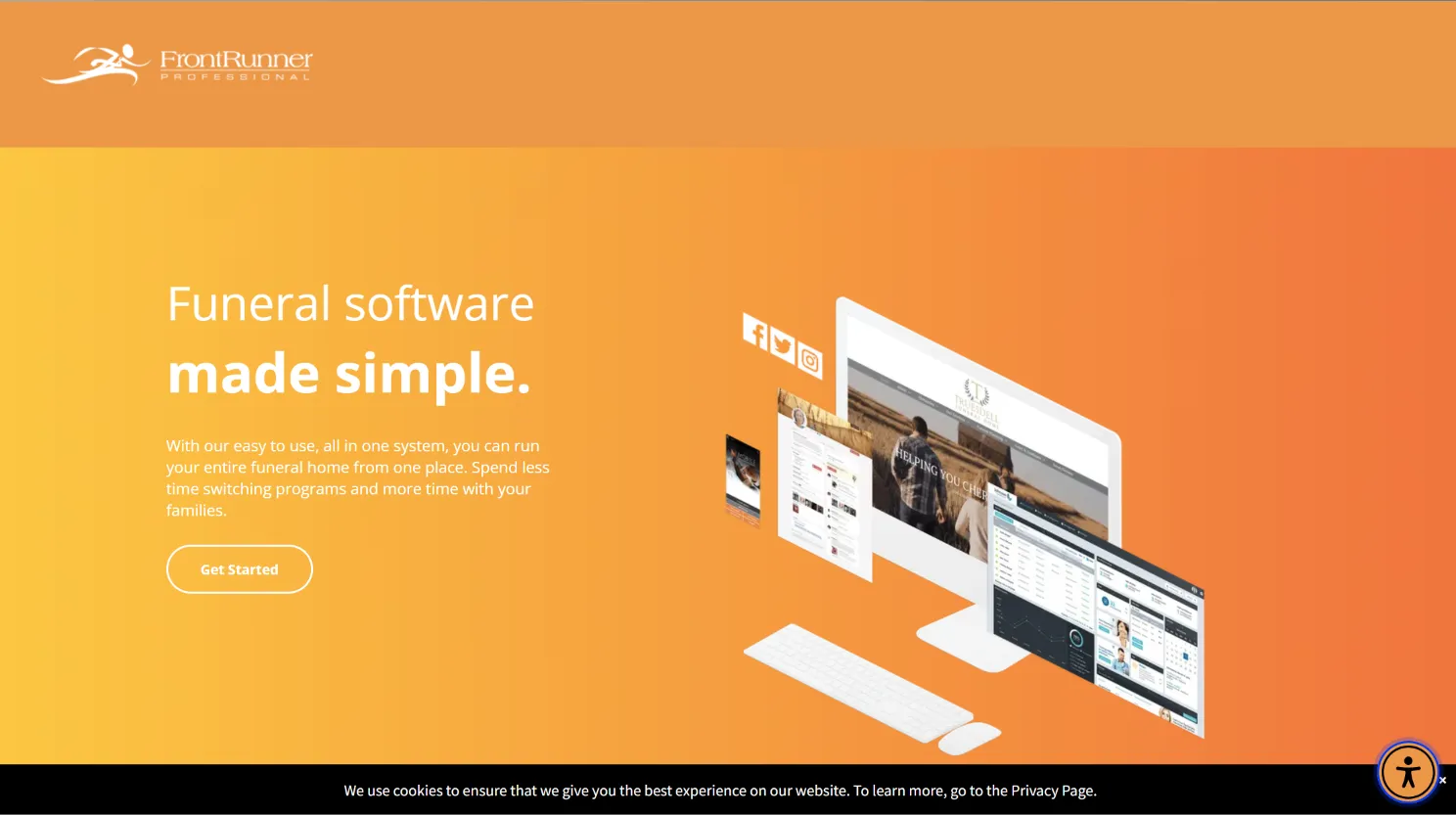
FrontRunner Professional is one of the most established names in the funeral tech space, offering a comprehensive, cloud-based suite for funeral home management, websites, and tribute services. FrontRunner is built for U.S.-centric shops that want to centralize everything, case management, obituaries, marketing, and even live streaming, under one vendor. The platform integrates with many common U.S. forms and templates, and their website builder is widely used for public-facing memorial pages.
Pricing: Contact for quote. Pricing varies by modules, number of users, and add-ons.
- Comprehensive all-in-one platform for U.S. funeral homes
- Integrated website builder and tribute services
- Recognizable brand with established support
- Opaque pricing and potential for higher costs with add-ons
- Limited flexibility for unique workflows or international needs
- Customization and integrations require vendor involvement
If you need a more flexible workflow or internationalization, Devaims can build your system to fit any region or process.
2. PassageQuest (Digital-first memorials)

PassageQuest is a newer SaaS tool designed for funeral homes that want to prioritize digital memorialization and streamlined case tracking. It stands out for its focus on modern, interactive tribute pages and family-facing features.
Pricing: Contact for quote. Pricing typically scales with case volume and user count.
- Modern digital memorial and family portal features
- Streamlined, user-friendly interface
- Good for shops moving to paperless workflows
- Limited integrations with external systems
- Physical document generation and advanced logic are basic
- No code or database ownership
If you need advanced business logic or full data ownership, Devaims delivers both with a custom build.
3. CRaKN (Busy multi-location operators)
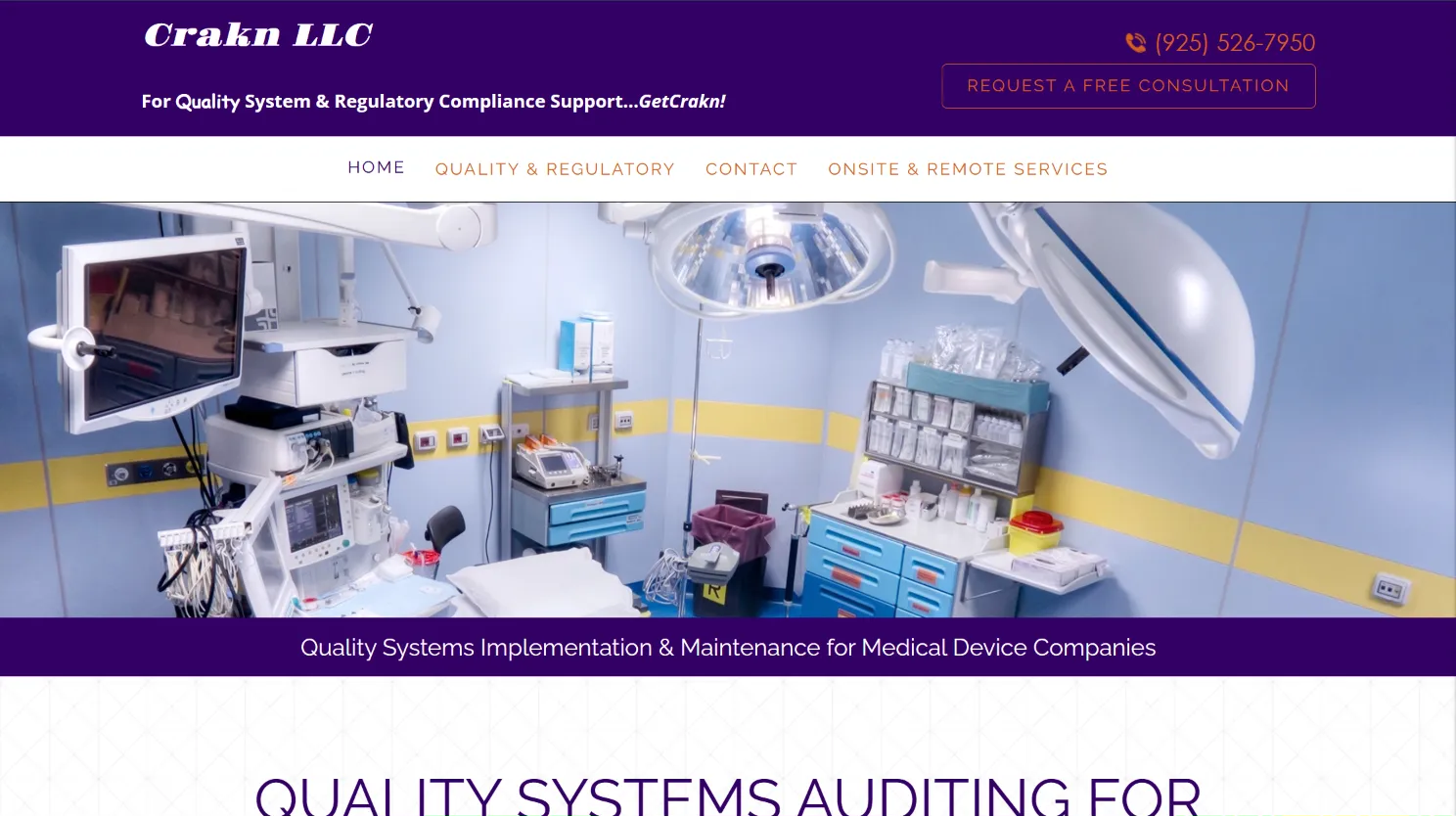
CRaKN is designed for larger, multi-location funeral home businesses that need workflow automation, compliance tracking, and detailed reporting. Its cloud-based architecture supports collaborative teams and high case volumes.
Pricing: Contact for quote. Pricing is based on number of locations, users, and modules.
- Strong workflow automation and compliance tools
- Centralized reporting for multi-location firms
- Collaborative, cloud-based platform
- Pricing can escalate with scale and add-ons
- Customizations limited to vendor-supported features
- No code or backend data access
For full workflow control and ownership, Devaims can unify all your locations under one custom system.
4. FuneralTech (Integrated website & management)
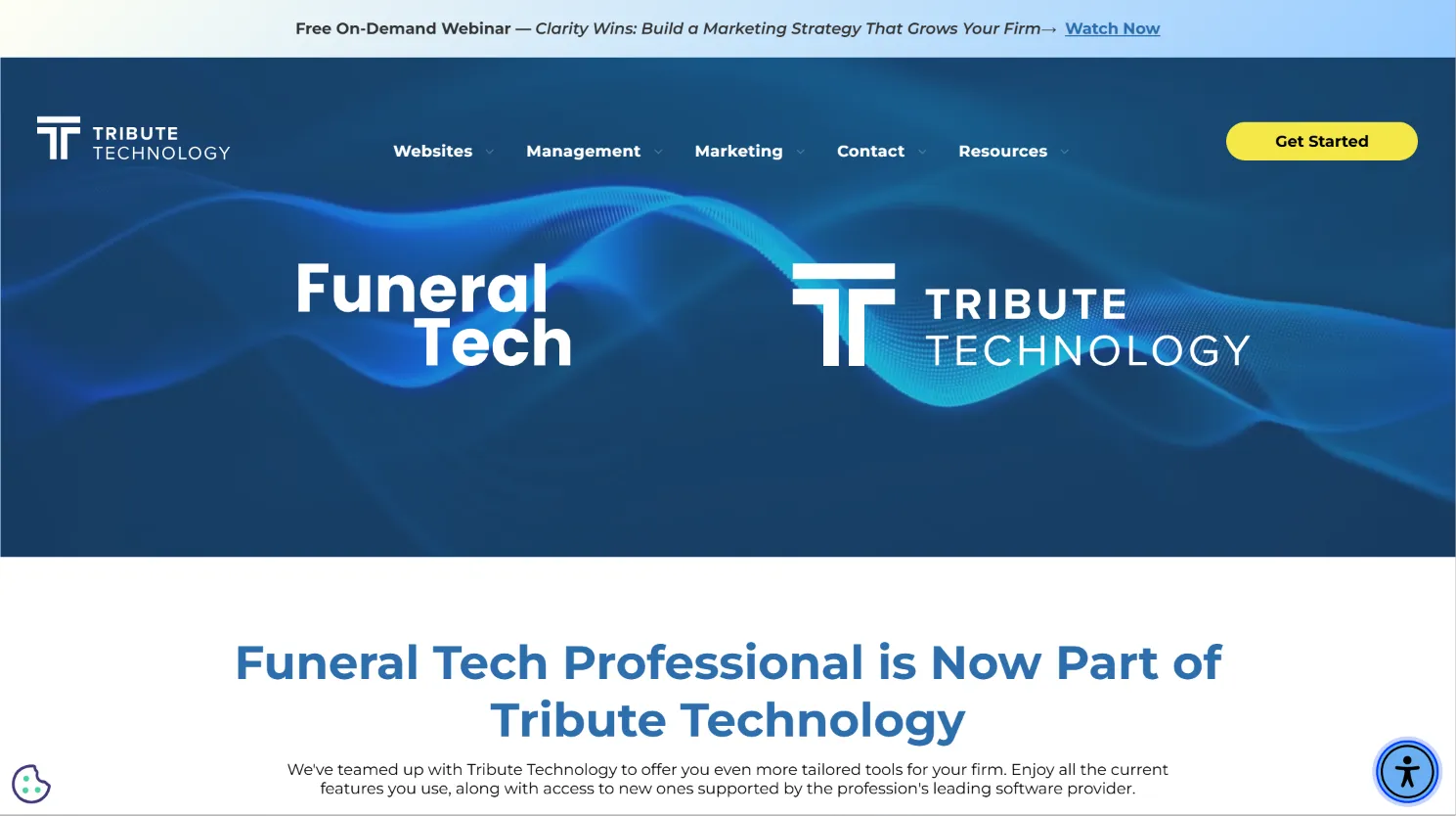
FuneralTech offers a broad suite covering funeral home management, website building, marketing automation, and aftercare. Their "all-in-one" approach appeals to funeral homes that want a single vendor for both public-facing and back-office needs.
Pricing: Contact for quote. Pricing depends on selected modules and user count.
- Integrated website and management tools
- Marketing automation and aftercare features
- Good for firms wanting to boost online presence
- Add-ons for advanced features can increase costs
- Customization limited by vendor's roadmap
- Long-term data portability is restricted
For unlimited customization and true ownership, Devaims builds your platform to your exact needs.
5. Tribute Management Software (Tribute and donation handling)
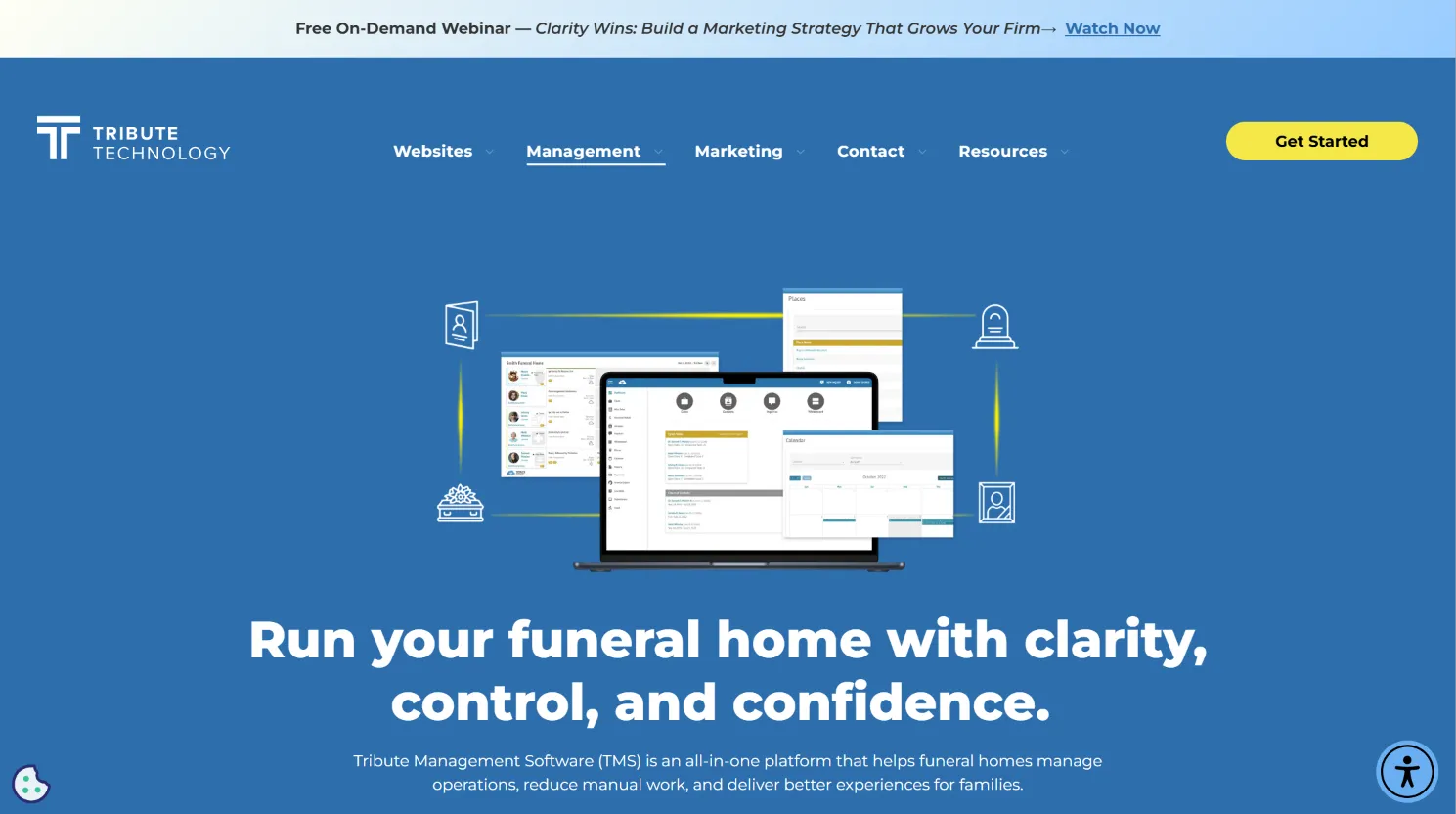
Tribute Management Software is focused on tribute pages, donation management, and event coordination. Its streamlined workflow is ideal for funeral homes that want to maximize memorial fundraising and event logistics.
Pricing: Contact for quote. Pricing is based on features and usage.
- Efficient tribute and donation management
- Event scheduling and guestbook tools
- Community engagement features
- Limited advanced case management and compliance features
- Workflow flexibility constrained to platform options
- No system ownership or deep customization
If you need advanced compliance or hybrid workflows, Devaims can build these into your system from day one.
6. MiMS (Simplified case management)
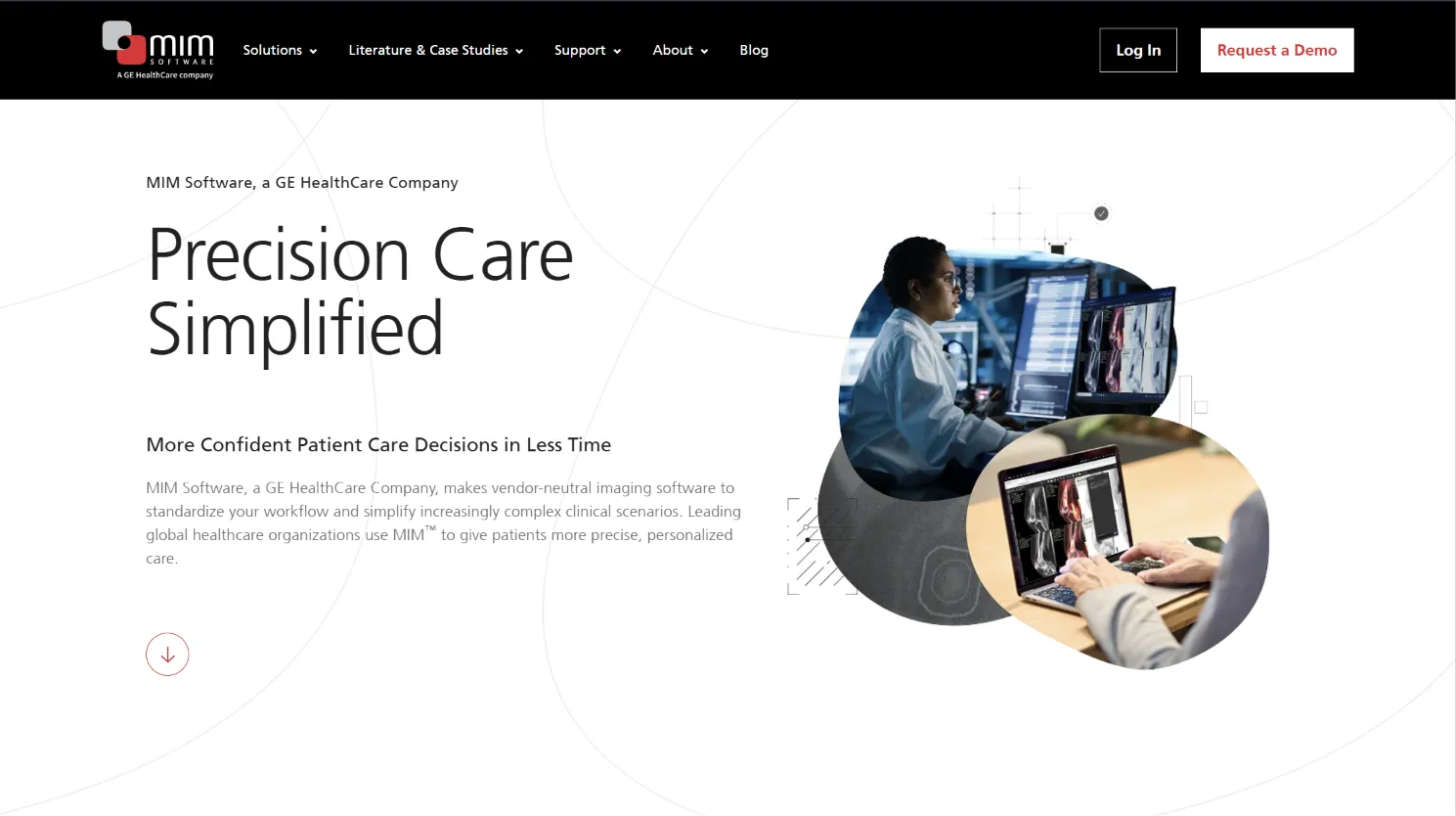
MiMS is a lightweight, browser-based case management tool for funeral homes that want simplicity and low training overhead. It is a good choice for small independents or those with basic operational needs.
Pricing: Contact for quote. Typically lower upfront cost, but fees add up with growth.
- Simple, easy-to-learn interface
- Low training overhead for staff
- Affordable for small or new funeral homes
- Minimal features and almost no customization
- Outgrown quickly as needs expand
- No data or code ownership
When your needs outgrow MiMS, Devaims can migrate your data and build a system that grows with you.
7. CIMS (funeral) (Cemetery & funeral integration)
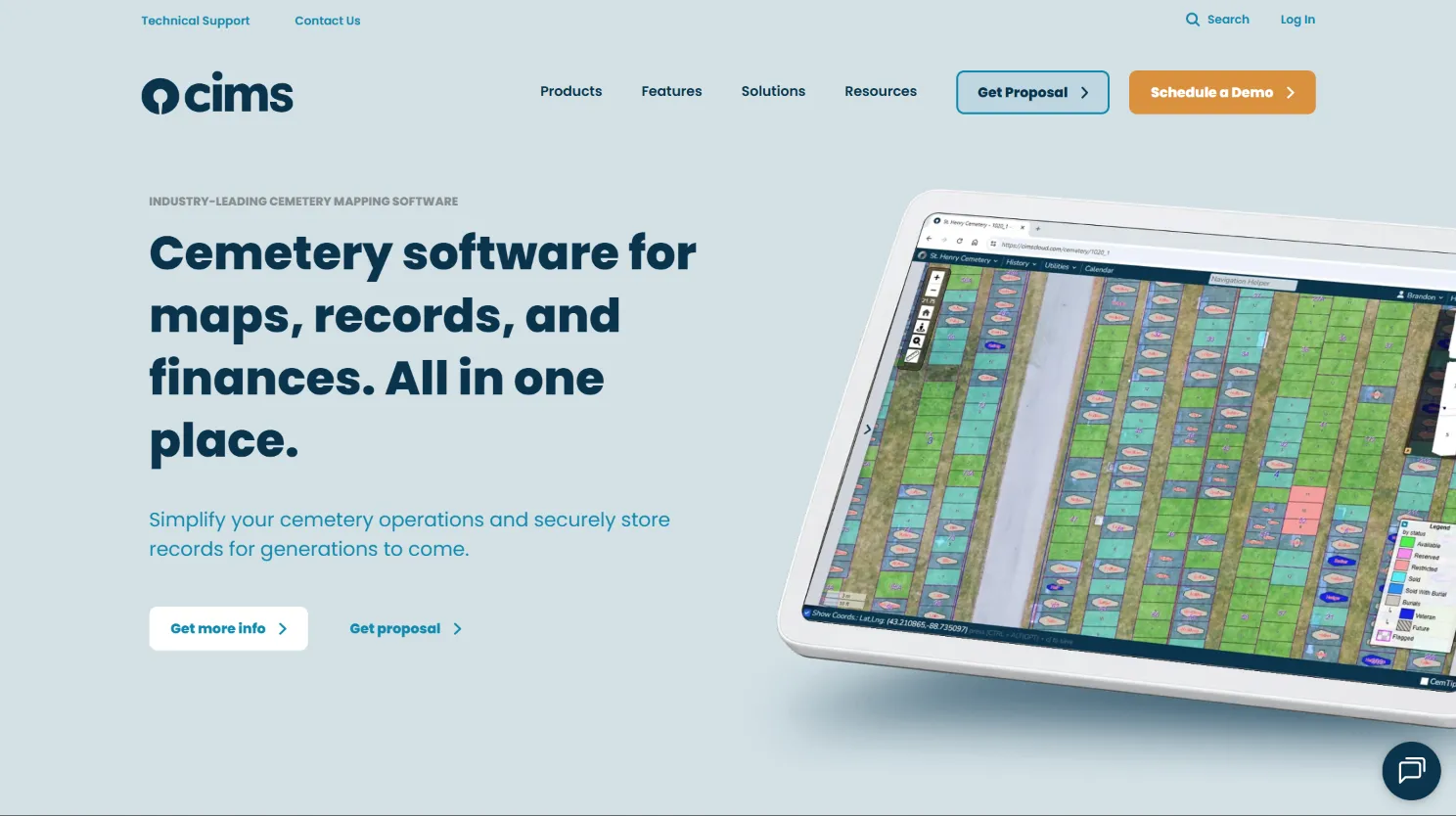
CIMS is best known for cemetery management, but offers funeral home modules for operators managing both sides of the business. The unified approach is appealing to hybrid businesses or those expanding into cemetery services.
Pricing: Contact for quote. Costs vary by modules and number of records managed.
- Unified cemetery and funeral management
- Detailed mapping and deed tracking
- Compliance and historical record tools
- Funeral modules less mature than cemetery core
- Customization limited by vendor's roadmap
- No code or backend data ownership
On a custom Devaims build, hybrid cemetery-funeral workflows are built for your needs, not retrofitted.
8. Epitaphe (European compliance needs)
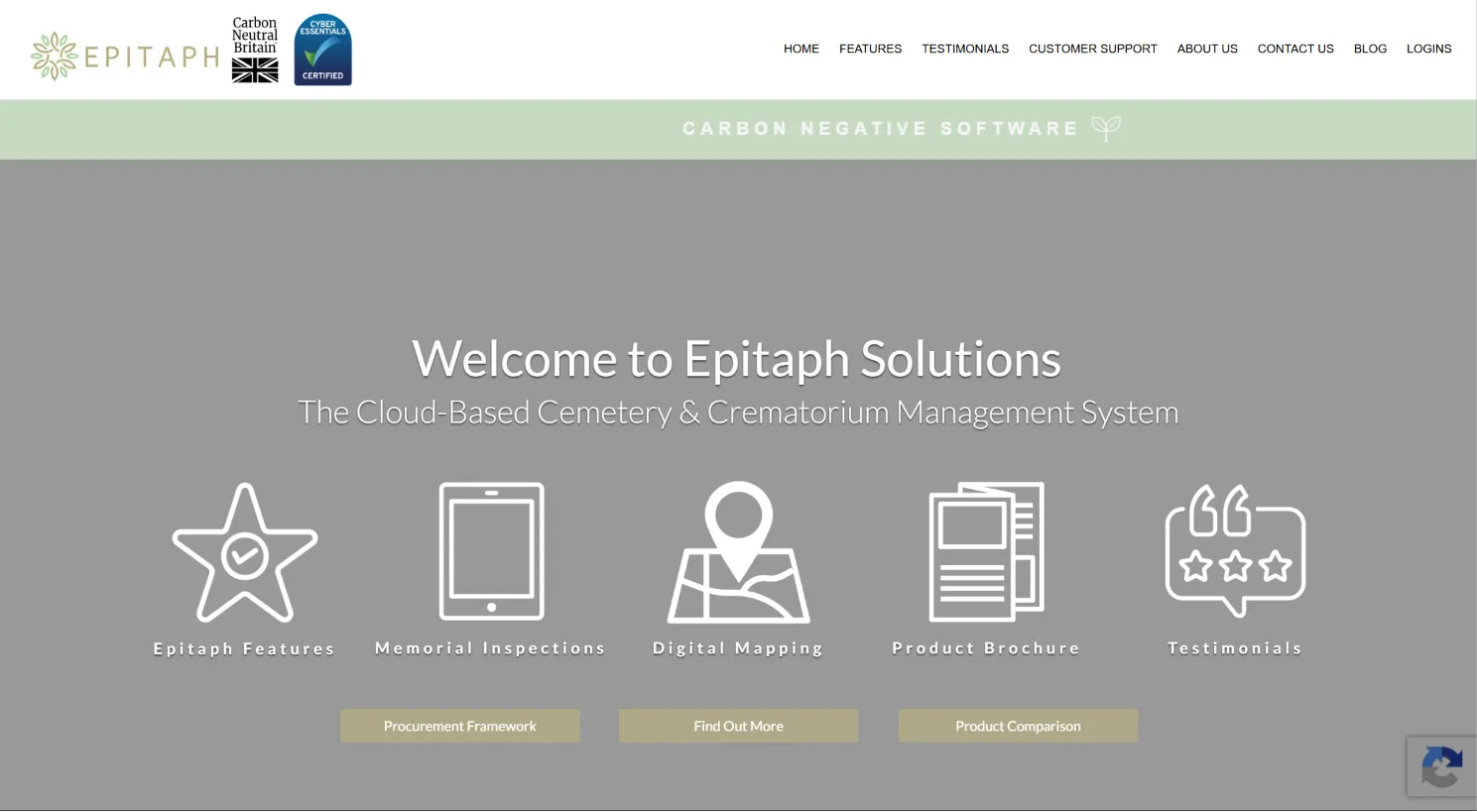
Epitaphe is focused on the European market, with features tailored to GDPR, multilingual support, and region-specific compliance needs. Epitaphe is cloud-based and supports both at-need and pre-need workflows, as well as a growing library of European legal templates.
Pricing: Contact for quote. Pricing depends on modules, users, and compliance requirements.
- GDPR and European compliance features
- Multilingual support and regional templates
- Digital forms and e-signature tools
- Not suitable for U.S. or Canadian funeral homes
- Customization limited by vendor's roadmap
- Recurring fees as long as you use the platform
If you need internationalization or compliance for multiple regions, Devaims can tailor your system for any market.
9. Bereave (Modern workflow automation)
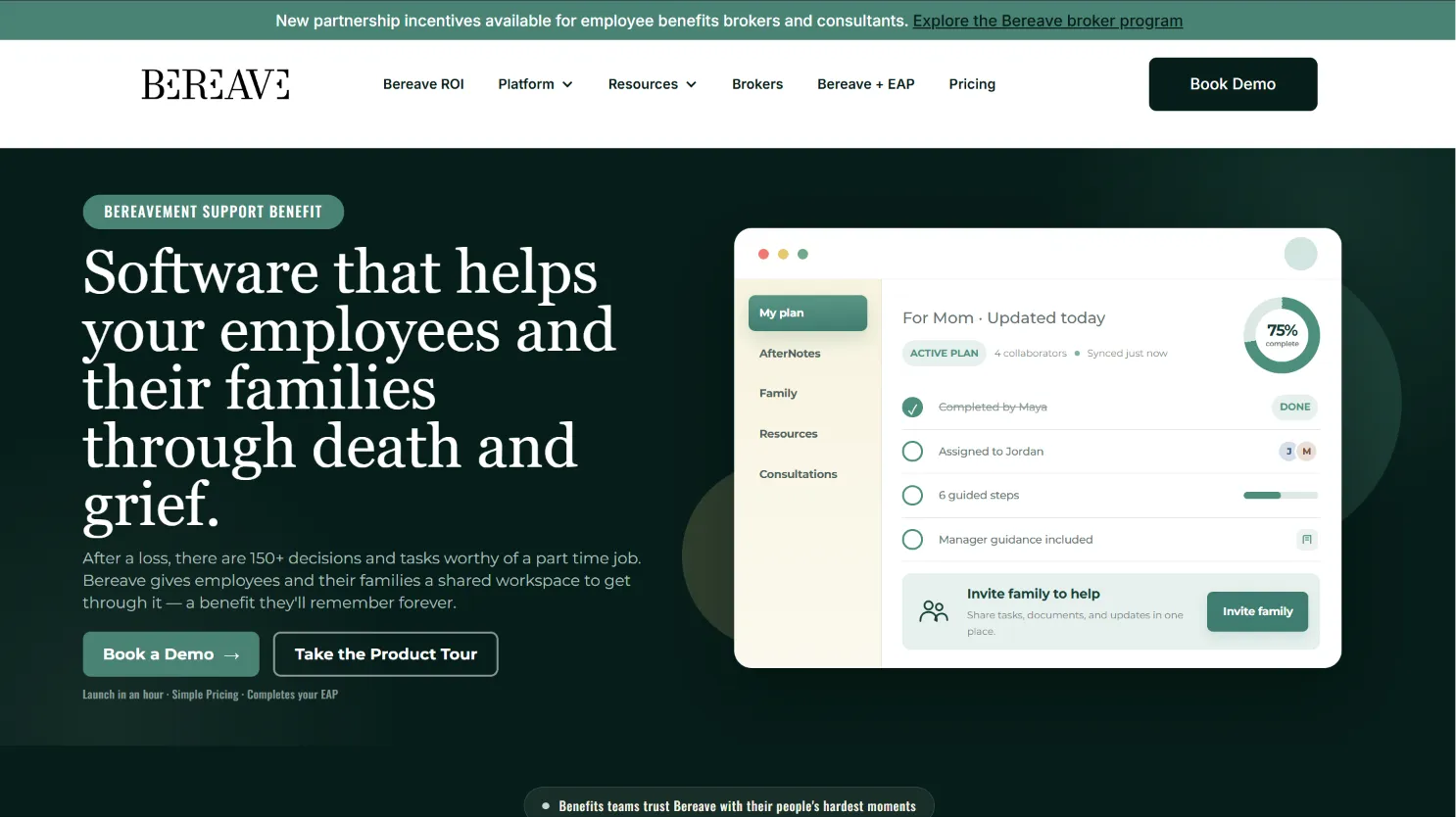
Bereave is a newer, cloud-native platform built for automation and mobile-first workflows. Its goal is to reduce manual data entry and automate repetitive administrative tasks for funeral homes of all sizes.
Pricing: Contact for quote. Pricing is based on features and user count.
- Mobile-optimized and automation-focused
- Real-time notifications and workflow tools
- Modern, user-friendly interface
- Some advanced features or integrations still in development
- Customization limited to vendor-supported options
- Software is rented, not owned
For automation plus full ownership and custom integrations, Devaims can build exactly what you need.
10. Devaims (Full ownership & custom fit)
Devaims stands out as the only option in this list that lets you truly own your funeral home management software. Instead of renting, you receive the source code, full data control, and perpetual use rights. Devaims builds your system from the ground up to fit your exact workflows, forms, branding, and regional compliance, whether you operate in the U.S., Canada, Europe, or internationally.
Pricing: One-time build cost, then flat maintenance. No per-user or per-computer fees.
- Full ownership of code, data, and business logic
- 100% custom fit for your workflows, branding, and compliance
- Flat, predictable maintenance with no per-unit upcharges
With Devaims, you gain the freedom to innovate, adapt, and grow your business on your terms.
Other Osiris alternatives worth knowing
- Aurora Funeral Solutions: Geared for larger corporate chains, with a focus on pre-need and merchandising. Aurora integrates merchandising and pre-need sales tracking, but custom workflows are often slow to implement and the platform is best suited to high-volume chains.
- FDMS: Legacy funeral home management, often used in multi-generational shops. Not cloud-native, and support can lag. FDMS has a loyal user base but is showing its age, with limited mobile support and integrations. Data migration to modern systems can be challenging.
- Funeral Director's Assistant: Popular in the UK, but limited U.S. support and features trail modern SaaS. Its focus is on basic case management and document generation, with minimal online features or integrations.
- Everdays: Focused on digital outreach and social memorials, but not a full management solution. Everdays offers social sharing, online arrangements, and digital marketing for funeral homes, but lacks deep case management or compliance features.
How to choose the right Osiris alternative
- By budget: If you want low upfront cost, subscription SaaS may win, but add up the 5-year total. For long-term shops, ownership saves money. Calculate not just the sticker price but all recurring and per-unit costs, plus any migration or integration fees.
- By workflow: Do you need custom documents, hybrid cemetery-funeral logic, or unique regional compliance? Off-the-shelf tools rarely fit perfectly. If your process is unique or regulated, custom builds are typically the only path to a perfect fit.
- By scale: Multi-location operators need robust reporting and integrations; small independents may get by with a lighter system. Consider your growth plans, will you need to add locations, users, or features?
- By data control: If owning your data and code matters, only a custom build like Devaims delivers. SaaS vendors can change terms or discontinue features at any time; ownership gives you certainty.
- By flexibility: Need to add features, change logic, or rebrand? SaaS limits you to their roadmap; ownership means you decide. Consider how often you have needed to request changes or workarounds in your current system.
When you want to stop paying for features you'll never use or start owning your business logic outright, a Devaims build makes the math work. See additional reviews and buyer guides for further comparison.
Stop paying rent on software you could own
The single biggest pain point with Osiris, and every alternative here, is the never-ending rent. Every year, you pay more for the same stack. Per-unit and per-computer fees pile up, and when you finally want to leave, you walk away empty-handed. Every SaaS vendor in this market keeps you renting.
Devaims flips that script. We build funeral home management systems that are truly yours: you keep the code, the data, and the logic. No per-device, per-case, or "enterprise" upcharges. No contract lock-in. You pay once to build, then a flat monthly for maintenance and support. Five years from now, you own an asset, not just a stack of receipts.
Here's how owning your system with Devaims solves the core headaches of Osiris and the rest:
- No more per-computer or per-case fees: Your cost is the same whether you add staff, locations, or features. Expansion does not trigger new fees.
- No contract shackles: You run your business on your terms, not a subscription agreement. You are free to change, upgrade, or even host elsewhere. No vendor permission required.
- Custom workflows for your reality: From international forms to hybrid cemetery logic, you get exactly what fits. No more bending your business to fit a tool.
- Full data and code ownership: Your business logic, integrations, and records stay with you, forever. You decide how your data is stored, accessed, and secured.
| Tool | Ownership | Custom fit | Maintenance cost |
|---|---|---|---|
| Osiris | No | Low to medium | $135/mo + add-ons |
| FrontRunner | No | Low to medium | Contact for quote |
| FuneralTech | No | Medium | Contact for quote |
| Devaims | Yes (you keep the code) | Fully tailored to you | $0 per unit, flat maintenance |
5-Year Cost Comparison (100 cases/year, 4 computers):
| Year | Osiris (cumulative) | Devaims (owned, cumulative) |
|---|---|---|
| 1 | $1,620 | $27,000 |
| 2 | $3,240 | $29,760 |
| 3 | $4,860 | $32,520 |
| 4 | $6,480 | $35,280 |
| 5 | $8,100 | $38,040 |
Break-even usually falls between year 5 and 6 for most shops, once you factor in rising SaaS fees and flat Devaims maintenance. If you plan to own your business for the long haul, every year after that is pure savings and full control. We'll run the real math for your shop, no strings attached.
How to switch from Osiris
- Export your existing data (cases, contacts, forms) from Osiris. Request a full backup if needed. Ask for all attachments, document templates, and historical records to minimize data loss.
- Choose and configure your new alternative, or plan your custom build with Devaims. Map out which workflows, forms, and integrations you need to replicate or improve.
- Import historical data into the new system and validate records for completeness. Pay special attention to custom fields and attachments, some SaaS tools require manual re-entry.
- Reconnect your payment processing, integrations, and website forms as needed. Confirm that all automated notifications, document templates, and compliance checks work as expected.
- Train staff on the new system, focusing on changed workflows and permissions. Provide hands-on demos and reference guides to reduce friction and errors.
- Test both systems in parallel for at least one week to catch issues before cutover. Have staff process sample cases and verify that reports, forms, and billing are correct.
- Review and terminate your Osiris contract when comfortable with the new platform. Confirm that all regulatory requirements for data retention and access are met before shutting down the old system.
With a custom Devaims build, the migration is handled as part of the project, including tailored data mapping and staff onboarding.
Frequently asked questions
What is the best Osiris alternative for a multi-location funeral home?
For multi-location operators, CRaKN offers strong workflow automation, compliance tracking, and centralized reporting. It is a good fit if you want a SaaS solution and do not need deep customization or ownership. For operators who want to fully control their workflows, integrations, and data, and avoid perpetual rent, Devaims is the only option that lets you build exactly what you need and keep it forever. With Devaims, you can unify multiple locations, customize permissions, and integrate with any third-party provider of your choice.
Which Osiris alternative is cheapest?
MiMS and Osiris Lite are designed for low upfront cost, but fees add up over time, especially as you grow. SaaS solutions can appear cheap at first, but with recurring fees, add-ons, and per-unit upcharges, your total cost of ownership over five years often surpasses the cost of building your own. The cheapest long-term path is a custom system with Devaims. After a few years, the savings on rent and upcharges start to add up, and you gain an asset you control.
Is there any free funeral home management software?
There are no full-featured, free Osiris alternatives for funeral homes. Some vendors provide free trials or basic versions with limited features, but every production-ready tool is paid or rented. Open-source options exist for general business management, but require significant IT expertise to adapt for funeral home use. Owning your own system with Devaims means no per-user fees as your staff grows and no surprise charges as you expand.
Which Osiris alternative is best for non-U.S. funeral homes?
Epitaphe is designed for European compliance and multilingual needs, with GDPR support and regional templates. If you operate internationally or have unique compliance needs, a Devaims build can be tailored to your region, language, and legal requirements, ensuring your business logic and forms fit your market, not just U.S. defaults.
Can I migrate all my data from Osiris to a new platform?
Yes, most Osiris alternatives support data import, but the process can be manual and time-consuming. Some SaaS vendors provide migration tools or onboarding support, but custom fields, historical attachments, and unique workflows often require manual mapping or re-entry. With a custom Devaims build, migration and validation are part of the project scope for a seamless transition, including scripts to handle even complex or non-standard data.
When should I switch from Osiris to another solution?
If your fees keep rising, workflows no longer fit, or you want to own your business logic and data, it is time to consider Osiris alternatives. Switching early allows you to stop the rent cycle, invest in a solution that fits your business, and avoid data loss or migration headaches as your records grow. If you plan to operate your funeral home for more than three years, the savings and control from ownership only increase with time.
Can I keep my existing website and branding with a new system?
Most SaaS tools offer limited website integration and branding options. Some lock you into their templates or restrict how you can present your brand online. With a Devaims build, your platform is designed to match your branding exactly, with no restrictions on website integration, custom forms, or third-party connections. You are free to update, rebrand, or redesign at any time, without waiting for vendor approval.
The bottom line
The honest test: add up what Osiris or any alternative will cost you over five years. If that number would have built you something you own, you already have your answer. Most funeral homes renting today could have built an asset for the same money and put an end to the cycle. Read user reviews on Capterra to see how others have navigated this decision.
Owning your funeral management system is more than a financial play. It's about controlling your data, your workflows, and your future. If you're ready to step off the SaaS treadmill, Devaims is your path to code and cost certainty. You gain the freedom to innovate, adapt, and grow on your terms, not a vendor's.
Explore more on the Devaims blog, or see other alternatives: FrontRunner Professional alternatives, CRaKN alternatives, FuneralTech alternatives.