



If you’ve watched your Title Express bill creep up every year, another monthly fee here, another per-user charge there, you’re not alone. Notary and legal document shops everywhere are quietly doing the same math: how much longer are we going to pay rent on software that hasn’t changed since last year?
Maybe you’ve hit the wall on integrations, or maybe the per-file transaction fees are eating into your margins. Or maybe, like most, you just want a modern workflow without the fear of being priced out or locked into a vendor’s way of working. The good news? There are plenty of Title Express alternatives in 2026 worth a look. Notarize, Stavvy, DocVerify, and Snapdocs all bring something new to the table, but the one honest reason to switch is to regain control. And if you want to finally own your platform, there’s an alternative that puts the code in your hands: a custom build from Devaims.
Why notary and legal businesses look for Title Express alternatives
Recurring subscription fees stack up. Title Express and its closest competitors operate on SaaS (Software-as-a-Service) models, charging monthly, per-user, or per-transaction. These costs scale with your business: as you add notaries, staff, or transaction volume, recurring fees multiply. While $99 or $199 a month may feel manageable for a solo operator, growing teams quickly find themselves paying $1,000 or more monthly for the same features they’ve always had, sometimes with surprise increases after contract renewal.
Upgrades and integrations often cost extra. Need advanced reporting, custom workflows, or API access to connect with your CRM or accounting platform? Most vendors lock these features behind higher pricing tiers or require you to pay for “premium” add-ons. API access can cost hundreds per month, and even basic integrations (like e-recording or QuickBooks) may be unavailable unless you upgrade.
Data and process lock-in causes headaches. Your transaction history, client records, and compliance audit trails are your business’s lifeblood. With most SaaS providers, exporting this data is at best time-consuming and at worst, incomplete or costly. If you ever want to switch platforms or need to respond to a legal discovery request, you may find your data locked up in proprietary formats or accessible only at the vendor’s pace.
Customization is limited or expensive. Most title and notary SaaS tools offer only minor branding tweaks or workflow adjustments unless you’re paying for an enterprise contract. Even then, customization is limited to what’s on their roadmap, with little ability to tailor the system to your unique process, compliance rules, or local regulations. If your shop has specialized needs, like layered approvals, custom document templates, or state-specific workflows, you may find yourself bending your process to fit the tool, not the other way around.
Contractual lock-in and surprise price hikes. Many vendors require annual (sometimes multi-year) contracts, with auto-renewal clauses and steep penalties for early exit. It’s common for prices to rise at renewal, often with little warning. For businesses that have carefully built their operations around a specific platform, the cost and disruption of switching can feel prohibitive, exactly what vendors count on to keep you renting.
Quick comparison of the best Title Express alternatives
| Tool | Best for | Starting price | You own it? |
|---|---|---|---|
| Notarize | Remote online notarization | Reported $99/mo + per-transaction | No |
| Stavvy | Title, mortgage, and RON | Contact sales | No |
| DocVerify | Enterprise e-notary | From $30/mo + fees | No |
| BlueNotary | Individual notaries | From $24/mo | No |
| SigniX | Legal e-signing | Contact sales | No |
| Proof (RON) | Large-scale RON | Contact sales | No |
| Snapdocs | Title & closing workflow | Contact sales | No |
| NotaryCam | On-demand online notary | From $99 per session | No |
| Devaims | Owning your own platform | One-time build, you own it | Yes |
Always confirm current pricing before you decide. Most providers update fees and plans annually, and some may offer discounts for volume or multi-year contracts.
The 9 best Title Express alternatives
1. Notarize (Best for remote online notarization)
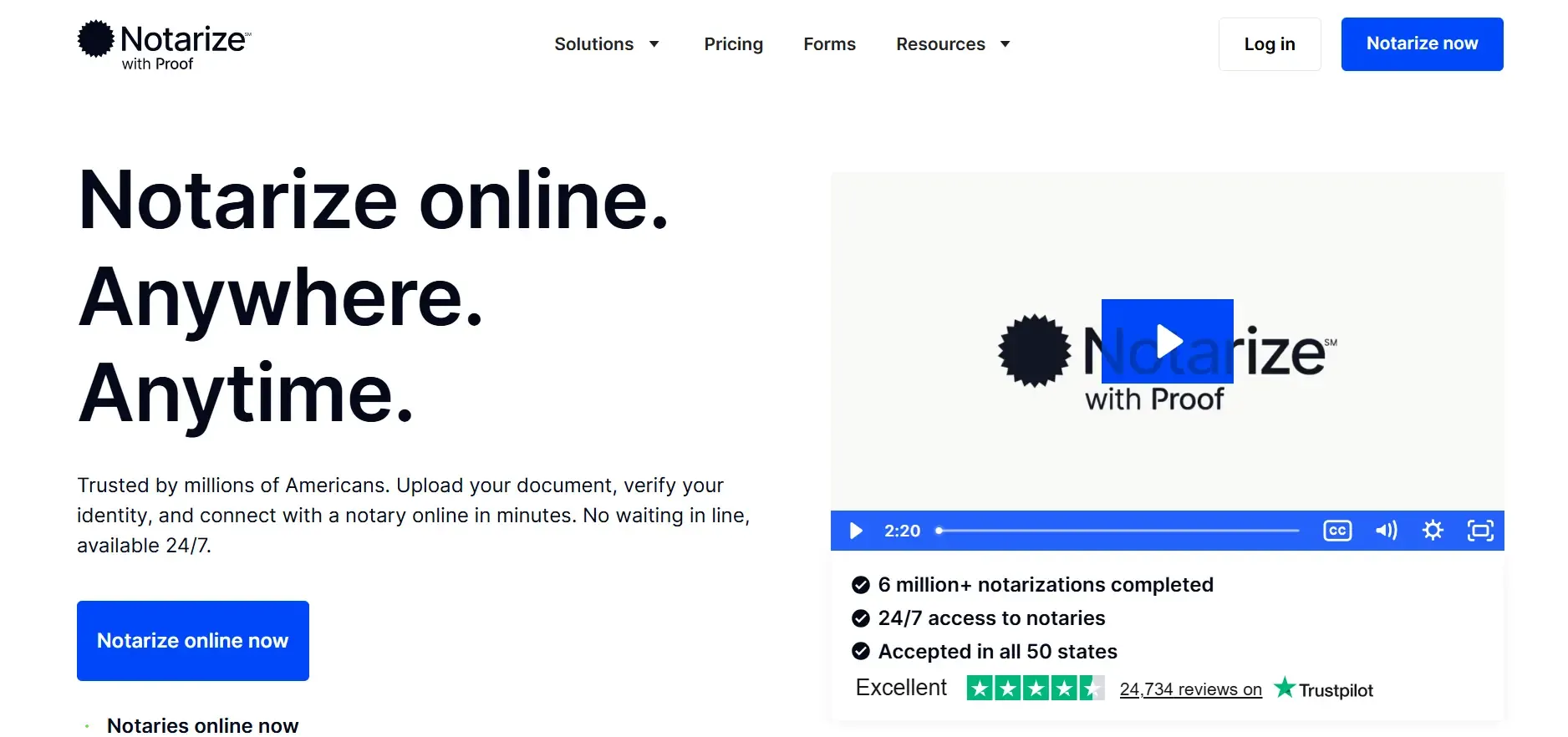
Notarize remains a leader for fully digital, remote online notarizations (RON), making it a go-to for title agents, law firms, and lenders who need legally binding notarizations with nationwide reach. Notarize’s cloud-first design means you can access your workflow from anywhere, and its interface is a major step up from the legacy look and feel of Title Express.
Pricing: Starts at $99/month plus per-transaction fees.
- Nationwide RON compliance and cloud access.
- Broad integrations with title and e-signature systems.
- Modern, user-friendly interface for remote workflows.
- Customization is limited unless you’re an enterprise client.
- API access requires higher-tier plans.
- Data is stored on Notarize’s servers, not yours.
Devaims note: If you want to own your data and avoid recurring fees, Notarize’s SaaS model may not fit long-term.
2. Stavvy (Best for title and mortgage closings)
Stavvy is designed for the modern real estate, mortgage, and title industry, offering a unified solution for e-signatures, e-notarization (including RON), and secure document collaboration. It covers the entire closing lifecycle, from document preparation to post-closing, and is trusted by some of the largest lenders and title agencies in the US.
Pricing: Contact sales for pricing; costs scale with volume and integrations.
- Comprehensive workflow for title and mortgage closings.
- Strong compliance and audit features.
- Integrates with major LOS and title production systems.
- Pricing is opaque and can be high for smaller agencies.
- Customization is limited to enterprise contracts.
- Still a subscription model, so you never own the platform.
Devaims note: For agencies needing total control, Devaims offers full ownership and custom integrations.
3. DocVerify (Best for enterprise e-notary)
DocVerify is a pioneer in the digital signature and electronic notary space, with a focus on auditability and compliance. It’s widely accepted by lenders, insurers, and legal professionals for its digital signature standards and secure storage. Compared to Title Express, DocVerify is more technical and security-focused, though it still operates on a subscription and per-use basis.
Pricing: From $30/month plus per-use fees.
- High-assurance digital signatures and compliance.
- Detailed audit trails and secure storage.
- API integrations with business tools.
- Interface is technical and less user-friendly for small firms.
- Advanced features require enterprise contracts.
- Manual data migration and export can be time-consuming.
Devaims note: If you want to avoid per-use fees and own your workflow, Devaims is the only alternative that puts you in control.
4. BlueNotary (Best for individual notaries)
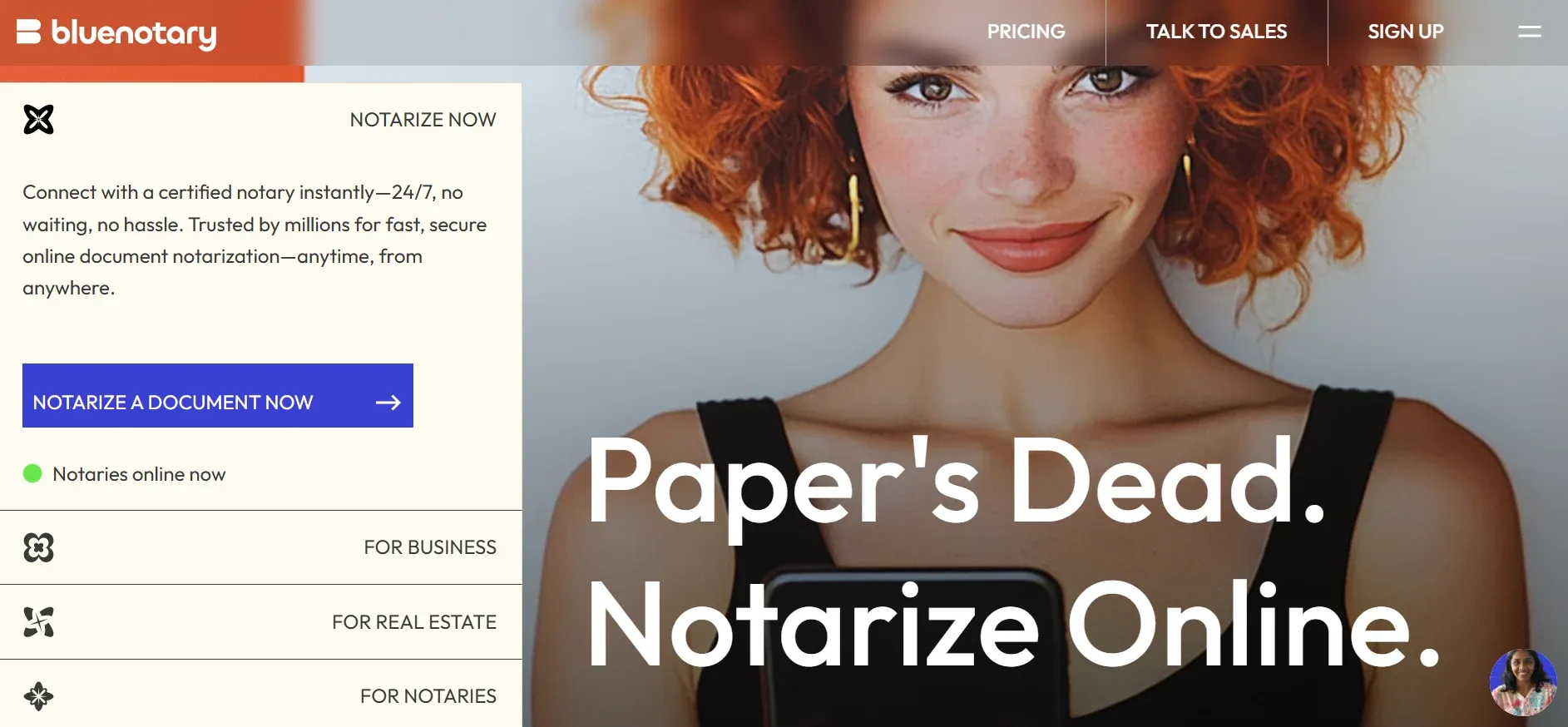
BlueNotary is built for solo notaries, small law offices, and mobile notary businesses who want to offer remote online notarization without the complexity or cost of enterprise tools. It’s one of the most accessible platforms for new notaries entering the digital space.
Pricing: Starts at $24/month; pay-per-session fees apply.
- Simple, fast onboarding for individuals.
- Low entry cost for solo notaries.
- Good for urgent or one-off notarizations.
- Minimal integrations and no open API.
- Limited scalability for growing businesses.
- No advanced workflow customization.
Devaims note: As your business grows, owning your system with Devaims can save you from rising per-session costs.
5. SigniX (Best for legal e-signature compliance)
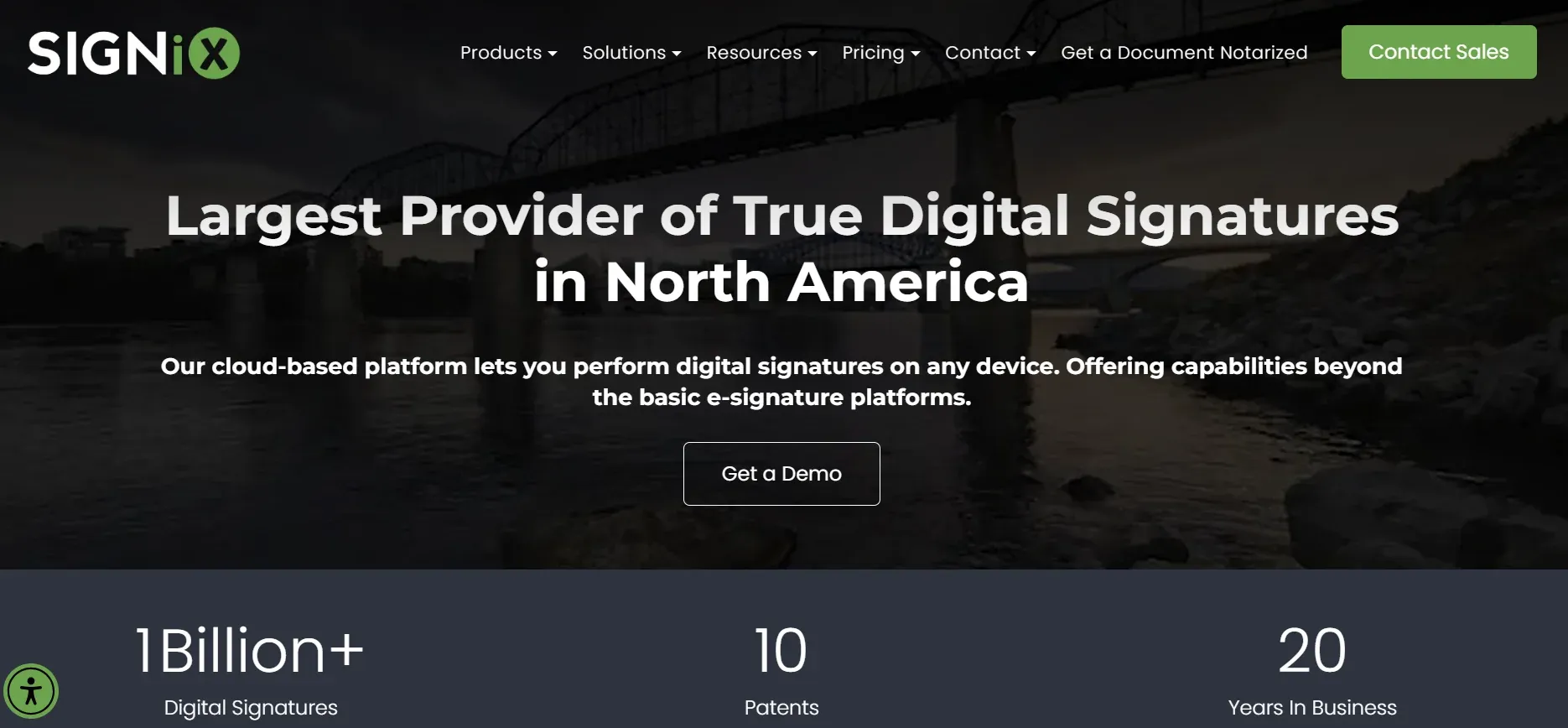
SigniX is a heavyweight in the legal and regulated industries, offering e-signature and e-notary solutions built for stringent compliance needs. Used by government agencies, healthcare organizations, and large law firms, SigniX focuses on digital identity, auditability, and long-term document integrity.
Pricing: Contact sales for custom pricing.
- Meets strict regulatory and compliance standards.
- Advanced audit trails and document retention.
- Open API and white-labeling options.
- Higher cost than basic e-sign or notary platforms.
- Complex interface for non-technical users.
- Some integrations require additional API fees.
Devaims note: For custom compliance and ownership, Devaims can tailor features to your jurisdiction and needs.
6. Proof (RON) (Best for high-volume RON)
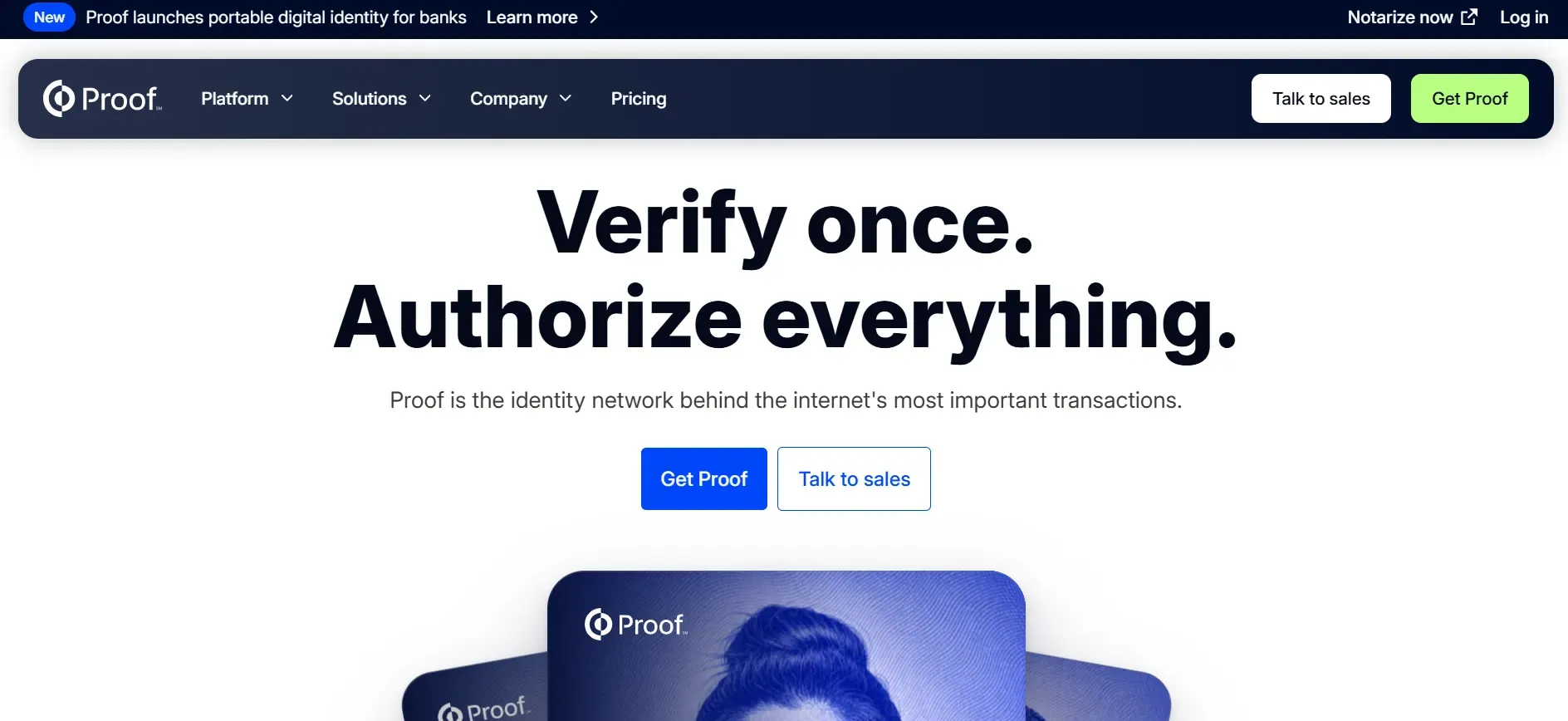
Proof (formerly Notarize’s RON platform) is engineered for enterprises that need to handle thousands of remote notarizations per month. It powers digital closings for some of the largest lenders, title agencies, and law firms in North America.
Pricing: Enterprise contracts only; contact sales.
- Handles high-volume RON at scale.
- Automated scheduling and compliance management.
- Deep integrations with LOS and title systems.
- Not available for solo notaries or small shops.
- Pricing and features scale with volume and contract.
- Customization is limited to platform boundaries.
Devaims note: If you want to own your high-volume workflow, Devaims builds to your exact requirements.
7. Snapdocs (Best for title & closing automation)
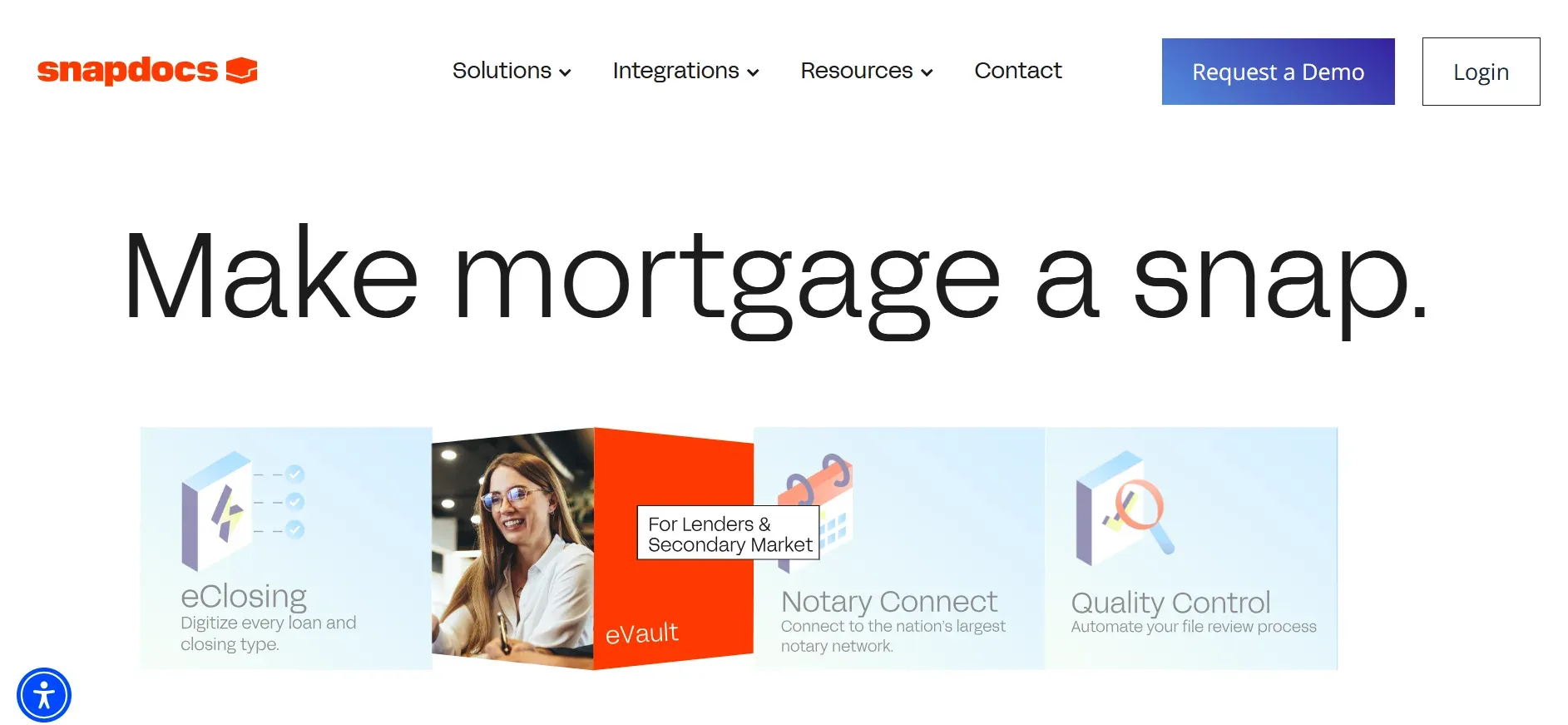
Snapdocs is a workflow automation and collaboration platform built specifically for title agents, escrow officers, and mortgage closers. It manages the entire closing process, from scheduling to document tracking and e-signature, and is used by more than 150,000 real estate professionals.
Pricing: Contact sales; pricing is based on volume and features.
- Automates closing and document workflows.
- Integrates with leading title and e-recording systems.
- Reduces manual data entry and improves compliance.
- Learning curve for smaller agencies.
- Advanced features require enterprise tier.
- Dependent on Snapdocs’ roadmap and support cycles.
Devaims note: For agencies wanting to own their automation, Devaims delivers full customization and control.
8. NotaryCam (Best for on-demand online notarizations)
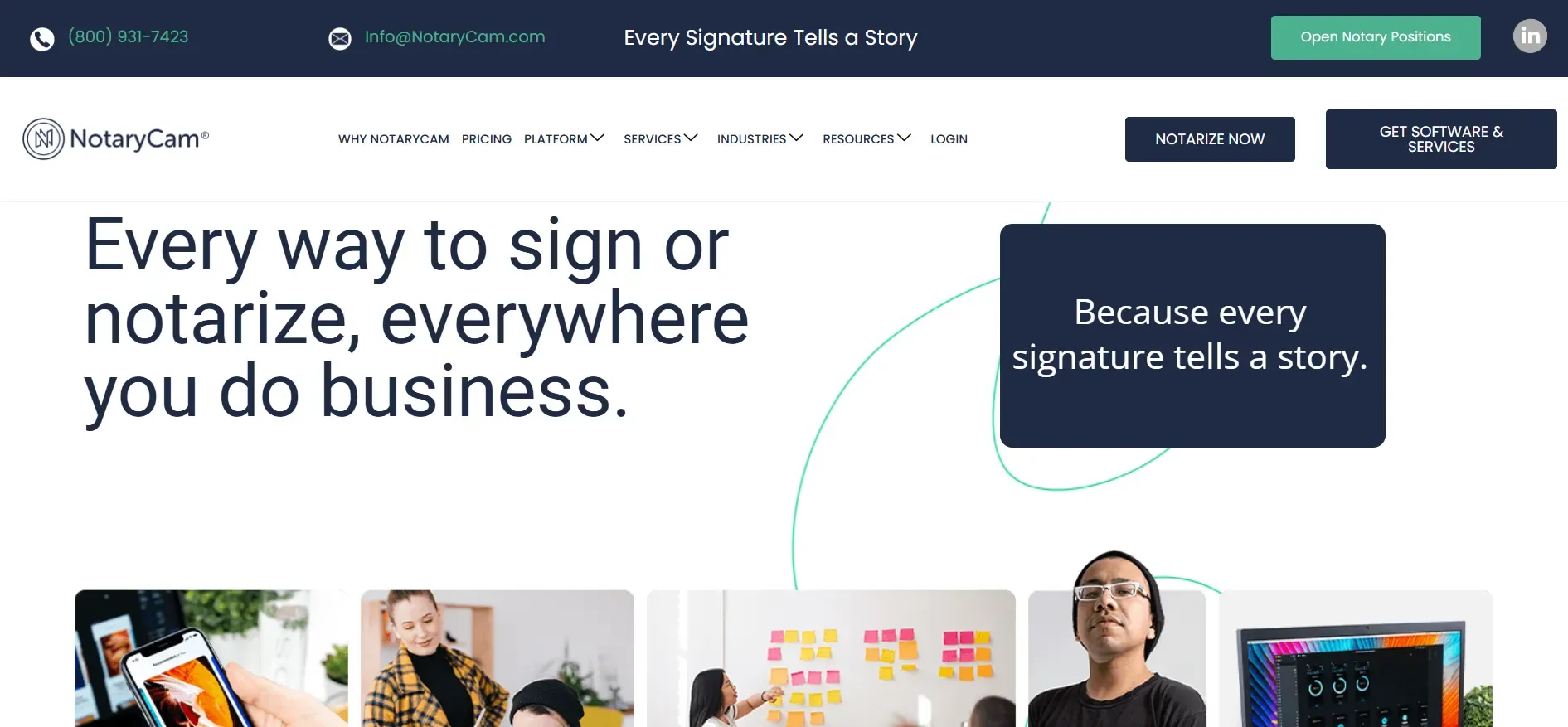
NotaryCam provides instant access to licensed notaries for individuals and businesses who need one-off or urgent notarizations. It’s used by real estate professionals, legal teams, and consumers who want a quick, legally binding RON session without monthly commitments.
Pricing: From $99 per session.
- 24/7 access to licensed notaries.
- Fast, transactional RON for urgent needs.
- No monthly commitment required.
- Pay-per-session pricing is expensive for high volume.
- No workflow automation or bulk processing.
- Limited integrations with title production systems.
Devaims note: For businesses with regular volume, owning your workflow with Devaims is more cost-effective long-term.
9. Devaims (Best for owning your notary and legal workflow)
Devaims is fundamentally different from every other option on this list. Rather than renting access to someone else’s platform, you commission a custom-built solution that is yours to own, including the code, data, and integrations. The result is a system tailored to your exact workflow, with no recurring per-user or per-transaction fees, and no risk of vendor lock-in or forced upgrades. You decide what gets built, how it integrates, and when it evolves.
- Full ownership of your platform, code, and data.
- Custom features and integrations built to your needs.
- No recurring per-user or per-transaction fees.
- Migration handled as part of the project, with dedicated support.
- Future-proof: evolve your system on your terms.
Other Title Express alternatives worth knowing
- Pantograph: Niche e-sign and workflow tool popular in legal, but rarely used in title production. Limited RON support and minimal integrations.
- Title365: Focused on title insurance and underwriting, not a direct workflow replacement for document management or RON.
- eNotaryLog: Good for remote notarization, but its feature set is more limited compared to Snapdocs or Notarize, and integrations are basic.
- DocuSign Notary: A newer entrant with strong e-signature pedigree, but RON features are still maturing and integration options are limited for title-specific workflows.
How to choose the right Title Express alternative
- Budget: Don’t just compare monthly subscription fees, factor in per-transaction charges, add-on costs for integrations or API access, and the price of future upgrades. For high-volume agencies, these extras can double or triple your spend.
- Volume: If you process dozens or hundreds of notarizations or closings per month, look for platforms with flat-fee or volume discounts. Otherwise, per-session or per-file pricing can erode your margins.
- Integration needs: Consider your tech stack. If you rely on QuickBooks, Salesforce, or a custom CRM, evaluate whether the platform offers native integrations or open APIs. Closed systems may require expensive custom work or manual processes.
- Customization: If your workflow is unique or you serve multiple states with different compliance rules, SaaS options may not fit. Only custom or open platforms let you build exactly what you need, when you need it.
- Ownership: If you want to control your system, data, and upgrades, only the owned route (like Devaims) delivers. This is especially important for businesses looking to build long-term value and avoid future migration headaches.
If you’re tired of renting and want to own your platform, keep reading. There’s a way to do it.
Stop paying rent on software you could own
Here’s the truth: every alternative to Title Express still rents you their workflow, stacking up recurring fees for as long as you stay. The only way to stop the cycle is to own your platform outright. That’s where Devaims comes in, tailoring every feature to your process, integrating every tool you actually need, and handing you the code when it’s done.
Devaims works with title companies, notary shops, and legal teams who are ready to invest in a system they control. You get exactly what you need, nothing less, nothing more. You keep the code, decide the roadmap, and never pay per-unit or per-user fees again.
- No more surprise hikes. Your cost is clear, up front.
- Integrate with your title production, e-recording, and accounting tools. No API tolls or vendor restrictions.
- Build the exact compliance, reporting, and workflow features your business needs. No waiting for a “feature request” to be prioritized.
- Own your data, your process, and your future. No lock-in, ever.
| Platform | Ownership | Customization | Fees |
|---|---|---|---|
| Title Express | No | Limited to what’s offered | Monthly + per-user + add-ons |
| Notarize | No | Limited, API extra | Monthly + per-use |
| Snapdocs | No | Integrations at enterprise tier | Monthly + per-closing |
| Devaims | Yes (you own the code) | Full, built for you | One-time build + flat maintenance |
| Year | Rent (cumulative) | Own (cumulative) |
|---|---|---|
| 1 | $14,400 | $29,760 |
| 2 | $28,800 | $32,520 |
| 3 | $43,200 | $35,280 (now ahead) |
| 4 | $57,600 | $38,040 |
| 5 | $72,000 | $40,800 |
In this example, renting (at $1,200/month plus add-ons) is cheaper for about two years. By year three, owning with Devaims pulls ahead, and from then on, your costs stay flat while subscription fees keep rising. If you’re managing 5 to 10 notaries or dozens of transactions a month, the math tilts even faster. Real-world clients have reported savings of 40% or more over five years, with the added benefit of never facing lock-in or forced migrations.
On software you own, every transaction after year three is pure margin. The businesses who gain the most are those tired of unpredictable costs and ready to invest in their own future. Plus, you avoid the risk of a vendor sunsetting a product or changing terms. Your system evolves only when you decide.
How to switch from Title Express
- Export your data and historical documents from Title Express (including backups, PDFs, transaction logs, and compliance records). Work with your vendor to obtain full data exports in usable formats, such as CSV, XML, or PDF/A.
- Evaluate and select your new platform, cloud SaaS or a custom Devaims build. Consider integration needs, compliance requirements, and user training.
- Import or migrate data into the new system, reconciling records, user accounts, and workflow settings. For custom builds, migration tools can automate much of this process, ensuring nothing is lost or duplicated.
- Reconnect payment gateways, e-sign, and title integrations as needed. Test integrations with partners and third-party services to ensure smooth operation.
- Train your team on the new workflow, focusing on compliance, efficiency, and any new features. Provide documentation and access to support during the transition period.
- Test everything in parallel for a week or two to catch any issues. Run sample transactions, verify audit trails, and confirm document integrity.
- Review your old contract for any exit clauses, data retention concerns, or final billing. Notify clients and update internal policies as needed.
With a custom Devaims build, the migration is handled as part of the project, with a dedicated project manager guiding you through each step. This minimizes downtime and ensures regulatory compliance throughout the switch.
Frequently asked questions
What is the best alternative to Title Express for high-volume title agencies?
Snapdocs and Stavvy are strong for high-volume title and closing workflows, with robust automation and deep integrations. However, both platforms operate on recurring fees and may restrict access to advanced features unless you sign an enterprise contract. If you want to eliminate recurring rent, own your data, and fully control customization, a Devaims build is the only way to remove those pain points entirely.
Which Title Express alternative is most affordable for solo notaries?
BlueNotary offers the lowest entry cost for individuals, with a $24/month plan and pay-per-session fees. For very low volume, it’s the most budget-friendly. However, as your volume grows, cumulative per-session fees can quickly surpass the cost of more robust alternatives. Always calculate your likely monthly spend before committing.
Is there a free Title Express alternative?
There isn’t a true free option for compliant notary or title workflows. Some e-signature tools like Dropbox Sign or PandaDoc offer limited free plans, but they lack RON, audit trails, or legal compliance features required for title and legal work. Free options may suffice for internal or informal document signing, but not for regulated transactions.
Which alternative is best for legal e-signature compliance?
SigniX is trusted for legal and regulatory compliance, especially in healthcare, government, and finance. It meets strict standards for digital signatures, document retention, and chain of custody. If you need custom compliance, a Devaims build can tailor features to your industry and jurisdiction.
How do I avoid getting locked into a contract or price hikes?
Most SaaS alternatives to Title Express require annual or multi-year contracts, and price increases are common at renewal. To truly avoid lock-in, you must own your software and data. With a Devaims build, you receive the source code and database, so you control upgrades, integrations, and future costs. No more forced migrations or vendor-driven changes.
Can I keep my historical documents if I switch from Title Express?
Yes, but you need to proactively export all documents, transaction logs, and compliance records before terminating your old system. Many vendors offer export tools, but some may charge extra or require manual effort. With Devaims, migration is included, your historical data is mapped, imported, and validated for integrity, ensuring nothing is lost.
What’s the real cost difference between renting and owning over five years?
Renting at $1,200/month totals $72,000 over five years, not including add-ons or price hikes. A Devaims build may cost $27,000 up front, plus $230/month for ongoing maintenance and support, about $40,800 over five years. This means you break even by year three, and every year after is pure savings. Plus, you own your code and data, with no risk of forced upgrades or platform sunsets. Always run your own numbers, but for any shop with moderate or high volume, owning wins long-term.
The bottom line
Don’t just swap one fee for another. Ask yourself what you want to own: your process, your data, your future.
Here’s the decision rule: add up what you’ll pay in subscriptions over the next five years. If that number could have built you something you own, it’s time to stop renting and start owning. Your notary or legal workflow should work for you, not the other way around. Every year you keep renting, the opportunity cost grows. Make your technology a business asset, not just another bill.
Explore more on the Devaims blog, or dive into related guides: Notarize alternatives, Snapdocs alternatives, and DocVerify alternatives.