
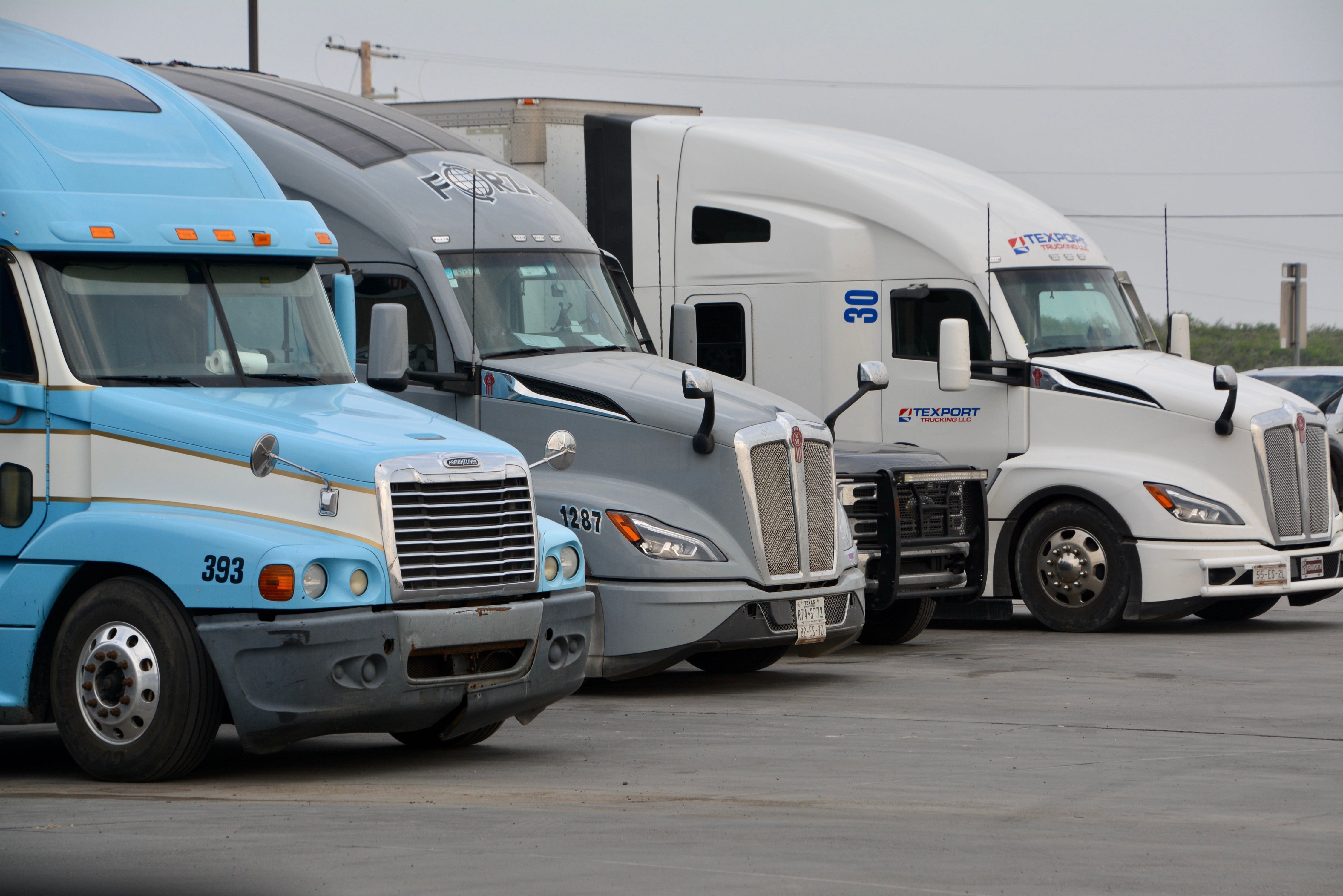


Your fleet grows, and so does the bill. One day it’s a few hundred a month, then you blink and it’s thousands, plus you’re locked into a contract you can’t escape. That’s the Samsara playbook: get you in with slick dashboards, then hold the keys to your data. Sound familiar?
If you’re hunting for Samsara alternatives, it’s not just about saving a few bucks. It’s about ditching the multi-year contracts, per-unit fees, and the feeling that you’re renting your own operations back from someone else. Motive, Verizon Connect, and Geotab all have their place, but every SaaS in this space shares one thing: you’ll never own it. The only way off the treadmill is to build something you control, and yes, we’ll show you how Devaims does that for trucking and fleet shops who want out for good.
Why trucking and fleet operators look for Samsara alternatives
Lock-in with long contracts: Samsara and most of its competitors require multi-year agreements, often three to five years, which can be nearly impossible to break without heavy penalties. This means if your business model shifts, if you merge or sell, or if you need to downsize, you’re still on the hook for monthly fees until the contract runs out. For many operators, this lack of flexibility is a dealbreaker, especially in a volatile market where fleet needs can change rapidly.
Per-vehicle pricing that scales painfully: Every major fleet SaaS, Samsara included, charges per truck or asset. What starts as a manageable expense for a small fleet becomes a major line item as you add vehicles. Even modest growth, adding 10 trucks per year, can mean an extra $3,000 to $6,000 in annual fees, not counting hardware or add-ons. This pricing model works for the vendor, not for you.
Opaque pricing and surprise renewals: Samsara is notorious for not publishing its prices. Many users only discover their true costs after lengthy sales calls and contract reviews. Worse, auto-renewal clauses can trigger new multi-year terms if you miss a cancellation window (sometimes as little as 30 days). Fleet managers report being charged for vehicles that have left the fleet or even for units that are out of service. The lack of pricing transparency makes it hard to budget for the long term.
Add-on fees for basic features: Features like video telematics, advanced reporting, or even basic API access are often locked behind premium tiers or add-on pricing. What seems like a complete solution on paper can quickly balloon in cost as you add the modules your team actually needs. Even compliance features like ELD or IFTA reporting, which are regulatory requirements, may cost extra.
Your data, but you don’t own it: While Samsara and its competitors let you export data, you never truly own the platform or its integrations. If you leave, your custom workflows, integrations, and historical data can become inaccessible. For operators who need long-term data retention for audits, insurance, or business intelligence, this is a significant operational risk.
Quick comparison of the best Samsara alternatives
| Tool | Best for | Starting price | Ownership/Contract |
|---|---|---|---|
| Motive | Flexible contracts, ELD compliance | $25/vehicle/mo | Month-to-month or annual, always rented |
| Verizon Connect | Enterprise fleets, full-stack telematics | $23/vehicle/mo + $150 install | 3-year minimum, always rented |
| Geotab | Customizable tracking, analytics | $20/vehicle/mo + $80 hardware | Contract via reseller, always rented |
| Azuga | Safety features, insurance discounts | $20/vehicle/mo | 2-3 year contract, always rented |
| Fleetio | Maintenance, light tracking | $4/vehicle/mo | Annual, no GPS native, always rented |
| GPS Insight | Month-to-month flexibility | $28/vehicle/mo | Month-to-month, always rented |
| Teletrac Navman | Global fleets, compliance | Reported | Contract required, always rented |
| Lytx | Video telematics, safety | Reported | Contract required, always rented |
| Devaims (owned) | Any fleet wanting to own their system | One-time build | One-time build, you own it |
Always confirm current pricing and contract terms before you decide, small print and add-ons are where costs explode. For a deeper breakdown of feature sets and pricing, sites like FleetScanner and Software Advice offer up-to-date peer reviews and pricing insights.
The 10 best Samsara alternatives
1. Motive (most flexible contracts)
Motive (formerly KeepTruckin) is a leading choice for fleets needing robust ELD compliance, real-time GPS tracking, and flexible contract options. Motive distinguishes itself from Samsara by offering month-to-month plans (with annual discounts), which is rare among top-tier fleet SaaS. The platform is designed for trucking, logistics, and delivery, with a mobile-first philosophy: drivers use the Motive app for logs, DVIRs, and messaging, while dispatch and operations get a web dashboard for route planning, vehicle health, and safety analytics.
Key features & integrations: Motive’s ELD is FMCSA-registered and widely accepted for DOT compliance. The system offers dash cam video (event-based or continuous), real-time GPS, geofencing, custom alerts, fuel card integration, driver scorecards, and maintenance reminders. Integrations include TMS (e.g., McLeod, Truckstop), payroll, fuel tax, and accounting platforms. Motive’s open API allows some custom reporting, though advanced analytics may require higher tiers or paid support.
Migration friction: Motive’s onboarding is relatively smooth, especially for fleets already using ELDs. Hardware installation is straightforward, with plug-and-play options for many vehicles. However, migrating historical data from Samsara may require CSV exports and some manual mapping, full API migration is not always supported. Some users report delays in hardware shipping and mixed experiences with onboarding support.
Concrete use cases: Motive is popular with midsize trucking companies (20-250 vehicles), last-mile delivery fleets, and regional carriers who need to ramp up or down seasonally. Its flexibility also appeals to owner-operators who want compliance without a multi-year commitment.
Honest trade-offs: Motive’s biggest advantage is flexibility, but this comes at a premium: per-vehicle costs can climb quickly, and advanced features (like AI dash cams or detailed analytics) may require expensive add-ons. Customer support is a frequent complaint, response times can be slow, especially during peak ELD mandate seasons. While Motive’s mobile app is user-friendly, some dispatchers find the web dashboard less customizable than Geotab or a custom build.
On a custom Devaims platform, you’d pay once for the feature set you actually use, no hardware markup and no monthly rental for your own data. Motive is a good option for short-term flexibility, but over five years, costs add up fast.
2. Verizon Connect (best for enterprise fleets)
Verizon Connect is built for large-scale operations, offering deep telematics, advanced route optimization, and extensive integrations with enterprise systems. It’s the platform of choice for national carriers, mixed-asset fleets, and businesses managing everything from trucks to heavy equipment and field vehicles. Verizon Connect’s strength lies in its mature ecosystem and ability to handle complex use cases (multi-depot routing, asset tracking, and compliance across states or countries).
Key features & integrations: Verizon Connect provides real-time GPS, driver behavior monitoring, maintenance scheduling, IFTA and ELD compliance, and advanced reporting. Its Reveal platform integrates with fuel cards (WEX, Comdata), TMS, HR/payroll, and ERP systems (SAP, Oracle). The system supports custom geofencing and can handle thousands of vehicles or assets. APIs are available for custom integrations, but some require enterprise-level contracts or professional services.
Migration friction: Switching from Samsara to Verizon Connect can be a heavy lift for large fleets, hardware installation is required, and data migration may be limited by API compatibility. Verizon provides onboarding support, but multi-site rollouts often face delays. Contract negotiation is lengthy and can involve custom SLAs for enterprise clients.
Concrete use cases: Verizon Connect is ideal for national LTL carriers, construction fleets needing asset and equipment tracking, and mixed-vehicle companies with complex compliance needs. Its robust analytics and integration capabilities serve organizations with dedicated IT and operations teams.
Honest trade-offs: Verizon Connect’s minimum three-year contract is a major commitment, and upfront installation fees can be significant (often $150, $250 per device). Pricing varies by fleet size and features, and add-ons (video, advanced analytics) can push costs higher. Customer support is mixed, some users report quick resolutions, others cite delays and escalations. The learning curve is steeper than Motive or Fleetio, and smaller fleets may find the platform overwhelming.
When you own the code, a feature like integration isn’t an upsell, it’s how the system is built for your operation. Verizon Connect is best for fleets with the resources to manage a complex, all-in-one solution and the patience for long-term contracts.
3. Geotab (most customizable analytics)
Geotab is the favorite of tech-savvy fleets that want to customize every aspect of their tracking and reporting. Geotab’s open platform and rich API ecosystem enable advanced analytics, custom dashboards, and integration with virtually any third-party system. However, the platform’s flexibility comes with a learning curve and depends heavily on reseller quality for onboarding and support.
Key features & integrations: Geotab offers real-time GPS, ELD, driver behavior analytics, vehicle diagnostics, fuel tracking, and advanced safety tools. Its Marketplace features hundreds of add-ons (dash cams, sensors, maintenance plugins) and integrations with TMS, ERP, and dispatch solutions. The open API supports deep customization, including custom rules, event triggers, and data exports for business intelligence platforms (Power BI, Tableau).
Migration friction: Geotab’s modular hardware is compatible with many vehicle types and supports plug-and-play installation. Migrating from Samsara requires mapping data fields, resellers may assist, but full historical data migration can be complex. Setup and configuration take time, especially if you want custom workflows or dashboards.
Concrete use cases: Geotab is a fit for large regional fleets, municipal/public sector fleets (city vehicles, transit), and logistics companies with in-house IT who want to build their own analytics and reporting. It’s also popular with fleets running mixed assets (vans, trucks, heavy equipment).
Honest trade-offs: Geotab’s power is in its flexibility, but that can be a double-edged sword. The interface is less intuitive than Motive or Fleetio, and less technical users may struggle. Support and contract terms depend on the reseller, service quality varies widely. Add-ons can drive up costs, and some advanced features require ongoing consulting or professional services. For operators who want only basic tracking, Geotab can feel overwhelming.
With Devaims, you’d get only the reports and dashboards you actually need, no wrestling with someone else’s complexity. Geotab is best for operators who want granular control and have the technical resources to leverage it.
4. Azuga (best for safety and insurance perks)
Azuga stands out for its focus on driver safety, real-time behavior scoring, and insurance partnership programs. It offers a clean, user-friendly dashboard and mobile app, making it accessible for fleets new to telematics. Azuga’s unique value is its insurance discounts, many carriers offer breaks on premiums for fleets using Azuga’s driver safety analytics and reporting.
Key features & integrations: Azuga provides GPS tracking, ELD compliance, driver safety scorecards, dash cam video, and maintenance reminders. Its insurance integrations are a differentiator, users can share driver data directly with insurers to qualify for lower rates. Azuga integrates with TMS, payroll, and maintenance platforms, and offers an open API for custom workflows.
Migration friction: Azuga’s installation is straightforward, with plug-and-play OBD-II devices and optional dash cams. Data migration from Samsara is possible via CSV, but may not include all historical trip or video data. Insurance integration setup can take time, depending on your carrier.
Concrete use cases: Azuga is ideal for small to midsize fleets focused on reducing accidents, improving driver behavior, and lowering insurance costs. It’s popular with last-mile delivery, service fleets (plumbing, HVAC), and regional trucking companies.
Honest trade-offs: Azuga’s safety and insurance features shine, but advanced analytics and integrations can be limited compared to Geotab or Verizon Connect. Customer support is generally good but can lag on complicated technical issues. Contracts are typically two to three years, and breaking them early can incur penalties. Some features (like dual-facing cameras or advanced reporting) require higher-tier plans.
5. Fleetio (cheapest for basic maintenance tracking)
Fleetio is the value pick for fleets prioritizing maintenance management, digital vehicle records, and workflow automation over full telematics. Unlike Samsara, Fleetio’s pricing is transparent and starts at just $4 per vehicle per month. It’s designed for ease of use, fleet managers can set up preventive maintenance schedules, track work orders, and manage inspections from a simple dashboard or mobile app.
Key features & integrations: Fleetio tracks work orders, PM schedules, fuel logs, and vendor management. It integrates with popular GPS providers (Samsara, Geotab, Verizon Connect) for location data, but does not include native GPS tracking, external hardware or third-party integration is required. Fleetio’s API allows connection to accounting, HR, and ERP systems. The mobile app enables barcode scanning, digital inspections, and photo uploads for maintenance documentation.
Migration friction: Fleetio is easy to implement, import vehicles and users via CSV, and set up maintenance workflows quickly. Migrating historical telematics or tracking data from Samsara is not supported natively, but ongoing integrations can bring in real-time location data.
Concrete use cases: Fleetio is a strong fit for companies focused on maintenance and asset management: municipal fleets, construction, landscaping, and rental fleets with less emphasis on real-time GPS. It’s also popular with small trucking companies as a maintenance add-on to other GPS platforms.
Honest trade-offs: Fleetio’s low price comes with trade-offs, no native GPS tracking, a five-vehicle minimum, and reliance on third-party integrations for location data. It’s not a true telematics platform, but excels as a digital maintenance hub. For pure maintenance tracking, it’s hard to beat on cost and usability.
Building your own system means your maintenance tracker can talk directly to your dispatch and fuel logs, no third-party patchwork.
6. GPS Insight (month-to-month flexibility)
GPS Insight appeals to fleet operators seeking flexibility and minimal contract risk. Unlike most competitors, GPS Insight offers true month-to-month plans, making it a rare option for companies who want to avoid long-term commitments. The platform covers GPS tracking, driver monitoring, ELD, and maintenance, with a focus on ease of use and rapid deployment.
Key features & integrations: GPS Insight provides plug-and-play GPS tracking, driver scorecards, maintenance scheduling, and ELD compliance. It integrates with fuel cards, TMS, payroll, and dispatch platforms. The dashboard is straightforward, with customizable alerts and reports. API access is available, but advanced integrations may require consulting.
Migration friction: Hardware is easy to install, and onboarding can be completed in days. Data migration from Samsara is possible via CSV, but advanced or historical data may not transfer cleanly. Training is minimal due to the intuitive interface.
Concrete use cases: GPS Insight is popular with seasonal fleets (agriculture, construction), companies in rapid growth or downsizing phases, and those piloting telematics for the first time. Its flexibility is a lifeline for operators who need to add or remove vehicles frequently.
Honest trade-offs: GPS Insight’s per-vehicle pricing is higher than average, flexibility comes at a premium. The interface is basic and can feel clunky for larger fleets or users needing advanced analytics. Reporting is adequate for most, but less customizable than Geotab or a custom build. For fleets with stable, long-term needs, renting month-to-month may cost more in the long run.
7. Teletrac Navman (global fleet compliance)
Teletrac Navman targets fleets operating across borders or with stringent compliance needs. Its platform supports global tracking, multi-language interfaces, and regulatory compliance for both North America and international markets. Teletrac Navman is favored by logistics companies with operations in the US, Canada, Europe, and Australia.
Key features & integrations: The platform offers real-time GPS, ELD, driver behavior analytics, route optimization, and compliance management (including EU tachograph integration and North American ELD). Teletrac Navman integrates with TMS, payroll, and maintenance software, and offers an API for custom workflows. Its global mapping and multi-currency support are unique in this space.
Migration friction: Teletrac Navman requires contract negotiation and hardware installation, which can be complex for large or international fleets. Data migration from Samsara is possible but may be limited by differences in compliance data formats. Support is available in multiple languages, but users report variability in responsiveness.
Concrete use cases: Teletrac Navman is a fit for multinational carriers, freight forwarders, and companies with mixed fleets operating in multiple regulatory environments. It’s also used by public sector fleets needing compliance with both local and international standards.
Honest trade-offs: Pricing is not transparent and can vary widely by region and contract. Support quality is inconsistent, some users praise dedicated account managers, others report delays. Software reliability has improved in recent years, but outages and bugs have been reported. Teletrac Navman shines for global compliance, but may be overkill for US-only operators.
8. Lytx (best for video telematics)
Lytx is the industry leader in video telematics, offering advanced dash cam solutions, AI-powered event detection, and deep driver safety analytics. Lytx is used by fleets where video evidence and driver coaching are top priorities, think national trucking, transit, and hazardous materials carriers. Its platform leverages machine learning to detect risky driving and automate coaching workflows.
Key features & integrations: Lytx provides high-resolution dash cams (road- and driver-facing), AI event detection (distracted driving, hard braking, following distance), video-on-demand, and automated driver scorecards. The system integrates with TMS, fleet maintenance, and insurance platforms. Lytx APIs enable data export and custom reporting for enterprise users.
Migration friction: Lytx requires proprietary hardware installation, existing Samsara or Motive dash cams are not compatible. Video data migration is not supported; fleets start fresh upon switching. Onboarding is handled by Lytx technicians, and training is provided for both drivers and managers.
Concrete use cases: Lytx is the go-to for fleets with high exposure to liability, hazmat carriers, school buses, public transit, and large trucking companies. Video evidence is invaluable for accident investigations, insurance claims, and driver training.
Honest trade-offs: Lytx is expensive, both upfront and ongoing. Contracts are strict, often three to five years, with little flexibility. For operators who don’t need advanced video analytics, Lytx may be overkill. The proprietary hardware means sunk costs if you switch platforms. However, for fleets where safety and liability are top concerns, Lytx sets the industry standard.
9. Devaims (the owned alternative)
Devaims by Softaims builds custom fleet, dispatch, and compliance platforms for companies ready to own their operations. Unlike every SaaS rental, you get the code, the integrations you need, and zero per-vehicle or per-feature fees, ever. No contract, no lock-in, just a system that grows with your business and adapts to your workflows.
Key features & integrations: Devaims platforms are built to your specification: GPS tracking, ELD compliance, maintenance, fuel, dispatch, HR/payroll, custom analytics, and more. Integrations are tailored to your stack, whether that’s QuickBooks, McLeod, SAP, or niche insurance tools. The result: a system that fits your business, not the other way around.
Migration friction: Migration is managed as part of the project. Devaims will import historical data from Samsara (or any platform) via CSV, API, or direct database transfer. Hardware compatibility is maximized, most open hardware (GPS, dash cams, sensors) can be reused, minimizing transition costs. Training is provided for your team, and support is ongoing.
Concrete use cases: Devaims is used by established fleets (50-1000+ vehicles), regional carriers, specialized logistics, and any operator who wants to end the rental cycle. It’s also a fit for businesses with unique compliance or reporting needs that off-the-shelf SaaS can’t match.
Honest trade-offs: The biggest barrier is upfront investment, custom software requires a one-time build cost (typically $30,000+), though this is often recovered by year two compared to SaaS rental. Feature development takes time, and operators must be ready to define their workflows. Ongoing maintenance is flat-rate and predictable, but you’re responsible for upgrades (with Devaims support). For operators ready to own their tech stack, the long-term savings and control are unmatched.
- One-time build cost, then flat maintenance
- You own the source code and data
- Custom features and integrations, your workflow, your way
- No per-vehicle or per-user charges
- No contract or auto-renewal
Other Samsara alternatives worth knowing
- Quartix: A budget-friendly GPS tracking solution with a simple interface. Best for small fleets needing basic location tracking. Lacks advanced reporting, compliance, and integrations needed for larger or regulated fleets. See Quartix.
- EROAD: Known for regulatory compliance in Australia and New Zealand, but also expanding in North America and the UK. EROAD’s focus is on tax, safety, and driver logs. US support is improving, but feature parity with Samsara is not there yet. See EROAD.
- Fleet Complete: A modular SaaS for small to mid-size fleets, offering GPS tracking, asset management, and maintenance. Contracts and support can be inconsistent, and pricing is not always transparent. See Fleet Complete.
- Custom legacy platforms: Some operators still use in-house tools built in the 2000s or earlier. These offer flexibility and ownership, but often lack support, mobile access, and modern integrations. Upgrading or replacing these can be a major project.
How to choose the right Samsara alternative
- Budget vs. ownership: SaaS is cheapest in year one, especially for small fleets or pilots. But by year three to five, per-vehicle fees add up. If you plan to grow or want strategic control, owning your platform wins long-term, especially with predictable, flat maintenance costs.
- Feature fit: Don’t pay for features you’ll never use. If you need only GPS and maintenance, Fleetio plus a GPS add-on may suffice. If you need deep analytics, video, or compliance, consider Geotab, Lytx, or a custom build. Map your workflow to each platform before deciding.
- Contract risk: If you hate multi-year lock-in, stick with Motive, GPS Insight, or other month-to-month options. For ultimate freedom, own outright with Devaims and avoid contracts entirely.
- Stack integration: If you need your fleet system to talk to accounting, insurance, or custom dispatch, check API and integration options carefully. SaaS systems have limits; custom platforms are built for your stack.
- Fleet scale: Per-vehicle fees hurt more as you grow. For 50+ vehicles, ownership becomes more attractive with every truck added, especially if your SaaS vendor hikes prices or adds fees for new features.
When you’re ready to stop renting your own data and operations, it’s time to run the numbers on owning. Be sure to review peer reviews (see Capterra or G2) and ask vendors detailed questions about migration, support, and hidden costs before you commit.
Stop paying rent on software you could own
Here’s the catch nobody admits: every Samsara alternative, from Motive to Verizon Connect, is just another flavor of rental. You pay per unit, forever, and as you grow, the bill grows with you. Contract terms, support complaints, and add-on fees are just symptoms, the real problem is you never own what runs your business.
Devaims by Softaims builds custom fleet and trucking software that you own outright. You get the source code, the integrations you actually use, and a system designed for your workflow. No per-vehicle or per-driver fees. No contract traps. No risk of losing access if you want to switch providers in three years. Your data, your platform, your call.
- Lock-in is gone: You keep the code and platform, so you choose when and how to upgrade.
- No more per-vehicle pain: Add a truck, pay nothing extra, it’s your system.
- Custom features just work: If you want a report or workflow, it’s built for you, not locked to a higher tier.
- Flat, predictable costs: Pay once to build, then a simple maintenance fee, no pricing surprises ever.
| Tool | Ownership | Contract | Per-vehicle fees |
|---|---|---|---|
| Samsara | Rented | 3-5 years | Yes |
| Motive | Rented | Monthly/annual | Yes |
| Verizon Connect | Rented | 3 years | Yes |
| Devaims | Owned | None | No |
| Year | Rent (Samsara or Motive) | Own (Devaims) |
|---|---|---|
| 1 | $36,000 | $30,000 |
| 2 | $72,000 | $32,760 |
| 3 | $108,000 | $35,520 |
| 4 | $144,000 | $38,280 |
| 5 | $180,000 | $41,040 (now ahead) |
Example math: 100 vehicles x $30/month = $3,000/month, $36,000/year to rent. A typical Devaims build is $30,000 to own, with $230/month flat maintenance. By year five, ownership is less than a quarter the SaaS price, and you keep your system for good.
This is the move for established fleets, growing operators, and anyone tired of paying for features they don’t need. If you want to see what owning could look like, we’ll run your real numbers for free.
How to switch from Samsara
- Export your fleet data and reports from Samsara (CSV or API if possible). For compliance, ensure you retain ELD logs and DVIRs for the required retention period.
- Review contract end dates and renewal terms, most require written cancellation months in advance. Document all correspondence to avoid surprise renewals.
- Choose your Samsara alternative and map feature parity or improvements. Compare not just GPS and ELD, but also reporting, integrations, and support.
- Import vehicle and driver data into the new platform; set up integrations (fuel, payroll, accounting). Test integrations with your existing systems to avoid workflow interruptions.
- Train staff on the new system, focusing on daily workflows and compliance requirements. Provide reference guides and hands-on sessions for both drivers and dispatchers.
- Test both systems in parallel for a month to catch issues before shutting off the old one. Use this period to validate data accuracy and workflows.
- Review contract status again and formally terminate Samsara access. Confirm all data and reports have been retained for audit and compliance.
With a custom Devaims build, the migration is handled as part of the project, including data transfer, hardware integration (where possible), and end-to-end training.
Frequently asked questions
What is the best Samsara alternative for small fleets?
If you’re running fewer than 20 vehicles, Fleetio or GPS Insight are excellent starting points. Fleetio’s low price and simple setup suit maintenance-focused fleets, while GPS Insight’s month-to-month plans are ideal for small, seasonal, or fluctuating operations. However, if you plan to grow or want full control, owning your own platform with Devaims can make sense even for smaller operators, especially if you have unique reporting or compliance needs.
Which Samsara alternative is cheapest?
For basic maintenance, Fleetio is the cheapest mainstream SaaS, starting at $4 per vehicle per month. For GPS and ELD, prices start at $20, $25 per vehicle across most vendors. The only way to eliminate per-vehicle charges entirely is to build your own platform, Devaims is the only alternative offering true ownership and flat, predictable costs over time.
Is there a free Samsara alternative?
There are no truly free fleet management solutions with compliance and real-time telematics. Open-source options like Traccar exist, but require technical expertise to deploy and maintain, and lack professional support, ELD compliance, and integrations. For operators seeking ownership without technical headaches, Devaims provides a supported, custom alternative with no recurring per-vehicle fees.
Which platform is best for ELD or compliance?
Motive and Geotab both offer industry-leading ELD and compliance solutions, with FMCSA registration, automated log management, and audit support. Motive is easier for smaller fleets, while Geotab is better for complex or custom compliance workflows. If you have unique requirements, like mixed fleets, international operations, or custom reporting, a Devaims build can be tailored to your exact needs, including integration with regulatory and audit tools.
When should I switch from Samsara?
If your contract is up soon, or if you’re facing a price hike, start planning now. The ideal time to switch is 3-6 months before your renewal window, to avoid double-billing and allow for a smooth migration. Early planning ensures you can export all necessary data, notify staff, and test the new system before going live. If you’re growing fast or frustrated with support, consider moving sooner, especially if your current provider won’t negotiate on terms.
Can I keep my old Samsara hardware?
Some Samsara hardware, especially GPS units and basic sensors, use industry-standard protocols and can be reused with other platforms (Geotab, GPS Insight, Devaims custom builds). However, Samsara’s video and ELD hardware may be proprietary and locked to their ecosystem. Before switching, ask your new provider (or Devaims) to audit your hardware for compatibility. Reusing hardware can save thousands during migration.
What’s the fastest way to cut recurring SaaS costs?
If you need to cut costs quickly, switching to a month-to-month provider like GPS Insight or Fleet Complete can help. However, over five years, the only way to truly eliminate recurring fees is to own your platform. Devaims specializes in building custom systems with zero per-vehicle or per-feature charges. You pay once, then a flat maintenance fee, no more SaaS treadmill.
The bottom line
Renting fleet management works for a while, but the per-vehicle math catches up by year three. The real test: add up what you’ll pay over five years, then ask if you’d rather own the system outright at a fraction of that. The best Samsara alternatives are just less-painful rentals, Devaims is the only option that ends the rent cycle for good.
More honest advice for fleet operators: Read the Devaims blog at devaims.com/blog, or see related picks at Verizon Connect alternatives, Geotab alternatives, and Fleetio alternatives.