



Every optometry practice has faced the moment of reckoning: another monthly invoice from RevolutionEHR, another tier upgrade for a minor feature, or the realization that your workflow is constrained by a system you don't control. Maybe your team hit a user cap, or you found yourself paying for yet another "required" add-on. The frustration is widespread: why are you renting your core business software, and is there a better way?
There are many RevolutionEHR alternatives, such as Crystal PM, Compulink, OfficeMate, and more, each promising to address specific pain points. But beneath the surface, most of these platforms share the same business model: you pay recurring fees, accept limited customization, and never truly own the platform or your data. For those seeking an escape from the cycle, a custom Devaims build changes the equation. Here’s a deep dive into the leading options for 2026, with real details on features, integrations, migration friction, and the honest trade-offs you need to consider.
Why optometry practices look for RevolutionEHR alternatives
Optometry clinics are increasingly reevaluating their EHR choices. The reasons go well beyond sticker shock and touch on the very foundation of how practices want to operate:
- Recurring subscription fees add up fast. Entry-level plans may start around $400 per month, but as you grow, adding doctors, staff, or new locations, costs can rise quickly. Add-ons for imaging, e-prescribing, telehealth, or advanced reporting can push your total to $1,000 or more per month. Multiply by five years, and you could be looking at $60,000 or more in outlays for a system you never own.
- Limited customization stifles workflow. SaaS EHRs are designed to serve the average practice, not your unique processes. Need a custom report, a new clinical form, or a workflow tweak? You often wait in a support queue, pay for "premium" modules, or are told, “That’s not on our roadmap.”
- Locked in with long contracts. Many EHR vendors require multi-year agreements. Upgrading or canceling early can trigger steep penalties. This makes switching platforms difficult, even if your needs change or you find a better fit.
- Data ownership is murky. The fine print often reveals that you cannot easily export all of your patient records, imaging, or historical data. If you do switch, you may get only partial exports or data in formats difficult to migrate.
- Support that can’t keep up. As EHR vendors grow, support teams are often stretched thin. Practices report waiting days for ticket responses, especially for urgent billing or clinical issues. Some platforms charge extra for "premium" or "expedited" support.
These pain points are why many practices are looking for RevolutionEHR alternatives that put them back in control, financially, operationally, and technologically.
Quick comparison of the best RevolutionEHR alternatives
| Tool | Best for | Starting price | You own it? |
|---|---|---|---|
| Eyefinity | VSP-integrated practices | Reported $399+/month | No |
| Crystal PM | Budget-conscious clinics | Reported $349/month | No |
| Compulink | Enterprise/multi-location | Contact for quote | No |
| MaximEyes | Cloud EHR | Reported $349/month | No |
| OfficeMate (Eyefinity) | Legacy users | Reported $299/month | No |
| Modernizing Medicine (Eyes) | Ophthalmology integration | Contact for quote | No |
| MDVista | Interoperability | Contact for quote | No |
| Net Health Optometry | Multi-location practices | Contact for quote | No |
| Devaims | Full ownership | One-time build | One-time build, you own it |
Confirm current pricing before you decide. EHR vendors change fees and bundles regularly. Also, check for required add-ons and support fees, which can vary based on practice size, features, and integrations.
The 9 best RevolutionEHR alternatives
1. Eyefinity (Best for VSP-integrated practices)
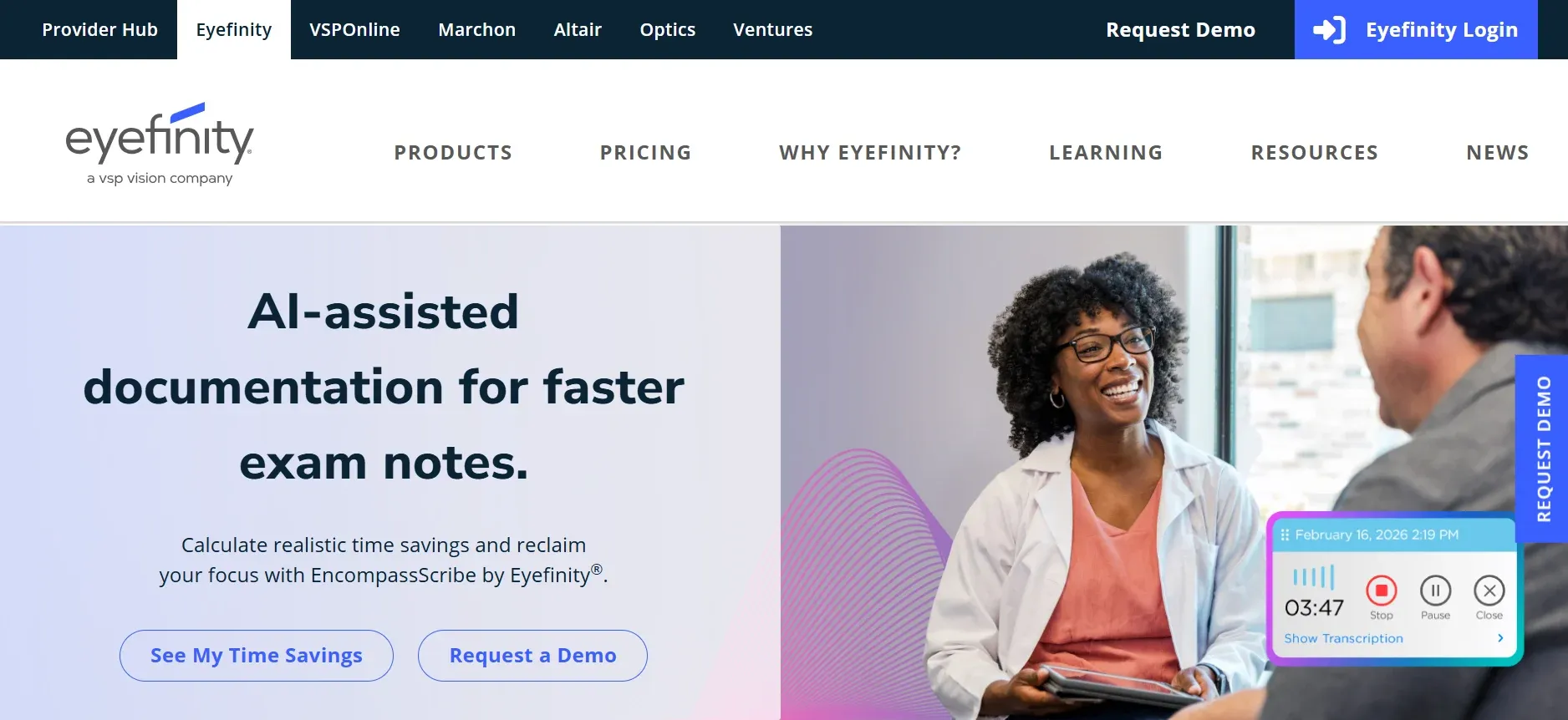
Eyefinity is the go-to for practices deeply integrated with the VSP network. Its EHR and practice management suite is built around VSP’s insurance and claims workflows, which can be a major advantage for clinics that see a high volume of VSP patients. The platform offers cloud-based access, a modern interface, and strong insurance eligibility tools. The claims automation and direct VSP connections can save significant admin time.
Pricing: Reported $399+/month, plus add-ons for e-prescribing and imaging.
- Deep VSP claims integration
- Modern cloud interface
- Efficient insurance workflows
- Recurring fees and contract lock-in
- Limited flexibility for non-VSP payers
- Data export can be complex
Devaims can build direct VSP claims integration into your owned platform, so you keep the workflow without the recurring fees.
2. Crystal PM (Best for budget-conscious clinics)
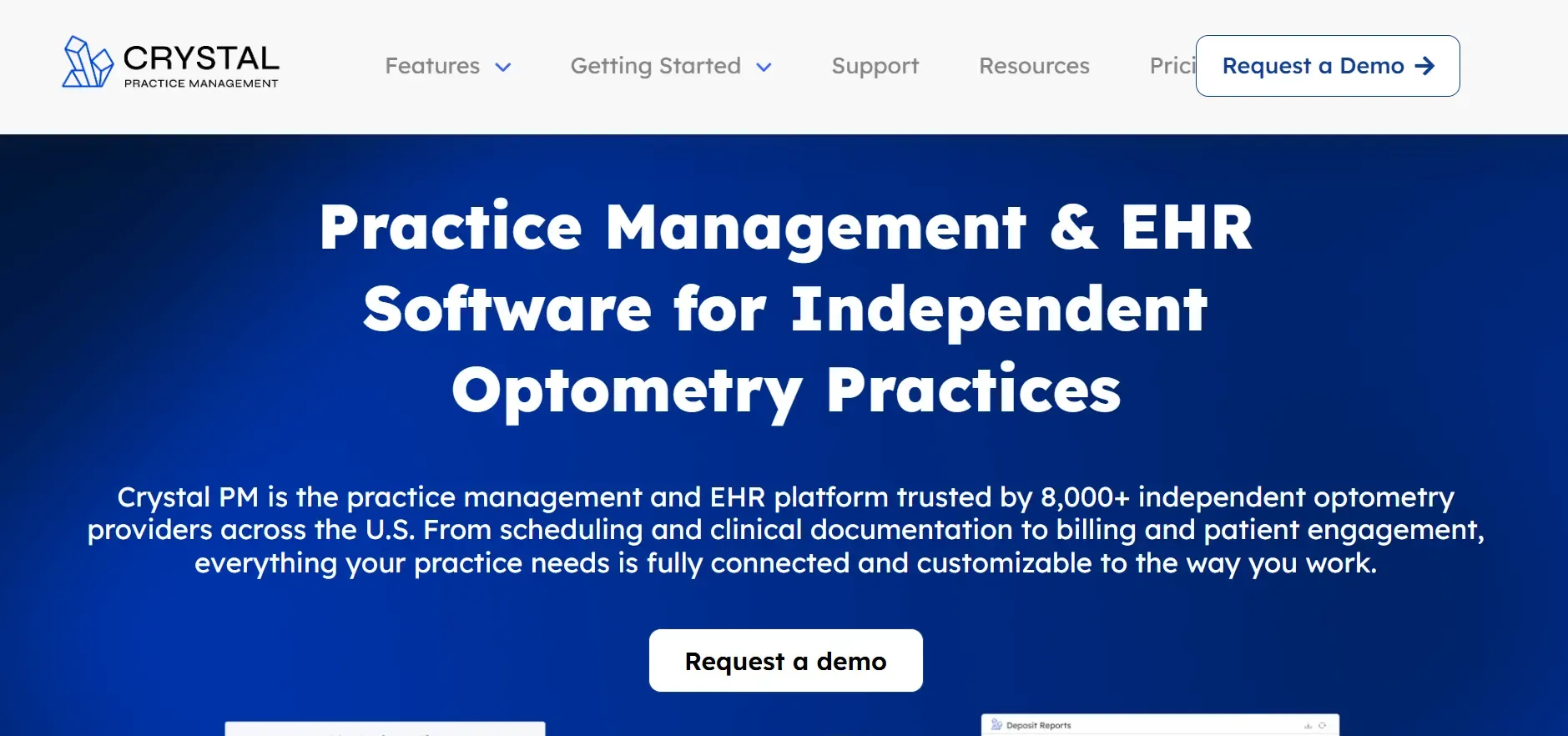
Crystal PM is a favorite among smaller, independent optometry practices. It’s known for its lower monthly fees and familiar, straightforward interface. Crystal PM’s design hasn’t changed much over the years, which can be a plus for staff who value consistency, but a drawback for those seeking modern UI or advanced features.
Pricing: Reported $349/month, plus add-ons for e-prescribing and imaging.
- Lower entry cost
- Simple, familiar workflows
- Good for small practices
- Dated interface and limited customization
- Manual processes for advanced integrations
- Exports can be labor-intensive
If you need a modern interface and custom workflows, Devaims can deliver a system tailored to your exact needs, with no recurring license fees.
3. Compulink (Best for enterprise/multi-location)
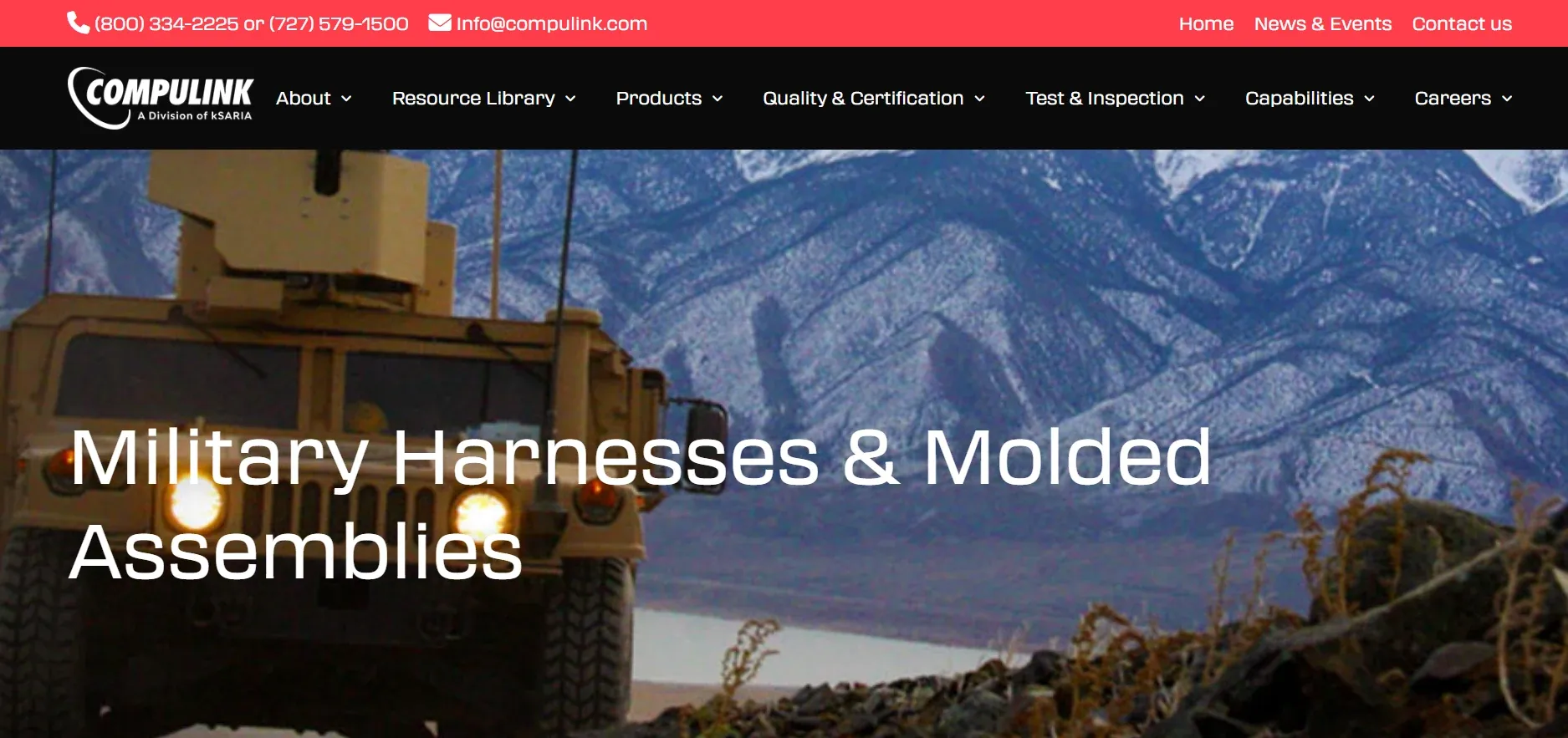
Compulink is positioned for large, multi-location, or enterprise optometry and ophthalmology practices. The system is highly customizable, with comprehensive modules for scheduling, billing, analytics, and even marketing. It can handle complex organizational structures, including multi-specialty or multi-state operations.
Pricing: Custom quote, typically higher for enterprise features and onboarding.
- Highly customizable workflows
- Enterprise-grade analytics
- Strong multi-location support
- Complex setup and onboarding
- Opaque pricing and contract lock-in
- May be overkill for small practices
Devaims can build enterprise features and analytics into your owned platform, so you scale without increasing subscription costs.
4. MaximEyes (Best for cloud EHR)
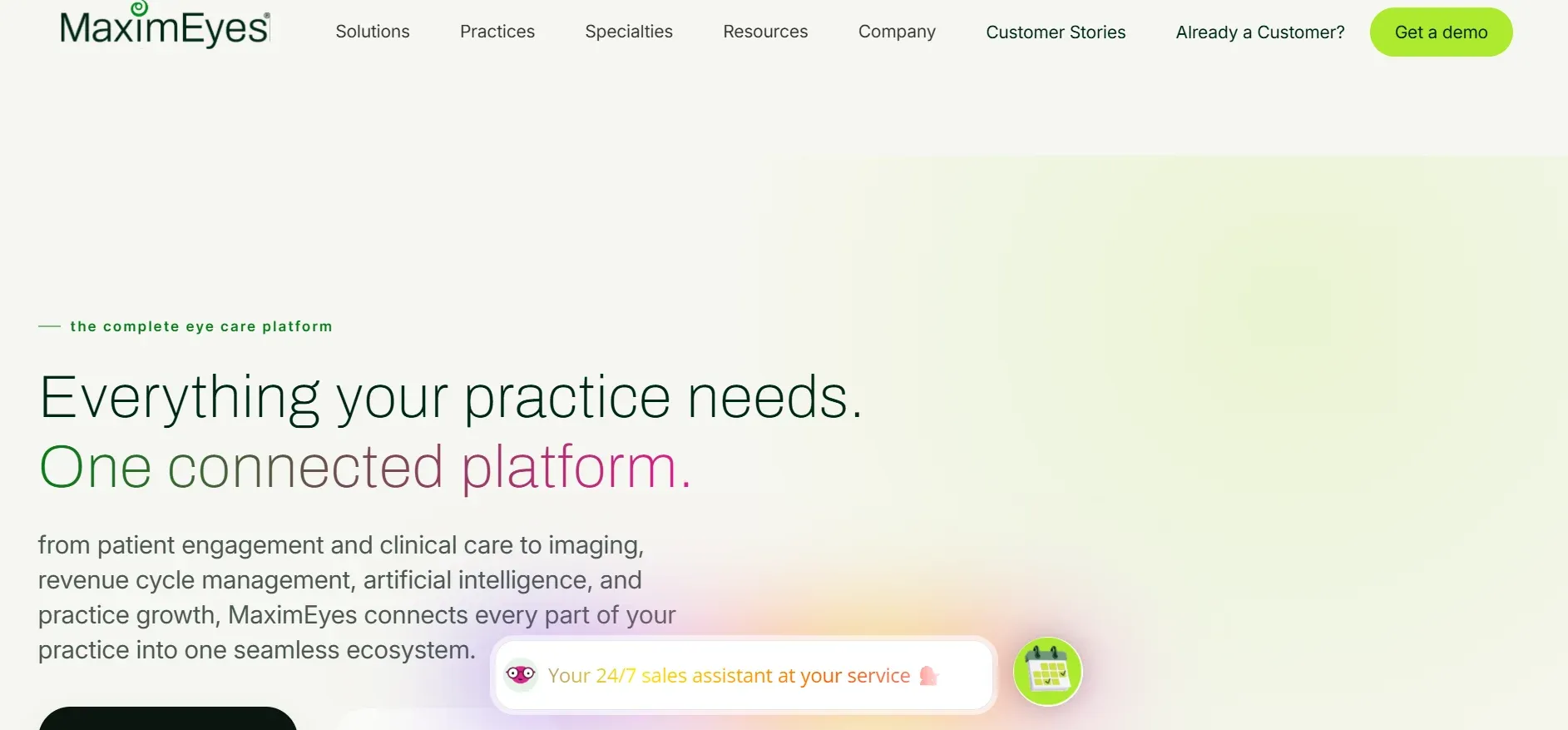
MaximEyes is a modern, cloud-based EHR and practice management platform. It offers a clean web UI, integrated e-prescribing, imaging, and robust compliance tools. MaximEyes puts a premium on accessibility and modularity, allowing practices to choose and pay for only the features they need.
Pricing: Reported $349/month, modular pricing for add-ons.
- Modern web-based interface
- Integrated e-prescribing and imaging
- Flexible modular pricing
- Monthly fees add up with modules
- Learning curve for legacy users
- Data export may require vendor support
With Devaims, you can own a modern web-based platform and avoid per-module fees entirely.
5. OfficeMate (Eyefinity) (Best for legacy users)
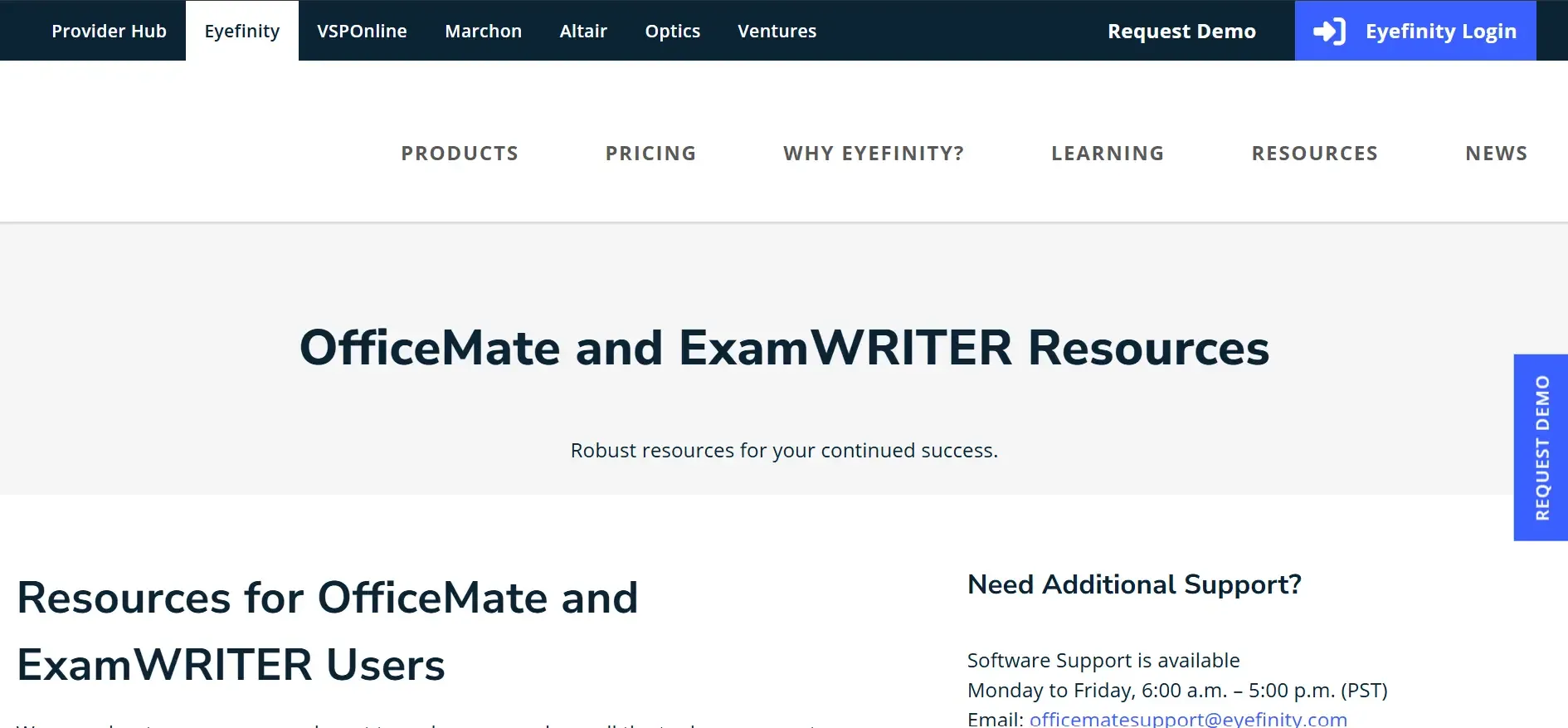
OfficeMate is one of the oldest and most widely adopted EHRs in optometry. Many practices have used it for years, appreciating its reliability and well-understood workflows. However, OfficeMate’s interface and architecture are aging, and Eyefinity is actively encouraging users to transition to their newer cloud platforms.
Pricing: Reported $299/month, plus support and add-ons.
- Reliable for established practices
- Well-understood workflows
- Good integration with Eyefinity products
- Dated interface and limited mobile access
- Migration to non-Eyefinity platforms is difficult
- Feature development has slowed
Devaims can migrate your legacy data and workflows into a modern, owned system, so you keep what works and gain full control.
6. Modernizing Medicine (Eyes) (Best for ophthalmology integration)
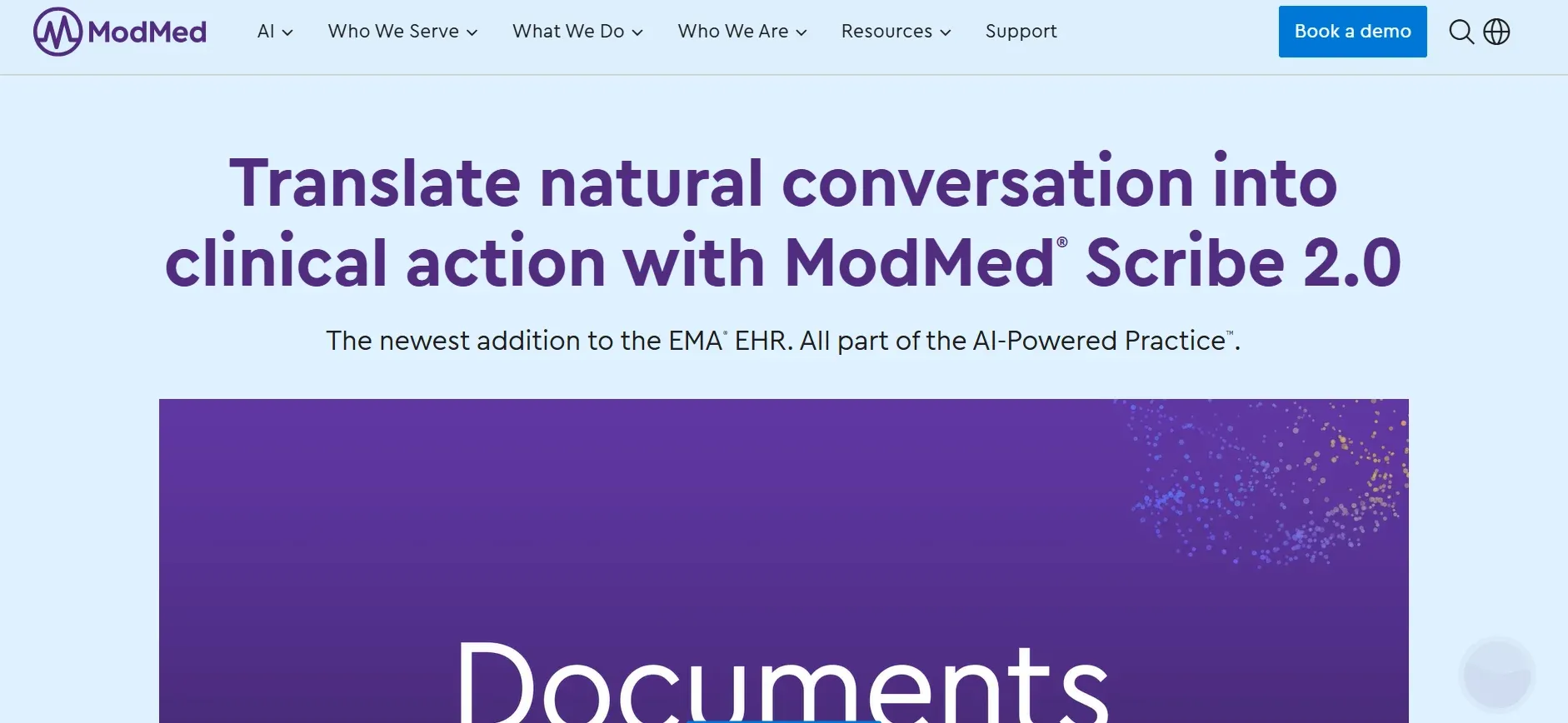
Modernizing Medicine (Eyes) is designed for clinics that straddle optometry and ophthalmology. Its "adaptive" charting and specialty-driven templates streamline documentation, especially for complex or mixed-modality practices. The interface is modern, and the company invests heavily in regular updates and compliance features.
Pricing: Custom quote, premium-priced with add-ons.
- Specialty-specific charting
- Modern, tablet-friendly interface
- Strong compliance tools
- Premium pricing and add-on costs
- Resource-intensive onboarding
- Updates can be slow to roll out
Devaims can build specialty charting and compliance features into your owned platform, so you get exactly what you need without ongoing add-on fees.
7. MDVista (Best for interoperability)
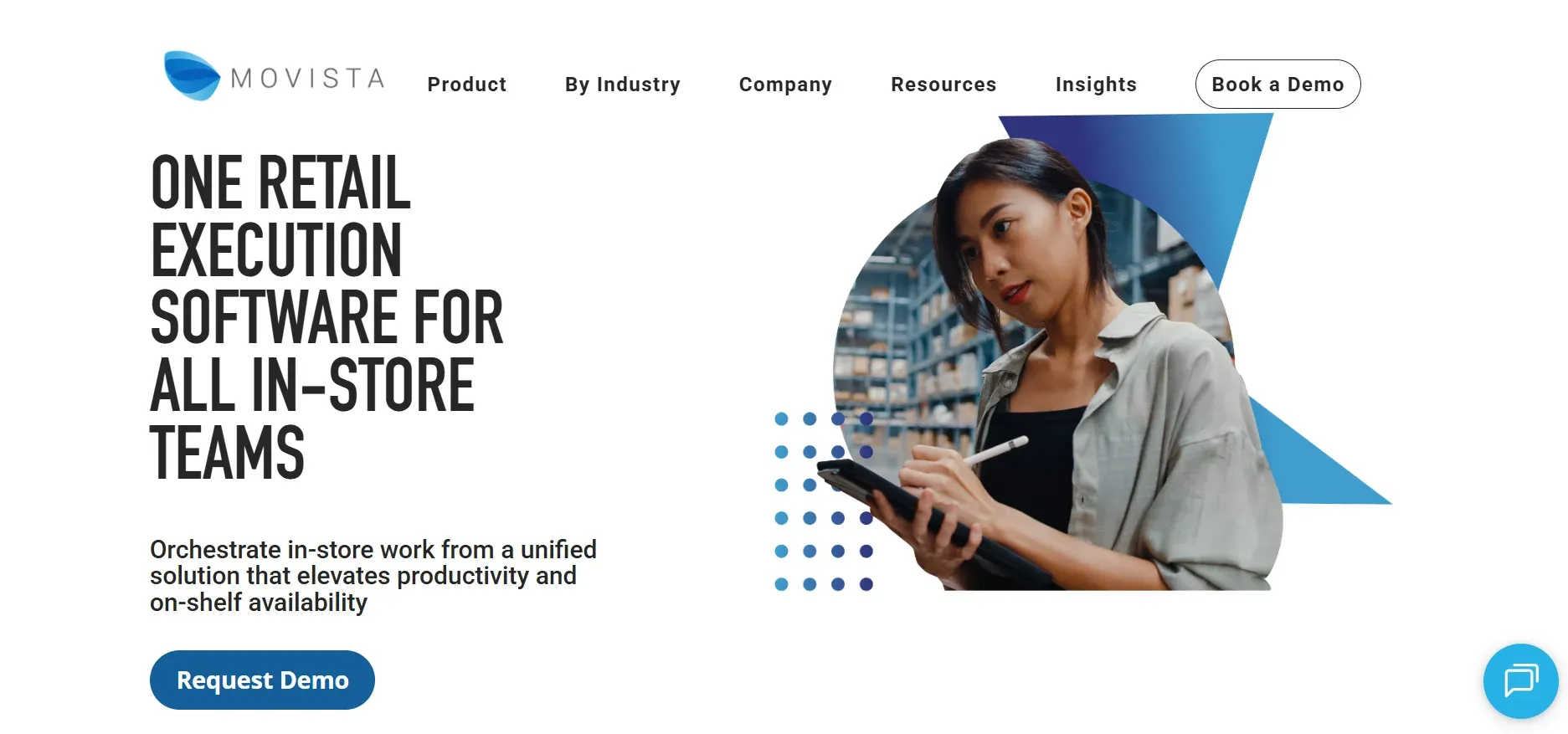
MDVista is built with interoperability at its core. The platform emphasizes seamless data exchange, making it a compelling choice for practices that need to connect with hospitals, health information exchanges (HIEs), or multiple EHRs. MDVista is especially useful for groups involved in coordinated care or multi-specialty networks.
Pricing: Custom quote, varies by integration needs.
- Strong HL7/FHIR data exchange
- Customizable workflows
- Good for multi-system practices
- Complex setup for interoperability
- Support quality varies by region
- Ongoing integration maintenance costs
Devaims can deliver direct HL7/FHIR integrations in your owned system, so you connect to any partner without vendor lock-in.
8. Net Health Optometry (Best for multi-location practices)
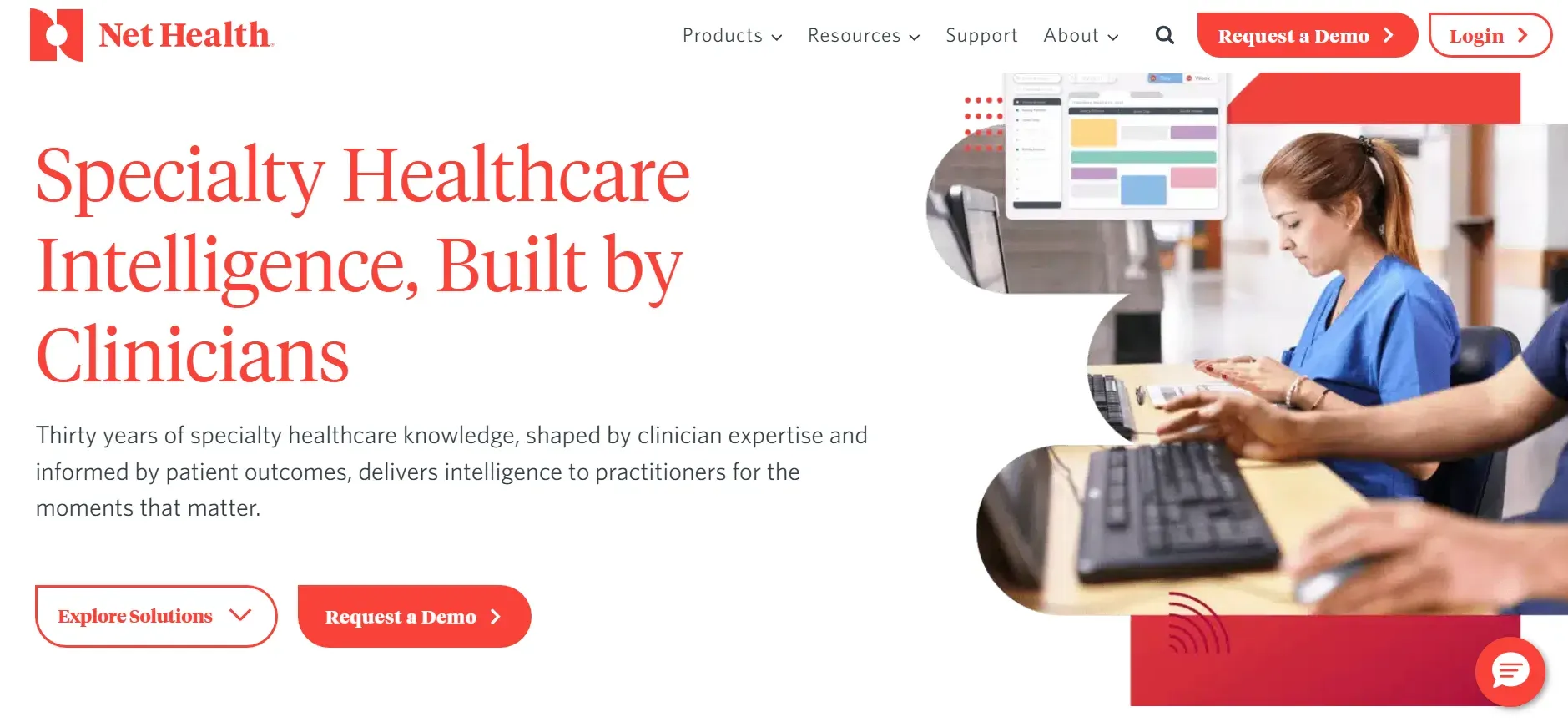
Net Health Optometry targets enterprise and multi-site optometry organizations. Its suite is designed for centralized management, compliance, and analytics across multiple locations. The dashboards and multi-site scheduling tools are standout features, helping larger organizations coordinate operations efficiently.
Pricing: Custom quote, scales with locations and users.
- Multi-location scheduling
- Enterprise analytics
- Centralized billing and compliance
- Pricing scales with growth
- Implementation can be overwhelming for small practices
- Customization beyond enterprise suite is limited
With Devaims, you can own a platform that scales to any number of locations with no per-location fees.
9. Devaims (Best for owning your platform)
Devaims represents a fundamentally different approach: instead of renting a SaaS EHR, you have a system custom-built for your practice, delivered with full source code and ownership. This means no ongoing license fees, no seat limits, no forced upgrades, and no contract lock-in. Your data remains yours from day one, and every feature, report, or workflow is tailored to your needs.
Pricing: One-time build (starting at $27,000), optional flat maintenance.
- Full ownership of your platform and data
- Unlimited users, locations, and custom features
- Direct integrations and tailored workflows
Devaims delivers a platform that adapts as your practice grows, with no recurring license fees and no contract lock-in.
Other RevolutionEHR alternatives worth knowing
- Nextech: A strong contender for larger specialty clinics, especially those with ophthalmology. Pricing is custom and can be high; its focus may not fit every optometry practice, but it is robust for complex clinical environments. Learn more.
- Kareo: Known for its cloud-based billing and practice management, Kareo lacks deep optometry features but is popular among clinics seeking strong billing and telehealth tools. See Kareo.
- CareCloud: A general medical EHR with some optometry users, CareCloud is worth considering for multi-specialty groups or organizations looking for broader healthcare IT integration. Explore CareCloud.
How to choose the right RevolutionEHR alternative
- By budget: Smaller practices may prioritize the lowest up-front cost, but always calculate the total cost of ownership over five years, including per-user, per-location, and add-on fees. A "cheap" SaaS can end up costing more than an owned platform in the long run.
- By workflow: If your practice has unique documentation, reporting, or scheduling needs, beware the limits of SaaS customization. Ask vendors for a list of what is, and is not, customizable.
- By size: Multi-location or enterprise clinics need scalable analytics, centralized billing, and robust integration options. Some SaaS tools are designed for solo clinics and will struggle to keep up as you grow.
- By vertical: Pure optometry, mixed modalities, or heavy insurance billing? Some platforms excel in specialty charting (Modernizing Medicine), while others focus on billing or insurance workflows (Eyefinity, Practice Mate).
- By ownership: If you’re tired of renting and want full control, only a custom-built platform like Devaims gives you true ownership, data portability, and freedom from contract lock-in.
If your goal is a system built for your team, with no monthly surprises or forced upgrades, owning with Devaims is worth a serious look.
Stop paying rent on software you could own
Every RevolutionEHR alternative on this list fixes specific pain points, such as lower pricing, easier claims, or better integrations, but each still keeps you in the cycle of monthly payments, add-on fees, and limited control. The true solution is to own your EHR platform outright. With Devaims, you get a system built to your workflows, integrated with your devices and partners, and delivered with full ownership, no recurring license, no contract lock-in, no forced upgrades.
- No more per-user or per-location fees eating into your margins
- Every report, workflow, or feature you want, because it’s built for you
- Data ownership from day one (no export headaches or vendor restrictions)
- Flat, predictable maintenance costs, and you control the update schedule
| Platform | Data ownership | Pricing model | Contract lock-in? |
|---|---|---|---|
| RevolutionEHR | No | Recurring subscription, per-user | Yes (multi-year typical) |
| Eyefinity | No | Recurring subscription, add-ons | Yes |
| Crystal PM | No | Monthly + add-ons | Yes |
| Devaims (owned) | Yes (you own the code) | One-time build + flat maintenance | No |
| Year | Rented (cumulative) | Owned (cumulative) |
|---|---|---|
| 1 | $12,000 | $29,760 |
| 2 | $24,000 | $32,520 |
| 3 | $36,000 | $35,280 |
| 4 | $48,000 | $38,040 (now ahead) |
| 5 | $60,000 | $40,800 |
For a typical mid-size optometry practice (3 doctors, 8 staff, imaging and eRx), rented EHR runs around $1,000/month or $12,000/year with add-ons. Custom builds start at $27,000 with flat $230/month maintenance, by year 4, owning pulls ahead, and every year after that is pure savings. If you’re growing, adding locations, or need custom workflows, the savings and flexibility only increase.
Ready to see exactly what your numbers look like? Bring us your current bill, and we’ll run the math and show you the break-even point for your practice. For more on EHR pricing and ownership, see the ONC’s EHR cost analysis.
How to switch from RevolutionEHR
- Request a full export of your patient data and records from RevolutionEHR. Insist on structured formats (like CSV, XML, or HL7) rather than just PDFs. This is critical for a smooth migration.
- Choose your new platform and confirm that it supports data import from your current system. Ask for references of similar migrations.
- Import your data into the new system, mapping fields (demographics, clinical notes, imaging, billing history) as needed. This may require vendor or consultant support.
- Reconnect payment processing, insurance clearinghouses, and device integrations. Test each connection thoroughly before going live.
- Train your staff on the new workflows, forms, and features. Consider onsite or remote training sessions to speed up adoption.
- Run both systems in parallel for 2 to 4 weeks. Enter new data into both to ensure nothing is missed and all workflows are functional.
- Review your old contract for cancellation terms, export fees, and required notice periods. Some vendors require 30 to 90 days’ notice and may charge for late termination.
With a custom Devaims build, all migration, mapping, and onboarding are handled as part of the project, minimizing risk and downtime. For more on EHR switching best practices, see this AAO resource.
Frequently asked questions
Which RevolutionEHR alternative is best for independent optometry?
For independent practices, Crystal PM is popular due to its lower costs and familiar workflow, but it comes with limited customization and reporting. If you want out of subscriptions and want to control every aspect of your workflow, a custom Devaims build is the honest long-term fix, giving you full ownership and flexibility as your practice evolves.
What’s the cheapest RevolutionEHR alternative?
Practice Mate offers entry-level plans that are free or very low cost, but these come with significant limitations: basic EHR functionality, limited integrations, and add-on fees that quickly increase as you grow. Over five years, "cheap" SaaS can cost more than investing in an owned platform with predictable costs and no recurring license fees.
Can I get a RevolutionEHR alternative with no monthly fee?
No mainstream SaaS EHR offers unlimited use with zero monthly fees. Every option charges by user, feature, or location. Only owning your own platform, like with Devaims, truly ends the monthly rent. You pay once for the build, keep the source code, and can run the system on your own infrastructure or with flat-rate support.
Which alternative is best for multi-location practices?
Compulink and Net Health Optometry are purpose-built for multi-location and enterprise clinics, offering strong analytics, centralized billing, and scalable infrastructure. However, both use subscription pricing that increases as you add users or locations. A Devaims build keeps costs flat and gives you the ability to scale without a growing bill or contract lock-in.
When should I switch from RevolutionEHR?
Switch if your costs outpace the value you receive, your workflow is hampered by software limitations, or you want to own your data and technology future. If you’re already searching for alternatives, it’s likely time to evaluate your options. The ideal time to switch is before contract renewal or major workflow changes, to minimize disruption.
Can I keep my old data when moving to a new system?
Most alternatives allow some form of data import, but the formats and completeness vary. Always request a full export in structured formats. With Devaims, the migration is handled for you, and you retain complete ownership of your data from day one. If you ever outgrow your custom system, you have all the code and data for future transitions.
What’s the real 5-year cost of renting vs owning?
Most practices spend $50,000 to $60,000 on rented EHRs over five years and still don’t own the system. A Devaims build typically breaks even by year four, then saves you money every year after. For growing or multi-location practices, savings accelerate as SaaS fees climb with each new user or location.
The bottom line
Every RevolutionEHR alternative fixes a pain point, whether cost, claims, or integration, but only an owned platform solves the rent-forever problem. Add up your five-year spend. If that number could have built you a system you own, you’re already losing money by renting. Ownership means no more vendor lock-in, no more surprise hikes, and no more paying for features you never use.
Imagine your practice five years from now: would you rather be paying ever-higher fees for the same system, or own your tech and your data outright? With Devaims, you control your platform, your features, and your costs, forever.
For more expert guides, visit the Devaims blog. Related reads: Eyefinity alternatives, Compulink alternatives, and Crystal PM alternatives.