


Ever feel like your EHR has you by the contract? Compulink is the backbone of many optometry clinics, but ask around at a conference and you will hear the same gripes: clunky updates that break your workflow, surprise add-on fees, and that sinking realization you are renting your own patient data. Five years in, you have paid as much as a new exam lane, yet you still do not own a single line of code.
For optometry clinics ready to break the cycle, there is no shortage of Compulink alternatives. Some are more modern, some play nicer with insurance, a few are cheaper upfront, but every one is rented. The honest list below breaks down the leading options, including Eyefinity, RevolutionEHR, Crystal PM, MaximEyes, OfficeMate, Modernizing Medicine, MDVista, Net Health, and the one way out: owning your platform with a custom Devaims build.
If you are tired of endless subscriptions, or just want to control your own feature roadmap, read on. The last entry is the only one you will ever own.
Why optometry clinics look for Compulink alternatives
Subscription fatigue: Monthly fees never end, and every extra doctor or location means more per-user or per-location charges. You are always one expansion away from another price hike, and Compulink alternatives fall into this same model.
Data lock-in: Want to export your own charts or migrate somewhere else? Be ready for clunky export tools and incomplete data sets. With Compulink and most alternatives, your records are in their format, on their servers.
Feature bloat or missing basics: Many clinics pay for tools they never use, or find that the one report they need is locked to a higher tier. Compulink alternatives often bundle features you do not want, then charge extra for the ones you do.
Integration headaches: Adding billing, imaging, or scheduling to Compulink, or a competitor, means stacking rented add-ons. Each integration can be a new contract, a new vendor, and another round of finger-pointing when something breaks.
Long-term cost: Five years of SaaS fees can easily buy you a system you own outright. With Compulink alternatives, you keep paying, and you never own the platform.
Every one of these pain points leads clinics to search for Compulink alternatives that fit their workflow, and maybe, let them finally own their tech.
Quick comparison of the best Compulink alternatives
| Tool | Best for | Starting price | You own it? |
|---|---|---|---|
| Eyefinity (VSP) | VSP-integrated practices | Reported $399+/mo | No |
| RevolutionEHR | Cloud-based, multi-location | Reported $399+/mo | No |
| Crystal PM | Customizable EHR | Reported $300+/mo | No |
| MaximEyes | All-in-one practices | Reported $349+/mo | No |
| OfficeMate (Eyefinity) | Legacy EHR users | Reported $299+/mo | No |
| Modernizing Medicine (Eyes) | Specialty and retina | Reported $600+/mo | No |
| MDVista | Enterprise optometry | Custom quoted | No |
| Net Health Optometry | Hospital groups | Custom quoted | No |
| Devaims | Ownership, custom needs | One-time build | One-time build, you own it |
Always confirm current pricing before you decide. Most vendors adjust rates annually.
The 9 best Compulink alternatives
1. Eyefinity (VSP) (Best for VSP-aligned practices)
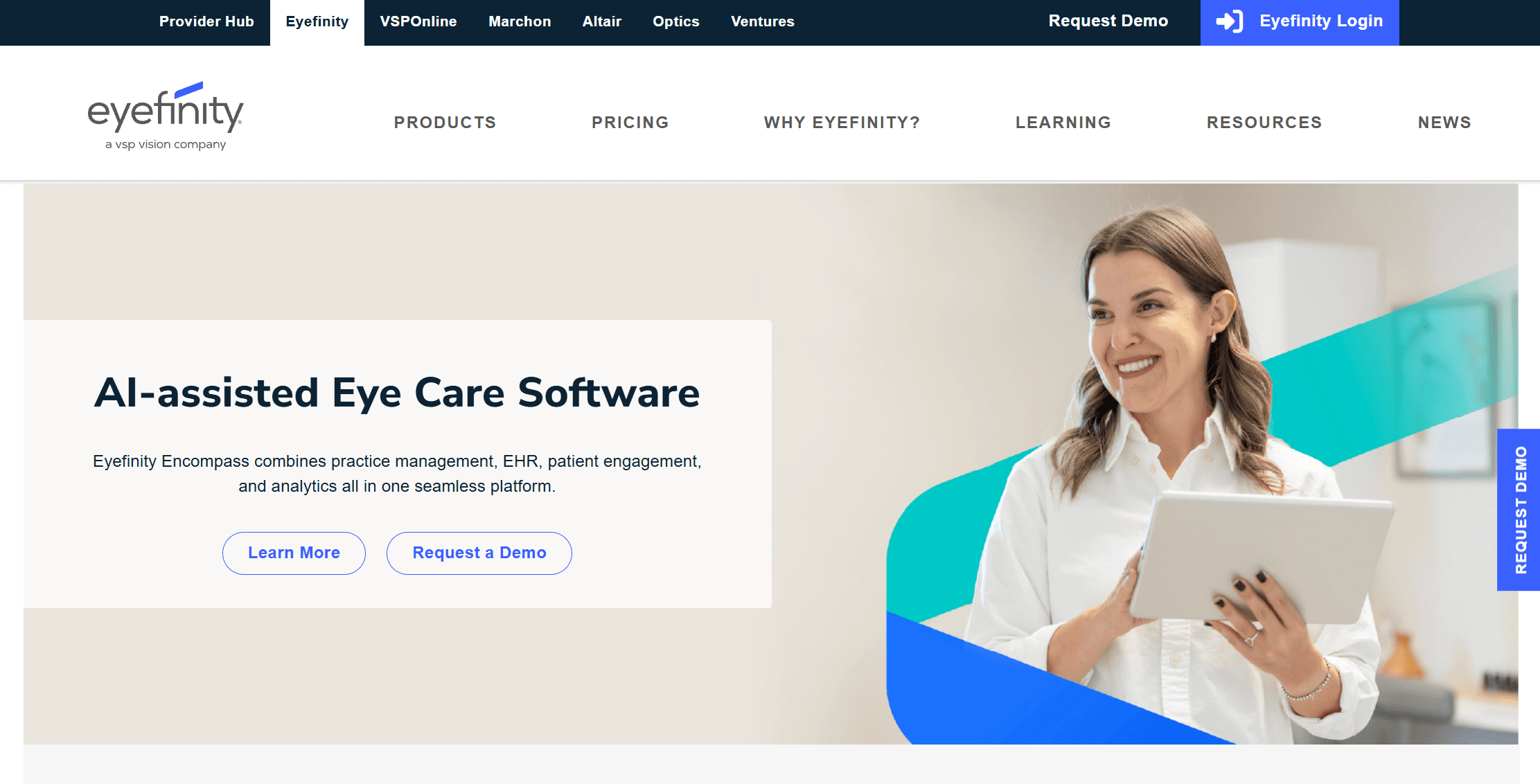
Eyefinity, backed by VSP, is built for optometry clinics that want tight insurance integration, especially with VSP plans. It feels more modern than Compulink in some areas, but shares its subscription-first DNA. If you are in-network with VSP, Eyefinity is often pitched as the automatic upgrade, but the learning curve and add-on costs can catch you off guard.
Pricing: Reported $399+/month per provider, plus implementation fees (Eyefinity pricing).
- Tight VSP and insurance integration
- Modern cloud-based workflow
- Large support and training network
- Heavy VSP focus can limit out-of-network billing
- Add-ons (imaging, recalls) cost extra
- Data export is complex and can be costly
If you ever want to own your own workflows, this is still a rented solution. With Devaims, you would keep every feature you pay for.
2. RevolutionEHR (Best for multi-location and cloud-first)
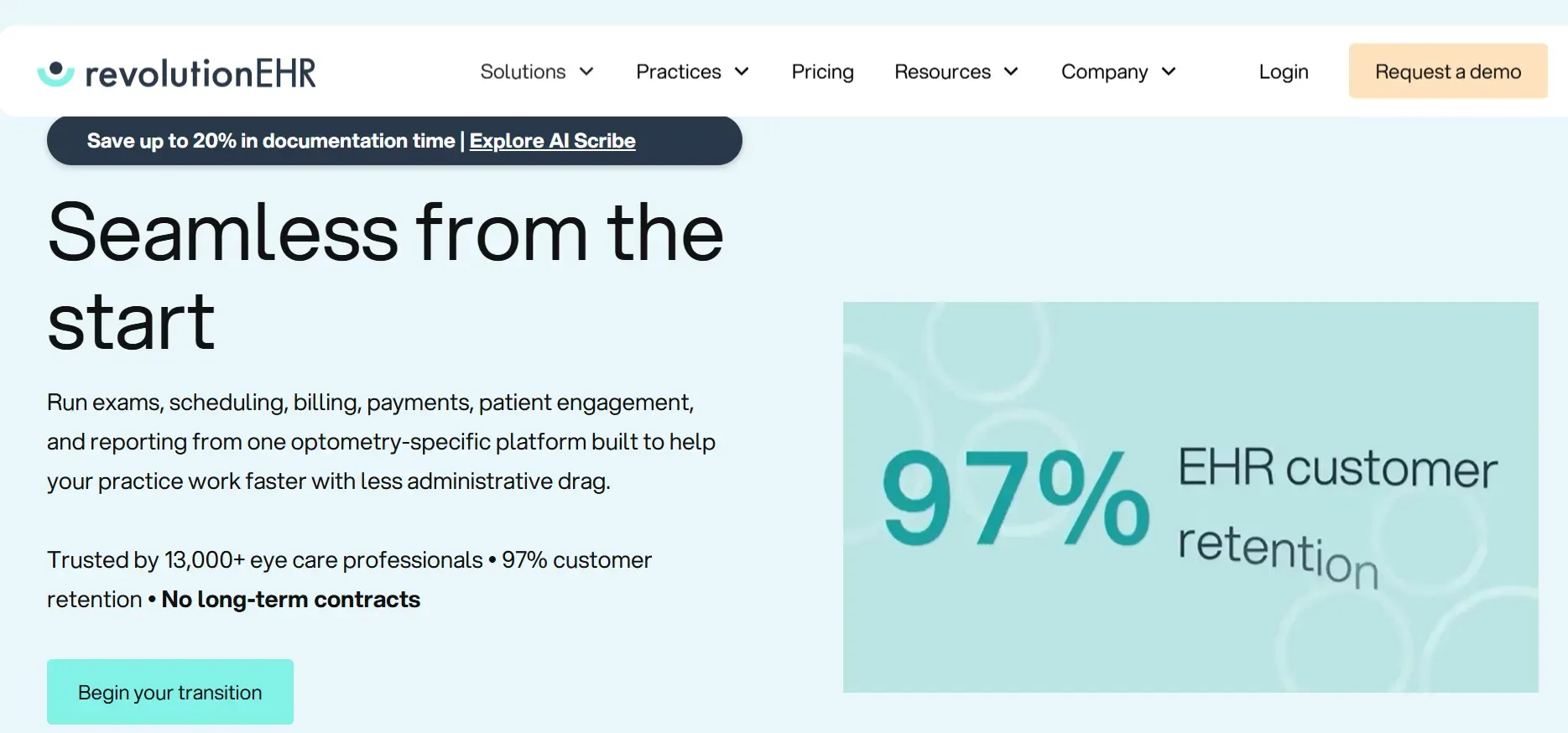
RevolutionEHR is a cloud-based EHR that targets optometry groups with multiple locations or remote access needs. Compared to Compulink, its interface is less dated and its support is more responsive, but you still face annual price increases and per-provider subscription fees.
Pricing: Reported $399+/month per provider, setup fees apply (RevolutionEHR pricing).
- Modern interface
- Good cloud access for multi-site practices
- Strong third-party integrations
- No ownership, always a monthly fee
- Custom reports and forms often require paid support
- Limited offline functionality
On owned software, that extra provider never bumps your monthly costs.
3. Crystal PM (Best for customization)
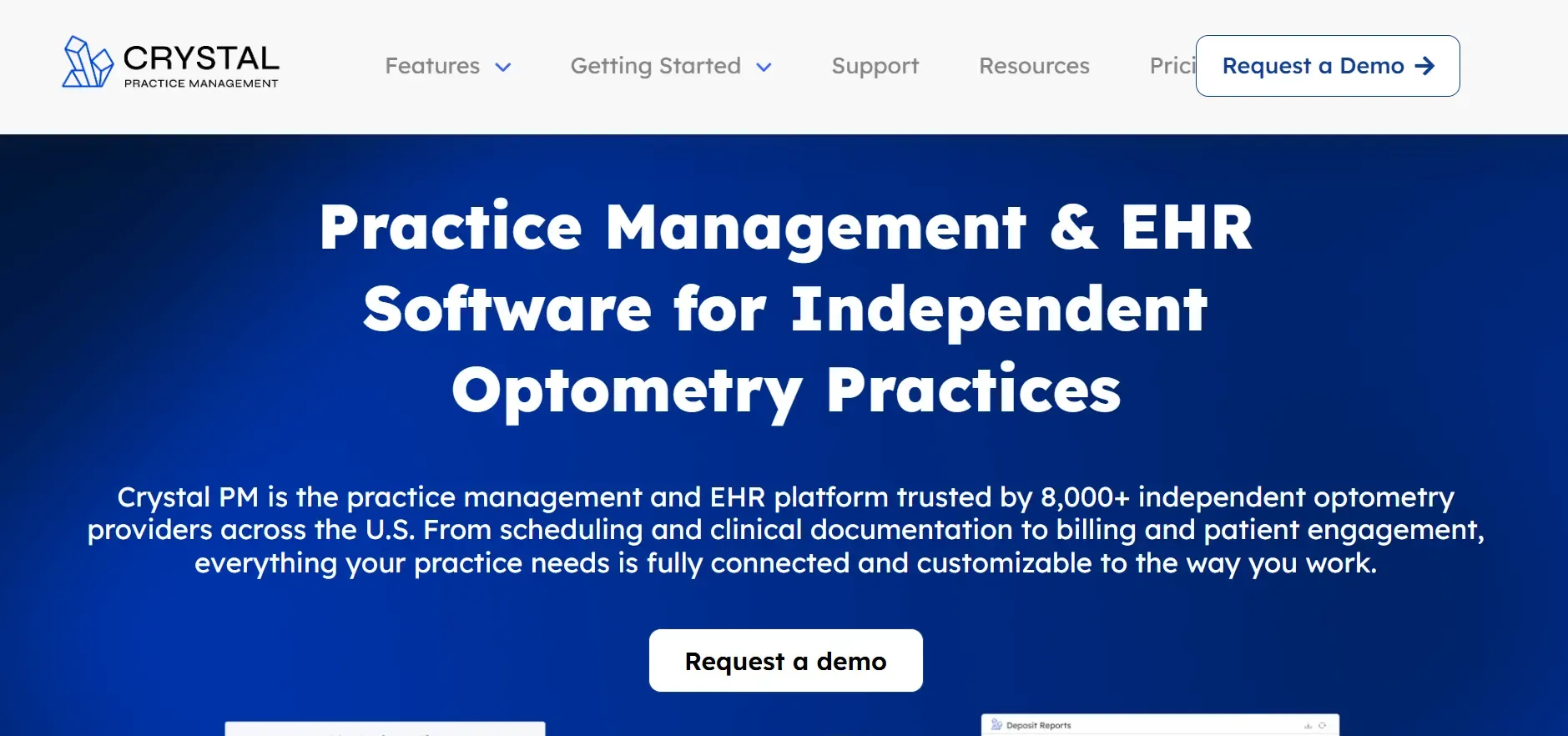
Crystal Practice Management stands out for its customizable templates and forms, giving tech-savvy clinics more flexibility than Compulink. It is popular with practices that want to tweak workflows, but you are still on the hook for recurring fees, and some customizations require paid support.
Pricing: Reported $300+/month per provider, plus setup costs (Crystal PM pricing).
- Highly customizable forms and templates
- Active user community
- Flexible appointment scheduling
- Recurring subscription, no ownership
- Integration with labs and imaging can be patchy
- Custom work often billed hourly
With an owned Devaims build, every customization is yours for life, no extra fee.
4. MaximEyes (Best for all-in-one clinics)
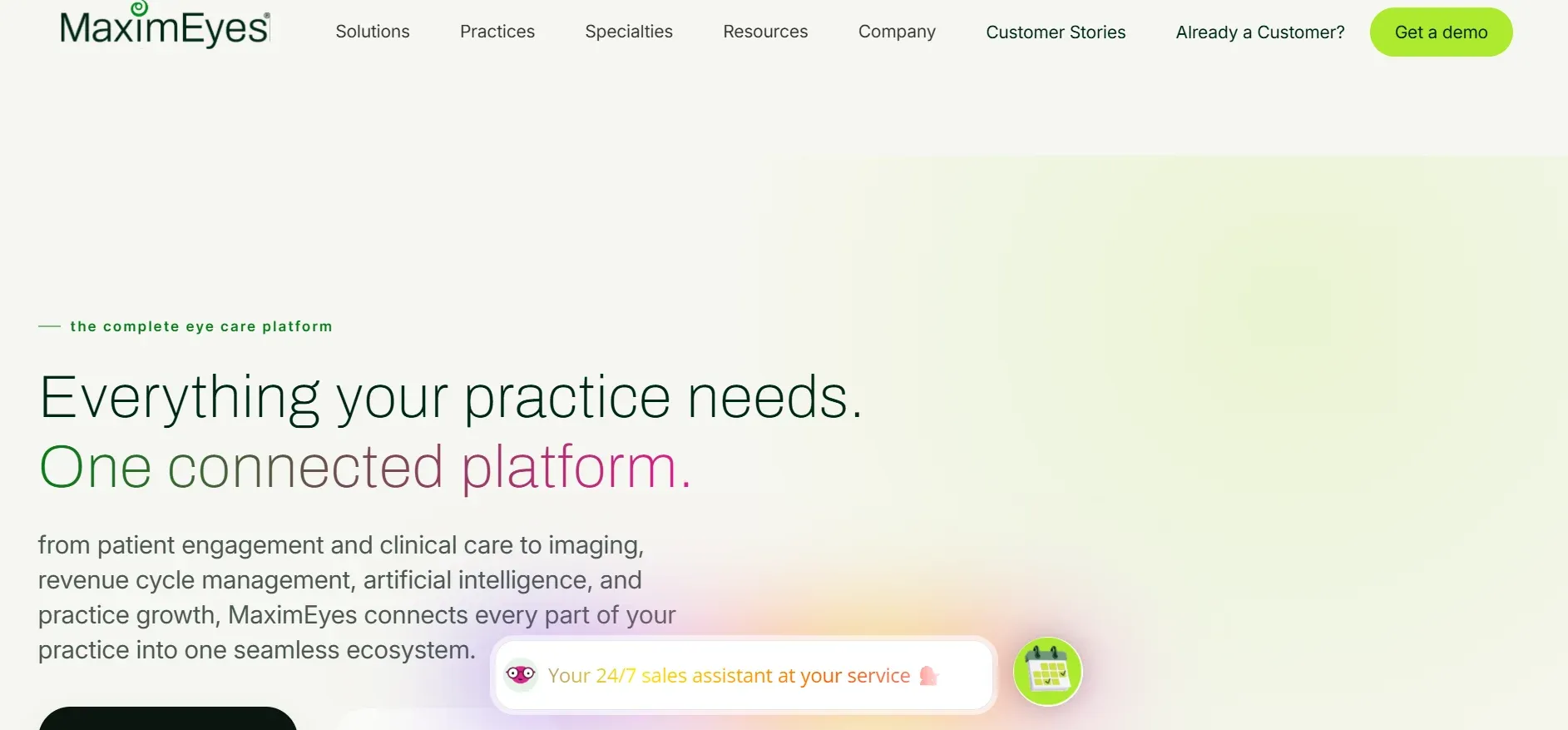
MaximEyes offers a single platform for EHR, practice management, imaging, and billing. Many optometrists use it as an all-in-one alternative to Compulink, but you will still face recurring per-provider fees and occasional upcharges for advanced modules.
Pricing: Reported $349+/month per provider (MaximEyes pricing).
- Integrated imaging and billing
- Designed for optometry workflow
- Active support and regular updates
- No single-user or perpetual license option
- Advanced features locked to higher tiers
- Migration from older systems can be complex
That is the kind of integration you would just have if the platform was built for you.
5. OfficeMate (Eyefinity) (Best for legacy users)
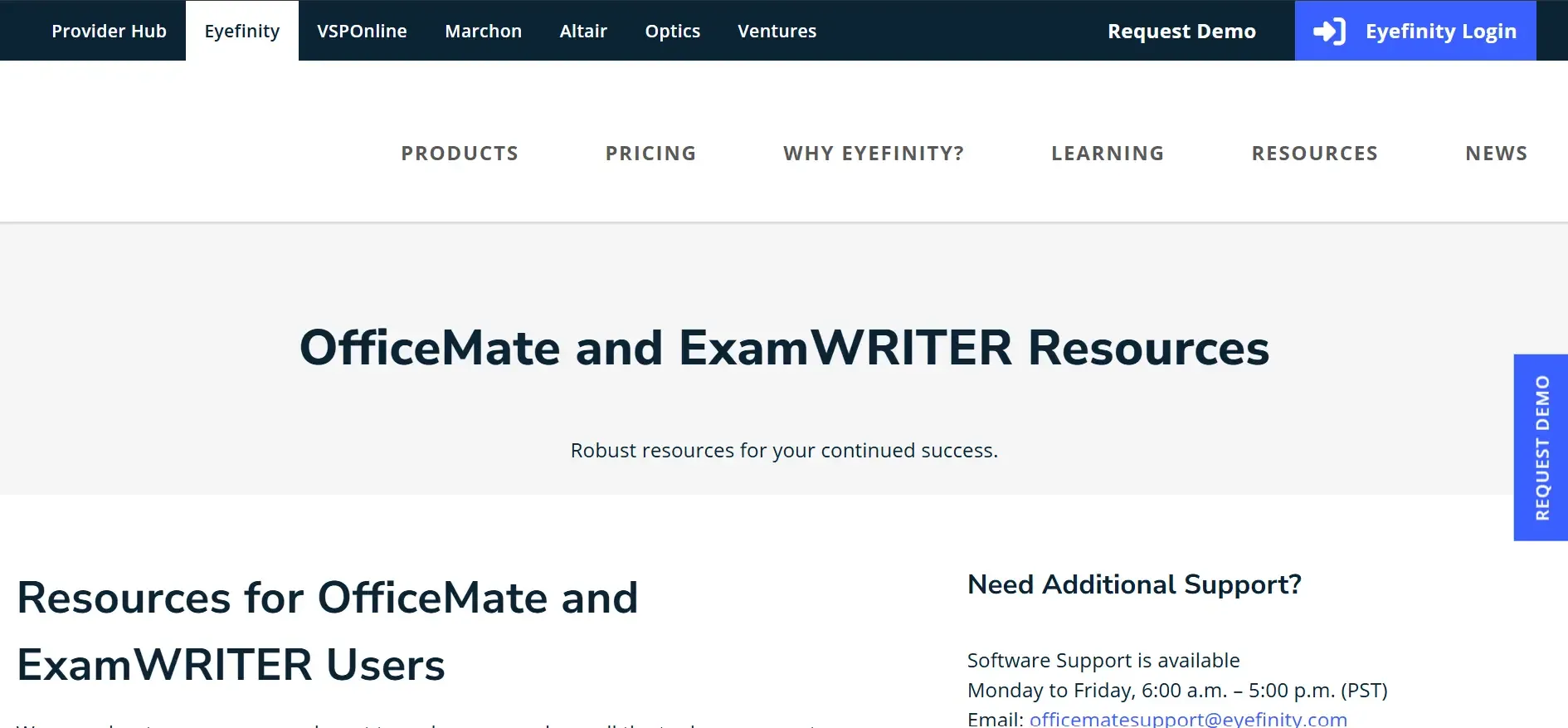
OfficeMate is a long-running desktop EHR, now under the Eyefinity umbrella. It appeals to clinics with legacy data or those who want an on-premise (but still rented) solution. Many find its interface dated, and you are still paying license and support fees year after year.
Pricing: Reported $299+/month per provider, plus support contracts (OfficeMate pricing).
- Strong for legacy data migrations
- Popular in small, established practices
- Decent reporting tools
- Dated UI, especially compared to newer cloud tools
- Upgrade/support fees required for security patches
- Limited cloud functionality
On software you owned, you control your update cycle and never pay for upgrades again.
6. Modernizing Medicine (Eyes) (Best for specialty and retina)
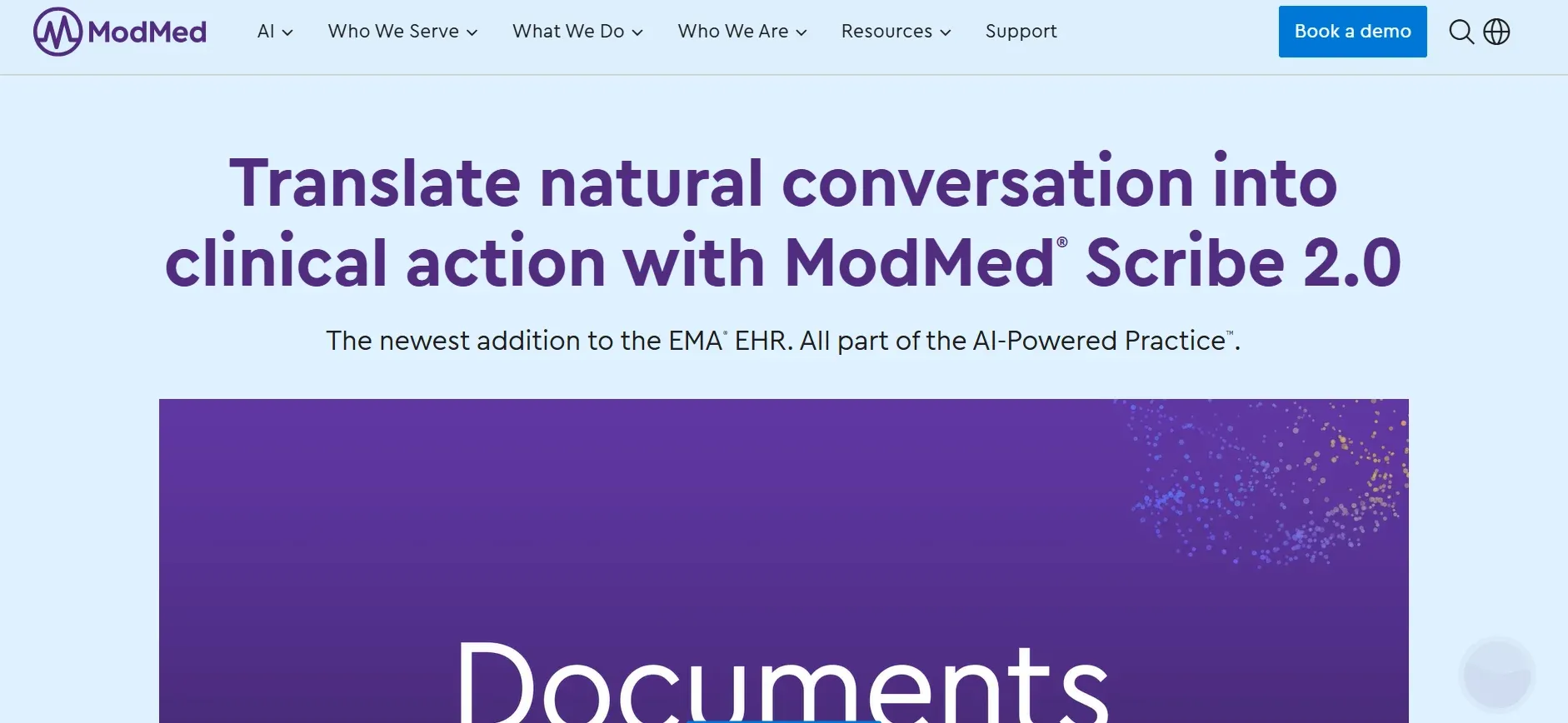
Modernizing Medicine's EHR for Eyes targets practices with advanced specialty workflows, especially retina and multi-specialty ophthalmology. It offers deep clinical templates, but pricing is high, and every add-on (imaging, billing, patient engagement) increases the monthly bill.
Pricing: Reported $600+/month per provider, plus training and onboarding (Modernizing Medicine pricing).
- Deep specialty modules
- Customizable clinical templates
- Frequent feature updates
- High entry and per-provider costs
- Add-ons quickly escalate pricing
- Complexity can slow down small practices
Building your own with Devaims means every specialty feature matches your workflow, not the vendor's roadmap.
7. MDVista (Best for enterprise optometry)
MDVista is positioned as an EHR for enterprise and large-group optometry environments. It handles complex scheduling and reporting, but is only available as a custom-quoted SaaS platform. Like Compulink, you never own the code or the data structure.
Pricing: Custom quoted, typically high for enterprise rollouts.
- Handles large groups and complex billing
- Enterprise-grade analytics
- Scalable infrastructure
- No published pricing, opaque contracts
- Custom features add cost, not ownership
- Enterprise focus may be overkill for small practices
On a Devaims build, the only ceiling on scale is the one you set.
8. Net Health Optometry (Best for hospital groups)
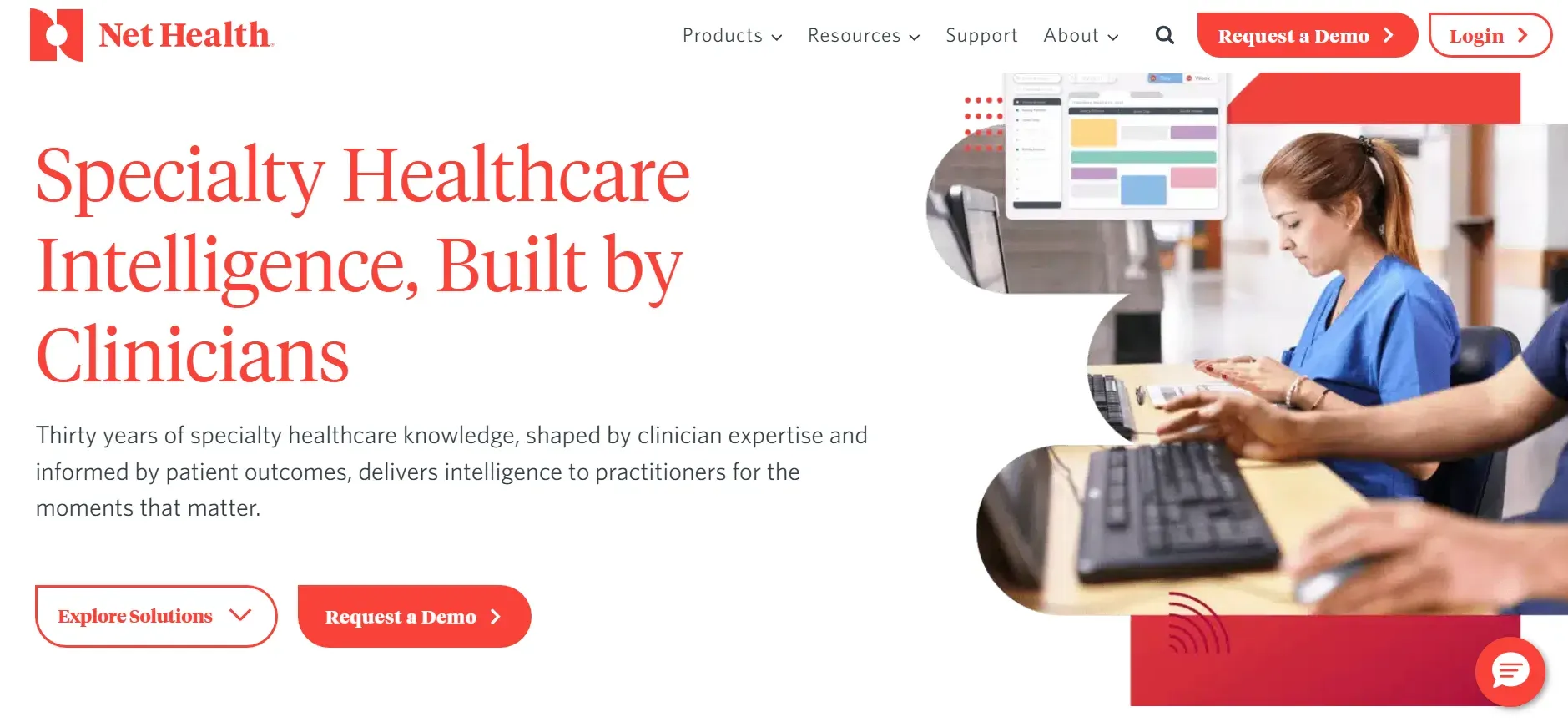
Net Health Optometry is built for hospital-owned and multi-location clinics that need compliance and reporting at scale. It is more rigid than Compulink, but offers strong integration with hospital billing and EMRs. Costs are custom-quoted, with per-site and per-user fees.
Pricing: Custom quoted, generally high for full-feature access (Net Health Optometry).
- Strong for compliance and hospital integration
- High-security standards
- Good reporting for enterprise users
- Rigid structure, little customization
- Expensive for smaller practices
- Long implementation timelines
9. Devaims (Best for clinics wanting to own their platform)
Devaims is the only alternative that lets you own your EHR and practice management software outright. Instead of renting, you get a custom-built platform with every workflow, report, and integration tailored to your clinic. You keep the source code, set your own rules, and pay only a flat maintenance fee, with no per-user, per-location, or upgrade charges ever again.
- One-time build cost, then you own the code and platform
- Every feature, report, and integration tailored to your needs
- No monthly user or location fees, add as many as you want
- Full data ownership and easy migration if you ever change tech
Other Compulink alternatives worth knowing
- Practice Fusion: A general EHR with some optometry users, but lacks deep specialty features.
- AdvancedMD: Ophthalmology-focused, but not optometry-specific.
- Practice Mate: Low-cost, but very basic for optometry needs.
- Nextech: Strong in ophthalmology, less so for optometry workflows.
How to choose the right Compulink alternative
- Budget: Calculate your true five-year spend, including add-ons and per-provider fees.
- Workflow fit: Look for platforms with templates and flows that match your daily operations.
- Scalability: Make sure the solution grows with your practice. Some charge more as you add locations or doctors.
- Integration: If you need imaging, billing, or recall systems, check integration ease and costs.
- Ownership: If you want to control features, data, and future upgrades, only Devaims offers full ownership.
For clinics tired of endless rent, the next section breaks down how owning with Devaims flips the math.
Stop paying rent on software you could own
Every Compulink alternative on this list is rented: you pay forever, and your data and workflows are tied to someone else's roadmap. Whether you pick Eyefinity, RevolutionEHR, or any other, you are still on the subscription treadmill. Devaims is the only path to owning your platform and breaking free from monthly fees.
Devaims builds custom EHR and practice management platforms for optometry clinics that want to own everything: source code, workflows, data, and integrations. You get a system designed around your daily reality, not a vendor's generic model. There are no per-user or per-location charges, and you keep the code for life.
- Per-user fees: With Devaims, you add as many users or locations as you want, no extra charge.
- Add-on fatigue: Every feature you need is built in, and you decide what gets added next, not an outside product team.
- Data lock-in: Your patient records are yours, in your format, and always portable.
- Integration pain: Integrations are built to match your stack, not just what the vendor supports.
| Tool | Ownership | Per-user/location fee | Custom features | Data export |
|---|---|---|---|---|
| Compulink | No | Yes | Limited | Complex |
| Eyefinity | No | Yes | Limited | Complex |
| RevolutionEHR | No | Yes | Some | Complex |
| Devaims | Yes | No | Unlimited | Simple, you own it |
Consider what renting versus owning really means over time. For a two-doctor clinic with five staff, renting at $400 per user per month (EHR plus add-ons) runs $2,800/month, or $33,600/year. Over five years, you pour $168,000 into a system you will never own. A custom Devaims build is typically $32,000 upfront and $180/month maintenance ($2,160/year). Here is how it stacks up:
| Year | Rented (cumulative) | Owned (cumulative) |
|---|---|---|
| 1 | $33,600 | $34,160 |
| 2 | $67,200 | $36,320 |
| 3 | $100,800 | $38,480 |
| 4 | $134,400 | $40,640 |
| 5 | $168,000 | $42,800 (now ahead) |
By year five, your owned platform costs less than a third of renting, and the gap keeps widening. Clinics with more doctors or custom workflows see the payback even faster. If you want to run your real numbers, Devaims will walk you through the math for free.
How to switch from Compulink
- Export all patient charts, scheduling, and billing data from Compulink (request full export access and support).
- Choose your new platform and confirm import capabilities.
- Map and import your data into the new system, testing for completeness and accuracy.
- Reconnect payment processors, imaging systems, labs, and insurance integrations.
- Train your team on the new workflows and software.
- Run both systems in parallel for 2 to 4 weeks to catch any gaps or errors.
- Review and close out your old Compulink contract.
With a custom Devaims build, the migration is handled as part of the project.
Frequently asked questions
What is the best Compulink alternative for optometry?
If you want a rented, cloud-based EHR, RevolutionEHR and Eyefinity are the most popular Compulink alternatives. If you want to own your software and control your data, only a custom Devaims build gives you true ownership.
Are there any free Compulink alternatives?
There are no truly free optometry-specific EHRs with full practice management and compliance. Some general medical EHRs like Practice Fusion offer limited free plans, but they lack specialty features and are not designed for optometry.
What is the cheapest Compulink alternative?
Kareo is often the lowest-cost, reputable EHR option, starting around $160 per provider per month. However, add-ons and support can raise the true cost. Over five years, even the cheapest rented tools can cost more than owning your own Devaims build.
Which Compulink alternative is best for multi-location practices?
RevolutionEHR and Net Health Optometry are strong for multi-location and enterprise clinics, offering cloud access and scalable reporting. Devaims can also build for any size, with no per-site fees and unlimited customization.
Can I keep my Compulink data if I switch?
You can export most patient and billing data from Compulink, but the process can be tedious and some formats may not transfer perfectly. With Devaims, the migration is handled for you, and you own the data in your chosen format.
When should I switch from Compulink?
If you are facing another round of price increases, need features locked to a higher tier, or want to own your platform, now is the time to compare Compulink alternatives. Clinics planning to expand or invest heavily in workflow automation often save more by switching sooner.
Do Compulink alternatives let me own the software?
No. All major Compulink alternatives are subscription-based and do not allow you to own or modify the source code. Only Devaims offers a true ownership model for optometry clinics.
The bottom line
Every Compulink alternative rents you the same basic toolkit, and your costs only go up as your practice grows. If you are tired of pouring tens of thousands into platforms you will never own, it is time to run the five-year math and see if building your own makes more sense.
Here is the test: add up what you will spend to rent EHR and practice management over five years. If that number would build you something you own, you already have your answer. Devaims can help you make that call, with no obligation.
Find more insights on the Devaims blog or see other alternatives: Eyefinity alternatives, RevolutionEHR alternatives, Crystal PM alternatives.