


That sinking feeling when you realize your PT software bill is climbing faster than your patient volume? You are not alone. Most clinics start with a slick SaaS package, then hit a growth ceiling: surprise per-user fees, features locked behind pricier tiers, and mounting integration headaches. Five years in, you have paid out enough to buy the system twice, but own nothing.
The Physical Therapy / Rehab alternatives below are the best bets for clinics fed up with rent-forever platforms. If you want to keep costs predictable, regain control, or finally own your workflow, read on. Prompt EMR, Raintree, and Practice Perfect rise to the top for most clinics. But if you want your software to work like your own practice, not someone else’s, the last option lets you own the code outright. That’s where a custom Devaims build changes the equation.
Why physical therapy and rehab clinics look for alternatives
Per-user and per-visit fees stack up fast. Even modest growth means your software bill can double, then triple, as you add clinicians or locations. SaaS providers often start with attractive entry pricing, but as you onboard therapists, assistants, and admin staff, the per-user model quietly multiplies your monthly outlay. If you expand to multiple sites or bring on part-time providers, you may be surprised to see separate charges for each login, even if the user is not full-time. Over a few years, the compounding effect of per-user pricing can outpace your clinic’s growth in revenue, especially if your payer mix is not ideal or reimbursement rates are slow to rise.
Locked features and surprise upgrades. Reporting or integrations you need are often paywalled behind more expensive plans, pushing your costs up. Many clinics discover that the entry-level tier lacks key features, like advanced analytics, custom forms, or API access, forcing them to upgrade for functionality that should be standard. This can create budgeting headaches, especially if you need to unlock features for compliance, telehealth, or insurance claim automation. Some SaaS platforms even roll out new features only to restrict them to premium plans, leaving your team with the choice of paying more or falling behind competitors.
Long-term contracts with tough exit clauses. Many platforms lock you in for a year or more, making it costly or disruptive to switch when the software no longer fits. Some contracts auto-renew or require 60 to 90 day notice before cancellation, and early termination fees are common. When your needs change, say, if you add new specialties or want to integrate with a local hospital, being locked in can force you to compromise on care quality or efficiency.
Data portability headaches. Exporting your records, notes, and schedules can feel like pulling teeth, especially when you try to switch platforms. Data exports from SaaS EMRs are rarely plug-and-play: they may come in proprietary formats, incomplete CSVs, or PDFs that are hard to import elsewhere. This complicates compliance with HIPAA and state retention rules and often results in lost productivity during migration. Clinics that want to analyze historical data or switch billing vendors may face additional fees or manual work to access their own records.
Workflow rigidity. Most out-of-the-box solutions force you to change how your clinic runs, not the other way around. Standardized templates, documentation flows, and reporting can streamline onboarding but often fail to account for the nuances of your practice, whether it’s unique intake questionnaires, multidisciplinary team notes, or custom reminders for follow-up care. This “one size fits many” approach can slow down experienced teams, introduce errors, and erode the patient experience. This is why so many search for Physical Therapy / Rehab alternatives.
Quick comparison of the best Physical Therapy / Rehab alternatives
| Tool | Best for | Starting price | You own it? |
|---|---|---|---|
| Prompt EMR | Modern all-in-one EMR | Reported around $100/mo | No |
| Raintree | Enterprise and multi-site | Custom quote | No |
| Clinicient | Insurance billing | Custom quote | No |
| Therabill | Therapist-owned clinics | Reported $149/mo | No |
| Net Health Therapy | Multi-setting organizations | Custom quote | No |
| Fusion Web Clinic | Pediatric therapy | Reported $99/mo | No |
| Practice Perfect | Budget-minded clinics | Reported $69/mo | No |
| Devaims | Owning your own platform | One-time build, you own it | Yes |
Always confirm current pricing before you decide. Add-ons, user counts, and integrations can change your actual cost.
The 9 best Physical Therapy / Rehab alternatives
1. Prompt EMR (Modern all-in-one EMR)
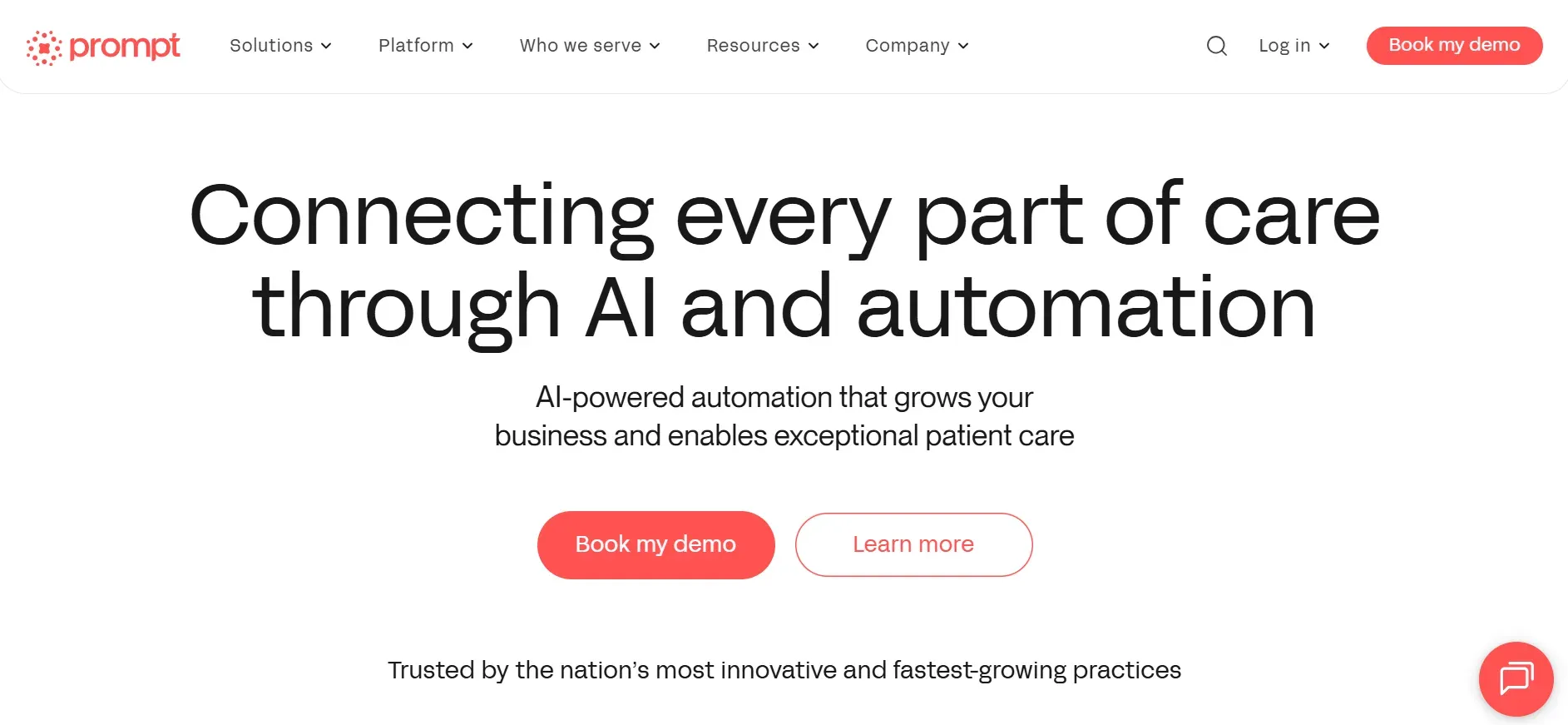
Prompt EMR has earned a reputation as a modern, all-in-one platform for physical therapy clinics looking for a streamlined, cloud-based solution. Its clean interface stands out, offering a user experience that helps new staff get up and running with minimal training. Prompt’s main modules cover scheduling, documentation, billing, outcomes tracking, and patient engagement, all tightly integrated for daily efficiency.
Pricing: Reported around $100 per provider per month. Confirm with vendor for current rates and add-ons.
-
Key limitations:
- Per-provider pricing increases costs as you scale
- Custom workflows limited to Prompt’s roadmap
- Data export can be complex for full records
-
Strengths:
- Modern, intuitive interface for rapid onboarding
- Integrated scheduling, billing, and telehealth
- Frequent feature updates and responsive support
2. Raintree (Enterprise and multi-site rehab)
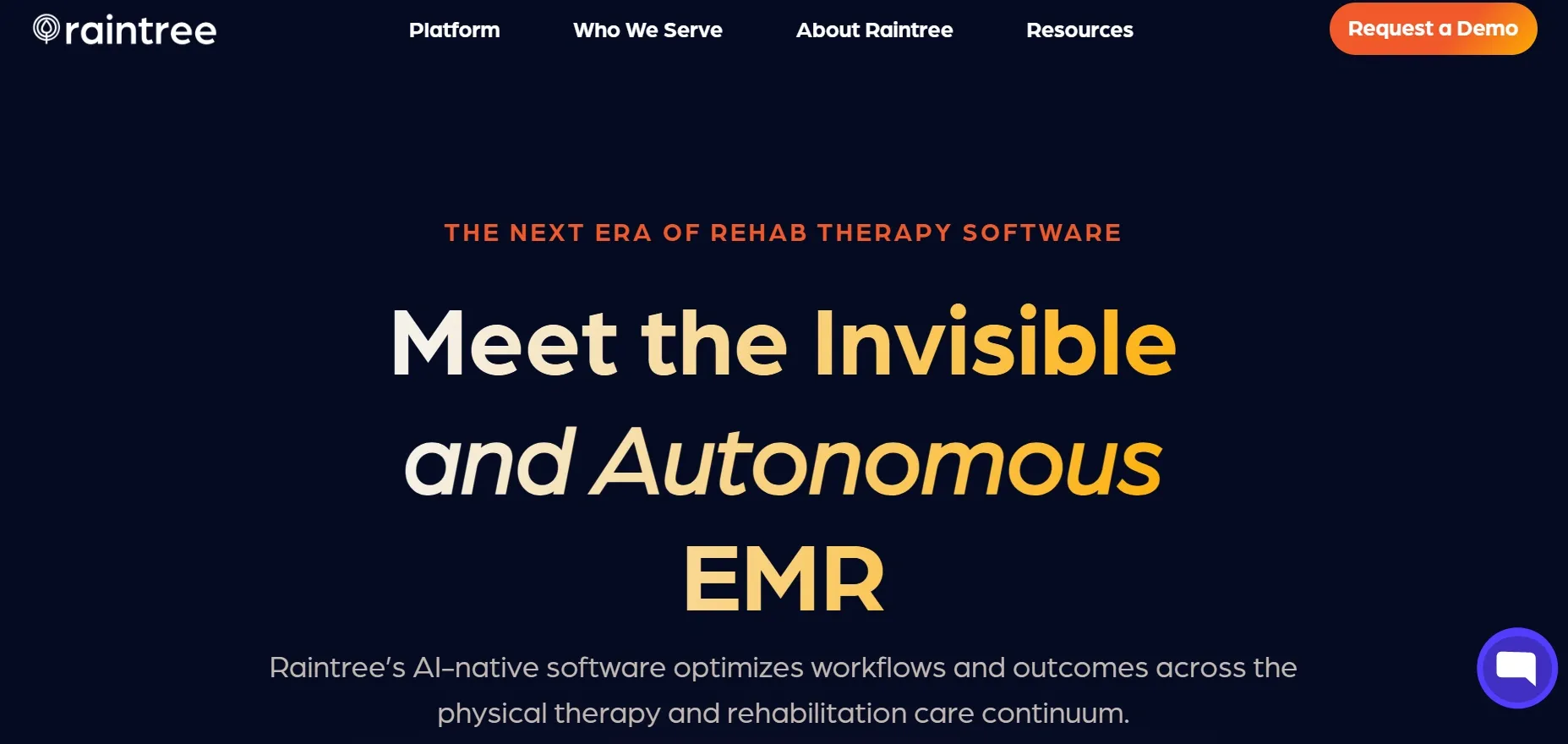
Raintree is built for large rehab organizations, multi-site clinics, and enterprise networks that need advanced scheduling, workflow automation, and reporting. Its platform is modular, with options for outpatient, inpatient, and home health, and supports complex billing structures, including split payments and contract management for large payer networks.
Pricing: Custom quote based on organization size and modules.
-
Key limitations:
- Complex setup and longer onboarding for large groups
- Multi-year contracts are typical
- Customizations can add significant cost
-
Strengths:
- Enterprise-grade scheduling and workflow automation
- Deep reporting and compliance tools
- Strong integrations for hospital systems
3. Clinicient (Insurance billing and compliance)
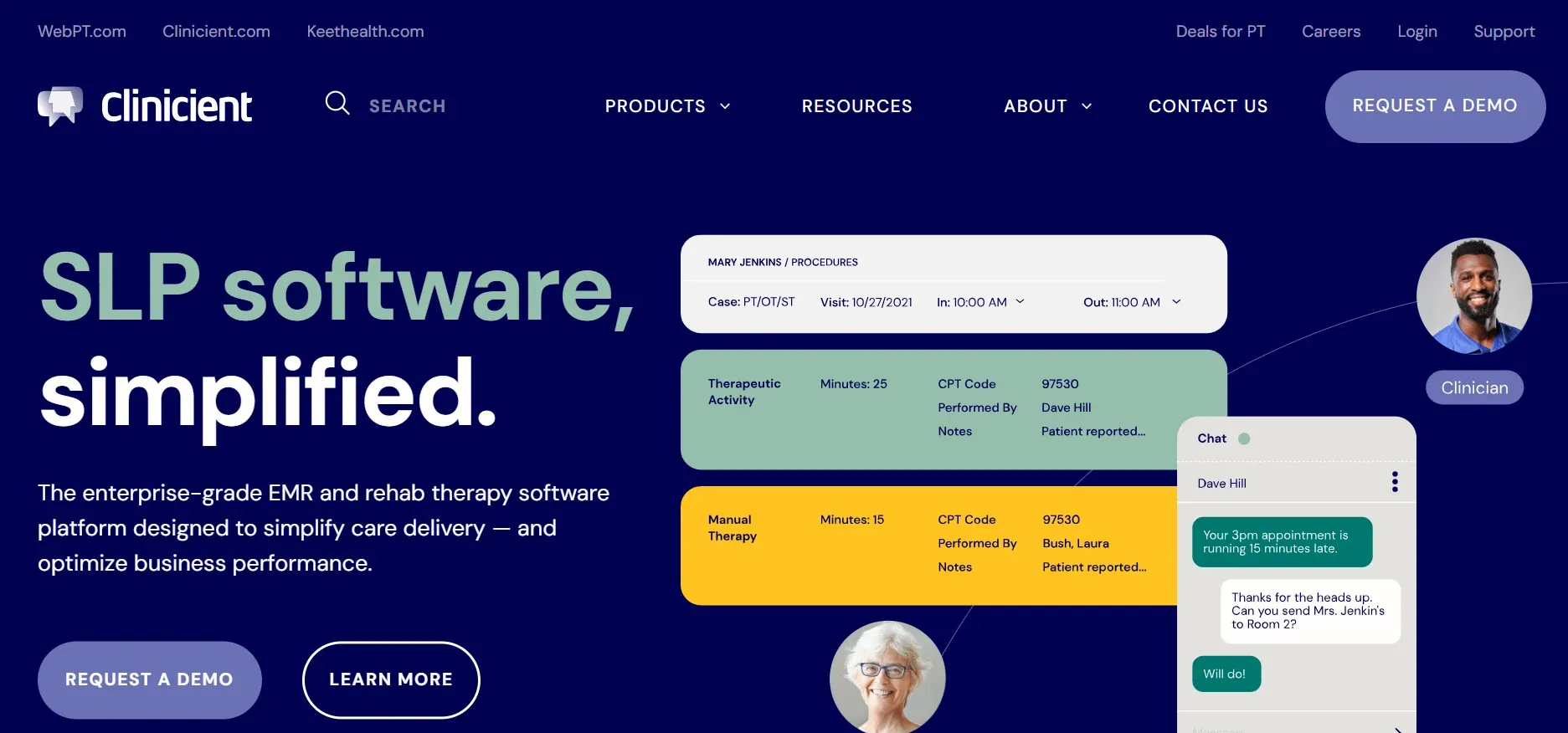
Clinicient is focused on the business side of physical therapy: insurance billing, compliance, and revenue cycle management. Its EMR is tightly integrated with billing, making it a favorite of clinics that handle high volumes of insurance claims or face complex payer requirements.
Pricing: Custom quote; typically higher for clinics with complex billing needs.
-
Key limitations:
- Clinical documentation less customizable than billing
- Limited third-party integrations
- Data export can be challenging for attachments
-
Strengths:
- Powerful insurance billing and denial management
- Compliance tools for Medicare and Medicaid
- Centralized analytics for multi-site groups
4. Therabill (Therapist-owned clinics)
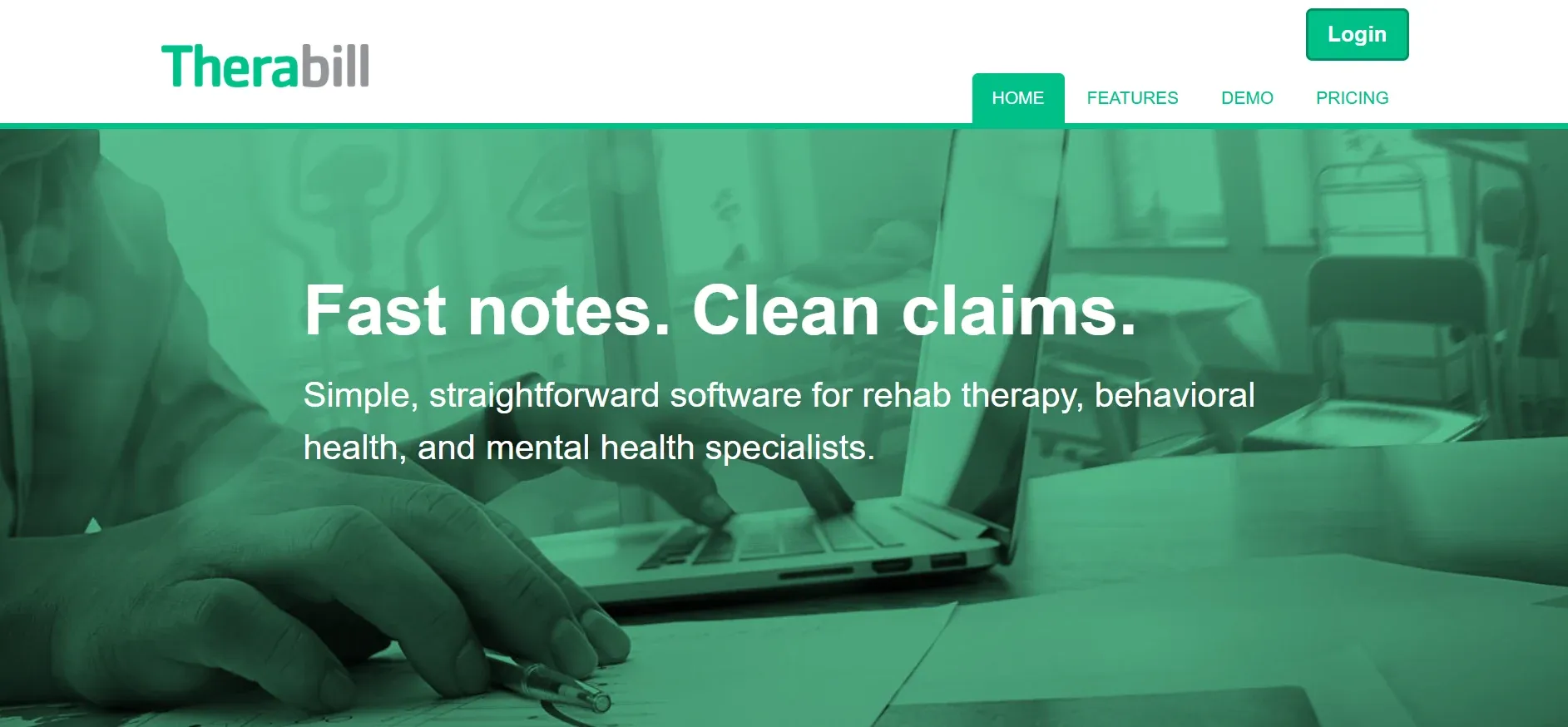
Therabill, now under the WebPT umbrella, is a long-standing favorite among therapist-owned clinics, particularly those that value straightforward billing and scheduling. The platform is designed for simplicity, making it approachable for small teams or solo practitioners.
Pricing: Reported $149 per month for a single provider. Additional users and features may increase costs.
-
Key limitations:
- Limited integrations beyond clearinghouses
- Feature development has slowed
- Interface is dated compared to newer tools
-
Strengths:
- Simple, reliable billing and scheduling
- Easy onboarding for small teams
- Customizable note templates
With a Devaims build, you control the interface and user permissions as your team grows.
5. Net Health Therapy (Multi-setting organizations)
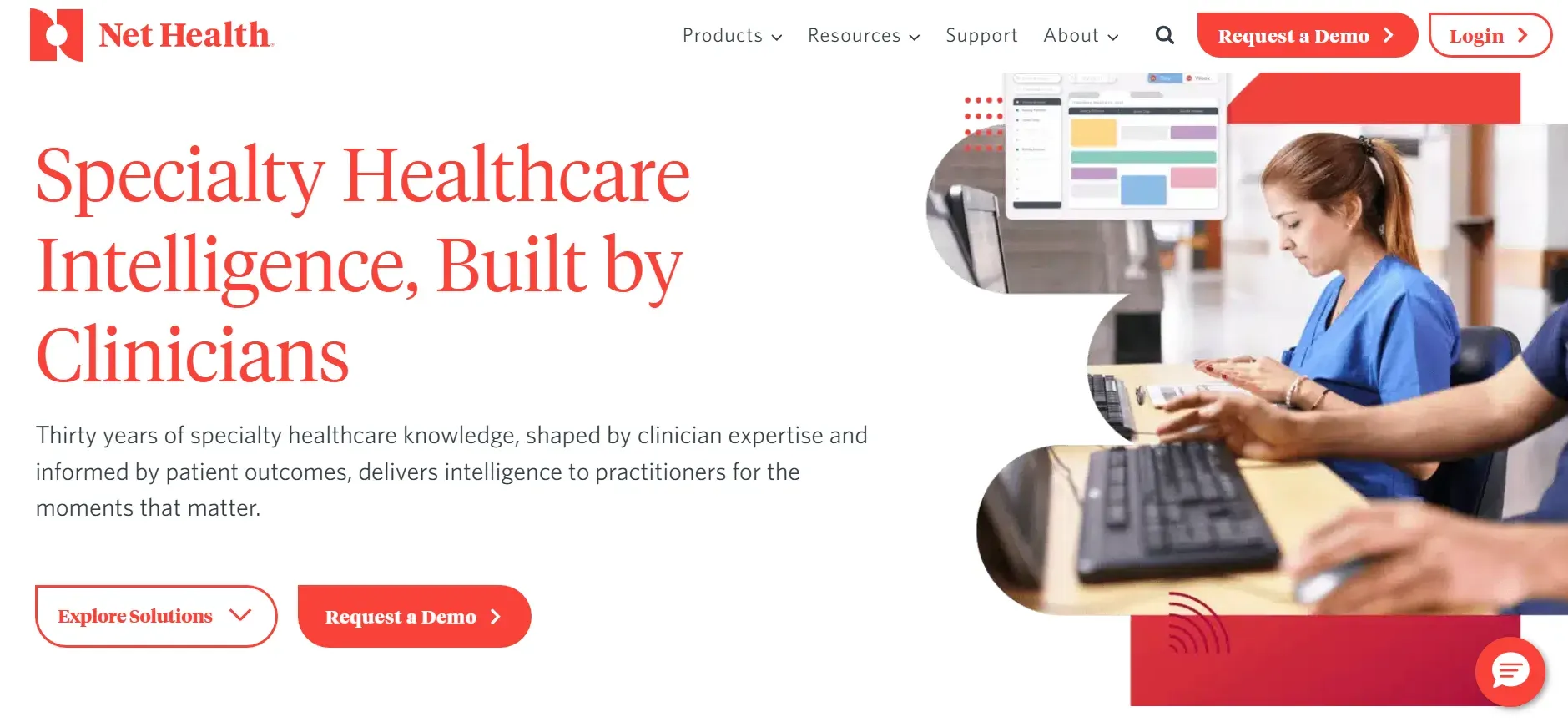
Net Health Therapy is a suite of software solutions for PT, OT, SLP, and wound care organizations. It is designed for organizations operating in multiple settings, such as outpatient, inpatient, and home health, and for those needing to bridge care across the continuum.
Pricing: Custom quote; varies by modules and scale.
-
Key limitations:
- Rigid workflows for smaller practices
- Opaque pricing and custom negotiation
- Steep learning curve for new users
-
Strengths:
- Unified records across care settings
- Enterprise scheduling and compliance
- Interoperability with hospital EHRs
6. Fusion Web Clinic (Pediatric therapy clinics)
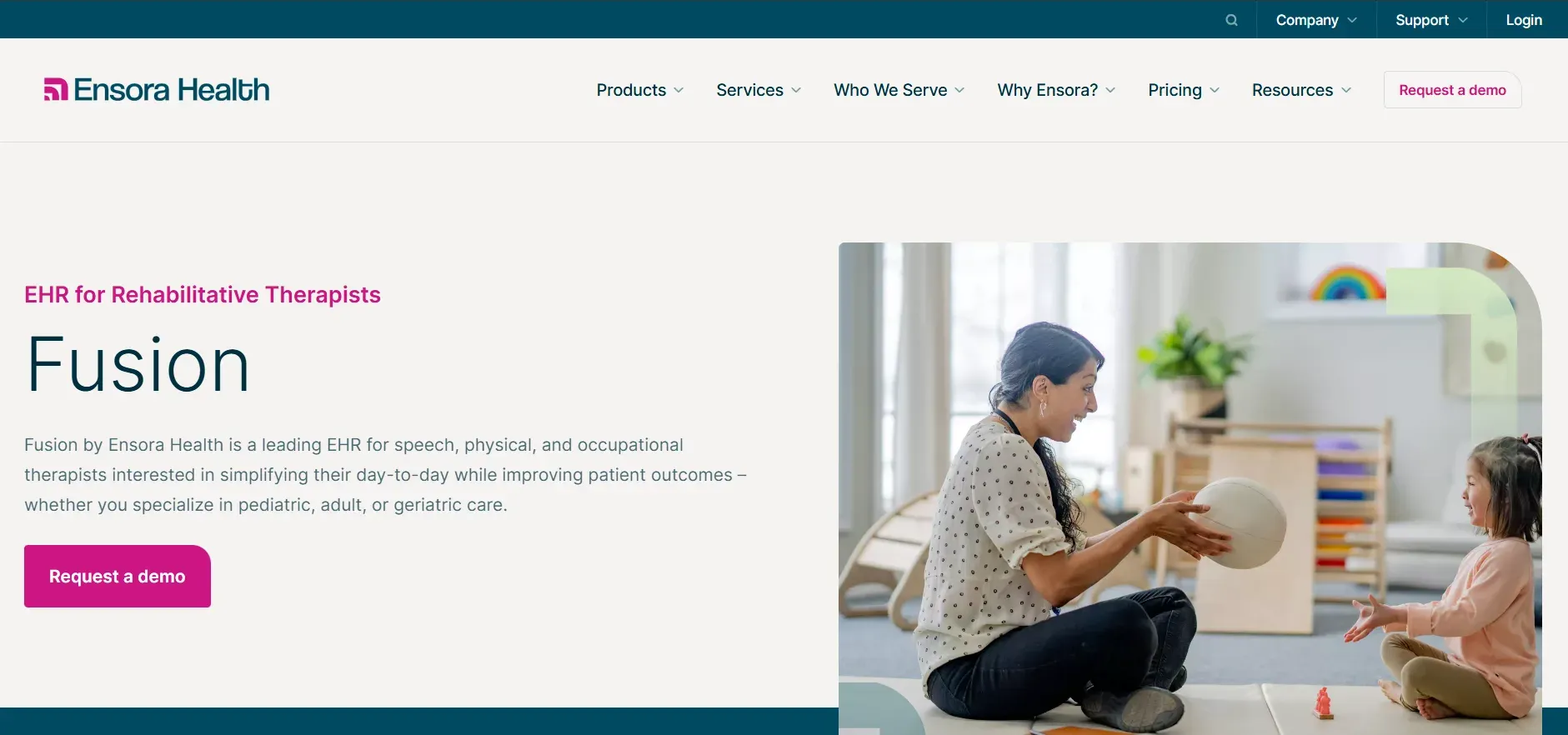
Fusion Web Clinic is purpose-built for pediatric physical, occupational, and speech therapy practices. Its workflows, documentation templates, and interface are designed around the unique needs of children, their families, and therapists working in early intervention and school-based environments.
Pricing: Reported $99 per month per provider. Confirm with vendor for latest pricing.
-
Key limitations:
- Limited features for adult or mixed-age clinics
- Cloud-only, no offline access
- Data export limited to CSV/PDF formats
-
Strengths:
- Pediatric-specific templates and workflows
- Family engagement and parent portals
- Colorful, user-friendly interface
On an owned platform, expanding to new therapy types or age ranges is just a config, not a costly upgrade.
7. Practice Perfect (Budget-minded clinics)
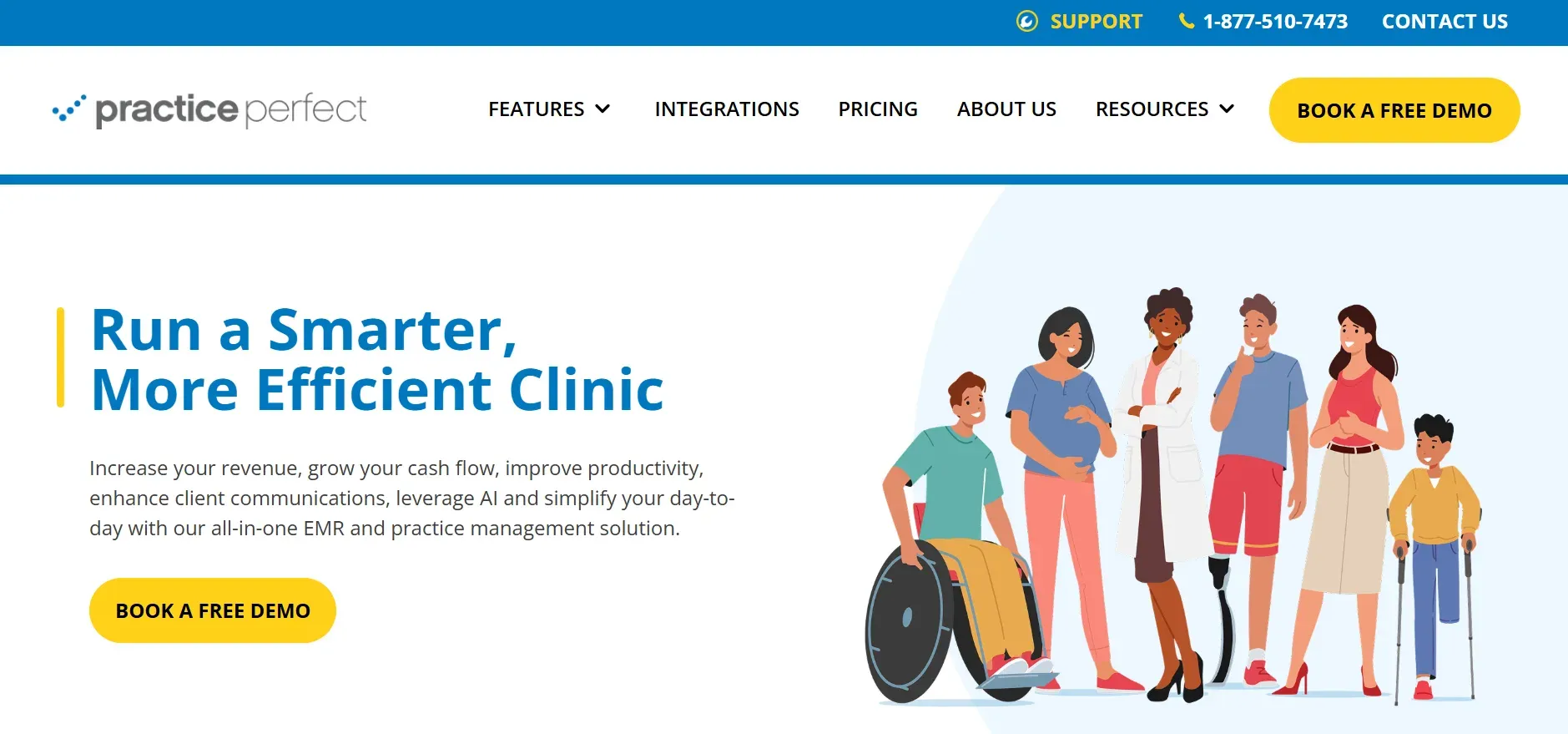
Practice Perfect is designed for clinics seeking affordable, basic EMR functionality without the bells and whistles found in enterprise or specialty platforms. Its focus is on simplicity and value, making it a popular choice for small practices, startups, or clinics with straightforward needs.
Pricing: Reported $69 per month for a single user. Additional users and features may increase costs.
-
Key limitations:
- Limited advanced reporting and analytics
- Few integration options
- Interface less polished than newer tools
-
Strengths:
- Affordable and predictable pricing
- Simple scheduling and billing
- No long-term contracts required
8. Devaims (Owning your own platform)
Devaims builds custom Physical Therapy / Rehab platforms that you own outright. Unlike SaaS EMRs, you receive the full source code and complete rights to your system, so you are not locked into any vendor or pricing model. Every workflow, report, and integration is developed specifically for your practice, with ongoing support from the team that built your platform.
- Tailored documentation, scheduling, and billing workflows
- Custom integrations (billing, telehealth, analytics, EHRs, payers)
- Role-based access and audit trails for compliance
- Data ownership: export, backup, and analysis without restriction
- Flat ongoing maintenance, no per-user or per-site fees
- Direct support from the developers who know your system
With Devaims, migration, integration, and training are handled as part of your project. You are never limited by vendor priorities or contract restrictions, and future upgrades or analytics are fully within your control.
Other Physical Therapy / Rehab alternatives worth knowing
- MediLinks is strong for large rehab networks but is typically priced out of reach for small clinics. Its focus on enterprise integration and compliance makes it a contender for hospital systems and national therapy groups.
- TherAssist is a legacy solution with basic features, best for clinics that do not need modern interfaces. It remains in use among long-standing practices with minimal needs and low turnover.
- Kareo PT fits clinics that already use Kareo for broader EHR needs. Its integration with Kareo's billing and scheduling modules can streamline operations for multi-specialty or primary care groups.
- Some clinics try to make generic EHRs (like Athenahealth or Epic) work for PT, but customization is often costly and cumbersome. These platforms are best suited for clinics embedded in hospital networks or large health systems with dedicated IT support.
How to choose the right Physical Therapy / Rehab alternative
- Budget: Know your true 5-year cost, not just the sticker price. Include add-ons, users, and integrations. Calculate potential price increases as you grow, and consider the cumulative cost of feature unlocks, integrations, and support. For clinics with 5 or more providers, ownership often breaks even by year five.
- Clinic size: Small teams may want simple, low-cost tools; multi-site groups need workflow depth and reporting. Enterprise solutions may be overkill for startups, while budget platforms may not scale for growing networks.
- Specialty: Pediatric, multi-specialty, or enterprise clinics each have unique needs not all tools address. Pediatric clinics need family engagement and custom templates; multi-specialty groups require flexible documentation; large organizations prioritize compliance and analytics.
- Data ownership: If you want to own your records and workflows, only a custom build delivers true control. Consider your needs for HIPAA compliance, analytics, and future-proofing your records.
- Integration needs: Consider how deeply you need to connect billing, telehealth, or analytics. Evaluate whether your preferred platforms offer APIs, and what the cost and effort would be to connect your existing tools.
If you hit a wall with per-user fees or locked features, owning your system can be the smarter move.
Stop paying rent on software you could own
The single biggest frustration with Physical Therapy / Rehab alternatives is the rent-forever trap. Every tool above, no matter how polished, bills you every month, per user, per visit, per integration. The more your clinic grows, the more you pay. You never own your workflows or your data. And when your needs change, you have to adapt or start the painful switching process all over again.
Devaims is different. We build a custom PT or rehab platform for your clinic or network, tailored down to every last workflow and integration. You pay once to build, then a flat maintenance rate. The full source code is yours. No per-user upcharges, no forced upgrades, no long-term contracts. It is your system, forever.
- No more per-user or per-visit fees: Add clinicians or sites without a cost spike. Whether you grow from 3 to 30 therapists or add satellite locations, your costs stay predictable.
- Every workflow your way: Reports, reminders, and workflows built for your team, not a generic template. Need a unique intake form, a custom referral dashboard, or integration with your local HIE? It is possible from day one.
- True data ownership: Your records, your infrastructure, your rules. You decide when and how to export, backup, or analyze your data, without waiting for vendor approval or risking lock-in fees.
- Integration freedom: Connect to any billing, telehealth, or analytics tool you choose. Want to automate patient surveys, connect to regional payers, or build a custom analytics pipeline? Full control is yours.
- No contract lock-in: You decide when and how to upgrade or switch. Maintenance is flat, and you are never forced into upgrades or long-term commitments.
| Tool | Ownership | Per-user fees | Custom workflows | Contract required? |
|---|---|---|---|---|
| Prompt EMR | Rented | Yes | Limited | Usually |
| Raintree | Rented | Yes | Configurable (for a price) | Yes |
| Practice Perfect | Rented | Yes | Limited | No |
| Devaims | You own it | No | Fully tailored | No |
| Year | Rented SaaS (Prompt EMR example) |
Owned (Devaims) |
|---|---|---|
| Year 1 | $8,400 | $32,400 |
| Year 2 | $16,800 | $34,800 |
| Year 3 | $25,200 | $37,200 |
| Year 4 | $33,600 | $39,600 |
| Year 5 | $42,000 | $42,000 (now ahead) |
Break-even comes in year 5 for most clinics. After that, you keep saving every month while owning your system and your data. Clinics with five or more providers or specialized workflows see the biggest gains. Want the exact math for your clinic? We will run it for free.
How to switch from Physical Therapy / Rehab software
- Export all patient data, notes, and schedules from your old system. Request structured data (not just PDFs) and clarify what formats are available for each data type.
- Choose your new Physical Therapy / Rehab alternative, considering budget and workflow needs. Evaluate not just features, but migration support, integration options, and contract terms.
- Import data into the new platform, checking for accuracy and completeness. Test with a sample cohort first, then migrate the full dataset. Validate that attachments, scanned notes, and historical billing records are intact.
- Reconnect payments, billing, and any third-party integrations. This includes clearinghouses, accounting software, telehealth platforms, and analytics tools. Confirm that all connections work as expected before going live.
- Train staff on new workflows and documentation. Provide role-specific training, and consider appointing “superusers” to support the transition.
- Run both systems in parallel for a short period to ensure a smooth transition. Use this time to identify gaps, catch missing data, and resolve workflow questions.
- Review your old contract for cancellation terms and close out your account. Ensure you have written confirmation of data retention and disposal to remain compliant.
With a custom Devaims build, the migration is handled as part of the project, including data mapping, integration setup, and team training.
Frequently asked questions
What is the best Physical Therapy / Rehab alternative for clinics that want to own their software?
Devaims is the only major solution that delivers a custom-built platform you own outright. Every other tool rents you access, but with Devaims, you keep the code and control the roadmap. This means you can update, integrate, or pivot your workflows at any time, and you never risk losing access to your records due to pricing changes or vendor decisions.
Which Physical Therapy / Rehab alternative is most affordable for small clinics?
Practice Perfect is one of the lowest-priced SaaS EMRs, starting at $69 per month for a single user. It covers basic scheduling, documentation, and billing. However, as clinics grow or require more advanced features, the cost and limitations of SaaS can add up. For clinics planning to expand or needing custom workflows, the math often tips in favor of owning with Devaims over five years, as you avoid per-user fees and feature upcharges.
Are there any free Physical Therapy / Rehab alternatives?
There are very few truly free PT EMRs. Some generic EHRs (like Practice Fusion) offer free tiers, but they lack rehab-specific workflows and compliance tools. Most clinics outgrow free options quickly due to missing documentation templates, billing support, and integration needs. Free tools may also monetize your data or restrict exports, making future migration difficult.
Which Physical Therapy / Rehab alternative is best for pediatric therapy?
Fusion Web Clinic is designed for pediatric PT, OT, and speech, with kid-centric features like family engagement portals and pediatric-specific templates. It is a strong fit for clinics focused exclusively on children. For clinics spanning multiple specialties or needing to support both pediatric and adult rehab, a custom Devaims build can cover all age groups and therapy types under one platform, without paying for multiple systems.
When is the right time to switch Physical Therapy / Rehab software?
If you are frustrated by fees, locked features, or workflow bottlenecks, it is time to explore Physical Therapy / Rehab alternatives. Other signs include difficulty exporting your data, lack of integration with your billing or analytics tools, or being forced into price hikes and contract renewals. Switching makes sense when your current costs or limitations block your growth, or when new compliance, payer, or specialty requirements arise.
Can I keep my old PT records when I move to another platform?
Most SaaS EMRs allow data export, but the formats can be clunky or incomplete. Some platforms restrict you to PDFs, which are not easily imported into new systems. With Devaims, your data is yours, exportable in any format you need, with no hoops to jump through. This ensures long-term access, compliance with retention laws, and the ability to analyze your own historical data.
What if I need integrations that none of the SaaS tools support?
Most rented platforms limit you to pre-built integrations or charge extra for custom connections. If your clinic wants to connect to local hospital systems, specialized analytics, or innovative patient engagement tools, you may be out of luck with SaaS. With Devaims, you can connect any tool or workflow needed, since the platform is built for your exact stack. API access and custom integration are part of the initial build, not expensive add-ons.
The bottom line
The strongest Physical Therapy / Rehab alternatives for 2026 meet clinics where they are, Prompt EMR for modern features, Raintree for scale, Practice Perfect for value. But here is what most clinics miss: add up what you will spend over five years renting, and you may have paid for a system you could have owned outright.
The single most useful decision rule? If your five-year SaaS bill would buy you a custom platform, you are already better off owning. You do not have to settle for someone else’s workflow or pricing forever. With ownership, you gain lasting flexibility, predictable costs, and the freedom to adapt as your clinic evolves.
Explore more on the Devaims blog. You may also find our alternatives guides for Prompt EMR, Therabill, and Practice Perfect helpful.