


Your front desk is tired of workarounds. Your staff dreads yet another login. And just when you finally get your workflows tight, here comes another fee hike or a must-have feature stuck behind a higher tier. If you run a chiropractic clinic and feel like OfficeAlly was supposed to make life easier, but now feels more like a monthly leash, you are not alone.
Most clinics start with OfficeAlly for the basics: billing, scheduling, EHR. But the minute you outgrow cookie-cutter templates, or want to bolt on new integrations, the real costs show up. Over five years, renting the basics can cost more than building exactly what you want. Below, I break down the best OfficeAlly alternatives for chiropractic clinics in 2026, who wins at what, what gets annoying fast, and when it’s time to stop renting and start owning. Spoiler: you can own your own platform, and Devaims can build it.
Why chiropractic clinics look for OfficeAlly alternatives
Chiropractic clinics have unique operational needs that most off-the-shelf SaaS tools, including OfficeAlly, are slow to address. The search for alternatives is most often driven by these persistent pain points:
Mounting per-claim and add-on fees: What starts as an “affordable” rate for basic EHR and billing quickly escalates. OfficeAlly, like many SaaS platforms, charges extra for clearinghouse use, e-prescribing, electronic remittance advice (ERA), and even for each additional user. As your clinic grows, more providers, more claims, more patients, your monthly bill can easily double or triple from the advertised base price. Worse, these add-ons are rarely optional for a busy practice.
Feature lock-in and rigid workflows: Most SaaS tools are built for the average clinic. If you need custom forms, unique intake flows, or specialized reports, you’ll quickly learn that the system is either inflexible or demands expensive custom work. Want to automate a unique workflow, add a new service line, or integrate with a local lab? Prepare to be told “that’s not supported.” This rigidity stifles operational improvements and makes true differentiation difficult.
Limited customization and branding: Clinics want their software to reflect their brand and process. OfficeAlly and its peers typically allow only basic logo swaps and color changes. Deep customization, like patient portals with your branding, forms tailored to your services, or multi-location logic, is simply not on offer. This forces clinics to adapt their processes to the software, not the other way around.
Data portability headaches: Moving your data out of OfficeAlly is not a one-click affair. Exports are often incomplete, poorly documented, or require manual cleanup. Some platforms charge for bulk exports or restrict access to certain data fields (like attachments or historical billing records). This friction is by design: the harder it is to leave, the less likely you are to switch.
Surprise pricing changes: SaaS pricing is rarely stable. Annual increases are now the norm. New compliance mandates or “premium” features that used to be included can become add-ons overnight, catching clinics off guard. Budgeting for software becomes difficult when the goalposts keep moving.
For clinics that want real control, over costs, workflows, and data, these pain points are what drive the search for OfficeAlly alternatives.
Quick comparison of the best OfficeAlly alternatives
| Tool | Best for | Starting price | You own it? |
|---|---|---|---|
| ChiroTouch | Enterprise clinics | Reported $259/mo | No |
| ChiroFusion | Integrated billing | Reported $99/mo | No |
| Jane App | Multi-discipline clinics | Reported $79/mo | No |
| Atlas Chiropractic System | Automated patient flows | Reported $199/mo | No |
| Platinum System | High-volume practices | Reported $249/mo | No |
| DrChrono | All-in-one EHR | Reported $249/mo | No |
| Kareo (Tebra) | Insurance billing | Reported $125/mo | No |
| Practice Perfect | Physical therapy hybrid | Reported $159/mo | No |
| Genesis Chiropractic | Automated compliance | Reported $295/mo | No |
| Devaims | Custom, ownable platform | One-time build, you own it | Yes |
Always confirm current pricing before you decide. Rates and packages change quickly. Also, be aware that most platforms charge extra for features such as telehealth, SMS reminders, and advanced analytics, which can significantly impact your total cost.
The 10 best OfficeAlly alternatives
1. ChiroTouch (enterprise clinics)
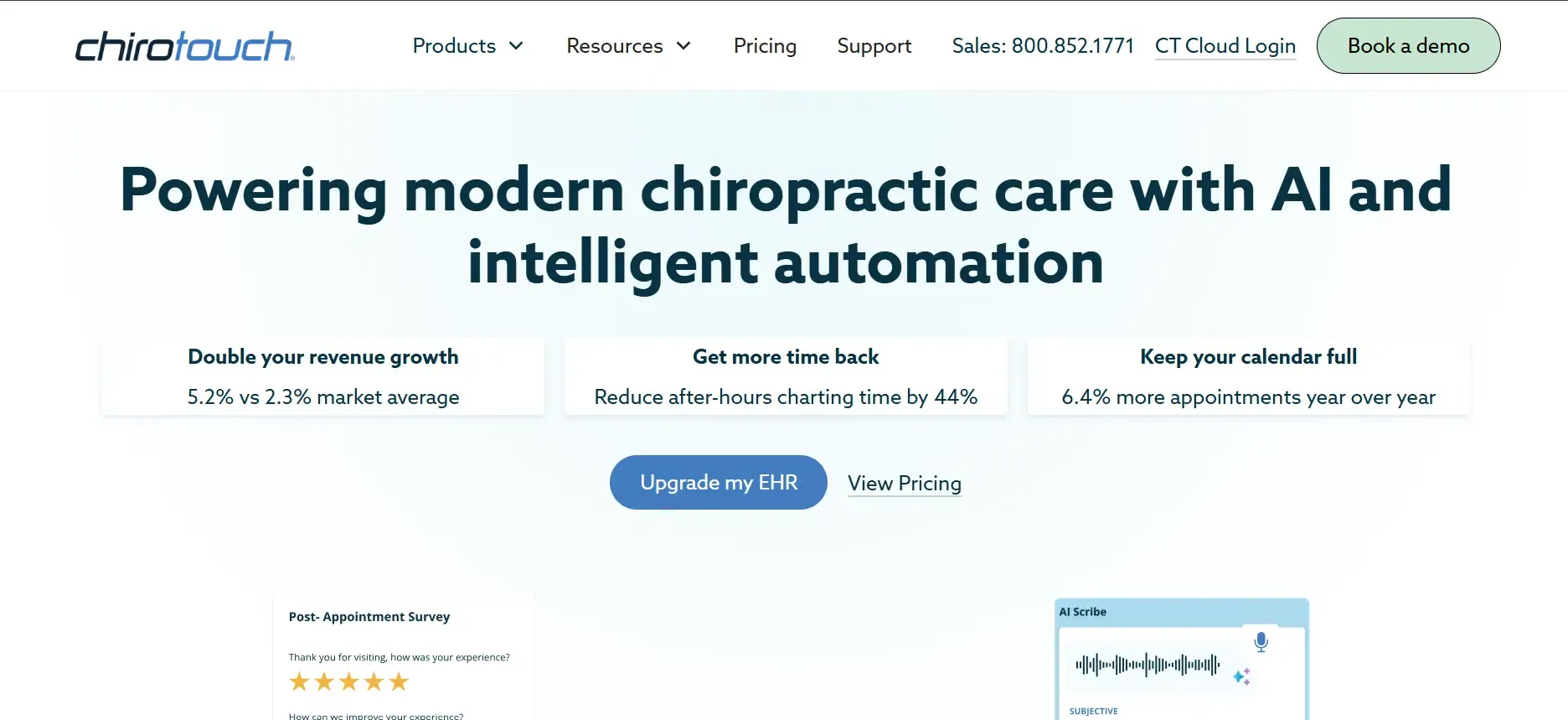
ChiroTouch is widely regarded as the gold standard for large, multi-provider chiropractic practices. Its legacy as an on-premise EHR has evolved into a powerful cloud-based suite, offering deep functionality for clinical documentation, billing, scheduling, and compliance. ChiroTouch is certified for HIPAA and ONC requirements, and its compliance toolkit is robust enough for clinics with complex payer mixes and audit risk. The platform includes features such as SOAP note templates, custom macro creation, integrated insurance verification, e-prescribing, and real-time eligibility checks.
Pricing: Starts at $259/month, with additional costs for add-ons and extra users.
- Comprehensive compliance and documentation tools
- Multi-location and multi-provider support
- Integrated insurance verification and billing
- High base price and add-on fees can escalate quickly
- Customization beyond templates requires paid development
- Support response can be slow during peak times
If your growth means paying more for every provider or location, a custom Devaims build can flatten your costs and give you total control as you scale.
2. ChiroFusion (integrated billing)

ChiroFusion is aimed at clinics that want a modern, cloud-based EHR with integrated billing and claims management. The interface is cleaner and easier to learn than most legacy systems, and onboarding is streamlined. ChiroFusion automates claim creation, submission, and tracking, and includes a suite of basic SOAP notes, scheduling, and patient communication tools.
Pricing: Starts at $99/month, with extra fees for e-prescribing and per-claim charges.
- Easy onboarding and user-friendly interface
- Automated claims and eligibility checks
- Integrated patient communication tools
- Per-claim and e-prescribing fees add up for high-volume clinics
- Limited customization for reports and forms
- Basic analytics, complex reporting requires exports
With Devaims, every report or workflow is tailored to your clinic, no "premium" tier or hidden upcharges.
3. Jane App (multi-discipline clinics)
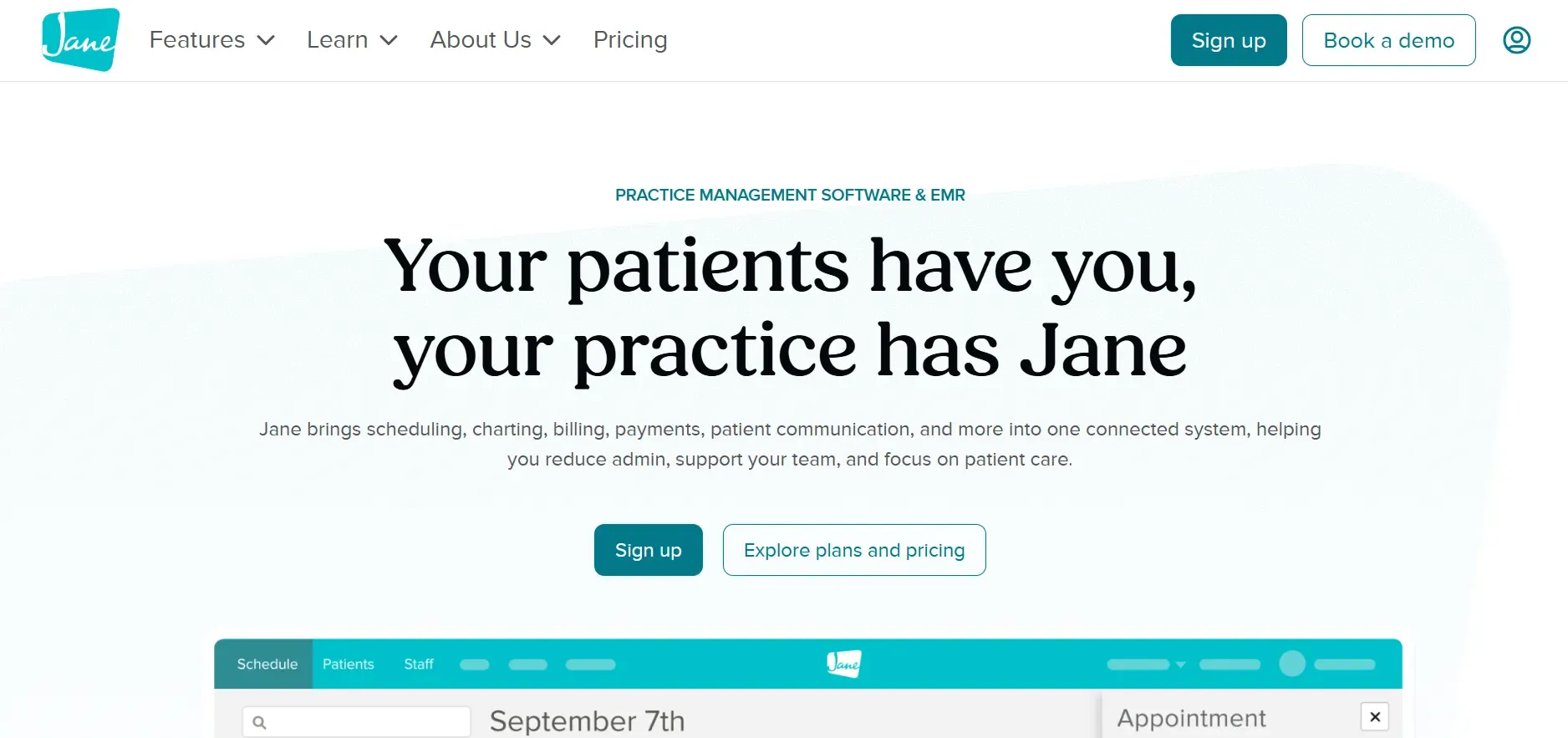
Jane App is especially popular among clinics that offer multiple disciplines, chiropractic, massage, acupuncture, naturopathy, and more. Its interface is modern and user-friendly, making it easy for staff and patients alike. Jane App excels at online booking, patient self-scheduling, and payment collection.
Pricing: Starts at $79/month, with add-ons for insurance billing and telehealth.
- Excellent online booking and patient experience
- Supports multiple disciplines and services
- Modern, intuitive interface for staff and patients
- Insurance billing features are limited and cost extra
- Deep customization requires API and developer resources
- Reporting is basic, not suited for complex analytics
With a Devaims build, your forms, workflows, and integrations match exactly what your clinic needs, no compromise.
4. Atlas Chiropractic System (automated patient flows)
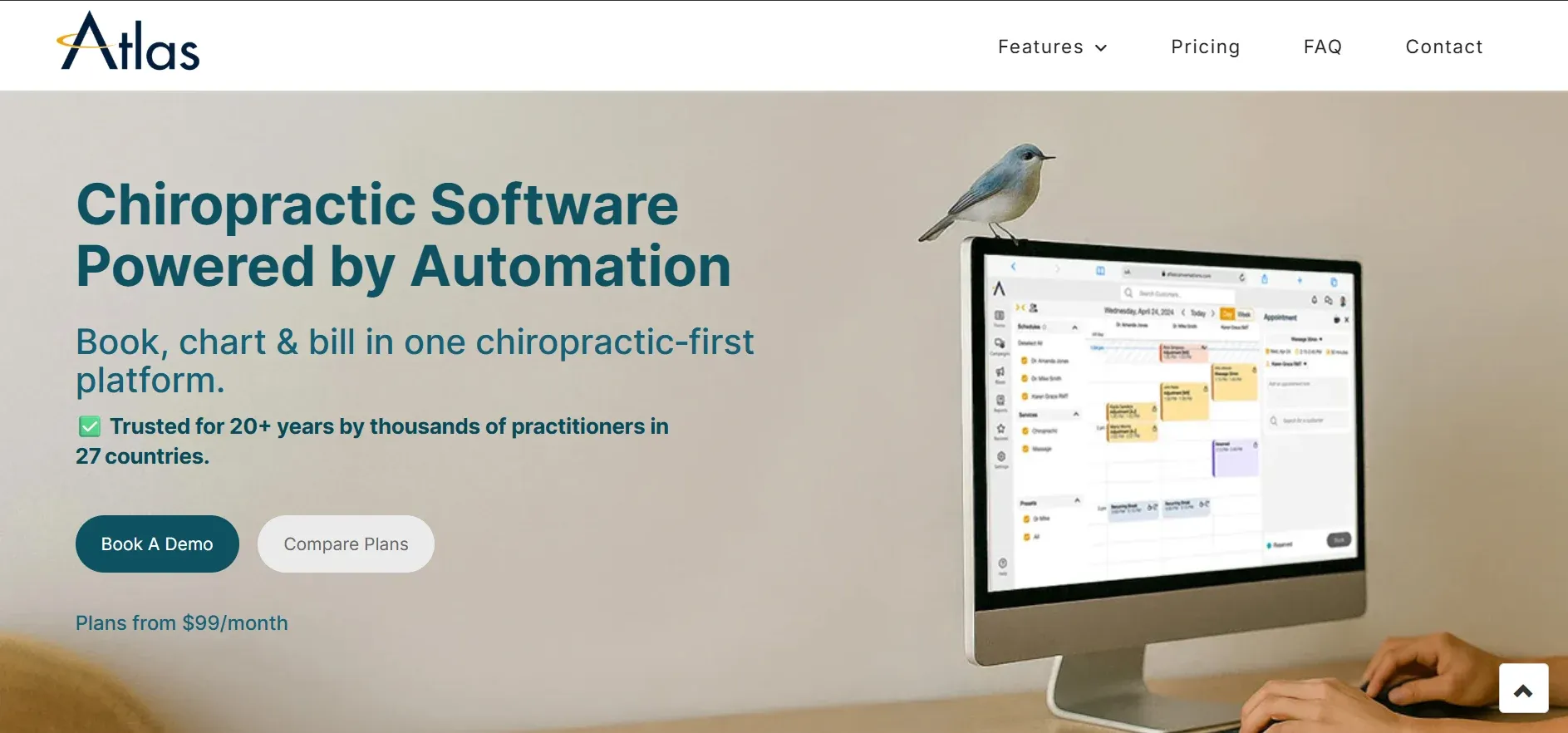
Atlas Chiropractic System is designed around automating patient engagement and front-desk workflows. It excels at automating appointment reminders, patient intake, and follow-up sequences, reducing manual tasks for staff. Atlas offers in-office kiosks, barcode scanning for fast check-in, and customizable text/email reminders.
Pricing: Starts at $199/month, with higher tiers for automation features.
- Automated patient flows and reminders
- Streamlined check-in and appointment management
- Good for high-volume, wellness-focused clinics
- Automation features often require higher pricing tiers
- Insurance billing is less robust than some competitors
- Custom integrations are limited or require developer help
5. Platinum System (high-volume practices)
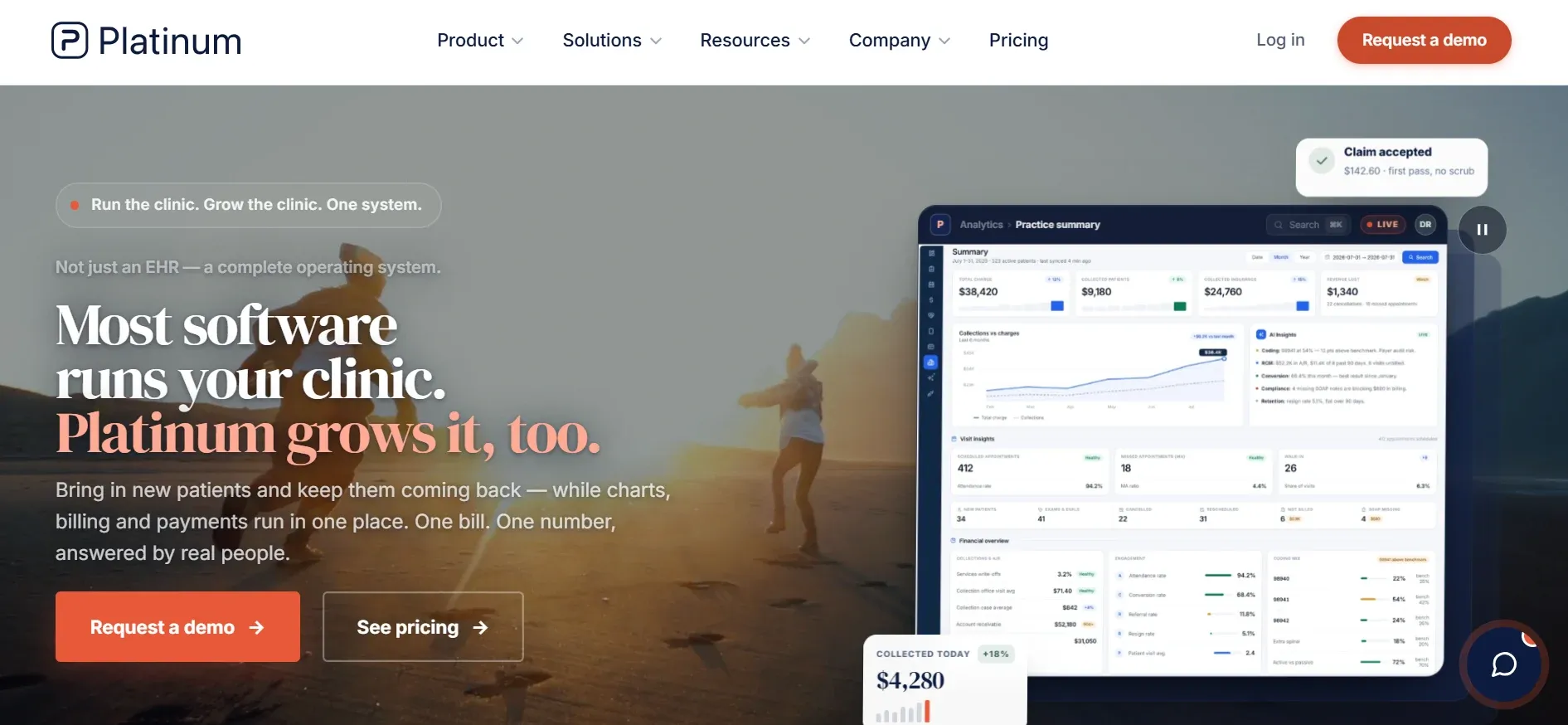
Platinum System is engineered for clinics that see dozens or even hundreds of patients a day. Its key differentiator is speed, patient check-in, charting, and check-out are streamlined for maximum throughput. Platinum offers a “one-screen” workflow where front desk, providers, and billing staff can all see what they need without switching tabs. The platform is known for its reliability in busy environments.
Pricing: Starts at $249/month, with possible hardware or on-premise costs.
- Extremely fast check-in and charting for high-volume clinics
- Reliable in busy, insurance-light environments
- One-screen workflow for all staff roles
- Not fully cloud-based, may require in-office servers
- Customization is limited and often requires vendor support
- Remote access can be a challenge for multi-location clinics
6. DrChrono (all-in-one EHR)
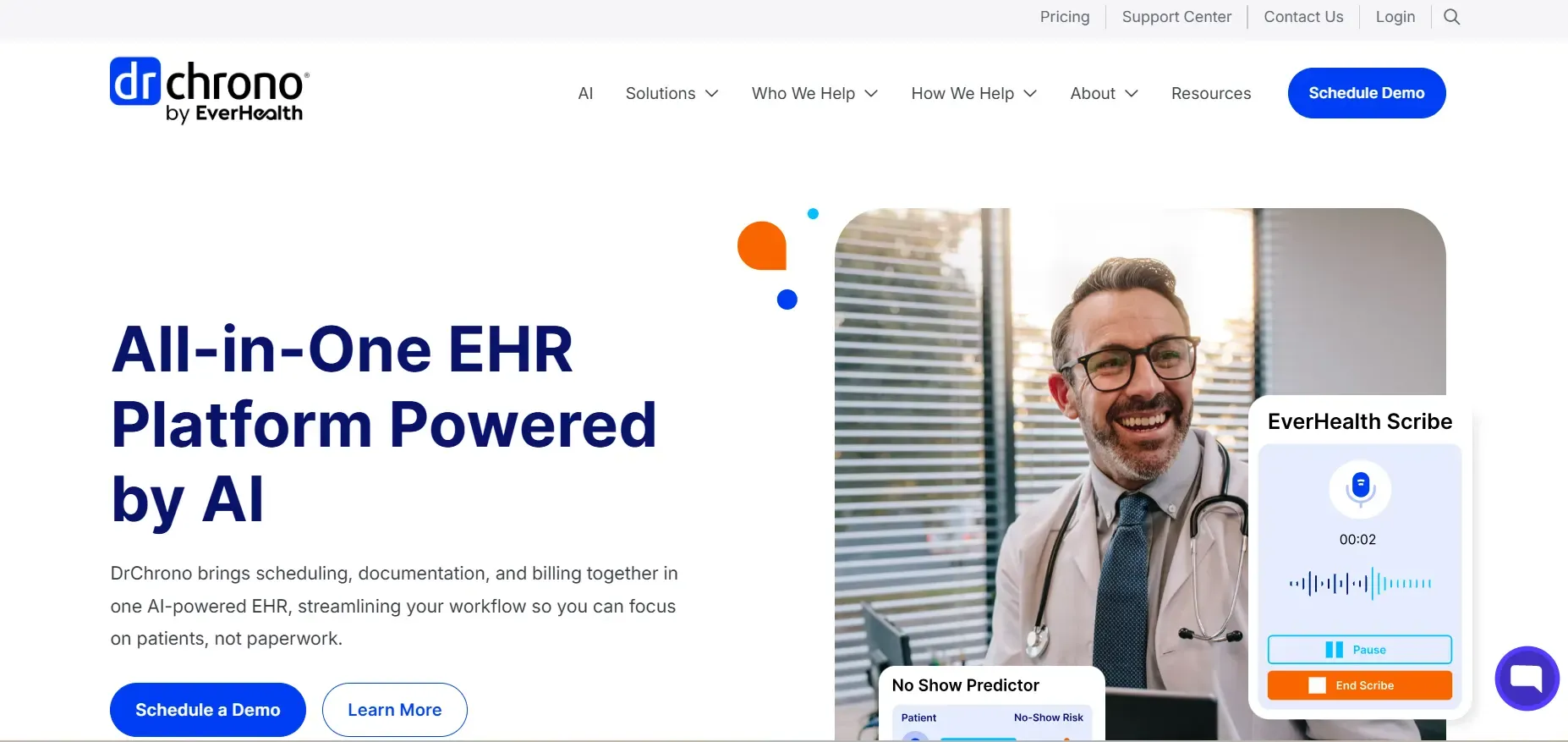
DrChrono is a broad EHR platform used by many specialties, including chiropractic. It stands out for its mobile-first approach, providers can chart, bill, and schedule from iPads or smartphones. DrChrono includes telehealth, e-prescribing, lab ordering, and advanced charting tools.
Pricing: Starts at $249/month, with add-ons for advanced features.
- Mobile-first design for on-the-go providers
- Comprehensive EHR with telehealth and e-prescribing
- API for custom integrations and workflows
- Add-on costs for telehealth and analytics can be high
- Per-provider pricing increases costs for larger practices
- Custom integrations often require developer support
For clinics wanting ultimate control over integrations and workflows, a Devaims build offers a more open, ownable path.
7. Kareo (Tebra) (insurance billing)
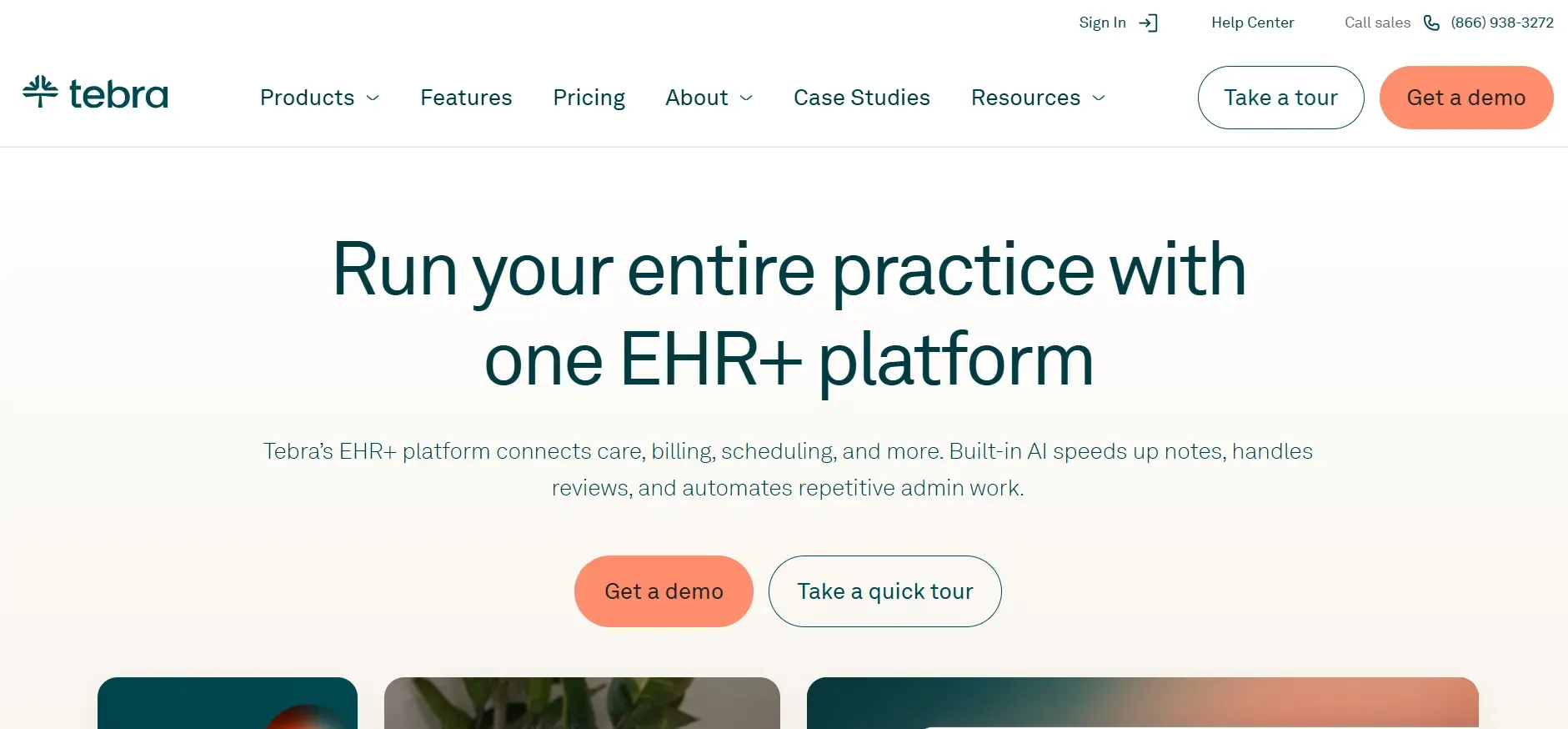
Kareo (now part of Tebra) is a medical billing and EHR suite focused on insurance claims. Its EHR module is less chiropractic-specific than others, but its billing engine is one of the strongest in the industry. Kareo automates claims status checks, ERA posting, and payer rules, helping clinics get paid faster.
Pricing: Starts at $125/month, with per-provider pricing and add-ons.
- Powerful insurance billing and denial management
- Automated eligibility and claims scrubbing
- Robust reporting for revenue cycle analysis
- Per-provider pricing increases costs for larger groups
- Chiropractic-specific charting is less robust
- Advanced analytics and telehealth require higher-priced plans
When every new provider means another monthly fee, owning your platform with Devaims keeps costs predictable and scalable.
8. Practice Perfect (physical therapy hybrid)
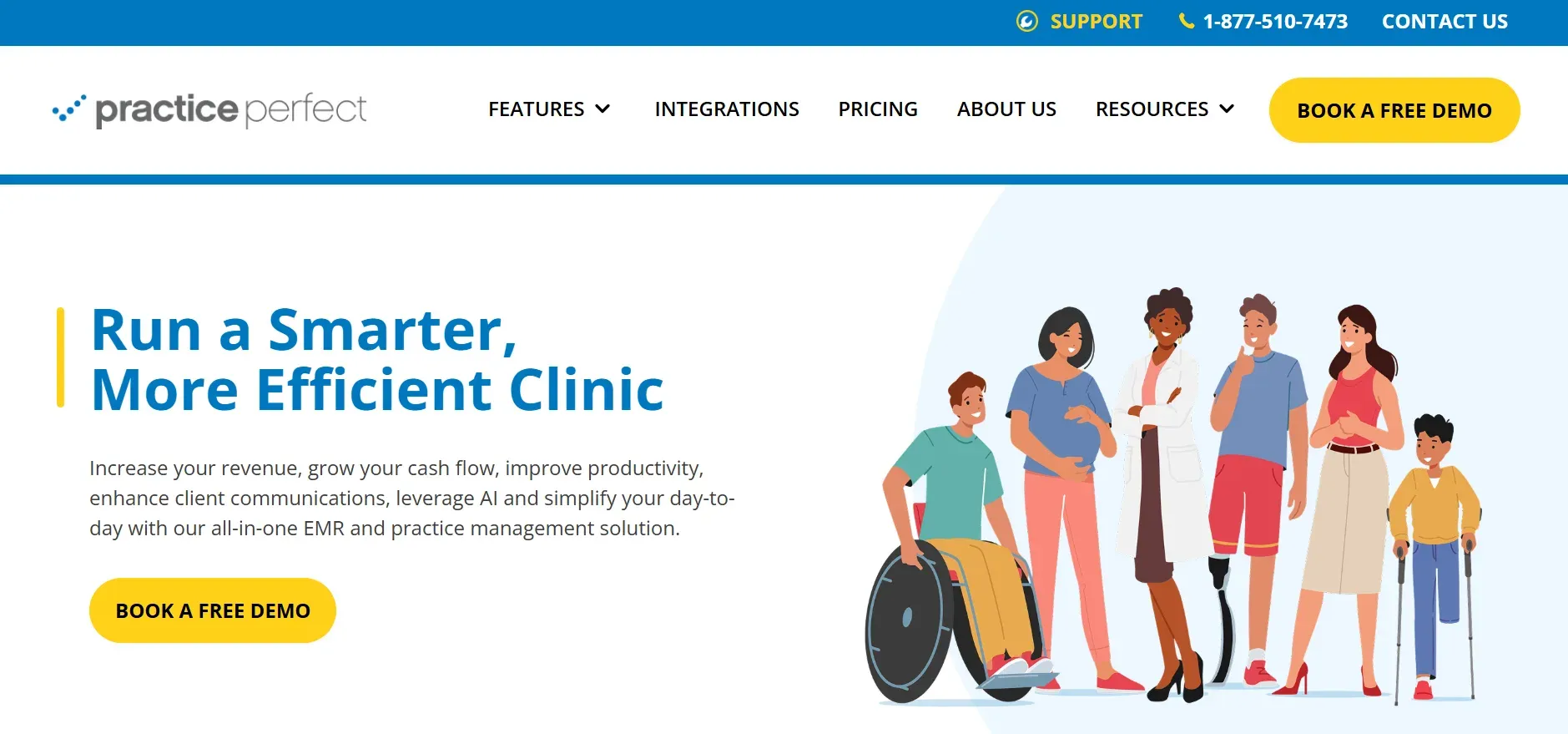
Practice Perfect is a hybrid EMR built for both physical therapy and chiropractic practices. It offers solid scheduling, billing, and documentation tools, making it a strong fit for clinics that offer rehab or wellness services alongside chiropractic care.
Pricing: Starts at $159/month, with add-ons for telehealth and advanced reporting.
- Multi-discipline scheduling and documentation
- Integrated billing and claims management
- Outcome measures and basic telehealth included
- Customization is limited for advanced chiropractic workflows
- Some features require paid add-ons
- Support for complex integrations may be slower
9. Genesis Chiropractic (automated compliance)
Genesis Chiropractic specializes in automating compliance, documentation, and claims management. Its compliance engine reminds providers of documentation gaps, helps prevent audits, and manages payer rules. Genesis also includes marketing automation, patient engagement tools, and revenue cycle management.
Pricing: Starts at $295/month, with separate billing for marketing and analytics features.
- Automated compliance and audit prevention
- Integrated marketing and patient retention tools
- Real-time analytics on collections and denials
- High starting price and separate billing for features
- Onboarding can be complex for clinics with historical data
- Workflows are locked to Genesis processes
10. Devaims (custom, ownable platform)
Devaims builds software you own, not rent. For chiropractic clinics that want full control, custom forms, unique workflows, unlimited users, and no per-claim or per-provider fees, Devaims gives you the source code. You keep your data, own your platform, and never face another forced upgrade or data migration nightmare.
- You own the code and data, no vendor lock-in, ever
- Workflows, reports, and patient portals built for your exact needs
- Flat, predictable costs as you grow (no per-provider or per-claim charges)
- Integrate with anything: clearinghouses, labs, marketing, analytics tools
- Support and future upgrades handled by the same team that built it
With Devaims, the migration is handled as part of the build. The team works with you to extract, clean, and import all your historical data, including attachments, notes, and custom fields, ensuring nothing is left behind.
Best for clinics that want to control their tech destiny, multi-location practices, high-volume clinics, those with unique workflows, or anyone tired of SaaS rent. If you want to add new service lines, automate unique processes, or launch your own patient app, Devaims is the only path to true ownership.
Other OfficeAlly alternatives worth knowing
- Kroll: More pharmacy-focused, not a direct fit for chiropractic clinics. Better suited for clinics with in-house dispensaries or pharmacies.
- EZBIS: An older chiropractic EHR with on-premise and cloud options. It’s solid for small, single-provider clinics but has a dated user interface and limited integration options. Support is reliable but innovation is slow.
- PracticeHub: Popular in Australia, but limited US support. Designed for multidisciplinary clinics, but US clinics may find payer and compliance features lacking.
- Cliniko: Great for allied health, but lacks robust insurance tools for US chiropractic needs. Excellent for cash-based clinics or those outside the US.
How to choose the right OfficeAlly alternative
- Budget: Add up your total monthly fees, including add-ons, users, and support, before you compare. Don’t just look at the sticker price; hidden costs for telehealth, text reminders, or billing modules can double your bill.
- Practice size: Some tools scale better with multiple locations or providers; others penalize growth with per-user or per-location pricing. If you plan to grow, look closely at how costs scale.
- Billing complexity: If you handle a lot of insurance claims, prioritize platforms with clearinghouse and EDI integration built in. Look for tools with automated claim scrubbing and denial management.
- Customization needs: Out-of-the-box works for some, but if your workflows are unique, you’ll need flexibility. Most SaaS tools limit customization to forms and basic reports, true workflow customization requires an ownable platform.
- Data ownership: If you want to keep everything in-house, owning your software makes the most sense. This protects you from future price hikes, vendor shutdowns, and data portability headaches.
If you’re tired of renting your own patient records, it might be time to own your platform for good.
Stop paying rent on software you could own
The catch with OfficeAlly and every SaaS on this list is that you never own what you’re paying for. Every new provider, every new patient, every extra feature: another fee, another contract. Even “no-contract” options keep your data locked in their cloud. When you build with Devaims, you own the code, the data, and the platform. The difference isn’t just technical, it’s financial, strategic, and operational freedom.
Devaims is a team of custom software builders for clinics who want more than one-size-fits-all. We scope, design, and build your entire clinic platform around your workflows and integrations. At launch, you hold the source code. Ongoing support is flat-rate, and you own your records, your billing, and your business logic, no more per-user or per-claim surprises.
- No per-claim fees: Your system is yours. You can run as many claims as you like, at zero extra cost.
- Custom features: Need a report or workflow no SaaS offers? We build it in from day one.
- Own your data: You export, migrate, or integrate freely, no lock-in, ever.
- Flat, predictable support: No more “premium” support tiers or surprise increases.
- Integrates with anything: Clearinghouses, labs, marketing, your platform, your rules.
| Platform | Ownership | Recurring fees | Customization |
|---|---|---|---|
| OfficeAlly | Rent only | Yes, monthly + per-claim | Low |
| ChiroTouch | Rent only | Yes, high monthly | Medium |
| Jane App | Rent only | Yes, monthly + add-ons | Low |
| Devaims | You own it | One-time build + flat maintenance | Full, built for you |
| Year | Renting (cumulative) | Owning (cumulative) |
|---|---|---|
| 1 | $17,400 | $28,800 |
| 2 | $34,800 | $30,600 |
| 3 | $52,200 | $32,400 |
| 4 | $69,600 | $34,200 |
| 5 | $87,000 | $36,000 (now ahead) |
Assumes a typical office with 5 providers, paying $290/month average in subscription and add-ons (rented), versus a $27,000 one-time build with $150/month flat maintenance (owned). Your numbers may differ, ask us to run the math for your clinic.
The ownership model pays off fastest for multi-provider practices, high-volume clinics, or anyone tired of shelling out for hidden add-ons and forced upgrades. The more you grow, the faster owning wins. Ownership also means you are shielded from future SaaS shutdowns, M&A events, or abrupt price hikes, a real risk in today’s consolidating health tech market. For more on the cost math, see this detailed breakdown.
How to switch from OfficeAlly
- Export all patient and billing data from OfficeAlly: Use available CSV, XML, or API export tools. Back up everything, patient demographics, appointments, SOAP notes, billing records, and attachments. Some data (like scanned documents) may need to be downloaded separately.
- Choose your replacement tool and map required data fields: Work with your new vendor to identify what data fields are needed and how they map to the new system. This step is crucial to avoid data loss or mismatches.
- Import data into your new platform: Use import tools, but expect to reconcile records and resolve mismatches, names, insurance IDs, and dates often need cleanup. Test with a small batch before importing everything.
- Reconnect payment processors, clearinghouses, and third-party integrations: Set up connections for claims, payments, labs, and marketing. Test each integration to ensure functionality.
- Train your staff on new workflows and test in parallel: Run both systems side by side for at least a week. Use real patient scenarios to test scheduling, charting, and billing.
- Review your old OfficeAlly contract: Confirm cancellation steps, required notice, and any early termination fees. Download all invoices and records for your files.
With a custom Devaims build, the migration is handled as part of the project, including data extraction, cleanup, and staff training, so you’re never left on your own.
Frequently asked questions
What is the best OfficeAlly alternative for a large chiropractic clinic?
For large, multi-provider clinics, ChiroTouch is the most common SaaS choice because of its depth, built-in compliance, and multi-location support. However, its costs rise quickly as you add providers and features, and customization is limited. For clinics that want to own their platform, avoid recurring rent, and gain unlimited customization, Devaims is the only alternative that gives you full control and long-term cost predictability.
What is the cheapest OfficeAlly alternative?
ChiroFusion and Jane App are usually the lowest cost for small clinics, with reported starting prices below $100 per month. However, you must factor in add-ons such as e-prescribing, clearinghouse fees, and per-claim charges, which can add up quickly for growing clinics. Be wary of ultra-low sticker prices that do not include essentials like support or text reminders.
Is there a free OfficeAlly alternative?
There are no truly free OfficeAlly alternatives that cover EHR, billing, and compliance for chiropractic clinics. Some platforms offer time-limited free trials (usually 14 to 30 days), but all require a monthly contract to continue. Open-source EHRs exist (like OpenEMR), but they lack chiropractic-specific features and require significant IT resources to deploy and maintain. Owning your platform with Devaims is the most realistic way to eliminate recurring software rent entirely while getting exactly what your clinic needs.
Which OfficeAlly alternative is best for insurance-heavy clinics?
Kareo (Tebra) specializes in insurance billing with strong payer integrations, automated eligibility, and claims scrubbing. ChiroTouch and DrChrono also offer robust claims management. For clinics that want to avoid per-claim and per-provider fees or need custom payer workflows, a custom Devaims build is the only path to full insurance control and ownership.
Can I keep my OfficeAlly data if I switch?
You can export patient data from OfficeAlly, but the process may require multiple exports (for demographics, appointments, billing, and attachments) and some manual cleanup. Some data fields may not map perfectly to your new system, especially custom forms or historical attachments. With Devaims, all data belongs to you, and the migration process is managed end-to-end by the build team, so you never lose access to your records.
How do OfficeAlly alternatives compare on data ownership?
Most OfficeAlly alternatives are SaaS and keep your data in their cloud. You have access to your data as long as you pay, but bulk export is not always simple and may incur fees. Only Devaims hands you the source code and database, meaning you own your records, control your backups, and can move or integrate data however you wish.
When should a clinic switch from OfficeAlly to another alternative?
If recurring fees, workflow bottlenecks, or lack of customization are slowing you down, it’s time to consider switching. The best time is often before a major growth phase, at contract renewal, or when a needed integration or report is not supported. The real question: would owning your platform pay off in the next three years? Run the math, and if your cumulative SaaS spend approaches the cost of a custom build, it is time to consider ownership.
The bottom line
The right OfficeAlly alternative depends on your clinic’s size, complexity, and appetite for recurring rent. Here’s the single most useful test: add up what you’ll pay over five years for SaaS. If that number could build you something you own, it’s time to stop paying rent.
When you own your clinic platform, every patient, provider, and workflow becomes a fixed asset, not another monthly bill. That’s the future-proof move. Ready to see if it’s your move?
Explore more insights on the Devaims blog, or see related posts: ChiroTouch alternatives, Jane App alternatives, and DrChrono alternatives.