



Your practice management software should be a strategic asset, not a monthly drain. Many clinics using Kroll find themselves stuck with rising costs, limited flexibility, and vendor lock-in. If you have ever struggled with a clunky interface, spent hours reconciling data between systems, or felt trapped by per-provider pricing, you are not alone. The challenges of renting software add up, both financially and operationally.
This guide unpacks the best Kroll alternatives for chiropractic clinics, examining not just features and pricing but real-world trade-offs: Who controls your data? How easy is it to migrate? Can you scale without hidden costs? And is there finally a way to own your platform outright? Whether you are a solo practitioner or running a multi-location practice, you will find detailed insights on each tool and the one path to true ownership.
Why chiropractic clinics look for Kroll alternatives
Chiropractic clinics are increasingly reevaluating Kroll for several common reasons:
- Surprise monthly fees: Many clinics report starting on a "starter" plan, only to discover essential features, like claims submission, advanced charting, or secure messaging, are locked behind pricey add-ons or higher tiers. This nickel and diming erodes trust and makes budgeting difficult.
- Per-provider and per-location pricing: As clinics grow, so do their software bills. Adding a new chiropractor or opening a second location often means doubling or tripling your monthly fee. Growth becomes a penalty rather than an opportunity.
- Locked-in contracts: Kroll and many competitors require annual commitments. If your clinic’s needs change, or if you are dissatisfied with support or uptime, you may be forced to pay for a system that no longer fits.
- Data portability headaches: Migrating your patient records, billing history, and scheduling data is rarely as straightforward as promised. Export tools may be limited, custom data fields can be lost in translation, and compliance issues can arise if data is incomplete or corrupted during the move.
- Integration gaps: Modern clinics use a mix of tools: imaging, marketing, accounting, and third-party billing. Kroll and similar platforms often tout integrations, but in practice, these are limited to a short list of partners or require extra fees. Custom integrations are rarely possible without significant vendor involvement or cost.
If you have experienced any of these issues, it is worth exploring what other platforms offer, and whether true ownership is finally within reach.
Quick comparison of the best Kroll alternatives
| Tool | Best for | Starting price | You own it? |
|---|---|---|---|
| Jane App | Modern clinics, all-in-one | Reported $79/mo | No |
| ChiroTouch | Established practices | Reported $159/mo | No |
| ChiroFusion | Small-to-medium clinics | Reported $99/mo | No |
| Atlas Chiropractic System | Multi-location practices | Reported $99/mo | No |
| Platinum System | High-volume clinics | Reported $249/mo | No |
| DrChrono | EHR-first clinics | Reported $199/mo | No |
| Kareo (Tebra) | Insurance-heavy clinics | Reported $125/mo | No |
| Practice Perfect | Allied health clinics | Reported $69/mo | No |
| Devaims (Custom Build) | Clinics that want to own | One-time build | One-time build, you own it |
Always confirm current pricing and contract terms before making a decision. Most platforms change rates and structure frequently, and some charge onboarding or migration fees that are not always obvious upfront.
The 9 best Kroll alternatives
1. Jane App (Best for modern, all-in-one clinics)
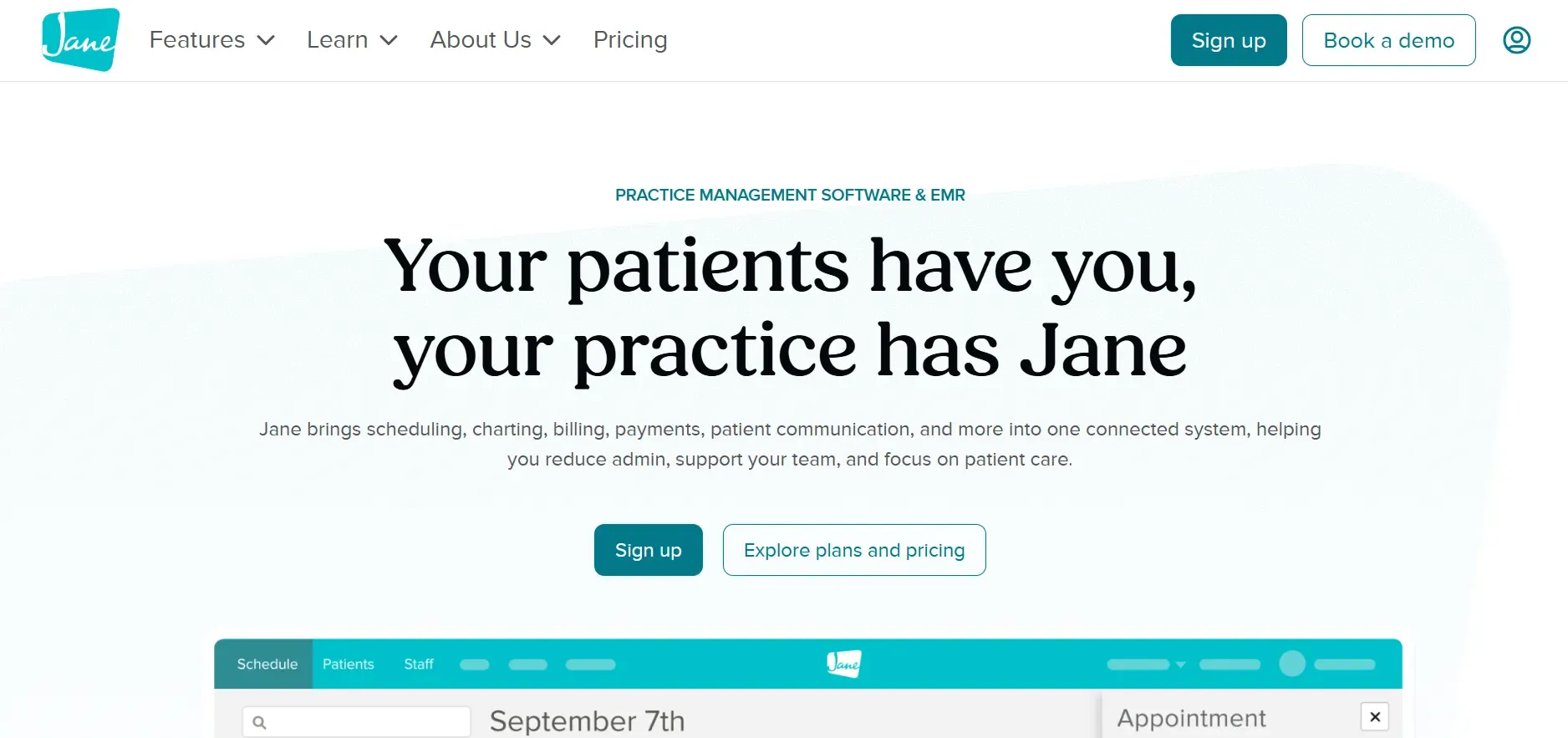
Jane App is widely regarded as one of the most user-friendly and visually appealing cloud-based tools for multi-disciplinary clinics. Its modern interface is designed for ease of use, with drag-and-drop scheduling, customizable intake forms, and built-in telehealth features. Jane makes it easy for staff to book appointments, manage payments, and send automated reminders, all from any device.
Pricing: Starts at $79/month per provider. Additional fees for insurance billing and some integrations.
- Key limitations:
- Per-provider pricing increases costs as you grow
- Insurance billing is an add-on, not included in base plan
- Limited customization beyond templates
- Strengths:
- Modern, intuitive interface for staff and patients
- Integrated telehealth and patient portal
- Strong support and regular updates
If you want to avoid per-provider fees and own your platform, Devaims offers a custom alternative with unlimited users and full data control.
2. ChiroTouch (Best for established chiropractic practices)
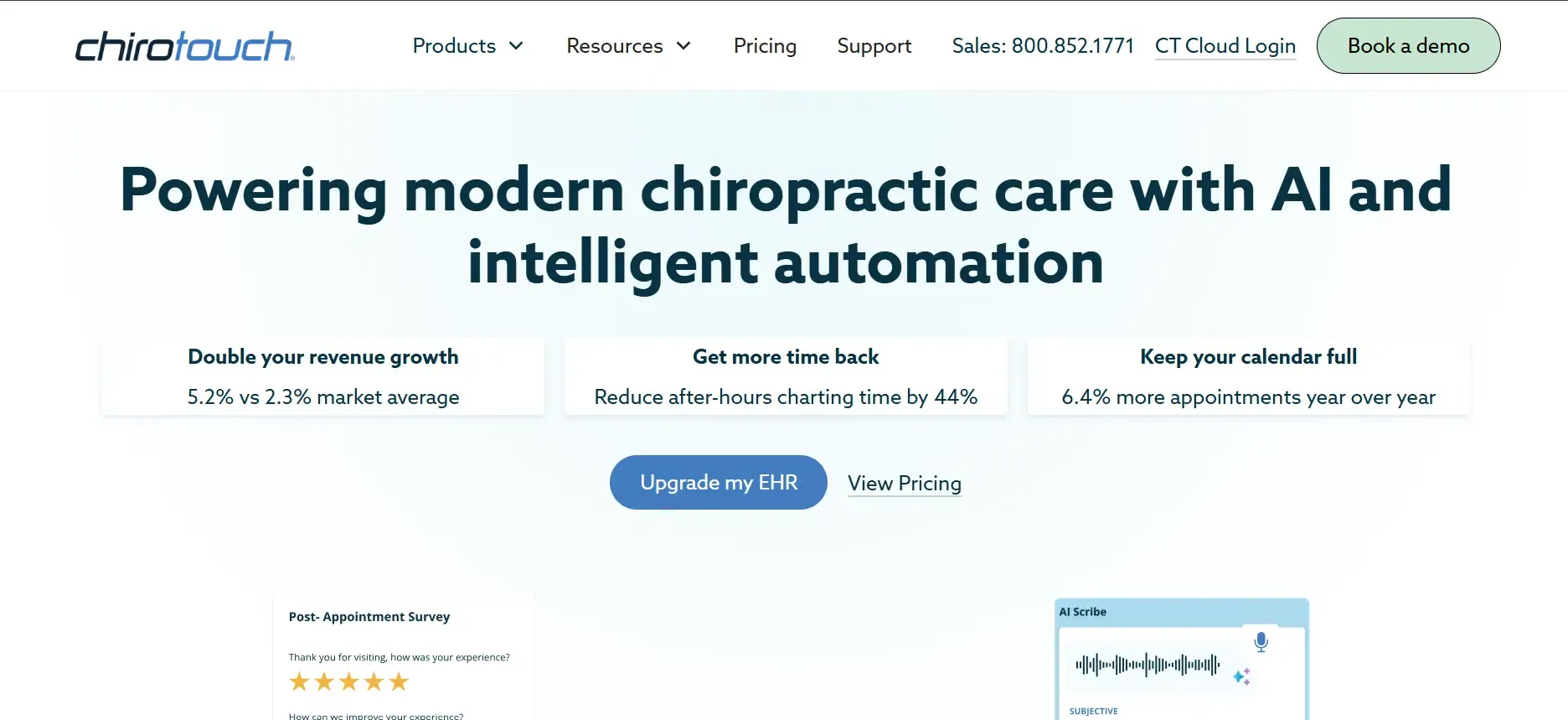
ChiroTouch is a legacy name in chiropractic EMR, trusted by thousands of clinics for its depth in chiropractic-specific charting, compliance, and billing. Its desktop and cloud versions cover everything from SOAP notes to inventory management, with a reputation for strong support for regulatory requirements like HIPAA and Medicare.
Pricing: Starts at $159/month per provider. Additional fees for mobile app and some integrations.
- Key limitations:
- Interface can feel dated for new users
- Long onboarding and training times
- Customization limited to platform constraints
- Strengths:
- Comprehensive chiropractic charting and compliance
- Automated billing and insurance claims
- Extensive reporting for business analytics
For clinics needing unlimited customization and no per-location fees, Devaims provides a tailored solution.
3. ChiroFusion (Best for small-to-medium practices)

ChiroFusion targets budget-conscious clinics that want to get off paper and into the cloud quickly. Its web-based platform focuses on core chiropractic workflows: scheduling, charting, billing, and compliance. The interface is streamlined for speed, but deeper customization is limited to templates and settings.
Pricing: Starts at $99/month per provider. Premium features require higher-tier plans.
- Key limitations:
- Per-provider pricing increases with growth
- Advanced features require premium plans
- Limited integrations with third-party tools
- Strengths:
- Affordable entry point for small clinics
- Streamlined scheduling and charting
- HIPAA-compliant cloud storage
Devaims eliminates per-user fees and supports custom workflows as your clinic grows.
4. Atlas Chiropractic System (Best for multi-location clinics)
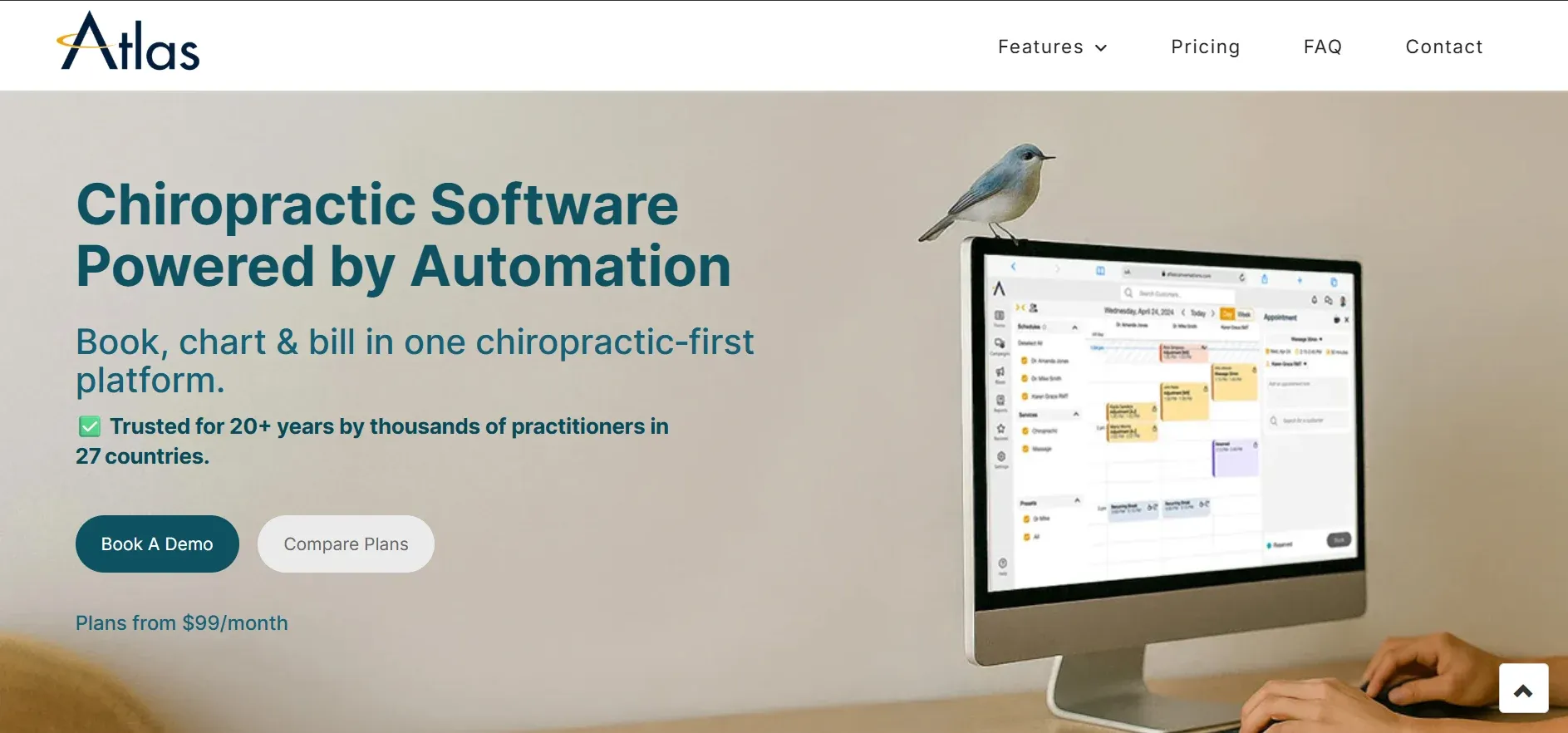
Atlas Chiropractic System is designed for clinics with multiple locations and complex staffing needs. Its strengths are in multi-site management, time tracking, and analytics. Atlas offers granular controls for location-specific workflows, such as assigning providers to certain clinics, managing location calendars, and comparing performance across sites.
Pricing: Starts at $99/month per provider or per location. Additional fees for advanced analytics.
- Key limitations:
- Costs rise quickly with more locations or providers
- Custom KPIs require vendor involvement
- User interface is less modern than some competitors
- Strengths:
- Strong multi-location scheduling and analytics
- Time tracking for staff and providers
- Integrated billing and reminders
With Devaims, you can add unlimited locations and users at no extra cost.
5. Platinum System (Best for high-volume clinics)
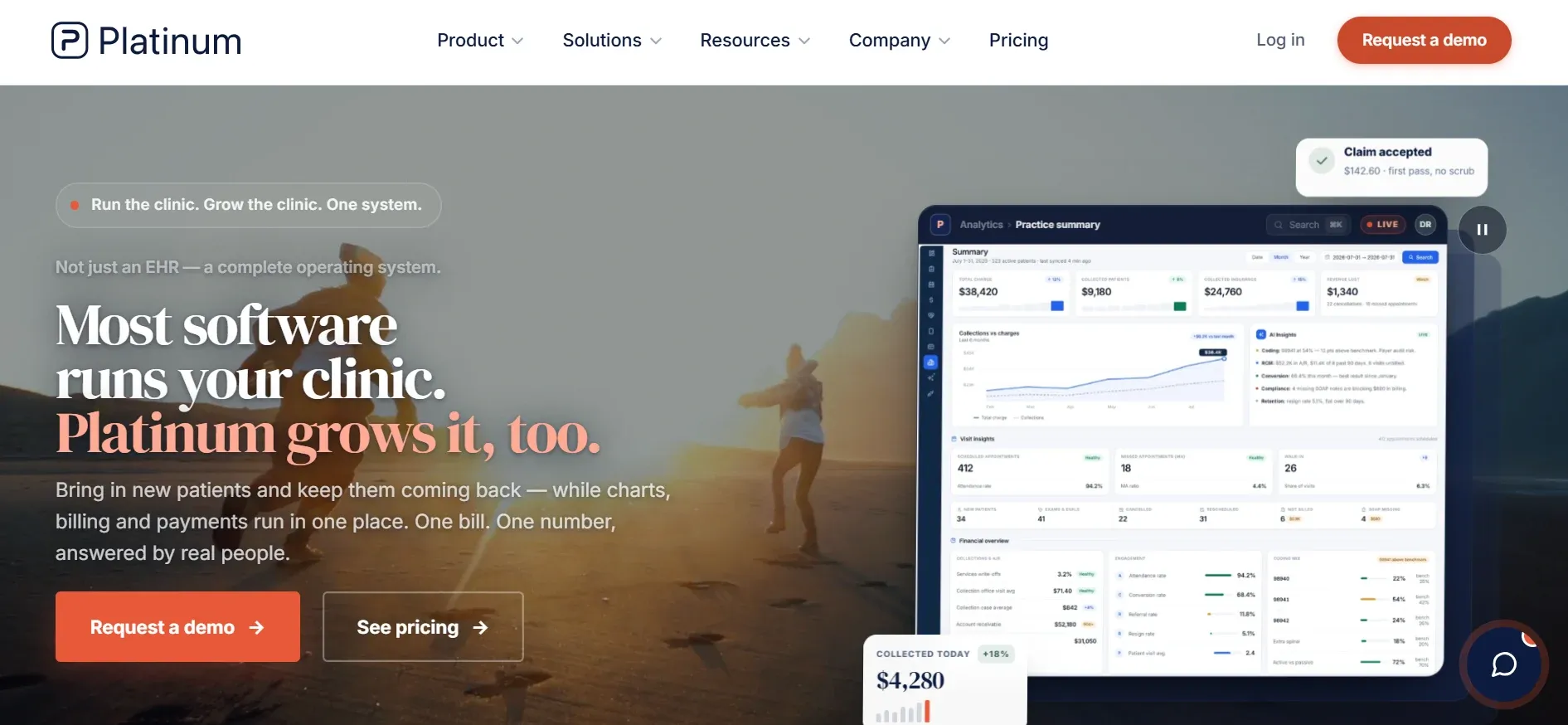
Platinum System is engineered for efficiency in busy, high-volume chiropractic clinics. Its claim to fame is rapid check-in and appointment workflows, helping front desk staff move patients through quickly. It supports barcode scanning, fast appointment creation, and customizable alerts for patient flow.
Pricing: Starts at $249/month per provider. Some features require additional fees.
- Key limitations:
- High monthly cost for large clinics
- Interface is functional but dated
- Customization limited to predefined options
- Strengths:
- Fast patient check-in and appointment workflows
- Automated scheduling and reminders
- Volume and revenue tracking tools
Devaims enables custom check-in and workflow features tailored to your clinic's needs.
6. DrChrono (Best for EHR-first chiropractic clinics)
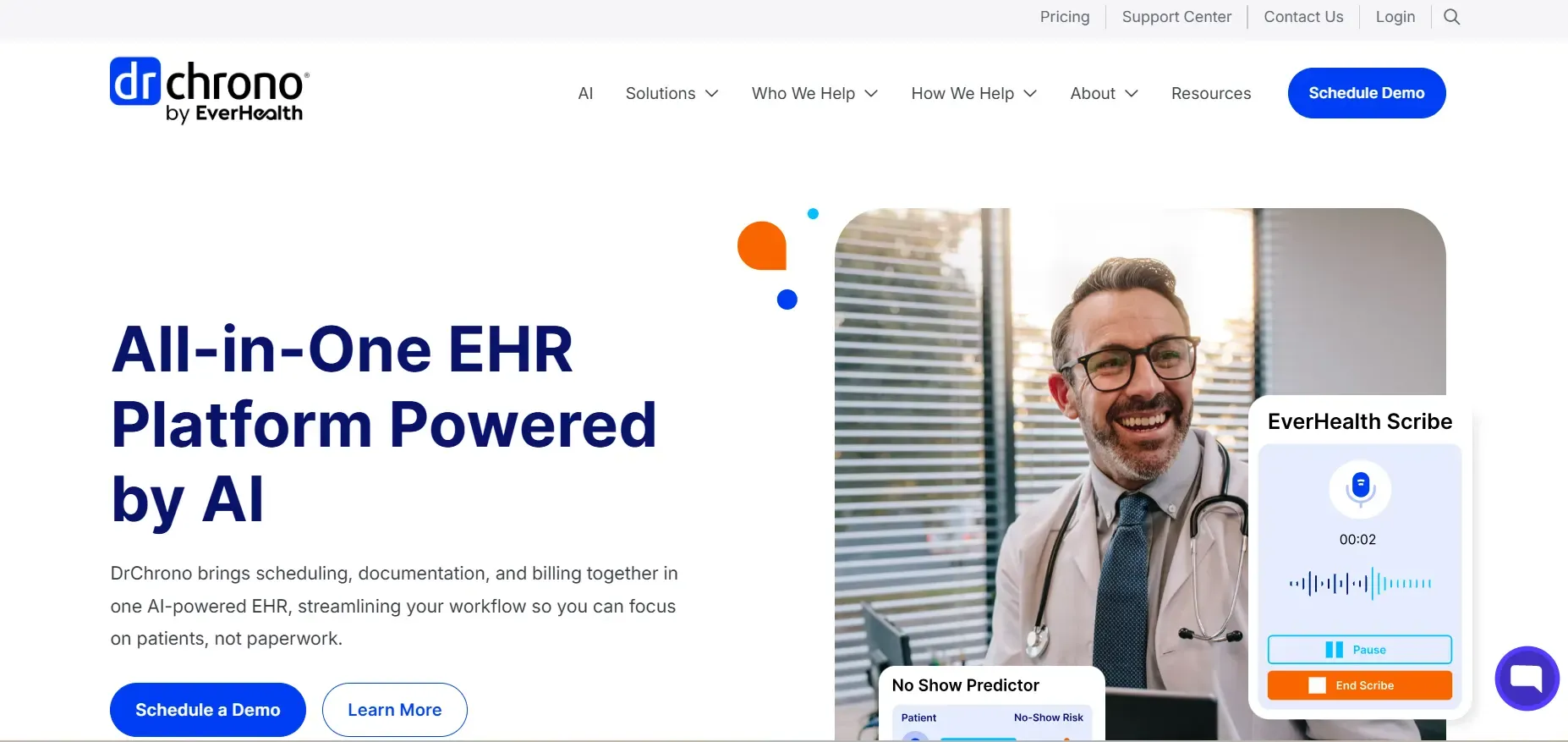
DrChrono is a leading medical EHR with a strong presence in the chiropractic space, known for its iPad-first approach and open API. It offers powerful tools for charting, billing, e-prescribing, and patient engagement. The open API enables some clinics to build custom integrations, though this often requires developer resources.
Pricing: Starts at $199/month per provider. Advanced features and API access may require higher tiers.
- Key limitations:
- Higher cost as you add providers
- Chiropractic workflows less mature than medical
- Customization requires technical resources
- Strengths:
- Mobile-first charting and patient engagement
- Open API for integrations
- Integrated billing and telehealth
Devaims provides full customization and integration freedom without ongoing per-user fees.
7. Kareo (Tebra) (Best for insurance-driven clinics)
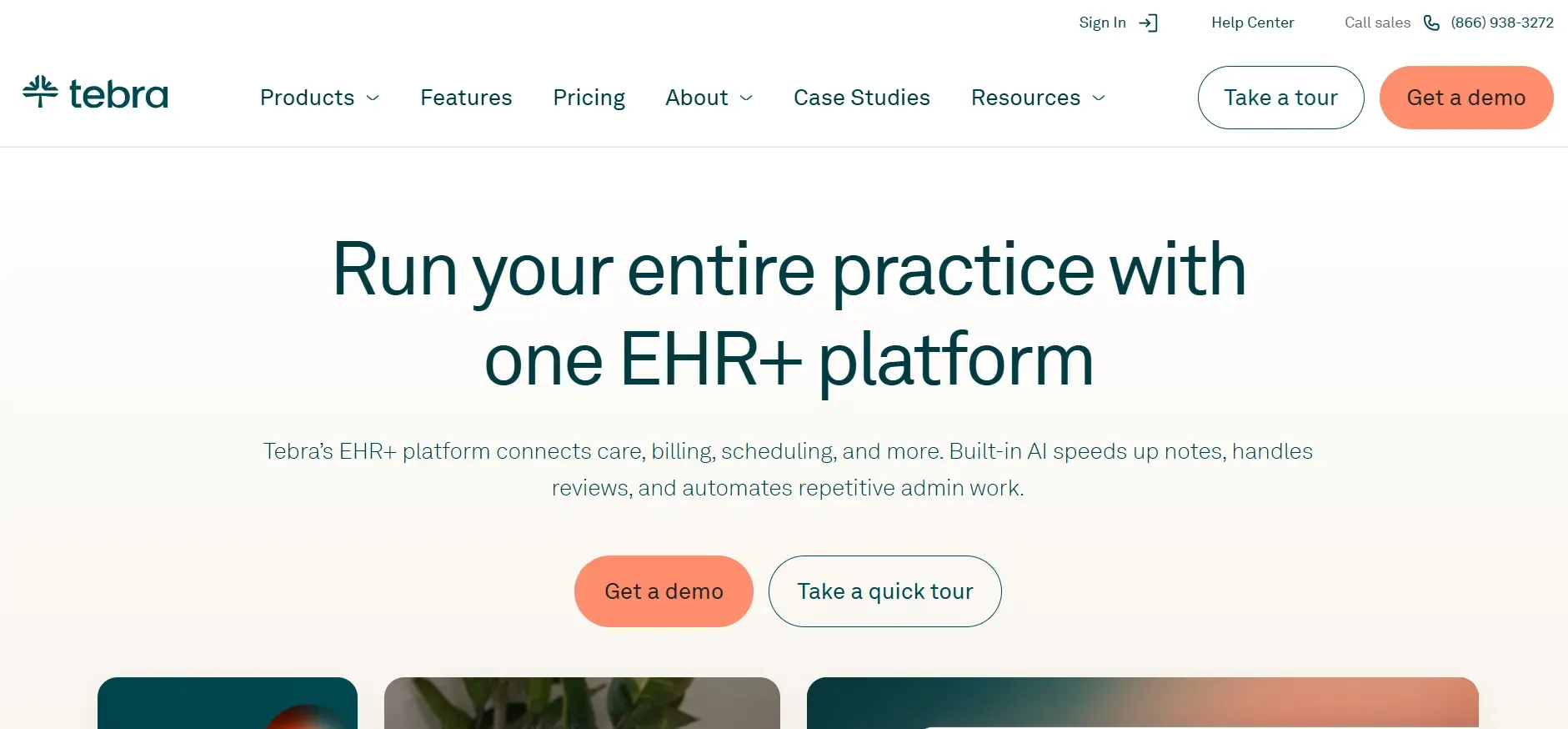
Kareo (now Tebra) specializes in billing and insurance management, making it a strong fit for clinics that process a high volume of claims. Its platform covers scheduling, charting, and reporting, but the chiropractic-specific features are less developed than in other tools.
Pricing: Starts at $125/month per provider. Additional fees for advanced features.
- Key limitations:
- Per-user pricing adds up for larger clinics
- Limited chiropractic-specific customization
- Reporting focused on financials, not clinical analytics
- Strengths:
- Strong insurance billing and claims management
- Integrated scheduling and reminders
- Patient portal for payments and communication
Devaims lets you control claims, reporting, and workflows without per-user charges.
8. Practice Perfect (Best for allied health clinics)
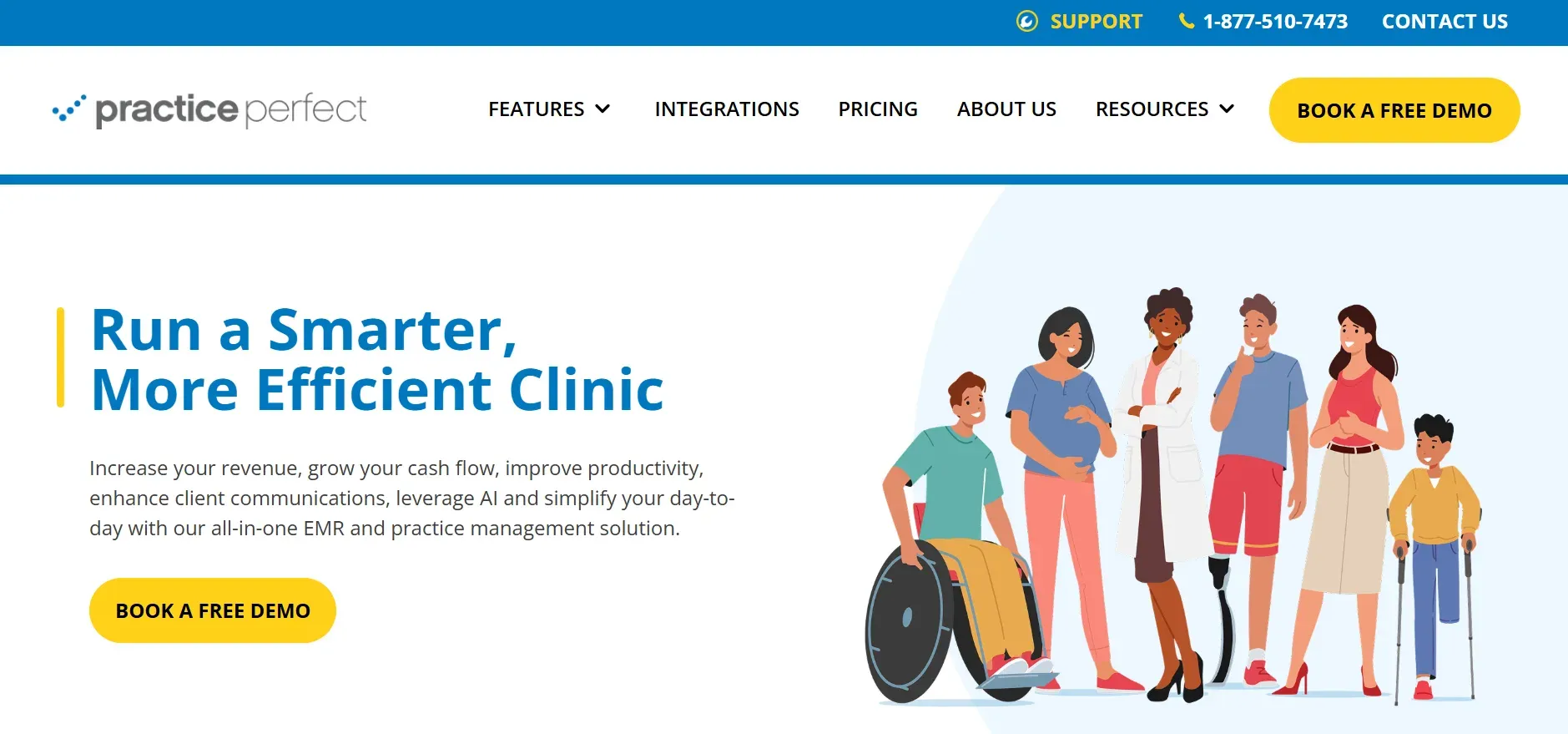
Practice Perfect is a flexible platform for clinics offering a mix of chiropractic, physiotherapy, massage, and other allied health services. It covers scheduling, charting, billing, and document management in a single interface.
Pricing: Starts at $69/month per provider. Premium features may require upgrades.
- Key limitations:
- Lacks advanced chiropractic charting
- Premium features require extra fees
- Interface is less modern than some competitors
- Strengths:
- Affordable for small, mixed-discipline clinics
- Integrated billing and document management
- Multi-discipline scheduling and charting
Devaims supports custom charting and reporting for any allied health workflow.
9. Devaims (Best for clinics that want to own their system)
Devaims specializes in designing and building custom practice management systems for clinics ready to take ownership. Rather than renting forever, you pay a one-time build fee and a flat maintenance cost. The system is tailored to your exact workflows, branding, and reporting needs. You receive the full source code, database, and documentation, giving you total control over updates, integrations, and compliance.
- Ownership: You get the code, database, and documentation. No vendor lock-in.
- Unlimited users and locations: Add as many providers or clinics as you want, with no extra fees.
- Custom features: Build exactly what your clinic needs, custom charting, billing, reporting, integrations, and more.
- Integration freedom: Connect with any clearinghouse, payment processor, or third-party tool you choose, either at launch or as your needs evolve.
- Flat, predictable costs: Pay once for the build, then a flat maintenance fee. No per-user or per-location charges, ever.
- Migration and support: End-to-end migration from Kroll (or any system), user training, and support are built into the project.
Devaims can integrate with any third-party service that provides an API or standard data format. This includes insurance clearinghouses, payment processors, marketing platforms, and analytics tools. Migration is comprehensive: all patient data, appointments, billing history, and even custom fields are mapped and imported, with compliance checks throughout.
Clinics planning to scale, practices with unique workflows, or business groups that want to differentiate their patient experience benefit from Devaims. Also ideal for clinics with strict data governance or compliance needs, or those that have outgrown the limits of SaaS platforms.
If you want to own your platform, remove per-user fees, and future-proof your business, Devaims is the only option that puts you in control.
Other Kroll alternatives worth knowing
- OfficeAlly: Excellent for claims and clearinghouse services, but does not provide deep chiropractic EMR features. Often used alongside other tools for billing.
- SimplePractice: Marketed to mental health, but some chiropractors use it for basic scheduling and notes. Lacks chiropractic-specific charting and compliance.
- Cliniko: Focused on allied health, especially outside North America. Flexible for scheduling and billing, but not deep in chiropractic workflows.
- CharmHealth: Medical EHR with add-on chiropractic modules, but not a chiropractic-first solution. More suited for clinics offering a range of medical services.
How to choose the right Kroll alternative
- Budget: Calculate the true monthly and annual cost, including per-provider/location fees and mandatory add-ons for claims, texting, or advanced reporting. Consider onboarding, migration, and support costs, which can add up quickly.
- Clinic size and growth: Single-provider clinics may favor affordable SaaS, but larger or growing clinics should model costs as they scale. Many find that after 3 to 5 years, renting is far more expensive than owning.
- Feature set: Map your must-have features (e.g., charting, billing, reminders, telehealth) and check if they are included or require upgrades. Some platforms have impressive feature lists, but core tools are paywalled.
- Data ownership and portability: If you want to retain control over your data, be wary of platforms that limit exports or make migrations difficult. Custom builds guarantee data control and future flexibility.
- Support and customization: Evaluate vendor responsiveness and the true extent of customization. Many SaaS platforms only allow template edits or limited workflow changes, while custom builds are tailored to your exact needs.
If you are tired of renting and want to own your practice management platform, there is one more option to consider.
Stop paying rent on software you could own
Every Kroll alternative above, no matter how modern or full-featured, is still a rental. That means you are subject to per-user fees, periodic price increases, and vendor priorities. Your data sits on someone else’s server, and your ability to scale or customize is limited by their business model. Over time, the costs stack up, and you still do not own the system your clinic relies on.
Devaims builds custom platforms where you own the code, the database, and every feature. This means you control user access, add unlimited providers or locations, and can update reporting or integrations as your business evolves. No more “you need to upgrade for that feature.” It is all built for you, with no ongoing per-user fees or forced upgrades.
- No per-provider or per-location charges: Add as many as you need, whenever you want, at zero extra cost.
- Custom workflows and compliance: Build exactly what your clinic needs, not what a vendor template allows. Respond to regulatory updates or operational changes on your timeline.
- Your data, your rules: Full exportability, unrestricted integrations, and reporting you control. No lock-in, ever.
- Flat, predictable costs: One-time build, then flat maintenance. No price hikes, no hidden fees, and no forced upgrades to access essential features.
| Tool | Ownership | Per-user/location fees | Custom features |
|---|---|---|---|
| Jane App | No | Yes | Limited to platform |
| ChiroTouch | No | Yes | Limited |
| Genesis Chiropractic | No | Yes | Extra cost |
| Devaims (Custom Build) | Yes (you own it) | No | Fully custom, built for you |
Here is how the 5-year math works for a mid-sized chiropractic clinic (6 providers, 2 locations):
| Year | Rented (6 providers, $175/mo each) | Owned (Devaims) |
|---|---|---|
| 1 | $12,600 | $29,800 (build + maint) |
| 2 | $25,200 | $32,560 |
| 3 | $37,800 | $35,320 |
| 4 | $50,400 | $38,080 |
| 5 | $63,000 | $40,840 (now ahead) |
The break-even typically arrives in year 3. By year 5, you are ahead by over $22,000, and you own the platform. For larger clinics, specialty workflows, or those planning to add locations, the savings and control can be even greater. If you want to see what this looks like for your clinic, Devaims will run the numbers for you at no charge.
How to switch from Kroll
- Export all patient records, appointments, and billing data from Kroll: Use Kroll’s built-in export tools to create CSV or XML files. Review exported data for completeness and compliance.
- Vet and select your new platform: Whether you choose a SaaS alternative or a custom Devaims build, clarify migration support, contract terms, and compliance guarantees.
- Import patient data into the new system: Map all fields (including custom ones) to ensure accurate transfer. For custom builds, Devaims handles field mapping and validation for regulatory compliance.
- Reconnect insurance clearinghouses, payment processors, and third-party integrations: Ensure all billing, payment, and communication tools are reconnected and tested.
- Train your team on new workflows, charting, and billing features: Provide hands-on training and documentation. For custom builds, training is included.
- Run both systems in parallel for a week: Catch any discrepancies or data issues before fully switching over. This parallel run ensures business continuity and minimizes disruptions.
- Review any remaining Kroll contract obligations and finalize cancellation: Ensure you are not billed for overlapping service, and confirm that all compliance obligations are met.
With a custom Devaims build, all migration, integration, and training is managed as part of the project, reducing risk and downtime.
Frequently asked questions
What is the best Kroll alternative for chiropractic clinics?
Jane App and ChiroTouch are among the most widely adopted Kroll alternatives for chiropractic clinics, each offering a strong set of scheduling, charting, and billing tools. However, both operate on a subscription model with per-user fees and limited customization. If you want to own your system, control your data, and never pay per-provider again, Devaims is the only alternative that delivers full code and data ownership with tailored features.
Which Kroll alternative is cheapest for small clinics?
Practice Perfect and ChiroFusion are typically the most affordable options for solo or small chiropractic clinics, with base plans starting around $69 to $99 per month. However, always check what is included, essential features like claims, reminders, or analytics may require upgrades. For clinics expecting to grow, the total cost of ownership may still favor a custom build over time.
Is there a free Kroll alternative?
There are no truly free, full-featured chiropractic EMR platforms that match Kroll’s scope. Some vendors offer limited free trials or basic versions, but these lack critical features such as billing, electronic claims, and compliance tools. Free open-source EMRs exist (such as OpenEMR), but they lack chiropractic-specific workflows and require significant IT expertise to set up and maintain.
Which Kroll alternative works best for multi-location practices?
Atlas Chiropractic System and Genesis Chiropractic offer strong support for multi-location clinics, with features for location-specific scheduling, analytics, and staff management. However, both charge per site and per provider, making costs rise rapidly as you expand. A custom Devaims build allows you to add unlimited locations and users at no extra cost, with analytics and workflows tailored to your exact business structure.
How do Kroll alternatives handle data export and ownership?
Most Kroll alternatives allow you to export patient data in standard formats (CSV, XML), but you do not own the underlying system or business logic. Some platforms restrict exports of billing or custom fields, making true data portability difficult. Only a custom build like Devaims gives you full data and source code ownership, ensuring long-term control and compliance.
When should a clinic switch away from Kroll?
If your software costs are rising with each new provider or location, if you need features that Kroll locks behind expensive tiers, or if you want to control your data and integrations, it is time to evaluate alternatives. Clinics planning to scale, streamline operations, or customize workflows should consider ownership options like Devaims to future-proof their practice.
Can I keep my old Kroll data when switching?
Yes, most patient and billing data can be exported from Kroll for import into a new system. The migration process varies by platform, SaaS tools may only support standard fields, while a custom Devaims build can map and import all data, including custom fields and historical notes. This ensures continuity and compliance throughout the transition.
The bottom line
There is no shortage of Kroll alternatives, but every SaaS platform means you are renting forever, subject to rising fees, limited customization, and uncertain data control. If you are ready to invest in your clinic’s future, owning your software flips the cost equation and puts you in control. The test is simple: add up what you will pay over the next five years. If that number would cover a custom system you own, the answer is clear.
See more insights on the Devaims blog, or explore related reads: ChiroTouch alternatives, Jane App alternatives, DrChrono alternatives.