



The sticker shock comes later. That moment your nonprofit's "all-in" CRM budget jumps, again, thanks to one more user or record tier. Or you hit a wall: a feature you need, tucked behind a $400 training, or locked into a higher tier. If you have ever eyed Virtuous and asked, "Is there a way to own this, not just rent?" you are not alone.
Most so-called alternatives are just a different shade of SaaS. Bloomerang, DonorPerfect, Salesforce Nonprofit, they all promise donor management, but their price structures have a way of creeping up. The truth: after a few years, you have paid enough to have built your own. So if you are searching for Virtuous alternatives, here is what actually changes the math, plus the only option that lets you keep the code and walk away from per-seat pricing forever.
Why nonprofits look for Virtuous alternatives
Recurring subscription costs add up fast: Even "starter" plans can balloon with add-ons, per-user fees, and annual renewals. Five years in, you have paid a fortune and still rent your platform. Many SaaS CRMs lure organizations in with an attractive base price, but the real costs are hidden in per-user pricing, extra modules, and integration fees. Over time, this can become unsustainable for nonprofits with tight or unpredictable budgets. For instance, a $100/month plan for 10 users is $1,000/month, $12,000/year, before you add any extra features or support.
Setup and training fees are real: Virtuous charges $200 to $400 for every training session. Other CRMs are similar, and implementation can hit five figures. These costs are often non-negotiable and can be required for basic onboarding, data migration, or even just to unlock certain features. Some platforms require a mandatory onboarding fee, which can be as much as 25% of your first-year cost. When you factor in the need for ongoing training (as staff turns over or as new product features roll out), the total cost of ownership (TCO) keeps climbing.
Locked features and upgrade walls: Grant compliance, restricted fund tracking, or custom reports are often missing or locked behind a higher tier. You end up paying for features that should be standard. For example, advanced segmentation, reporting, or integrations may only be available at the $300+/month level, even though your data and workflow needs might not otherwise justify such a jump. This can trap organizations in a cycle of upgrades just to maintain basic operations.
Contract lock-in and migration headaches: Many tools require annual commitments, and switching means wrestling with data exports and surprise fees. Some CRMs restrict bulk data exports, charge for historical data retrieval, or require you to pay for months after you have left. The migration process itself can be technically challenging, with custom fields, historical donations, recurring gifts, and communication logs all needing careful mapping to avoid data loss.
Interface complexity and learning curve: Some alternatives are so packed with features that smaller teams get lost or need ongoing help just to run a campaign. If you are seeking Virtuous alternatives, these are the pain points that drive the search. SaaS vendors often prioritize adding features to attract new customers, but this can make the platform overwhelming for small teams who only need core functionality. The result is frustration, underutilization, and more time spent in training than on mission-critical work.
Quick comparison of the best Virtuous alternatives
| Tool | Best for | Starting price | You own it? |
|---|---|---|---|
| Bloomerang | Small to mid nonprofits | $40/user/mo | No, subscription |
| DonorPerfect | Growing nonprofits | $99/mo | No, subscription |
| Salesforce Nonprofit Cloud | Large orgs, custom needs | 10 free licenses, then paid | No, subscription |
| Blackbaud Raiser's Edge NXT | Enterprise fundraising | $12,000/yr | No, subscription |
| Neon CRM | Mid-size nonprofits | $99/mo | No, subscription |
| Little Green Light | Budget-conscious teams | $45/mo | No, subscription |
| Kindful | Integrations focus | $119/mo | No, subscription |
| Network for Good | Simple fundraising | $100/mo | No, subscription |
| Devaims | Custom, own forever | One-time build, you own it | Yes, you own it |
Always confirm current pricing before you decide. Tiers and fees change fast. And remember: the sticker price rarely reflects the real cost after you add users, records, or integrations.
The 9 best Virtuous alternatives
1. Bloomerang (Best for small to mid nonprofits)
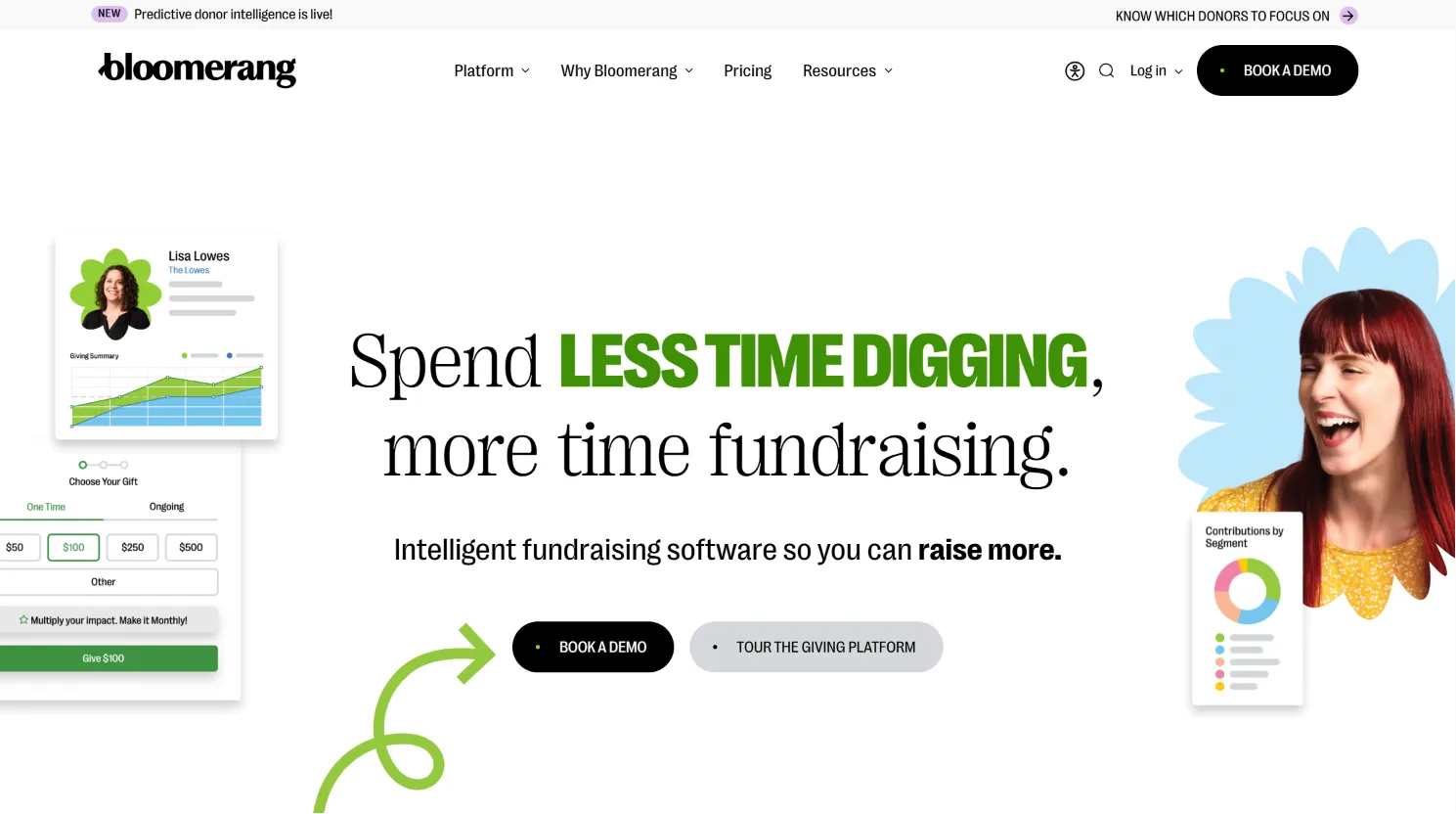
Bloomerang is a favorite among small and medium-sized nonprofits seeking a balance between usability and core donor management features. Its interface is visually clean and approachable, making it easy for staff and volunteers with limited technical experience to adopt quickly. Key features include contact and donation tracking, basic email marketing, and simple reporting tools. Bloomerang also comes with built-in donor retention analytics, which can help organizations focus on relationship-building rather than just transactions.
Bloomerang integrates natively with QuickBooks, Mailchimp, and Eventbrite, and offers a Zapier connector for hundreds of other tools. However, deeper integrations, such as with grant management or custom accounting platforms, may require manual work or third-party connectors, and can sometimes be limited by API call quotas.
Pricing: Starts at $40/user/month.
- User-friendly interface for non-technical staff
- Strong donor retention analytics
- Quick onboarding and basic integrations
- Costs rise with users and database size
- Advanced reporting and segmentation require setup
- No ownership or code-level customization
2. DonorPerfect (Best for growing nonprofits)
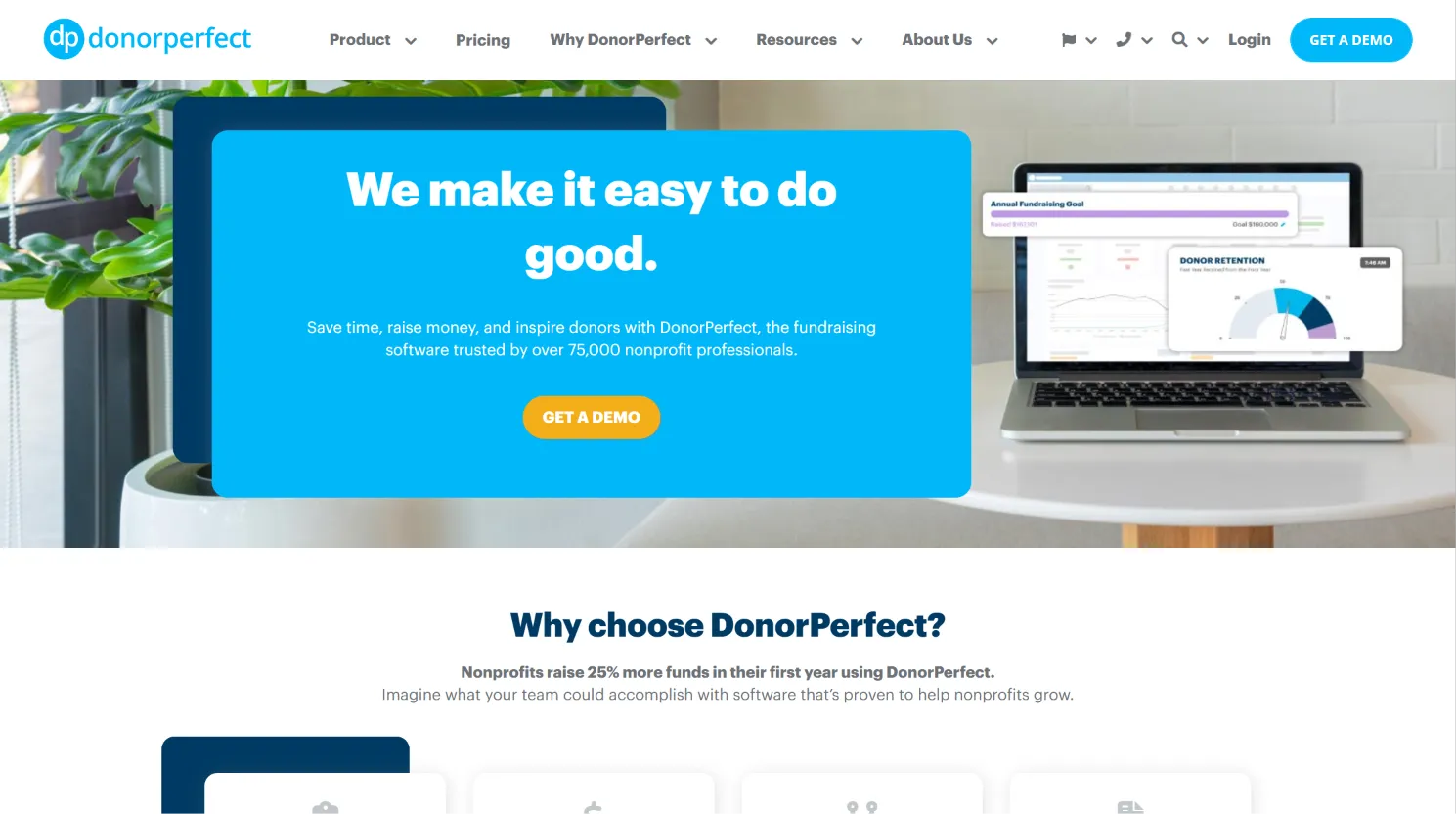
DonorPerfect has been a nonprofit sector staple for decades, offering a donor management platform with a modular approach. Its core features include constituent management, donation tracking, and event management. DonorPerfect also offers advanced options like volunteer management, grant tracking, and membership management as paid add-ons.
The interface is functional but dated, with a utilitarian design that can feel overwhelming for users accustomed to more modern SaaS products. However, DonorPerfect's flexibility means it can be tailored to a wide range of nonprofit workflows, from basic donation tracking to complex capital campaigns.
Pricing: Starts at $99/month.
- Highly flexible and modular
- Strong reporting and segmentation
- Wide range of integrations
- Interface can feel dated and complex
- Costs escalate with add-ons and database growth
- Learning curve for small teams
3. Salesforce Nonprofit Cloud (Best for large orgs with custom needs)
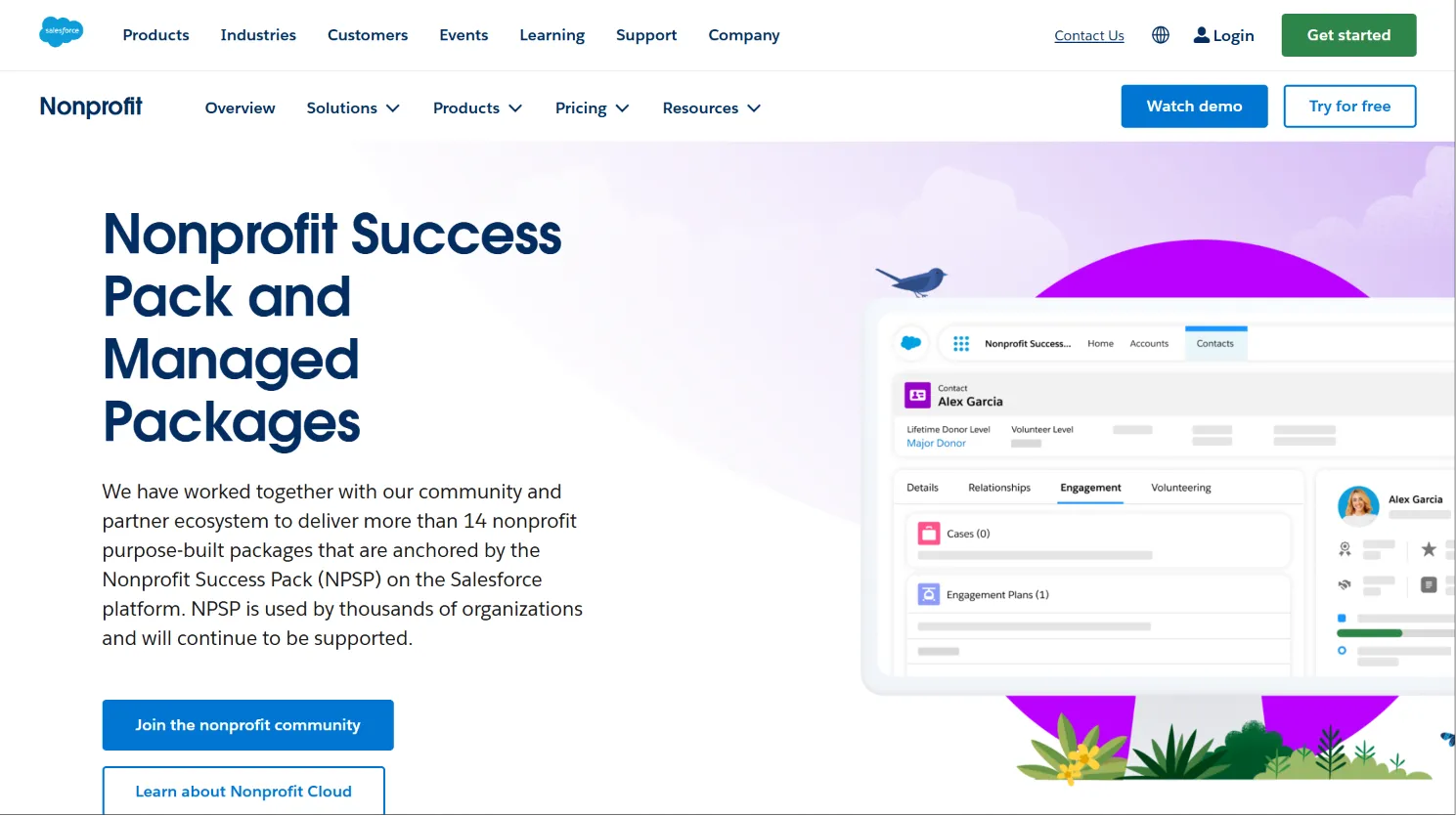
Salesforce Nonprofit Cloud is the most powerful and customizable solution on this list, but it comes with significant complexity. Built on the Salesforce platform, it offers a Nonprofit Success Pack (NPSP) that tailors the core CRM to the needs of charities, foundations, and NGOs. Features include donation and grant tracking, program management, volunteer management, and sophisticated automation through Salesforce’s Flow Builder.
Pricing: 10 free licenses for eligible nonprofits, then paid tiers.
- Unmatched customization and scalability
- Vast integration ecosystem
- Enterprise-grade security and compliance
- High implementation and ongoing admin costs
- Steep learning curve, requires dedicated admin
- Ownership and control remain with Salesforce
4. Blackbaud Raiser's Edge NXT (Best for enterprise fundraising teams)
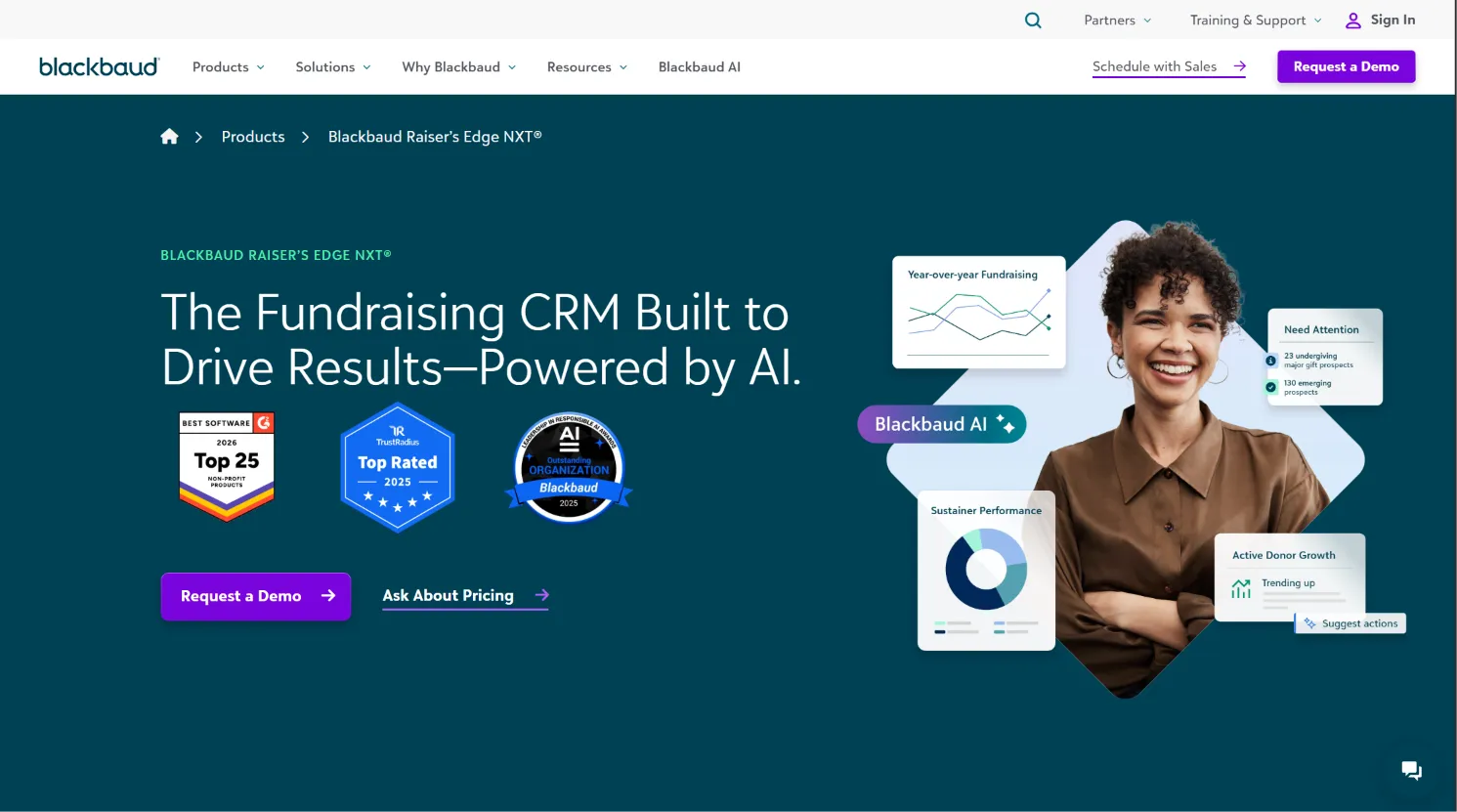
Raiser's Edge NXT is the flagship CRM for large, fundraising-driven nonprofits. Its strengths lie in deep donor profiling, event and campaign management, and sophisticated reporting. The platform is cloud-based, but built on decades of Blackbaud's on-premise experience, resulting in a hybrid of legacy and modern functionality.
Pricing: Starts at $12,000/year.
- Deep donor profiling and segmentation
- Robust event and campaign management
- Strong support for large teams
- High annual contracts and add-on fees
- Customizations limited to Blackbaud ecosystem
- Data extraction can be costly and incomplete
5. Neon CRM (Best for mid-size nonprofits)
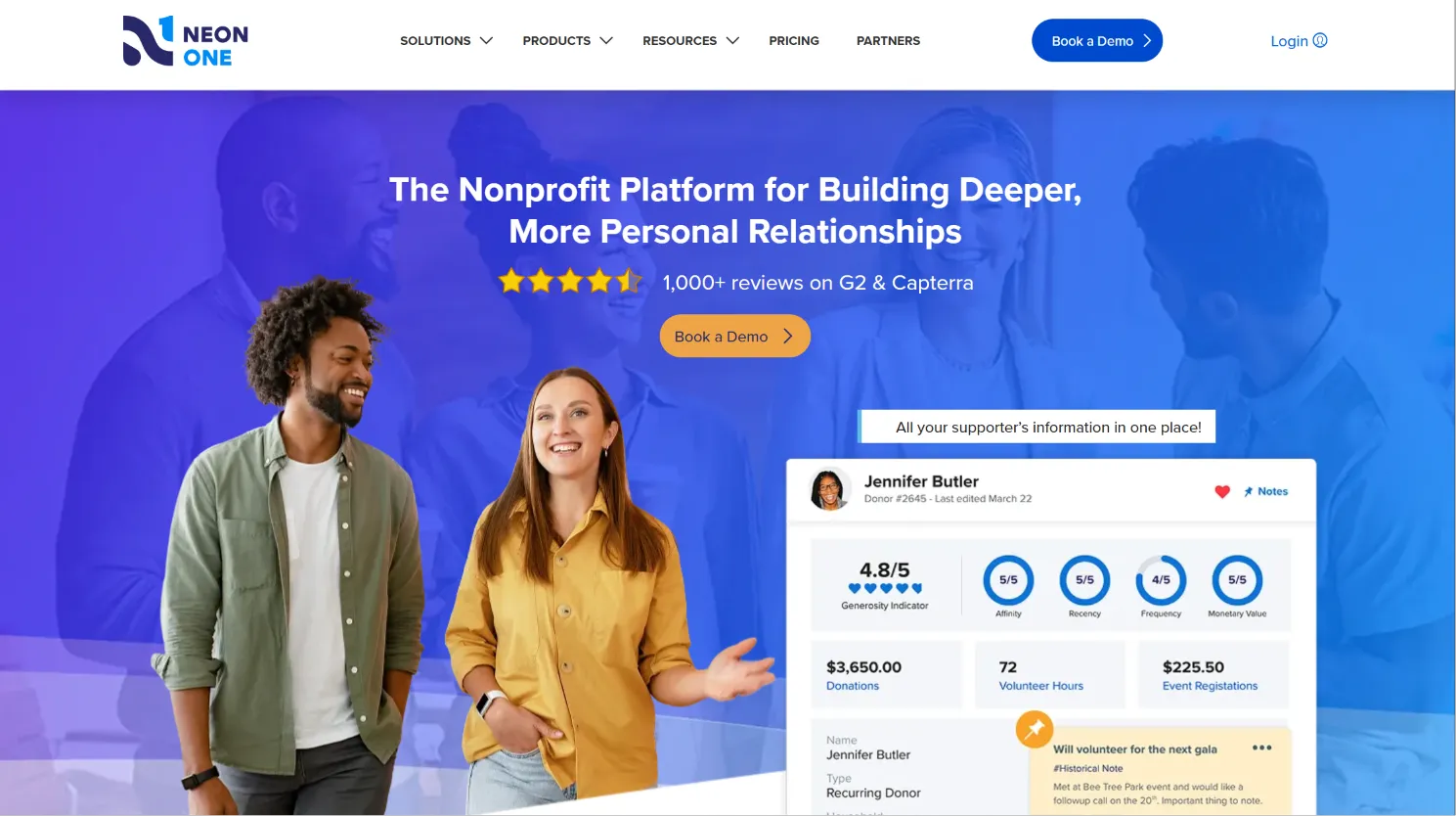
Neon CRM positions itself as a flexible, all-in-one solution for organizations ready to move beyond spreadsheets but not yet at enterprise scale. Its feature set covers constituent management, online giving, event registration, membership management, and email marketing. Neon’s dashboard and reporting tools are designed to be accessible, but the interface can feel busy compared to some competitors.
Pricing: Starts at $99/month.
- All-in-one platform for fundraising and events
- Direct integrations with popular tools
- Automated donor communications
- Price increases with advanced features and users
- Interface can be unintuitive for some users
- Customizations limited to platform capabilities
6. Little Green Light (Best for budget-conscious teams)
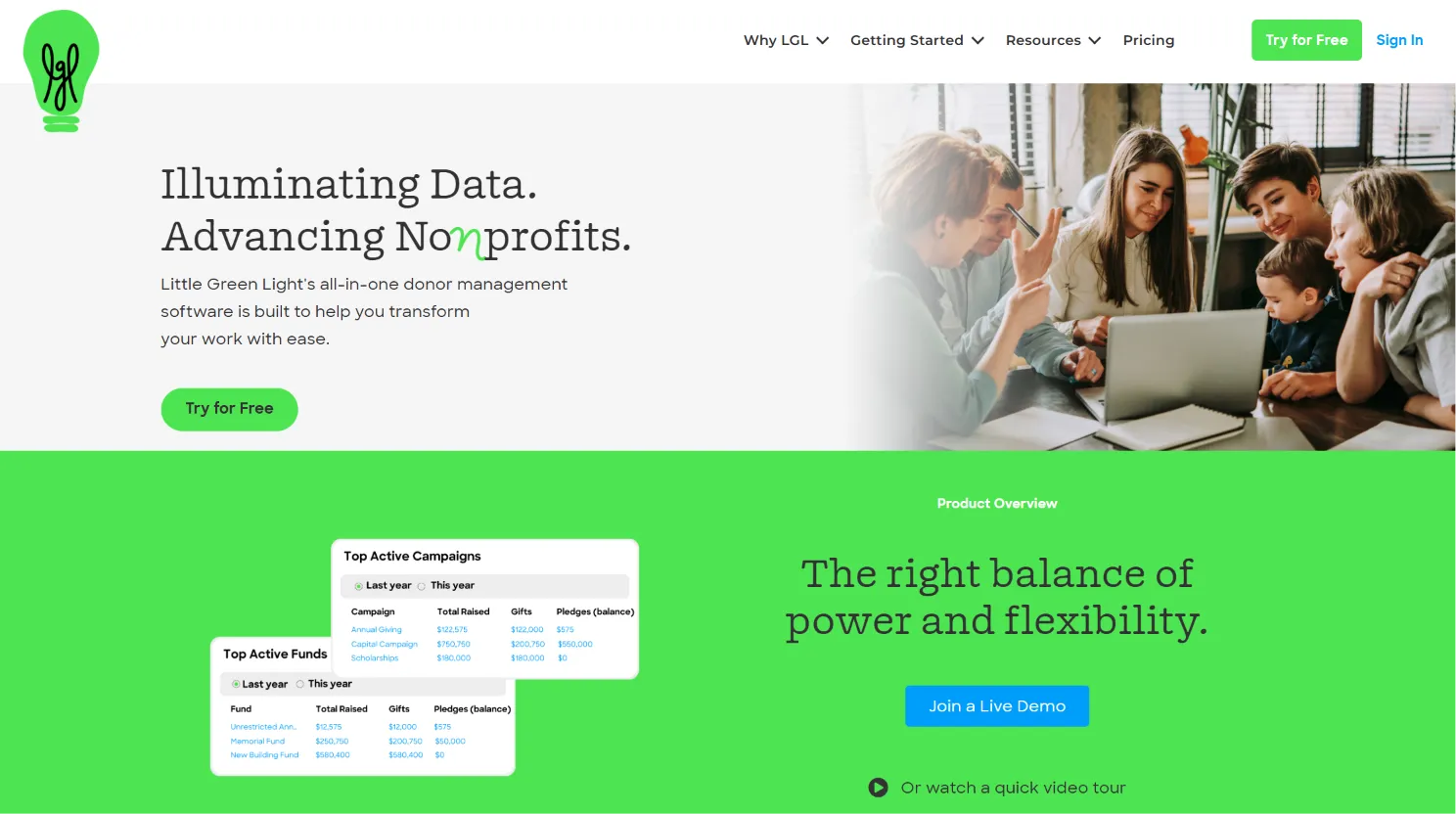
Little Green Light is built for smaller nonprofits seeking a simple, affordable donor management system. It focuses on the essentials: constituent records, donation tracking, simple reporting, and basic event management. The platform is intentionally lightweight, with a user-friendly interface that minimizes the learning curve for new staff or volunteers.
Pricing: Starts at $45/month.
- Affordable for small organizations
- Quick to learn and implement
- Solid integrations for core needs
- Limited advanced campaign and grant tracking
- Custom reporting options are basic
- Live onboarding support limited to higher plans
7. Kindful (Best for nonprofits needing integrations)
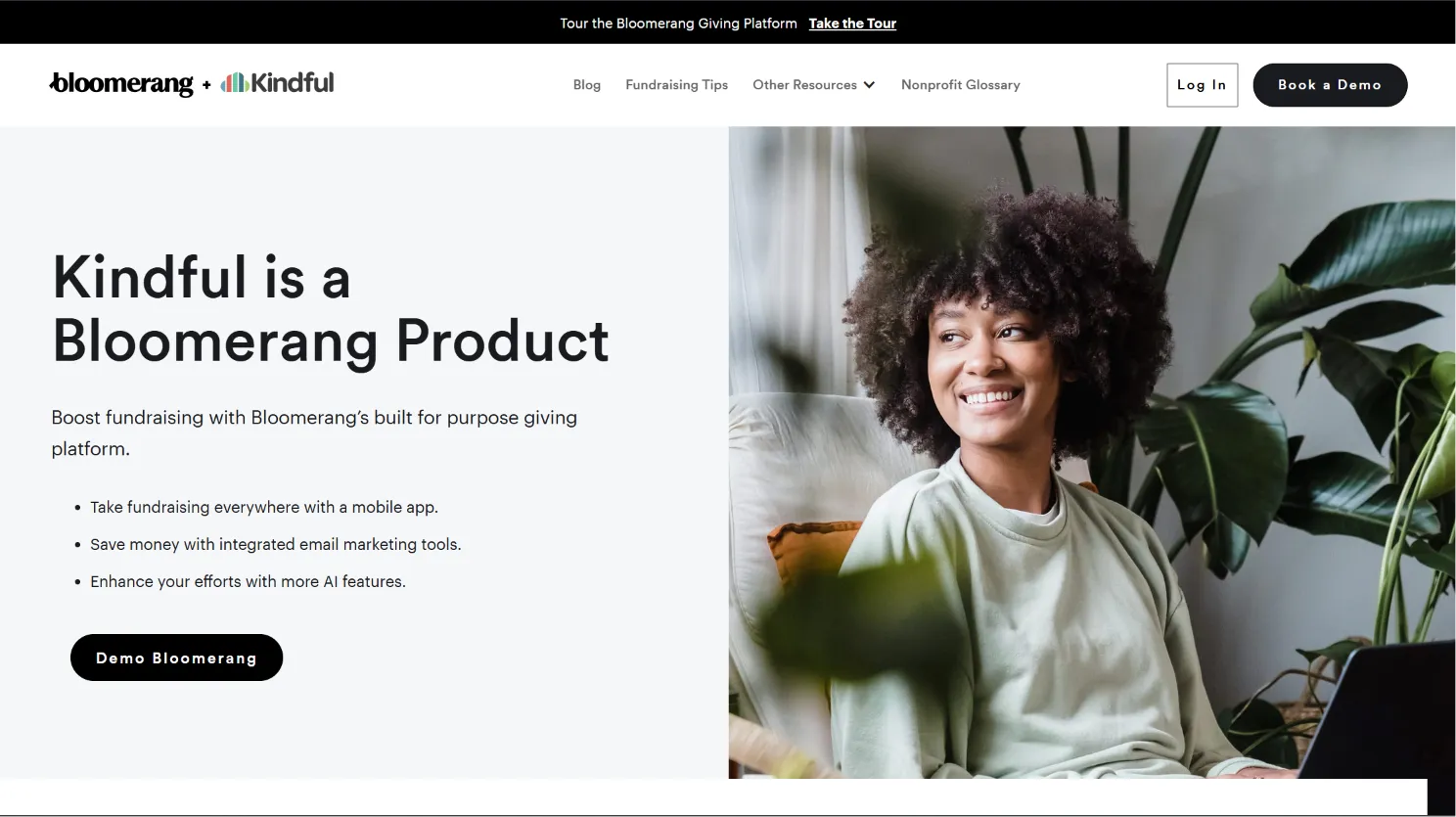
Kindful, now part of Bloomerang, is designed for organizations that prioritize integration with other cloud tools. It covers donor management, online giving, and basic reporting, but its standout feature is its ability to connect with tools like QuickBooks, Mailchimp, Eventbrite, and peer fundraising platforms.
Pricing: Starts at $119/month.
- Easy integration with popular nonprofit tools
- Clean interface for donor management
- Automated data flow between systems
- Some integrations require higher tiers or setup fees
- Limited advanced custom workflows
- Ownership and data control remain with vendor
With a custom Devaims platform, you set your integrations, no gatekeeping or tier jumps.
8. Network for Good (Best for simple fundraising)
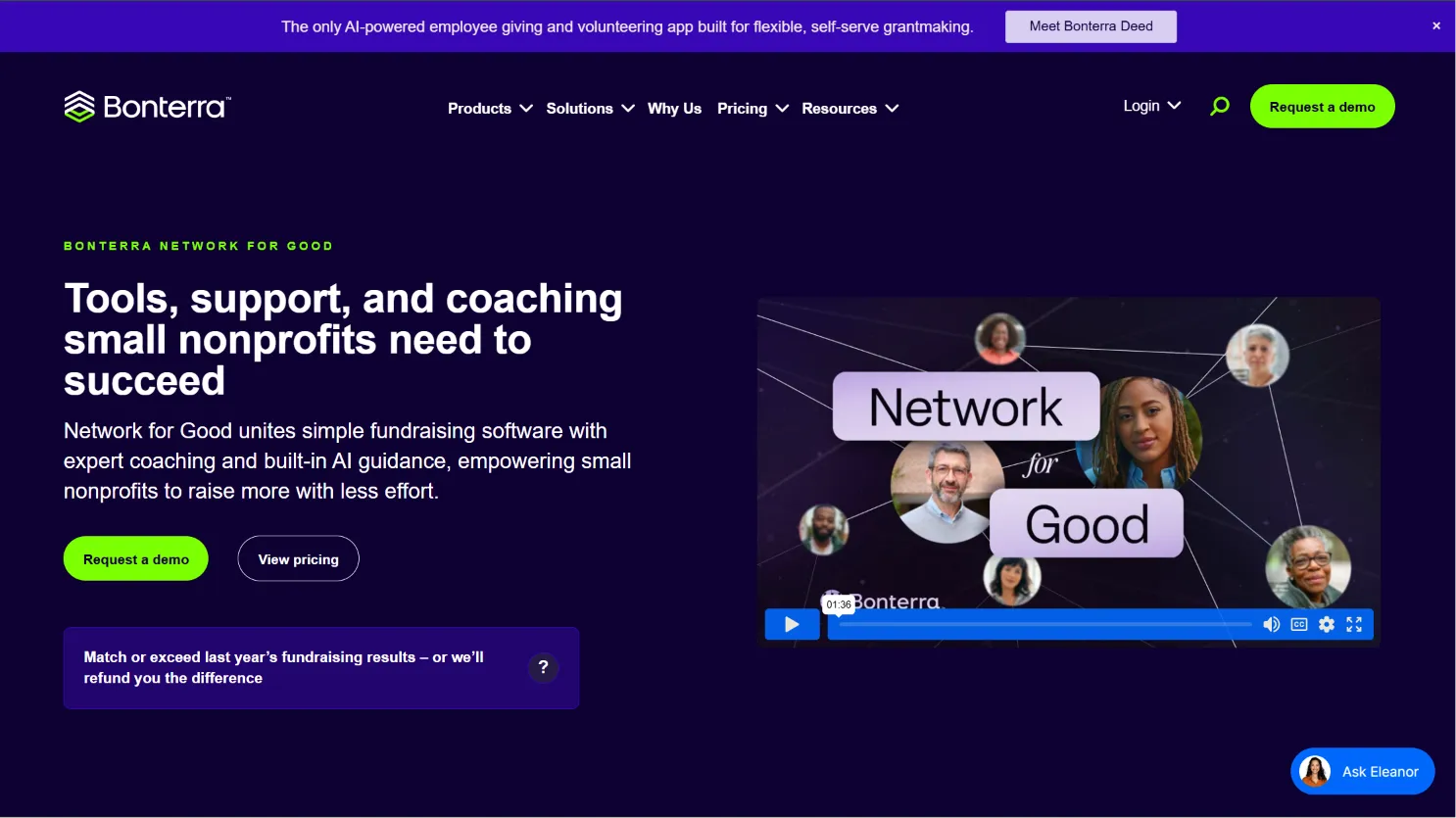
Network for Good specializes in making online giving accessible to small and mid-sized nonprofits. Its platform emphasizes simplicity, offering donation pages, campaign management, and basic donor tracking. The user interface is clean, with minimal setup required to get started with online fundraising.
Pricing: Starts at $100/month.
- Simple setup for online fundraising
- Clean, intuitive interface
- Quick onboarding for small teams
- Lacks advanced donor segmentation and grant management
- Limited integrations with accounting and reporting tools
- Transaction fees can reduce revenue
9. Devaims (The only owned alternative: custom, full control)
Devaims is the only provider on this list that delivers a custom-built donor management platform you own outright, source code, database, integrations, and all. Instead of paying recurring subscription fees, you invest in a one-time build tailored precisely to your workflows, compliance requirements, and reporting needs. The result is a system that belongs to you, free from per-user fees, forced upgrades, or vendor lock-in.
Features: Every aspect of your donor management can be custom-built: grant tracking, restricted fund management, program and event workflows, custom dashboards, and reporting. Integrations are designed around your stack, QuickBooks, Mailchimp, custom accounting, or even legacy systems.
Integrations: Devaims builds direct, robust integrations to the tools you use most, without upcharges or API limits. If you need to connect to a niche accounting system, a custom email marketing tool, or even proprietary databases, it is all possible as part of the build. You are not limited by vendor partnerships or tiered access.
Migration friction: Unlike SaaS providers who treat migration as an upsell, Devaims includes full data migration in your project. That means all your donor, gift, campaign, and custom field data is mapped and imported, no extra fees, no lost history. Training is also included, tailored to your team and workflows, not just generic features.
Concrete use cases: Devaims is ideal for nonprofits who have outgrown off-the-shelf solutions, need to comply with specific grant or government reporting, or want to automate unique workflows. It is also a fit for organizations with sensitive data, strict security requirements, or those seeking to future-proof their tech stack by decoupling from SaaS vendors.
- Full ownership of source code and data
- Unlimited custom workflows and integrations
- Flat, predictable maintenance costs
With Devaims, you never face per-user or per-record fees, and your integrations are built to your exact needs.
Other Virtuous alternatives worth knowing
- Apricot by Bonterra: Best for case management, but overkill for basic donor CRM. Apricot excels in social services and program management, with deep case tracking and compliance tools, but its complexity and price make it unsuitable for organizations focused only on fundraising.
- Donorbox: Excellent donation forms, but not a full donor CRM. Donorbox is a fast way to add donation widgets to your website, supports recurring gifts, and integrates with Stripe and PayPal, but lacks comprehensive donor management and reporting tools.
- Funraise: Event and online giving focus, less for complex donor tracking. Funraise is strong for digital fundraising and events, but organizations running multiple programs or requiring grant management will find it limited.
- CharityEngine: Large, custom nonprofits only; expensive and heavy to implement. CharityEngine offers deep customization and robust integrations, but its pricing and complexity make it best suited for very large organizations with IT resources.
How to choose the right Virtuous alternative
- Budget: If monthly fees make you nervous, add up the true 5-year cost, including add-ons and training. Many organizations underestimate the long-term expense of SaaS subscriptions, especially as their teams and data grow. Calculate the total cost of ownership, not just the first-year price.
- Features: Need deep grant tracking or custom workflows? Most SaaS tools hit a wall, custom is your out. List your must-have features and map them against each platform’s roadmap and upgrade paths. If you find yourself facing multiple upsells, consider if custom development is more cost-effective.
- Size: Small teams often do best with simpler tools, but as you grow, per-seat pricing becomes a trap. If you expect to double staff or expand programs, factor in scaling costs and possible migration headaches down the line.
- Integration needs: If your stack is unique, owning the platform means you call the shots, no locked APIs. Evaluate how each CRM connects to your accounting, email, and event tools, and whether those integrations are included or require extra fees. True ownership means you control your data and integrations, without vendor-imposed limits.
If you want to break the cycle of rising SaaS fees, a custom build like Devaims is the only step off the treadmill.
Stop paying rent on software you could own
Virtuous and every alternative above keep you on the hook, subscriptions, per-seat fees, and constant upsells. No matter where you switch, you stay a tenant. With Devaims, you finally become the owner: the code, the data, and the features are yours, not theirs. No monthly surprises. No forced upgrades. No "Sorry, that is only in the next tier."
Devaims is a custom software development shop that builds donor management platforms for nonprofits who want off the SaaS treadmill. You tell us how you work, we build your system, and you keep the source code. No lock-in. No seat math. No hidden costs.
- Your donor, grant, or program tracking is tailored to your real workflows, not someone else's vision.
- Integrations are exactly what you need; you never pay extra to connect "just one more" tool.
- Your data is always yours, exportable, portable, and never held hostage by a vendor.
- Maintenance is flat and predictable. You know exactly what you will pay year after year.
| Feature | Virtuous | Bloomerang | Blackbaud RE NXT | Devaims (owned) |
|---|---|---|---|---|
| Pricing model | Subscription | Subscription | Subscription | One-time build, then flat maintenance |
| Ownership | No | No | No | Yes, full source code |
| Per-user/record fees | Yes | Yes | Yes | No |
| Custom workflows | Limited | Limited | Limited | Unlimited |
| Migration included | No | No | No | Yes |
| Year 1 | Year 2 | Year 3 | Year 4 | Year 5 | |
|---|---|---|---|---|---|
| Rented (Virtuous, typical) | $12,000 | $24,000 | $36,000 | $48,000 | $60,000 |
| Owned (Devaims) | $28,000 | $29,800 | $31,600 | $33,400 (now ahead) | $35,200 |
If your nonprofit spends more than $1,000 a month on CRM, you will break even in just over three years with Devaims, and every year after puts you further ahead. This is the math SaaS vendors hope you never run. Let us run your numbers and show you what you could own.
How to switch from Virtuous
- Export your donor, gift, and campaign data from Virtuous. Virtuous provides export tools, but review your database for custom fields, recurring gifts, and historical activity to ensure nothing is missed.
- Choose your new platform or a custom Devaims build. Consider your integration needs, migration support, and long-term ownership goals.
- Import data into the new system, mapping fields as needed. This is often the most complex step, especially if you have custom workflows or legacy data quirks.
- Reconnect payment processors and key integrations. Test each integration to ensure live transactions, email campaigns, and accounting syncs work as expected.
- Train your staff on the new interface and workflows. Develop role-based training sessions and documentation to smooth the transition.
- Test in parallel until you are confident in the new setup. Run both systems for a short period to catch any data or process gaps before going live.
- Review and cancel your Virtuous contract after migration. Confirm that all recurring payments and data retention policies have been addressed before finalizing the switch.
With a custom Devaims build, the migration is handled as part of the project. The team will map, clean, and import your data while providing custom training for your unique workflows.
Frequently asked questions
What is the best Virtuous alternative for small nonprofits?
For smaller teams, Bloomerang and Little Green Light are user-friendly and budget-conscious. Both offer intuitive interfaces that minimize training and onboarding costs. Little Green Light is particularly attractive for organizations with basic needs and small budgets, while Bloomerang offers more donor retention analytics and campaign tools. If you want to avoid per-user fees forever and build around your unique needs, a Devaims custom build is the only owned option, especially beneficial as you grow or if you have complex workflows not supported by SaaS CRMs.
What is the cheapest Virtuous alternative?
Givebutter offers a free platform for fundraising, funded by donor tips and payment processing. It is ideal for event-based or peer-to-peer fundraising, but does not include comprehensive donor management or reporting. For full-featured donor management, Little Green Light starts at $45/month and covers the basics for small organizations. However, "cheapest" rarely means "best fit". If you need features like grant tracking or custom integrations, investing in a custom system may save money over time.
Are there any free Virtuous alternatives?
Salesforce Nonprofit Cloud offers 10 free licenses to eligible nonprofits, making it the only true enterprise-grade CRM with a no-cost entry point. However, implementation and support often require a paid partner, and the learning curve can be steep. There are also open source CRMs (like CiviCRM) that are technically free, but require technical expertise to host, maintain, and support. A Devaims build is not free, but after year three, it is usually the most cost-effective option long term, especially for organizations seeking ownership and predictable costs.
Which alternative is best for complex grant management?
Blackbaud Raiser's Edge NXT and Salesforce Nonprofit Cloud both offer advanced grant tracking, including restricted fund management, compliance reporting, and multi-program support. However, these features come at a high cost, both in subscription fees and required add-ons. If you want those features built around your workflow (such as custom approval processes, automated compliance alerts, or integration with government portals), Devaims can design them into your platform from day one, ensuring you pay only for what you need, with no ongoing upgrade fees.
When should a nonprofit switch from Virtuous?
If your monthly fees keep climbing, you hit a feature wall, or you are tired of being locked into contracts, it is time to consider Virtuous alternatives. The break-even for owning is often three to four years out. After that, renting makes less and less sense. Additionally, if you are facing organizational changes (such as a major campaign, merger, or expansion), or if you need deeper integrations or custom reporting, switching to a platform you own can eliminate recurring headaches and costs.
Can I keep all my historical data when migrating?
Most alternatives allow you to import donor and gift data from Virtuous, though custom fields may need mapping. Some platforms (especially SaaS CRMs) limit the depth or history of imported data, or charge for advanced migration services. With a Devaims build, your migration is handled by the team, including complex data or custom fields, ensuring you retain your full donor history and all relevant records.
Do any Virtuous alternatives let me truly own my software?
Out of all Virtuous alternatives, only Devaims delivers a platform you own outright, source code, database, and all. Every other option is a subscription, no matter how it is branded. Open source options like CiviCRM offer ownership in theory, but require technical skills to deploy and support. Devaims provides the benefits of ownership with professional support and predictable costs.
The bottom line
There is no shortage of Virtuous alternatives, but they almost all keep you renting. The real pivot is when you add up five years of SaaS spend and realize you could have built a system you own for less. If you want to stop paying for the same features every year, owning is the move. Ownership means control, freedom, and long-term savings, no more surprise fee increases or forced upgrades.
Here is the test: add up what this tool will cost you over the next five years. If that number would have built you something you own, you already have your answer.
See more insights and alternatives on the Devaims blog, or check out our related guides: Bloomerang alternatives, DonorPerfect alternatives, and Blackbaud Raiser's Edge alternatives.