


Ever get that monthly bill for your practice management software and think, "What am I really paying for?" VetBadger and its rivals all promise to run your clinic, but the truth is, you rent the same toolkit as everyone else. Five years later, you’ve paid enough to buy the system twice, and you still don’t own a thing.
Veterinary clinic owners looking for VetBadger alternatives aren’t just shopping features. You’re looking for flexibility, honest costs, and a way out of the endless subscription treadmill. In this article, I’ll walk you through the top picks, the real-world pros and cons, and why more clinics are asking if it’s time to own, not rent, their software. If you want to stop paying monthly forever, the last option is the only one that lets you keep the code: a custom build with Devaims.
Why veterinary clinics look for VetBadger alternatives
Recurring monthly fees add up fast: Most platforms charge per user, per doctor, or by feature, meaning your costs rise as your clinic grows. A solo practice may pay a few hundred a month, but busy clinics with multiple doctors and staff will often see monthly bills balloon to thousands, especially when adding integrations or advanced modules. Over time, this compounds into a significant operational expense that can outpace inflation and eat into margins.
Feature gaps or paywalls: Essential features like advanced reporting, telemedicine, inventory management, and integrations with diagnostic labs are often locked behind higher-priced tiers or require additional add-on fees. For example, if you want automated reminders, integrated texting, or enhanced analytics, you may be forced to upgrade or purchase extra modules. This piecemeal approach can be frustrating for clinics that expect a comprehensive solution out of the box.
Data lock-in: Exporting your clinic’s data for migration or backup can be difficult, slow, or incomplete, tying you to one vendor. Some vendors only allow partial exports (patients but not appointments, for example), or deliver data in proprietary formats that require significant cleanup before import. This can stall or complicate any future switch, leaving clinics feeling trapped by their technology choices.
Limited customization: Out-of-the-box tools rarely fit every workflow, and customization options are either limited or require costly development fees. If your clinic has unique reporting needs, specialized treatment templates, or wants to automate a specific workflow, you may find yourself restricted by what the vendor’s roadmap allows. Customizations often require vendor approval, extra costs, or long wait times.
Surprise price hikes: Annual increases or new "compliance" fees are common, making it difficult to forecast your real costs. Many clinics experience annual price increases between 5 to 10%, or find that certain features are moved to higher tiers after an initial contract period. If you’re searching for VetBadger alternatives, these pain points probably sound familiar, and are often the tipping point for considering a new solution.
Quick comparison of the best VetBadger alternatives
| Tool | Best for | Starting price | You own it? |
|---|---|---|---|
| Cornerstone (IDEXX) | Large multi-location clinics | Reported around $249/month | No |
| Vetspire | AI-powered, cloud-first practices | Custom quote | No |
| IDEXX Neo | Cloud-based, all-in-one | Reported $199/month | No |
| eVetPractice | Clinics wanting easy onboarding | Reported $150/month | No |
| Shepherd Veterinary Software | Fast-growing practices | Reported $250/month | No |
| NaVetor | Ease of use, small teams | Reported $150/month | No |
| AVImark | Established clinics, on-premise | Reported $12,000+ one-time, annual support | Partially (license only) |
| IntraVet | Legacy EMR users | Quote only | No |
| RxWorks | Global/multisite practices | Quote only | No |
| Devaims | Clinics who want to own their software | One-time build, you own it | Yes |
Always confirm current pricing before you decide, vendors can and do change tiers and fees, and some may offer discounts for multi-year contracts or bundled integrations.
The 10 best VetBadger alternatives
1. Cornerstone (IDEXX) (Best for large, multi-location clinics)
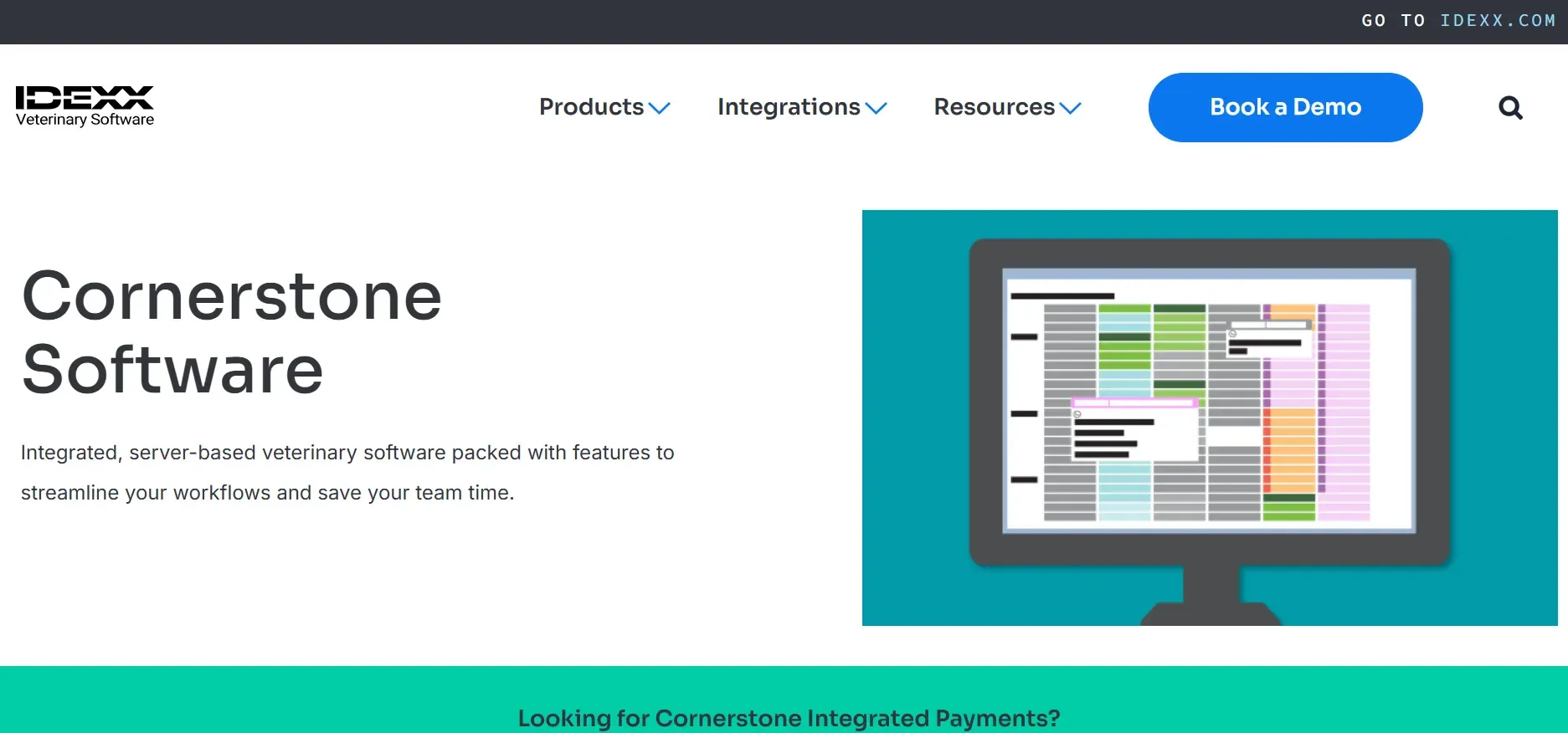
Cornerstone is the long-established standard for veterinary practice management, especially for larger clinics or those with multiple locations. It offers a comprehensive feature set that covers everything from appointment scheduling and billing to advanced inventory management and direct diagnostic lab integration, particularly with IDEXX’s own suite of in-house and reference labs. The system is designed to scale, supporting complex organizational structures and strict regulatory compliance.
Key features: EMR, integrated inventory, customizable reporting, patient reminders, direct IDEXX lab device integration, imaging, and document management. Cornerstone also supports third-party integrations for payment processing, pharmacy management, and client communications, though many of these require additional setup or licensing fees.
Integrations: Out-of-the-box integration with IDEXX labs and diagnostics, plus support for third-party vendors via APIs or certified partners. Labs, radiology, and pharmacy systems can be tightly connected, but some connections may require extra configuration or licensing.
Migration friction: Transitioning to Cornerstone can be a significant project. Data imports are possible, but custom mapping and validation are often required, especially for clinics with legacy or cloud-based systems. Onboarding may involve formal training sessions and can take several weeks or more depending on clinic size.
Concrete use cases: Multi-doctor clinics that perform a high volume of lab work, clinics with complex inventory needs, or those requiring granular role-based access and audit trails for compliance.
Pricing: Reported around $249/month (base), with additional fees for integrations, support, and premium features. See current pricing.
- Key limitations:
- Steep learning curve for new users
- Customizations require vendor involvement and fees
- Costs can rise quickly with add-ons
- Strengths:
- Comprehensive feature set for large clinics
- Deep IDEXX lab integration
- Strong compliance and reporting tools
If you often get tripped up by pricey add-ons, remember: with software you own, every feature is yours from day one.
2. Vetspire (Best for AI-powered cloud practices)
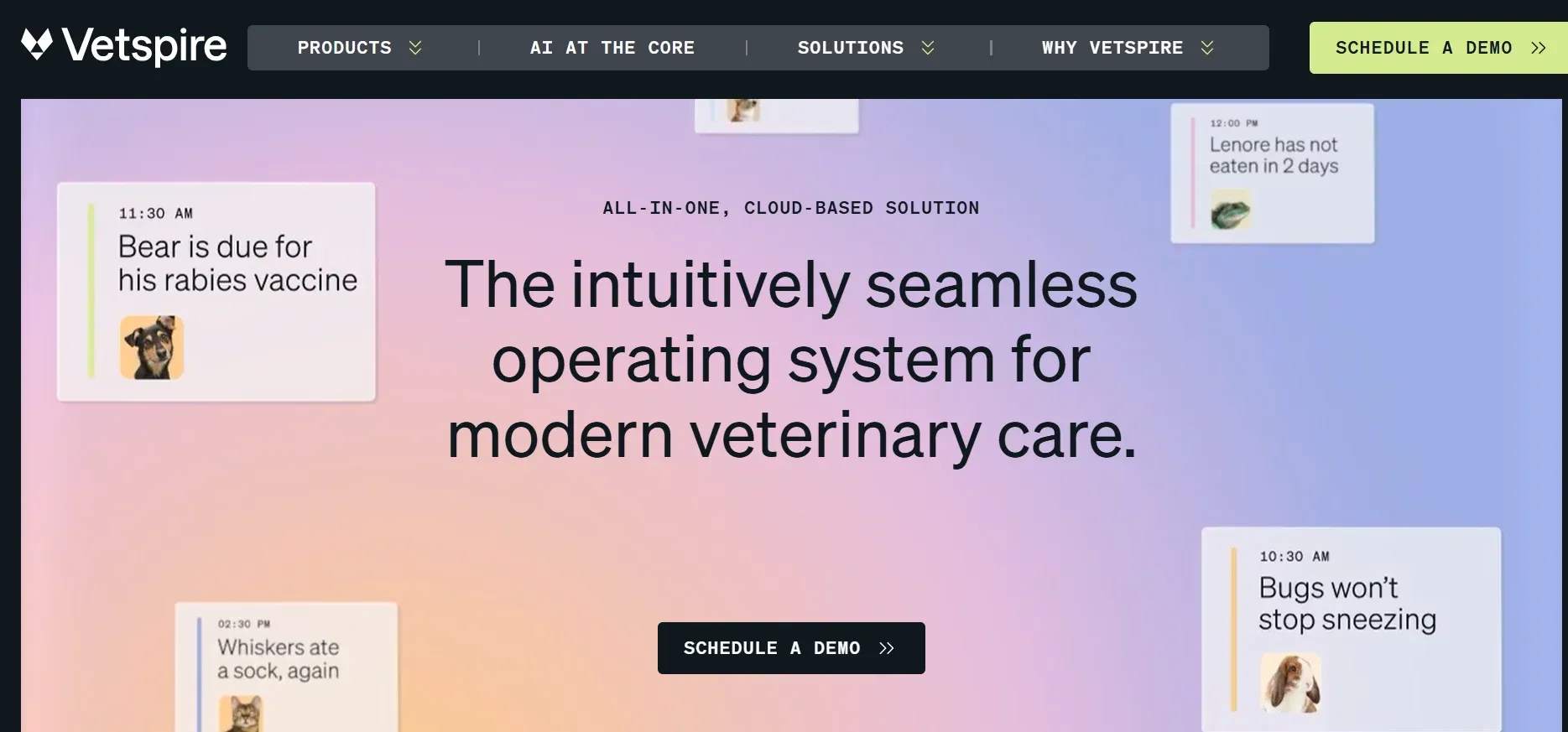
Vetspire is a next-generation, AI-driven cloud platform that stands out for its intelligent automation and modern user experience. Built from the ground up for the cloud, Vetspire emphasizes speed, automation, and data-driven workflows. Its AI-assisted charting can save clinicians time by suggesting common diagnoses and treatments based on case notes, and its interface is designed to minimize clicks and streamline recordkeeping.
Key features: AI-powered medical records, rapid charting, customizable templates, cloud-based scheduling and billing, built-in telemedicine, and analytics dashboards. Vetspire also offers integrated payment processing and a client portal for appointment requests and communication.
Integrations: Vetspire offers direct integration with diagnostic labs (IDEXX, Antech), payment processors, and some pharmacy fulfillment partners. It also provides an API for custom integrations, though advanced connections may require vendor assistance.
Migration friction: Data migration is handled as a project, but clinics report that Vetspire’s migration process is smoother than some legacy systems. However, moving from on-premise or less structured cloud systems may require data cleaning and field mapping. Custom workflows must be adapted to fit Vetspire’s architecture.
Concrete use cases: Tech-forward practices looking to automate as much as possible, high-volume clinics prioritizing speed, or clinics wanting to use telemedicine and analytics out of the box.
Pricing: Custom quote only; typically higher than entry-level tools, especially for clinics with multiple users or locations.
- Key limitations:
- Pricing is not transparent, requires a quote
- Flexibility limited to vendor roadmap
- Annual contracts are typical
- Strengths:
- Modern, AI-driven workflows
- Strong automation and analytics
- Cloud-based and accessible anywhere
Vetspire is a strong choice for innovation-driven clinics, but true ownership, code access, and unlimited customization are not included.
3. IDEXX Neo (Best for all-in-one cloud-based clinics)
IDEXX Neo is designed as a streamlined, all-in-one practice management solution for clinics seeking simplicity and cloud accessibility. Its interface is clean, with workflows optimized for small to mid-sized clinics. Neo’s strongest suit is its seamless integration with IDEXX’s diagnostic ecosystem, making it easy to order, track, and receive lab results directly within the platform.
Key features: EMR, appointment management, billing, inventory tracking, built-in reminders, and payment processing. Neo also offers secure cloud document storage, customizable forms, and basic analytics.
Integrations: Deep integration with IDEXX labs is a core advantage. Neo also connects to select payment processors and offers limited support for third-party apps. Integration with outside vendors (e.g., alternative labs, specialty pharmacies) is less robust.
Migration friction: Data migration is supported, but clinics report that exporting from previous vendors can be time-consuming. Some data fields (such as custom notes or attachments) may not map perfectly and require manual review.
Concrete use cases: Clinics wanting a cloud-based, turnkey system with reliable lab connectivity, or those seeking to transition from legacy on-premise tools without complex customization needs.
Pricing: Reported at $199/month (base), with add-ons for advanced features and integrations. See current pricing.
- Key limitations:
- Advanced features require extra fees
- Limited third-party integrations
- Data export can be cumbersome
- Strengths:
- User-friendly interface
- Strong IDEXX lab integration
- Cloud-based for easy access
When you own your platform, you can set up every integration you want, not just those supported by the vendor.
4. eVetPractice (Best for clinics prioritizing onboarding ease)
eVetPractice is oriented toward clinics that want to get up and running quickly, with minimal training or IT overhead. The platform is cloud-based and designed for intuitiveness, making it accessible to teams with varying levels of tech experience. Its interface is simple and the learning curve is gentle, which speeds up onboarding for new staff.
Key features: Patient management, appointment scheduling, billing, reminders, inventory, and basic reporting. eVetPractice also includes a client portal for appointment requests and communication, as well as integrated payment processing.
Integrations: Connects with some diagnostic labs, payment processors, and select third-party communication tools. However, the list of integrations is shorter than with larger platforms, and some connections may require vendor support.
Migration friction: Data import tools are available, but clinics may need to clean up or reformat data, especially when migrating from highly customized systems. The relatively simple data structure makes onboarding easier, but complex workflows may need to be adapted to fit available features.
Concrete use cases: Single-location clinics, new practices, or those with high staff turnover who prioritize fast training and onboarding.
Pricing: Reported $150/month (base), with additional fees for extra features and users.
- Key limitations:
- Lacks advanced customization
- Limited specialty features
- Costs rise with users or modules
- Strengths:
- Easy onboarding and training
- Simple, intuitive interface
- Affordable for small clinics
5. Shepherd Veterinary Software (Best for growing teams)
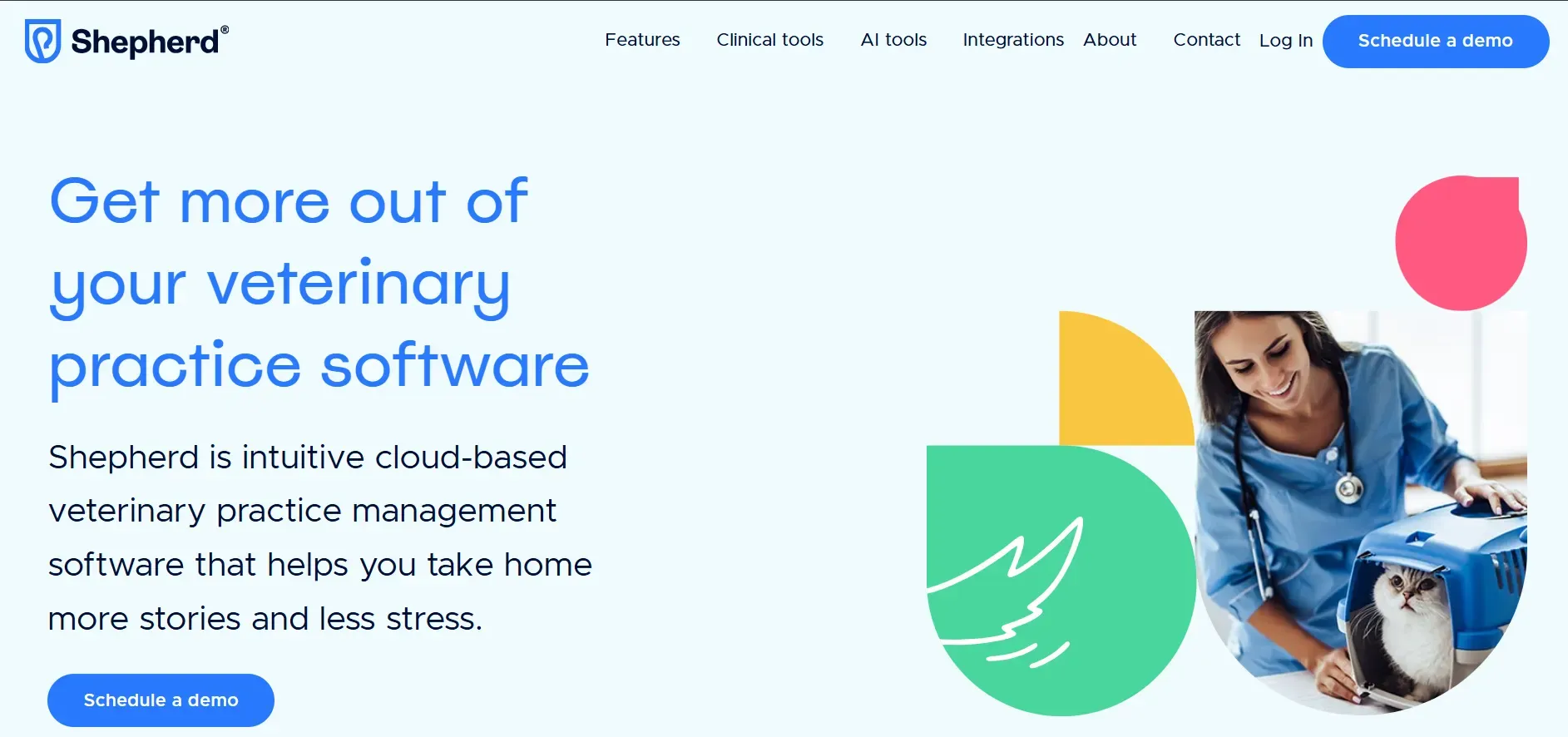
Shepherd is a cloud-based platform designed for rapidly growing clinics that need scalable, modern workflows. Shepherd’s interface is clean and visually intuitive, and it emphasizes reducing data entry by automating medical recordkeeping and billing. The system is built for speed, with features like one-click invoicing and integrated reminders.
Key features: Streamlined EMR, one-click billing, appointment and inventory management, reminders, and integrated payment processing. Shepherd also offers basic analytics and client communication tools.
Integrations: Shepherd integrates with select diagnostic labs, payment processors, and third-party communication platforms. Some integrations (e.g., with new labs or specialty services) may require requests or incur additional setup fees.
Migration friction: Migration is supported, but clinics with complex legacy data may need vendor assistance. The platform is less customizable than legacy systems, so unique workflows may need to be adapted or workarounds developed.
Concrete use cases: Clinics expanding to new locations or rapidly increasing staff, those who want to minimize admin time, or practices seeking a modern, visually appealing interface.
Pricing: Reported $250/month per location, plus onboarding and integration fees.
- Key limitations:
- Pricing per location can escalate
- Limited deep customization
- Integration delays for unsupported vendors
- Strengths:
- Modern, intuitive interface
- Automated recordkeeping and billing
- Scalable for growing teams
On a platform you own, growing your team doesn’t mean multiplying your monthly bill.
6. NaVetor (Best for small teams wanting ease of use)
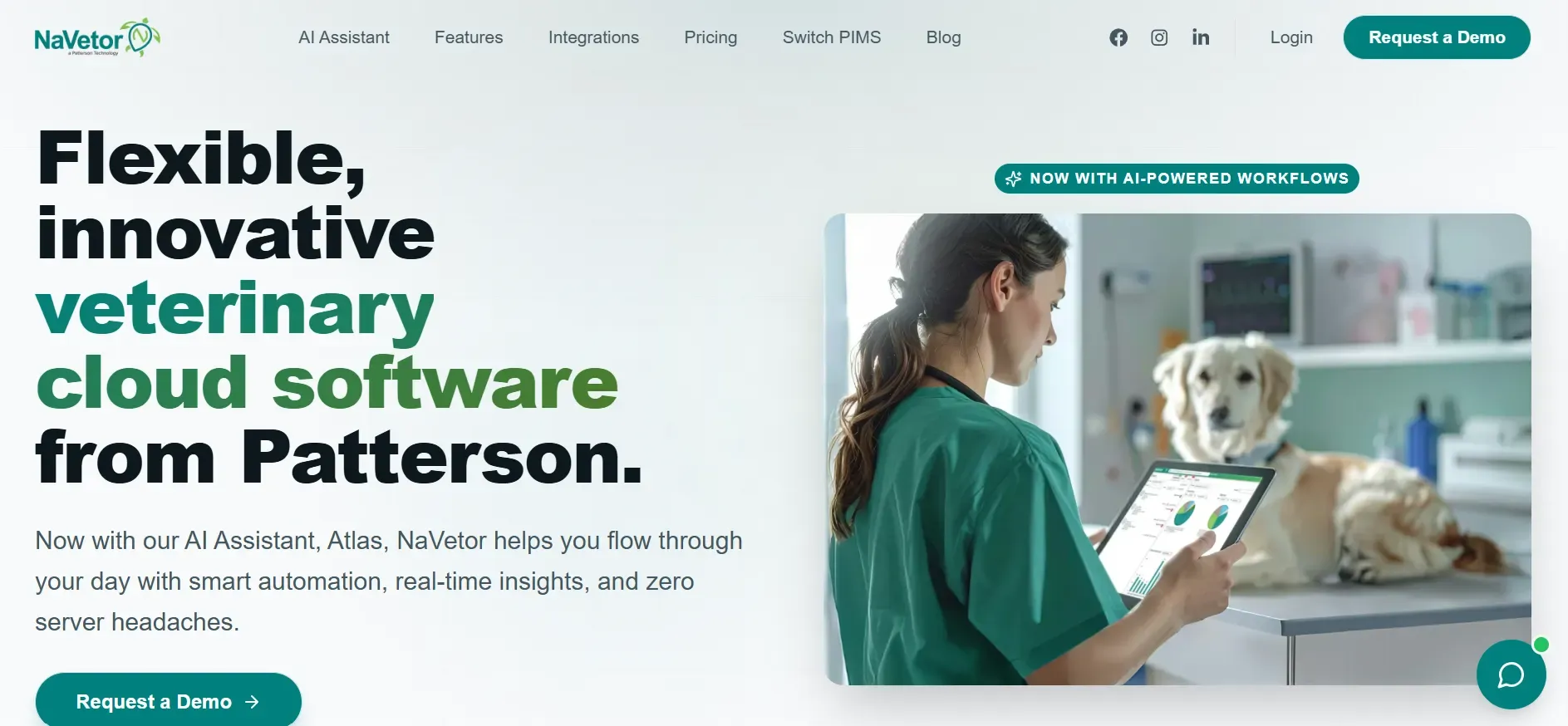
NaVetor is targeted at small clinics and solo practitioners who want a simple, affordable cloud-based solution. The interface is easy to navigate, requiring little to no training for staff, and the platform offers all the basics for day-to-day operations.
Key features: Appointment scheduling, patient records, billing, reminders, inventory management, and basic reporting. The system is designed for quick access and streamlined workflows, making it ideal for clinics with limited IT resources.
Integrations: NaVetor offers integration with some labs, payment processors, and communication tools, but the list is shorter than with larger platforms. Texting and reminders are available as add-ons.
Migration friction: Onboarding is straightforward for clinics with simple data structures, but clinics migrating from more robust systems may find some data fields or custom templates do not transfer over seamlessly.
Concrete use cases: Solo practitioners, mobile vets, or small teams who want a reliable, easy-to-use tool without the complexity or cost of larger platforms.
Pricing: Reported at $150/month, with extra charges for reminders, texting, and premium features.
- Key limitations:
- Not suited for complex, multi-doctor practices
- Limited custom reports and specialty features
- Costs rise with add-ons
- Strengths:
- Simple, user-friendly interface
- Affordable for small teams
- Quick onboarding
7. AVImark (Best for established clinics wanting on-premise control)
AVImark is one of the longest-running on-premise veterinary practice management systems, favored by clinics who prefer local data control and a proven track record. The platform is highly reliable, but its interface and user experience are less modern than newer cloud offerings. AVImark is often used by high-volume clinics with a preference for on-site servers and local backups.
Key features: EMR, appointment scheduling, billing, inventory management, reminders, and extensive reporting. AVImark’s reporting capabilities are deep, allowing clinics to customize financial, operational, and compliance reports.
Integrations: Integrates with IDEXX and Antech labs, payment processors, and some pharmacy systems. However, integrating with modern cloud-based apps or telemedicine platforms is limited without custom development.
Migration friction: Moving to or from AVImark typically involves significant data mapping due to its proprietary database structure. AVImark’s support team provides migration assistance, but clinics switching to or from cloud-based solutions should expect manual validation of records.
Concrete use cases: Large, established clinics with high patient volume, on-premise IT infrastructure, or regulatory requirements for local data storage.
Pricing: Reported $12,000+ one-time license, plus $1,200+ per year for support and upgrades. See details.
- Key limitations:
- High up-front licensing costs
- No cloud access unless self-hosted
- Upgrades require additional purchases
- Strengths:
- Reliable, proven on-premise solution
- Deep reporting capabilities
- Local data control
8. IntraVet (Best for legacy EMR users)
IntraVet is a legacy, on-premise EMR solution used by clinics that have been running electronic records for many years. Its interface is familiar to long-time users, and it is known for reliability and regulatory compliance. IntraVet is often seen as a safe choice for clinics that do not want the disruption of cloud migration.
Key features: Comprehensive patient management, appointment scheduling, billing, inventory, and compliance reporting. IntraVet supports regulatory requirements and long-term data retention.
Integrations: Integrates with some labs, payment processors, and pharmacy systems. However, integration options are limited compared to modern cloud platforms, and new integrations may not be supported.
Migration friction: Migrating from IntraVet to a modern cloud platform can be challenging due to proprietary data formats and field structures. Data exports are available, but clinics should budget for manual data cleaning and validation.
Concrete use cases: Clinics with long-term staff familiar with the system, those with regulatory or insurance requirements for on-premise data, or practices that have not yet embraced cloud technology.
Pricing: Quote only; typically license plus annual support.
- Key limitations:
- No mobile or true cloud access
- Limited new feature development
- Support dependent on annual contracts
- Strengths:
- Reliable for legacy users
- Regulatory compliance support
- Long-term data retention
9. RxWorks (Best for global and multi-site practices)
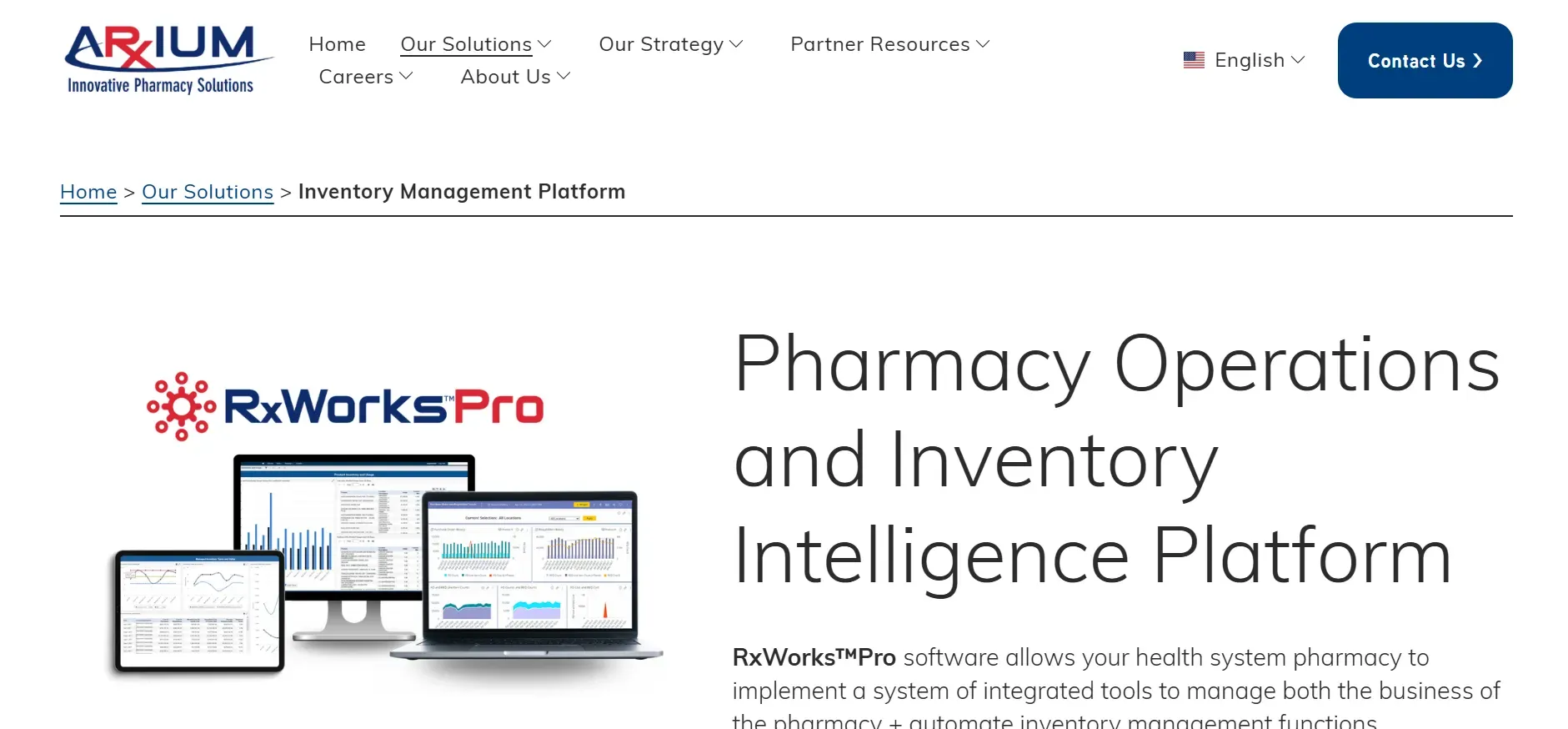
RxWorks is built for large, multi-site, or international veterinary organizations that need centralized data and advanced organizational controls. RxWorks is used globally and supports multiple languages, currencies, and regulatory frameworks.
Key features: Centralized patient management, multi-site scheduling, advanced reporting, inventory, and compliance tools. RxWorks offers custom workflow automation and supports regional regulatory requirements, making it suitable for corporate groups or franchises.
Integrations: Integrates with major diagnostic labs, payment processors, and select regional partners. The platform is designed for enterprise-scale integrations, but custom connections may require vendor involvement and additional fees.
Migration friction: Migrating to RxWorks is a significant project, with dedicated onboarding and data migration support. Smaller clinics may find the process complex and the platform more than they need.
Concrete use cases: Veterinary groups with multiple locations (especially internationally), or practices with centralized management and compliance needs.
Pricing: Quote only; typically per-site/month, with enterprise pricing for large groups.
- Key limitations:
- Complexity not ideal for small practices
- Customization requires enterprise contracts
- No code or data ownership
- Strengths:
- Enterprise-scale features
- Multi-site and international support
- Centralized management tools
10. Devaims (Best for clinics who want to own their software)
Devaims builds custom veterinary practice platforms tailored to your clinic’s exact needs, then hands over the source code, so you own it outright. No user fees, no rental, no lock-in. You keep your data, your features, and your workflow, forever. Devaims projects are fully scoped to your requirements, from appointment scheduling and EMR to billing, reminders, analytics, and any integration you need.
Key features: Everything you specify, EMR, appointment and resource scheduling, billing, inventory, reminders, analytics, telemedicine, integrations with labs, pharmacies, payment processors, and more. The feature set is defined by your clinic’s needs, not a vendor’s roadmap.
Integrations: Any integration you need can be built in, from IDEXX and Antech labs to payment gateways, client communication tools, or specialty referral networks. There are no per-integration fees, and you are never limited by a vendor’s list of supported partners.
Migration friction: Devaims handles data migration as part of the project, ensuring that your patient records, appointments, and billing data are transferred cleanly and accurately. Custom migration scripts and validation are built for your specific data sources.
Concrete use cases: Clinics with unique workflows, specialty practices, multi-location groups wanting to centralize operations, or any clinic tired of surprise price hikes and recurring fees. Clinics with in-house IT support or those wanting to future-proof their technology investments benefit the most.
Pricing: One-time build, then flat maintenance. You own the code and data for good.
- Full ownership of code and dataUnlimited customization and integrationsNo recurring user or feature fees
- Full ownership of code and data
- Unlimited customization and integrations
- No recurring user or feature fees
Other VetBadger alternatives worth knowing
- VetHero: Focused on client communication and reminders, but less a full PMS. Useful as a supplement for clinics wanting to improve client engagement, but not a replacement for a comprehensive management system.
- Gingr: Great for boarding, not a full practice management tool. If your clinic offers kenneling or daycare, Gingr can be a useful add-on alongside your main PMS.
- ezyVet: Cloud PMS with strong integrations but similar rental model to VetBadger. Offers advanced reporting and workflow automation, but costs and data ownership are similar to other SaaS tools. Learn more.
- ProVet Cloud: Fast-growing, Europe-focused cloud PMS with pay-per-user pricing. Known for strong compliance features and multilingual support, but costs can rise quickly for larger teams. See details.
If you need niche scheduling or boarding features, some of these may fill the gap, but for full practice management most clinics will want one of the main alternatives above.
How to choose the right VetBadger alternative
- By budget: Small clinics may prefer lightweight SaaS tools, but high-volume practices quickly hit per-user fee ceilings. Run the math on your total five-year spend, including all anticipated add-ons, support, and integration fees. Do not just compare sticker prices, look at your real monthly usage and growth plans.
- By workflow: Specialty clinics often need more customization than off-the-shelf tools can provide. If your workflow is unique, such as exotics, referral-only, or mobile practice, renting may not cut it, and you may outgrow templated solutions quickly.
- By size: Multi-location clinics need tools that scale efficiently without multiplying costs. Look for platforms with centralized management and role-based access, and beware of per-location or per-user pricing models.
- By ownership needs: If you want to control your data, your features, and your costs for the long haul, only an owned solution truly fits. Consider your risk tolerance for vendor lock-in and your desire for long-term technology stability.
The right VetBadger alternative depends on your growth plans and your appetite for ongoing fees. If you’re tired of rental math, read on for an option that puts you in control.
Stop paying rent on software you could own
The core problem with VetBadger and every alternative so far? You’re always a renter. Whether it’s monthly SaaS, per-user fees, or annual support contracts, you’re paying forever, and you never own your data or your workflow outright. Every year your bill goes up, and every new staff member or feature means another upcharge.
Devaims solves that by building your clinic’s ideal practice management platform from the ground up, then handing you the source code. No more contracts, no per-user fees, no "access" to your own data. You keep it all.
- No more surprise price hikes: Your costs are fixed, not subject to annual increases. Budgeting becomes predictable, and your technology spend does not spiral as you grow.
- Own your data and features: Export, backup, and modify at will. You are never at the mercy of a vendor’s export tools or proprietary formats, and your data remains yours, even if you change IT partners.
- Customize to fit your workflow: Every report, view, and process can match your team, specialty, and compliance needs.
- Integrate anything: Labs, payments, reminders, if you need it, it’s built in, not gated. You never pay extra for integrations, and you are free to adapt as your clinic’s needs evolve.
| Tool | Ownership | Customization | Ongoing Fees |
|---|---|---|---|
| VetBadger | Rented | Limited to vendor roadmap | Monthly, per user/location |
| Cornerstone | Rented, license-only | Limited, with integration fees | Monthly + add-ons |
| Vetspire | Rented | Limited to vendor roadmap | Monthly, quoted |
| Devaims | You own the code and data | Fully custom, forever | One-time build, flat maintenance |
Here’s how the five-year math shakes out for a typical 10-user clinic. This comparison assumes a SaaS model at $200 per user per month (a common industry rate), versus a custom Devaims build with a $27,000 initial investment and modest annual maintenance.
| Year | Rented (Cumulative) | Owned (Cumulative) |
|---|---|---|
| Year 1 | $24,000 | $27,000 |
| Year 2 | $48,000 | $29,760 |
| Year 3 | $72,000 | $32,520 |
| Year 4 | $96,000 | $35,280 |
| Year 5 | $120,000 | $38,040 (now ahead) |
Renting looks cheaper for the first year, but after year two, you’re already ahead by owning. Multiply your own numbers and see: if your SaaS bill is $2,000 a month, you’ll pay $120,000 in five years and still own nothing. With Devaims, you could have built exactly what you want, and kept it for good.
Clinics who invest in ownership gain the most if they plan to grow, want to lock in their costs, or have specialized workflows not served by rental tools. Ownership is also a hedge against market consolidation, vendor shutdowns, or forced migrations.
How to switch from VetBadger
- Export your current data (patients, appointments, billing) from VetBadger, request a full export if needed. Be proactive in requesting all data fields, including attachments, notes, and historical billing.
- Choose your new platform and map required fields for import. Review your new system’s data structure and prepare mapping documentation for each data type.
- Import your data and validate integrity (test on a subset if possible). Many clinics run a pilot import with a small data sample to ensure accuracy before a full migration.
- Reconnect payment processors, lab integrations, and client communication tools. This may involve setting up new API keys, credentials, or vendor relationships.
- Train your staff and update internal documentation. Ensure all users are comfortable with new workflows and know where to find key information.
- Run both systems in parallel for a short period to ensure data and workflow accuracy. This reduces risk of downtime or data loss during the transition.
- Review your VetBadger contract to confirm cancellation terms and avoid overlap fees. Some vendors require written notice or have early termination penalties.
With a custom Devaims build, the migration is handled as part of the project, including custom scripts for data transformation and validation. Dedicated support is provided throughout the transition.
Frequently asked questions
What’s the best VetBadger alternative for large clinics?
Cornerstone (IDEXX) is popular for multi-location practices needing deep integrations and strong reporting. Its ability to centralize data and scale across locations makes it a good fit for larger organizations. Vetspire is another strong choice for tech-forward clinics that want modern automation and AI assistance. However, both are subscription-based and do not allow true ownership. For clinics that want to control their technology stack and costs, Devaims is the only option where you own the code and data, with unlimited customization for multi-site operations.
Are there free VetBadger alternatives?
There are no widely used, truly free veterinary practice management systems at the level of VetBadger. Open-source options (such as OpenVPMS) exist, but they usually lack commercial support, integrated compliance features, and strong integrations with labs or payment processors. Most clinics pay monthly for commercial tools or invest in an owned build for long-term stability and support.
What’s the cheapest VetBadger alternative?
NaVetor and eVetPractice are reported to start around $150 per month, but costs scale quickly with users and features. AVImark requires a larger up-front investment but has lower annual fees over time. For the lowest long-term cost, especially for clinics with more than 4 to 5 users, owning your platform with Devaims is often cheaper after a few years, especially as SaaS fees continue to rise annually.
Can I keep all my patient data when switching from VetBadger?
VetBadger allows exports, but data formats may require cleanup before importing into a new system. Attachments, notes, and billing histories can be especially tricky to transfer. With Devaims, you control your data and export on your terms, with custom migration scripts and validation to ensure accuracy. If long-term data ownership is a concern, Devaims or another owned option is your safest bet.
Which VetBadger alternatives integrate best with labs?
Cornerstone and IDEXX Neo have strong built-in lab integrations, especially for clinics already using IDEXX diagnostics. Vetspire also focuses on integration, particularly with IDEXX and Antech. However, most rental tools charge for advanced connectivity, and integration with non-mainstream labs can be limited. Devaims lets you integrate any lab or service you need, with no per-integration fees or vendor restrictions.
When should I switch from VetBadger?
If your clinic is outgrowing its workflow, facing rising monthly fees, or wants to control data and features, it’s time to evaluate VetBadger alternatives. The sooner you switch, the sooner you stop accumulating sunk costs and start building equity in your own platform. Plan the transition during a slow period, and budget extra time for data migration and staff training.
What’s the one VetBadger alternative that lets me own my software?
Devaims is the only alternative on this list that builds a custom platform for your clinic, hands over the source code, and lets you own it for good. All other options are rented or licensed only, meaning you never truly control your technology or data.
The bottom line
You have plenty of VetBadger alternatives, but almost every path leads to another rented tool. Here’s the real decision: add up what you’ll pay over five years. If that number could have built you a platform you own, you know what makes sense.
When you own your practice management system, you control your data, your costs, and your future. Want out of the rental cycle? We’ll run your numbers and help you plan the switch.
Want more insights? Visit the Devaims blog or check out related guides: Cornerstone alternatives, Vetspire alternatives, and AVImark alternatives.