



The moment your catering business hits its stride, Total Party Planner’s monthly bill stings a little more. Maybe it’s that $119 a month, plus $25 for every new user. Or the $200 penalty if you don’t use their payment system. Or the fact that after five years, you’ve paid over $7,000, and still own nothing.
Every catering shop I know, from startups to high-volume event firms, has run into the same wall: rental software is easy, until the costs, lock-ins, and limits catch up. That’s when folks start searching for honest Total Party Planner alternatives. Here’s the quick answer: Caterease and HoneyBook get plenty of love, Planning Pod is flexible, and 17hats is affordable on paper. But every one of them is still a rental. If you want to own your system, Devaims is the path off the treadmill.
Let’s break down the real options, the hidden costs, and the one alternative that puts your business in the driver’s seat for good.
Why catering companies look for Total Party Planner alternatives
Surprise per-user fees: Add a manager or seasonal staffer, and your monthly bill grows by $25 each. Multiply that by your team, and it adds up fast.
Locked-in payment processing: Skip their TPP Pay system and you’re hit with a $200 monthly penalty. Not every caterer wants to be forced into a processor.
Setup costs and add-ons: A $299 setup fee just to get in the door, plus $500 if you want your old data imported. Features like data entry or reporting can require extra purchases.
No free trial, long contracts: You’re paying before you ever prove it fits. And if you want a lower rate, you’re stuck with annual billing.
Steep learning curve: Many users complain the interface is anything but intuitive, leading to lost hours and frustrated staff.
Every one of these pain points drives catering businesses to search for Total Party Planner alternatives that cut the fees, the lock-in, or both.
Quick comparison of the best Total Party Planner alternatives
| Tool | Best for | Starting price | You own it? |
|---|---|---|---|
| Caterease | Large event caterers | $99/mo (annual) | No |
| HoneyBook | Client communications | $29/mo (annual) | No |
| 17hats | Solo/very small teams | $13/mo (annual) | No |
| Flex Catering | Online ordering | Reported $119/mo | No |
| Better Cater | Simplicity | $79/mo | No |
| Curate | Event design/proposals | $149/mo | No |
| Tripleseat | Venues/events | From $150/mo | No |
| Planning Pod | Flexible workflows | $68/mo | No |
| Devaims | Owning your system | One-time build | One-time build, you own it |
Always confirm current pricing before you decide, as fees and add-ons change fast in this space.
The 9 best Total Party Planner alternatives
1. Caterease (Best for large event caterers)
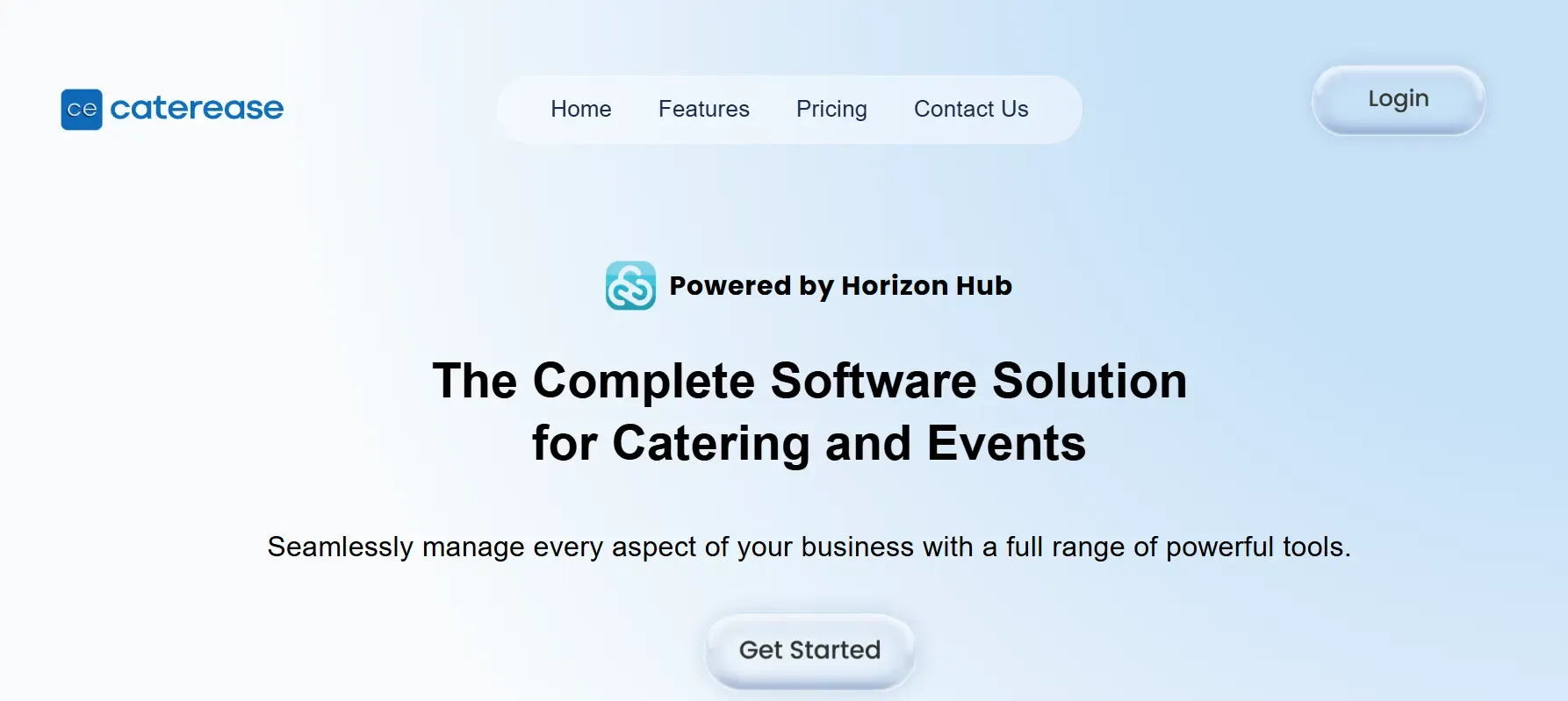
If your catering operation runs high-volume events, Caterease is a familiar name. It’s powerful, with deep features for proposals, contracts, and staff scheduling. But it brings its own stack of fees and a famously steep learning curve. Compared to Total Party Planner, it’s similarly priced and just as focused on the event space.
Pricing: $99 to $199/month (billed annually), $28/mo per extra user, $200/user launch fee. See pricing.
- Extensive event management tools
- Customizable workflows and templates
- Strong industry reputation
- Annual contracts, no monthly option
- Per-user fees add up quickly
- Complex interface requires training
On software you owned, every new hire wouldn't cost you extra to onboard.
2. HoneyBook (Best for client communications)
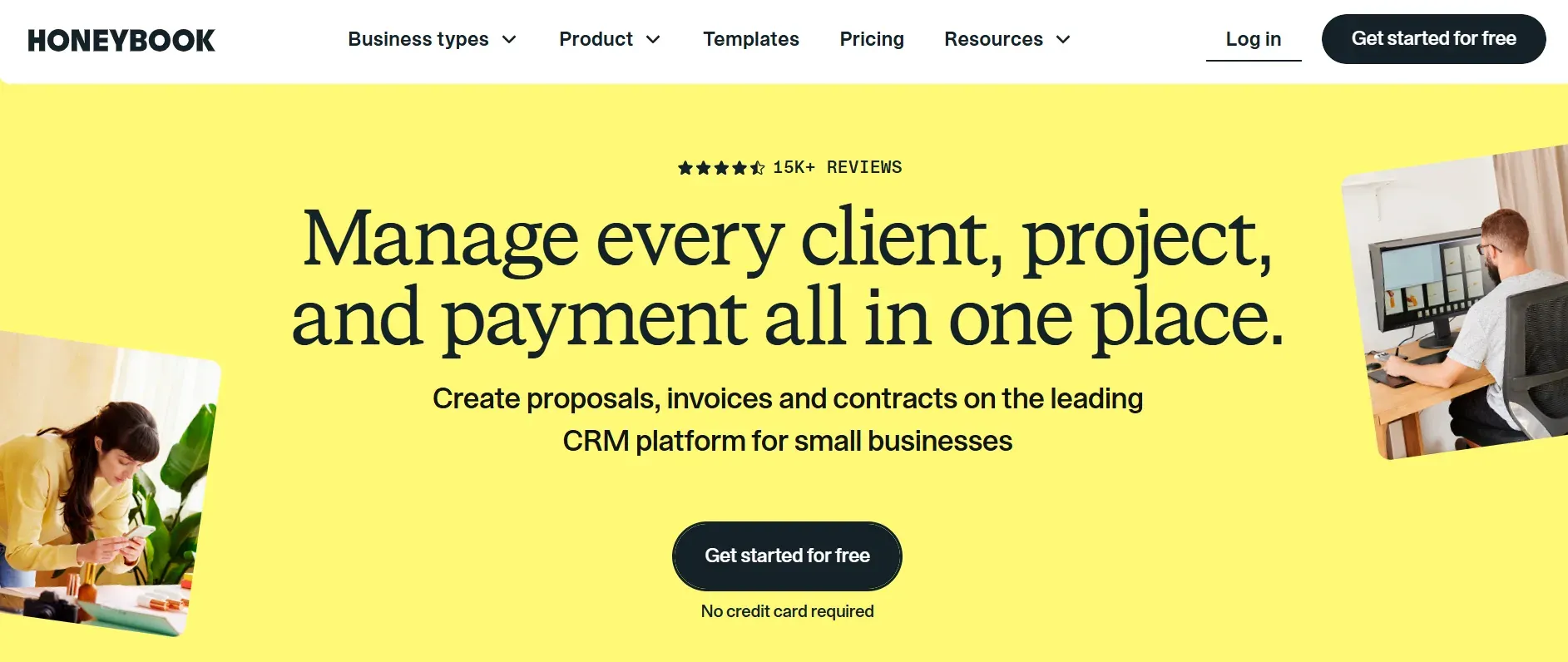
HoneyBook aims to streamline client-facing workflows, such as proposals, contracts, and payments in one sleek package. It’s lighter than Total Party Planner and caters to creative businesses, not just catering, so some features may feel generic. Its design is modern, but you trade away some industry-specific depth.
Pricing: $29 to $109/month (annual). See pricing.
- Polished interface and mobile app
- Integrated client communications
- Fast onboarding with a free trial
- Annual billing only
- Limited template customization
- Not purpose-built for catering
3. 17hats (Best for solo caterers or very small teams)
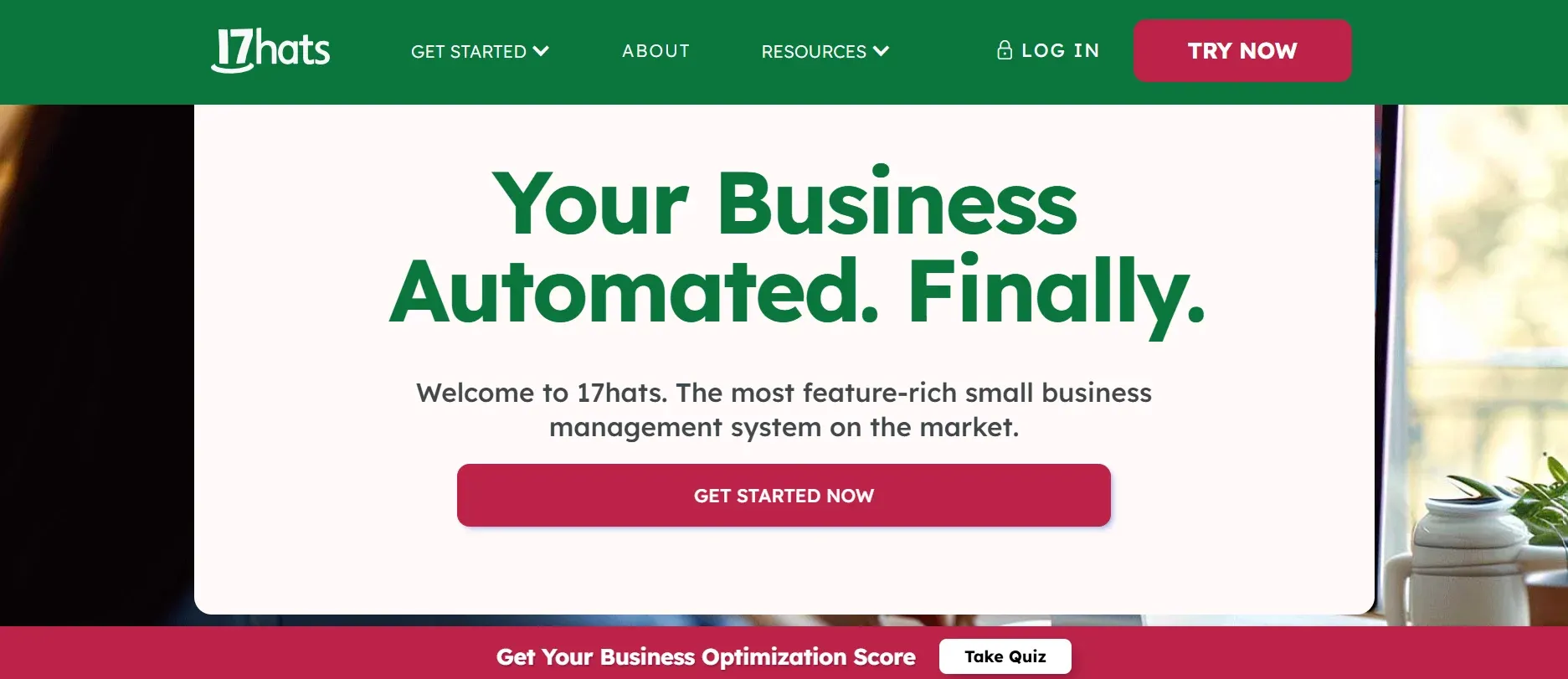
17hats targets freelancers and small businesses who want everything in one place: CRM, invoicing, scheduling, and task management. It’s less feature-rich for the catering vertical than Total Party Planner but offers a simple, all-in-one approach at a lower initial price.
Pricing: $13 to $50/month (annual). See pricing.
- Affordable entry-level pricing
- Good for simple operations
- Includes core admin tools
- Limited catering-specific features
- Interface can be less intuitive
- Annual contracts required
4. Flex Catering (Best for online ordering and production)
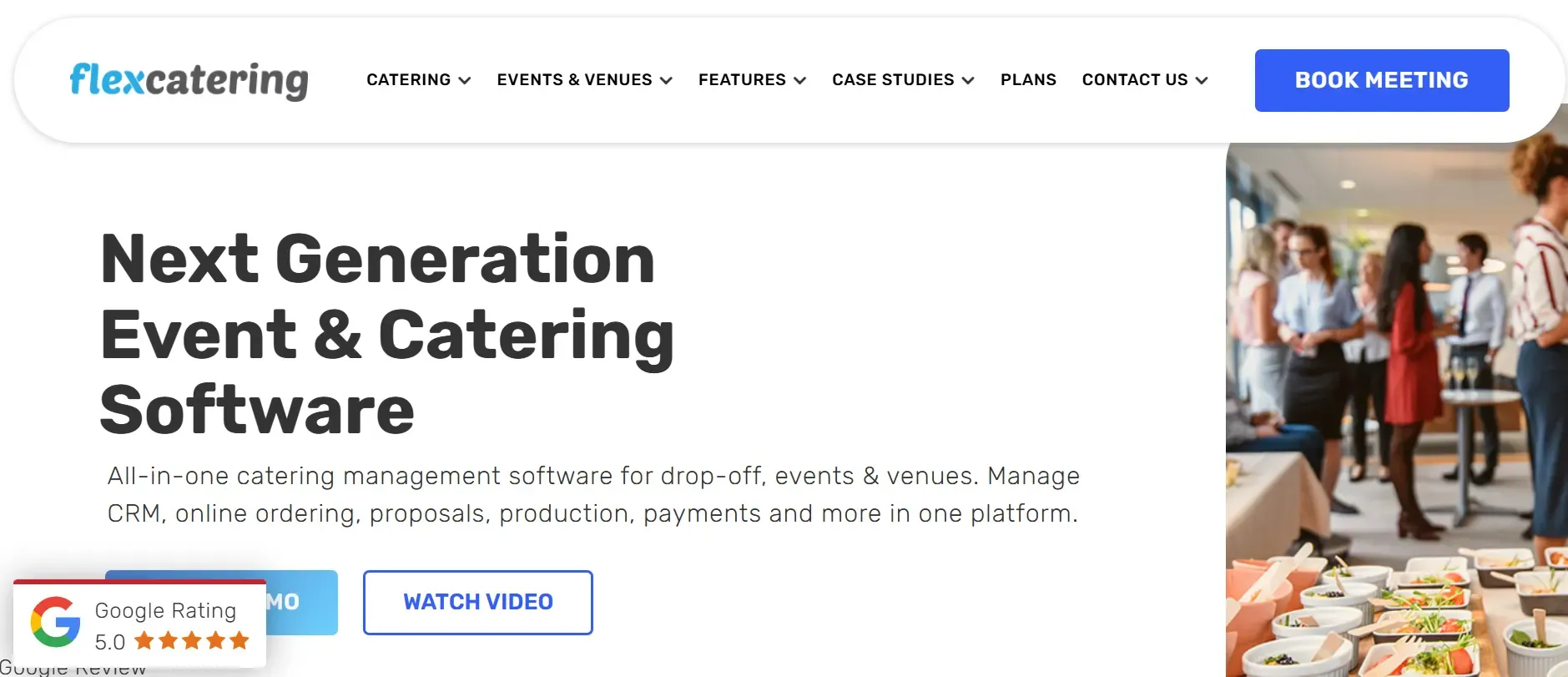
Flex Catering is built for caterers who need a strong online ordering system, production planning, and logistics features. It fills a gap for those who want modern e-commerce in addition to event management. Like Total Party Planner, it’s rental only.
Pricing: Reported $119+/month, multi-user pricing varies.
- Strong online ordering tools
- Automated production sheets
- Integrations for payment and delivery
- Pricing not fully transparent
- Some features require higher tiers
- No ownership, subscription only
That kind of production dashboard can be part of your stack, owned, not rented, if you build with Devaims.
5. Better Cater (Best for simplicity and ease of use)
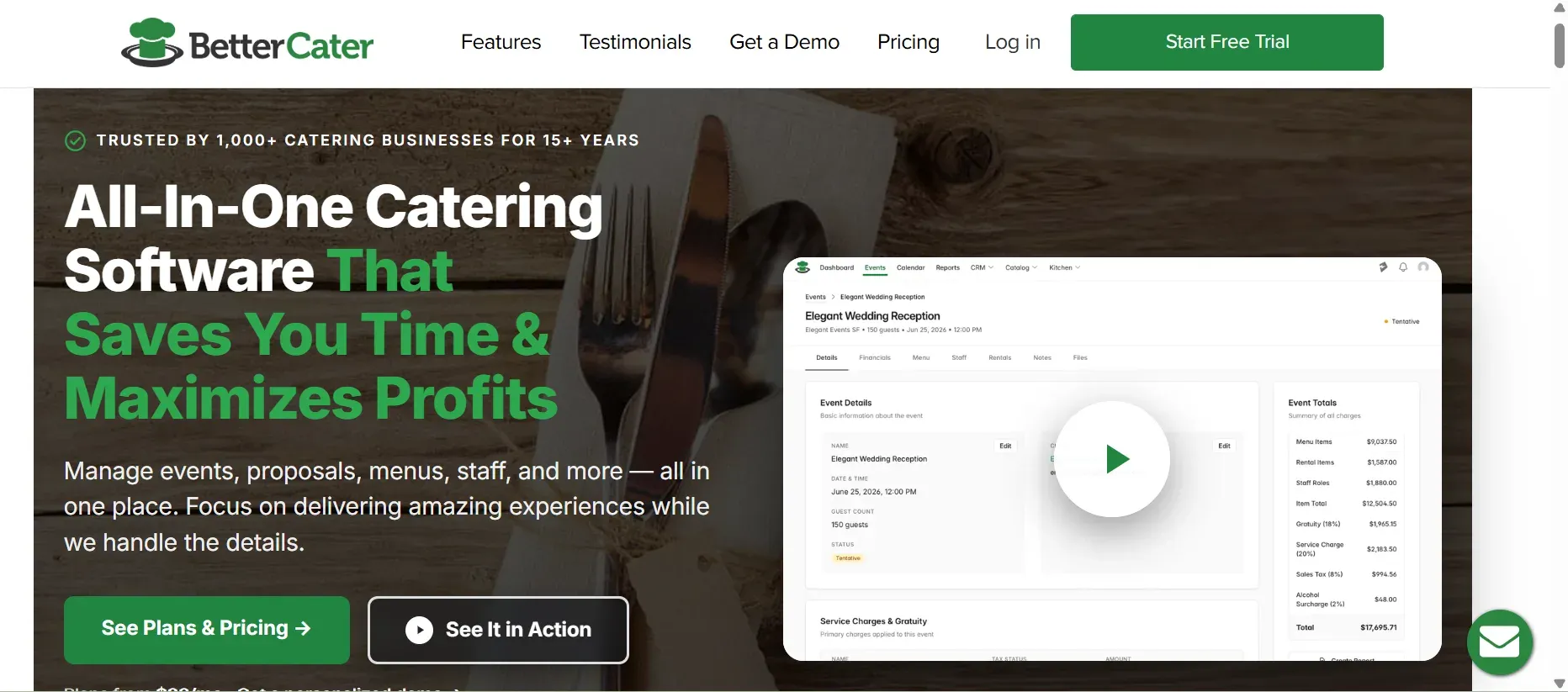
Better Cater is a lightweight catering management platform designed for ease of use. If Total Party Planner’s complexity drives you up the wall, this is the antidote. But you sacrifice advanced features and ownership for simplicity.
Pricing: $79/month, flat rate.
- Simple, clean interface
- Flat pricing regardless of users
- Quick setup
- Limited advanced reporting
- No free trial
- No ownership, always rented
6. Curate (Best for event design and proposals)
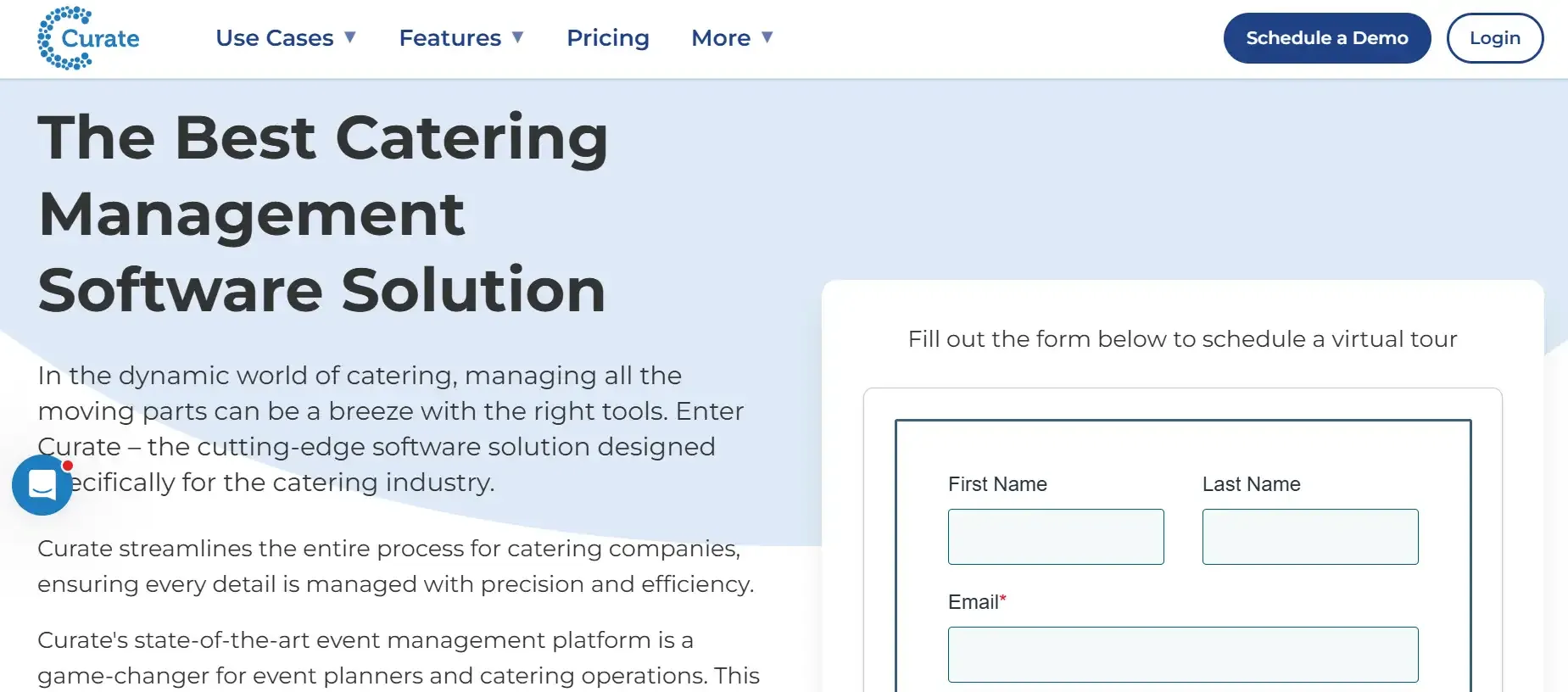
Curate specializes in proposals, contracts, and event design, serving caterers, florists, and event planners. It’s more expensive than Total Party Planner but offers unique tools for visual proposals and design-centric workflows.
Pricing: $149+/month. Pricing page (if available).
- Visual proposal and event design tools
- Integrates with QuickBooks and CRMs
- Flexible contract management
- Higher monthly cost
- May not fit basic catering needs
- Subscription only
7. Tripleseat (Best for venues and event coordination)
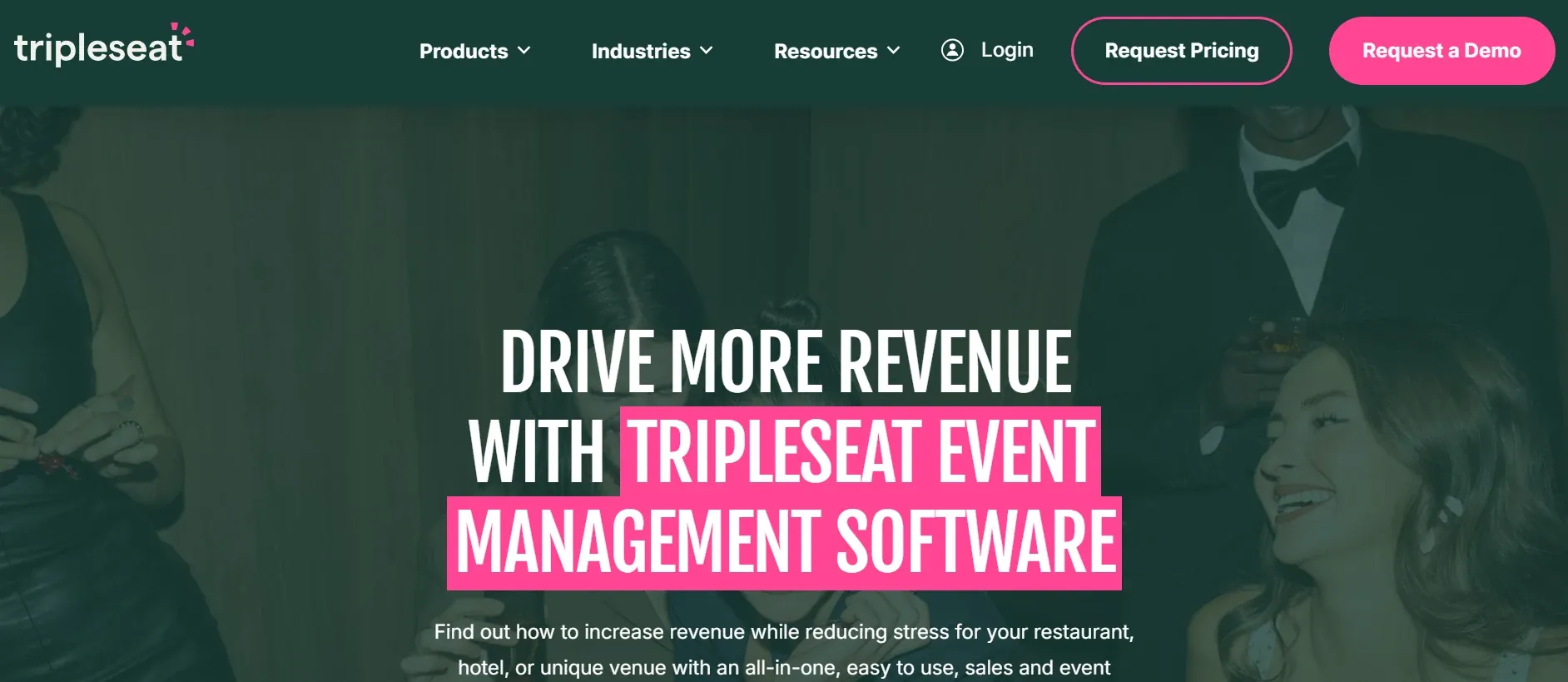
Tripleseat is built for venues that host events, including catering but also banquets, conferences, and meetings. It’s broad, with deep integrations and reporting, but less focused on pure catering workflows than Total Party Planner.
Pricing: From $150/month, custom quotes for larger teams.
- Powerful event management and CRM
- Reporting and analytics
- Integrations with payment and accounting tools
- Higher starting price
- Designed for venues, not just caterers
- Subscription rental only
8. Planning Pod (Best for flexible workflows)
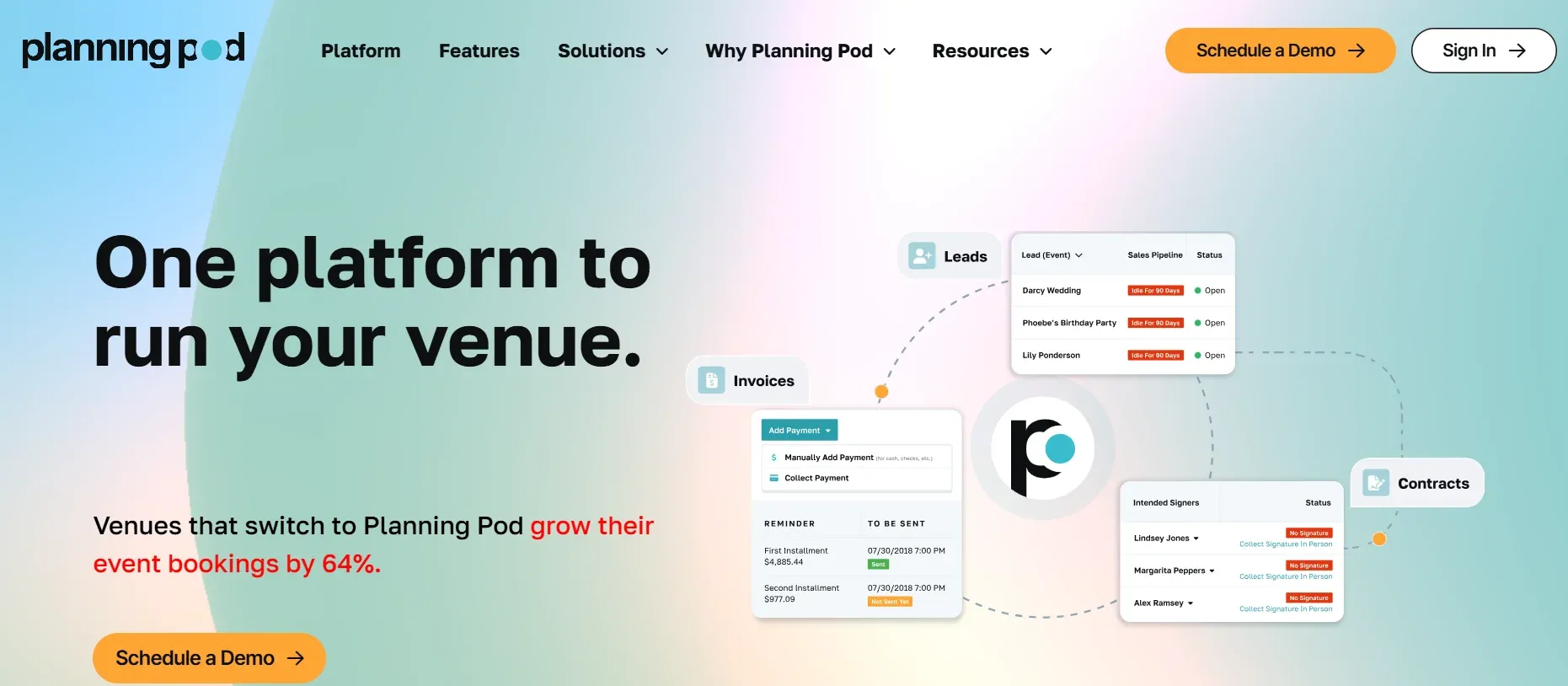
Planning Pod brings huge flexibility to event and catering management, with dozens of modules you can mix and match. It’s less rigid than Total Party Planner, but all that flexibility can feel overwhelming to new users.
Pricing: Starts at $68/month for one user, plus add-ons, $200 setup fee. See pricing.
- Highly customizable workflows
- Many modules and integrations
- Free trial available
- Can be overwhelming for new users
- Extra cost for add-ons
- Still a rental, not owned
With Devaims, you get only the modules and automations you actually use, no bloat, no upsells.
9. Devaims (Best for owning your catering system)
Devaims by Softaims builds custom catering management platforms you own outright. That means no per-user fees, no forced payment processors, no surprise price hikes, and no lock-in. You get the features you want, nothing you do not, with the ability to grow, integrate, and adapt as your business changes. Unlike every other tool on this list, Devaims hands you the source code and the keys. You rent nothing.
- One-time build, flat maintenance
- Fully customized to your workflows
- You own the code, data, and integrations
- No per-user, per-event, or per-feature fees
- Scales as your business grows
Other Total Party Planner alternatives worth knowing
- Spiffy: Popular for event forms but not a full catering platform.
- CaterZen: Focused on marketing automation for caterers but with fewer operations tools.
- FoodStorm: Designed for high-volume food production, but more commonly used by large grocery catering arms than independent caterers.
- Ungerboeck: Event management for large venues, not purpose-built for catering.
If your needs are hyper-niche (like major stadium catering or multi-location franchises), some of these can work, but most caterers find them too broad or too rigid.
How to choose the right Total Party Planner alternative
- Match your workflow: Are you all about online ordering, events, or both? Pick tools aligned with your daily grind, not just what’s popular.
- Budget for growth: Calculate per-user and add-on fees over five years. What looks cheap now can balloon as your team grows.
- Data freedom: Will you own your data, or is it locked behind a paywall?
- Integration needs: List your must-have connections (QuickBooks, Stripe, website). Not every platform plays nicely.
- Contract flexibility: Some tools force annual commitments or charge setup fees. Confirm before you sign.
If you want to escape the rental cycle for good, there’s only one option that hands you the keys: a custom build from Devaims.
Stop paying rent on software you could own
The real cost of Total Party Planner and its competitors isn’t just the monthly fee, it’s the fact that you’re always renting. Every alternative on this list, no matter how affordable or feature-packed, is a subscription that climbs as your business grows. You never own the system. You never control the roadmap. And your data lives on someone else’s servers, with their rules.
That’s why Devaims exists: to build catering platforms you own outright. You get a custom system tailored to your kitchen, your sales, your team, delivered with the source code in your hands. No per-user fees, no surprise invoices, and no contract renewals. You can integrate with whatever you want, adapt as you scale, and never worry about a competitor’s price hike blowing up your budget.
- No per-user or per-feature fees: You decide who uses it, how many users, and what features you need, no extra charges.
- No forced payment processors: Integrate with the gateways you choose, without penalty fees.
- Full control of your data: Export, migrate, or analyze as you wish. It’s your business, not a vendor’s.
- Flat maintenance: Predictable support and updates, no surprise bills.
- Scales as you grow: Add users, modules, or integrations as your business evolves, without renegotiating contracts.
| Platform | Ownership | Per-user fees? | Contract required? |
|---|---|---|---|
| Total Party Planner | No | $25/user/mo | Monthly/annual |
| Caterease | No | $28/user/mo | Annual only |
| HoneyBook | No | No (but tiered) | Annual only |
| Devaims | Yes (you own it) | None | No contract |
What does this look like in real dollars? Here’s the math for a typical catering company with 8 users, a couple of integrations, and a moderate add-on stack:
| Year | Rented (Total Party Planner) | Rented (Caterease) | Owned (Devaims) |
|---|---|---|---|
| 1 | $4,279 | $5,952 | $31,800 |
| 2 | $8,558 | $11,904 | $34,560 |
| 3 | $12,837 | $17,856 | $37,320 |
| 4 | $17,116 | $23,808 | $40,080 |
| 5 | $21,395 | $29,760 | $42,840 (now ahead) |
For most catering companies, the break-even point comes in year 4 to 5. After that, every dollar you spend is building your asset, not someone else’s. If you want to see your real numbers, Devaims will run the math for you at no charge.
Who benefits most? If you’re running 5+ trucks, managing dozens of events a month, or tired of watching costs creep up as you add staff, owning your software is the play. The bigger you grow, the faster you pull ahead.
How to switch from Total Party Planner
- Export all client, contract, and event data from Total Party Planner (CSV or Excel is typical).
- Choose your new platform and map data fields to the new system.
- Import your data, clients, event histories, menus, and more, into your new software.
- Reconnect payment processors and any key integrations (QuickBooks, Mailchimp, website forms).
- Train your staff on the new workflows and run a test batch of events in parallel.
- Review your old contract for renewal dates and cancellation terms, then make the switch official.
With a custom Devaims build, the migration is handled as part of the project.
Frequently asked questions
What is the best alternative to Total Party Planner for catering?
Caterease is a strong competitor for large event caterers, while HoneyBook suits smaller teams focused on client communications. For total ownership and customization, Devaims is the only solution that lets you own your system outright.
Which Total Party Planner alternative is the cheapest?
17hats offers the lowest entry pricing at $13/month, but it lacks many catering-specific tools. Over five years, a custom Devaims build can actually be cheaper if you factor in the true cost of per-user and add-on fees.
Is there a free Total Party Planner alternative?
No major platform offers a truly free plan for catering management at scale. Some, like HoneyBook and 17hats, have free trials, but long-term use is paid. Custom builds are never "free", but you can own them, and recoup the investment over time.
Which alternative is best for event venues?
Tripleseat and Event Temple both offer deep venue management features, but they’re not as focused on pure catering workflows as Total Party Planner or Devaims. Devaims can custom-build for venues if you want ownership and flexibility.
How hard is it to switch from Total Party Planner?
It takes exporting your data, training your team, and getting integrations live in the new tool. With a Devaims build, migration is handled and tailored to your business, minimizing downtime.
Can I keep my old data when I switch?
Yes, most platforms (and Devaims) allow you to import historical data, though the process may vary. A custom build from Devaims can map and migrate your data as part of onboarding.
Does Devaims charge any per-user or monthly rental fees?
No. Devaims delivers a one-time build and flat monthly maintenance. You own the code and can add as many users as you need with zero extra cost. That’s the core difference from all other Total Party Planner alternatives.
The bottom line
There’s no shortage of Total Party Planner alternatives, but every rental tool comes with hidden fees, contract terms, and the risk of future lock-in. If you’re tired of paying for software you never own, the math says it all: add up five years of rental fees and ask if you’d rather own your system instead.
The real test: price out what you’ll spend over the next five years. If that number could have built you a platform you own, you already have your answer. Every month you rent is a month you could be building your asset, not someone else’s, and that’s a decision you control.
Explore more on the Devaims blog, or see our honest comparisons: Caterease alternatives, HoneyBook alternatives, Planning Pod alternatives.