



Ever try to add a new user to Caterease and get hit with another $200 setup fee, plus $28 every month after? Or spend half your week wrestling with a feature that’s “coming soon” for months, only to realize it’s locked behind a pricier tier? That’s the day you start searching for Caterease alternatives.
Most catering software promises simplicity, but the fine print hits you with annual contracts, per-seat pricing, and the creeping sense you’re just renting your own process. Today, we’ll dig into the top Caterease alternatives: which ones really deliver, when they trip you up, and what it actually costs to keep renting versus building your own. Here’s the honest bottom line: Total Party Planner, HoneyBook, and 17hats each solve pieces of the puzzle, but only a custom Devaims build lets you own the whole solution, source code and all.
If you’re ready to stop paying rent on your own business logic, read on. There’s a smarter way out.
Why catering companies look for Caterease alternatives
Steep and recurring setup fees: Caterease charges $200 per user upfront, plus $28 per month for every additional user. Costs pile up as your team grows.
Rigid annual contracts: Locked into annual billing, you can’t scale down mid-year or easily switch if your needs change.
Feature fatigue: The learning curve is steep, and some core features are only available in higher tiers, meaning you’re always upgrading to unlock basics.
Vendor lock-in and no ownership: With Caterease (and most rivals), you never truly own your system or your data pipeline. Switching always risks loss.
Hidden scale limits: As your event count and staff grow, per-user fees and workflow restrictions can turn a helpful tool into a bottleneck.
For many catering companies, Caterease alternatives promise flexibility, but most still rent you the same old SaaS model.
Quick comparison of the best Caterease alternatives
| Tool | Best for | Starting price | You own it? |
|---|---|---|---|
| Caterease | Large, complex catering ops | $99/mo + fees | No |
| Total Party Planner | Event-focused caterers | $65/mo | No |
| HoneyBook | Small teams, freelancers | $29/mo | No |
| 17hats | Solo caterers | $13/mo | No |
| CaterZen | Delivery-heavy caterers | $129/mo | No |
| Flex Catering | Online ordering | $100/mo | No |
| Better Cater | Budget-focused | $69/mo | No |
| Curate | Event floral/catering | $125/mo | No |
| Devaims | Custom build, you own | One-time build | One-time build, you own it |
Always confirm current pricing before you decide. Rates and terms change fast.
10 Caterease alternatives catering companies are using in 2026
1. Total Party Planner (event-focused catering)
Total Party Planner is a workhorse for event caterers needing menu planning, proposals, and kitchen reports in one place. It’s easier to get started, but CRM and delivery features lag behind.
Pricing: $65/mo for Nibble, $165/mo for Feast, $365/mo for Delicacy. See pricing.
- Month to month contracts for flexibility
- Strong menu costing and kitchen workflow features
- Clear, simple pricing without hidden per-user fees
- Some users report basic CRM tools don’t match modern needs
- Delivery and driver tracking less advanced than rivals
- Occasional performance lags with large event lists
If your ideal workflow needs more CRM depth or custom delivery logic, Devaims can build those features to fit your process, not someone else’s roadmap.
2. HoneyBook (small teams and freelancers)
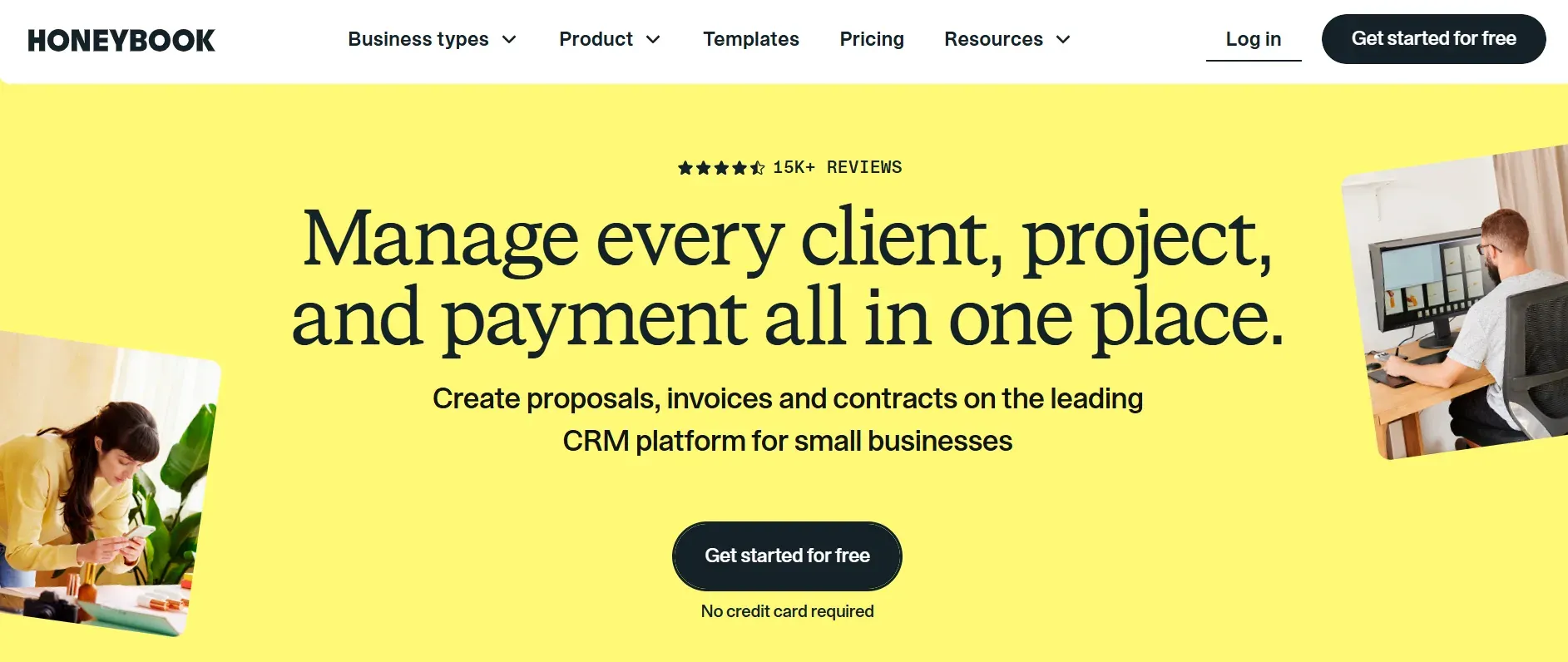
HoneyBook is built for creative businesses and solo caterers who need fast proposals, e-signatures, and client payments in one. It’s friendlier than Caterease but can feel boxed in as you scale.
Pricing: $29/mo (Starter), $49/mo (Essentials), $109/mo (Premium), all billed annually. See pricing.
- Modern UX, easy onboarding
- No setup fees
- Integrated client portal and e-payments
- Limited customization. Reporting and workflows are locked down
- No built-in kitchen or delivery modules for caterers
- Annual contracts, no true monthly option
On HoneyBook, every unique workflow becomes a workaround. With a Devaims build, your process is the software.
3. 17hats (solo operators)
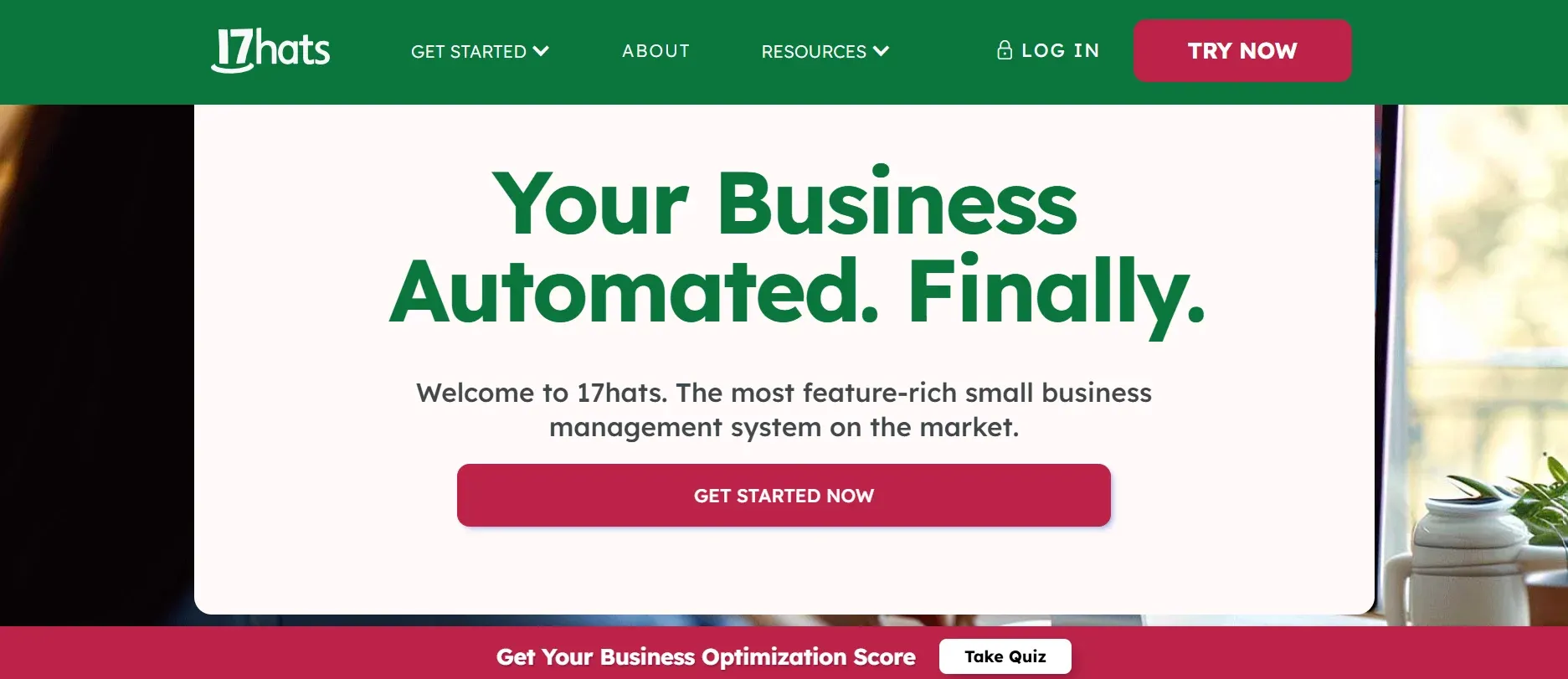
17hats targets solo caterers who want to automate quotes, contracts, and payment reminders. It’s less intimidating than Caterease, but the interface can feel dated and some automations are awkward.
Pricing: $13/mo (Essentials), $25/mo (Standard), $50/mo (Premier), all billed annually. See pricing.
- Lowest entry price in the list
- Solid for quotes and e-signatures
- No setup fees
- Interface can feel clunky next to modern SaaS
- Automations lack depth for complex catering
- No native support for kitchen or fulfillment workflows
When you outgrow 17hats, most data needs to be rekeyed elsewhere. Owning your platform means you never re-platform again.
4. CaterZen (catering delivery and call-in orders)
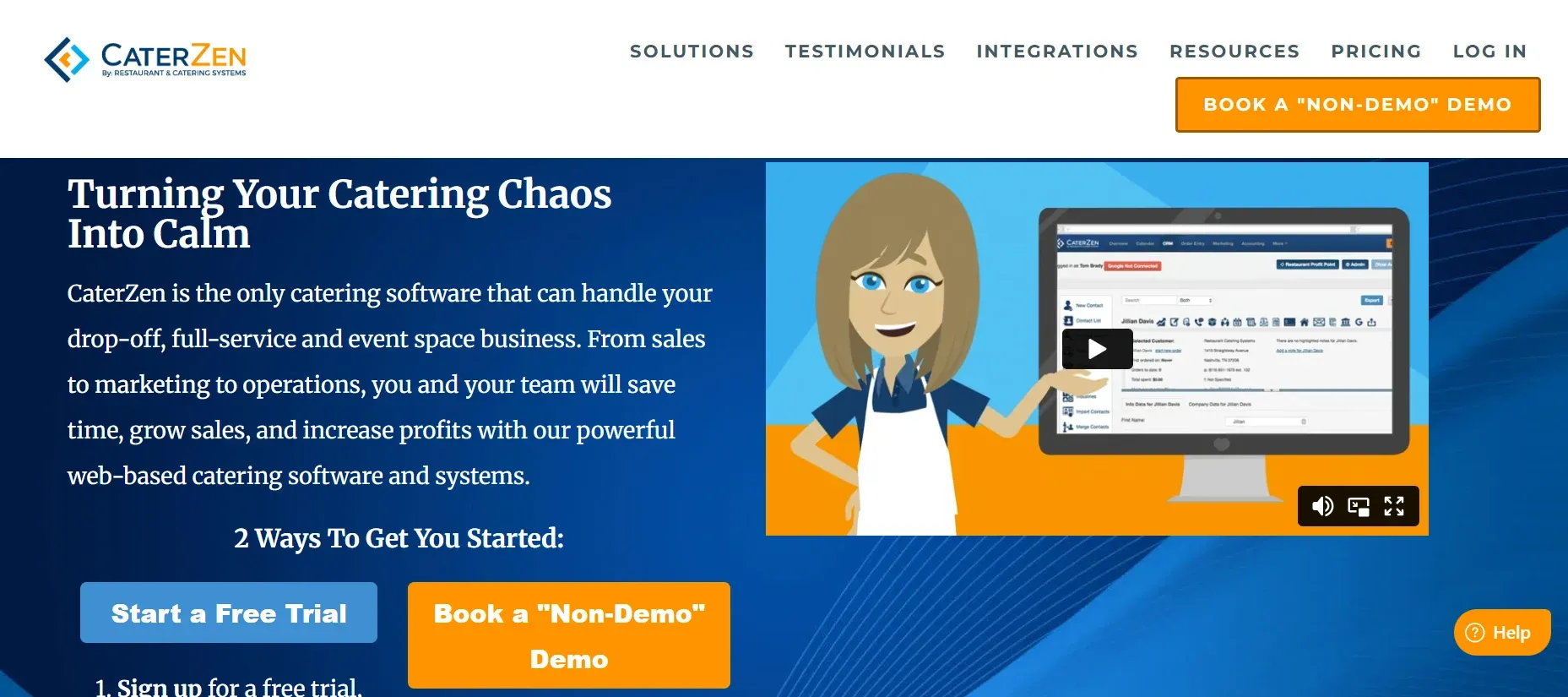
CaterZen is focused on caterers juggling call-in orders, delivery, and repeat business. It offers delivery routing and marketing tools missing from Caterease, but the UI can feel stuck in 2018.
Pricing: Starts at $129/mo. See pricing.
- Call center workflows built in
- Delivery routing and driver management
- No annual contract required
- Interface feels dated, especially on mobile
- Some key reports require manual exports
- Integrations limited without extra fees
With Devaims, your custom build can automate delivery and reporting exactly how your team already works. No more workarounds.
5. Flex Catering (online ordering and e-commerce)
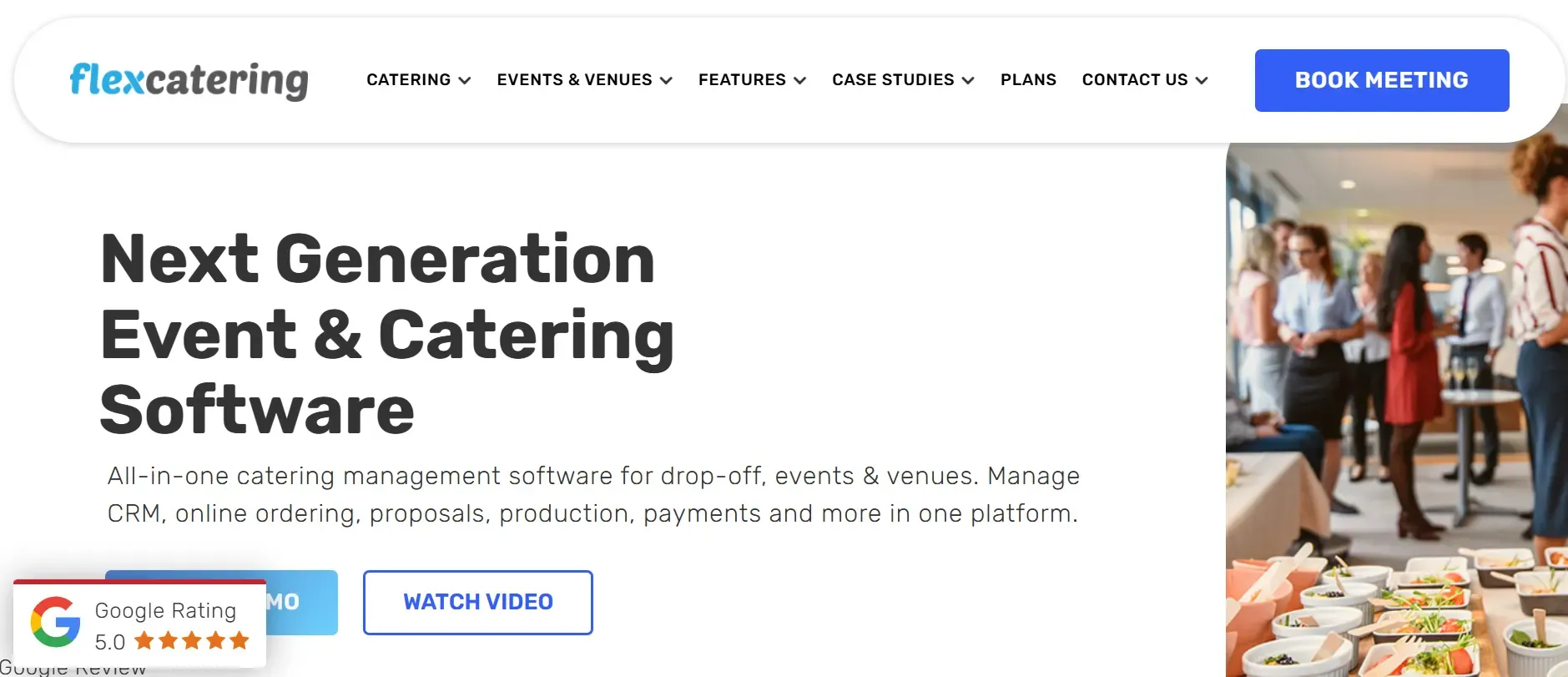
Flex Catering shines for caterers selling online, with a client portal and menu ordering. It’s modern but light on CRM and marketing compared to Caterease.
Pricing: Starts at $100/mo. See pricing.
- Clean interface, easy for clients to order
- No per-user fees
- Monthly contracts
- CRM features limited. Hard to track repeat clients
- Marketing automations lag behind category leaders
- No kitchen or production modules
6. Better Cater (budget-focused teams)
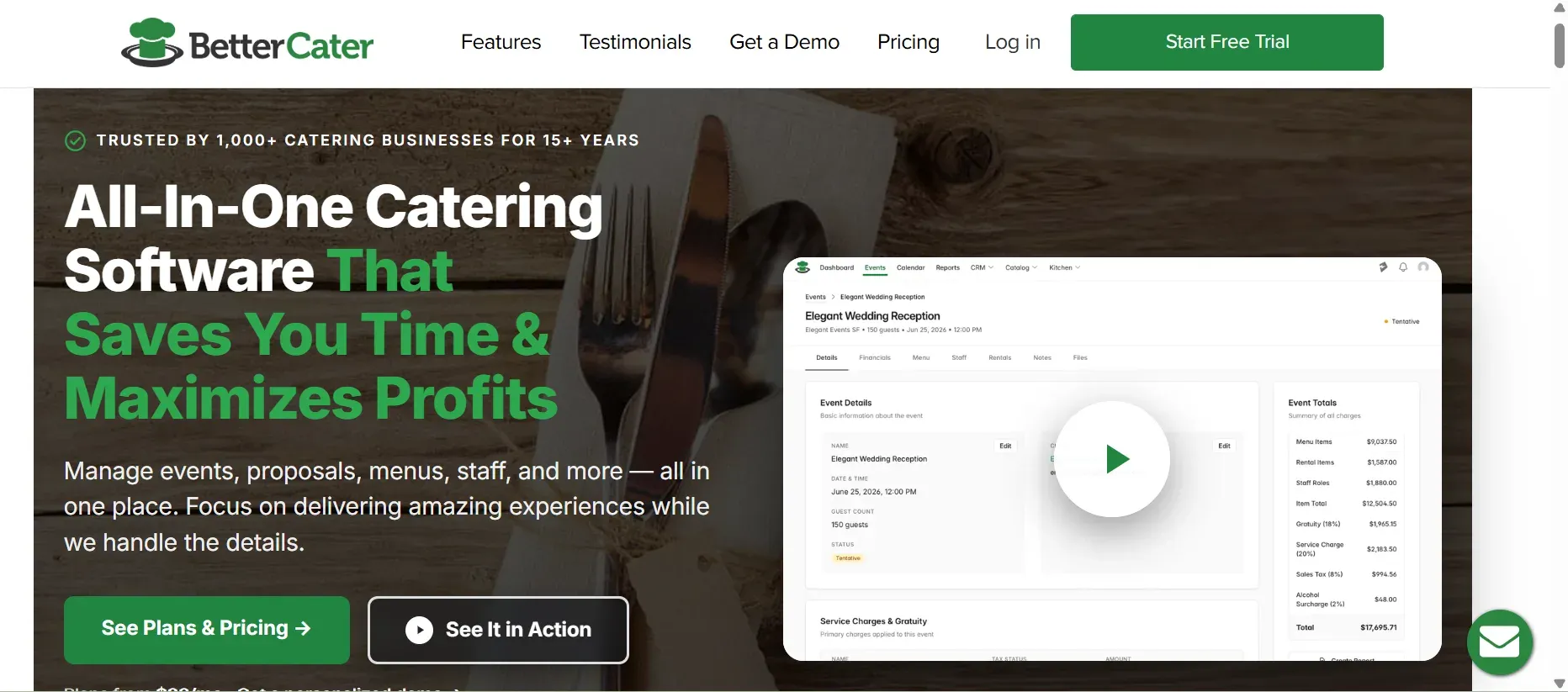
Better Cater keeps costs low for caterers who want proposals, invoices, and event tracking. Nothing fancy. If you’re moving from Caterease, it’ll feel stripped down, but the price is unbeatable.
Pricing: $69/mo. See pricing (if available).
- Simple pricing, no per-user fees
- Quick to onboard and train
- Works for small, budget-driven teams
- Limited integrations and reporting
- Basic UI and fewer workflow automations
- No delivery or kitchen management
7. Curate (event floral and catering pros)
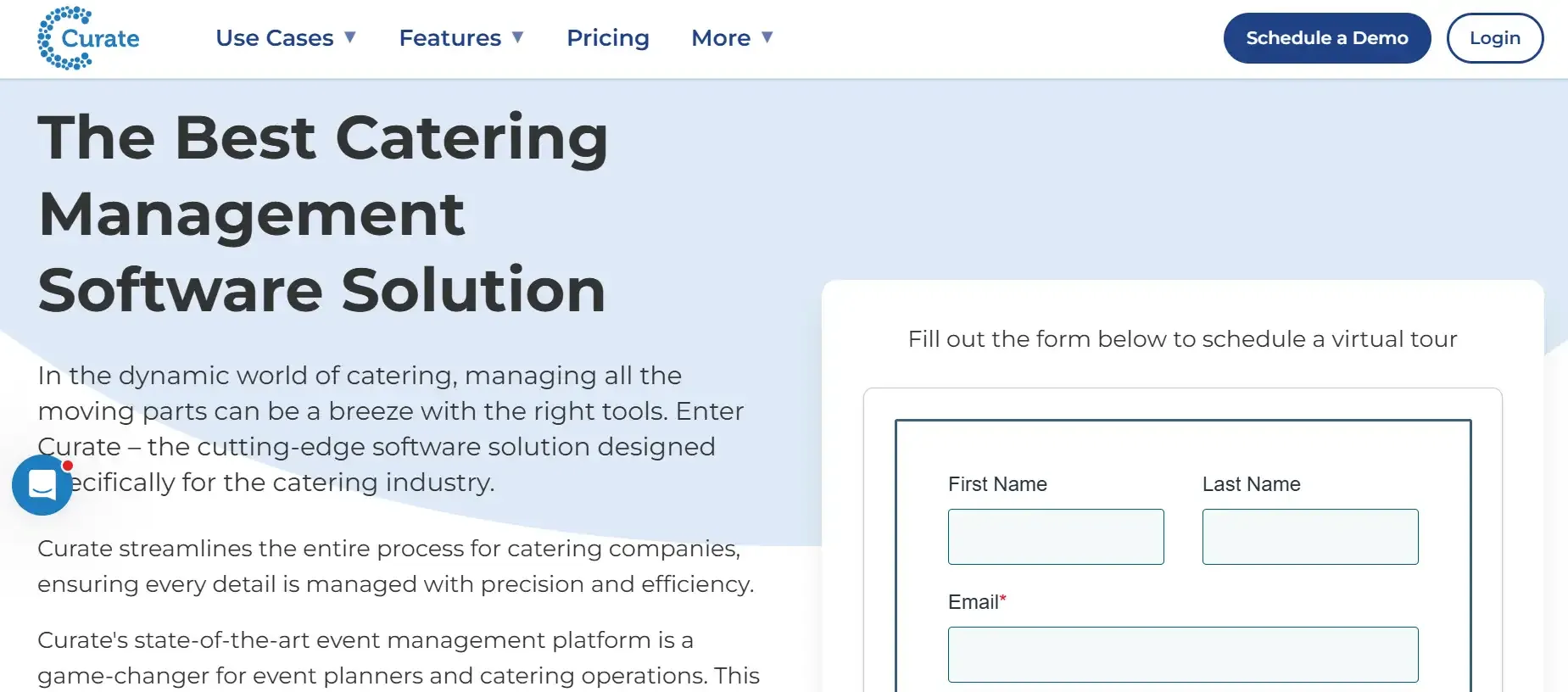
Curate targets event pros who need to manage floral, rentals, and catering in one. It covers Caterease’s event side but at a higher price, and can be overkill for pure caterers.
Pricing: Starts at $125/mo. See pricing (if available).
- All-in-one for events with rentals and florals
- Proposals and e-signatures built in
- Customer portal for event collaboration
- Pricier than most for catering-only teams
- Some features tailored to florists, not caterers
- Learning curve for non-event pros
8. Spiffy (simple event booking)
Spiffy is a lightweight event booking tool. Faster to use than Caterease, but missing deep catering features. Good for simple bookings, not full event management.
Pricing: Around $79/mo. Confirm on Spiffy’s site.
- Easy for basic events and bookings
- No contract required
- Clean, modern design
- Very limited catering-specific modules
- No kitchen or fulfillment
- Few integrations with accounting or delivery
9. Tripleseat (event venues and caterers)
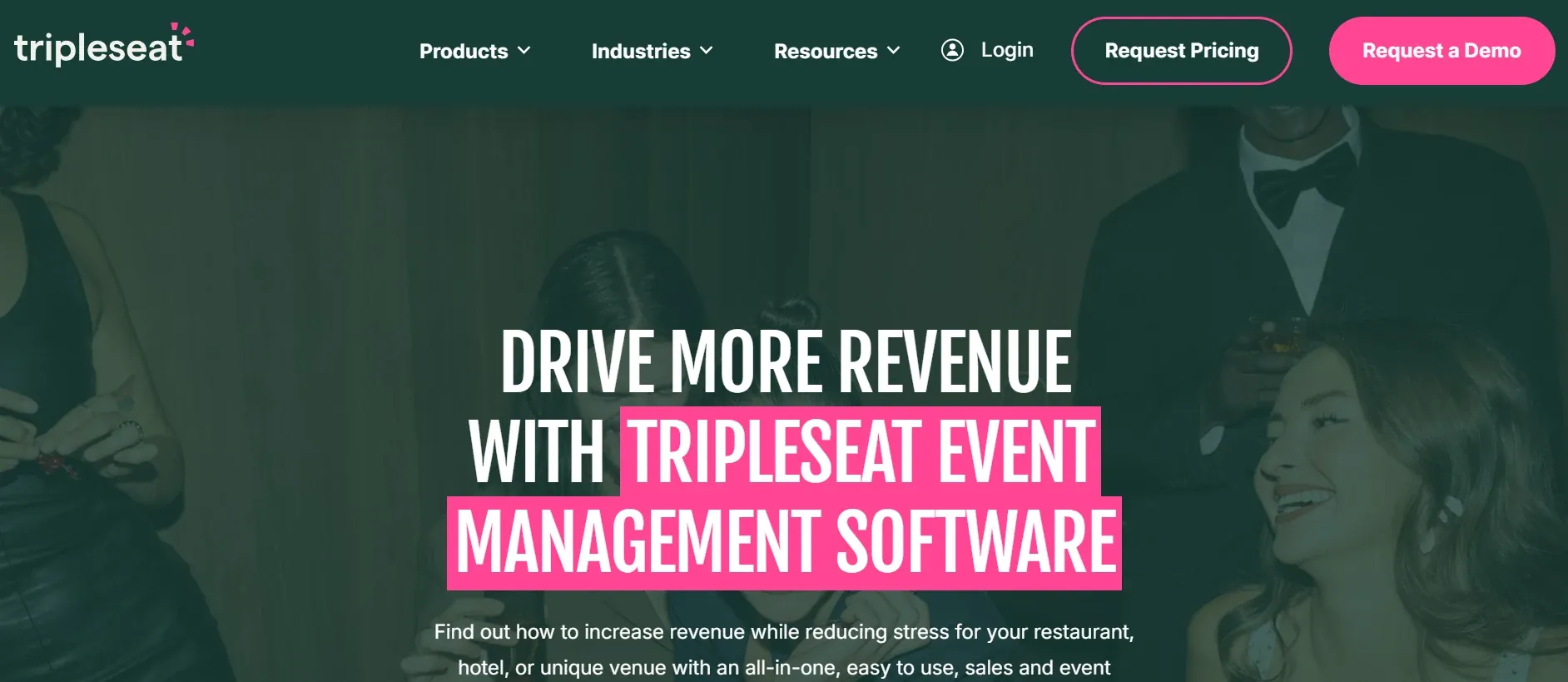
Tripleseat is built for venues and caterers running multiple events. It offers CRM and proposal tools that can outshine Caterease, but the pricing is steeper and per-user.
Pricing: Custom, often $200+/mo. See Tripleseat for details.
- Deep event CRM features
- Strong reporting and analytics
- Solid venue and event coordination tools
- Pricing can rise quickly with user count
- Contract terms not always transparent
- Some integrations require extra fees
10. Devaims (custom build, you own it)
Devaims builds custom web and business software for catering companies who want to own their stack, not rent it. You get exactly the workflows, reporting, and integrations your shop needs, delivered as source code you keep. No recurring per-user or per-month fees, no vendor lock-in, no "feature coming soon" roadblocks.
- Custom-built for your process, not generic workflows
- You own the source code and data, forever
- No ongoing per-user or per-feature fees. Just flat maintenance
- Integrates with your existing systems, not just what’s on a vendor’s list
- Scales as you grow, without hidden costs
Other Caterease alternatives worth knowing
- Planning Pod: Event management with basic catering modules, but not built for high-volume food operations.
- Event Temple: Focused on venues and hotels, less fit for pure catering workflows.
- Excel or Google Sheets plus Zapier: Still common for micro-caterers, but manual and error-prone.
These tools fill unique niches, but most won’t replace Caterease for a busy catering team needing deep kitchen, delivery, and event features.
How to choose the right Caterease alternative
- Budget: Under $100/mo? Focus on Better Cater, 17hats, or Flex Catering. Ready to invest long term? Consider Devaims.
- Workflow needs: If you need delivery routing, look at CaterZen. For deep CRM, Total Party Planner or Tripleseat. For custom workflows, Devaims is the only true fit.
- Team size: Solo or duo? Start with 17hats or HoneyBook. 10 or more users? Watch for per-user fees. Devaims or Total Party Planner scale better.
- Ownership: If you’re tired of paying rent, only Devaims ends the subscription cycle.
Once you’ve filtered by budget, features, and ownership, it’s clear that renting fits until you hit scale. Then owning wins.
Stop paying rent on software you could own
Here’s the dirty secret: Every Caterease competitor is just another rental. Whether it’s $28 per user per month or a $200 setup fee, the meter keeps running. Add up five years and you’ll pay $12,000 to $25,000 or more. Then start again when your contract rolls over.
Devaims is different. We build custom catering software you own outright. No seat fees, no annual lock-in, no paying extra to unlock basic features. You get the source code, the integrations, and the reporting your business actually needs, forever.
Let’s map the difference:
- No more per-user fees: Add staff as you grow. Your system’s cost doesn’t change.
- Your process, not a template: Stop hacking features into someone else’s workflow. We build for your kitchen, your event logic, your reporting.
- Own your data and integrations: No more vendor lock-in or export headaches. Your data is always yours.
- Flat, predictable maintenance: No surprise hikes, just a flat support plan after launch.
| Tool | Ownership | Contract | Per-user fees |
|---|---|---|---|
| Caterease | Rented | Annual | $28/user/mo + $200 setup |
| Total Party Planner | Rented | Monthly | Included, but CRM limits |
| HoneyBook | Rented | Annual | No per-user, but feature limits |
| Devaims | You own it | No contract, one-time build | No per-user fees |
| Year | Rented (Caterease/typical) | Owned (Devaims) |
|---|---|---|
| 1 | $8,000 | $33,800 |
| 2 | $16,000 | $35,600 |
| 3 | $24,000 | $37,400 |
| 4 | $32,000 | $39,200 |
| 5 | $40,000 | $41,000 (now ahead) |
For a 10-user catering business, Caterease or a peer costs about $8,000 a year after setup. With Devaims, your one-time build (say $32,000) plus $150/mo flat maintenance ($1,800/year) is paid off in just over five years. Every year after, you’re saving money and building value you own.
Serious caterers with unique workflows, high staff counts, or complex delivery and event needs benefit most from owning. If you’re tired of paying rent on your own business, it’s time to keep what you build.
How to switch from Caterease
- Export your data: Download client lists, menus, and event histories from Caterease.
- Choose your new tool: Evaluate alternatives by fit, contract, and ownership.
- Import and map data: Use the new platform’s importer or work with your vendor to migrate data cleanly.
- Reconnect payments and integrations: Link your payment processors, CRM, and accounting tools.
- Train your team: Walk staff through the new workflows and permissions.
- Test in parallel: Run both systems for a week or two to catch issues before cutover.
- Review your contract: Make sure Caterease is canceled with no auto-renewal.
With a custom Devaims build, the migration is handled as part of the project.
Frequently asked questions
What is the best Caterease alternative for large catering teams?
Total Party Planner and Tripleseat both handle large event loads and have solid reporting. For total process control and no per-user fees, a custom Devaims build is the only option that lets you own your platform.
What’s the cheapest Caterease alternative?
17hats starts at $13/month, and Better Cater at $69/month, both with no setup fees. Remember, the lowest price may mean fewer features or more manual work as you grow.
Is there a free Caterease alternative?
There’s no true free tool at this depth. Most “free” event software skips catering workflows. Micro-caterers often use spreadsheets, but that’s not scalable.
Which Caterease alternative is best for delivery-heavy caterers?
CaterZen stands out for delivery management, while Flex Catering is strong for online orders. If you need both, a Devaims build can combine them with your own process.
When should I switch from Caterease?
If you’re frustrated by per-user fees, locked features, or annual contracts, or if the total five-year cost would pay for a custom build, it’s time to review Caterease alternatives.
Can I keep my existing data when switching from Caterease?
Most alternatives offer import tools for contacts and events, but custom fields and history may need manual mapping. With Devaims, your migration is tailored to your data.
Do any Caterease alternatives let me own the software?
Only Devaims builds a catering platform you own outright. All others are SaaS rentals, no matter the price or contract.
The bottom line: Should you keep renting or finally own?
Every Caterease alternative brings its own strengths, from Total Party Planner’s kitchen workflow to HoneyBook’s ease of use. But here’s the real test: add up what you’ll pay over the next five years. If that number could have built you a system you own, you already have your answer.
Renting makes sense for light, temporary needs. But if your catering business is here to stay, owning your software means building equity in your process, not just paying the meter. Ready to see what owning looks like?
Want more honest takes? Visit the Devaims blog or check out our alternatives guides for Jobber, Clover POS, and Housecall Pro.