



Your QS/1 NRx bill never gets smaller. Add a store, hire a pharmacist, or need a new report? That price climbs or features stay locked. After years of upgrades and "integrations" that never quite click, every pharmacy owner wonders: what else is out there?
Here’s the answer, straight: PioneerRx and Liberty Software top the list for ease and innovation. Rx30, Winpharm, and Scriptpro each solve a different pain, if you’re willing to keep renting. But after five years of rising fees, every option here starts to look the same. You still don’t own your system. That’s where Devaims comes in, building pharmacy software you keep, fully owned, with source code in your hands.
Why pharmacies look for QS/1 NRx alternatives
Per-store and per-user fees stack up: Every time you add a location or staff login, the monthly bill climbs, sometimes with little warning. Most pharmacy software companies operate on a SaaS (Software as a Service) model, which means paying not just for the core platform, but for every additional user, workstation, or location. For a single store with a handful of employees, this may feel manageable, but multi-location or growing independent pharmacies often see their costs multiply rapidly, sometimes unexpectedly when new staff come on board or when a new feature is required.
Long-term contracts and lock-in: Multi-year agreements can trap pharmacies in slow-moving vendor ecosystems, with expensive early exits. Many vendors require at least one or two year commitments and often bundle in early termination fees or penalties for switching to a competitor. This can make it risky to experiment with new technologies or pivot your business model if your needs change. You may find yourself continuing to pay for features or modules you no longer use, simply to avoid contract penalties, and in some cases, even data migrations are contractually restricted.
Feature gating at higher tiers: Essential reports or compliance modules are often locked behind premium plans, costing hundreds more each month. In practice, this means you might have the basic dispensing functionality but need to pay extra for features like multi-site inventory, advanced billing, or even certain regulatory compliance modules (such as 340B, LTC, or specialty pharmacy support). Over time, these add-ons can turn what seemed like an affordable package into a significant operational expense.
Integration friction: Connecting POS, inventory, and third-party platforms often means workarounds or expensive add-ons, not true interoperability. Many systems advertise integrations with popular hardware and software, but in reality, these are sometimes brittle, require manual intervention, or come at additional cost. For example, integrating with a leading point-of-sale system or an automated pill counter may require paid connectors or even custom development. This creates hidden maintenance costs and can slow down your workflow during outages or updates.
Data access and true ownership: Exporting your full records or migrating to another system is rarely simple, because you never really own the platform. Most pharmacy management systems make it difficult to perform full data exports, and even when possible, the data may be provided in proprietary or incomplete formats. Your records are your business’s lifeblood, but in a rental model, you may be at the mercy of the vendor’s export tools, timelines, and fees. This lack of control is a major driver for pharmacies seeking true alternatives to QS/1 NRx.
Quick comparison of the best QS/1 NRx alternatives
| Tool | Best for | Starting price | You own it? |
|---|---|---|---|
| PioneerRx | Modern workflow | Reported $500+/mo/store | No, recurring fees |
| Liberty Software | Cloud-first pharmacies | Reported $475+/mo/store | No, recurring fees |
| Rx30 | Legacy integration | Reported $400+/mo/store | No, recurring fees |
| Winpharm | Independent pharmacies | Reported $375+/mo/store | No, recurring fees |
| Scriptpro | Automation | Custom, often $1K+/mo | No, recurring fees |
| RxSafe | Inventory automation | Hardware + custom SaaS | No, recurring fees |
| McKesson EnterpriseRx | Large chains | Enterprise, custom quote | No, recurring fees |
| PharmaServ | All-in-one solution | Reported $450+/mo/store | No, recurring fees |
| BestRx | Independent, value | Reported $390+/mo/store | No, recurring fees |
| Devaims (custom) | Ownership, flexibility | One-time build, you own it | Yes, you keep the code |
Always confirm current pricing before you decide. Hidden fees and required add-ons change fast in pharmacy software. Ask about onboarding, integration, training, and support costs, as these can add thousands of dollars in the first year alone.
The 10 best QS/1 NRx alternatives
1. PioneerRx (Modern workflow)
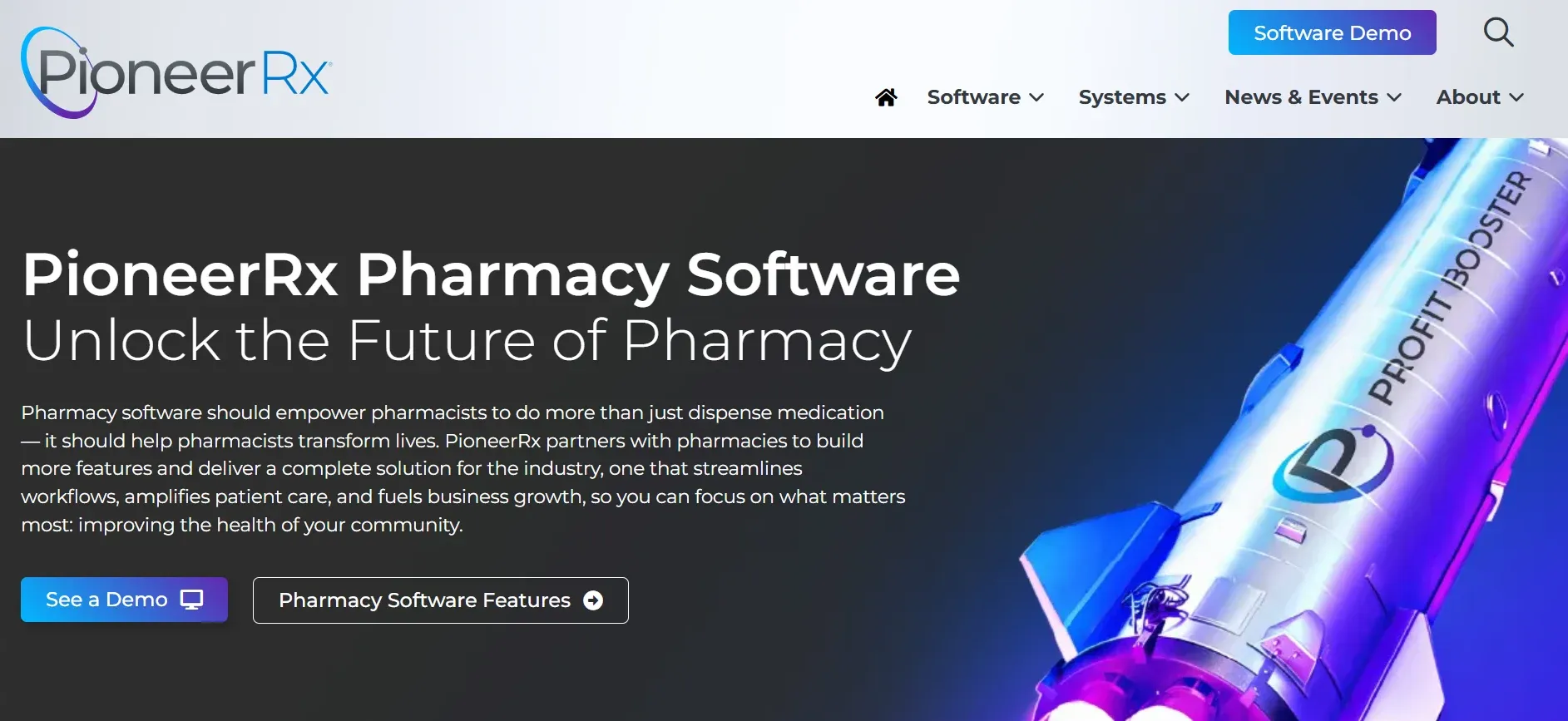
PioneerRx has positioned itself as the go-to solution for pharmacies looking for a slick, modern interface and rapid innovation. Its design is user-centric, making daily operations like prescription filling, patient counseling, and workflow management intuitive. Unlike QS/1 NRx’s legacy feel, PioneerRx’s navigation is clean, supports touchscreens, and is optimized for speed, which can reduce training time for new staff.
Features and integrations: PioneerRx offers integrated e-prescribing, automated refill reminders, inventory tracking, and a robust clinical services module. Its real-time dashboard helps pharmacists monitor workflow bottlenecks, and the system integrates with leading POS solutions, inventory automation (such as Parata and Scriptpro robots), and third-party platforms for immunization and adherence services. The platform is certified for NCPDP SCRIPT and supports HL7 for broader healthcare data exchange, which can be essential for pharmacies that collaborate with clinics or health systems.
Migration and data: Moving from QS/1 NRx to PioneerRx typically involves a vendor-managed migration. The process is streamlined, but you will not get direct access to the underlying data structures. Most data is imported, but proprietary reports or custom fields may require manual adjustment. Training is available but may be an extra charge, especially for advanced modules or multi-location rollouts.
Concrete use cases: PioneerRx is often chosen by high-volume independents and small chains that want to add clinical services, launch med sync programs, or participate in DIR fee mitigation. Its user-friendly interface helps with staff adoption, and its third-party integrations allow for flexible automation and reporting. Pharmacies aiming for URAC or ACHC accreditation often find PioneerRx’s compliance tools helpful.
Pricing: Reported at $500+ per store per month, plus one-time onboarding and training fees. See PioneerRx pricing.
- Modern, intuitive interface reduces training time
- Strong clinical and automation integrations
- Frequent updates and compliance support
- Recurring per-store pricing increases with growth
- Limited customization, no source code access
- Feature requests subject to vendor roadmap
With a custom Devaims build, you’d get the workflow you want, without fees scaling by store.
2. Liberty Software (Cloud-first pharmacies)
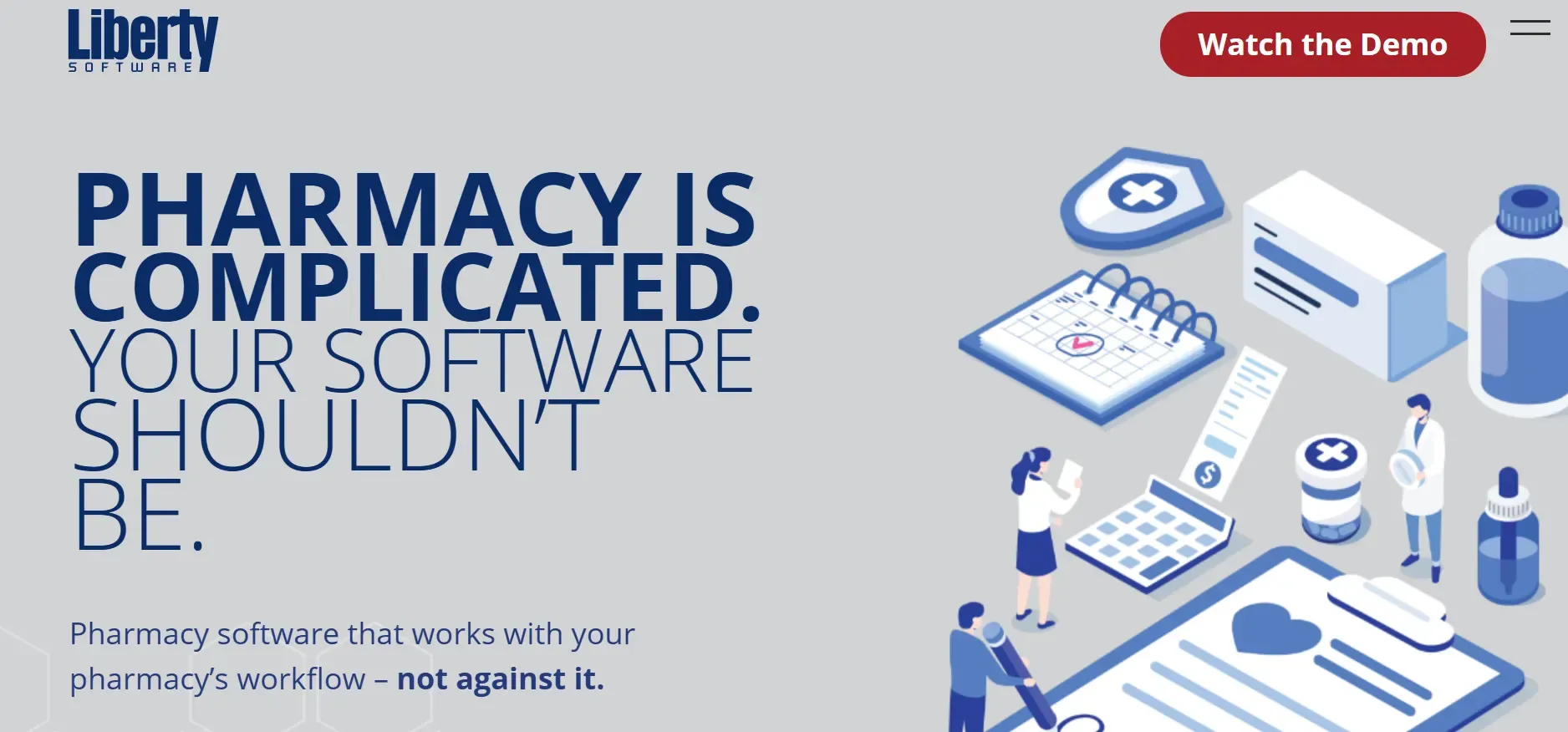
Liberty Software brings a cloud-native approach, making it easy for pharmacies to access their systems from anywhere. The interface is visually modern and designed for both desktop and tablet use, which is helpful for pharmacies with mobile vaccination clinics or off-site services. Cloud hosting means you do not need to maintain local servers, and the vendor handles all updates and security patches.
Features and integrations: Liberty offers an integrated POS, inventory module, and customizable workflow queues. It supports eCare plans, electronic prior authorizations, and built-in texting for patient notifications. The platform integrates with pharmacy automation vendors, vaccine registries, and common accounting tools like QuickBooks. For clinical services, Liberty supports MTM documentation and Medicare star ratings tracking.
Migration and data: Liberty’s onboarding process includes guided data migration from QS/1 NRx or other legacy systems. However, bulk exports are limited, and some custom data fields may not transfer directly. The vendor controls the database, which can make switching platforms in the future more difficult. Support is responsive, but deep customization is not possible. Requests are prioritized by the vendor’s product team.
Concrete use cases: Liberty Software is ideal for pharmacies that want to run multiple sites without maintaining their own IT infrastructure. Mobile clinics, COVID-19 testing, and travel immunizations are easier to manage with Liberty’s mobile access. The platform is also a good fit for pharmacies that want to offer telepharmacy or remote counseling.
Pricing: Typically starts around $475 per store per month, with add-ons for specialty modules and one-time setup costs.
- Cloud-based, accessible from anywhere
- Integrated POS and clinical modules
- Responsive support and regular updates
- No platform or code ownership
- Advanced features locked behind higher-priced plans
- Data exports can be slow or incur extra fees
When you own your software, upgrades are driven by your needs, not a vendor’s release schedule.
3. Rx30 (Legacy integration)
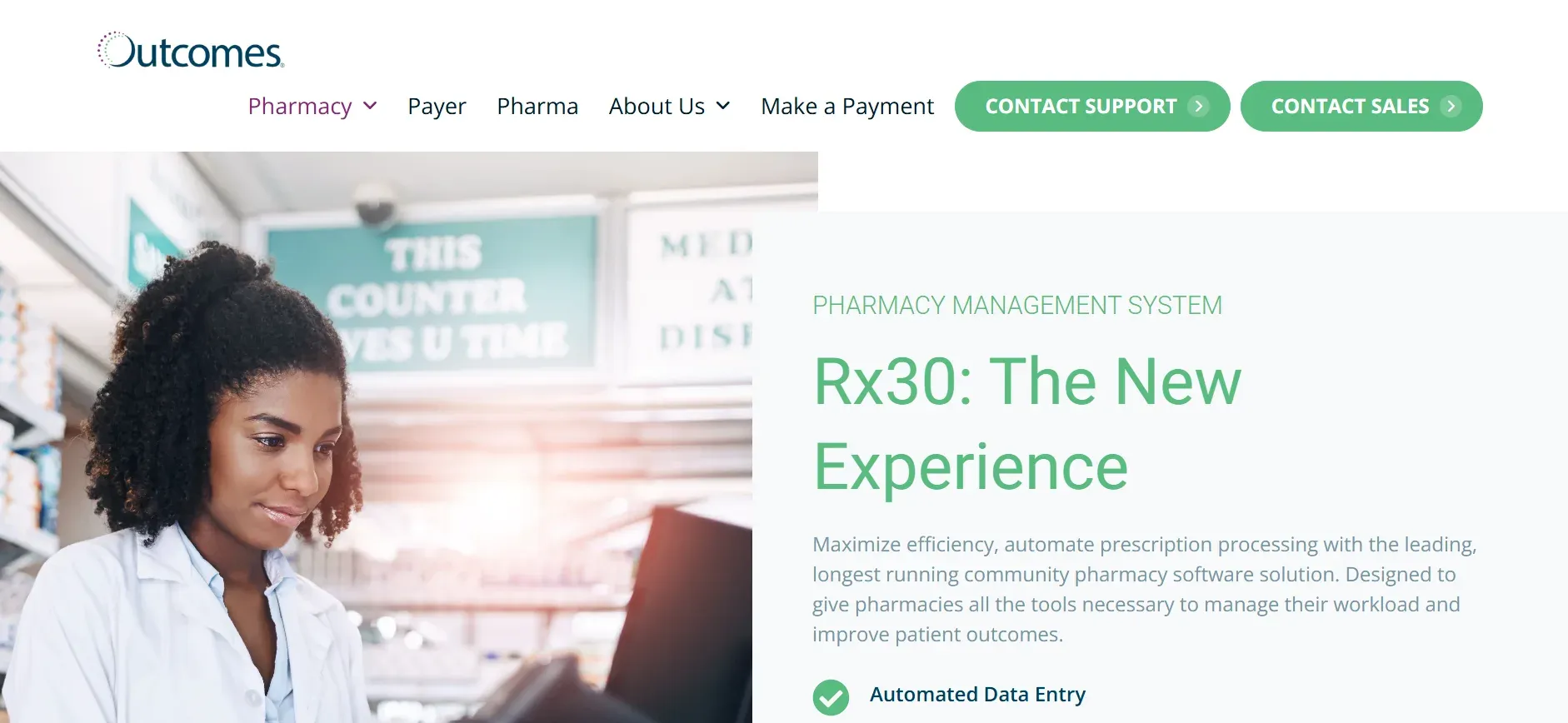
Rx30 has a long track record in the pharmacy software space and is well-known for its compatibility with legacy systems and hardware. Its interface is functional but less modern than the cloud-first options. Rx30’s main appeal is support for complex billing scenarios and a wide range of insurance plans, making it popular among pharmacies that serve a diverse patient base.
Features and integrations: Rx30 includes core dispensing, claims processing, and a robust reporting suite. It integrates with many automated dispensing cabinets, pill counters, and common POS systems. The system’s third-party integration is strong for insurance claims, Medicare/Medicaid billing, and compliance reporting. Rx30 also partners with telehealth and adherence platforms, but most integrations are add-ons with associated fees.
Migration and data: Migrating from QS/1 NRx to Rx30 is generally straightforward, especially for pharmacies with older hardware or data formats. Rx30 has tools for importing legacy datasets, but custom reports and unique data fields may not transfer seamlessly. Data exports are possible but may be limited by the vendor’s export utilities, not by direct database access.
Concrete use cases: Rx30 is a good fit for pharmacies that want to minimize disruption when moving off legacy systems or that need to preserve complex billing workflows. It is also used by pharmacies that want to retain existing hardware investments or that have specialized insurance workflows.
Pricing: Reported around $400+ per location per month, with integration and support fees. One-time onboarding fees are common.
- Strong legacy hardware and billing support
- Wide insurance and claims compatibility
- Reliable migration tools for older systems
- Interface is dated compared to newer options
- Customization limited to pre-built modules
- Rental model, no ownership or direct data access
With Devaims, you can finally drop legacy code and build exactly what you need, no more, no less.
4. Winpharm (Independent pharmacies)
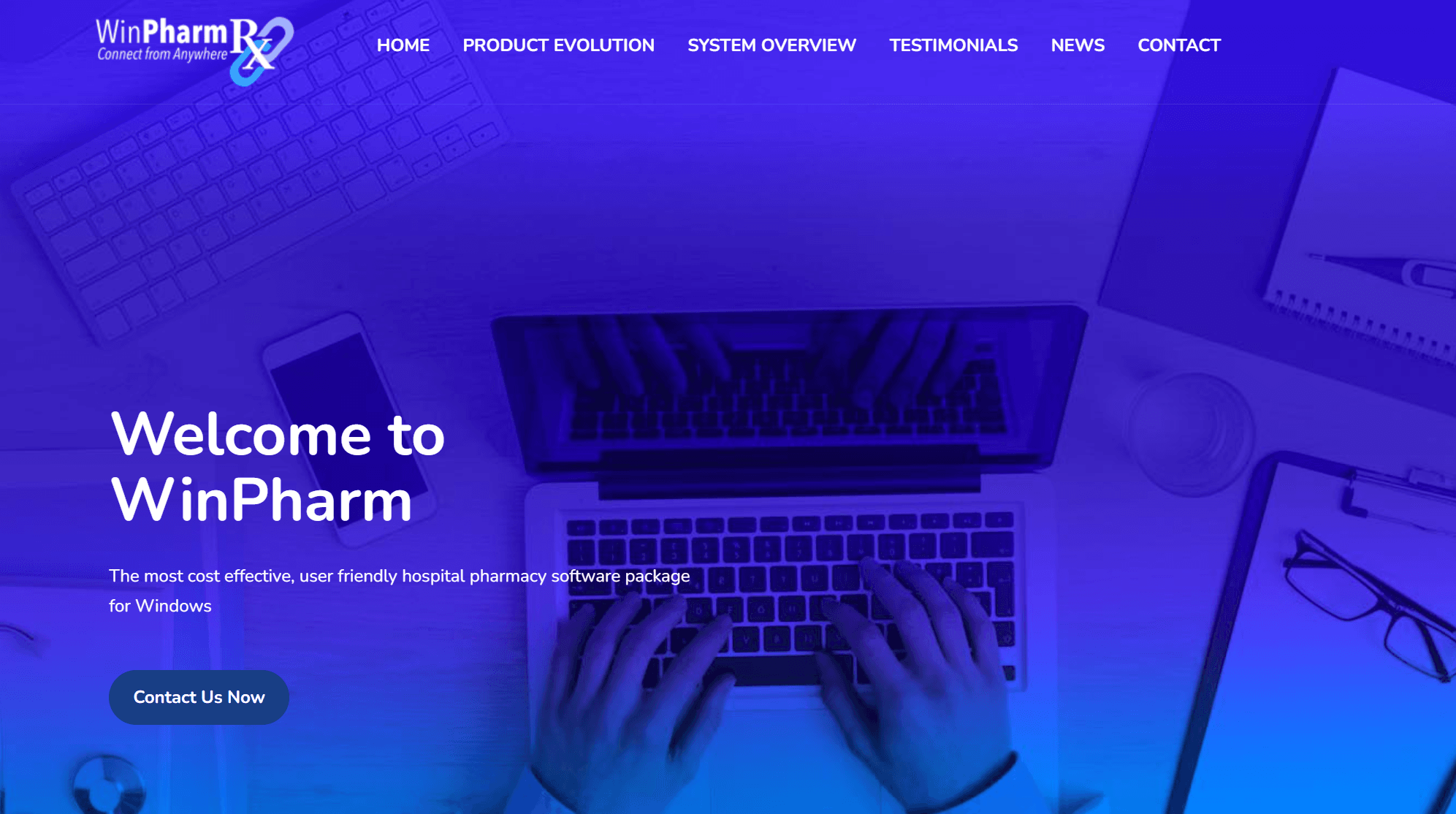
Winpharm is designed for independent pharmacies seeking an affordable and straightforward pharmacy management system. It focuses on the essentials, with fewer bells and whistles than some competitors, but this can be an advantage for small teams that value simplicity over exhaustive feature sets.
Features and integrations: Winpharm covers core dispensing, claims, and inventory, with support for basic POS integration. It offers electronic prescribing, workflow management, and compliance modules for state and federal regulations. The platform includes a basic reporting suite and supports HL7 and NCPDP standards for interoperability. However, advanced automation or specialty modules are limited compared to larger vendors.
Migration and data: Migration from QS/1 NRx is supported, but the process may require more manual intervention, especially for custom fields or historic data. Data exports are available, but the formats may require additional processing to migrate to other systems in the future.
Concrete use cases: Winpharm is often chosen by single-location or low-volume pharmacies that want to keep costs low and avoid overcomplicated systems. It suits pharmacies that do not need advanced automation or highly customized workflows.
Pricing: Around $375+ per store per month, with extra fees for integrations and onboarding.
- Affordable for independents
- Straightforward, easy to use
- Compliance modules for state and federal needs
- Limited scalability for growing pharmacies
- Basic reporting and analytics
- Fewer advanced automation options
5. Scriptpro (Automation)
Scriptpro is a leader in pharmacy automation, offering both hardware (robotic dispensing systems) and software for workflow and medication management. It is often used in conjunction with other pharmacy management systems, but Scriptpro also offers its own integrated platform for full dispensing and inventory management.
Features and integrations: Scriptpro’s flagship offering is its robotic dispensing system, which automates prescription filling and labeling, reducing manual labor and errors. The software manages workflow, tracks inventory in real time, and integrates with third-party systems for claims, POS, and other automation devices. Scriptpro supports HL7 integration for broader healthcare connectivity and can connect with hospital information systems for outpatient or discharge pharmacy services.
Migration and data: Scriptpro provides comprehensive onboarding for both hardware and software, but migration from QS/1 NRx or other systems requires detailed planning. Integration with legacy data is possible, but the focus is on forward-looking automation. Hardware installation and training can add significant upfront costs and require physical space and workflow changes.
Concrete use cases: Scriptpro is ideal for high-volume pharmacies, hospital outpatient pharmacies, and chains seeking to reduce labor costs and improve accuracy. The automation is particularly valuable for central fill operations, adherence packaging, and multi-location groups that want to standardize processes.
Pricing: Typically custom-quoted, but often $1,000+ per month per location for full automation suites, plus significant upfront hardware costs.
- Industry-leading automation and robotics
- Reduces manual labor and errors
- Strong integration with hospital systems
- High upfront and ongoing costs
- Locked into proprietary hardware and protocols
- Customization limited to vendor-supported options
Devaims can integrate with hardware you already use, on your terms, not a vendor’s.
6. RxSafe (Inventory automation)
RxSafe specializes in high-end inventory automation and secure medication storage. Its systems are widely used by pharmacies that want to reduce shrinkage, improve accuracy, and automate inventory tracking.
Features and integrations: RxSafe’s core offering is its automated storage and retrieval system, which works in tandem with its software to track inventory in real time. The platform integrates with popular pharmacy management systems, including QS/1 NRx, PioneerRx, and Liberty Software. RxSafe provides reporting on inventory movement, expiration tracking, and controlled substance management. The system can automate 340B inventory management and supports barcode verification for safety.
Migration and data: RxSafe is typically added to an existing pharmacy system, so migration from QS/1 NRx is not always required. However, deploying RxSafe’s software modules may require data integration and staff retraining. Onboarding is vendor-managed, and data exports are available for inventory and transaction logs.
Concrete use cases: RxSafe is a strong fit for pharmacies with high inventory turnover, those managing controlled substances, or those participating in 340B programs. It is also used by multi-location groups to standardize inventory controls and reduce diversion risk.
Pricing: Hardware sold up front (often tens of thousands), software add-ons via custom SaaS pricing, and ongoing support fees.
- Advanced inventory automation and security
- Reduces shrinkage and improves accuracy
- Strong 340B and compliance support
- Significant hardware investment required
- Limited flexibility for custom workflows
- Integration may require middleware if switching vendors
7. McKesson EnterpriseRx (Large chains)
EnterpriseRx is McKesson’s enterprise-grade platform, powering some of the largest pharmacy chains and health systems in North America. It is designed for scalability, compliance, and integration with McKesson’s vast supply chain and analytics tools.
Features and integrations: EnterpriseRx includes advanced dispensing, inventory, billing, and compliance modules. It provides centralized management for multi-location groups, integrates directly with McKesson’s drug distribution, and supports real-time analytics for inventory and financials. The platform connects with hospital EHRs, immunization registries, and supports centralized call centers and telepharmacy. EnterpriseRx also offers medication synchronization, clinical services, and specialty pharmacy modules.
Migration and data: Migration projects are complex and vendor-managed, requiring significant planning and IT involvement. McKesson provides tools for data import and validation, but customization is limited to what is supported in the platform’s configuration options. Data exports are possible, but you do not own the code or database schema.
Concrete use cases: EnterpriseRx is used by regional and national pharmacy chains, hospital outpatient pharmacies, and organizations that need to manage hundreds of sites with consistent workflows and compliance. It is also leveraged by 340B contract pharmacies and large health systems seeking integration with their supply chain.
Pricing: By custom quote. Enterprise pricing is significant, often bundled with distribution agreements and requiring multi-year commitments.
- Enterprise-grade scalability and compliance
- Direct integration with supply chain
- Centralized management for large groups
- Expensive, with long-term contracts
- Customization limited to platform configuration
- Locked into McKesson ecosystem
8. PharmaServ (All-in-one solution)
PharmaServ provides an all-in-one pharmacy software suite, targeting independents and small chains that want a single-vendor solution for dispensing, inventory, billing, and POS. Its goal is to reduce vendor management overhead and streamline support.
Features and integrations: PharmaServ bundles dispensing, claims, inventory, and POS into one platform. It offers built-in e-prescribing, electronic signature capture, and compliance modules for HIPAA and state regulations. The system integrates with a range of payment processors and supports basic automation hardware. PharmaServ’s reporting suite covers financials, inventory movement, and controlled substance tracking.
Migration and data: PharmaServ provides guided migration from QS/1 NRx and other systems, but as with most SaaS platforms, you do not have direct access to the underlying database. Bulk data exports are available, but complex custom fields or historical data may require manual mapping. Training is included, but advanced customization is not supported.
Concrete use cases: PharmaServ is a fit for pharmacies that want a tightly integrated, single-vendor stack and do not want to juggle multiple software vendors. It is also suited for new pharmacy startups that want a turnkey solution with minimal IT management.
Pricing: Around $450+ per store per month, plus charges for premium modules and support.
- All-in-one platform reduces vendor management
- Integrated compliance and reporting
- Turnkey setup for new pharmacies
- Subscription model, no ownership
- Limited custom features or integrations
- Migration to new system can be challenging
9. BestRx (Independent, value)
BestRx is marketed to independent pharmacies that want affordability and ease of use. Its interface is simpler than QS/1 NRx’s legacy UI, with a focus on quick setup and minimal training.
Features and integrations: BestRx covers dispensing, claims, inventory, and basic reporting. It offers e-prescribing, barcode scanning, and signature capture. Integrations are available for POS, medication synchronization, and some automation hardware, but often at additional cost. BestRx supports compliance modules for eCare plans, immunization reporting, and controlled substance tracking.
Migration and data: BestRx supports migration from most legacy systems, including QS/1 NRx. Data transfer is vendor-managed, but custom reports and unique data fields may not map perfectly. Data export tools are available, but you are limited to the formats provided by BestRx.
Concrete use cases: BestRx is a strong fit for single-location independents, startup pharmacies, and those that want to minimize upfront and monthly costs. It is also chosen by pharmacies that want to get up and running quickly with minimal IT overhead.
Pricing: Reported at $390+ per month per location, plus fees for add-ons and support.
- Affordable for independents and startups
- Quick setup and minimal training
- Essential compliance modules included
- Limited customization and advanced features
- Basic reporting and analytics
- Rental model, no code ownership
10. Devaims (Ownership, flexibility)
Devaims builds custom pharmacy software designed around your exact workflow, compliance, and reporting needs. You keep the source code, own your data, and control every feature and integration. No recurring per-store or per-user fees, ever.
Features and integrations: Every feature is built to your specification: dispensing, inventory, claims, custom reporting, and unique workflows. Devaims can integrate with any hardware (from barcode scanners to Scriptpro or RxSafe robots), any POS, and any third-party platform via API or HL7/NCPDP. If you want unique compliance modules (such as for 340B, LTC, or specialty pharmacy), they are included in the build. Reporting is fully customizable, if you want a KPI dashboard or a custom export, it is built for you.
Migration and data: Devaims handles the entire migration process, extracting your data from QS/1 NRx or any other platform, cleaning and mapping it into the new system, and validating accuracy. Because you own the code and database, you have full access to all your data at any time, in any format you choose. Future migrations are simplified because you control the platform.
Concrete use cases: Devaims is ideal for pharmacies with multiple locations, complex workflows, or unique compliance requirements. Multi-site operators, specialty pharmacies, 340B contractors, and pharmacies that want to own their technology stack choose Devaims to avoid rental fees and gain full control. Pharmacies that want to integrate with hospital or clinic EHRs, or that require robust analytics for payer negotiations, benefit from custom builds.
- You own everything, the code, the data, the stack
- Fully custom workflows, reports, and integrations
- No recurring rental fees, one-time build, flat maintenance
- Migration and compliance tailored to your pharmacy
Other QS/1 NRx alternatives worth knowing
- Datascan: Focused on specialty and compounding pharmacies, with advanced compounding modules and detailed batch tracking. Less mainstream for high-volume retail dispensing, but a strong choice if you need complex compounding records and hazardous drug tracking.
- Computer-Rx: Now part of Transaction Data Systems; offers a modern workflow and strong integrations, but is still a rental model with per-store fees. Particularly popular in the Midwest and among small chains.
- SuiteRx: Designed for closed-door and LTC pharmacies. Features include med pass, MAR, and cycle fill management. Less suited for retail independents due to niche focus and pricing structure.
How to choose the right QS/1 NRx alternative
- Budget and scale: How many stores, users, or volume will you run? Per-store fees multiply quickly as you grow. For chains or groups, a custom solution can be more cost-effective over five years than SaaS subscriptions.
- Required features: Do you need automation, specialty billing, or specific compliance modules? Make a checklist of must-have features and compare against each vendor’s offering, including the cost of add-ons and upgrades.
- Data ownership: Will you need to export, migrate, or fully control your data in the future? If you anticipate acquisitions, mergers, or new lines of business, owning your data and code can reduce future migration costs and headaches.
- Integration: Does the platform easily connect to your POS, inventory, and external apps? Ask vendors for a list of supported integrations and whether new connections can be built on request. Some platforms charge extra for integration connectors.
- Long-term cost: Add up the real 5-year spend, including hidden fees and upgrades, to see if owning with Devaims makes more sense. Factor in onboarding, support, integration, and training costs, as well as the opportunity cost of being locked into a vendor’s roadmap.
If you’re tired of paying rent for your own pharmacy data, it might be time to look at a custom, owned solution.
Stop paying rent on software you could own
QS/1 NRx and every major competitor keep you on the monthly treadmill: per-store, per-user, and upgrade fees that never end. Even "cloud" alternatives rarely hand you true ownership of your platform or data. After five years, you’ve paid out six figures and still don’t own a line of code.
Devaims is the alternative that flips the script. We build pharmacy software tailored to your workflow, compliance, and reporting needs, and you keep the source code. No contracts, no locked modules, and no surprise price hikes. You pay a one-time build fee and a flat monthly maintenance, then it’s yours to run, modify, or expand as you wish.
- No per-store or per-user rent: Add locations or staff without extra fees. Your cost is predictable, letting you scale your business without penalty.
- Own your data and platform: Export any time, integrate anything, and never fear lock-in again. Your data stays with you, and you control backups, privacy, and reporting.
- Every feature is yours: If you want a report, it’s built for you instead of being locked to a premium tier. You set the priorities and timing, not a vendor’s product team.
| Tool | Contract | Customization | Ownership |
|---|---|---|---|
| QS/1 NRx | Multi-year, recurring | Limited to modules | Vendor-owned |
| PioneerRx | Annual, recurring | Platform-limited | Vendor-owned |
| Liberty Software | Annual, recurring | Limited | Vendor-owned |
| Devaims | No contract, one-time build | Fully custom | You own it |
| Year | Rented (QS/1 NRx, PioneerRx, etc.) | Owned (Devaims) |
|---|---|---|
| 1 | $36,000 | $27,000 (build) + $2,400 (maint) = $29,400 |
| 2 | $72,000 | $27,000 + $4,800 = $31,800 |
| 3 | $108,000 | $27,000 + $7,200 = $34,200 |
| 4 | $144,000 | $27,000 + $9,600 = $36,600 |
| 5 | $180,000 | $27,000 + $12,000 = $39,000 (now ahead) |
For a pharmacy group running five locations, even "value" alternatives at $600 per store per month become $36,000 per year and you never own the platform. With Devaims, that money builds your system, not someone else’s.
Pharmacies with multiple locations or complex reporting needs see the biggest gain from owning. We’ll help you run the real math on your pharmacy’s numbers, no pressure, just facts.
How to switch from QS/1 NRx
- Export all patient, prescription, and billing data from QS/1 NRx (most vendors will provide a migration package on request). Make sure to request comprehensive exports, including custom fields and historical records.
- Choose your new pharmacy system or custom platform (get a demo with each option). Evaluate not just the features but also the vendor’s support for migration, training, and integration.
- Work with your new vendor to import historical data and verify accuracy. Validate patient records, prescription histories, and billing information through test cases and parallel runs.
- Reconnect payment processors, insurance, and third-party integrations. This may require new credentials, interface middleware, or vendor configuration. Test each integration before going live.
- Train your staff on the new workflows and interface. Use vendor-provided materials, and consider appointing a “superuser” for ongoing support.
- Test transactions and claims in parallel before full switchover. Run a period of dual operation to catch data discrepancies and workflow issues.
- Review your QS/1 NRx contract for cancellation terms and submit notice. Ensure you have no outstanding obligations and that all data has been transferred before decommissioning the legacy system.
With a custom Devaims build, the migration is handled as part of the project, including custom field mapping and post-launch support.
Frequently asked questions
What is the best QS/1 NRx alternative for independent pharmacies?
PioneerRx and Liberty Software are popular for independents due to their modern features and support, but they still rely on monthly rental fees and per-store charges. For pharmacy owners who want to control their costs and technology long-term, a custom solution from Devaims is the only way to keep your code and control costs over the life of your business. Devaims lets you build only what you need, with no forced upgrades or hidden fees.
Which QS/1 NRx alternative is the cheapest?
Winpharm and BestRx are typically less expensive per month, with prices starting around $375 to $390 per store. However, even at these rates, the costs add up over time, especially for multi-site groups. Devaims is often cheaper after a few years because you own your system and never pay per-store or per-user fees again. Always factor in onboarding, integration, and support costs when comparing options.
Is there a free QS/1 NRx alternative?
There is no true free pharmacy management system with full dispensing, compliance, and claims support. Some open-source tools (like OpenMRS) exist, but they lack the pharmaceutical workflow, claims processing, and certification required for US pharmacies. They also require significant IT expertise and offer no support for regulatory compliance. Devaims can scope a build to your essentials, keeping costs down and ownership in your hands, while ensuring compliance and support.
Which QS/1 NRx alternative is best for multi-location pharmacies?
McKesson EnterpriseRx and PioneerRx both scale well for chains, with robust management tools for multi-site operations. However, their fees multiply as locations grow, and you are locked into their roadmap. Devaims stands out for multi-location operators because there are no per-store charges. Your platform is yours, and you can add new locations or users at no extra cost. This makes budgeting and growth much simpler.
How hard is it to migrate from QS/1 NRx?
The process typically includes exporting your data, cleaning it, and importing into your new system, often with vendor help. The complexity depends on the amount of historical data, custom fields, and integrations you have. Most vendors provide migration tools, but some data may require manual re-entry or validation. QS/1 NRx alternatives differ in migration support, and hidden fees for data extraction or import are common. Devaims handles migration as part of every custom build, including mapping custom fields and ensuring data integrity.
Can I keep my old hardware with a new QS/1 NRx alternative?
Most alternatives support standard hardware like scanners and printers, but automation tools (like robotics or pill counters) may need new integrations or middleware. Always check compatibility lists and test hardware before committing. With Devaims, your build is tailored to your existing stack, no forced upgrades. If you want to keep using your existing POS, label printers, or automation hardware, the software is built to fit your environment.
Why do so many QS/1 NRx alternatives still charge per store?
Per-store and per-user pricing is how most vendors maximize recurring revenue and keep their SaaS business models profitable. This ensures a predictable income for vendors but makes it expensive for pharmacies with multiple locations or high staff turnover. Even after switching, you still rent your pharmacy software and have limited control. Devaims is the only alternative here that breaks the rental cycle, giving you full ownership and predictable, flat-rate costs no matter how much you grow.
The bottom line
Every popular QS/1 NRx alternative is a new way to rent a pharmacy platform, until you build one you own. Here’s the test: add up what this tool will cost you over the next five years. If that number would have built you something you own, you already have your answer.
Ownership means freedom: no more surprise hikes, no more contract handcuffs, and every feature tailored to you. When you’re ready to stop renting, Devaims can build a pharmacy platform that’s yours for good.
Explore more on the Devaims blog or see other alternatives: PioneerRx alternatives, Liberty Software alternatives, Rx30 alternatives.