


Your tire shop pays for software every month, but what do you actually own at the end of five years? With PartsTech and its competitors, the answer is "nothing but a login". Every month, another fee, another add-on, another price bump. If you ever tried to import a part and watched your profit disappear because the system priced it at cost, you know the feeling.
The real kicker? Most PartsTech alternatives lock you into long contracts, tack on implementation fees, or push features into pricey upper tiers. Tekmetric and Shop-Ware are strong if you want a "rented" platform, but the only way to stop paying rent is to own the system outright. That is where Devaims comes in, true ownership, no per-seat fees, no surprise hikes. Here is how the options stack up in 2026, and why the smartest shops are building instead of renting.
Why tire shops look for PartsTech alternatives
Every tire shop owner knows the frustration of paying for software that seems to take more than it gives. Here are the main reasons shops are actively searching for PartsTech alternatives in 2026:
Surprise fees everywhere: The headline price rarely reflects the true monthly cost. PartsTech and its competitors often split their feature sets into different tiers and add-ons. A basic plan may look cheap, but need DVI, marketing, or multi-location? Expect $39 to $300 extra per month, per location. Shops regularly discover new charges for features they assumed were included, and annual price hikes are now the norm. Even data storage, text messaging, and basic integrations can cost extra.
Profit-killing price leaks: A core complaint with PartsTech is parts being imported at cost, not list price, into estimates and invoices. If the shop misses the markup step, margin disappears instantly. Some shops report thousands lost per year on this issue alone, especially when counter staff are busy or inexperienced. SaaS alternatives sometimes suffer similar issues, requiring shops to manually audit every ticket or set up complex price matrices, usually available only in higher tiers.
Locked-in contracts: While some SaaS tools claim to be month-to-month, many require annual agreements, sometimes with 60-day or 90-day cancellation windows. If you want to leave early, you may owe for unused months or face data export fees. Implementation or onboarding fees are often non-refundable. This lock-in means shops can end up paying for software they are not even using, simply to avoid legal or operational headaches.
Missing modern features: The digital demands of tire shops have evolved: integrated DVI, automated reminders, tire storage management, and deep supplier integrations are now standard needs. But many vendors put these features behind paywalls or keep them in development. When you realize the feature you need is only in the "Scale" tier, or requires a third-party subscription, you are forced to either pay more or go without.
Owning nothing after five years: The biggest frustration is realizing that, after years of paying thousands, you do not own the code, the data structure, or the process. If you leave, you might get a CSV export, but you lose your workflow, customizations, and sometimes even your customer history. That is why more tire shops are asking about PartsTech alternatives that offer true ownership, not just another login.
Quick comparison of the best PartsTech alternatives
| Tool | Best for | Starting price | You own it? |
|---|---|---|---|
| Tekmetric | Multi-location and tire suite | $179/mo (+ add-ons) | No, SaaS subscription |
| Shop-Ware | Integrated DVI and workflow | $349/mo | No, SaaS subscription |
| Mitchell 1 | Legacy users, deep repair info | ~$200, $400/mo | No, local install |
| AutoLeap | All-in-one shop management | Consult | No, SaaS contract |
| Protractor | Shops needing basic POS | ~$250, $400/mo | No, SaaS subscription |
| NAPA TRACS | NAPA-affiliated shops | Consult | No, SaaS or local |
| Bay-master | Inventory-centric shops | Consult | No, SaaS or local |
| Omnique | Shops needing flexibility | Consult | No, SaaS or local |
| Devaims | Shops that want to own it | One-time build | One-time build, you own it |
Always confirm current pricing and contract terms before you decide. Most SaaS tools raise rates annually, and feature sets may change without notice.
The 9 best PartsTech alternatives
1. Tekmetric (Best for multi-location and tire suite)
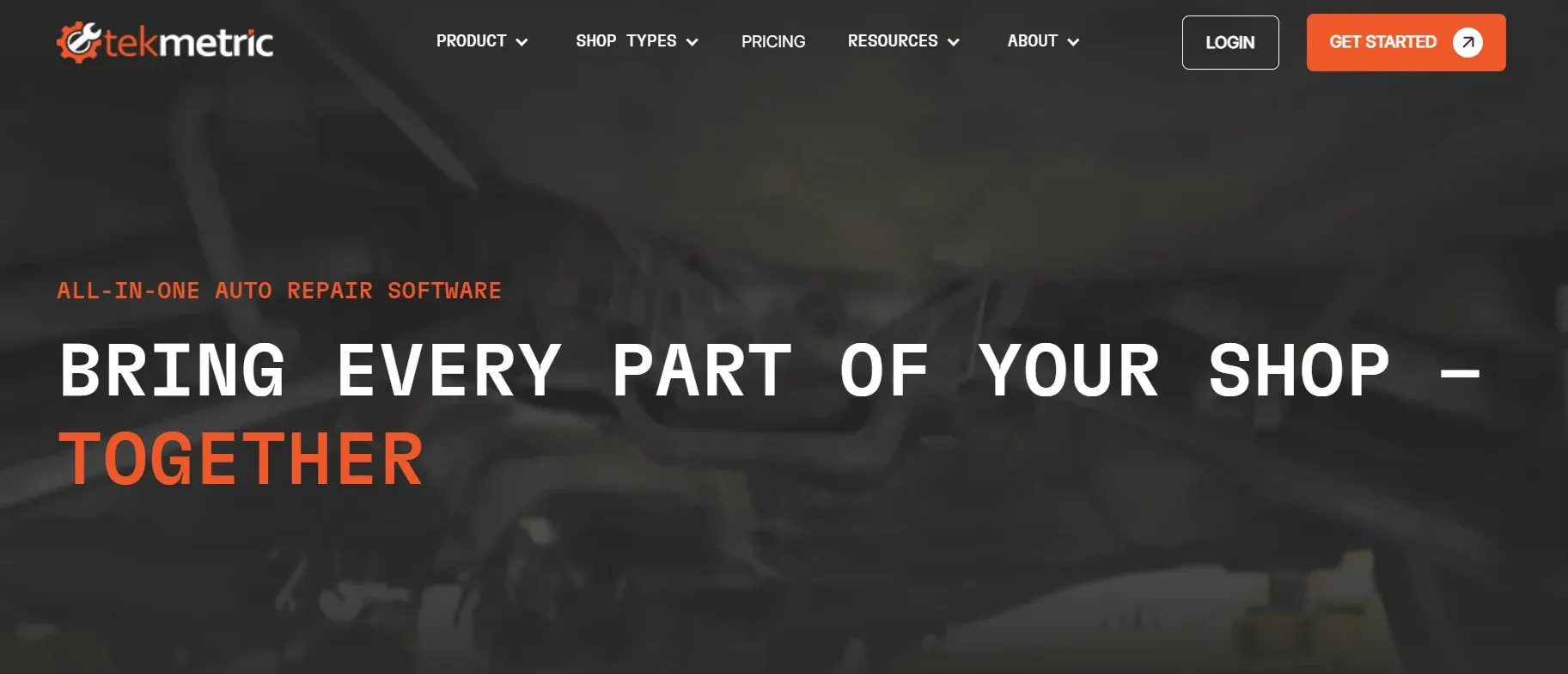
Tekmetric is widely recognized as one of the most modern, cloud-first shop management solutions. Its standout features include a robust tire module (Tire Suite), multi-location support, and a highly visual workflow that suits busy tire shops. Tekmetric’s interface is clean and mobile-friendly, making it easy for staff to adopt. Notably, its open API enables integrations with marketing tools, accounting platforms, and DVI providers, but deeper customization is not possible unless Tekmetric builds it or approves the integration partner.
Specific features:
- Tire Suite: Dedicated tire inventory, ordering, and quoting tools. Lets you quote, source, and sell tires from multiple suppliers in one workflow. Tracks tire storage for customers and supports tire-specific pricing matrices.
- Multi-location management: Central dashboard for shop groups, with reporting and user controls across locations. Inventory can be shared or segmented. You can manage permissions at the location or user level.
- Workflow automation: Digital vehicle inspections, customer texting, and online booking (with add-ons). Workflow is visual and drag-and-drop, helping shops manage bays and tech assignments.
- Integrations: Connects to major parts suppliers, QuickBooks, and some marketing platforms. DVI and payment processing are integrated, but advanced or custom integrations may require Tekmetric’s approval.
Migration and onboarding: Tekmetric offers onboarding, but data migration from legacy systems can be complex. Shops moving from on-premise software may need to clean and map data, and Tekmetric does not guarantee all custom fields will import. Switching costs include training, downtime, and sometimes re-entering historical data.
Concrete use cases: Busy, multi-location tire retailers who want to centralize operations, standardize reporting, and leverage modern tire management. Also fits single-location shops that want scalable tech and are willing to pay for the full feature set.
- Modern, mobile-friendly interface
- Strong tire and multi-location support
- Open API for integrations
- Every add-on (Tire Suite, Marketing, Multi-Shop) increases the bill
- Advanced tire features are not in the base plan
- Custom logic cannot be added beyond what Tekmetric supports
Pricing: Starts at $179/month (Start), $309/month (Grow), $409/month (Scale). Tire Suite is a $39/month add-on; multi-shop $70/month extra. Annual billing saves $20 to $30/mo per tier. See source.
On software you owned, adding a new shop or tire module would not trigger another monthly fee. That independence is only possible with a custom build.
2. Shop-Ware (Best for integrated DVI and workflow)
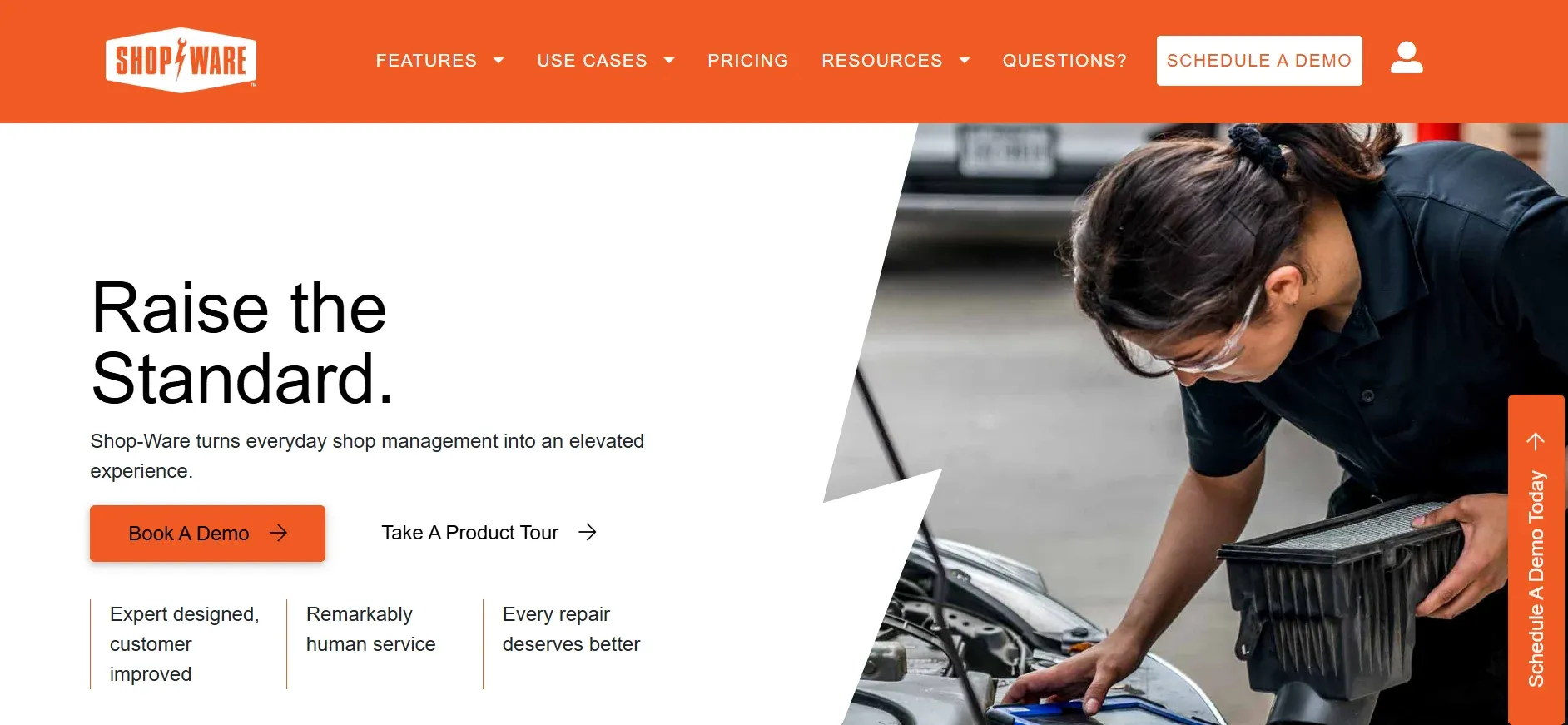
Shop-Ware is built for workflow and communication, with a heavy focus on digital vehicle inspections (DVI) and a chat-style interface for both staff and customers. Its DVI module is among the best in class: you can build detailed inspection templates, attach photos and videos, and send results to customers for review and approval. Shop-Ware also supports workflow automation, from estimate building to technician assignments, and integrates with major parts suppliers for easy sourcing.
Specific features:
- Digital Vehicle Inspection (DVI): Highly customizable inspections, media attachments, and real-time customer approvals. DVI can be tailored for tire shops, including tread depth recording, tire storage status, and safety checks.
- Workflow and communication: Internal chat for staff, customer messaging, and automated reminders. Workflow steps are visualized and can be adjusted to match shop processes.
- Integrations: Parts ordering through multiple suppliers, QuickBooks, and DVI partners. For advanced repair data (labor times, wiring diagrams), you may need to subscribe to a separate tool like MOTOR or ALLDATA.
- Reporting: Detailed shop performance dashboards, technician metrics, and profitability tracking. Custom reporting is possible, but some advanced features are in higher tiers.
Migration and onboarding: Shop-Ware charges a one-time implementation fee ($500 to $2,000 depending on complexity). Data import from legacy systems is supported, but custom fields and historical documents may require manual entry. Training is included, but shops report a learning curve for staff unfamiliar with digital workflows.
Concrete use cases: Shops that prioritize workflow efficiency, digital inspections, and customer communication, especially those looking to boost transparency and increase average ticket size with media-rich DVI reports.
- Best-in-class DVI and workflow automation
- Strong customer communication tools
- Modern, intuitive interface
- Higher base price than most competitors
- Parts and tire inventory management is less advanced
- Custom feature requests are limited to what Shop-Ware builds
Pricing: Starts at $349/month, plus a $500 to $2,000 implementation fee depending on setup. See pricing.
That kind of workflow automation could be built into your own platform, no recurring setup fee required.
3. Mitchell 1 (Best for legacy users and deep repair info)
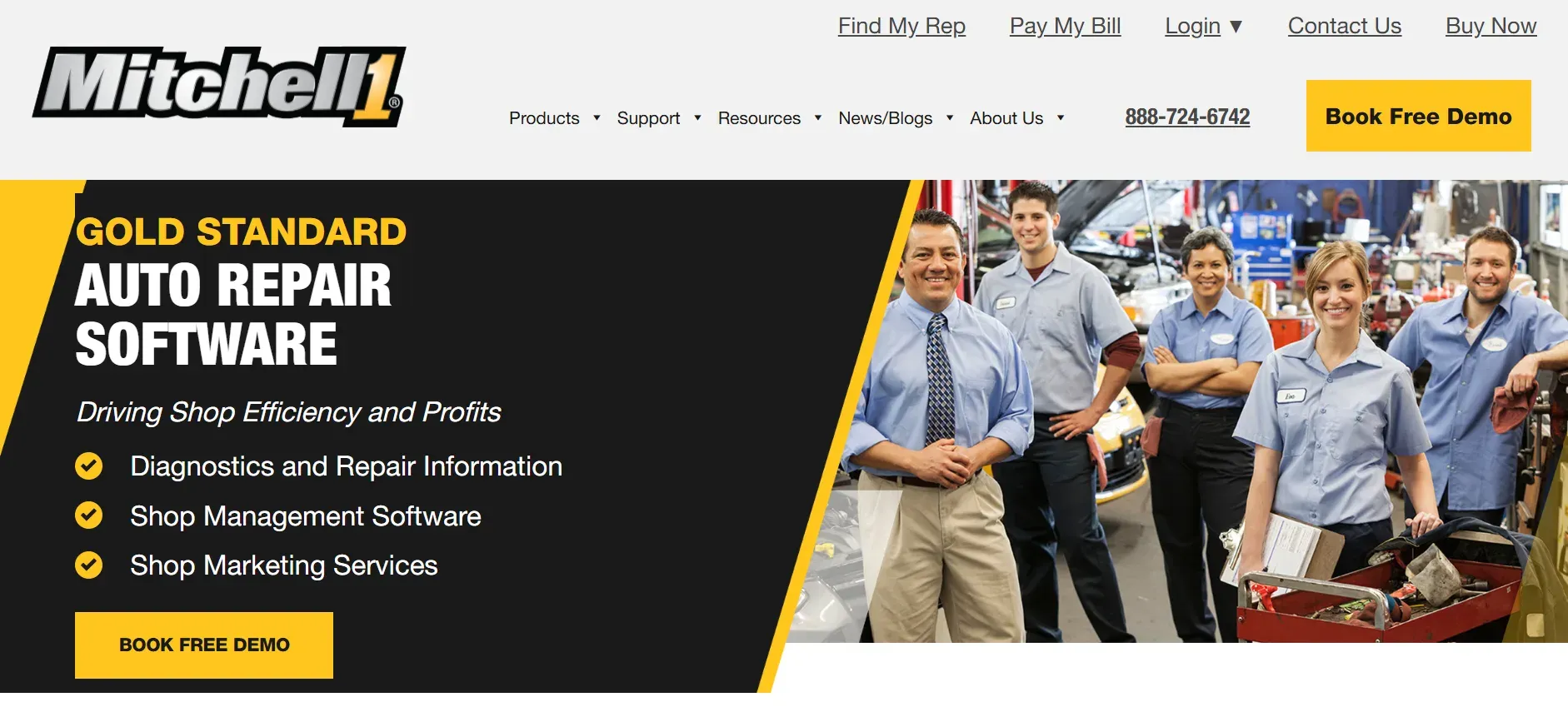
Mitchell 1 Manager SE is a staple for many long-running tire and repair shops, especially those accustomed to on-premise software. Mitchell 1’s biggest value is its comprehensive repair data: detailed service procedures, wiring diagrams, and OEM bulletins. This makes it attractive to shops that perform complex repairs in addition to tire work.
Specific features:
- Repair info: Access to a vast database of OEM procedures, TSBs, and diagrams.
- Shop management: Work order management, scheduling, inventory, and customer history.
- Integrations: Connects to parts suppliers and QuickBooks, but many integrations require local configuration. Cloud access is limited compared to SaaS rivals.
- Customization: Some flexibility in workflow and reporting, but major changes require IT support or consulting.
Migration and onboarding: Mitchell 1 offers migration tools for legacy data, but moving to or from cloud systems often means manual data work. Training is available, but staff familiar with newer SaaS may find the interface dated.
Concrete use cases: Shops that value deep repair info and are comfortable with local server management. Also fits shops that want to avoid monthly SaaS fees (though support contracts are still annual).
- Comprehensive repair data and OEM info
- Flexible for legacy workflows
- Some local control over data
- Local install means higher IT overhead
- Interface feels old compared to cloud-first tools
- Migration to cloud platforms can be costly and time-consuming
Pricing: Around $200 to $400+ per month, depending on modules. See reference.
Owning your platform means you choose where it runs, and you control your upgrade cycle, not the vendor.
4. AutoLeap (Best for all-in-one shop management)
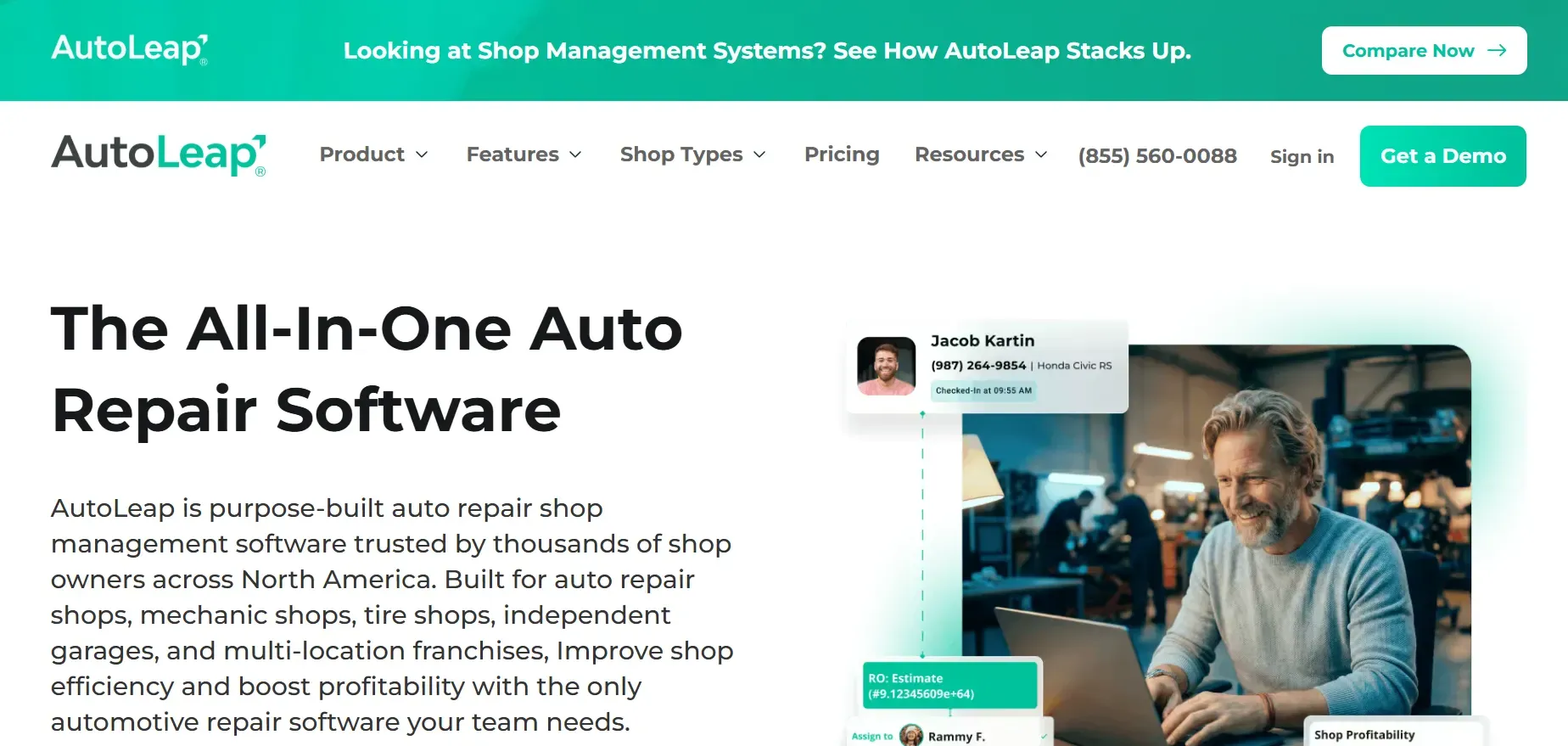
AutoLeap is a newer, cloud-based shop management platform that promises an all-in-one approach: scheduling, workflow, customer communication, DVI, and marketing in one subscription. AutoLeap’s interface is modern and mobile-friendly, and it offers a broad feature set aimed at both tire and general repair shops.
Specific features:
- All-in-one dashboard: Scheduling, technician dispatch, customer communication, and reporting in a single UI.
- Marketing automation: Built-in CRM, appointment reminders, and review requests. Text and email campaigns can be automated based on customer visits or tire service intervals.
- DVI and workflow: Digital inspections with media, estimate approvals, and workflow tracking. Tire-specific DVI templates are available.
- Integrations: Connects with major parts suppliers, payment processors, and QuickBooks. Some integrations (like custom accounting or local suppliers) may be limited or in development.
Migration and onboarding: AutoLeap provides onboarding and migration support, but user reviews are mixed: some shops praise the white-glove service, while others report delays and difficulty getting all data transferred (especially custom fields or historical invoices). Contracts are typically annual, and setup fees are common.
Concrete use cases: Shops wanting a modern, all-in-one platform to manage both front-of-house and back-office operations. Good for shops new to digital management or those consolidating multiple tools into one.
- Modern, mobile-friendly interface
- All-in-one feature set
- Integrated marketing and DVI tools
- Annual contracts with strict cancellation windows
- Customization is limited to what AutoLeap supports
- Some features may be delayed or not as promised
Pricing: Not publicly listed; requires sales call. Setup fees and annual contracts are typical. See user reviews.
If you owned the code, your features would ship on your timeline, not theirs, and you would never get stuck paying for tools you do not use.
5. Protractor (Best for shops needing basic POS)
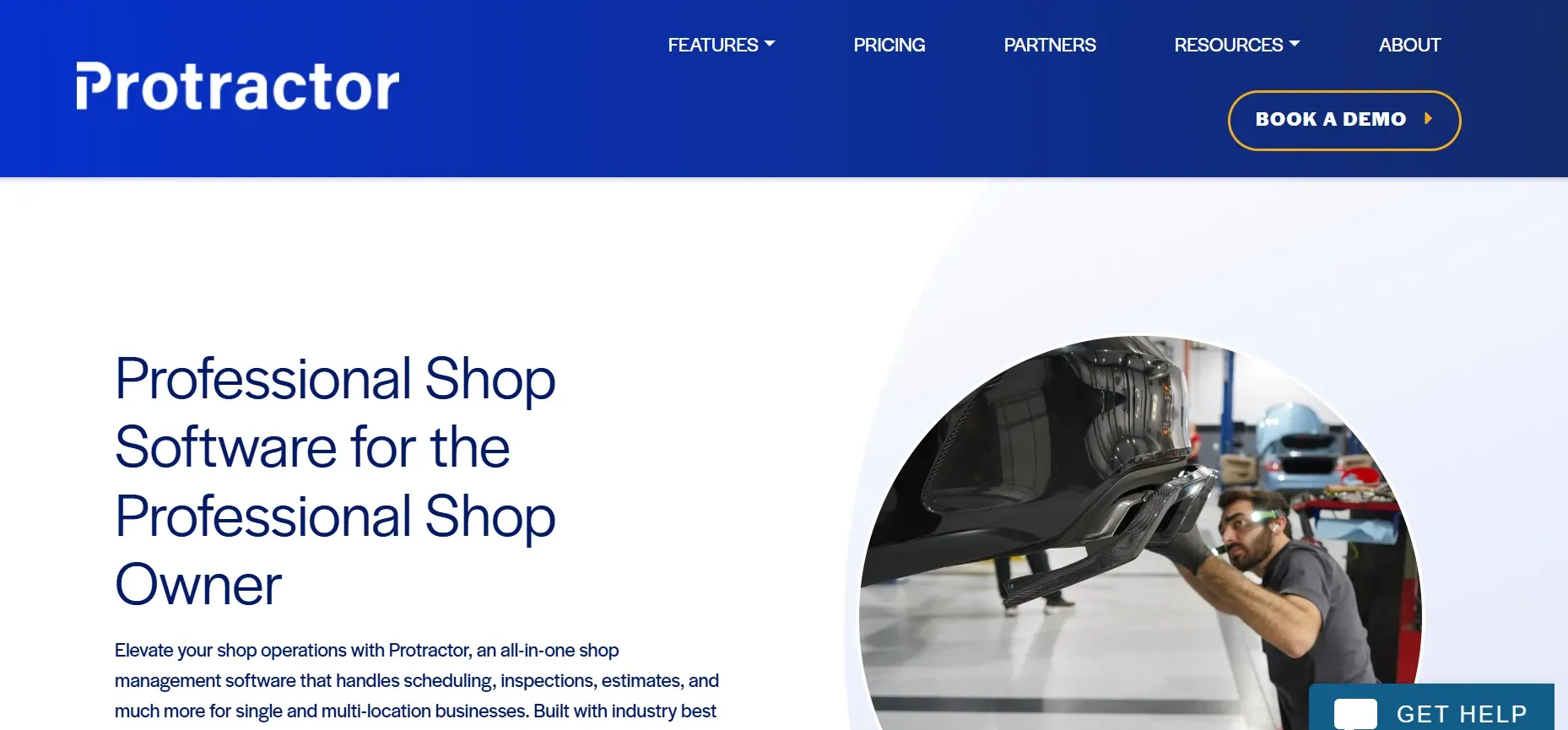
Protractor is a cloud-based POS and shop management system known for its straightforward interface and basic feature set. It covers scheduling, work orders, and basic inventory but does not offer advanced tire management or DVI out of the box. Protractor is popular with small and midsize shops that want an easy-to-learn system without a steep price tag.
Specific features:
- POS and invoicing: Quick work order creation, estimating, and invoicing. Simple inventory tracking for tires and parts.
- Scheduling and reporting: Basic calendar, technician assignment, and sales reporting tools.
- Integrations: Connects with major parts suppliers and QuickBooks. Limited DVI and marketing integrations.
Migration and onboarding: Protractor offers migration from some legacy systems, but data mapping (especially for custom fields or tire-specific info) can be limited. Setup fees are common for multi-location or complex migrations.
Concrete use cases: Small tire shops or single-location retailers who need a simple, reliable POS and billing system, not a full-featured workflow or inventory suite.
- Simple, easy-to-learn interface
- Affordable for small shops
- Reliable POS and billing features
- No DVI or advanced workflow automation
- Limited tire storage and loaner management
- Customization is limited to UI settings
Pricing: Around $250 to $400+ per month; setup fees $500 to $2,500 possible for multi-location. See industry blog.
When you own your system, features like tire storage or custom workflows are added once, no upsell, no extra subscription.
6. NAPA TRACS (Best for NAPA-affiliated shops)
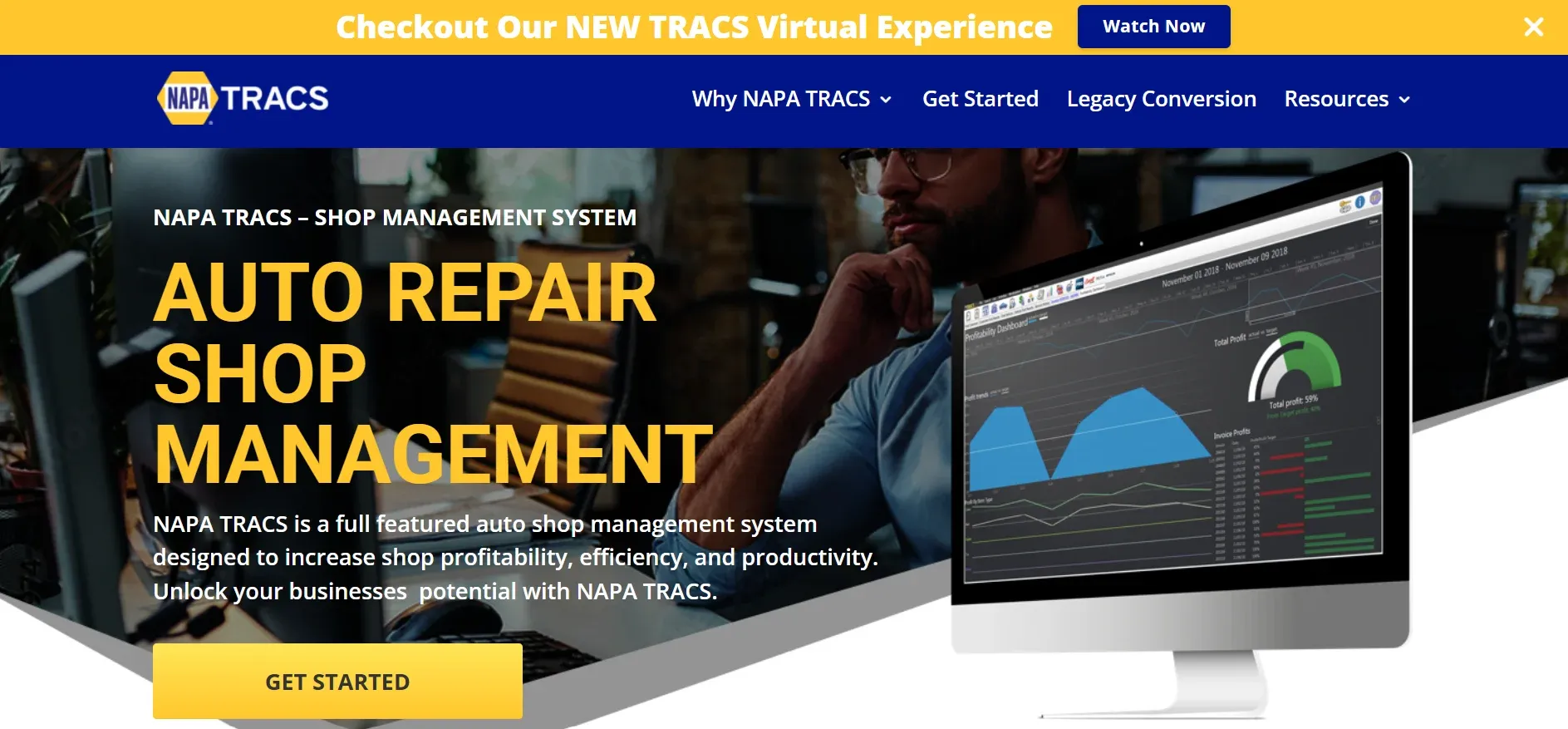
NAPA TRACS is a staple among NAPA-affiliated tire and repair shops. Its core value is tight integration with NAPA’s parts catalog and supplier network. TRACS offers both local and cloud-hosted versions, giving shops some flexibility in deployment. The platform covers scheduling, work orders, and inventory, but its interface is less modern than many SaaS rivals.
Specific features:
- NAPA integration: Real-time access to NAPA parts catalogs, pricing, and ordering. Streamlined process for warranty claims and returns.
- Shop management: Scheduling, work orders, inventory, and reporting. Tire inventory is supported but lacks advanced features like storage or custom pricing logic.
- Integrations: Works best with NAPA suppliers, but can connect with some third-party DVI and accounting tools. Custom integrations are limited.
Migration and onboarding: NAPA TRACS migration is straightforward if you are coming from another NAPA system. For non-NAPA shops or those with custom workflows, data mapping may be more involved. Training is provided, but the system’s legacy interface can be challenging for staff used to mobile-first tools.
Concrete use cases: NAPA-affiliated tire shops or those who do most of their parts business with NAPA. Good for shops with legacy workflows who want to stay inside the NAPA network.
- Strong NAPA parts integration
- Flexible deployment (local or cloud)
- Good fit for NAPA network shops
- Interface feels dated
- Advanced tire features and integrations are limited
- Pricing and contract terms are not transparent
Pricing: Not publicly listed; requires sales call. May vary by package and setup.
Custom platforms can connect to any supplier you need, and you never lose access if you switch brands.
7. Bay-master (Best for inventory-centric shops)
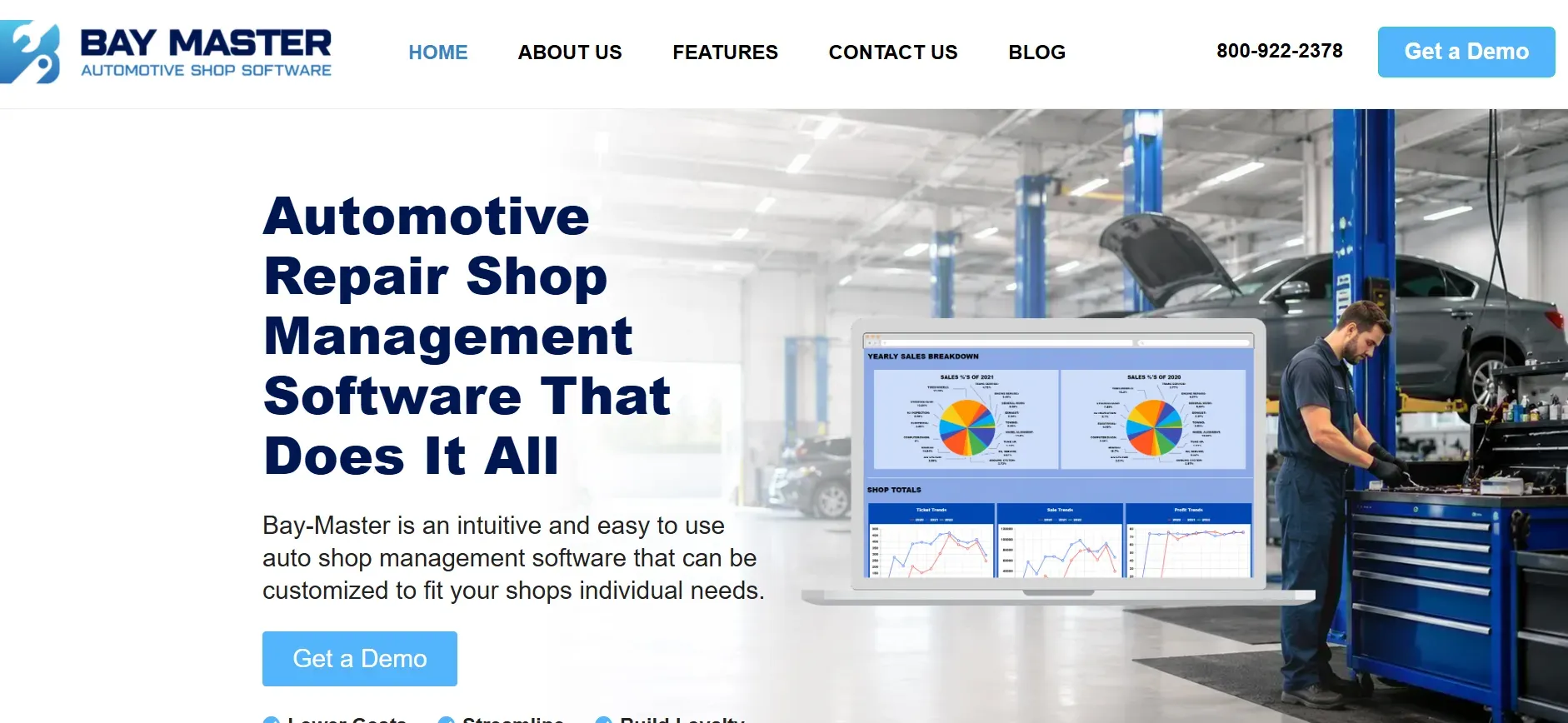
Bay-master is a feature-rich platform with a focus on inventory management for both parts and tires. Bay-master stands out for its customizable inventory controls, including bulk import, barcode scanning, and tiered pricing. Reporting is highly granular, allowing you to drill down into tire movement, reorder points, and profitability by SKU.
Specific features:
- Inventory management: Track tires and parts by SKU, bin location, and supplier. Automated reorder alerts and support for physical inventory counts. Supports tire storage and rotation tracking for customers.
- Customizable reporting: Create custom sales, inventory, and technician performance reports. Export to Excel or PDF for analysis.
- Integrations: Connects to major tire and parts suppliers, as well as accounting tools. Some API access for advanced users, but customization is not at the code level.
Migration and onboarding: Bay-master offers guided onboarding, but the system’s depth means a steep learning curve. Data migration can be complex if you have custom workflows or historic inventory data. Training is available, but expect a multi-week ramp-up for staff.
Concrete use cases: High-volume tire retailers, wholesalers, or shops with complex inventory needs. Ideal for businesses that want granular control over tire and parts stock, pricing, and reporting.
- Granular inventory and reporting controls
- Supports tire storage and rotation
- Customizable reports
- Steep learning curve for new users
- Smaller user community and less online support
- Some difficulty with third-party integrations
Pricing: Not publicly listed; consult for quote.
8. Omnique (Best for shops needing flexibility)
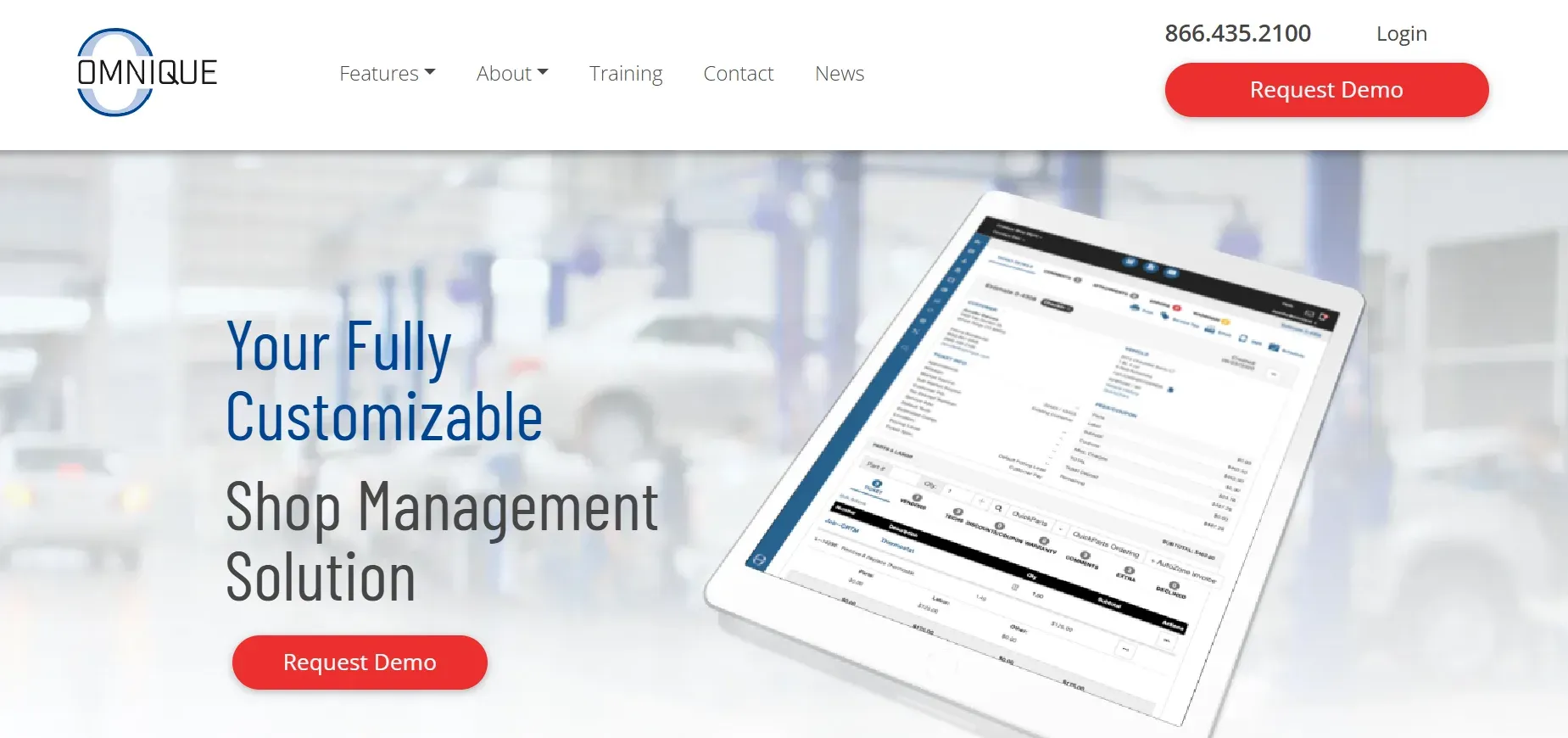
Omnique offers a modular approach to shop management, serving both independent and franchise tire shops. Omnique’s key differentiator is its API access, allowing some flexibility for integrations, though it still follows the SaaS rental model. The platform includes scheduling, work orders, inventory, and some DVI features, with optional modules for marketing, tire management, and customer communication.
Specific features:
- Modular design: Choose features a la carte, adding or removing modules as your shop grows. Tire management, DVI, and marketing are all optional.
- API access: For shops with IT support, Omnique’s API enables custom integrations with accounting, CRM, or local suppliers. Not full code ownership, but more flexible than most SaaS platforms.
- Shop management: Scheduling, work orders, inventory, and reporting. Tire inventory supports basic storage and tracking.
Migration and onboarding: Omnique offers migration support, but complexity varies by starting system. API integrations may require technical expertise. Staff training is included, but the interface is less modern than Tekmetric or AutoLeap.
Concrete use cases: Independent tire shops needing specific integrations or franchises wanting to standardize across locations without giving up flexibility. Also fits shops with in-house IT looking to build custom workflows atop a SaaS core.
- Modular, flexible feature selection
- API access for integrations
- Fits both independent and franchise shops
- Interface is less modern than leading SaaS tools
- Full customization is limited to the API layer
- Pricing and contract structure are opaque
Pricing: Not publicly listed; consult for quote.
9. Devaims (Best for shops that want to own it)
Devaims is the only real alternative to renting forever. We build custom shop management platforms tailored to the way your tire shop actually works, from tire inventory to customer reminders to real parts markup logic. You keep the source code, own your data, and never pay per-seat or get locked into a contract.
Specific features:
- Full code and data ownership: The software is built for your process, not a generic template. You decide the features, workflow, and integrations.
- Custom tire logic: Build inventory, storage, and pricing workflows to your exact needs, including unique markup rules, supplier integrations, and customer reminders. No more parts imported at cost unless you want it.
- Unlimited integrations: Connect to any supplier, payment processor, or marketing platform, on your terms. API, direct database, or custom endpoints are all possible.
- Scalability: No per-seat, per-location, or feature add-on fees. You add users, locations, or modules without paying more.
- Data migration: Full support for migrating your customer, invoice, and inventory data from any legacy system. Custom field mapping and historical data import included.
Migration and onboarding: Devaims manages the migration process, including data cleaning, field mapping, and custom feature setup. Training for your team is included, and you have input at every stage.
Concrete use cases: Tire shops with multiple locations, complex inventory, or unique workflows. Also ideal for shops that want to future-proof their business, avoid recurring SaaS inflation, or build competitive advantage with proprietary software.
- You own the code and data outright
- Custom features built for your process
- No per-user, per-location, or add-on fees, just a platform that is yours
Other PartsTech alternatives worth knowing
- TireShop: Specialized for tire retailers, with deep tire inventory and storage management. Limited outside tire workflows; lacks full repair management.
- TireConnect: Focuses on e-commerce and online tire sales, not end-to-end shop management. Integrates with some POS systems for online-to-in-store workflow.
- MaxTraq: Niche platform for fleet management and tire tracking. Useful for shops with large commercial or municipal fleets, but not a retail shop solution.
These tools fill unique gaps, but most tire shops still need a full-featured management system or a custom build.
How to choose the right PartsTech alternative
- By budget: If $200 to $400/month plus add-ons feels steep, compare total 5-year cost to a custom build. SaaS fees add up fast, especially with multiple locations or users.
- By features: List your must-haves (custom markup, tire storage, DVI, integrations) and see if they are included or cost extra. Many platforms require upper-tier plans or add-ons for core features.
- By shop size: Multi-location and high-volume shops hit per-seat and per-location fees fastest; ownership advantages scale with size. If you plan to grow, owning means your costs do not balloon with every new tech or location.
- By need for control: If you hate being locked out, or want to build on your own data, only an owned solution like Devaims delivers true control. Consider how much flexibility and future-proofing your shop needs.
If you are tired of paying for features you never use, or losing access to your own data, it is time to consider building what your shop actually needs.
Stop paying rent on software you could own
Every PartsTech alternative on the market is a rental, no matter how many features or add-ons you choose, you will always pay monthly, and you will never own a line of code. The moment you outgrow your plan or want to switch, you are back to square one. That is the real pain: you pay, and they keep the keys.
Devaims builds custom software for tire shops that fits your process, not someone else's template. You keep the source code, the data, and all the integrations, no lock-in, no recurring per-seat fees. When your shop grows, your system grows with you, not your bill.
- No more surprise price hikes: you pay once for the build, then a flat maintenance fee. No annual inflation, no new add-on charges for basic features.
- Your data and process are yours, forever. Even if you change payment providers, you keep your stack. No more scrambling to export data or rebuild workflows after a contract ends.
- Custom features are built to your spec, no waiting for "maybe next year" on a SaaS roadmap. You control the timeline, the feature set, and the integrations.
| Tool | Ownership | Monthly/Annual Fees | Custom Features | Contract |
|---|---|---|---|---|
| Tekmetric | No | $179, $409/mo + add-ons | Limited, add-on only | Monthly or annual |
| Shop-Ware | No | $349/mo + $500, $2,000 setup | Limited | Monthly/annual |
| PartsTech | No | Free, $85/mo | No | Monthly |
| Devaims | Yes | One-time build, flat maintenance | Unlimited, by request | No contract |
The 5-year cost math: rent vs own for a tire shop
| Year | Rent (Tekmetric w/ Tire Suite) | Own (Devaims custom build) |
|---|---|---|
| 1 | $218/month x 12 = $2,616 (base + tire + multi-shop) | $30,000 build + $200/mo maint = $32,400 |
| 2 | $5,232 | $34,800 |
| 3 | $7,848 | $37,200 |
| 4 | $10,464 | $39,600 |
| 5 | $13,080 | $42,000 |
Break-even is usually year 5: after that, owning is permanently cheaper. If your shop has more locations or higher-tier needs, you hit break-even even sooner. Want a real-world number for your size? We will run the math with you, no pitch.
How to switch from PartsTech
- Export your customer, invoice, and inventory data from PartsTech (CSV or API). Confirm you have all the fields you need, some providers restrict access to historical or custom data.
- Choose your alternative, rented or owned, and ensure feature fit. Demo the new system with your workflows before committing.
- Import data into the new system, mapping fields as needed. If moving to Devaims, this process is fully managed, including custom field mapping and data cleaning.
- Reconnect payment processing, supplier integrations, and DVI modules. Test each integration for accuracy and workflow fit.
- Train staff on the new workflow and run parallel for two weeks to spot issues. Prepare training materials and support resources for a smooth transition.
- Review your PartsTech contract for any exit or notice requirements. Watch for auto-renewal clauses or early termination penalties.
With a custom Devaims build, the migration is handled as part of the project, including hands-on support for staff training and system validation.
Frequently asked questions
What is the best PartsTech alternative for tire shops?
Tekmetric and Shop-Ware are strong SaaS options for modern workflow and DVI. However, if you want to own your platform, avoid recurring fees, and never lose your data or features, Devaims is the only real ownership solution in 2026. It is the right choice for shops that want full control, unlimited customization, and to build long-term value into their business.
Which PartsTech alternative is the cheapest?
PartsTech's free plan is the lowest cost, but it is limited in features. Tekmetric's entry tier is $179/month, but most shops need add-ons for tire and multi-location management. Over five years, renting adds up, especially for multi-location shops. If you plan to grow, building your own with Devaims is often cheaper in the long run, as your costs stay flat while SaaS fees rise every year.
Is there a free PartsTech alternative?
PartsTech's free tier exists, and a few other tools offer trial versions or basic plans. However, these usually lack essential features like inventory management, DVI, or integrations. Free plans are best for solo or low-volume shops, but most tire businesses outgrow them within a year or two. In practice, "free" means more manual work, limited support, and no customization.
Which PartsTech alternative has the best tire inventory management?
Bay-master is the strongest out-of-the-box for inventory-centric shops, with granular controls and custom reporting. Tekmetric and Shop-Ware offer tire modules as add-ons, but these are less customizable. For shops with unique storage, rotation, or pricing needs, only a Devaims build delivers exactly what you want, with no compromise or workaround.
When should a tire shop switch from PartsTech?
If you are paying for features you do not use, losing profit on part pricing, struggling with contract limits, or feel boxed in by vendor roadmaps, it is time to compare PartsTech alternatives. Switching makes sense when cost, control, or capability becomes a barrier to growth, or when you want to future-proof your shop by owning your system and data.
Can I keep my data if I leave PartsTech?
Most providers allow you to export basic customer, invoice, and inventory data (typically as CSV). However, full historical data, custom fields, and workflow settings may not be included. With Devaims, you own the database and code outright, so you control access and never face lock-in. You can even build new tools or integrations on your own timeline.
The bottom line
Shop management software should make you money, not cost you margin. The best PartsTech alternatives give you more features, but only an owned platform lets you keep the value you build. Here is the test: add up what your software will cost over five years. If that number would have built you something you own, you already have your answer.
For more shop ownership insights, visit the Devaims blog, or explore our other comparisons: Tekmetric alternatives, Shop-Ware alternatives, AutoLeap alternatives.