

Your catering company’s software shouldn’t feel like a shackle, or a bottomless pit for monthly fees. If you’ve done the math on Event Temple, you know the sticker shock comes not just from the $249 per month, but from the per-user fees, setup costs, and the fine print that keeps you renting year after year. And if you’ve ever tried to add a new manager or outgrew the feature set, it gets even more frustrating.
There’s a crowded field of Event Temple alternatives. Caterease is everywhere but charges a launch fee per user. HoneyBook is friendlier on price but lighter on enterprise features. Planning Pod is flexible but can feel piecemeal. If you want to break the rental cycle for good, owning your system with Devaims is the only way off the treadmill. Here’s how the landscape looks in 2026 for catering companies who want more control, lower long-term costs, and real ownership.
Why catering companies look for Event Temple alternatives
Annual contracts trap your business. Event Temple and most rivals require a 12-month minimum, making it hard to leave if your needs shift or the platform stalls. Many companies feel pressure to commit without fully knowing how their business or the software will evolve. With a rental model, flexibility is limited, and you’re often stuck until the renewal window, even if your needs change or your team grows faster than expected.
Setup and onboarding fees pile up fast. Caterease, for example, charges $200 per user just to get started, and Event Temple can tack on fees for custom setup. These upfront costs can be a serious barrier for small businesses or those scaling quickly. Even if you’re migrating from another platform, you may be charged for onboarding, template design, or initial data imports. Over several years and multiple staff changes, these fees can double your real cost.
Per-user pricing punishes teams that grow. Add a new event coordinator and watch your bill climb, sometimes by $100 or more per month. This model discourages healthy business growth and often leads to sharing logins, which creates compliance and accountability risks. For enterprises with seasonal or part-time staff, per-seat pricing can be especially punishing.
Locked features and slow updates. Want a custom report or integration? Expect to pay more or wait for roadmap cycles that aren’t yours. Many platforms bundle advanced features into higher tiers, forcing you to pay more for capabilities you need to stay competitive. Integration with new payment gateways, logistics apps, or CRM tools might be blocked until the vendor decides to prioritize them, or charges for custom work.
Owning nothing at the end. Years of payments, and you still don’t control your data, code, or workflows. That’s why so many are searching for Event Temple alternatives. Your business processes are locked into someone else’s roadmap, and exporting data for a true migration can be difficult, with limited ability to transfer custom fields or automation.
Quick comparison of the best Event Temple alternatives
| Tool | Best for | Starting price | You own it? |
|---|---|---|---|
| Caterease | Mature teams, deep features | $99/mo (annual contract) | No |
| HoneyBook | Small teams, easy onboarding | $29/mo (annual contract) | No |
| Planning Pod | Event-centric operations | $69/mo per user | No |
| Total Party Planner | Catering-specific workflows | Reported $70+/mo | No |
| CaterZen | Online ordering focus | Reported $79/mo | No |
| 17hats | Small business simplicity | $13/mo (annual contract) | No |
| Tripleseat | Venue-driven catering | ~$99/mo per user | No |
| Better Cater | Budget catering management | $69/mo | No |
| Devaims | True ownership, custom fit | One-time build, you own it | Yes |
Always confirm current pricing before you decide. Rates and terms change fast. Also, consider that add-ons, onboarding, and integration fees can quickly increase your total cost of ownership.
The 9 best Event Temple alternatives
1. Caterease (Best for mature catering teams)
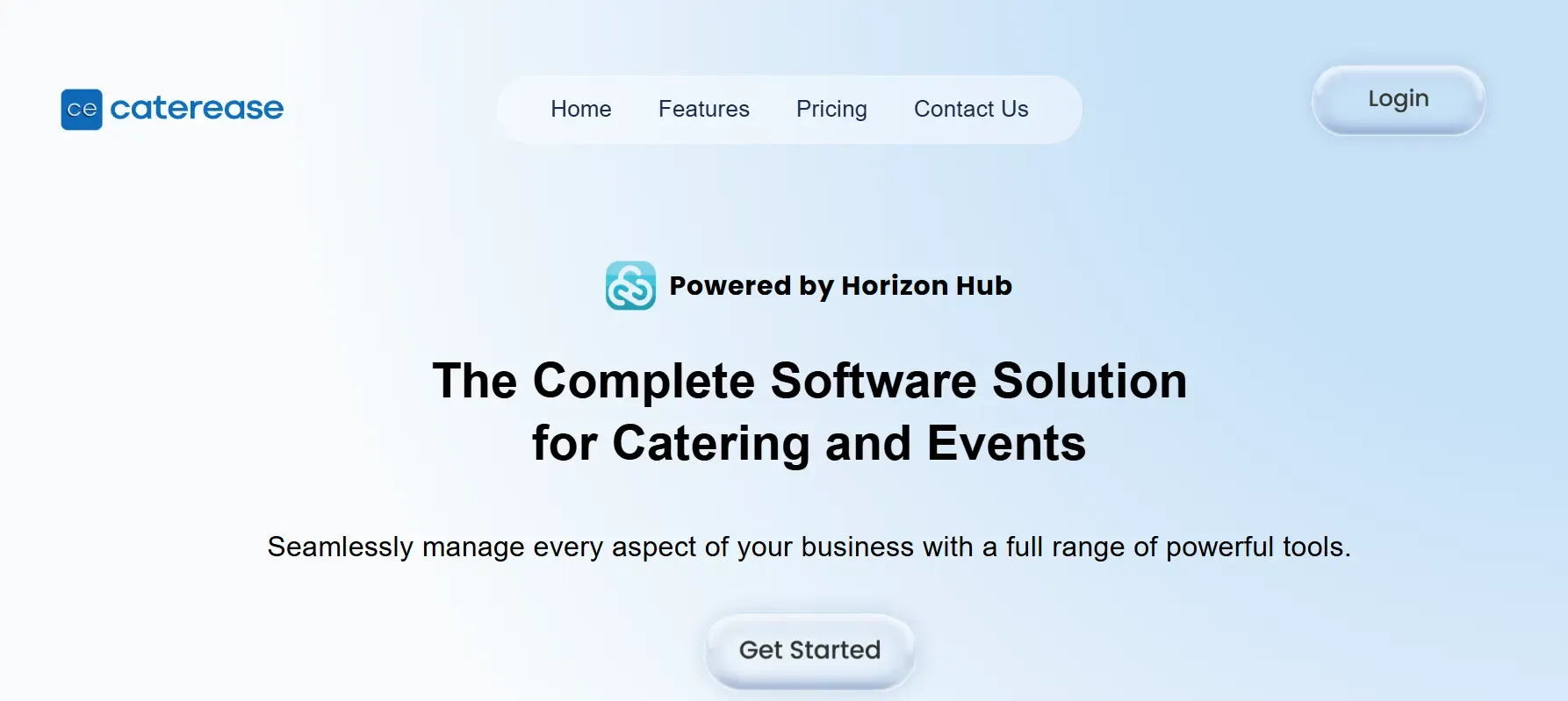
Caterease has been a staple for large, established caterers who want deep feature sets and don’t mind a steeper learning curve. Caterease is highly configurable, with detailed menu planning, event timelines, contract generation, staff scheduling, and inventory management. It also supports complex pricing rules, multi-location operations, and has granular permissions to manage access across departments.
Pricing: Starts at $99/month (annual contract), plus $200 per user launch fee and add-ons for integrations or advanced modules.
- Deep feature set for catering operations
- Granular permissions and reporting
- Trusted by large, multi-location teams
- Annual contracts limit flexibility
- Per-user and setup fees add up quickly
- Interface can feel dated, limited modern integrations
If you built your own system with Devaims, every user costs you the same, nothing extra per seat, and you control your integrations and custom workflows.
2. HoneyBook (Best for small teams and freelancers)
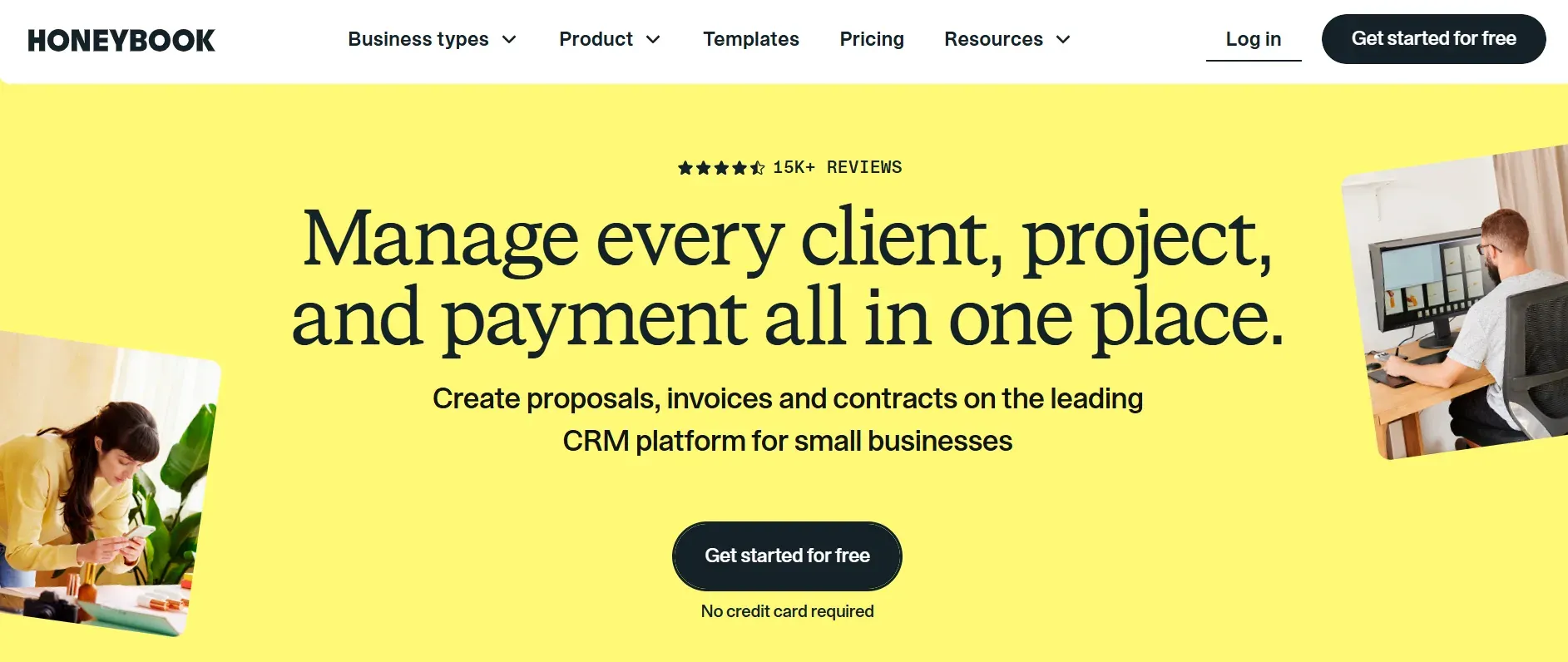
HoneyBook is a favorite among small catering outfits and event planners who want simple, modern workflows. Its onboarding is quick, and the interface is designed for users who may not have specialized technical skills. HoneyBook streamlines client communication, invoicing, contract signing, and payment collection.
Pricing: Starts at $29/month (annual contract), no per-user fees, with payment processing fees on transactions.
- Easy onboarding and intuitive interface
- All-in-one client portal and automation
- Affordable for small teams
- Not purpose-built for catering workflows
- Limited customization for complex operations
- Basic integrations, no kitchen management
With Devaims, you’d get payment integrations and workflows tailored to your business, not just generic templates.
3. Planning Pod (Best for event-centric catering)
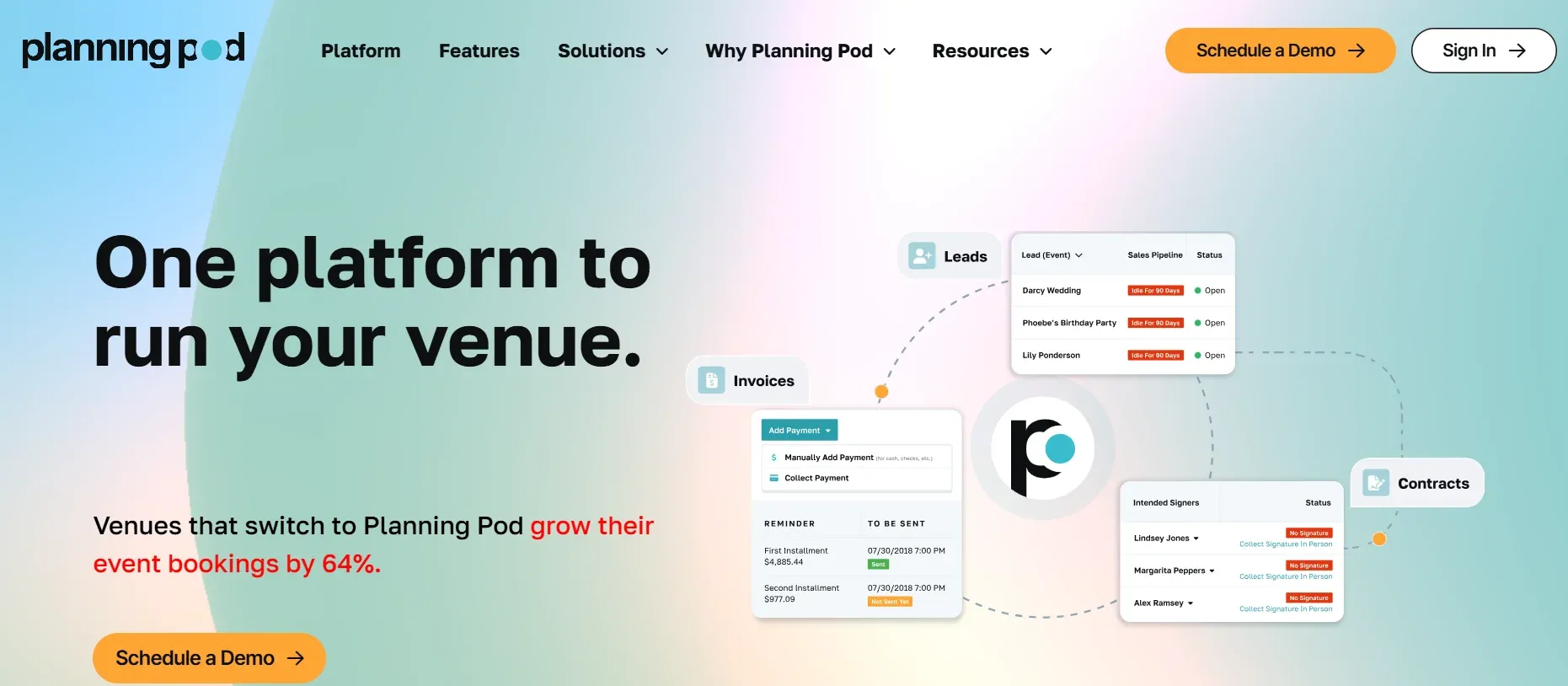
Planning Pod is built for event professionals, including caterers, who need a flexible, modular system. Planning Pod stands out for its event management depth, supporting venues, floor plans, timelines, contracts, and attendee tracking. You can pick and pay for only the modules you need, making it scalable for different business types.
Pricing: Starts at $69/month per user, with additional fees for extra modules and integrations.
- Flexible event management modules
- Good for venues and event-centric caterers
- Integrates with popular calendars and accounting
- Per-user pricing increases costs as you grow
- Catering features less deep than dedicated tools
- Modular design can feel fragmented
When you own your stack, you can add any module you want, or retire the ones you don’t, without waiting for a vendor update or paying extra.
4. Total Party Planner (Best for catering workflow depth)
Total Party Planner is designed for caterers who want robust food costing, proposal, and delivery tools. It covers the full workflow from proposal to kitchen production, delivery routing, and post-event analysis.
Pricing: Starts at $70+/month, with additional fees for users and modules.
- Detailed food costing and kitchen management
- Strong reporting and delivery tools
- Supports multi-location operations
- Interface less modern than newer tools
- Limited API and integration options
- Manual migration for complex data
5. CaterZen (Best for online ordering and delivery)
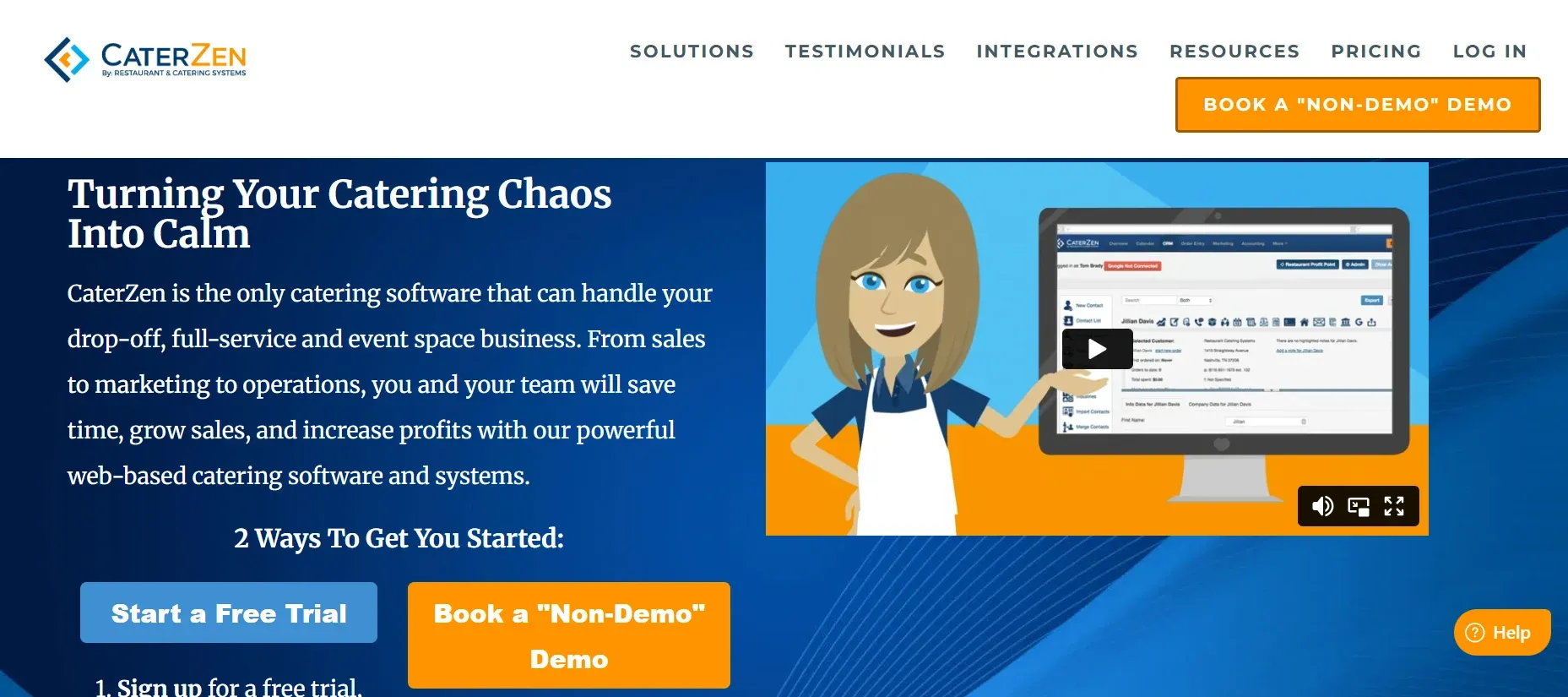
CaterZen specializes in online ordering, delivery management, and catering CRM. Where CaterZen shines is in managing drop-off catering, repeat orders, and automated customer communications.
Pricing: Starts at $79/month, with additional charges for advanced features and integrations.
- Branded online ordering portals
- Automated delivery and CRM tools
- Good for recurring and drop-off catering
- Less suitable for full-service event catering
- Some features only in higher tiers
- Limited data ownership beyond exports
6. 17hats (Best for small business simplicity)
17hats is aimed at solopreneurs and very small shops who want simple CRM, billing, and project management in one. It is not built for catering but offers a wide range of small business tools in a single dashboard.
Pricing: Starts at $13/month (annual contract), no per-user fees.
- Affordable for solo operators
- Simple dashboard and templates
- Automated workflows for basic business needs
- No catering-specific features
- Manual setup for catering workflows
- Limited data import and export options
7. Tripleseat (Best for venue-driven catering)
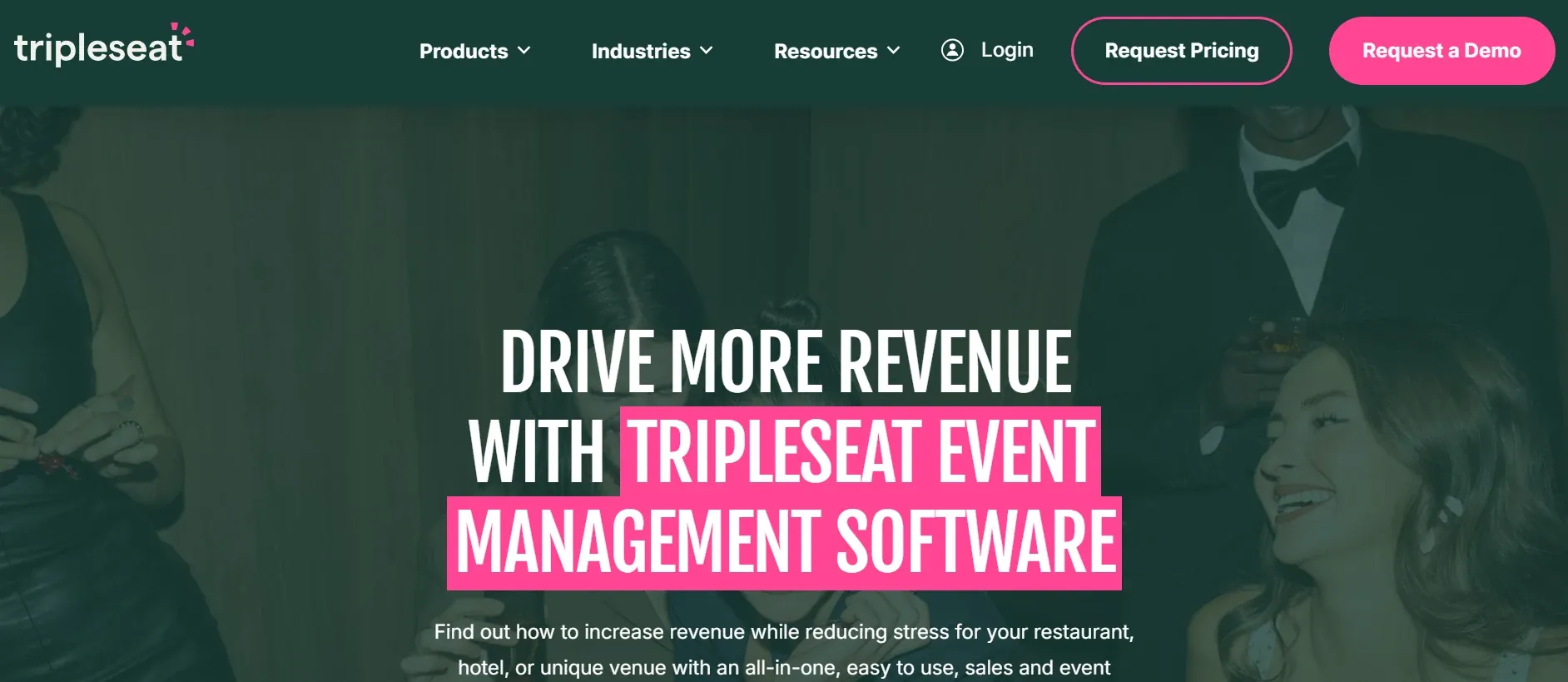
Tripleseat is built for venues and caterers who handle complex bookings and event logistics. It is particularly strong for businesses managing multiple event spaces, restaurants, or hotels with in-house catering.
Pricing: Around $99/month per user, with additional fees for integrations and onboarding.
- Comprehensive booking and event management
- Strong CRM and reporting for venues
- Centralized management for multi-location businesses
- Steep pricing for large teams
- Limited kitchen and menu management
- Custom integrations require paid support
When you own your solution, adding a new manager or sales rep doesn’t spike your costs. Your system is yours to use at scale.
8. Better Cater (Best for budget catering management)
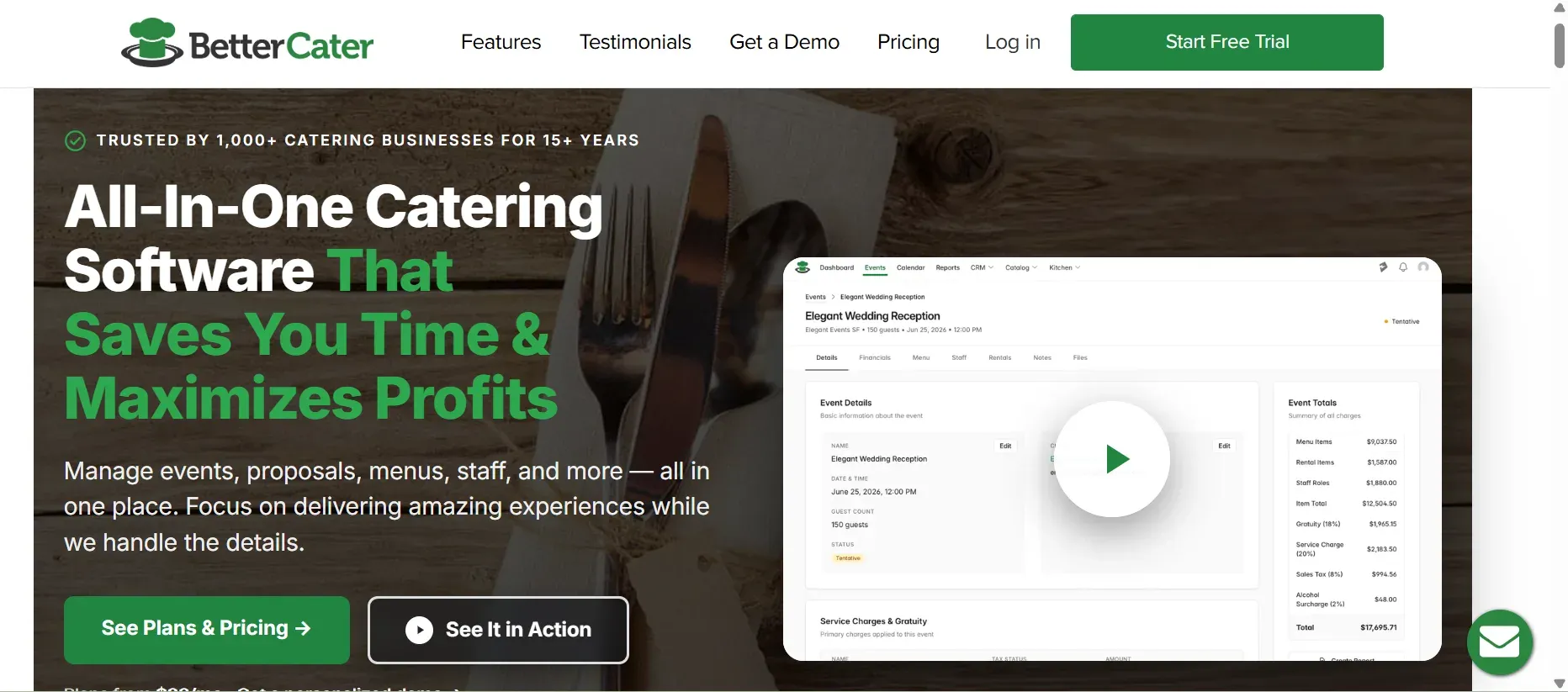
Better Cater is a budget-friendly tool for smaller caterers who want basic event, proposal, and kitchen tracking. Its simple interface is easy to learn, and there are no per-user fees, making it cost-effective for small teams.
Pricing: Starts at $69/month, no per-user fees.
- Affordable for small caterers
- Simple event and kitchen tracking
- Easy to learn for new users
- Basic features, limited customization
- Minimal integrations and exports
- Manual onboarding for complex data
9. Devaims (Own it, build it your way)
Devaims is the only alternative on this list that lets you own your catering software outright. Instead of renting forever, your team gets a system built to your exact needs, and you receive the source code, so you control every feature, integration, and user. No contracts. No per-user fees. No surprise price hikes. You decide what’s next, not the vendor.
- Full ownership: you keep the code, data, and workflows
- Custom-built to fit your unique catering business
- No recurring rental or per-user fees, just flat maintenance
- Freedom to extend, integrate, or even resell as you wish
- Migration and onboarding handled by the build team
Other Event Temple alternatives worth knowing
- Curate: Focused on florists and caterers; strong proposal tools, collaborative client portals, and recipe costing, but less depth for high-volume catering or delivery logistics.
- Spiffy: Event management with some catering support, but mainly for smaller operations and mobile teams. Limited integrations for kitchen or logistics.
- Catertrax: More enterprise-focused, often used by institutional foodservice, but complex and pricey with a steep learning curve and long implementation cycles.
How to choose the right Event Temple alternative
- By team size: Solo or small shop? HoneyBook or 17hats. Large ops? Caterease or Devaims. For mid-sized teams, Planning Pod or Total Party Planner can be a fit, but watch for rising costs as you add users.
- By workflow: Need deep kitchen, delivery, or menu tools? Total Party Planner or Better Cater. If your focus is on event logistics and venue management, Planning Pod or Tripleseat may be better.
- By budget: Watch out for setup fees and per-user pricing that make a cheap tool expensive as you grow. Calculate your 5-year total cost, including onboarding and add-ons.
- By ownership: If you want to own your stack, Devaims is the only real answer. Ownership means you’re not at a vendor’s mercy for pricing or features.
- By integration: If you need perfect fit with QuickBooks, POS, or logistics, custom beats rental every time. Consider how critical integrations are for your business flow and whether rental platforms can keep up.
Ready to stop renting and start owning? Here’s the math behind the switch.
Stop renting what you could own: The Devaims cost advantage
Here’s the reality: every Event Temple alternative on this list is rented. Per-user fees. Setup costs. Contracts that lock you in. And at the end, you still don’t own a thing. That’s why more caterers are asking what it would cost to own their system outright, and discovering that the break-even comes a lot sooner than they thought.
Devaims builds custom web, mobile, and business software designed for your workflow. You get the source code, all your data, and the freedom to scale without permission or penalty. No more per-user upcharges, no more waiting for feature roadmaps, and no more worrying about a vendor’s next price hike.
- Annual contracts? Gone. You set the terms.
- Per-user fees? None. Add as many staff as you want.
- Feature lockouts? If you need it, it’s built in.
- Data ownership? It’s all yours, forever.
| Tool | Ownership | Contract | Per-user fees? |
|---|---|---|---|
| Event Temple | Rented | Annual | Yes |
| Caterease | Rented | Annual | Yes |
| HoneyBook | Rented | Annual | No |
| Planning Pod | Rented | Annual | Yes |
| Devaims | You own it | No contract | No |
Let’s run the 5-year numbers for a typical 6-person catering shop. These figures include not just subscription costs, but also onboarding, per-user expansion, and required add-ons for common integrations:
| Year | Rented (Event Temple, 6 users) | Owned (Devaims, $29,000 build + $180/mo maint) |
|---|---|---|
| 1 | $6,324 (plus onboarding) | $31,160 |
| 2 | $12,648 | $33,320 |
| 3 | $18,972 | $35,480 |
| 4 | $25,296 | $37,640 |
| 5 | $31,620 | $39,800 (break-even year) |
By year 5, Devaims is on par with renting, and after that, every year you keep your system, you’re saving thousands. For shops with more users or more complex needs, the break-even comes even faster. If you want us to run your actual numbers, we’ll do it free, just ask.
Beyond the math, ownership means you control your technology roadmap. You can adapt to new business models, integrate with emerging platforms, and keep your client data secure, all without waiting for a vendor’s next patch or price increase.
How to switch from Event Temple
- Export your data: Download contacts, menus, events, and billing history from Event Temple. Be sure to check for all custom fields and attachments. Some platforms limit batch exports, so you may need to request a full data export from support.
- Pick your new platform: Weigh the pros and cons of rented vs. owned solutions. Confirm contract terms, onboarding costs, and data import capabilities.
- Import your data: Map fields carefully to ensure nothing is lost. Clean up duplicates, and test that custom workflows and automations are preserved or rebuilt.
- Reconnect payments and integrations: Link your payment processor (e.g., Stripe, Square), connect your calendar, and set up CRM integrations. Test all connections before going live.
- Train your team: Provide hands-on walkthroughs for booking, billing, kitchen production, and delivery processes. Record training sessions for future hires.
- Test in parallel: Run both systems for at least a week, handling real events in the new platform while keeping the old system as backup. This helps catch workflow or data issues before fully switching over.
- Review your Event Temple contract: Confirm cancellation deadlines and billing cutoff dates. Schedule your migration to avoid double billing or data loss.
With a custom Devaims build, the migration is handled as part of the project, including custom field mapping, automation migration, and user training.
Frequently asked questions
What is the best Event Temple alternative for catering companies?
Caterease and Planning Pod are popular for established businesses and event-centric teams, offering robust features and industry reputation. However, if you want to own your system, avoid perpetual rental fees, and have the freedom to customize every aspect, Devaims is the only alternative that gives you the source code and full control. Ownership means your technology grows with you, not against you.
Which Event Temple alternative is cheapest for small teams?
17hats offers the lowest entry price, starting at $13 per month, but it’s light on catering features and best for solo operators. HoneyBook is another affordable choice for small operations, with a more modern interface and better invoicing, but lacks deep catering workflow tools. For small, growing teams, watch for per-user fees that can erode the initial price advantage over time.
Is there a free Event Temple alternative?
There are no truly free, full-featured catering management tools at this level. Some tools, like HoneyBook and Planning Pod, offer limited free trials (usually 7-14 days), but ongoing use will require a paid plan. Open-source options exist but lack catering-specific features and require significant technical expertise to implement and maintain. If you’re considering open source, be prepared for a DIY approach and limited support.
Which alternative is best for large catering operations?
Caterease and Tripleseat handle scale and multi-location operations well, but watch for per-user fees that add up fast, especially with seasonal or part-time staff. Devaims offers a custom solution that lets you scale users and features on your terms, with no extra charges. For large operations with complex workflows, ownership provides the flexibility and cost predictability that rental models cannot match.
How hard is it to migrate from Event Temple to another tool?
Exporting your data and mapping it into a new system can take some effort, especially if you have custom fields, automations, or years of historical data. Most alternatives offer basic migration support, but you may need to re-create custom reports, workflows, or automation manually. Devaims handles migration as part of the build, including data cleaning, field mapping, and workflow recreation, reducing friction and minimizing business disruption.
Can I keep my data if I leave Event Temple?
You can export most core data (contacts, events, invoices), but you may lose access to custom workflows, automations, and some attachments. Export formats are often limited to CSV or PDF, which may not capture all relational data. With Devaims, you own all your data and processes from day one, your database, files, and custom logic are yours to use, extend, or migrate as you see fit.
When should I consider an owned solution like Devaims?
If your annual spend on catering software is over $5,000, your team is growing, or you need custom workflows and integrations, the 5-year math almost always favors ownership. If you want to avoid vendor lock-in, control your technology roadmap, and protect your client data, Devaims is the answer. Ownership is especially valuable for businesses planning to scale, add locations, or adapt to new service models in the future.
The bottom line
Every Event Temple alternative brings a new mix of price, features, and trade-offs, but they all keep you renting software you’ll never truly own. The most useful test? Add up what you’ll pay over the next five years. If that number could have built you a system you own, you already have your answer.
Here’s the reframe: renting makes sense for a short-term fix, but if your catering business is here to stay, ownership is the path to long-term control and cost savings. Let Devaims show you what owning your platform really looks like.
Dig deeper on the Devaims blog, or check out our latest comparisons: Caterease alternatives, HoneyBook alternatives, and Planning Pod alternatives.