



Ever added up what Neon CRM actually costs your non-profit over five years? Or tried to pull a custom report, only to hit a tier wall or learn you need yet another paid add-on? If you’re reading this, you’ve probably run into the same issues: rising subscription fees, per-record pricing, and the sinking feeling that you’re renting your own donor data.
Non-profits want to focus on their mission, not spend hours wrestling with a CRM interface or budgeting for surprise price hikes. The good news: there are real Neon CRM alternatives out there. Bloomerang and Little Green Light are standouts for simplicity and cost, while Salesforce NPSP offers flexibility, if you can handle the complexity. But none of these give you true ownership. That’s where a custom Devaims build flips the script: one build, you own it forever. Let’s break down your options in detail, with a no-nonsense look at each tool’s real strengths, trade-offs, and migration friction.
Why non-profits look for Neon CRM alternatives
Non-profits choose Neon CRM for its reputation as a dedicated donor management platform, but as organizations grow and their needs evolve, common pain points push teams to seek alternatives. Here’s why the search is so common:
Rising recurring costs: Neon CRM’s monthly subscription may seem reasonable at first, but over time, revenue-based pricing and add-ons can eat into your budget. For example, adding modules for volunteer management, peer-to-peer fundraising, or advanced reporting can quickly double your expected annual spend. As your donor database grows, so does your monthly bill, often with little warning. Many non-profits report sticker shock when their annual renewal comes due, especially after a few years of steady growth.
Lock-in and contract creep: Most platforms tie key features and data exports to paid tiers or annual contracts. You might start on a monthly plan, only to find out that critical integrations or data exports require a 12-month commitment. Migrating away is often complex: some vendors restrict full data exports to certain formats, or only allow them with active subscriptions. This makes switching harder and more expensive than it should be, especially if you have years of historical data or custom workflows you want to preserve.
Per-record or per-user fees: Outgrowing your plan means higher costs for every donor or staff member. For example, Neon CRM’s pricing increases in steps based on the number of constituent records, and there are extra user fees for larger teams. This creates a situation where growth is penalized, and budgeting for the future becomes unpredictable. For organizations with seasonal spikes in volunteers or donors, these costs can be especially frustrating.
Complex onboarding and training: Platforms like Neon CRM or Salesforce NPSP are powerful but can require weeks of setup and staff training, slowing down impact. Onboarding isn’t just about learning the interface; it’s about mapping your existing processes, migrating data, configuring reports, and integrating with payment processors and communications tools. Many non-profits underestimate the internal time and expertise required to get fully up and running.
Feature silos and add-on fatigue: Volunteer management, event registration, and advanced reporting are often locked behind more fees. The more you need, the more you pay. If you’re searching for Neon CRM alternatives, these pain points probably feel familiar. Worse, some features are only available via third-party integrations, leading to a patchwork of subscriptions and potential data silos.
In short, the SaaS model works for many organizations, until you need more control, better cost predictability, or real data ownership. That’s when it pays to know your options.
Quick comparison of the best Neon CRM alternatives
| Tool | Best for | Starting price | You own it? |
|---|---|---|---|
| Bloomerang | User-friendly donor management | $40/mo | No |
| DonorPerfect | Customizable reporting | Custom | No |
| Salesforce NPSP | Complex, multi-program orgs | Free (10 users) | No |
| Blackbaud Raiser's Edge NXT | Enterprise fundraising | Custom | No |
| Little Green Light | Small to mid-sized orgs | $45/mo | No |
| Givebutter | Peer-to-peer fundraising | Free + fees | No |
| Network for Good | All-in-one fundraising | Custom | No |
| Virtuous | Automation-heavy shops | Custom | No |
| Devaims | Owning your CRM and data | One-time build | One-time build, you own it |
Pricing and terms change regularly. Confirm current pricing before you decide. Remember to consider migration friction, support, and integration needs as well as sticker price.
The 9 best Neon CRM alternatives
1. Bloomerang (User-friendly donor management)
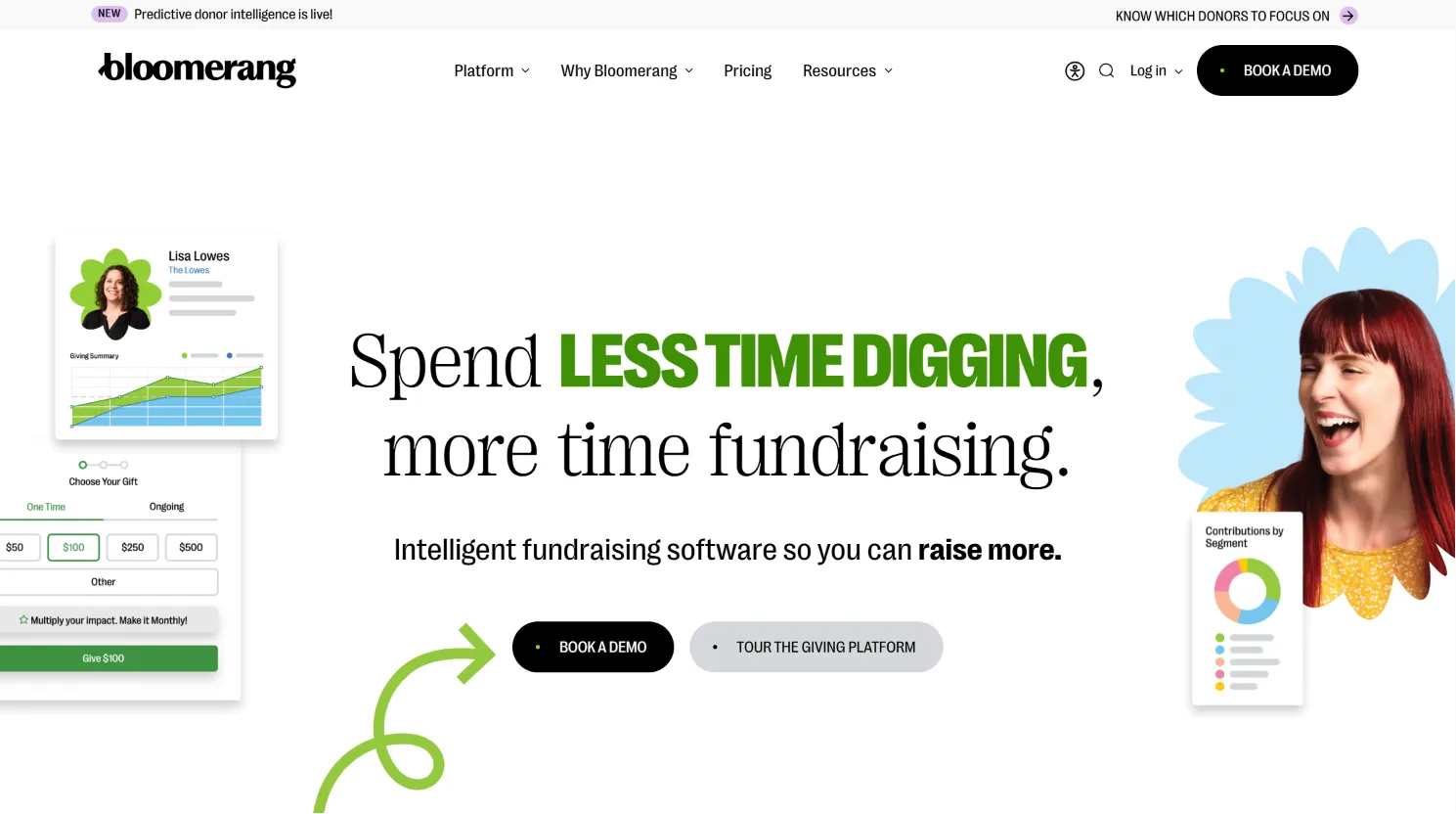
Bloomerang is a crowd favorite for small and mid-sized non-profits who want a simple, modern donor management system. The platform’s UI is clean and intuitive, making it easy for organizations with limited tech resources to onboard new users. Since acquiring Kindful, Bloomerang has expanded its feature set to include event management, peer-to-peer fundraising, and improved online giving tools.
Pricing: Starts at $40/month for up to 1,000 records. Higher tiers for more records and advanced features.
- Easy to use and quick onboarding
- Modern interface and clear navigation
- Solid integrations with fundraising and accounting tools
- Costs rise as your contact list grows
- Advanced reporting and integrations require higher tiers
- Volunteer management is basic
On an owned Devaims build, you’d never pay more just because your donor list grows. Increasing records costs you nothing, and you get unlimited customization and the ability to own your workflows and data structure.
2. DonorPerfect (Customizable reporting)
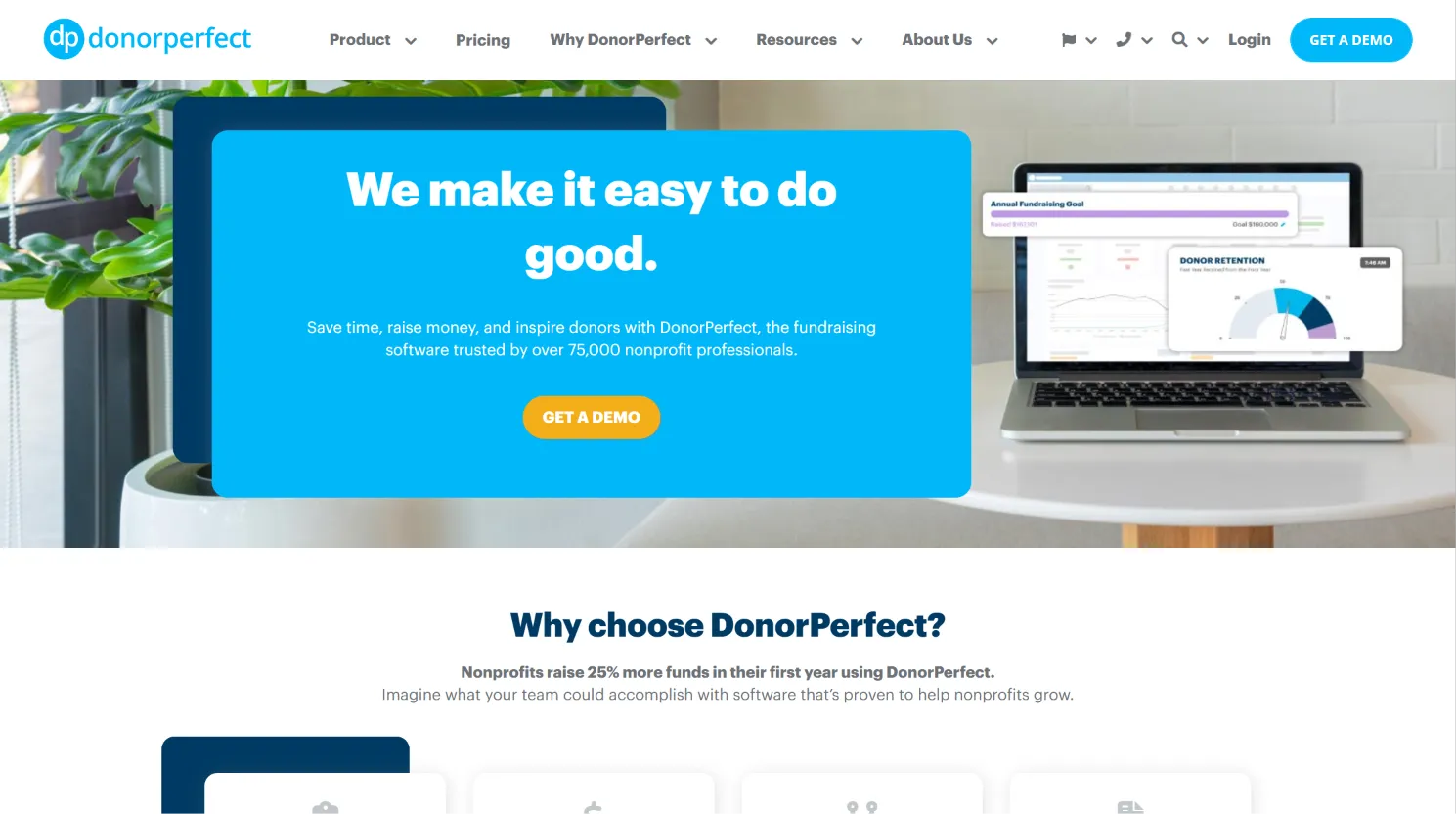
DonorPerfect has a reputation for powerful reporting and custom fields, making it a staple for mid-sized non-profits with complex needs. Its legacy in the sector means it supports a wide range of fundraising models, from annual appeals to major gift cultivation and grant management.
Pricing: Custom-quoted, typically $99, $499/month depending on features and records.
- Highly customizable donor and gift records
- Robust reporting and analytics
- Strong support for complex fundraising models
- Interface can feel dated
- Learning curve for advanced reporting
- Add-ons and customizations increase total cost
3. Salesforce Nonprofit Success Pack (NPSP) (Complex, multi-program orgs)
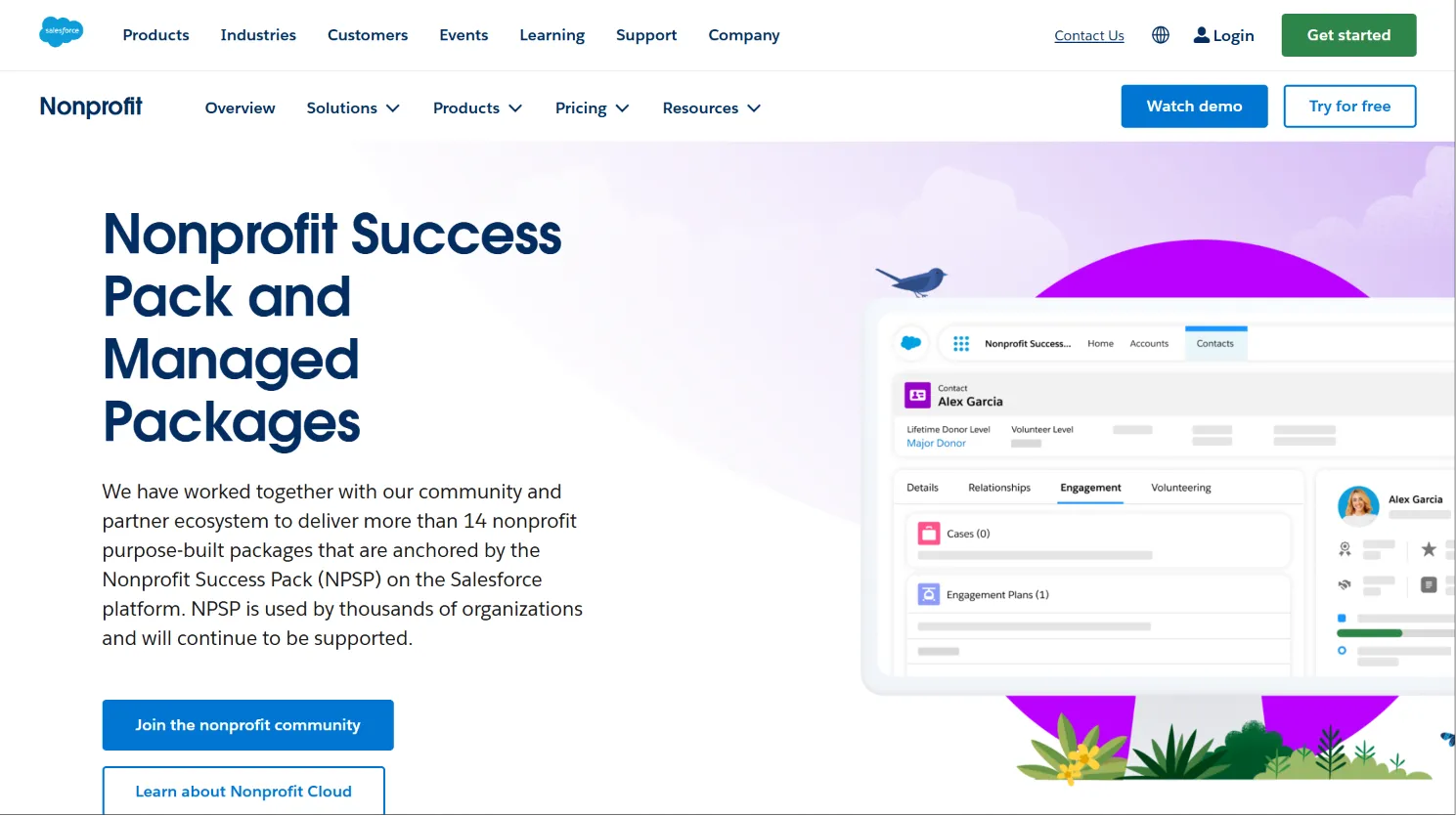
Salesforce NPSP is a heavyweight with enormous flexibility, especially for large organizations running multiple programs. NPSP is built on the Salesforce platform, which means you gain access to a world-class CRM backbone with thousands of third-party apps and integrations.
Pricing: Free for up to 10 users, then $36/user/month and up for additional users or add-ons.
- Unlimited customization and automation
- Extensive integration ecosystem
- Powerful reporting and dashboards
- Setup and customization are complex
- Costs rise quickly with more users and features
- Requires ongoing admin or consultant support
If you ever want to keep your customizations and not start over, only an owned system like Devaims lets you truly keep what you’ve built.
4. Blackbaud Raiser's Edge NXT (Enterprise fundraising)
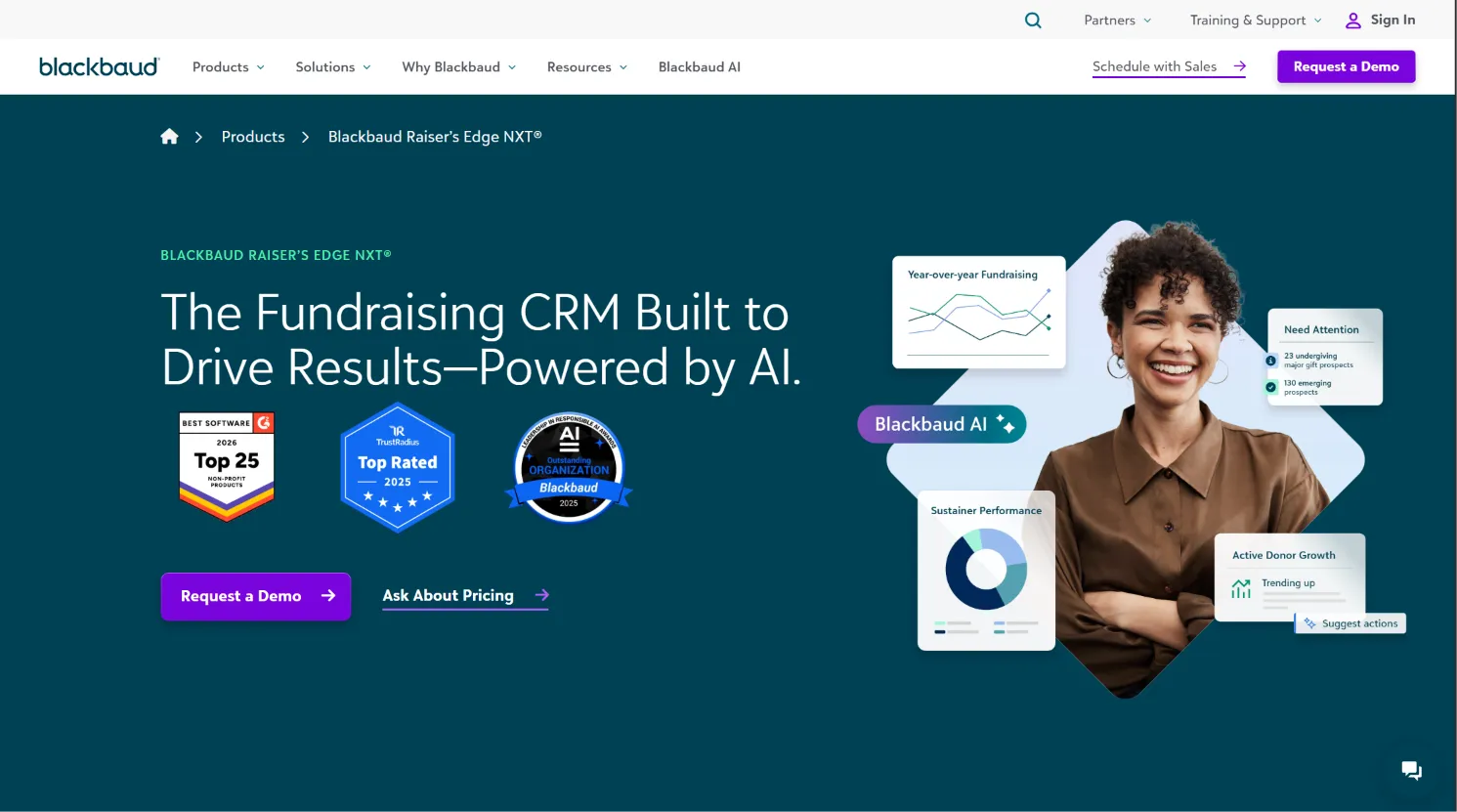
Blackbaud Raiser's Edge NXT is the go-to for large non-profits and charities managing major gift programs, complex grant tracking, and high-volume fundraising. It’s a cloud-based evolution of the legacy Raiser’s Edge product, offering end-to-end donor lifecycle management.
Pricing: Custom-quoted, often $500, $1,000+/month for mid-sized to large organizations.
- Comprehensive fundraising and stewardship tools
- Strong security and compliance
- Deep integrations and partner ecosystem
- Custom pricing can be a barrier for smaller orgs
- Longer learning curve due to platform depth
- Customization limited by vendor’s roadmap
5. Little Green Light (Small to mid-sized orgs)
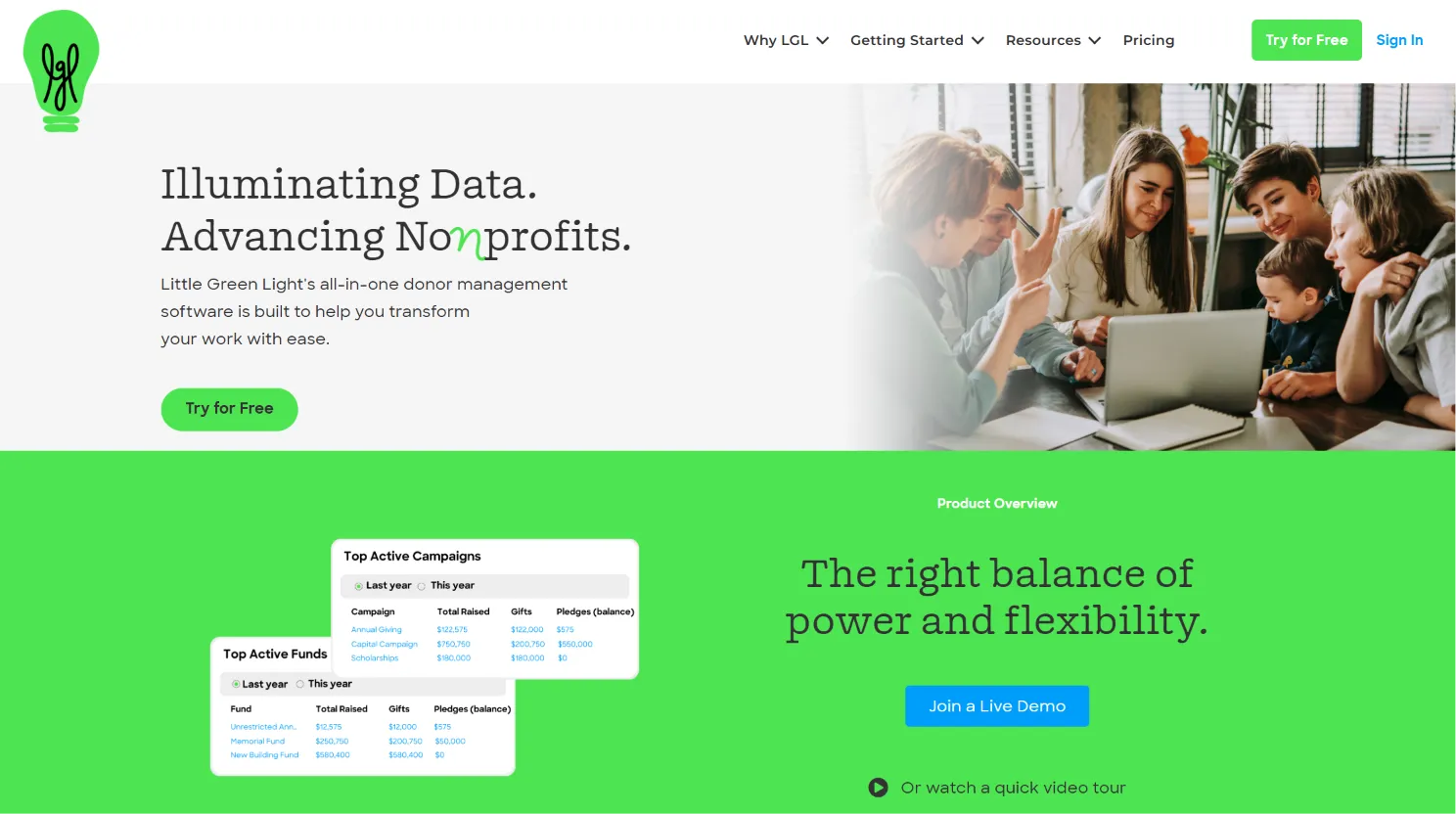
Little Green Light is a favorite of small and mid-sized non-profits seeking a balance of affordability, usability, and donor management features. Its clean interface and transparent pricing appeal to organizations that need to get up and running quickly without a lot of IT support.
Pricing: $45/month for up to 2,500 records, with higher tiers for more records.
- Affordable and transparent pricing
- Easy onboarding and clean interface
- Good core donor management features
- Reporting is basic compared to larger platforms
- Some integrations require paid add-ons
- No native volunteer management
With Devaims, you’d never pay extra for integrations or exports, those are built in from day one, and your data structure can be custom-tailored to your workflows.
6. Givebutter (Peer-to-peer fundraising)
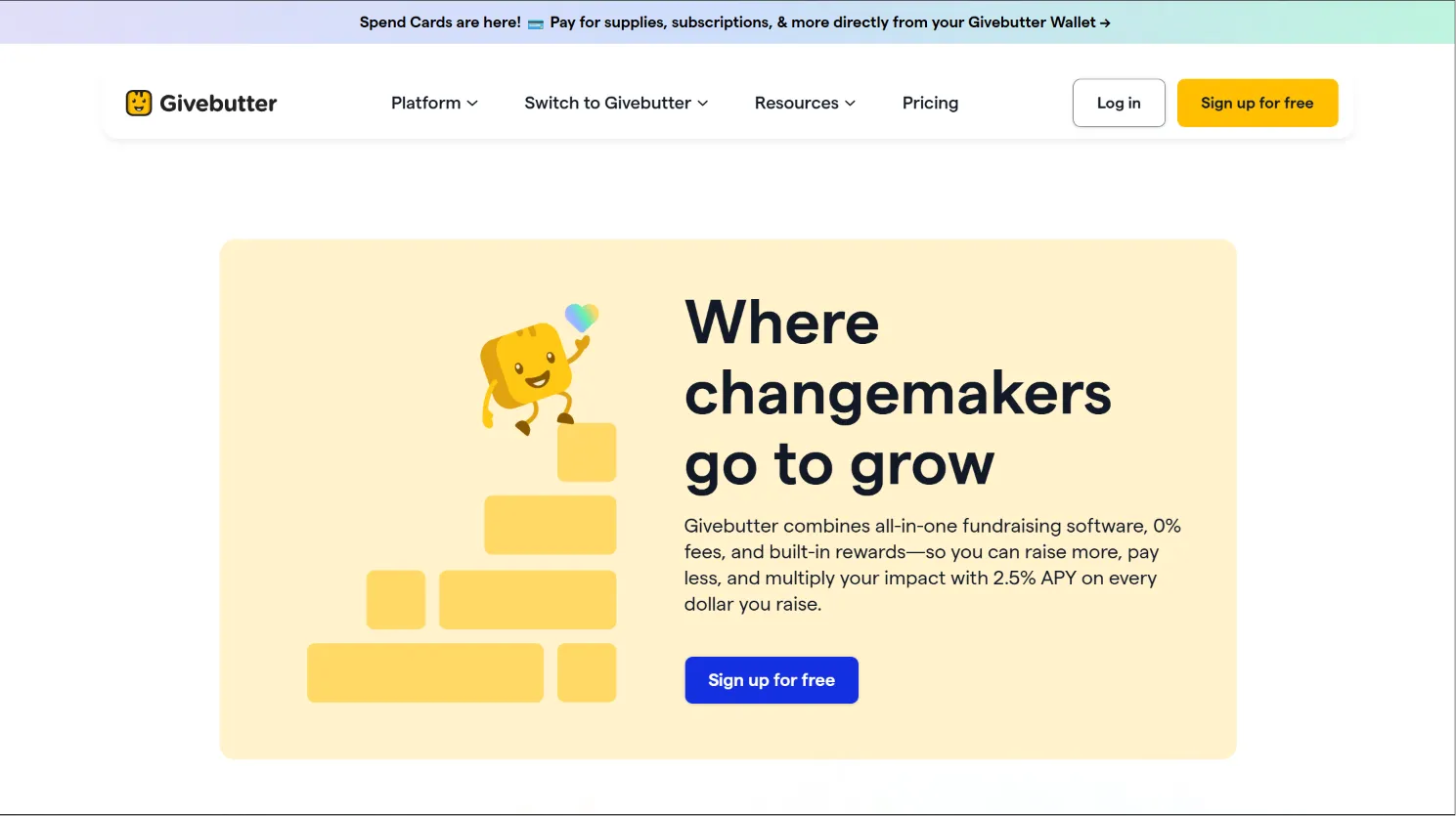
Givebutter is built for modern fundraising campaigns, especially peer-to-peer and events. Its slick, mobile-friendly forms and campaign pages help organizations activate their supporters as fundraisers, making it popular for Giving Day events, crowdfunding, and community-driven campaigns.
Pricing: Free to start, with 1.5-5% platform fees on donations (plus payment processing).
- Excellent peer-to-peer and event fundraising tools
- Easy campaign setup and mobile-friendly forms
- Integrates with major CRMs and marketing tools
- Platform fees can add up for successful campaigns
- CRM features are basic
- Best as a supplement, not a full donor database
On software you own, every dollar raised is yours, no platform fee cuts.
7. Network for Good (All-in-one fundraising)
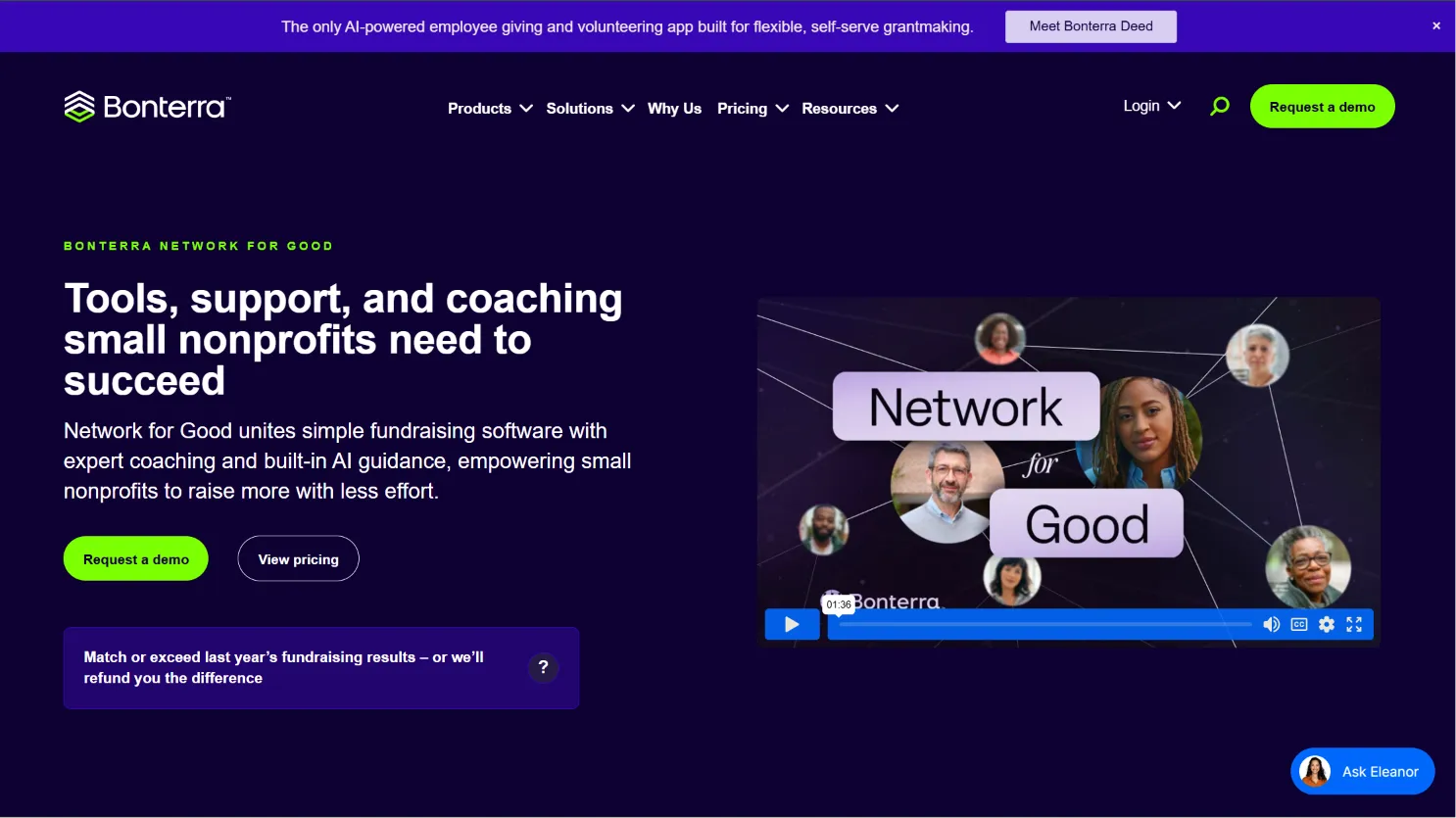
Network for Good is an all-in-one fundraising platform that blends donor management, email marketing, and event tools. Its focus is on simplicity: integrated donation pages, campaign management, and basic CRM features in one subscription.
Pricing: Custom-quoted, typically $100, $400/month depending on organization size and needs.
- Integrated fundraising and communications
- Simple onboarding and support
- Good for small to mid-sized teams
- Pricing is not transparent
- Feature set may lag for larger orgs
- Reporting is less flexible than some competitors
8. Virtuous (Automation-heavy shops)
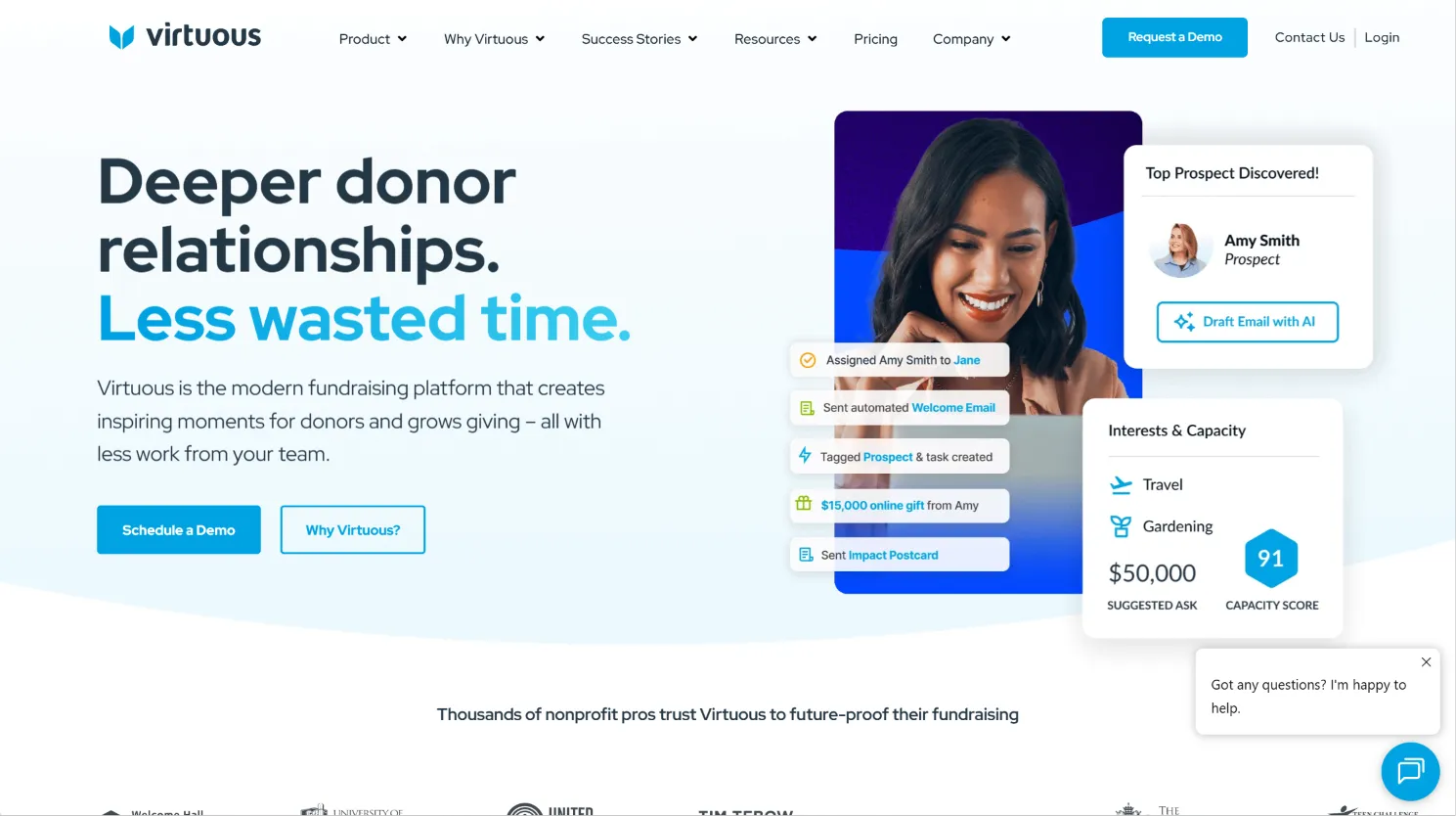
Virtuous is built for non-profits that want to automate personalized donor journeys, marketing, and workflows. Its core promise is to reduce manual effort through automation and smart segmentation, making it a good fit for organizations with growing teams or sophisticated stewardship needs.
Pricing: Custom-quoted, typically $350, $1,000+/month depending on features and contacts.
- Powerful automation and segmentation
- Strong marketing tools
- Open API and good integrations
- Significant learning curve for automation features
- Higher price point than basic CRMs
- Some features require premium tiers
9. Devaims (Owning your CRM and data)
Devaims isn’t a subscription. It’s a custom-built CRM, designed for your non-profit’s needs, with every feature you want and none you don’t. You pay once for the build and a flat, predictable maintenance fee. You keep the source code, the data, and the ability to change or expand as your mission grows. No recurring user or per-record fees. No lock-in.
Pricing: One-time build (typical range: $30,000, $40,000) plus flat annual maintenance (e.g., $1,800/year).
- Custom donor, volunteer, and program management, built to your spec
- Unlimited reporting, dashboards, and exports
- Integrations with any tool you use: payment processors, accounting, marketing, and more
- Automated workflows as simple or complex as you need
- Role-based access and compliance features as required
- Full data ownership, never pay to export your records again
Every Devaims build includes full data migration from Neon CRM (or any other system), with custom mapping for all your fields, historical data, and workflows. Integrations are built to match your stack, not just the most common tools. Training and documentation are included, and you get access to the source code for future changes.
Any non-profit looking to break free from SaaS lock-in, control costs, and own their data and workflows will find Devaims especially valuable. If your needs are unique, a custom build is often the only way to achieve a perfect fit.
Other Neon CRM alternatives worth knowing
- DonorSnap: Budget-friendly, but lacks advanced automation features. Good for very small organizations with simple needs. See DonorSnap.
- CharityEngine: Powerful, but pricing and complexity make it a fit mostly for enterprise charities. See CharityEngine.
- Kindful: Now part of Bloomerang, if you’re looking for Kindful, check Bloomerang’s current offerings.
- Sumac: Flexible, but interface is dated and user base is smaller in North America. See Sumac.
These tools serve niche needs or regional markets, but most non-profits find better value in the nine main Neon CRM alternatives above. For a full market landscape, see G2’s nonprofit CRM category or Capterra’s Neon CRM alternatives.
How to choose the right Neon CRM alternative
- Budget: If your organization has limited funds, tools like Little Green Light or Givebutter work well. For larger budgets, Salesforce NPSP or Blackbaud unlock more features, but at a price. Always factor in all-in costs: add-ons, support, integrations, and migration fees.
- Reporting and integrations: If you need custom fields, advanced reporting, or deep integrations, DonorPerfect or a custom Devaims build are strong picks. Look for platforms with open APIs and pre-built connectors for your core tools.
- Team size: NPSP is free for up to 10 users, but costs climb with larger teams. Devaims has no per-user cost. If you expect to scale, model your 3 to 5 year costs, not just first-year pricing.
- Long-term ownership: If you want to keep your data, integrations, and workflows forever, Devaims is the only choice where you own it all. Consider your organization’s history with vendor lock-in and how often you’ve had to retrain staff or rebuild processes.
- Mission fit: Automation-focused charities may prefer Virtuous, while case management tools like Blackbaud or Network for Good suit social service orgs. If your needs are unique, a custom build is often the only way to achieve a perfect fit.
Ready to stop renting and start owning? Here’s what that means for your non-profit.
Stop paying rent on software you could own
Every Neon CRM alternative on this list, Bloomerang, DonorPerfect, Salesforce NPSP, you name it, charges you by the month, by the user, or by the record. Even after five years and thousands of dollars, you don’t own a line of code. Switch vendors, and you start from scratch. That’s the core problem with today’s non-profit CRMs: they’re all rented, never owned.
Devaims builds custom donor management, fundraising, and reporting platforms that are truly yours. You pay for the build, get the full source code, and own your data and workflows outright. No surprise price hikes. No tiers. No per-user or per-contact fees, ever.
- No growing costs as your donor list or staff expands. Your price stays flat, even if you double your number of records or users.
- All your reports, integrations, and exports. Baked in, never an extra fee, and fully custom to your process.
- Custom workflows and branding. Your CRM fits the way you work, not the other way around. Add new features as your mission evolves, without waiting for a vendor’s roadmap.
- Freedom from contracts. You own it, full stop. No risk of losing access to your data or being forced into price hikes at renewal.
| Tool | Ownership | Monthly cost (scaled org) | 5-year contract? |
|---|---|---|---|
| Bloomerang | Rental | $120, $250+ | Yes |
| Little Green Light | Rental | $45, $150 | No (month-to-month) |
| Salesforce NPSP | Rental | $180 (15 users) | Optional |
| Devaims (owned) | Owned (you keep the code) | One-time build + flat maintenance | No contract |
Here’s what the numbers look like over five years for a mid-sized non-profit (1,500-3,000 donors, 10-15 staff):
| Year | Bloomerang (rented) | Little Green Light (rented) | Salesforce NPSP (rented) | Devaims (owned) |
|---|---|---|---|---|
| 1 | $2,880 | $1,800 | $2,160 | $31,800 (build + $1,800 maint) |
| 2 | $5,760 | $3,600 | $4,320 | $33,600 |
| 3 | $8,640 | $5,400 | $6,480 | $35,400 |
| 4 | $11,520 | $7,200 | $8,640 | $37,200 |
| 5 | $14,400 | $9,000 | $10,800 | $39,000 (now ahead) |
At around year 5, owning with Devaims is now the cheaper option. After that, every year you keep renting, the gap widens. This math gets even more compelling if your organization is growing, running multiple programs, or needs advanced integrations that would otherwise mean pricey add-ons. We’ll run your real numbers for free if you want to see the break-even for your shop.
How to switch from Neon CRM
- Export your data: donors, donations, campaigns, and custom fields. Check Neon CRM’s export tools for limitations, such as export formats (CSV, Excel) and field mapping. Some data (like activity logs or custom objects) may require extra steps or support tickets.
- Choose your new CRM or custom build: weigh up features, support, costs, and long-term ownership. Consider how each platform handles custom fields, historical data, and integrations with your payment processors, email marketing, and accounting software.
- Import data into the new system, mapping fields to preserve history and segmentation. Test sample imports to ensure accuracy, and plan for cleaning up duplicate or incomplete records.
- Reconnect payment processors, email tools, and integrations. For SaaS tools, this may require API keys or third-party connectors. For custom builds, integrations are developed to your requirements.
- Train staff on the new workflows and dashboards. Provide documentation, walkthroughs, and time for Q&A to ensure buy-in and smooth adoption.
- Test everything in parallel for a few weeks to catch issues. Run real campaigns, process donations, and generate reports to validate the new system before fully cutting over.
- Review your Neon CRM contract and cancel with proper notice. Make sure you’ve exported all data and confirmed any ongoing obligations or final invoices.
With a custom Devaims build, the migration is handled as part of the project. This includes full data mapping, integration setup, and staff training, so you can focus on your mission, not on technical details.
Frequently asked questions
What is the best Neon CRM alternative for small non-profits?
Little Green Light is a top pick for small organizations thanks to its simple pricing, approachable interface, and strong customer support. It is ideal for teams with limited tech experience and budgets under $2,500/year. Bloomerang is also strong, especially after its Kindful acquisition, offering a more modern UI and better event management. For those wanting full ownership, Devaims is the only alternative where you keep the code and data for good. If your organization expects to grow or needs custom workflows, the long-term math often favors building and owning your system.
Which Neon CRM alternative is the cheapest?
Givebutter offers a free entry point, but platform fees (1.5-5% per donation) can quickly add up and eat into your fundraising totals. Little Green Light starts at $45/month for up to 2,500 records, with predictable pricing and no setup fees. Over five years, renting any of these adds up, owning with Devaims usually breaks even around year 5, then saves you money every year after. Always consider the total cost, including add-ons, support, and migration fees.
Is there a free Neon CRM alternative?
Salesforce NPSP is free for up to 10 users, but setup and customization can be complex and may require paid consultants or dedicated staff. Some tools offer free trials or basic tiers, but every rental model eventually costs more than you expect once you factor in growth and add-ons. Devaims is not free, but you pay once and own it forever, meaning no more surprise bills or forced upgrades.
Can I keep my donor data if I switch?
You can export most data from Neon CRM and import it into your new tool, but field mapping and historical records can get tricky, especially for custom fields, activity logs, or integrated event data. Some platforms limit export formats or require paid support for full exports. With a Devaims custom build, your data structure is designed to match your needs, and you never lose access. You own the database, so you can always back up or move your data as you see fit.
When should a non-profit build custom instead of renting?
If your organization is paying over $2,000 per year for CRM software, or if you need features not available in any single platform, the math for a custom Devaims build starts to make sense, especially if you want to own your workflows and data long-term. Custom builds are also smart if you have special compliance, reporting, or integration needs that would otherwise require expensive add-ons or workarounds. If you’ve migrated systems more than once in the past decade, ownership can save you time, money, and staff frustration in the long run.
What’s the main reason non-profits leave Neon CRM?
Most organizations leave Neon CRM due to rising subscription costs, limited customization, and frustration with support or contract terms. Many non-profits also cite difficulty with data exports, lack of flexibility in workflows, and feature silos that require multiple add-ons. If you want to own your CRM and stop paying rent, alternatives like Devaims are the only real way out.
The bottom line
Every Neon CRM alternative solves some pain points, but none except Devaims let you own your platform. Here’s the test: add up what your CRM will cost over the next five years. If that number could have built you a custom platform you control, you’re already paying to rent what you could own. The future of non-profit software is ownership, not endless subscriptions. If you’re ready to own your data, workflows, and future, a custom build is the last CRM migration you’ll ever need.
Read more on the Devaims blog, or check out our deep dives on DonorPerfect alternatives, Little Green Light alternatives, and Bloomerang alternatives.