


Ever looked at your Agilysys invoice and wondered how much of it is just for the privilege of using their software on your own property? Most entertainment venue operators have. Between per-terminal fees, surprise increases, and features gated behind higher tiers, the cost of running your venue quickly adds up. And after all those payments, you still don’t own a line of code.
Here’s the blunt truth: every SaaS alternative to Agilysys will rent you what you need, but none will hand you the keys. That’s why more venues are asking about Agilysys alternatives that put you in control. For most, CenterEdge, Embed, and RecTrac offer strong feature sets with familiar pricing models. But if you want to stop paying rent and actually own your system, Devaims is the only path there.
Let’s break down the best Agilysys alternatives for entertainment venues in 2026, including the one option that lets you keep the source code.
Why entertainment venues look for Agilysys alternatives
Steep per-terminal and per-user fees: Agilysys often charges by device or user, so costs balloon as your venue grows or during busy seasons. For example, if you add terminals for a seasonal event or expand to a second location, your monthly bill could double or triple. These fees are rarely negotiable and can sneak up as your business scales.
Locked-in contracts with little flexibility: Multi-year agreements limit your ability to adapt as your business changes, and getting out early means penalties. If your business model shifts or new technologies emerge, you may find yourself stuck with software that no longer fits your needs, unless you pay hefty exit fees or wait out the contract term.
Essential features hidden in higher tiers: Need advanced reporting or integrations? Expect to pay for the next plan up, even if you only need one extra feature. This can be especially frustrating for venues that require just a single advanced capability, as the only way to access it is to upgrade the entire system, often at a significant cost.
Limited integration with custom systems: Many operators end up cobbling together workarounds or double entry when Agilysys won’t connect easily with homegrown tools or legacy systems. Integration is often available only via paid add-ons, and custom API access may be restricted, making it difficult to automate or streamline operations without incurring ongoing fees.
Long-term costs that never stop: Even after five years of payments, you still don’t own your platform. The search for Agilysys alternatives is about breaking this cycle: instead of endlessly paying rent, you can invest in a system that pays for itself over time and gives you total control.
Quick comparison of the best Agilysys alternatives
| Tool | Best for | Starting price | You own it? |
|---|---|---|---|
| CenterEdge | Family entertainment centers | Reported $250+/mo | No, SaaS rented |
| Embed | Arcades and attractions | Custom quote | No, SaaS rented |
| Active Network | Large multi-venue ops | Quoted, varies | No, SaaS rented |
| RecTrac | Parks & rec venues | Custom quote | No, SaaS rented |
| PerfectMind | Fitness & rec centers | Quoted, varies | No, SaaS rented |
| Bookeo | Smaller venues, tours | From $14.95/mo | No, SaaS rented |
| FareHarbor | Tour & activity ops | Transaction % | No, SaaS rented |
| Xola | Adventure & bookings | 2.9% + $0.30/booking | No, SaaS rented |
| Devaims | Venues ready to own | One-time build | One-time build, you own it |
Always confirm current pricing before you decide, as costs and structures change frequently.
The 9 best Agilysys alternatives
1. CenterEdge (Best for family entertainment centers)
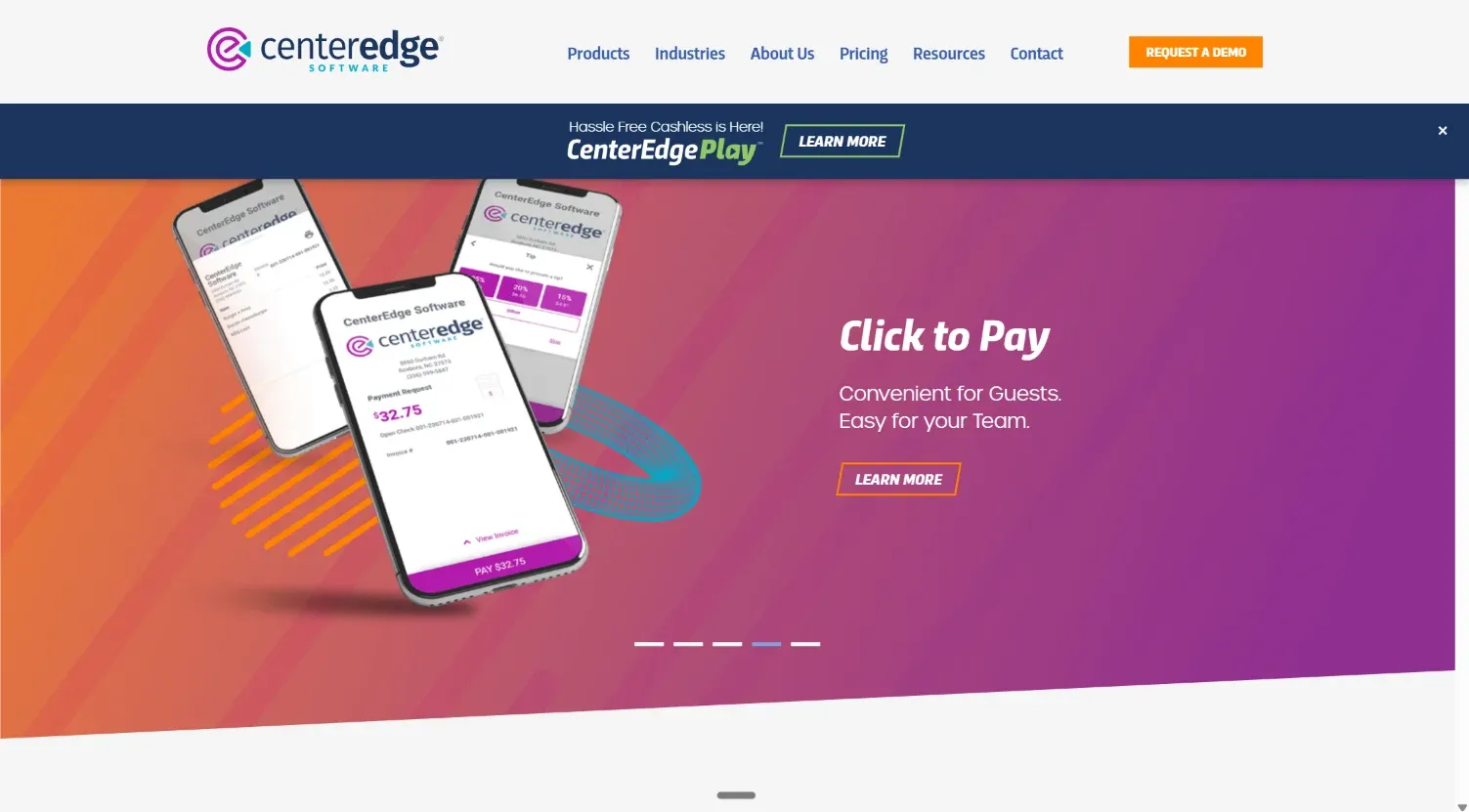
CenterEdge is a seasoned platform tailored for FECs, trampoline parks, and multi-attraction venues. Its all-in-one suite covers everything from POS to waivers, party bookings, group sales, food and beverage, and arcade card management. The user interface is designed for high-volume, high-turnover environments, and its modules are tuned for birthday parties, timed attractions, and varied activity types.
CenterEdge integrates with hardware like card readers, ticketing kiosks, and redemption centers, supporting cashless play and quick guest throughput. The software supports integrations with popular payment processors, digital signage systems, and even some loyalty and marketing platforms. However, API access and deeper integration with legacy or custom tools may require additional fees or development effort.
Migration friction: Migrating to CenterEdge from another system requires careful data mapping and staff retraining, especially if moving from a less specialized POS. Their onboarding team offers guided setup, but expect a ramp-up period and some downtime during the switch. Hardware compatibility should be confirmed in advance to avoid costly replacements.
Concrete use cases: A large trampoline park with a cafe, arcade, and event rooms can use CenterEdge to manage all revenue streams, track guest visits, and automate birthday party bookings. Operators can monitor real-time sales and occupancy, set up dynamic pricing, and handle guest waivers digitally. However, if you plan to expand into non-traditional attractions or need highly custom integrations (e.g., with bespoke access control systems or unique loyalty programs), you may encounter platform limits.
Pricing: Reported $250+/month plus onboarding and support fees. See pricing.
- Key limitations:
- Per-terminal pricing can inflate costs for large venues
- Feature upgrades often require higher tiers
- Customization limited to CenterEdge-supported options
- Strengths:
- FEC-specific features and modules
- Strong support and onboarding
- Stable SaaS product with regular updates
2. Embed (Best for arcades and attractions)
Embed is best known for its cashless card systems, used by arcades, FECs, and amusement parks worldwide. Embed’s platform covers POS, guest management, cashless play, prize inventory, and analytics. It is built for throughput, with card kiosks, tap-and-play hardware, and mobile wallet integration, enabling guests to reload cards or pay via phone. The system is highly reliable for high-traffic, game-centric environments.
Integration and features: Embed provides APIs and supports integrations with some third-party redemption, ticketing, and CRM tools, but deep customization is often limited to partners within the Embed ecosystem. You can connect to payment processors and some digital marketing platforms, but integrating with legacy business systems or truly bespoke workflows may be challenging or require custom development by Embed.
Migration friction: Switching to Embed usually involves significant hardware investment: card readers, kiosks, and networked game connections. Migration includes data transfer for guest accounts and balances, which can be complex if moving from a different card system. Staff training is essential, especially for venues with hybrid operations (e.g., food service plus gaming), as the platform is optimized for arcade flows.
Concrete use cases: A large arcade with hundreds of machines uses Embed to manage play credits, automate redemption, and track game popularity. Operators get analytics on machine revenue, guest behavior, and inventory. Mobile wallet features allow guests to skip lines and operators to streamline operations. For multi-attraction venues, Embed can be paired with other systems for food and beverage, but this means managing integrations or even double entry.
Pricing: Custom quote, typically includes hardware and monthly SaaS fees.
- Key limitations:
- Monthly SaaS fees for each feature
- Hardware bundles can be expensive up front
- Flexibility is strongest for arcade models
- Strengths:
- Reliable for high-traffic, game-centric venues
- Mobile wallet and cashless play features
- Granular analytics for arcade operations
3. Active Network (Best for large multi-site operators)
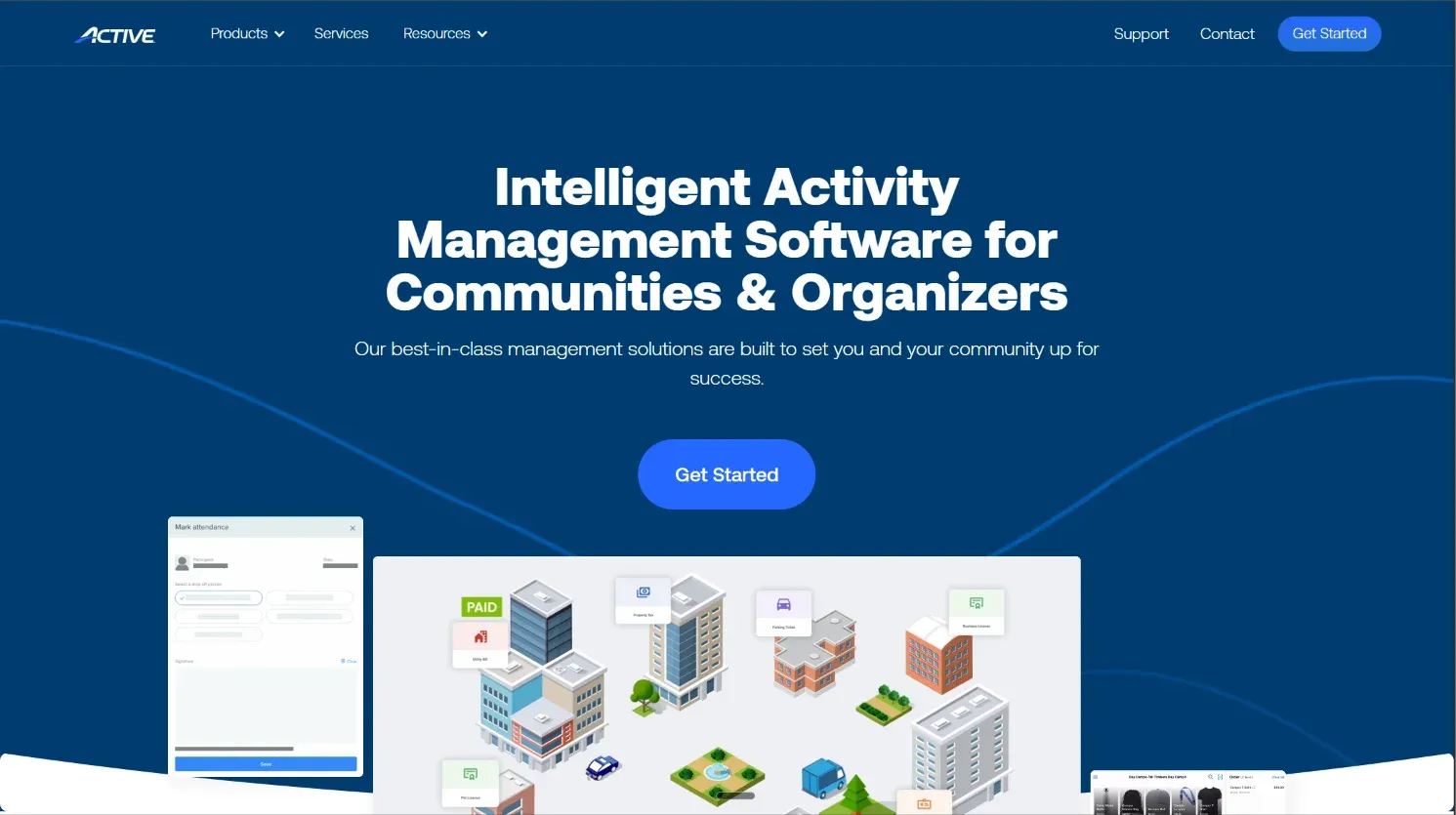
Active Network is engineered for complex, multi-location organizations such as event venues, sports complexes, and large parks departments. Its core strengths are in registration management, event scheduling, membership programs, and resource allocation. The platform’s reporting and analytics are built for enterprise-scale operations, allowing for in-depth financial tracking, attendance analysis, and customer segmentation across multiple locations.
Integration and features: Active Network connects with a range of third-party software, including popular CRM platforms, financial systems, and marketing automation tools. The platform offers APIs for custom integrations, but access may be limited by your contract or require additional fees. Its registration tools are robust, supporting everything from youth leagues to major events, and it can handle complex pricing models and group discounts.
Migration friction: Implementation is a significant project, often involving months of planning, data migration, and staff training. Smaller venues may find the setup process overwhelming, and custom integrations may extend timelines. Active Network provides onboarding specialists, but expect a learning curve and a need for ongoing IT support.
Concrete use cases: A city parks department uses Active Network to manage memberships, facility rentals, class registrations, and multi-site reporting. A large events company schedules ticketed events and tracks registrations across multiple venues. The platform’s scalability is its main appeal for organizations with complex, distributed operations.
Pricing: Custom quote, typically based on scale and volume.
- Key limitations:
- Complexity and cost may be excessive for smaller venues
- Contractual terms can be rigid
- POS capabilities not as deep as FEC-focused systems
- Strengths:
- Enterprise-scale reporting and analytics
- Strong for multi-location and event management
- Robust registration and scheduling tools
4. RecTrac (Best for parks and rec venues)
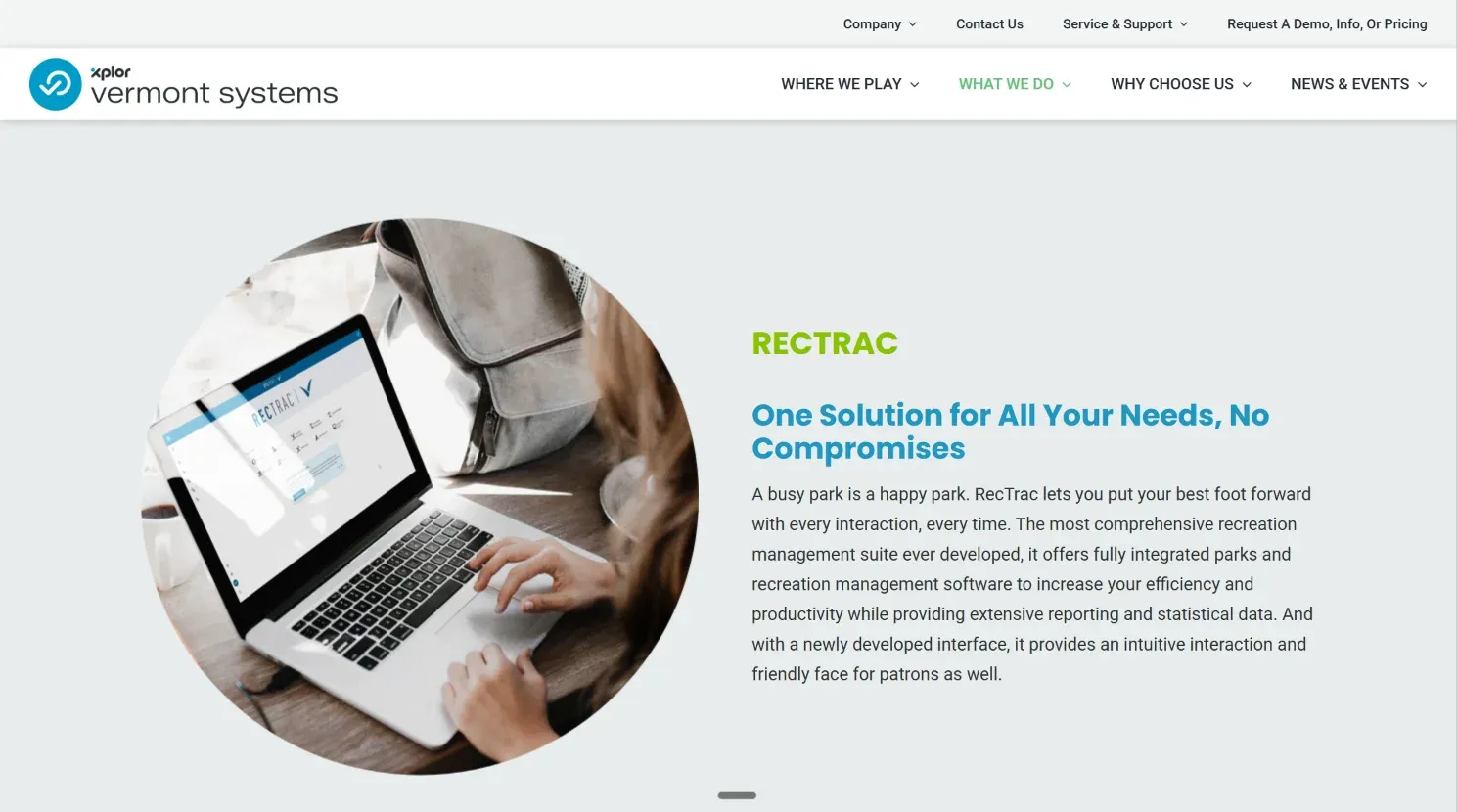
RecTrac is a mainstay for municipal parks, recreation centers, aquatic facilities, and community venues. Its modules cover facility bookings, program registrations, memberships, POS, and detailed reporting. RecTrac is built for the public sector, supporting government procurement standards, ADA compliance, and audit trails.
Integration and features: RecTrac connects with government accounting systems, access control hardware, and digital signage, and offers APIs for custom integrations. However, customization beyond the standard modules often requires CivicRec’s development team or incurs additional fees. RecTrac’s scheduling and rental tools are among the best for managing spaces, classes, and equipment across multiple facilities.
Migration friction: Implementation can be lengthy, especially for larger municipalities. Data migration from legacy systems is supported, but mapping fields and cleaning data is a manual process. Training is thorough, but the breadth of features means a longer ramp-up for staff.
Concrete use cases: A city recreation department uses RecTrac to handle pool memberships, sports league registration, community room rentals, and POS for concessions. Reporting tools help justify funding and track program performance for government stakeholders.
Pricing: Custom quote depending on features and users.
- Key limitations:
- Opaque pricing with add-on fees for advanced modules
- Customization limited outside public sector template
- Implementation can be lengthy for large orgs
- Strengths:
- Compliance and procurement support for government venues
- Strong scheduling and rental management
- Detailed reporting for public sector needs
5. PerfectMind (Best for fitness and rec centers)
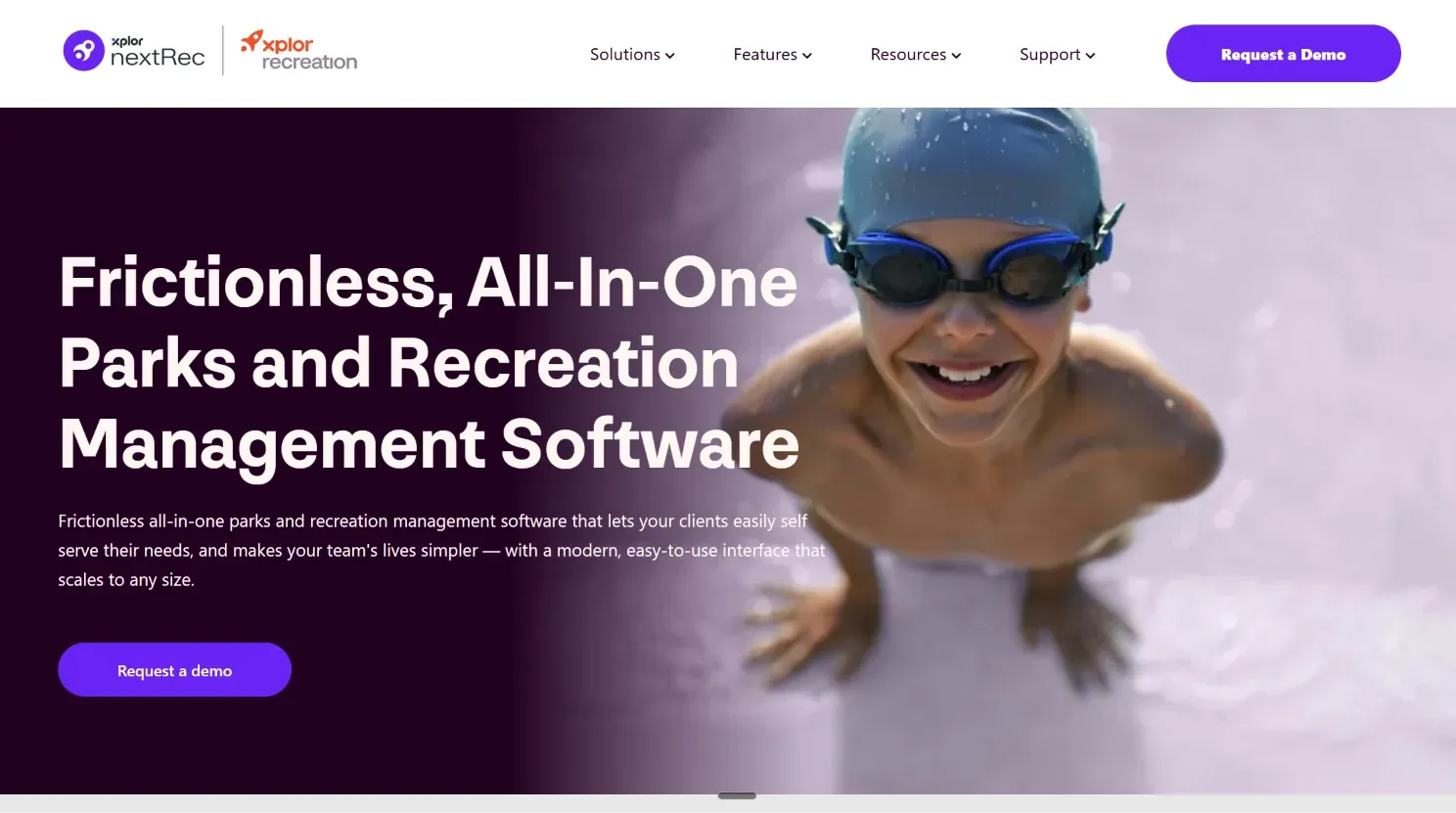
PerfectMind targets gyms, fitness studios, community centers, and yoga studios. The platform offers membership management, class scheduling, POS, attendance tracking, and automated billing. Its user experience is streamlined for booking recurring classes, managing memberships, and processing payments, making it a popular choice for fitness-focused venues.
Integration and features: PerfectMind integrates with payment gateways, access control systems, and marketing tools. API access is available, but advanced custom integrations often require vendor support. The platform supports recurring billing, package management, and mobile check-in for members. Reporting tools track attendance, revenue, and membership churn.
Migration friction: Transitioning from Agilysys or other POS systems to PerfectMind requires exporting member data, payment histories, and class schedules. The onboarding process is guided, but custom data fields or unique workflows may require manual intervention or vendor customization.
Concrete use cases: A multi-location fitness chain manages memberships, class bookings, and retail sales through PerfectMind. Automated reminders reduce no-shows, and staff can track member attendance and engagement. The platform excels at managing recurring revenue and class scheduling but is less suited for high-volume attractions or non-fitness operations.
Pricing: Quoted per location, typically includes onboarding and support.
- Key limitations:
- Advanced features only in higher price tiers
- Vendor sets feature roadmap
- Customization limited for complex/hybrid venues
- Strengths:
- Streamlined for fitness and recurring classes
- Automated billing and reminders
- Mobile check-in and attendance tracking
6. Bookeo (Best for smaller venues and tours)
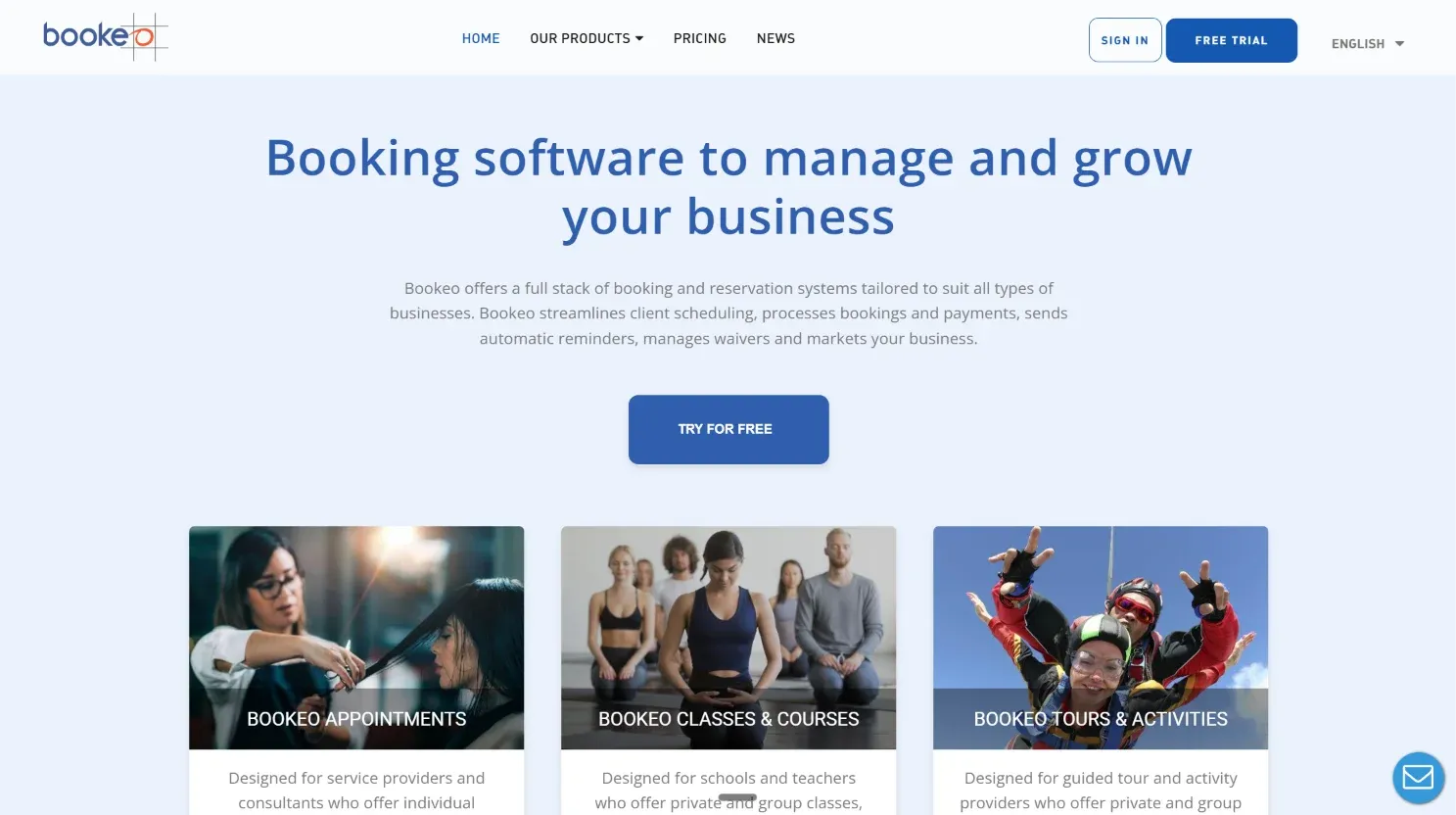
Bookeo is a lightweight, budget-friendly booking tool for small venues, escape rooms, activity operators, and tour companies. It is a cloud-based system focused on online bookings, customer management, and calendar synchronization. Bookeo offers a simple, embeddable booking widget for your website, integration with Google Calendar, and automated email reminders for customers.
Integration and features: Bookeo supports integrations with payment processors (Stripe, PayPal, Square), Google Calendar, and some CRM tools. It provides a basic API for custom integrations, but advanced reporting and analytics are limited compared to enterprise platforms. Bookeo is not a full-featured POS; instead, it excels as a front-end booking engine.
Migration friction: Bookeo is easy to adopt for new or small operators, as setup is self-service and data entry can be done manually. Migrating from a larger venue management system may involve data exports and some manual re-entry, as Bookeo lacks bulk import tools for complex data sets.
Concrete use cases: An escape room business uses Bookeo to manage room bookings, accept online payments, and automate confirmations. A small tour company handles group scheduling and payment collection, syncing with their team’s calendars. For micro-venues or startups, Bookeo offers rapid deployment and low ongoing costs.
Pricing: From $14.95/month per location. See pricing.
- Key limitations:
- No advanced POS features
- Limited analytics and reporting
- Per-location pricing can add up as you grow
- Strengths:
- Budget-friendly for small venues
- Easy online booking and calendar sync
- Rapid deployment and low setup friction
7. FareHarbor (Best for tour and activity operators)
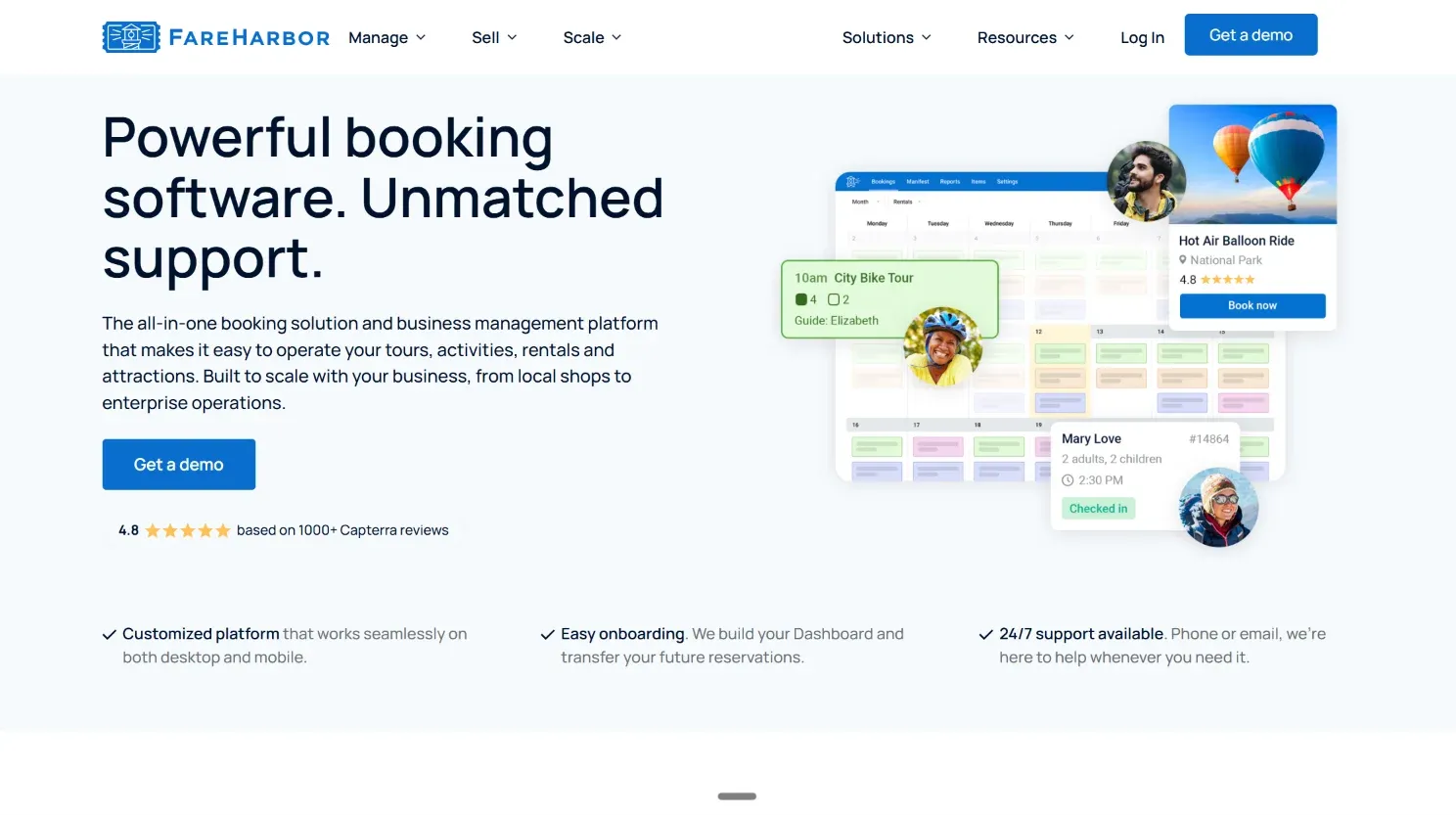
FareHarbor is a booking and reservation system designed for tour companies, activity operators, and event-based businesses. Its core strengths are in online booking, real-time availability management, and channel distribution (selling through OTAs and resellers). The cloud-based dashboard allows for mobile management, making it ideal for operators on the go.
Integration and features: FareHarbor integrates with payment processors, Google Analytics, TripAdvisor, Viator, and several online travel agencies (OTAs). The platform supports custom forms, waiver management, resource allocation, and dynamic pricing. It is not a traditional in-venue POS but can integrate with some hardware for ticket printing or check-in.
Migration friction: Moving to FareHarbor requires importing existing bookings, schedules, and customer data. FareHarbor’s onboarding team assists with setup, but mapping complex pricing or legacy data can take time. Staff training is straightforward, thanks to a modern, mobile-friendly interface.
Concrete use cases: A zipline tour company uses FareHarbor to manage online bookings, distribute inventory across multiple sales channels, and automate waivers. The system handles last-minute bookings and sends real-time updates to staff smartphones. FareHarbor is popular with seasonal or mobile operators who need to manage capacity and maximize bookings.
Pricing: Transaction-based, typically 6% to 10% per booking with no monthly base.
- Key limitations:
- Transaction fees can erode margins for high volume
- No full-featured POS for concessions/merchandise
- Hardware integration is limited
- Strengths:
- Strong for online bookings and channel distribution
- Mobile management for operators on the go
- Automated waivers and resource allocation
8. Xola (Best for adventure and booking-heavy operations)
Xola is designed for adventure parks, escape rooms, activity operators, and experience-based venues. Its focus is on online bookings, scheduling, waivers, and payment processing. Xola’s dashboard is cloud-based and mobile-friendly, with a strong emphasis on customer experience and automation.
Integration and features: Xola integrates with Stripe, Square, QuickBooks, Mailchimp, and TripAdvisor. It offers APIs for custom integrations, supports digital waivers, and provides a customizable booking widget for your website. Real-time reporting and scheduled email campaigns help operators track performance and drive repeat business.
Migration friction: Migrating to Xola involves importing customer lists, booking histories, and waiver data. The platform offers onboarding support, but complex migration projects may require manual intervention or third-party help.
Concrete use cases: An adventure park uses Xola to handle time-slot bookings, automate waiver collection, accept online payments, and send post-visit follow-ups. Escape room operators use Xola to manage group schedules, staff assignments, and capacity planning.
Pricing: 2.9% + $0.30 per booking. See pricing.
- Key limitations:
- Transaction fees add up for high-volume venues
- Not a full POS for retail/concessions
- In-venue workflows may require extra tools
- Strengths:
- Strong online booking and automation
- Mobile-friendly dashboard
- Customizable booking widget and integrations
9. Devaims (The owned alternative for venues ready to control their stack)
Devaims is the only alternative on this list where you own the source code and platform outright. Instead of paying per terminal or per booking forever, Devaims builds your custom web, mobile, or business software, hands over the code, and you decide how to run, scale, and integrate it. There are no feature gates, no surprise price hikes, and no contracts beyond the build. You keep your data, and you keep your stack.
Integration and features: Devaims is not a SaaS product but a custom development partner. Your system is built to your exact requirements, integrating with any hardware (POS, kiosks, card readers), third-party APIs, or legacy systems you need. You control the roadmap, add features at will, and decide on hosting (cloud or on-premise). There are no per-terminal, per-user, or per-booking fees.
Migration friction: Devaims manages the entire migration process: exporting your data from Agilysys (or any current system), cleaning and mapping it, setting up integrations, and training your staff. The transition is project-managed and includes parallel runs to ensure zero downtime. Since you own the code, you can evolve the system as your business grows without waiting for a vendor’s roadmap.
Concrete use cases: A multi-attraction venue with arcades, food service, and events builds a unified platform: custom POS, booking engine, loyalty program, and analytics dashboard. A chain of trampoline parks creates a single, branded system with integrations for access control, waivers, and marketing automation. Unique workflows, such as integrating with city permit systems or custom loyalty programs, are possible because you own the tech stack.
- One-time build, then flat maintenance, no per-unit fees
- 100% ownership of your code and data
- Custom integrations and features on your timeline
- No contracts or lock-in, you own it
Other Agilysys alternatives worth knowing
- eSoft Planner: Niche fit for sports facilities, less for entertainment venues.
- Check niche tools like ROLLER for amusement parks, but be aware they share the SaaS rental model.
- Vantora for paintball and laser tag venues; strong for waiver management and bookings, but limited outside those verticals.
- Resova, a booking platform for adventure and activity businesses; flexible API, but still SaaS-based.
How to choose the right Agilysys alternative
- Budget: Know your true cost per month and how it scales with your busiest season. Calculate not just the base fee, but also per-terminal or per-booking charges, hardware costs, and add-on modules. Compare these against the potential ROI of owning your stack.
- Business model: If you’re heavy on bookings, choose a tool that handles spikes without punishing per-transaction fees. For high-volume operators, transaction-based SaaS can eat into margins fast; owning your platform means costs stay flat as you grow.
- Integration needs: Will you need to connect to legacy systems, accounting, access control, or custom apps? SaaS platforms may offer limited or paid integrations, while a custom build gives you unlimited flexibility. List your must-have integrations before choosing.
- Ownership: If you want to own the code and control your stack, skip straight to Devaims. Ownership means you set the roadmap, keep your data, and can adapt your tech as your business evolves, without waiting on vendor updates or price hikes.
If your current platform’s fees are stunting your growth, it’s time to consider an owned alternative.
Stop paying rent on software you could own
Every Agilysys alternative above is still SaaS. That means the same pain: per-unit fees, gated features, contracts, and a stack you never truly own. Devaims is different. We build your platform from scratch, hand over the source code, and you run it how you want. You keep your data, your integrations, and your margins.
Devaims delivers custom web, mobile, and business software for entertainment venues. You pay once for the build, a flat monthly for maintenance, and that’s it, no per-terminal tax, no forced upgrades, and no lock-in. It’s your platform, forever.
- No more per-terminal or per-user fees: Add as many units as you like, you pay the same.
- No feature gates: If you want a report, dashboard, or integration, it’s yours from day one.
- No contracts: Once delivered, the software is yours to run, extend, or even host elsewhere.
- Own your stack: Connect it to anything, modify it, and keep your data onsite or in the cloud.
| Platform | Pricing model | Ownership | Custom integrations |
|---|---|---|---|
| Agilysys | Monthly per-terminal/user | No | Limited, extra cost |
| CenterEdge | Monthly, tiered | No | Some, extra cost |
| Embed | Monthly SaaS, hardware bundles | No | Some, by quote |
| Devaims | One-time build, flat maintenance | Yes (you own code) | Unlimited, you decide |
| Year | Rented (Agilysys, CenterEdge, etc.) | Owned (Devaims) |
|---|---|---|
| 1 | $20,000 | $32,000 |
| 2 | $40,000 | $33,800 |
| 3 | $60,000 | $35,600 |
| 4 | $80,000 | $37,400 |
| 5 | $100,000 | $39,200 (now ahead) |
For most venues, owning your stack pays off after year four and keeps saving you every year after. If your venue has 10 POS terminals and pays $150 per terminal per month, that’s $1,500/month, $18,000/year, and $90,000 over five years. Why keep renting when you can build what you actually need and own it outright? For venues with more complex needs or multiple locations, the savings and flexibility become even more dramatic.
How to switch from Agilysys
- Export your current data: Gather customers, bookings, sales records, inventory, terminal configs, and loyalty program data. Agilysys offers data export tools, but the format may require conversion.
- Evaluate and choose your new platform or custom build: Review feature sets, integration capabilities, and migration support. Engage with vendors early to confirm compatibility and migration support.
- Import your data into the new system: Map fields from Agilysys to your new platform, clean up duplicates or outdated records, and run test imports to verify accuracy.
- Reconnect payment gateways, hardware, and integrations: Ensure terminals, card readers, printers, and online payment processors are connected and tested. For custom builds, this may include integrating with access control, digital signage, or marketing platforms.
- Train your staff: Schedule hands-on training for all staff on new workflows, system navigation, and troubleshooting. Provide documentation and quick-reference guides.
- Run both systems in parallel: Operate both platforms side by side for a set period (often 1 to 2 weeks) to catch discrepancies, train staff, and ensure smooth operations.
- Review your Agilysys contract: Check for cancellation terms, required notice, or penalties before final cutover. Plan your switch date to minimize overlap costs and disruptions.
With a custom Devaims build, the migration is managed end-to-end as part of the project, including custom field mapping, data cleaning, and workflow design, ensuring a smooth transition.
Frequently asked questions
What is the best Agilysys alternative for entertainment venues?
For most venues, CenterEdge is a strong SaaS option, offering a comprehensive feature set for FECs and multi-attraction businesses. However, if you want to break free from per-terminal fees, locked features, and contracts, Devaims is the only alternative that lets you own the entire platform and control every feature. With Devaims, you decide what to build, when to upgrade, and how to integrate, making it the best fit for operators seeking true control and long-term value.
Which Agilysys alternative is the cheapest?
Bookeo is the lowest-cost option for small venues, starting under $20/month and offering essential booking functionality. However, for larger or growing venues, the cheapest option over time may be owning your stack with Devaims. While the upfront investment is higher, you avoid per-unit fees forever, and your total cost of ownership often drops below SaaS after just a few years, especially as your operations scale.
Is there a free alternative to Agilysys?
There are no truly free, full-featured venue management platforms tailored for entertainment venues. Some tools offer free trials or limited free tiers (e.g., Bookeo, FareHarbor), but these quickly run into usage and feature limits. Open-source POS systems exist, but they lack the specialized features entertainment venues need. Owning your platform with Devaims means no ongoing rent, and you avoid surprise costs and limits as you grow.
Which Agilysys alternative is best for parks and rec?
RecTrac is built specifically for parks and recreation departments, with strong scheduling, rental, and membership tools. It supports government compliance and multi-site management. However, it shares the SaaS rental model and may require add-ons for advanced needs. For public venues that want to own their system, a Devaims build is the only non-rental alternative, offering total flexibility and integration with existing municipal systems.
How do per-terminal and per-booking fees compare over five years?
Per-terminal and per-booking fees add up rapidly, especially as your venue scales. For example, a 10-terminal operation paying $150 per terminal per month spends $18,000 per year, or $90,000 in five years, often more than the cost to build a custom platform outright. Transaction-based fees (e.g., FareHarbor, Xola) can be even steeper as booking volume grows. Owning your stack with Devaims means your costs stay predictable and flat, regardless of how many terminals or bookings you process.
Can I keep my historical data when switching from Agilysys?
Yes, most platforms provide data export tools, though some formats may require extra work to import. The ability to retain customer records, booking histories, and sales data is essential for continuity. Devaims handles data migration as part of each custom build, ensuring your historical data is preserved, cleaned, and mapped into your new system, so you keep your booking and sales history without disruption.
When should I switch to an owned platform?
If your annual SaaS fees are over $15,000, or you have features you can't get without upgrading tiers, or you need integrations not supported by your current vendor, it’s time to calculate what ownership would save. Owning makes sense for venues with multiple terminals, growing locations, or unique workflows. Devaims can run your numbers to see if owning beats renting for your operation, factoring in your projected growth and integration needs.
The bottom line
The best Agilysys alternatives help you run your venue, but only Devaims lets you truly own your system. If you’re tired of contracts, rising fees, and renting features you should control, it’s time to consider building your own stack for less than you think. The cost math is clear: if your five-year software spend could build you a custom platform that’s yours forever, ownership is the smarter path.
Here’s the test: add up what your current platform will cost you over the next five years. If that number would have built you a system you own, and let you skip per-terminal, per-booking, and feature upgrade fees, you already have your answer.
Want more insights? Read the Devaims blog, plus our deep dives on CenterEdge alternatives, Embed alternatives, and RecTrac alternatives.